Blog Archives: Blog

Know Your Ocean: Have You Taken “The Coral Pledge?”

in , , /by

Learn about the “The Coral Pledge,” a new initiative to reduce human impacts on Hawaiiʻs reefs year-round. The presenter was Dan Dennison, Senior Communications Manager for the Hawaii Dept. of Land and Natural Resources (DLNR). The Coral Pledge was created by the DLNR Division of Aquatic Resources and was introduced statewide earlier this month. The eveningʻs presentation included details about The Coral Pledge and featured a showing of “Saving Coral,” a half-hour television special created by DLNR to educate the public about threats to Hawaii’s coral reefs.

Dennison also provided updates on “30 x 30” which is a State of Hawaii commitment to effectively manage 30% of Hawaiiʻs nearshore ocean waters by 2030. At the conclusion of the evening, Maui Ocean Center also provided a special holiday treat for attendees: a viewing of the movie, “Humpbacks of Hawaii,” shown in 3D at The Sphere.

“The Coral Pledge provides a simple set of recommendations to help reduce human impacts to Hawai‘i reefs year-round, but particularly during bleaching events,” says Dennison. “While all ocean users can learn from the recommendations in The Coral Pledge, we especially encourage commercial tour operators and businesses who work in and around the ocean, and who regularly interact with visitors, to attend to learn about The Coral Pledge and hopefully to sign up to participate in this initiative.”

Click on the video below to watch the presentation:

About
Presented by Dan Dennison

Dan currently serves as the Senior Communications Manager for the Hawaii Dept. of Land and Natural Resources. He brings more than four decades of broadcast journalism experience to his current position. Prior to joining DLNR in 2014, Dan served as news director at six, top-rated television stations, in four states, including KHON2 and KHNL/K5 in Honolulu. He began his news management career in his native Colorado after being a television reporter and photographer for 25 years covering Western Colorado for Denver television stations. He has multiple Emmy awards, state broadcaster association awards, and Edward R. Murrow awards both as a reporter and news director. At DLNR, Dan has been responsible for the production of more than 1.000 videos to date, including seven television specials. He supervises a team of communications specialists who handle all internal/external communications, media relations, and social media. Dan has served on numerous state and national boards both as a broadcaster and now as a government communications professional. He is an avid hiker, bicyclist, snorkeler, and skier, and loves to play tennis and Frisbee. He says he is both blessed and honored to document the work of DLNR staff and its many partners in the mountains, forests, and waters that comprise Hawaii Nei. “The best job in the world,” he says.

Reef Friendly Landscaping Pilot Report

in , /by

Healthy plants require healthy soil. SoilThrive’s mission is to facilitate healthy, aerobic soil structure to support the thriving plant systems above the surface. SoilThriveTM has developed protocols that facilitate this goal by cultivating and propagating beneficial, indigenous microbiology that effectively promote healthy landscapes without the use of chemical pesticides and fertilizers. Rather than utilizing untold labor hours and synthetic compounds to amend unproductive soil, SoilThriveTM promotes and leverages nature’s pre-existing systems to reduce unwanted biomass, build soil structure to fight compaction and improve water retention,
and thus enable plant health and vitality.

This collaborative pilot project had a specific focus on organically supporting the soil health of high-traffic areas. The pilot project’s focus is to achieve this by utilizing organic liquid biological soil amendments produced locally on Maui from plant-based compost. The ultimate goal was to create an environment that would enhance the natural biological balance of the soil, which in turn will promote the health of the plants. One of the supporting goals is to reduce the amount of irrigation required to maintain the health of the turf. Using a holistic approach, the team worked to create a more efficient system conserving water and reducing costs. Additionally, the protocols deployed provided additional value with a reduction
in the number of labor hours required for manual dethatching, which is time-consuming and labor-intensive. The outcome of the pilot project initiated the process of creating a sustainable system for long-term support of soil health in an environmentally friendly and economically feasible process. With this in mind, the pilot projects included 3 initial test plots:

  • County of Maui, Keopuolani Park – Baseball Field 1
  • Mākena Golf &Beach Club- South Course Tee Boxes
  • Wailea Community Association – Event Parking Turf

Download a .pdf of the pilot study report here:

What is a watershed? Why do they matter in Maui County?

in /by

You live in a watershed, even though you might not know it. A watershed is an area of land that drains all the streams and rainfall to a single body of water, such as a river, lake, or ocean. Watersheds and their management are incredibly important for coral reefs because they are the source of fresh water and nutrients that can actually promote reef growth.

Unfortunately, human activities, such as poorly planned development, have caused pollution to enter our watersheds and flow down into the ocean, affecting our reefs. Excessive use of fertilizers, pesticides, and herbicides that are used in farming or lawn care is one source of polluted runoff, also known as nonpoint source or NPS pollution. Urbanization adds to NPS pollution as roads, parking lots, and other developments produce runoff polluted with oil, grease, and other chemicals.  Impermeable surfaces such as paved areas, roofs, and even compacted bare soil increase the rate at which water flows down through a watershed.

Groundwater is also an often overlooked part of a watershed system.  Maui County is currently struggling with coral reef and water quality degradation caused by failed and poorly planned sewage disposal systems that are contaminating groundwater. Like surface water, the direction of flow is towards the ocean, so pollutants that are pumped into injection wells do eventually have an impact on our coastal environment.

Fortunately, there are a number of steps that anyone can take to help protect their watersheds. Here are ten things you can do:

1. Reduce the use of household chemicals and pesticides that can pollute watersheds – many of these common pollutants contain harmful elements that negatively impact coral reefs.

2. Conserve water by taking shorter showers, turning off the tap when brushing your teeth and only running full loads in the washing machine. This will help reduce water waste and also help to prevent runoff from carrying pollutants into our watersheds, especially through groundwater.

3. Dispose of waste properly by making sure all hazardous materials – and this includes any unused medications – are taken to a designated drop-off center, not put down any drains or flushed down the toilet.

4. Participate in beach cleanups or other local events dedicated to protecting our waterside ecosystems – this will not only remind us how important watersheds are but also help keep them clean.

5. Plant native vegetation. The plants that grow naturally in a given area are adapted to the local conditions and provide essential food, shelter, and refuge for wildlife. Any vegetation helps filter polluted runoff before it enters our water, but by reducing water consumption.

6. Avoid dissolving detergent products – both pods and sheets – these products are actually packaged in a dissolving plastic that breaks down into microparticles in water. Even though not visible to the naked eye, these particles are not fully rinsed from clothing and cannot be filtered out by the municipal wastewater treatment systems we have in Hawai’i.

7. Avoid using or disposing of single-use plastics or Styrofoam products near rivers, streams, lakes, or oceans. Even though Maui County has banned some of these single-use materials, they still exist in packing materials.  If not recycled, and most are not, these materials break down into small pieces that can be ingested by animals, including reef corals.

8. Reduce pesticide and herbicide use, as these chemicals have been proven to contaminate our water and harm coral reefs. Use organic gardening products when possible, and follow any local ordinances pertaining to the proper disposal of hazardous materials.

9. Volunteer with a local watershed organization or join a cleanup effort near where you are located. Community members can help make an impact by simply picking up trash on shorelines or in waterways; this not only reduces debris but also helps protect aquatic life from toxins and pollutants that may be present in the garbage being collected.

10. Help spread awareness about how watersheds are connected to coral reefs, and the pollution that can be caused by human activities. The more people know about this issue, the more likely it is for us to make a collective effort toward protecting our watersheds and ultimately, our reefs.

Even if you do any one of the tips above, you will reduce your impact on watersheds and help protect our coral reefs. Watershed degradation and the resulting pollution are one of the top three things harming our coral reefs.  Together, let’s keep our waters clean, safe and healthy so that future generations can enjoy the beauty of coral reefs.

Maui has three watershed partnerships that are great resources for information about watersheds and provide opportunities for you to get involved in watershed conservation and management.

East Maui Watershed Partnership

West Maui Mountains Watershed Partnership

Leeward Haleakala Watershed Restoration Partnership

Hui O Ka Wai Ola Reports on Six Years of Monitoring Maui’s Coastal Water Quality 2016-2022

in , , /by

KIHEI, HI – How do you know the water off your favorite beach is clean enough to swim in? You have a group of volunteers to thank for that.  Prompted by caring for the health of our residents, visitors, and the culturally important and ecologically sensitive coral reefs off our shores,  Hui O Ka Wai Ola (the Hui) has been keeping track of changes in water quality on Maui since 2016. (https://www.huiokawaiola.com/findings.html

Their data supports the efforts of the Department of Health to maintain a long-term record of nearshore water quality to inform efforts by state agencies and local nonprofit groups, like MNMRC, to reduce pollution impacts around the island. 


Water testing by HOKWO

The program, which follows strict quality control standards, measures physical qualities like water clarity, salinity, and temperature, as well as nutrient levels (which harm coral reefs if out of balance). A new collaborative project with the National Oceanographic and Atmospheric Administration (NOAA) is addressing a long-standing to-do from the Hawaii Coral Reef Initiative – evaluating pesticide contamination in the waters along our coast.

In he January 2023 MNMRC Know Your Ocean Speaker Series talk, Liz Yannell, the Hui’s Senior Team Lead, spoke about water quality observations taken over the last year and presented long-term trends from the past six years.  She also spoke about an ongoing collaborative project with the National Oceanographic and Atmospheric Administration (NOAA) to evaluate pesticide contamination in waters along our coast. View the talk here: https://www.youtube.com/watch?v=Ey3xHZ0u3Z4.

The Hui O Ka Wai Ola is a volunteer-based water quality monitoring organization that is a partnership between MNMRC, The Nature Conservancy, and the West Maui Ridge to Reef Initiative. The Hui’s members include volunteers from diverse backgrounds like scientists and community organizations. The Hawaii Department of Health is mandated to monitor coastal water quality around the islands and encourages partnerships with groups such as the Hui to improve data about pollutants threatening coral reefs and human health.

The Hui’s culture of collaboration and a deep interest in ocean health made for a natural partnership with  NOAA’s NCCOS (National Centers for Coastal Ocean Science) carrying out the fieldwork needed for a research study to address a long-standing gap in our understanding of Maui’s water quality, “current use” pesticides. Current use pesticides are still legally in use for pest control vs those, like DDT, that are no longer on the market in the US. Current use pesticides are one class of chemicals that has long been overlooked here in Maui.  Pollutants in the water are typically measured by collecting a one-time “grab sample” (i.e. a bottle of water). While these can provide good information, especially when repeated over time, the drawback to using grab samples is that low-level pollutants can be missed.  Passive samplers that absorb chemicals in the environment over time can be used to sample for a longer period of time. This minimizes the likelihood of missing the presence of a pollutant.  In the current project, silicone bands will be used to soak up any pesticides in the water at eighteen nearshore reefs along Leeward Maui. This work will provide a more comprehensive assessment of pesticide pollution in our coastal waters, and help guide pollution reduction actions if needed.

To view this talk, please visit https://www.youtube.com/watch?v=Ey3xHZ0u3Z4.

About Liz Yannell, Hui O Ka Wai Ola Senior Team Lead: 

Liz joined the Hui as Senior Team Leader in May 2022. She has a bachelor’s degree in environmental studies from Florida Gulf Coast University. In 2022, Liz graduated from the Marine Options Program at UH Maui and worked as an assistant in the marine lab on campus. She also often volunteered in the lab with Surfrider’s Blue Water Task Force.

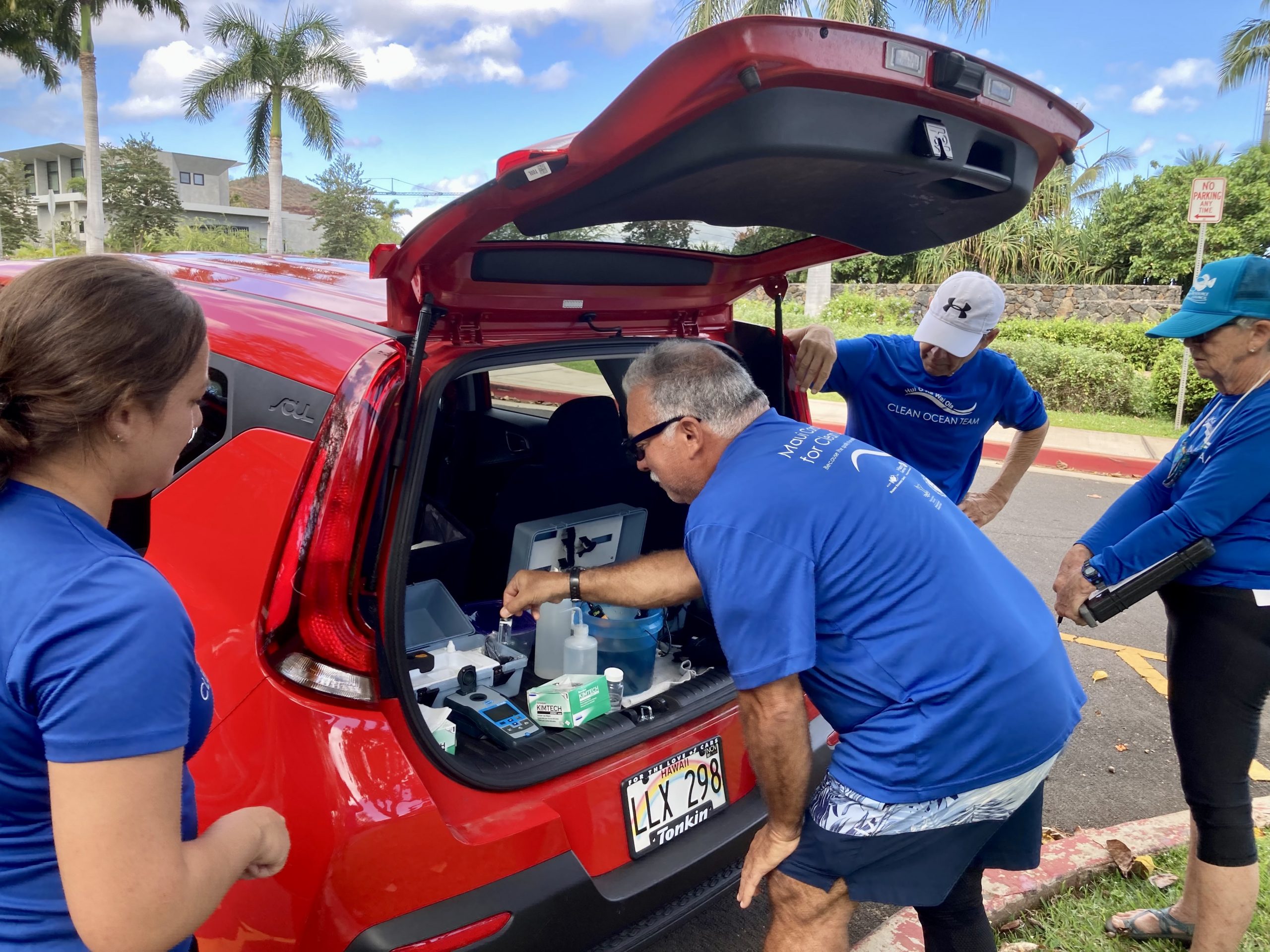
Water quality monitoring with the HOKWO mobile water quality lab.

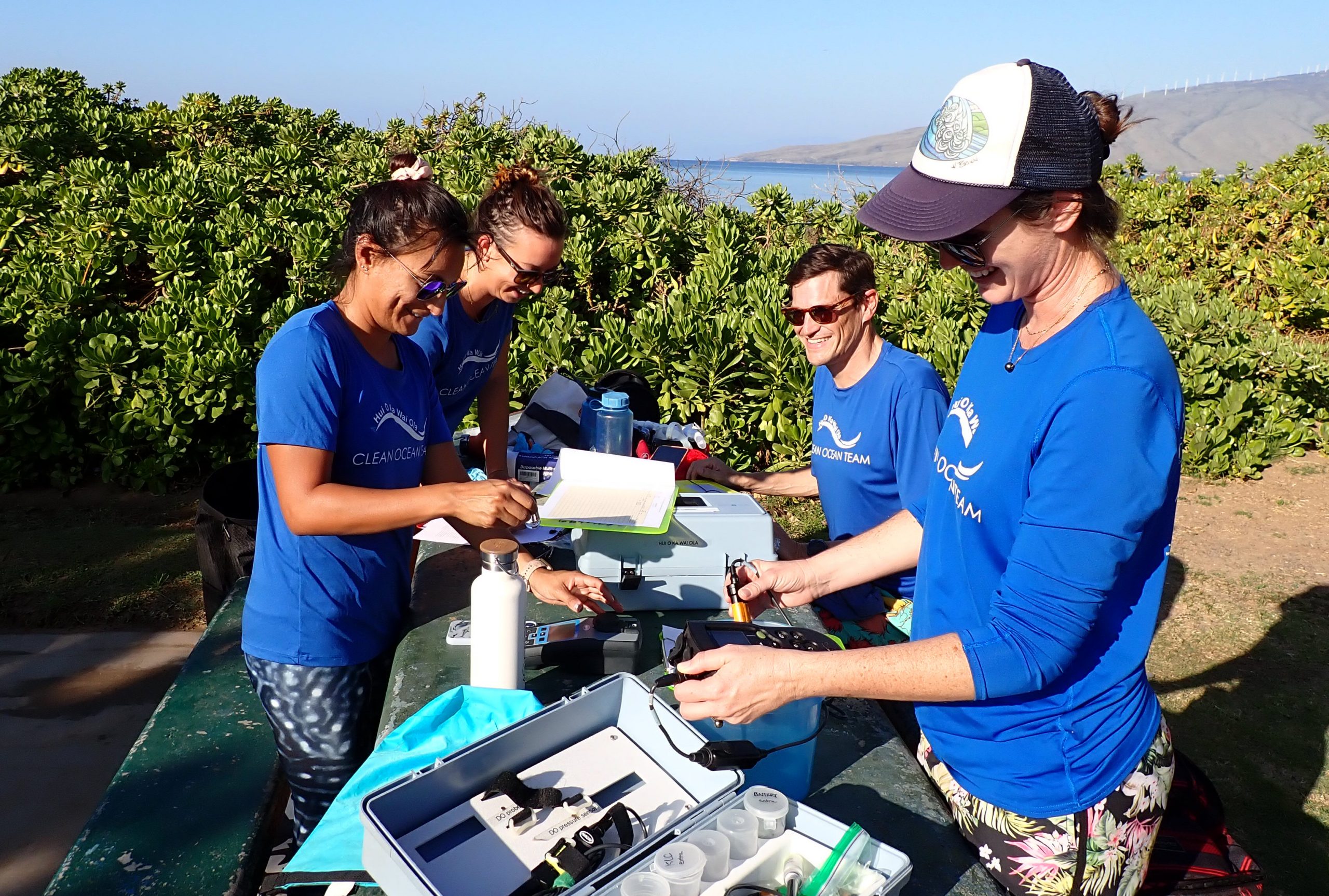
Hui O Ka Wai Ola volunteers and staff (left to right: Ylenia St. Louis, Kristina McHugh, Dan Crevier, and Liz Yannell) go beyond their regular ocean water testing duties in support of NOAA’s current-use pesticide study. Their data will help the science team understand ocean conditions where the pesticide sampling bands are deployed. Photo Credit: Tova Callender Location: North Kihei

Four Seasons Resort Lāna’i Goes for Gold, Becomes First Resort to be Reef Friendly Certified by Maui Nui Marine Resource Council

in , , /by

KIHEI — Maui Nui Marine Resource Council’s Reef Friendly Landscaping Certification Program is pleased to announce its first fully accredited resort partner, Four Seasons Resort Lānaʻi. The resort was awarded Gold Certification for its new efforts to manage the property grounds organically.

The Reef Friendly Landscaping (RFL) Program aims to prevent polluted runoff originating from the use of synthetic fertilizers, herbicides, and pesticides from resorts, golf courses, businesses, and residential areas. Research has shown that traditional pesticides, fungicides, and fertilizers can negatively impact marine ecosystems, through coral bleaching and developmental issues in juvenile corals and fish. Additionally, they can cause cancerous growths in sea turtles and other marine life.

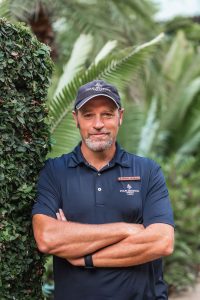
Maui Nui Marine Resource Council (MNMRC), in partnership with Duane Sparkman, worked with Robert Woodman, Director of Landscaping at Four Seasons Resort Lānaʻi. Woodman has been leading the landscaping team for 7 years, managing 12 densely planted acres of gardens, incorporating a number of native Hawaiian plants. He focused on plants that were less water and labor intensive and those that can thrive in the specific microclimate on Lānaʻi at Hulopoʻe Bay.

MNMRC launched their RFL Certification program in early 2022, and have been assisting the resort with their transition since August of the same year. The program requires properties to stop the use of all pesticides, herbicides, and synthetic fertilizers that are harmful to aquatic and marine life, with the opportunity to go one step further and implement 100% organic landscaping.* The Gold Level requires properties to have at least one member of the landscaping team become an Accredited Organic Landcare Professional through the Northeast Organic Farming Association (NOFA), and document and report all “emergency use” chemicals in case of a pest infestation or outbreak.

Woodman and the landscaping team were close to achieving 100% organic landcare; the safe removal of select pesticides by Cameron Chemical Corp ensured full compliance for organic landscaping. In addition, the landscaping team has begun composting onsite using their own green waste.

Four Seasons Resort Lānaʻi is committed to preserving and regenerating the environment and leaving a positive, enduring impact on the local community. Some of their Environment, Social, and Governance (ESG) efforts on the property include: elimination of single-use plastic bathroom amenities, food waste diverted from landfill and donated to local farmers for agricultural use, water-efficient landscaping and golf course management, waters off the coast have been declared a Marine Reserve to promote resilience in the reef, complimentary reef-friendly sun care products available for guests, botanical preservation to reintroduce awikiwiki, a federally endangered perennial vine, to the area, and the resort has Arboretum Accreditation by the Morton Register of Arboreta, recognizing professional standards and capabilities in a shared purpose to plant and conserve trees and advance goals specific to tree-focused public gardens.

“We are committed to building upon Four Seasons’ strong history of supporting our communities and the environment, leaving a positive, long-lasting impact on the storied places where we operate and live,” said Alastair McAlpine, General Manager, Four Seasons Resorts Lāna‘i.  He continued, “Protecting Lāna‘i’s native ecosystem and championing ongoing sustainability efforts across our island is an honor as is becoming the first Resort to achieve this accreditation, a true testament to the hard work of our landscaping team.”

“We know that holistic land management isn’t a new idea. This program recognizes and supports properties who are genuinely trying to do the right thing with the resources they have, and we hope other properties will want to do the same; not only for the health of their guests, but the environment as well,” states Jill Wirt, project manager for the RFL program.

The certification program has taken some time to gain traction due to the lack of viable organic alternatives produced locally in Maui County; but with support of Duane Sparkman and other businesses like Environmental Solutions Maui who produce a liquid biological soil amendment that supports soil health, it is becoming easier and more accessible to transition from conventional landscaping to holistic land management.

“I am really excited to see Four Seasons Lānaʻi take on this endeavor to change their resort landscape maintenance practices,” states Duane Sparkman. “Robert Woodman and his team now lead the way in the organic landscape resort maintenance industry. Gold level certification that he and his team have achieved is not only the first one awarded but critical to all life in the Mānele-Hulopoʻe area of Lānaʻi.”

MNMRC looks forward to continuing this partnership and working with more shoreline properties to prevent harmful land-based sources of pollution from entering invaluable nearshore marine ecosystems.

If you would like a free property assessment and recommendations to pursue an RFL Certification, please contact [email protected] or visit www.mauireefs.org/what-we-do/reef-friendly-landscaping/.


*Emergency Non-Organic Rescue Treatment (from NOFA standards handbook)

As one moves forward in a transitional or organic program, it may become necessary to intervene with a product for control of a particular pest if all reasonable efforts within an Organic IPM program have failed. It is acknowledged that from time to time situations present themselves that call for intervening action that normally would not be incorporated into an organic program. It is far preferable to react to pest pressure than it is to preemptively apply even allowed pesticides. When a situation arises that could create economic or unreasonable aesthetic injury an application may be made during or after transition that would allow for the inclusion of a material within the framework of a sound organic program.


About Maui Nui Marine Resource Council:

Founded in 2007, Maui Nui Marine Resource Council (MNMRC) is a nonprofit organization working for healthy coral reefs, clean ocean water and abundant native fish for the islands of Maui County (Maui Nui). We’re recognized for working with our local community to create culturally appropriate, effective science-based solutions to serious local threats facing our reefs.

About Four Seasons Resort Lānaʻi:

The five-diamond, five star Resort features 213 guestrooms and suites in a series of low-rise buildings spread along the Pacific coastline and immersed in Hawaiian botanical gardens, providing a private residential experience. Additional facilities include the signature ONE FORTY restaurant, Malibu Farm, NOBU LANAI, a spa and wellness program, variety of complimentary activities, luxury retail boutiques, Tennis Gardens, an 18-hole ocean-view Jack Nicklaus Signature Manele Golf Course, the Lanai Observatory, as well as an array of land, ocean and air activities.

 

Sharks and Us: Free Webinar Presents Short Film about Humanity’s Relationship with Sharks through Unique Hawaiian Lense

in , /by

KIHEI – Google search news for tiger sharks, and you’re most likely to see the latest headlines about unfortunate run-ins between these animals and people – especially on Maui. The Hawaiian Islands are infamous for these toothy apex predators, and Maui is home to the most tiger sharks of all the islands.

But rewind about a thousand years, and you’d find a society with a different view of these animals. The ancient Hawaiians revered sharks, called manō, recognizing their potential danger but admiring their strength and role in marine ecosystems. In fact, many Hawaiian families denoted sharks as ‘aumakua, personal or family gods that originated as a deified ancestor, which takes on physical forms.

This evolving relationship is the focus of a new animated short film, Manō, which will be presented and discussed during Maui Nui Marine Resource Council’s next Know Your Ocean Speaker Series webinar, which is supported by the County of Maui. Brittany Biggs, director and producer of Manō, will lead the screening and discussion of the film, along with cultural advisors Mike and Kaikea Nakachi. 

“One of my primary goals with Manō is to present a cultural perspective to shark conservation by sharing the relationship between sharks and Native Hawaiians, in which these animals are revered and loved as family,” said Biggs. “My hope is that this film will illustrate how vulnerable sharks are and inspire people to protect them.”

The film, which is about 10 minutes long, follows humankind’s relationship with these animals through the eyes of a tiger shark in Hawaii’s ever-changing waters. From the ancient Hawaiians’ first settlement of the islands to the present day, viewers will get a specialized view of how these animals are both revered, feared, and even killed in a world of once-pristine seas to an ocean now desecrated with pollution and capitalized as an economic resource through activities such as shark finning.

“It’s no secret that sharks are vital for healthy oceans,” said Meredith Beeson, Project and Research Coordinator at Maui Nui Marine Resource Council. “And unfortunately it’s well known that these animals are declining rapidly. We hope this webinar and film spark more compassion and understanding for these important and misunderstood animals.”

About Brittany Biggs:
Brittany Biggs is an animation professional, filmmaker, artist, and educator. She is currently a Previz / Rough Layout Artist at DreamWorks Animation. Her animation feature film screen credits include DreamWorks’ Trolls, Kung Fu Panda 3, Kung Fu Panda 2, and Turbo. Prior to her recent return to DreamWorks, she was an Assistant Professor of 3D Animation at the Academy for Creative Media at the University of Hawaii at Mānoa. In August 2020, she was selected as one of 102 fellows for the Unreal Fellowship in Virtual Production.

About Mike and Kaikea Nakachi:
Mike and Kaikea Nakachi from the Big Island are cultural practitioners, and they are descendants of Hawaiian kahu manō, or “shark guardians.” They are devoted to the study and preservation of sharks. Mike and Kaikea have been providing feedback and guidance relating to the story, manō ‘aumakua, character designs, and visuals. They advocated for years for the state to pass a law protecting sharks, and on June 8, 2021, Hawaii House Bill 553 was passed, which establishes an offense for intentionally or knowingly capturing, entangling, or killing a shark in state marine waters.

Donor Spotlight: Mathieu St Louis

in /by

“The first few years were rough,” said Mathieu St Louis, owner and operator of Maui Skydiving. “Skydiving was a tough market to break into on Maui, but despite the market there was definitely opportunity.”

St Louis, preferring Matty to Mathieu, has been operating Maui Skydiving since moving to the island in 2018. Having grown up around aviation – both his parents were pilots and skydivers – he developed the passion while young. But his path to owning his own business wasn’t easy flying.

Born in Quebec, St Louis spent most of his youth drifting between Las Vegas and Montreal with his family, following the warmth with the seasons. When his family relocated to Vancouver, he struck out on his own as a young adult with his first business. Early success soon fell to ruin and St Louis found himself on the streets, working odd jobs before an assistance program called Zero Ceiling helped get him back on his feet. The program took young houseless adults and put them up in Whistler as snowboarding instructors, providing housing and amenities in the process.

St Louis tandem jumping with a customer

“This program really helped me get back on the right path, both mentally and financially,” he said. “Living and working on the streets really does something to you, and it’s a hard mentality to break from.”

But break from it he did, and in his mid twenties his passion for aviation soared back into his life. By the time he was 26, St Louis was a skydiving instructor, moving up the ranks while getting new licenses and certifications around the world, including Canada, Australia, New Zealand, Mexico, and California. At 32 years old, he was operating his own business, three years ahead of his personal ten year plan. But the drifting life was getting to him.

“They say a rolling stone doesn’t gather any moss, but after some time you kind of wish you were gathering moss,” he said. While operating in Mexico, he met his wife, Ylenia, who has a background in marine biology and scuba instructing.

They saw potential for both of their fields in Hawaii, and made the move to Kauai in 2015. Shortly after they relocated to Oahu, and finally settled on Maui in 2018 – an island that had seen skydiving business before, but none of which succeeded.

St Louis and wife Ylenia

“Three people before me had come and failed to establish skydiving operations on Maui. So I talked to them, figured out their pitfalls,” said St Louis. “Their failures were not going to be mine.”

Of course, he had his struggles. Maui’s airport situation wasn’t the best for skydiving: Kahului is too busy, Kapalua is private, and Hana is remote, but they settled on Hana and found a way to make it work after struggling for a few years.

“Now things are rainbows and sunshine,” he said.

These rainbows and sunshine can be clouded with carbon, and St Louis is very aware of the problems with the aviation industry. His passion for flying and skydiving, and his desire to help the planet and his island home, drove him to start regular donations to Maui Nui Marine Resource Council.

“Aviation is a dirty industry, and I wanted to do something. I didn’t want my passion to intercept my support for conservation,” he said.

St Louis researched global standards for carbon offsets, and was astounded by how little money is actually recommended to offset one metric ton of carbon – sometimes as little as nine cents per gallon of fuel burned. He knew he had to do more than this, and decided he would give more than this, and give to a local organization working to protect Maui. Since October 2021, St Louis has made monthly donations based on the amount of fuel his planes use, as a unique way to pursue carbon offsets.

“I love Maui Nui Marine Resource Council, and the organization is exactly what I’m looking for in a relationship with a nonprofit,” he said. “You work for healthy reefs, clean water, and abundant fish, and we want that too. I only wish we could support you more.”

Free Presentation “Saving a Species: “Rehabilitation as a Conservation Tool for Hawaiian Monk Seals” Offered on Weds., Aug. 4

in , /by

Hawaiian monk seals are endangered, with fewer than 1,400 animals left on earth — yet they have recently been in the news, as videos and photos have surfaced showing the seals falling victim to harassment by visitors who get too close or attempt to touch them, sometimes for social media content. Learn more about Hawaiian monk seals at a free presentation called “Saving a Species: Rehabilitation as a Conservation Tool for Hawaiian Monk Seals” on Wednesday, August 4 at 5:30 pm HST via Zoom where two special guests from The Marine Mammal Center’s dedicated hospital for monk seals, Ke Kai Ola, on Hawai’i Island will highlight their conservation and outreach work.

The Center’s Lauren Van Heukelem, Response and Operations Coordinator, and Dr. Sophie Whoriskey, Hawaiian Monk Seal Conservation Veterinarian, will speak at this event, part of the “Know Your Ocean Speaker Series” which is hosted every month by Maui Nui Marine Resource Council.

Researchers estimate that about 30 percent of Hawaiian monk seals are alive today due to conservation efforts led by the National Oceanic and Atmospheric Administration (NOAA) and partners like the Center. The mission of The Marine Mammal Center focuses on global ocean conservation through rescue and rehabilitation, scientific research, and education.

Reserve a spot at the free presentation by visiting https://www.bitly.com/monksealwebinar

“We are hosting this special presentation with the awareness that public education is needed to help protect our Hawaiian monk seals from harassment or injury,” says Anne Rillero, Communications Manager at Maui Nui Marine Resource Council. “These animals are among the most endangered seals on earth.”

Dr. Whoriskey received her bachelor’s degree from Dalhousie University in Nova Scotia, Canada, and her veterinary medical degree from the Atlantic Veterinary College. She first came to The Marine Mammal Center in 2015 as the intern veterinarian in marine mammal medicine and pathology where she spent two years training with marine mammal medicine experts.

In 2020, she returned to the Center as a full-time Hawaiian Monk Seal Conservation Veterinarian. She leads the Center’s Hawaiʻi animal care operations, dedicated to the rehabilitation, conservation and research of the endangered Hawaiian monk seal.

Whoriskey has extensive field experience in remote and harsh environments and has participated in research projects from Alaska to Antarctica, all with a mission of advancing the global body of knowledge on marine mammal health.

Born and raised in Hawaiʻi, Van Heukelem received both her bachelor’s and master’s degrees from the University of Hawaiʻi at Mānoa in Marine Biology. She has participated in many research studies both in Hawaiʻi and the Northern Mariana Islands on various topics.

As the Response and Operations Coordinator, Van Heukelem oversees the monitoring of the endangered Hawaiian monk seal population on Hawaiʻi Island. She runs the Center’s 24-hour hotline for reporting seal sightings around the island and coordinates outreach and population assessments on a daily basis.

“On Hawai’i Island, we operate Ke Kai Ola, the only hospital dedicated to Hawaiian monk seals, providing support for monk seals found throughout the Hawaii archipelago,” says Van Heukelem. “Utilizing a 24-hour response hotline and a variety of education and outreach programs, we aim to advance conservation practices that empower our local community to protect this rare species.”

This presentation will focus on the center’s mission and work over the past 45 years in California and Hawaiʻi. Since opening Ke Kai Ola in 2014, The Marine Mammal Center has treated 36 Hawaiian monk seals and supports the work of NOAA’s Hawaiian Monk Seal Research Program by providing the only long-term care facility for this endangered animal.

These monthly virtual events are supported by the County of Maui Mayor’s Office of Economic Development.

The event’s emcee will be Darla Palmer-Ellingson, local radio show host of the public affairs program, Island Environment 360 Maui’s only commercially broadcast public affairs show on environmental and related Hawaiian cultural topics, aired on the stations of H-Hawaii Media.

To reserve your spot at this free Zoom webinar, please visit https://www.bitly.com/monksealwebinar


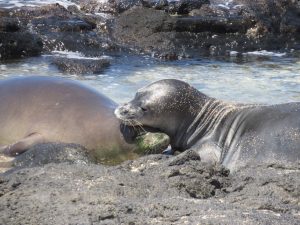
Eleu (PP08), a weaned female Hawaiian monk seal pup rescued from Papahānaumokuākea Marine National Monument Refuge, rests during rehabilitation at The Marine Mammal Center’s Ke Kai Ola hospital and visitor center in Kailua-Kona, HI. The young female seal’s name means one that is active, alert, energetic, lively and nimble. Credit Lauren Van Heukelem © The Marine Mammal Center, NOAA Permit #18786-03


Hawaiian monk seals RK26 (on left) and RL50 (on right) rest on a beach. As the world’s largest marine mammal hospital, The Marine Mammal Center actively monitors endangered monk seals that frequent Big Island beaches to check on their condition, but its experts do not serve in a law enforcement capacity. Credit Sheila Latta © The Marine Mammal Center

“Sewage Impacts on Hawaiʻi’s Coastlines: Past, Present and Future” a “Know Your Ocean” Webinar

in /by

Part of Maui Nui Marine Resource Councilʻs Online “Know Your Ocean Speaker Series”

Watch the presentation on our YouTube channel: https://youtu.be/80r7tzV3RiU

What will determine the future impacts of sewage on Hawai’i’s nearshore ecosystems and public health? Daniel Amato, Ph.D., presented “Sewage Impacts on Hawaiʻi’s Coastlines: Past, Present and Future” which included recent research and the latest information on Hawaiʻi’s wastewater saga. The webinar took place on Wednesday, October 7 and was presented by Maui Nui Marine Resource Council as part of their monthly “Know Your Ocean Speaker Series.” Advance reservations are recommended as the Zoom webinar is limited to 100 attendees.

“My talk will share reports on how injection wells and cesspools continue to pollute Hawaiʻi’s waters, with an emphasis on recent Maui studies,” says Dr. Amato. ”I will also present recent decisions from the Hawaiʻi State Legislature and the current status of their effort to phase out cesspools.”

Dr. Amato will also discuss the current situation with sewage pollution in Hawai’i, and will present community efforts and new technological developments in sewage detection that show promise for the future.

A water quality specialist, Dr. Amato’s professional work focuses on the detection and impacts of land-based pollution in the Pacific Ocean and the development of new technology to assist in detecting the DNA of fecal indicator bacteria (FIB) in the water. Dr. Amato is a Marine Research Specialist at the University of Hawaiʻi at Manoa, an Environmental Scientist at Element Environmental LLC, and serves as the coordinator for Surfrider-Oahu’s Blue Water Task Force.

“We are offering this webinar by Dr. Amato to share important information about sewage and its impact on Maui’s coastlines, including ocean water quality and our nearshore coral reefs,” says Amy Hodges, Programs and Operations Manager at Maui Nui Marine Resource Council. “It’s a critically important topic, at a time when our coral reefs need the benefit of clean ocean water, to survive the impacts of climate change and warming water.”

“We thank the County of Maui Mayorʻs Office of Economic Development for supporting our Know Your Ocean Speaker Series,” says Hodges.

Want to learn more? Watch the presentation on YouTube – click below. You can also read about some ways to help in this article in Maui Times about wastewater in Maui County: https://mauitimes.news/flushing-money-down-the-drain/.

About Maui Nui Marine Resource Council:
Maui Nui Marine Resource Council is a community-based nonprofit organization celebrating 12 years of working for healthy coral reefs, clean ocean water, and abundant native fish throughout Maui County. Our work includes co-managing the Hui O Ka Wai Ola Ocean Water Quality Monitoring Program in South and West Maui, efforts to reduce pollution in Mā‘alaea Bay (through erosion-control efforts in the Pohakea watershed and using oysters to filter sediment and pollutants from ocean water), coral reef research, visitor education programs and more.

Community asked to help protect the Olowalu reef, home to some of Hawaii’s oldest corals, by speaking up against a proposed large housing project

in /by

Maui Nui Marine Resource Council is asking community members to help protect the Olowalu reef, home to some of Hawaii’s oldest corals, by speaking up against a proposed large housing project of 40 homes plus 19 lots for homes on nearly 30 acres of land adjacent to the reef.

Please testify at the Maui County Council’s Affordable Housing Committee meeting:

When: Weds. Sept. 23 at 1:30 pm.

Where: The meeting will be held online only.

How to testify:
By phone: Call 408-915-6290 and entering meeting code 798 867 277

By video: https://bluejeans.com/798867277.

Please state that you support “DISAPPROVING THE INDEPENDENT DEVELOPMENT OF THE LIHAU‘ULA WORKFORCE HOUSING PROJECT PURSUANT TO SECTION 201H-38, HAWAII REVISED STATUTES.” The purpose of the proposed resolution is to disapprove the proposed project.


Background:

Maui’s Olowalu reef is a one thousand-acre coral reef that was designated a priority for protection in the Maui Coral Reef Recovery Plan, a document created by some of Hawaii’s top coral reef biologists. The reef is home to the largest known manta ray population in the United States and has some of the oldest coral in the main Hawaiian Islands. The Olowalu reef also acts as a coral nursery to replenish and populate the reefs of Maui, Molokai and Lanai.

Over the years, large-scale landowners have sought to urbanize and develop the land adjacent to this unique reef, even though there are no municipal sewer lines to this area and the main road in this area, the Honoapi’ilani Highway, is already overly congested with excessive traffic. Developers have recently adopted the approach of proposing numerous small developments rather than larger developments for this area. The end result will be the same – more development than this environmentally fragile area can safely accommodate.

About Lihau’ula:
This proposed development, named Lihau’ula, would result in the construction of 40 homes and the sale of 19 lots for additional home construction. The Lihau’ula development is described as “workforce housing” but 70% of the homes will be priced at over $600,000 (requiring incomes of over $100,000 per year) which is not considered affordable.

The homes would each rely upon individual private wastewater treatment systems. We believe these may be Aeration Treatment Units (ATUs). Unfortunately, ATUs are costly to install and require regular maintenance – another expense that the homeowner needs to bear. Failure to provide this maintenance will result in a drop in the treatment quality or failure of the unit. This is not a good choice for affordable housing, especially housing located near the Olowalu Reef.

The result of using septic systems or ATUs will be more nitrogen leaching into the nearshore waters of Olowalu. Excess nitrogen in these ocean waters will be harmful to the Olowalu reef, causing overgrowths of invasive algae that block the sunlight that the corals need to produce food for themselves.

Adding development to this area would result in applications of pesticides, chemicals and synthetic fertilizers by landowners and homeowners which would also likely flow into the nearshore ocean waters.

The Olowalu reef is already stressed.  Nearly 50% of the reef suffered bleaching in 2015, and some of its oldest coral is nearly 90% dead. Sighting rates for manta rays have dropped by 90% in the past 10 years. Why add additional stressors to the reef, when there are far more suitable locations for workplace and high-end housing?

The residents of these homes would need to drive on the already congested Honoapi’ilani Highway to travel to work, shopping, school, plus hospital and medical care. Adding housing that could easily result in 100 or more cars each day entering and departing from the highway in Olowalu will only compound the traffic issues and compromise safety in this area. Affordable housing should be built closer to the existing towns of Lahaina to encourage more sustainable, car-free modes of travel.

In addition, dense housing should not be built along the Honoapiʻilani Highway between Ukumehame and Olowalu due to the frequency of coastal flooding of the highway and resulting debris overtopping of the road. With climate change and rising sea level rise, this regular flooding is occurring more frequently. This highway between Ukumehame and Olowalu is forecast to be inundated by frequent flooding by 2030, with just a projected .5 feet of sea level rise. (PacIOOS Hawaii Sea Level Rise Viewer).

For the safety of the residents of West Maui, whose access to critical infrastructure (hospital, airport, harbor and stores) when the Honoapiʻilani Highway floods, the Maui County Council and the State of Hawaii Department of Transportation needs to first finalize plans for how and where the Honoapiʻilani Highway would be moved inland before any development occurs in this corridor between the ocean and the mountains.

Maui Nui Marine Resource Council supports affordable and workplace housing – in areas where such housing can be clustered in and around an existing town, to provide easy access to essential services and stores.

For all of the reasons cited above, we oppose the proposed Lihau’ula development in Olowalu.