Blog Archives: In the News

Replanting at Kahoma Village to support Lahaina recovery, growth following wildfires

in , /by


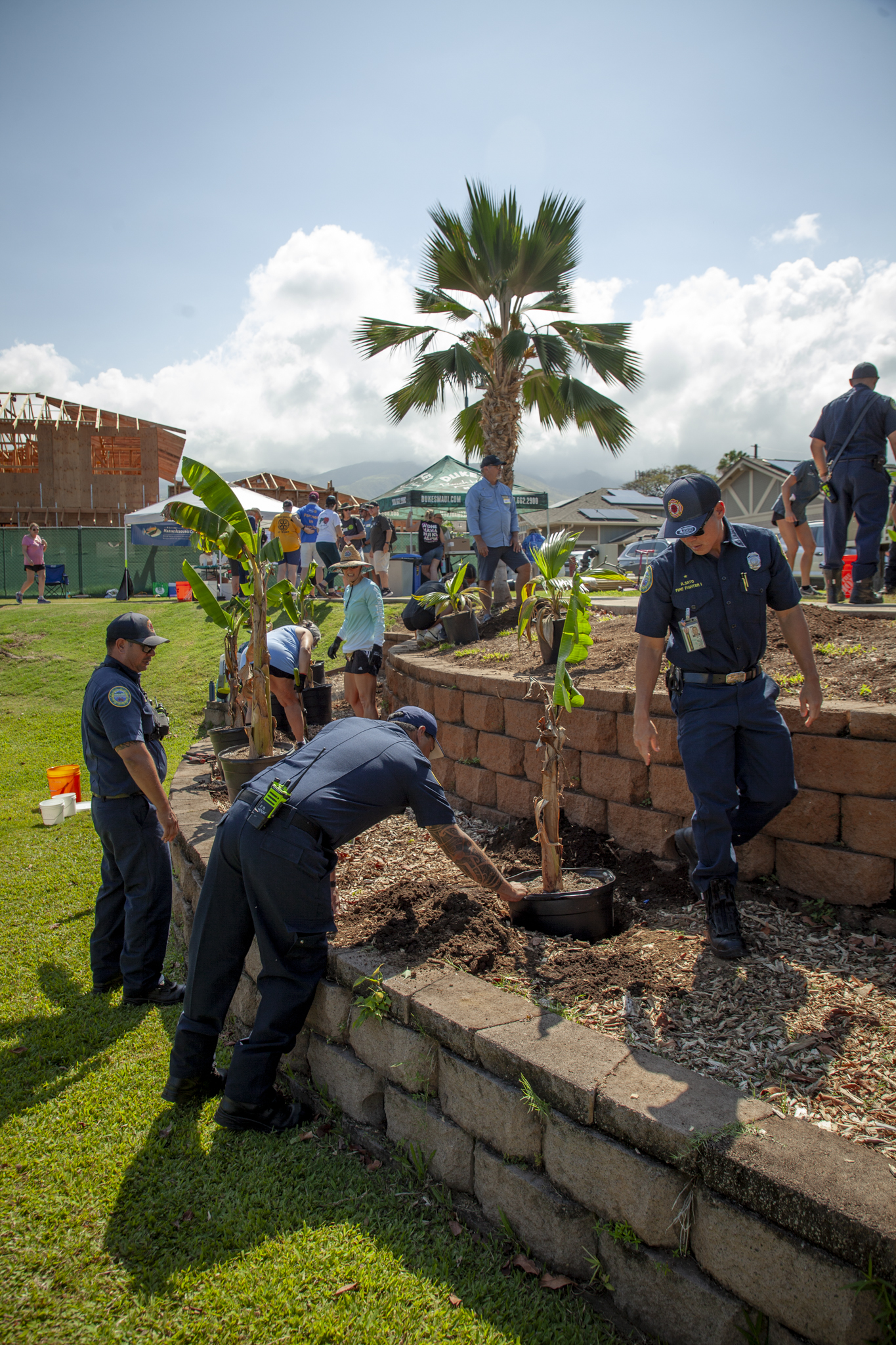
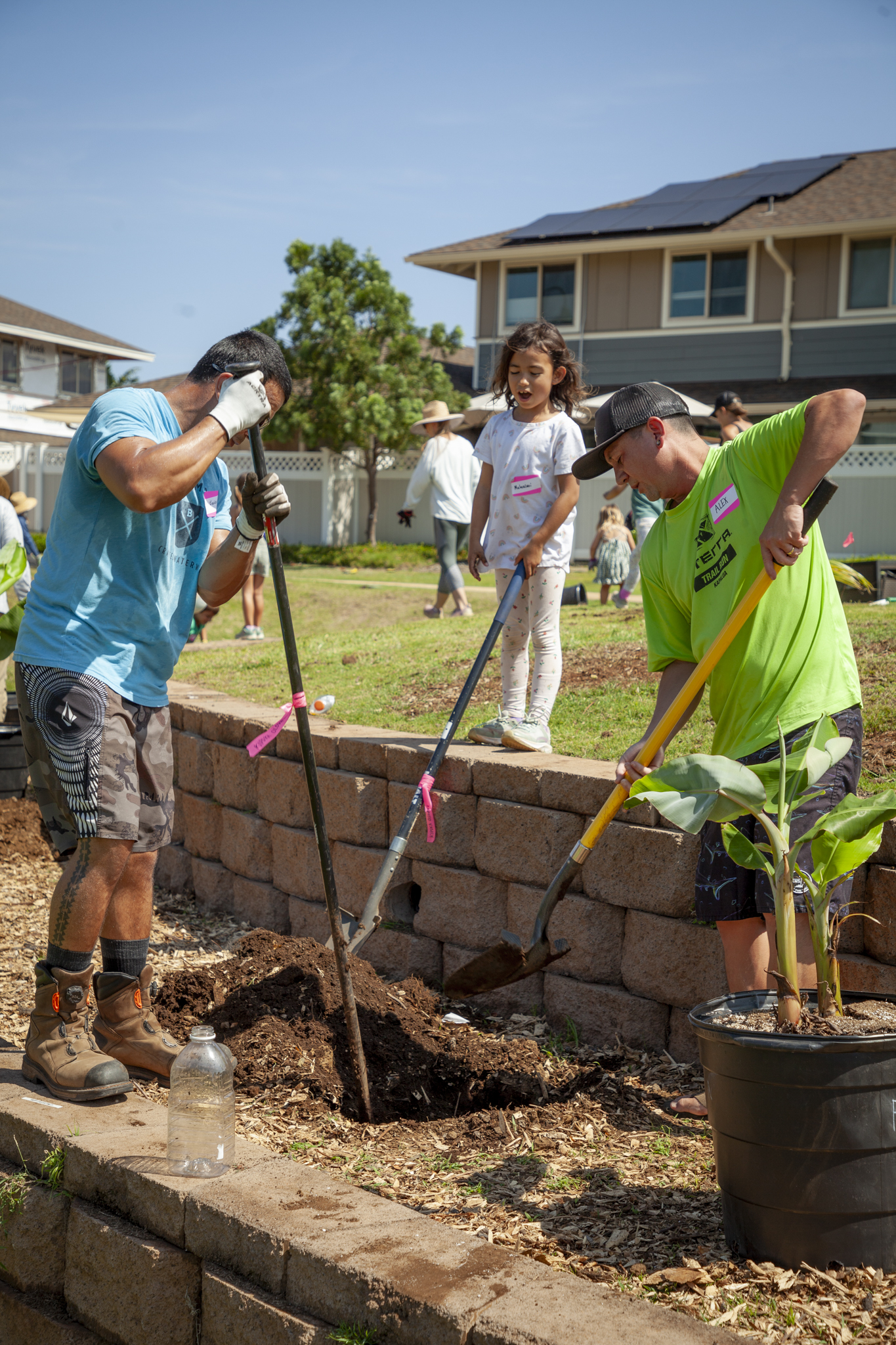
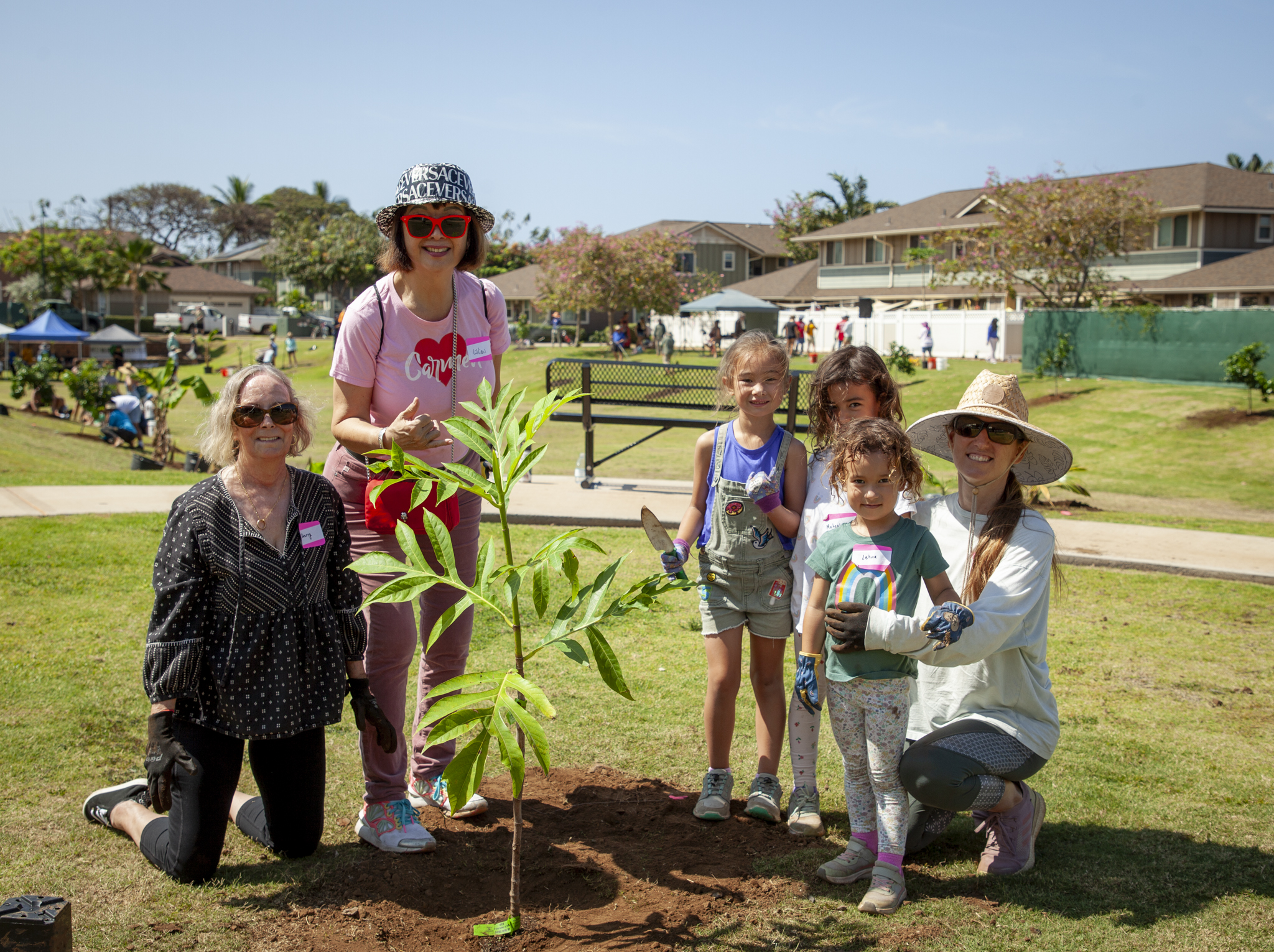
Nearly 200 Kahoma Village homeowners, community members, and local organizations gathered Saturday to restore the landscape in Lahaina by planting 100 native and resilient species to support ongoing post-wildfire recovery.

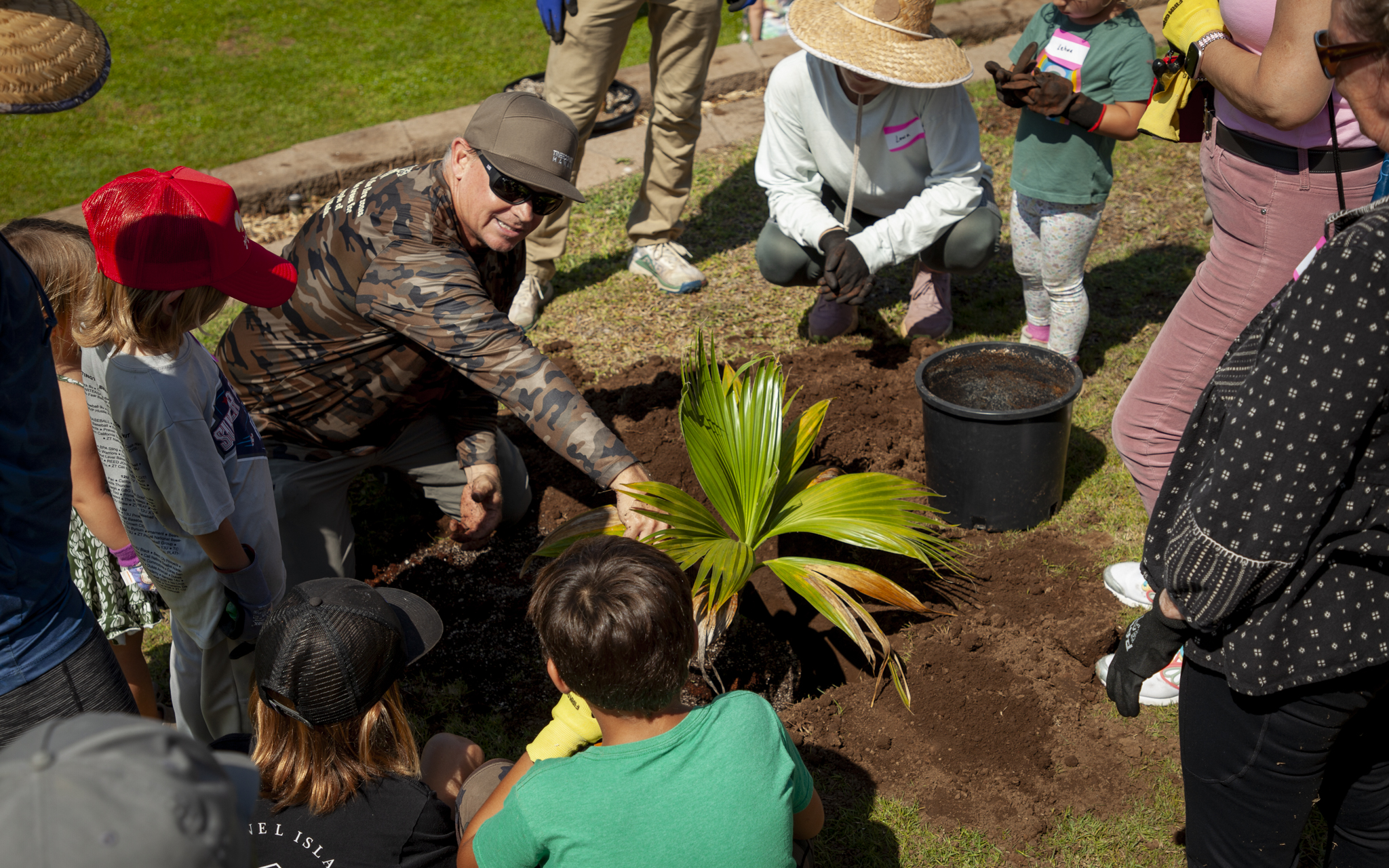
The replanting featured 19 different species, including ʻulu, puakenikeni, mango, various citrus trees and more.

The event was organized by Kahoma Village and Maui Nui Marine Resource Council, and focused on fostering environmental stewardship and strengthening community connection to the ʻāina. After the planting, participants enjoyed a lunch sponsored by Duke’s.

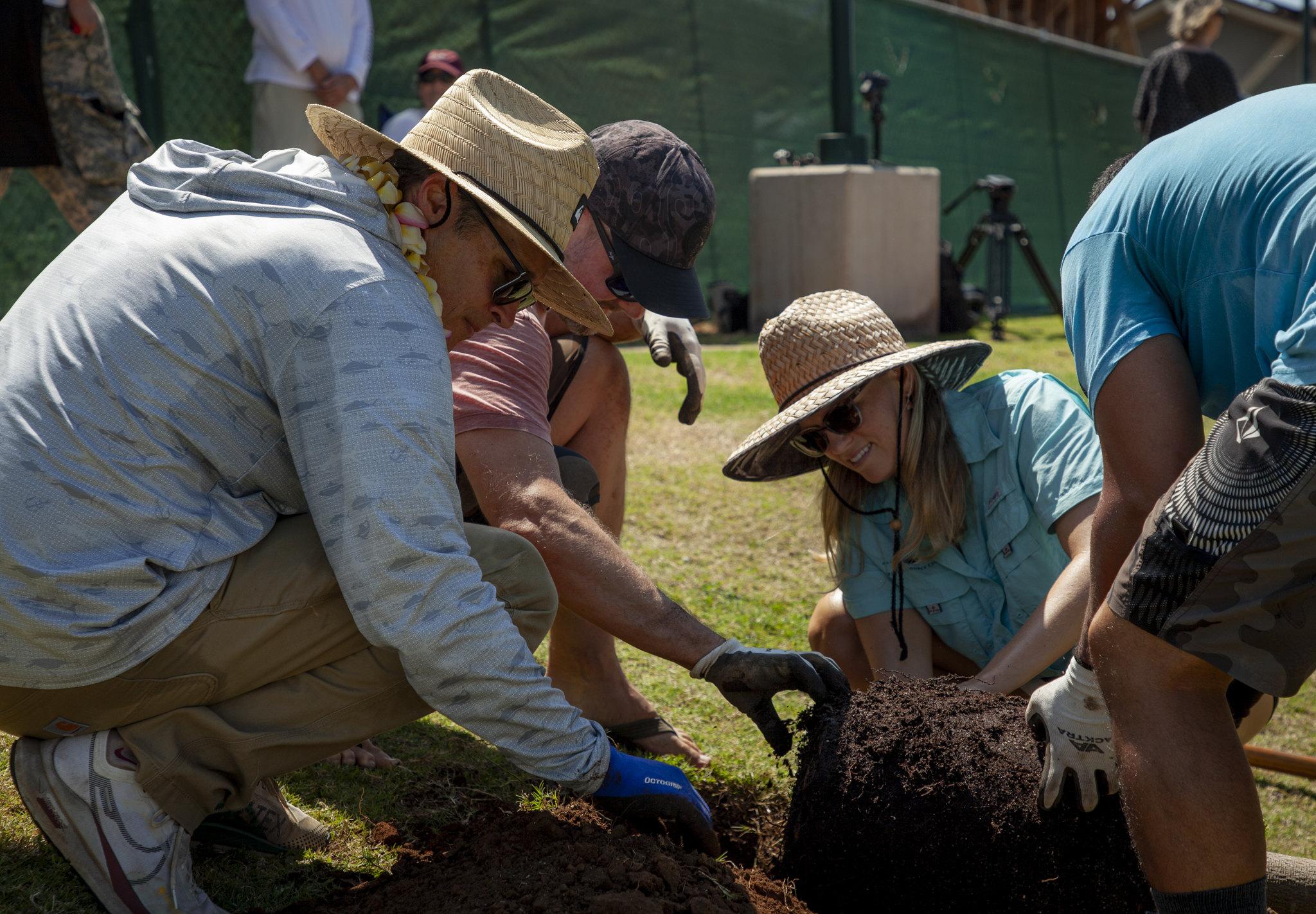
Over 200 volunteers helped to install native plants, trees, shrubs, and ground cover at Kahoma Village. (Photo Credit: Studio Asalt and Derek Sander)

The effort was made possible through funding from DLNR’s Division of Forestry and Wildlife’s Kaulunani Urban and Community Forestry Program. Also involved were Treecovery and Maui Nui Botanical Garden; Kīpuka Olowalu, who donated essential gardening tools; Marriott’s Maui Ocean Club, which provided expert landscaping support and equipment; and Surf and Turf Landscaping, which prepared the planting sites and ensured additional irrigation for optimal planting conditions. The plants were grown and cared for at Native Nursery over the past nine months.

Preparations for Saturday’s event began on Friday, April 25, when volunteers from Rotary Hawaiʻi, Rider Levitt Bucknell, Maui Bay Villas, and Marriott’s Maui Ocean Club and partners gathered to mark planting locations, set up irrigation and ready the site for a successful community effort.

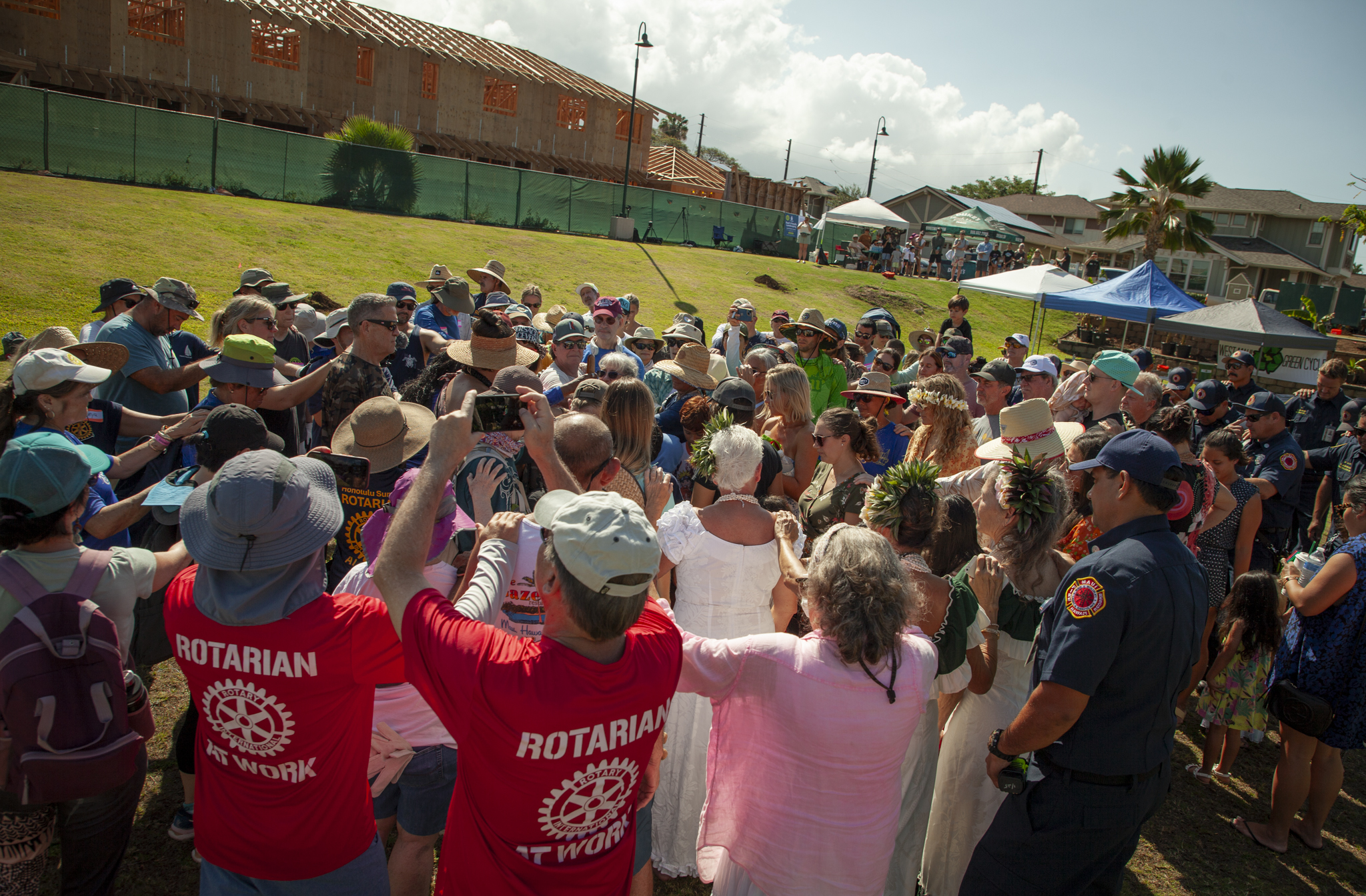
Community groups including representatives from the Maui Fire Department joined in on the planting effort. (Photo Credit: Studio Asalt and Derek Sander)

The project was made possible through a grant from the Kaulunani Ubran and Community Forestry Program of the DNLR Divison of Forestry and Wildlife, and the Urban & Community Forestry Program of the U.S.D.A. Forest Service, Region 5, State and Private Forestry. (Photo Credit: Studio Asalt and Derek Sander)


The planting day was a collaboration led by residents of Kahoma Village and the Maui Nui Marine Resource Council to revitalize a popular community park and commit to more sustainable land-based practices. (Photo Credit: Studio Asalt and Derek Sander)

Volunteers, community members, and local businesses and organizations gathered at the park space in Kahoma Village to begin the planting day with a blessing. (Photo Credit: Studio Asalt and Derek Sander)


The project was made possible through a grant from the Kaulunani Urban and Community Forestry Program of the DNLR Divison of Forestry and Wildlife, and the Urban & Community Forestry Program of the U.S.D.A. Forest Service, Region 5, State and Private Forestry.

Community-Led Coral Restoration Effort Launches in South Maui

in , /by


KIHEI – Maui’s coral reefs are facing increasing threats from rising ocean temperatures, sediment pollution, and human impact. In a community-driven effort to combat these challenges, a new Community-Based Coral Restoration Area (CBCRA) has been established in South Maui, giving damaged corals a second chance at survival.

Over the course of 3 days in February, the Maui Nui Marine Resource Council (MNMRC) worked under the guidance of Kuleana Coral Restoration to find broken corals near large reef colonies and re-plant them on bare reef in the same area. Reattaching the broken coral can help to extend its lifespan and over time it will continue to grow, increasing coral cover and providing habitats for fish and other marine life.

“We are excited to support Maui’s community in creating this new CBCRA site,” said Kuleana Coral Restoration’s Manager, Blake Nowack. “We have spent over a year training and planning with the MNMRC team to pilot restoration techniques in Maui so that their local communities can foster resilient coastal ecosystems. Kuleana Coral primarily focuses on Oʻahu, but we want all of Hawaiʻi to have healthy reefs, so we support efforts on other islands whenever we are able to.”

The teams only sourced corals found already detached from the reef, focusing on collecting grapefruit-sized (or larger) Large Rescued Colony (LRCs) and smaller coral fragments. Large Rescued Colony corals were prepared with a metal pin for reattachment while smaller, baseball-sized fragments were reattached directly to the bare reef using an adhesive.

The project began with a collaboration between MNMRC and community members to identify potential areas for restoration work. “Kula Kai is facing many threats, so when this project came up, we thought, ‘Why not try? What do we have to lose?’” said Kanaka ʻŌiwi of Kula Moku, Vernon Kalanikau. “It is clear the reefs need help, and while we are also looking mauka for solutions to mitigate sediment run-off, the thought has always been, ‘What else can we do to help makai?’ We felt that if there is an opportunity to do something in the ocean, this is a good place to start. Considering the damage sediment run-off has caused to our reefs in Kula Kai for years, a project like this can only have positive outcomes and results.”

In addition to working with community members, MNMRC also worked with the State of Hawaii Division of Aquatic Resources (DAR) to evaluate site selections and hosted DAR staff of Day 2 of the project. “Protecting our local reefs is of critical importance,” said DAR Aquatic Biologist, Russell Sparks. “Being a part of this project was a great opportunity to support restoration work in South Maui and train our team in new coral restoration methods to build capacity for future work on Maui.”

MNMRC has a long history of launching projects and initiatives to address the many factors influencing reef health. Last year, they launched reef-friendly landscaping education and test plots, adding to previous erosion mitigation efforts like gulch sediment removal and deer fencing for upstream ranches. The organization also conducts water quality monitoring at 41 sites in Maui, scientific studies, and reef monitoring dives throughout the year.

By creating community-based coral restoration areas, MNMRC aims to enhance the impact of conservation work already taking place on land and in the water.

“Whenever possible, we try to connect different efforts, so that we can make an even greater impact in one area or create a network of related projects from mauka to makai,” said Executive Director, Amy Hodges. “When we connect projects or communities together, impact is multiplied and change can happen at a faster pace.”

While the process is still new to Maui, there is interest in creating CBCRAs from communities in West Maui that are already doing water quality monitoring or reef-friendly landscaping. “Our goal is to accelerate conservation efforts in Maui by helping communities who want to create their own CBCRAs and to provide training so they have the skills and knowledge needed to sustain long-term reef health,” said Hodges.

The team from Maui Nui Marine Resource Council will continue to maintain the two sites going forward and monitor restored corals for signs of growth.

Support for community-based coral restoration provided by the County of Maui Department of Environmental Protection and Sustainability.

For more information, please visit: mauireefs.org/cbcra

NOTE: Please do NOT touch any live coral without obtaining a permit. Special permits are required for handling coral in Hawai’i [SAP 2025-12].

Maui Now: Ocean water testing begins off Lahaina

in /by

Preliminary water testing in the nearshore waters off Lahaina is showing that physical parameters, like temperature, PH, salinity, and dissolved oxygen, are currently in normal ranges.

Russell Sparks, an aquatic biologist with the DLNR Division of Aquatic Resources, said, “We have ongoing concerns that pollutants from the fire will make their way into the ocean at some of the drainage outfalls or from storm drains. For years we’ve done regular monitoring, but now we’re including testing from the fire zone. We’ll be sending samples off to… (Read More).

Maui Times: Lāhainā Prepares for Potentially Toxic Stormwater Runoff Amidst Hurricane Season

in /by

Maui residents have been manifesting rain, but this actually may be harmful to the waters surrounding Lāhainā. On Aug. 8, a wildfire damaged or destroyed most of the town, including more than 2,200 structures — 86% of which were residential. In the midst of hurricane season, there is concern over potentially toxic sediment runoff, which naturally occurs after heavy rains.

“You really have this toxic soup,” said John Starmer, chief scientist at the Maui Nui Marine… (Read More)

Civil Beat: Race Underway To Glue Down The Lahaina Fire’s Toxic Ash Before Rains Wash It Into The Ocean

in /by

With showers forecast over parts of Hawaii early next week, officials and environmentalists are scrambling to protect nearshore waters off Lahaina from becoming polluted with fire-related runoff.

The remnants of post-Tropical Storm Fernanda are expected to bring moist air and possible showers to windward and mountainous portions of Hawaii, including Maui, according to (read more)

Maui News: Maui nonprofit helps educate arriving visitors on reef health, snorkel tips and sunscreen.

in /by

Maui Nui Marine Resource Council helped to educate visitors about marine life and conservation with the County of Maui’s help in 2022 and has expanded efforts this year.

Travelers arriving at Kahului Airport are met with ads as they first arrive. Terminal window signs share information about reef health, snorkel tips, and sunscreen use. At the entrance to baggage claim and on baggage carousels, eight short videos… (Read More).

USA Today: Coral reefs are dying. What one Hawaii resort is doing to help.

in /by

The MNMRC Reef Friendly Landscaping is continuing to draw attention after our first certification: the Four Seasons Resort on Lanai.  In this article, USA Today reporter Kathleen Wong describes what the program is about and why Four Seasons thought it was important to obtain RFL certification. Read the story here:

https://www.usatoday.com/story/travel/2023/04/30/what-is-organic-landscaping-four-seasons-lanai/11635530002/


(Photo credit: Four Seasons Lanai)

Four Seasons Resort Lāna’i Goes for Gold, Becomes First Resort to be Reef Friendly Certified by Maui Nui Marine Resource Council

in , , /by

KIHEI — Maui Nui Marine Resource Council’s Reef Friendly Landscaping Certification Program is pleased to announce its first fully accredited resort partner, Four Seasons Resort Lānaʻi. The resort was awarded Gold Certification for its new efforts to manage the property grounds organically.

The Reef Friendly Landscaping (RFL) Program aims to prevent polluted runoff originating from the use of synthetic fertilizers, herbicides, and pesticides from resorts, golf courses, businesses, and residential areas. Research has shown that traditional pesticides, fungicides, and fertilizers can negatively impact marine ecosystems, through coral bleaching and developmental issues in juvenile corals and fish. Additionally, they can cause cancerous growths in sea turtles and other marine life.

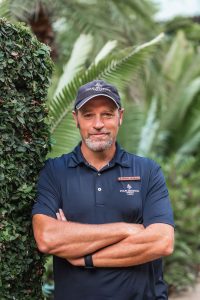
Maui Nui Marine Resource Council (MNMRC), in partnership with Duane Sparkman, worked with Robert Woodman, Director of Landscaping at Four Seasons Resort Lānaʻi. Woodman has been leading the landscaping team for 7 years, managing 12 densely planted acres of gardens, incorporating a number of native Hawaiian plants. He focused on plants that were less water and labor intensive and those that can thrive in the specific microclimate on Lānaʻi at Hulopoʻe Bay.

MNMRC launched their RFL Certification program in early 2022, and have been assisting the resort with their transition since August of the same year. The program requires properties to stop the use of all pesticides, herbicides, and synthetic fertilizers that are harmful to aquatic and marine life, with the opportunity to go one step further and implement 100% organic landscaping.* The Gold Level requires properties to have at least one member of the landscaping team become an Accredited Organic Landcare Professional through the Northeast Organic Farming Association (NOFA), and document and report all “emergency use” chemicals in case of a pest infestation or outbreak.

Woodman and the landscaping team were close to achieving 100% organic landcare; the safe removal of select pesticides by Cameron Chemical Corp ensured full compliance for organic landscaping. In addition, the landscaping team has begun composting onsite using their own green waste.

Four Seasons Resort Lānaʻi is committed to preserving and regenerating the environment and leaving a positive, enduring impact on the local community. Some of their Environment, Social, and Governance (ESG) efforts on the property include: elimination of single-use plastic bathroom amenities, food waste diverted from landfill and donated to local farmers for agricultural use, water-efficient landscaping and golf course management, waters off the coast have been declared a Marine Reserve to promote resilience in the reef, complimentary reef-friendly sun care products available for guests, botanical preservation to reintroduce awikiwiki, a federally endangered perennial vine, to the area, and the resort has Arboretum Accreditation by the Morton Register of Arboreta, recognizing professional standards and capabilities in a shared purpose to plant and conserve trees and advance goals specific to tree-focused public gardens.

“We are committed to building upon Four Seasons’ strong history of supporting our communities and the environment, leaving a positive, long-lasting impact on the storied places where we operate and live,” said Alastair McAlpine, General Manager, Four Seasons Resorts Lāna‘i.  He continued, “Protecting Lāna‘i’s native ecosystem and championing ongoing sustainability efforts across our island is an honor as is becoming the first Resort to achieve this accreditation, a true testament to the hard work of our landscaping team.”

“We know that holistic land management isn’t a new idea. This program recognizes and supports properties who are genuinely trying to do the right thing with the resources they have, and we hope other properties will want to do the same; not only for the health of their guests, but the environment as well,” states Jill Wirt, project manager for the RFL program.

The certification program has taken some time to gain traction due to the lack of viable organic alternatives produced locally in Maui County; but with support of Duane Sparkman and other businesses like Environmental Solutions Maui who produce a liquid biological soil amendment that supports soil health, it is becoming easier and more accessible to transition from conventional landscaping to holistic land management.

“I am really excited to see Four Seasons Lānaʻi take on this endeavor to change their resort landscape maintenance practices,” states Duane Sparkman. “Robert Woodman and his team now lead the way in the organic landscape resort maintenance industry. Gold level certification that he and his team have achieved is not only the first one awarded but critical to all life in the Mānele-Hulopoʻe area of Lānaʻi.”

MNMRC looks forward to continuing this partnership and working with more shoreline properties to prevent harmful land-based sources of pollution from entering invaluable nearshore marine ecosystems.

If you would like a free property assessment and recommendations to pursue an RFL Certification, please contact [email protected] or visit www.mauireefs.org/what-we-do/reef-friendly-landscaping/.


*Emergency Non-Organic Rescue Treatment (from NOFA standards handbook)

As one moves forward in a transitional or organic program, it may become necessary to intervene with a product for control of a particular pest if all reasonable efforts within an Organic IPM program have failed. It is acknowledged that from time to time situations present themselves that call for intervening action that normally would not be incorporated into an organic program. It is far preferable to react to pest pressure than it is to preemptively apply even allowed pesticides. When a situation arises that could create economic or unreasonable aesthetic injury an application may be made during or after transition that would allow for the inclusion of a material within the framework of a sound organic program.


About Maui Nui Marine Resource Council:

Founded in 2007, Maui Nui Marine Resource Council (MNMRC) is a nonprofit organization working for healthy coral reefs, clean ocean water and abundant native fish for the islands of Maui County (Maui Nui). We’re recognized for working with our local community to create culturally appropriate, effective science-based solutions to serious local threats facing our reefs.

About Four Seasons Resort Lānaʻi:

The five-diamond, five star Resort features 213 guestrooms and suites in a series of low-rise buildings spread along the Pacific coastline and immersed in Hawaiian botanical gardens, providing a private residential experience. Additional facilities include the signature ONE FORTY restaurant, Malibu Farm, NOBU LANAI, a spa and wellness program, variety of complimentary activities, luxury retail boutiques, Tennis Gardens, an 18-hole ocean-view Jack Nicklaus Signature Manele Golf Course, the Lanai Observatory, as well as an array of land, ocean and air activities.

 

The Maui News: Nonprofits tackle conservation work through CARES funds

in /by

The Maui News: Jan. 30, 2021

With much-needed funding and labor, seven Maui County conservation nonprofits made major progress late last year in preserving cultural and natural resources, improving food security and restoring previously lost infrastructure.

The Maui County Office of Economic Development and federal CARES Act funding supported an employment and workforce training program that created about 70 new temporary jobs for Maui and Molokai residents who lost their jobs due to COVID-19.

Read more: