
Explore the 2026 Fisheries Booklet
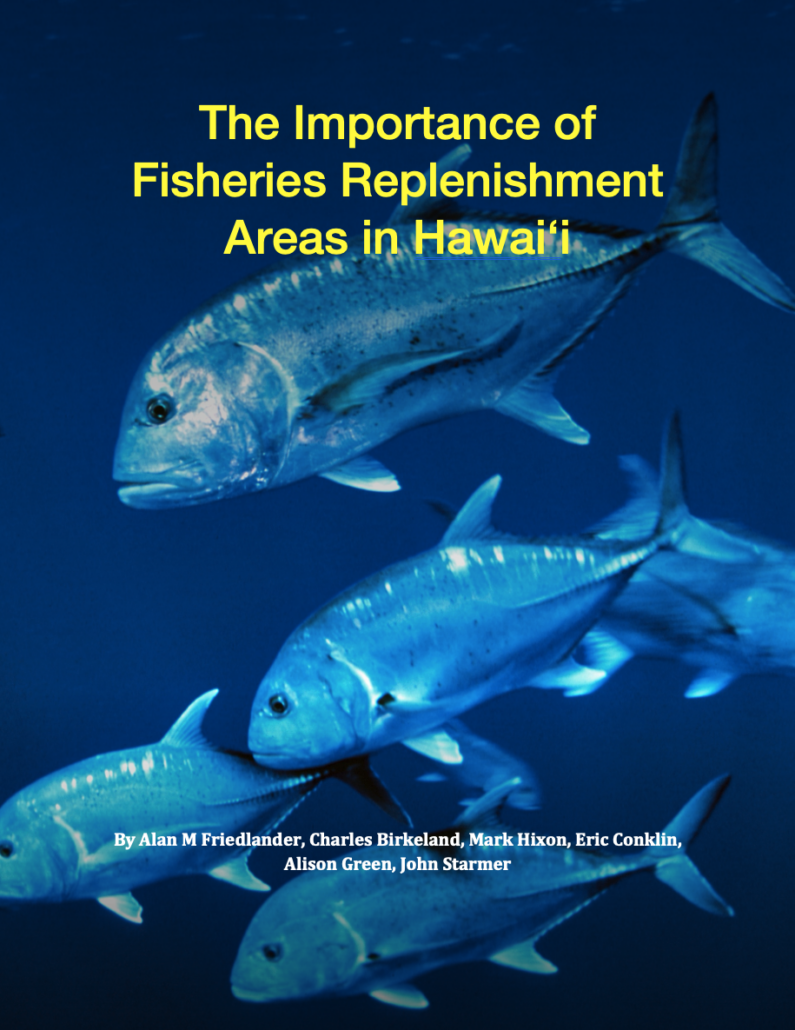
Explore how giving reef fish places to rest can help replenish fish populations and sustain fishing for future generations. Our updated 2026 fisheries booklet brings together decades of research, Hawaiian traditional management, and examples from across Hawaiʻi. View the booklet below.
Get Your Free Copy
Help us understand who our booklet is reaching! Sharing your name and affiliation is optional and helps our team evaluate its reach and impact. Your information will be used only for this internal evaluation. You can also skip directly to the booklet below.
Key Takeaways From the Booklet
What happens when fish have room to grow and time to reproduce? Research from across Hawaiʻi helps answer that question. Here are some of the findings and ideas explored in the updated booklet.
What Are Fish Replenishment Areas &
Why Do They Matter?
A fish replenishment area, sometimes called a “fish rest area,” is a place where fishing is limited or prohibited so fish have time to grow and reproduce.
The benefits can extend beyond its boundaries. Some adult fish move into nearby fishing grounds, while currents carry eggs and larvae to other reefs, helping replenish fish populations.
Healthy fish populations help feed families, sustain Hawaiian fishing traditions, and support local livelihoods. Plant-eating fish also keep algae in check, giving corals space to grow and recover after bleaching and other disturbances.
Giving fish time and space to replenish is an investment in future fishing. Thoughtfully designed areas with strong, lasting protections can help rebuild overfished populations and support healthier reefs.
The research and lessons from Hawaiʻi also offer insights for communities caring for coral reef fisheries around the world.
Why Fish Need Places to Rest
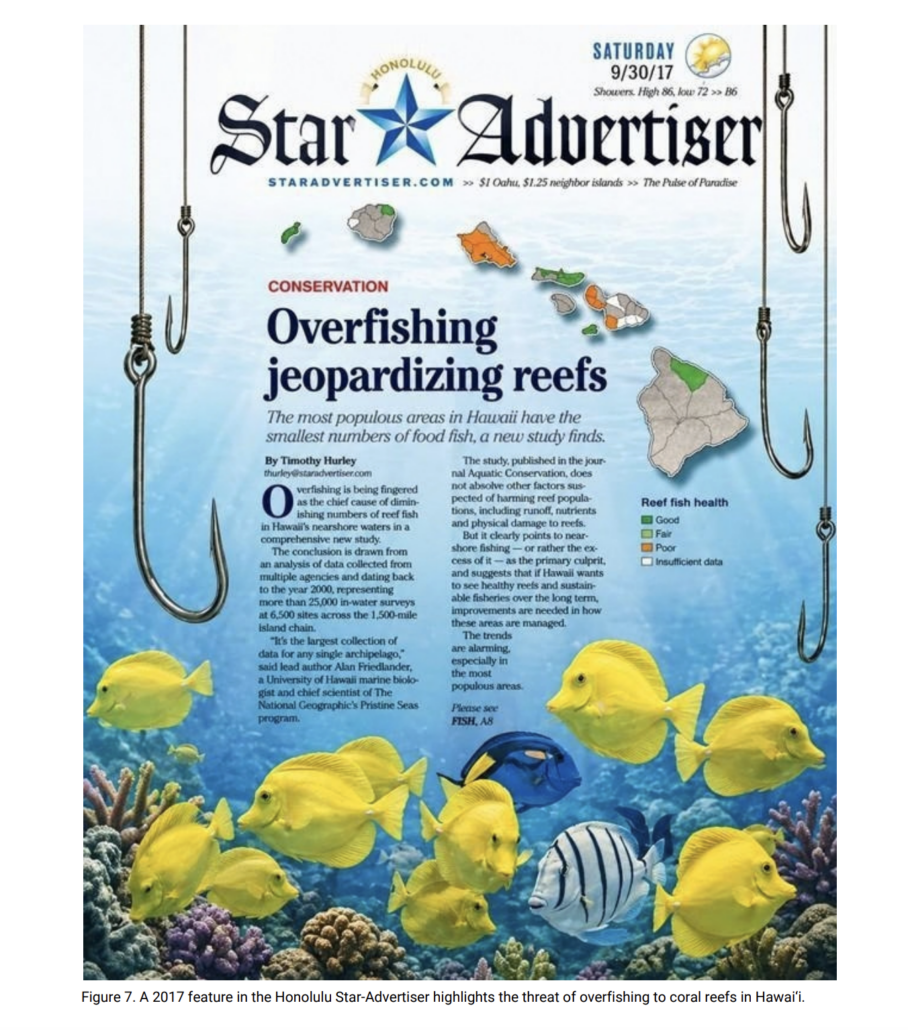
Many kūpuna remember reefs with more fish, bigger fish, and abundant catches. Today, those conditions are harder to find.
Fish once had natural places to escape fishing. Deep water, distance from shore, rough conditions, and nighttime offered protection. Modern boats, equipment, and fishing methods have made those places easier to reach.
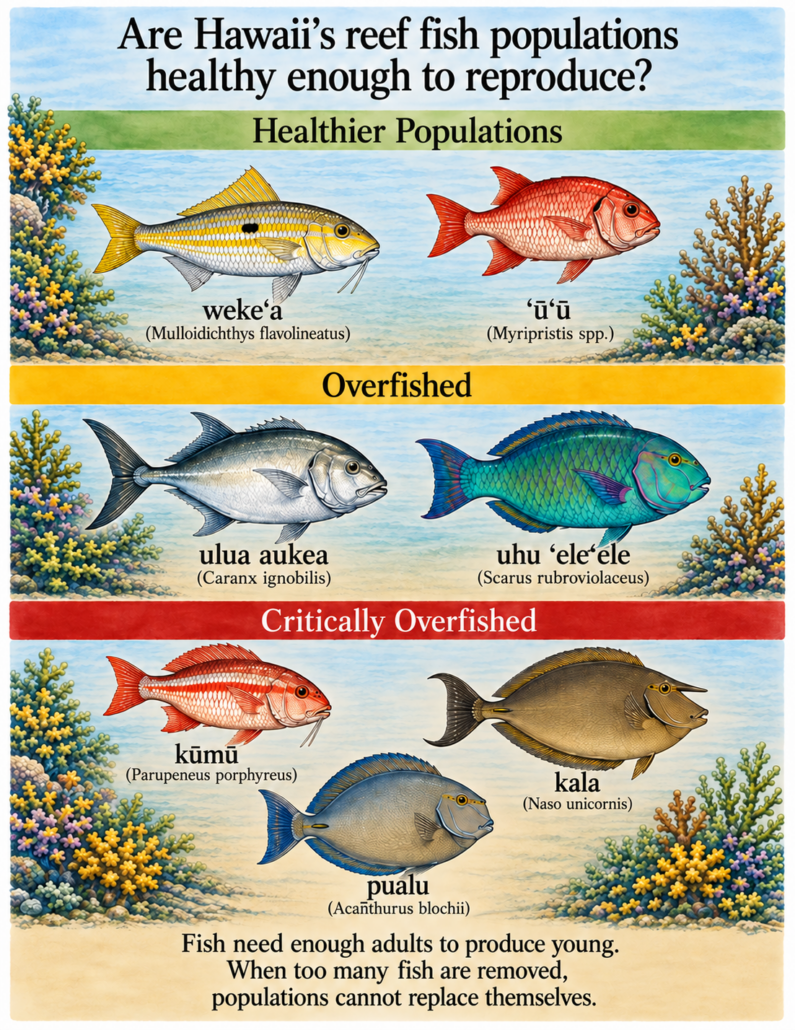
At the same time, sediment, pollution, and the loss of wetlands and estuaries have damaged habitats where young fish grow. Together, these pressures leave fish with fewer safe places and less time to replenish their populations.
Giving fish a place to rest helps restore some of that space and time.
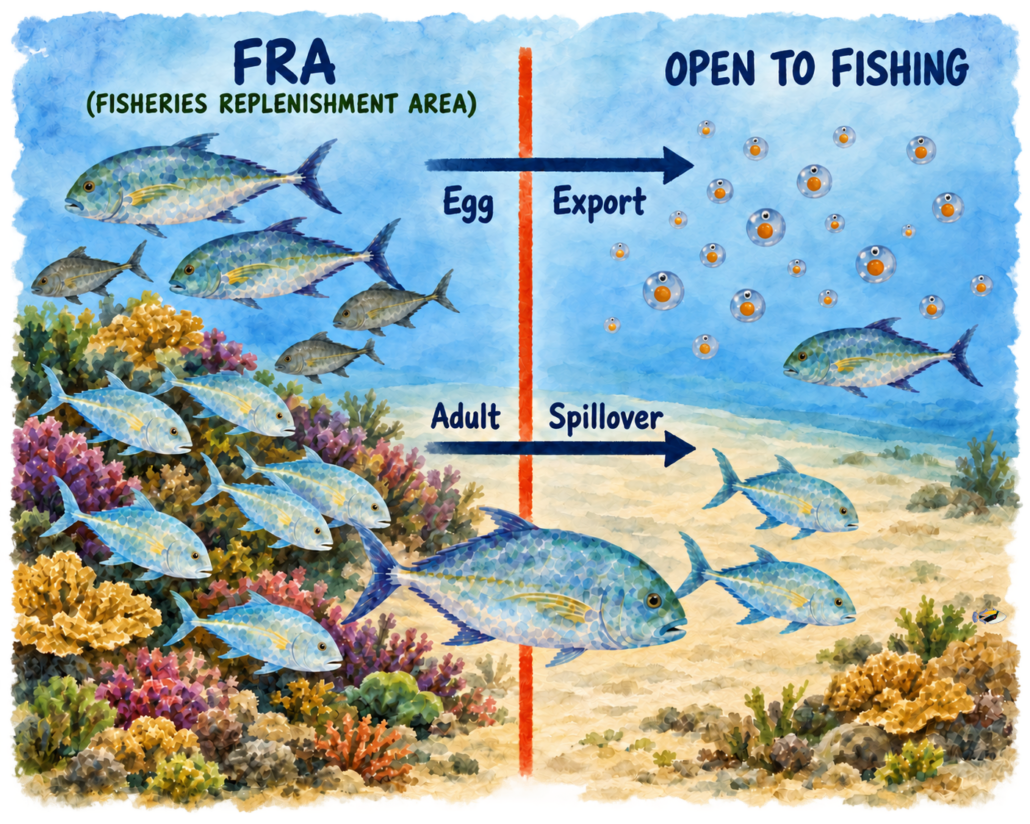
How Fish Rest Areas Help
When fish have a place to grow and reproduce, the benefits can reach beyond its boundaries.
Bigger fish help replenish populations
Large breeding fish can produce far more offspring than smaller fish. Protecting them helps sustain the next generation.
Fish move into nearby waters
As populations rebuild, some adult fish move into surrounding areas where fishing is allowed. Scientists call this “spillover.”
Offspring reach other reefs
Currents carry fish eggs and larvae beyond the protected area. These young fish can help replenish populations on reefs farther away.
Rooted in Hawaiian Practice
Giving fish time to replenish is a familiar idea in Hawaiʻi.
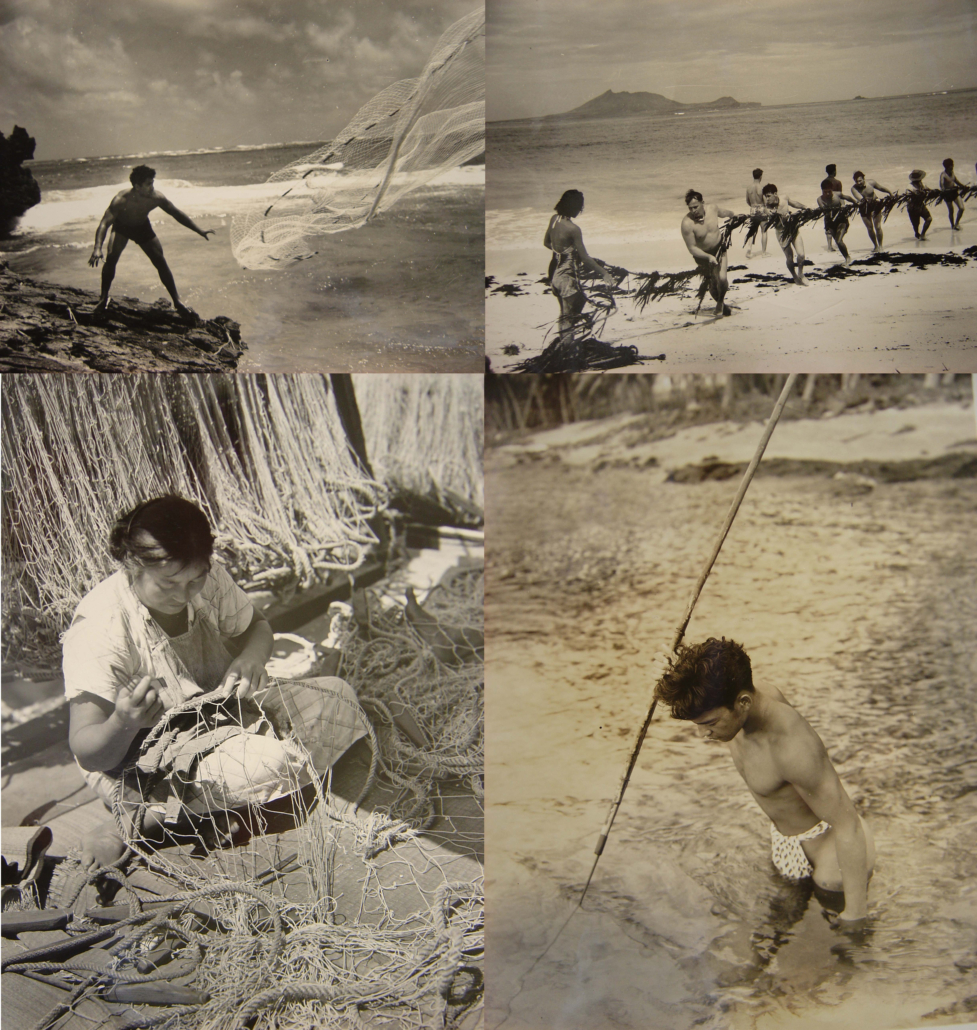
For generations, Native Hawaiian communities managed fishing through close observation and knowledge of place. Kapu guided when, where, and how people fished, protecting spawning periods, certain species, and important stages of a fish’s life.
This approach also recognized the connection between land and sea: healthy fisheries depend on healthy watersheds.
Today, community-led efforts, including Community-Based Sustainable Fisheries Areas, continue to bring local knowledge, science, and stewardship together to care for marine resources.
What Makes a Fish Rest Area Work?
Fish rest areas work best when they provide strong, lasting protection and include the habitats fish need to grow and reproduce. Some fish take years to mature, so recovery takes time.
Clear rules, community stewardship, and enforcement help those protections last. Caring for the land also matters, because sediment and pollution reaching the ocean can damage the habitats these areas are meant to protect.
Lessons From Hawaiʻi’s Reefs
Maui Nui
Kahoʻolawe
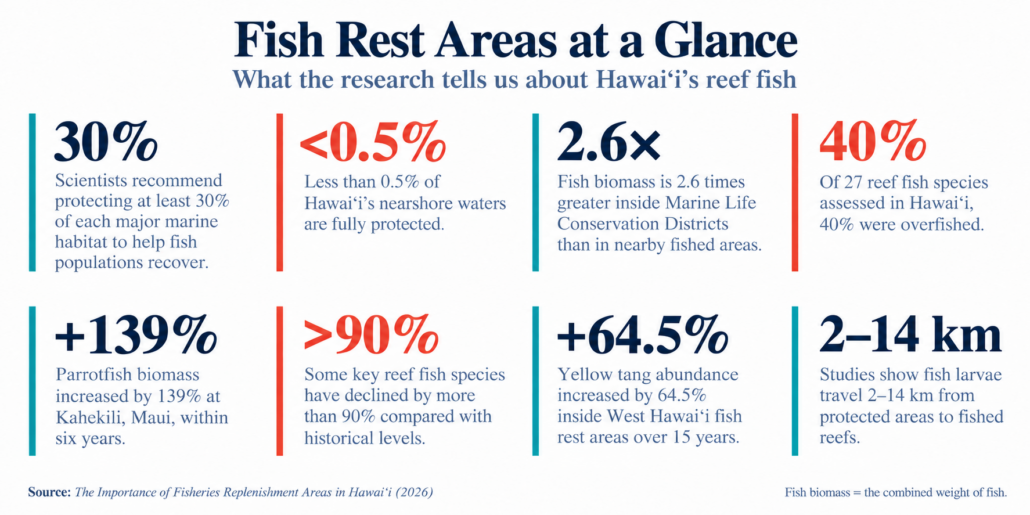
Decades of restricted access and culturally based harvest have helped Kahoʻolawe support some of the most abundant reef fish populations in the Main Hawaiian Islands.
Maui
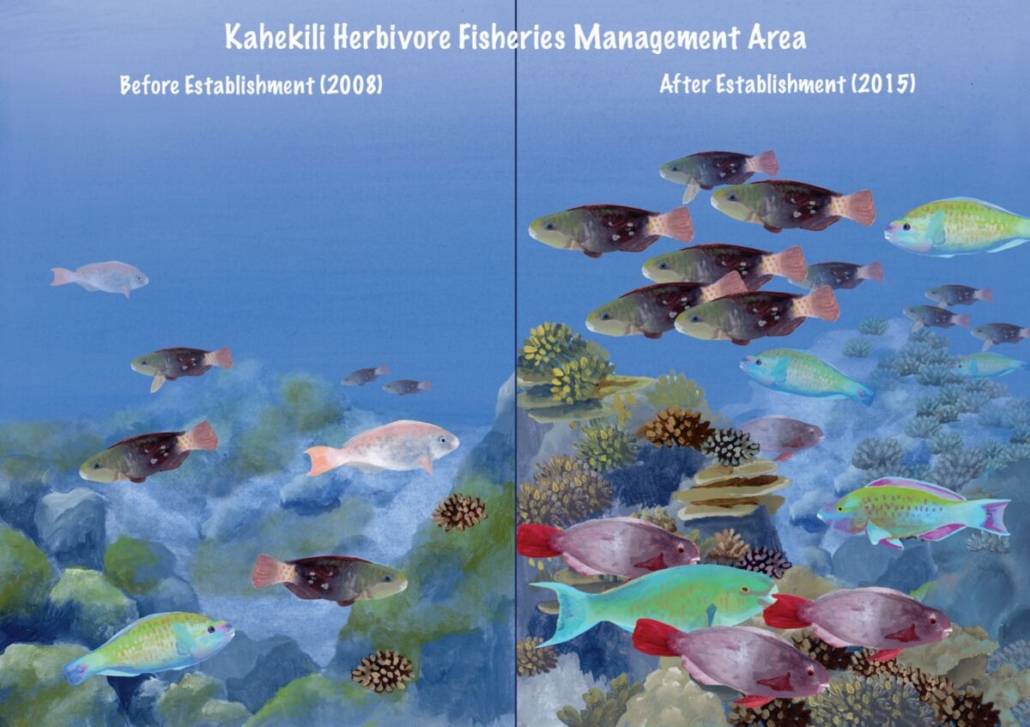
Kahekili Herbivore Fisheries Management Area
Established in 2009 to protect plant-eating fish and urchins. In six years parrotfish biomass rose 139% and surgeonfish 28%.
Hawaiʻi Island
West Hawaiʻi Regional Fishery Management Area
A network of nine areas closed to aquarium collecting helped yellow tang populations increase. Over 15 years, their numbers rose 64.5% within those areas.
Statewide
Across Hawaiʻi
Studies of 11 Marine Life Conservation Districts found that the total weight of fish (known as fish biomass) was 2.6 times greater than in nearby fished areas.
25 Years of Learning
In 2001, Charles Birkeland and Alan Friedlander explored a simple idea: giving reef fish a place to rest can help rebuild populations and support fishing beyond protected areas.
Twenty-five years later, research and experience across Hawaiʻi have deepened our understanding of how these areas work. This updated booklet brings together that knowledge, Hawaiian traditional management, and lessons from Community-Based Sustainable Fisheries Areas to explore how communities can help replenish reef fish populations and support healthy fisheries.
This updated edition was developed by authors from the University of Hawaiʻi, The Nature Conservancy Hawaiʻi & Palmyra, Alison Green Marine, and Maui Nui Marine Resource Council, with partial funding from the Hawaiʻi Community Foundation’s Holomua Marine Initiative Papio Grant program.
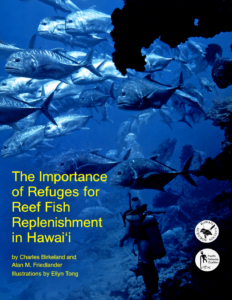
2001 | The Original Booklet
Written by Charles Birkeland and Alan Friedlander, The Importance of Refuges for Reef Fish Replenishment in Hawaiʻi explored how closing areas to fishing could help rebuild reef fish populations and support fishing beyond their boundaries.
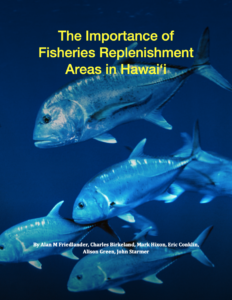
2026 | The Updated Edition
Six authors revisit fish rest areas with twenty-five years of additional research and experience. The updated booklet includes Hawaiian traditional management, community-based fisheries, design guidance, and lessons from Kahekili, Kahoʻolawe, and West Hawaiʻi.
Our Partners
Gallery


Citation: Friedlander, A. M., Birkeland, C., Hixon, M., Conklin, E., Green, A. & Starmer, J. (2026). The Importance of Fisheries Replenishment Areas in Hawaiʻi. Maui Nui Marine Resource Council, Kahului, Hawaiʻi.
Illustrations: Painted illustrations by Shannon Kerner; additional illustrations by the authors.
Page photos: Keoki Stender
Gallery photos: NOAA Photo Library (CC BY 2.0)
Funding: The Maui Nui Marine Resource Council and Hawai’i Community Foundation’s Holomua Marine Initiative Fund.
Original edition: Birkeland, C. & Friedlander, A. M. (2001). The Importance of Refuges for Reef Fish Replenishment in Hawaiʻi. Hawaii Audubon Society and Pacific Fisheries Coalition, Honolulu.

Maui Nui Marine Resource Council is a 501(c)(3) charitable organization.
Your donation is US tax-deductible to the extent allowed by law.
EIN: 47-2509441
Maui Nui Marine Resource Council
P.O. Box 331204, Kahului, HI 96733
(808) 707-5056