Blog Archives: Blog

Talk Story with Tova Callender

in , /by


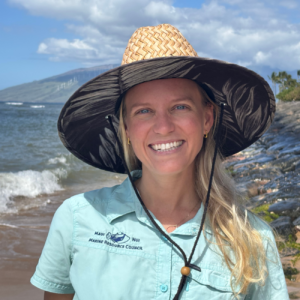
Tova Callender is a longtime partner of the Maui Nui Marine Resource Council and its newest board member. In her current role as the Ridge to Reef Coordinator for the Department of Land and Natural Resources, Division of Aquatic Resources (DNLR-DAR), Tova focuses on land-based solutions to protect Maui’s waters. Tova is also a member of the steering committee for Hui O Ka Wai Ola and is the watershed coordinator for the West Maui Ridge 2 Reef Initiative.

What first sparked your journey into environmental science?

I grew up running wild with my brothers on 100 acres of forest, fields, streams, and orchards in Ontario, Canada. That early connection to nature eventually led me to pursue a bachelor’s degree in environmental biology at McGill University followed by graduate studies at UC Santa Barbara. The close relationship I have felt to nature since I was young and my passion for the environment naturally evolved into my career focus.

I moved to Maui twenty years ago to work in sustainable agriculture in West Maui. That experience deepened my understanding of the island’s unique ecosystems and people, which led me to my current role as Ridge to Reef Coordinator for DLNR-DAR, where I focus on land-based solutions to protect our coastal waters.
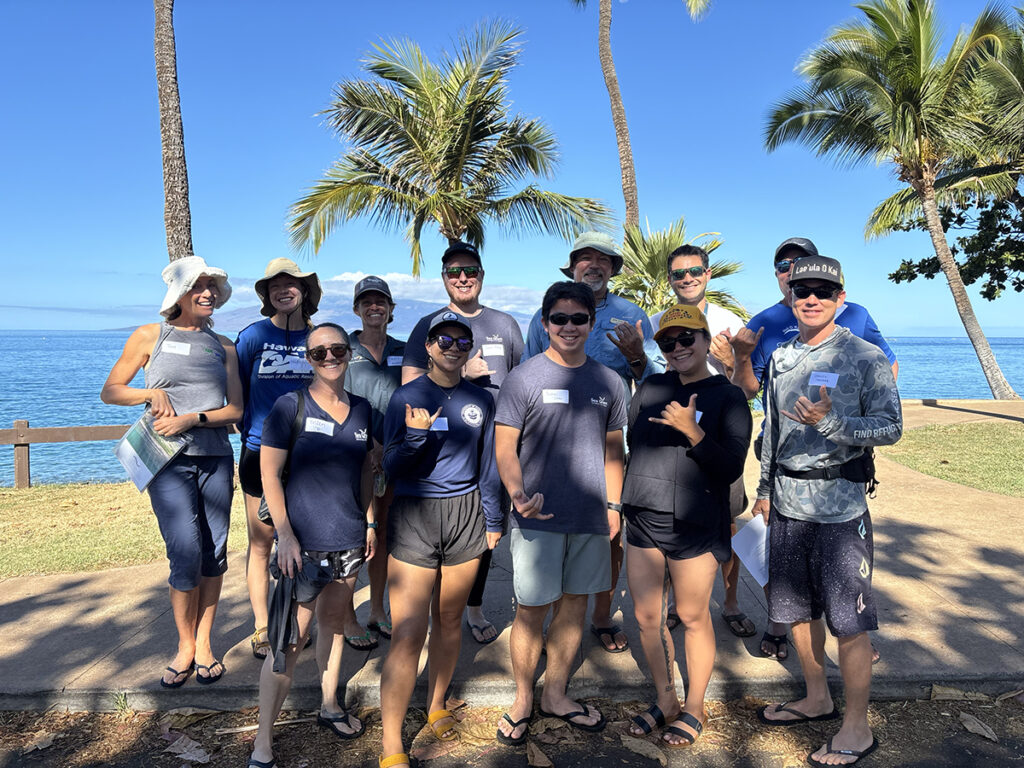
 

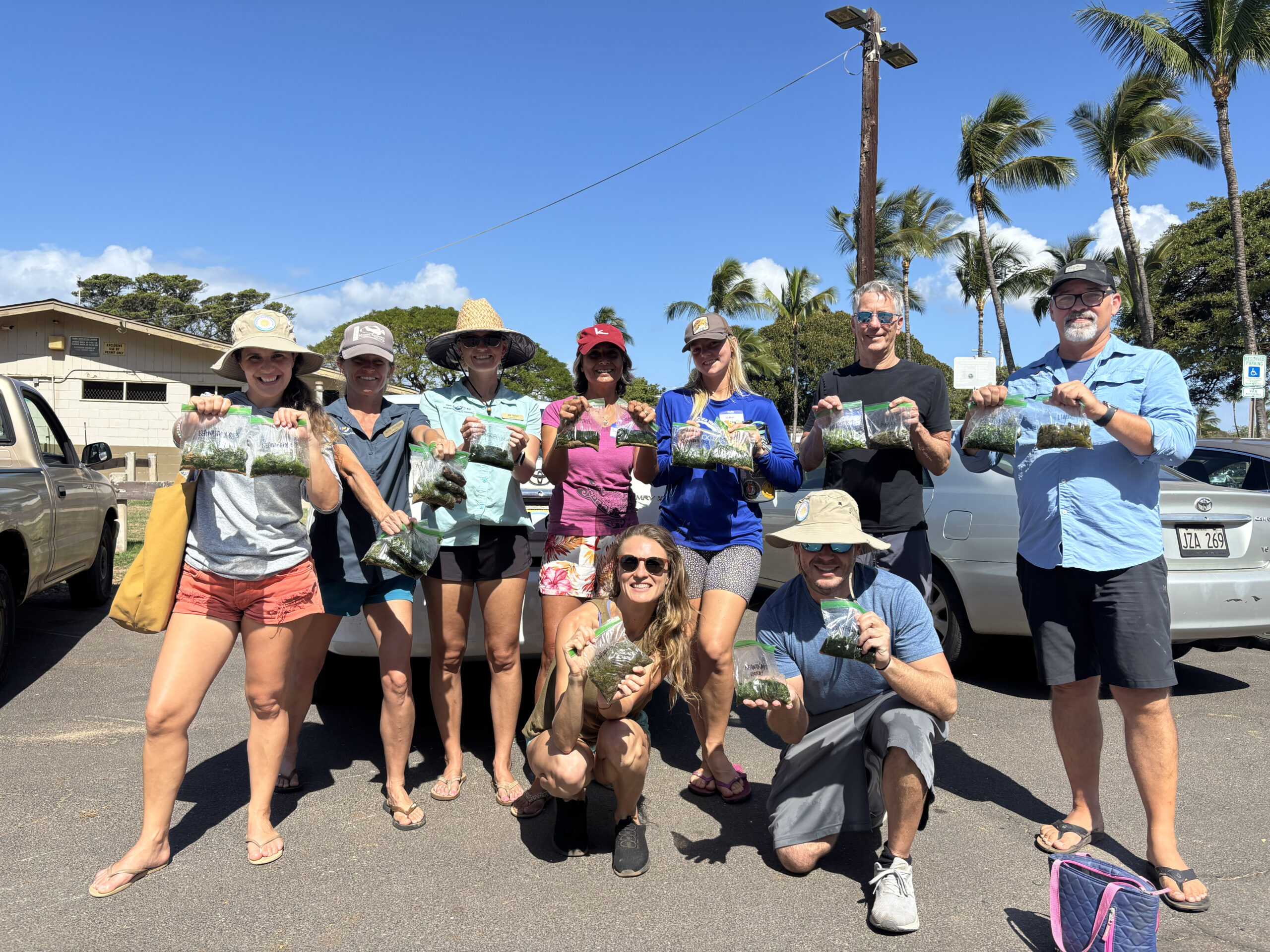
Tova (back row, left) participated in the Maui Nui Marine Resource Council’s limu volunteer day in Lāhainā in July.

Can you tell us more about your current work?

As Ridge to Reef Coordinator, I try to bring people together to find collaborative solutions to land and water issues, which are always closely tied together. It’s about facilitating connections between organizations, funders, and individuals—breaking down silos and recognizing where missions overlap. No landowner wants their soil washing into the ocean, and that shared concern opens the door for meaningful conversations and lasting partnerships.

Education is an element of what we do, especially around land-based pollution and community engagement. It’s important that people don’t feel overwhelmed by the scale of the problems we are collectively facing—individual actions really do make a difference.  Also, there is inevitable ongoing movement within positions on the island, with general managers transferring between properties, for example, so it’s critical to consistently focus on introducing the issues to new audiences—especially the land-ocean connection, what we refer to as working mauka (mountain) to makai (sea).
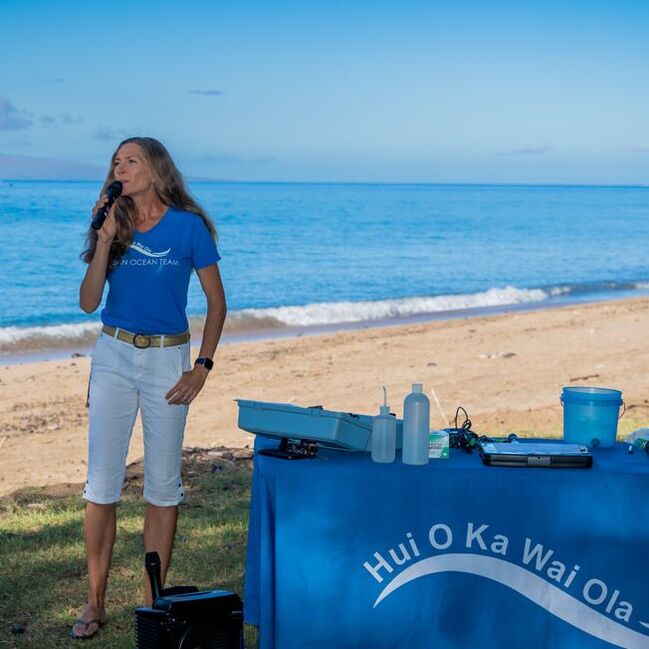
 

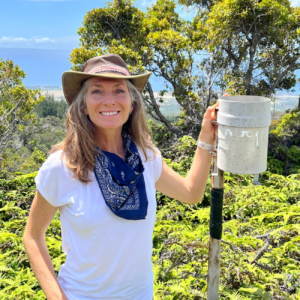
As a member of Hui O Ka Wai Ola’s steering committee, Tova advocates for data-based management solutions that protect coastal waters and local marine ecosystems. (Photo Credit: Hui O Ka Wai Ola)


You are on the steering committee for Hui O Ka Wai Ola. How has the Hui’s work impacted Maui’s waters?

Hui O Ka Wai Ola has been essential to watershed management on Maui—we wouldn’t have the water quality data we rely on without them. The work is deeply collaborative and gratifying. I chair the technical team, which meets every three weeks to ensure data collection and analysis align with community and environmental needs. Every two years, we publish a comprehensive report, with the next one coming out mid-2026.

The Kahana Nui Basin in West Maui is a great example that shows the impact of our data. Over time, the original retention basins had become less effective at preventing pollution from reaching the coastline. USGS studies had indicated that sediment-laden runoff from streams and gulches was contributing to coastal water degradation—a finding which was confirmed by our nearshore water quality assessments. By securing grant funding, working closely with landowners, the county, and the Soil and Water Conservation District, we were able to instigate the jump start needed to improve the functionality of those basins. Restoring retention capacity upstream significantly reduced pollutant loads, resulting in cleaner coastal waters and hopefully healthier reef ecosystems off Kahana. Maui County has since continued to make major investments in that area to keep the basin functioning optimally.  

This progress is the result of years of science, planning, and collective action—from identifying drainage issues back in 2013 to contracting heavy equipment operators to begin work in 2018 to the county continuing structural improvements today. It’s a reminder that every effort matters and together we can achieve a lot. Even when the challenges feel overwhelming, we really can create lasting change.
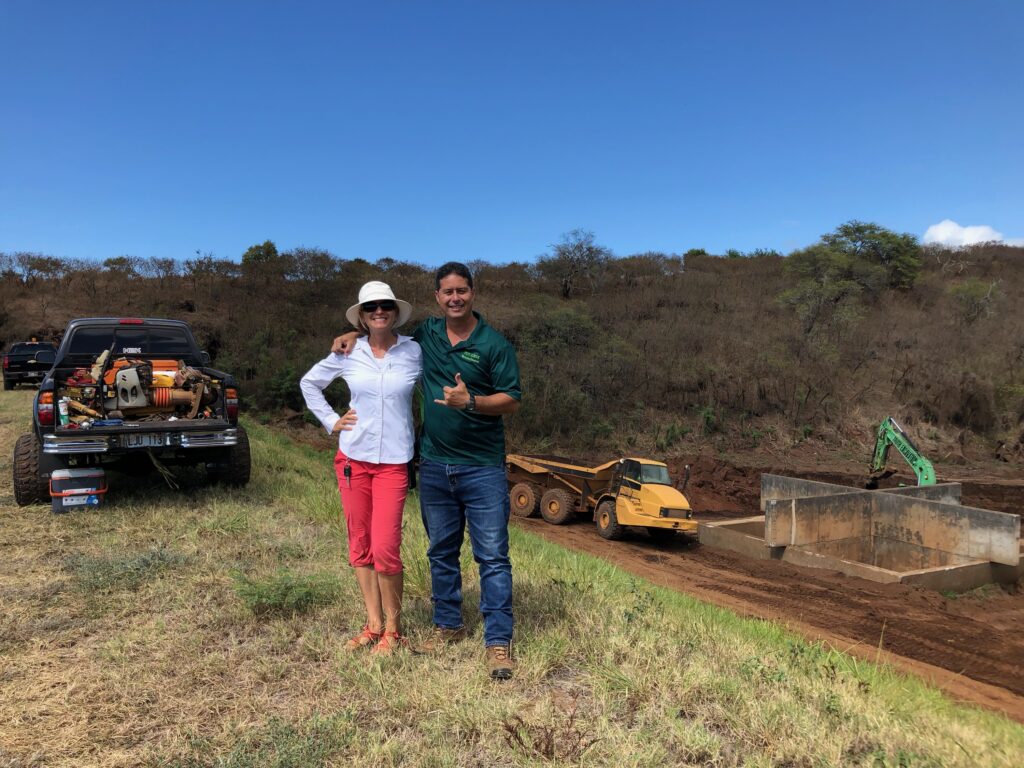
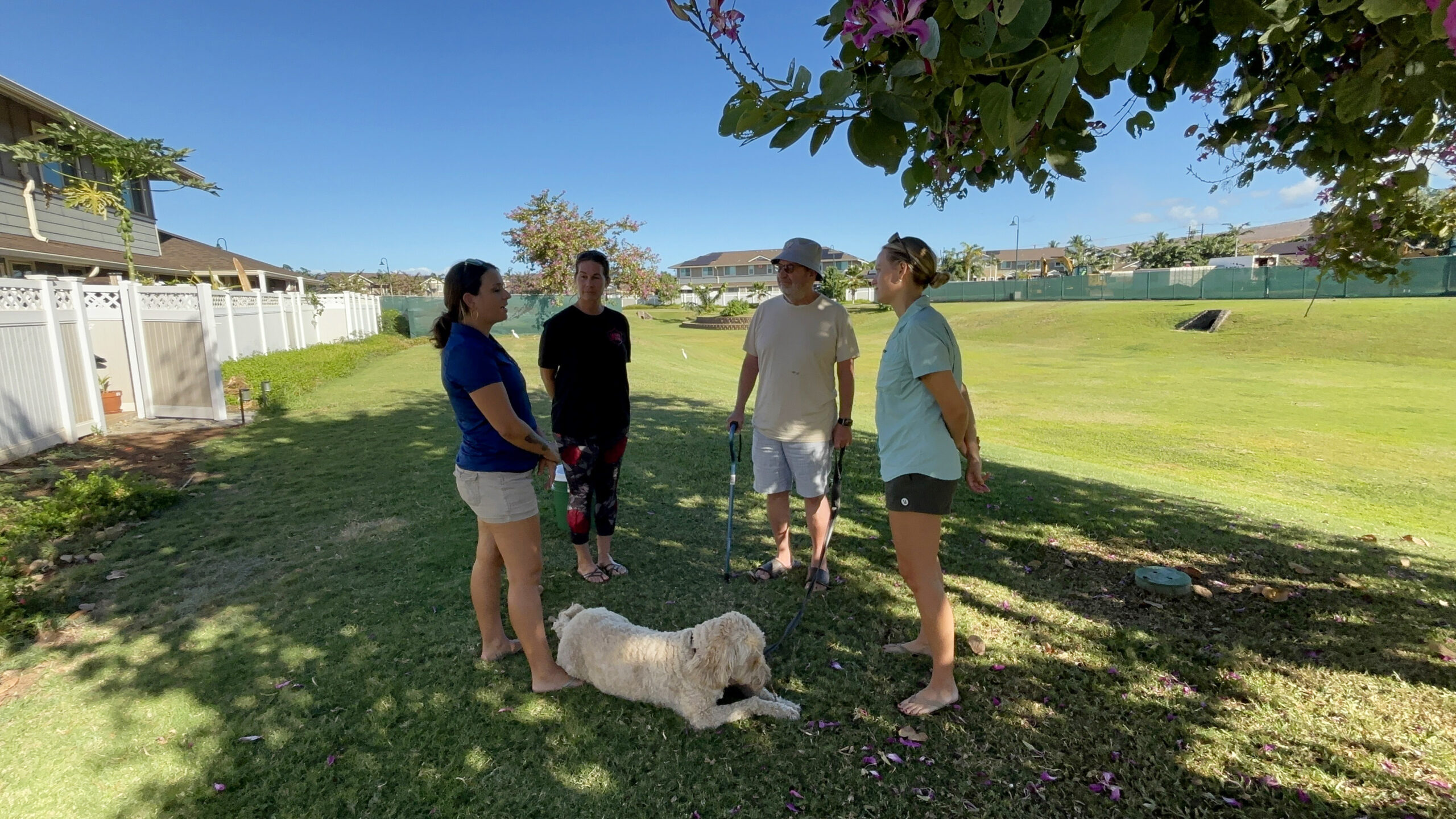
Tova at the Kahana Nui Basin clean out with Pomaikaʻi Kaniaupio-Crozier of Aloha Puʻu Kukui. (Photo Courtesy of Tova Callender)


During your time in Maui, what changes have you seen in the environmental landscape?

I have seen increased collaboration and a strong sense of ownership over our shared environment.  I have also seen improvements in land management and a focused commitment to reduce pollution before it reaches the ocean. 

Climate shifts are also noticeable—it’s warmer, the winds are less predictable, and brown water events are more frequent. The heavy rains in January that brought mud floods have caused persistent brown water in North Kihei. It’s late summer, and I still can’t swim at my local beach because the sediment continues to resuspend in the nearshore. These changes are tough to see, but they are motivating people to act and it’s clear we need to work together to address the issues.
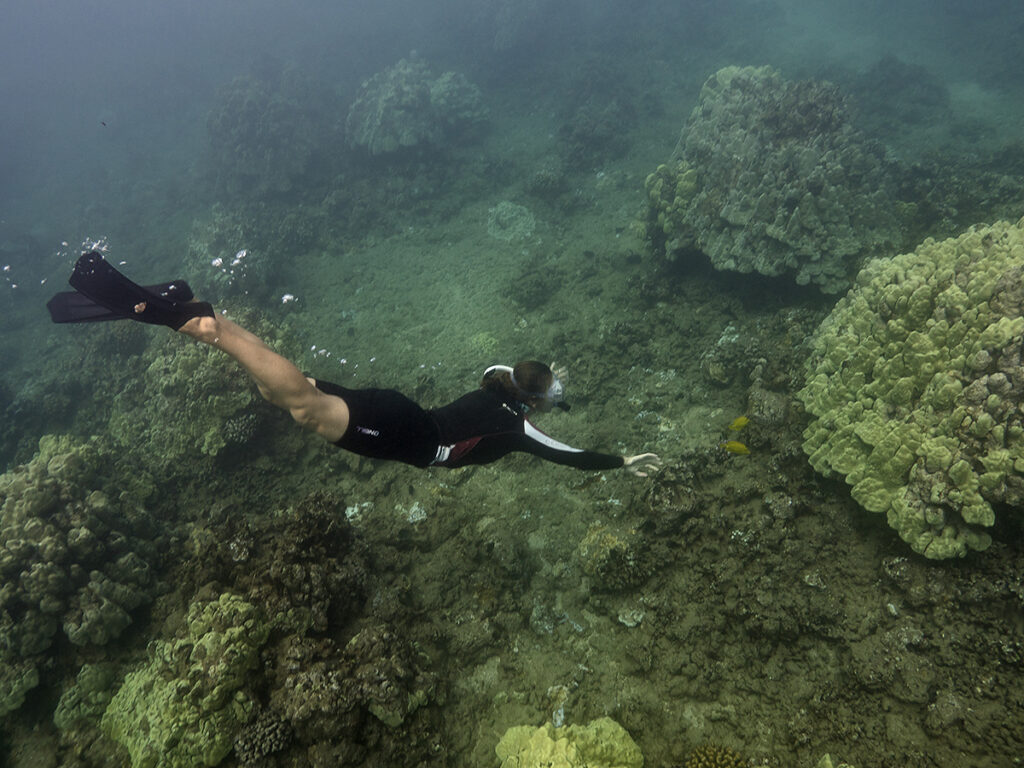
Tova enjoying time in the ocean. (Photo Courtesy of Tova Callender)

What do you love most about living and working here on the island?

Community and the proximity to nature. People on Maui tend to share a deep connection to the land and sea, and that shapes shared community values as well—family, relationships, and time spent being out in nature, all of which align with my sense of what makes life good. I’m inspired by the colors here—the blues and greens all around— the warm breeze, the sun, the welcoming air. Whether it’s biking, snorkeling, swimming, or just being outside, it’s all part of what makes this place so special to me. I love to travel, but I always love coming home.

Looking at the future of conservation, what makes you feel optimistic?

There are so many people who care, and real solutions do exist to the challenges we face. If we have the will, we can make progress—especially with so many incredible groups already taking action. But we’ll only solve these problems by working together and staying focused. Collaboration is essential to success.
Talk Story with Liz Yannell
in , /by


Liz Yannell is the Program Manager for Hui O Ka Wai Ola, a volunteer-powered water quality monitoring program supported by MNMRC. Liz manages all field, lab, and program logistics and often joins volunteers in the collection and analysis of coastal water samples in the field. Liz is also a member of MNMRC’s dive team that performs reef surveys throughout the year. She has a B.A. in environmental studies from Florida Gulf Coast University, and in 2022, Liz graduated from the Marine Options Program at UH Maui. 
What does the ocean mean to you?

The ocean has always felt like a best friend to me. I was born on Oʻahu, and we moved to South Florida when I was a kid. My grandparents lived on Hollywood Beach and then the Florida Keys. Since my mom was a teacher, every school break meant heading down to the Keys to stay with my grandparents. The Atlantic Ocean was at the end of their street—a place that I could freely play and explore the coast and coastal waters. I’m very much at home when I know the water is there. I remember how deeply connected I felt to the water as a kid, and there’s this sense of belonging when I’m by the ocean that has never faded.

I graduated from Florida Gulf Coast University with a degree in environmental studies with a focus on environmental education.  In part, it was the ocean that pulled me back to Hawaiʻi.  I eventually moved to Maui with my husband, and, after I took time off to raise my family, I decided it was the right time to dive into my love of the ocean and make marine science my career.  I enrolled at UH Maui College (UHMC) where I joined the Marine Option Program (MOP), a job-ready certificate program in marine science and conservation.


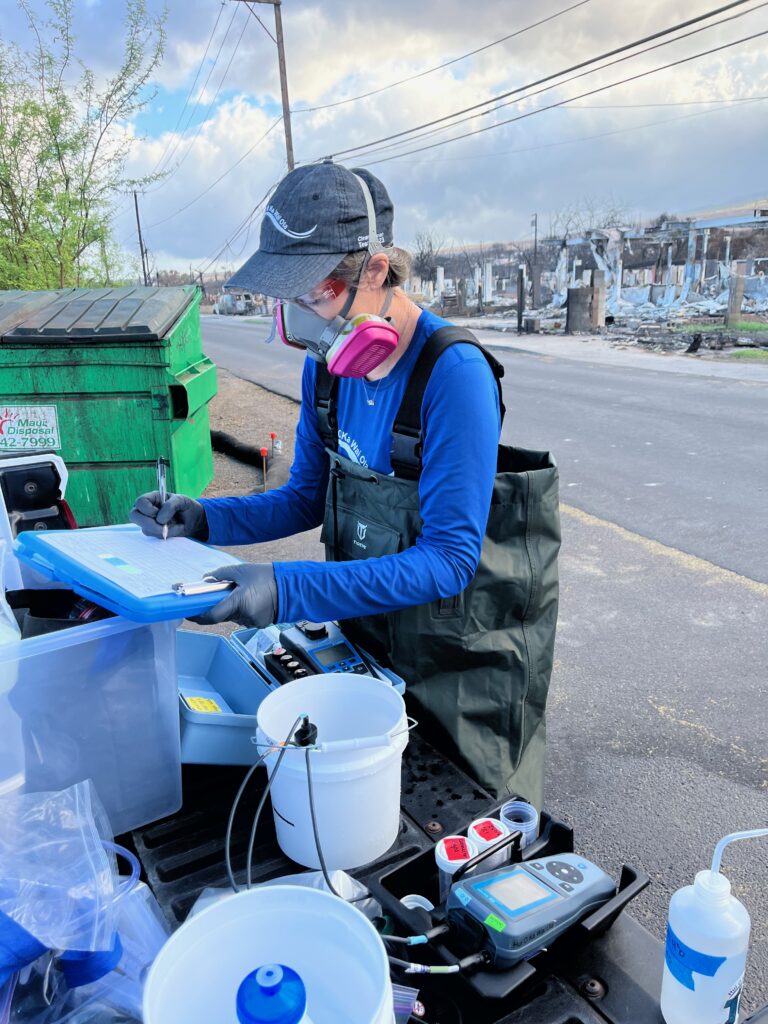
Hui O Ka Wai Ola was one of the first conservation groups to respond in the aftermath of the 2023 Lāhainā wildfire. Liz and Hui staff collected water samples at sites in and around the burn zone to monitor the effects of the fire on nearby waters. (Photo Credit: Tova Callender)


Can you tell us how Hui O Ka Wai Ola is connected with MNMRC?
Hui O Ka Wai Ola means Association Of The Living Waters in Hawaiian.  The Hui is unique in that we are a coalition program.  It was founded in 2014 as a way to come together to address concerns over coastal water quality, and our three main partners since the start  have been MNMRC, The Nature Conservancy of Hawai’i and the West Maui Ridge to Reef Initiative.  All three of those partners make up our steering committee, our technical team and our communications team with MNMRC also being our fiscal sponsor.  
What we do as a community-based organization is vital to understanding and protecting our island’s environment and ecosystem. Clean water is the foundation of a healthy reef, and Maui depends on its coral reef ecosystems for cultural, ecological, and economic well-being. Hui O Ka Wai Ola is on the ground, actively collecting the data needed to improve the health of our coastal waters. A key part of our work is adhering to the rigorous standards of our Quality Assurance Project Plan (QAPP), which ensures our data is credible, high-quality, and respected by decision-makers. Our data is shared and published widely — through the Hawai‘i Department of Health Clean Water Branch, the EPA, Aqualink, PacIOOS, and Zenodo — and is also available for free on our website, so that everyone in our community can access and use it.


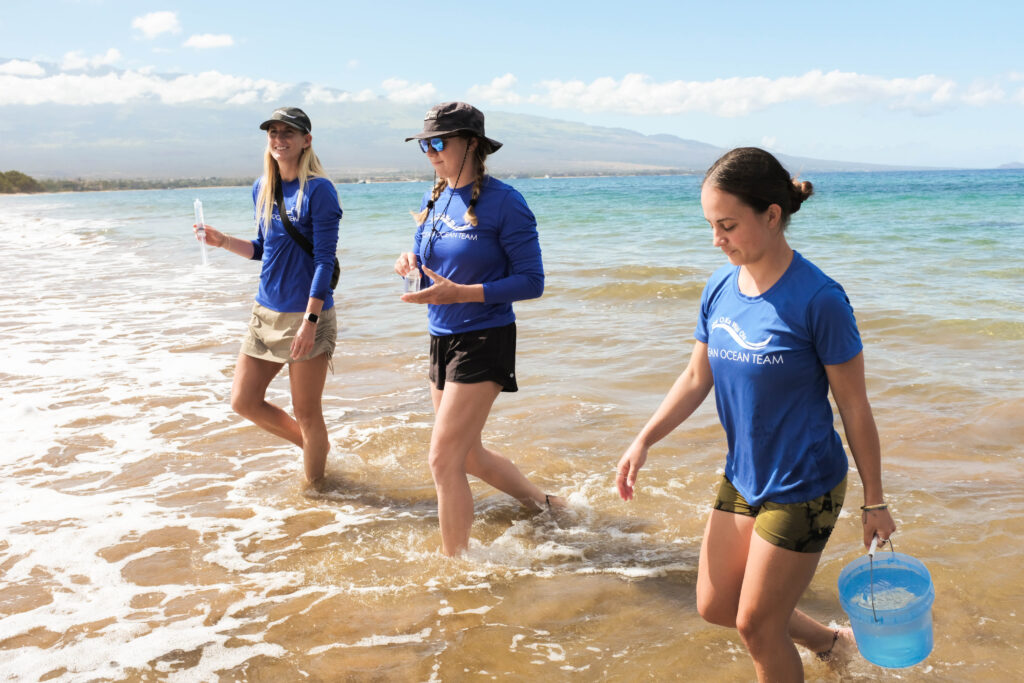
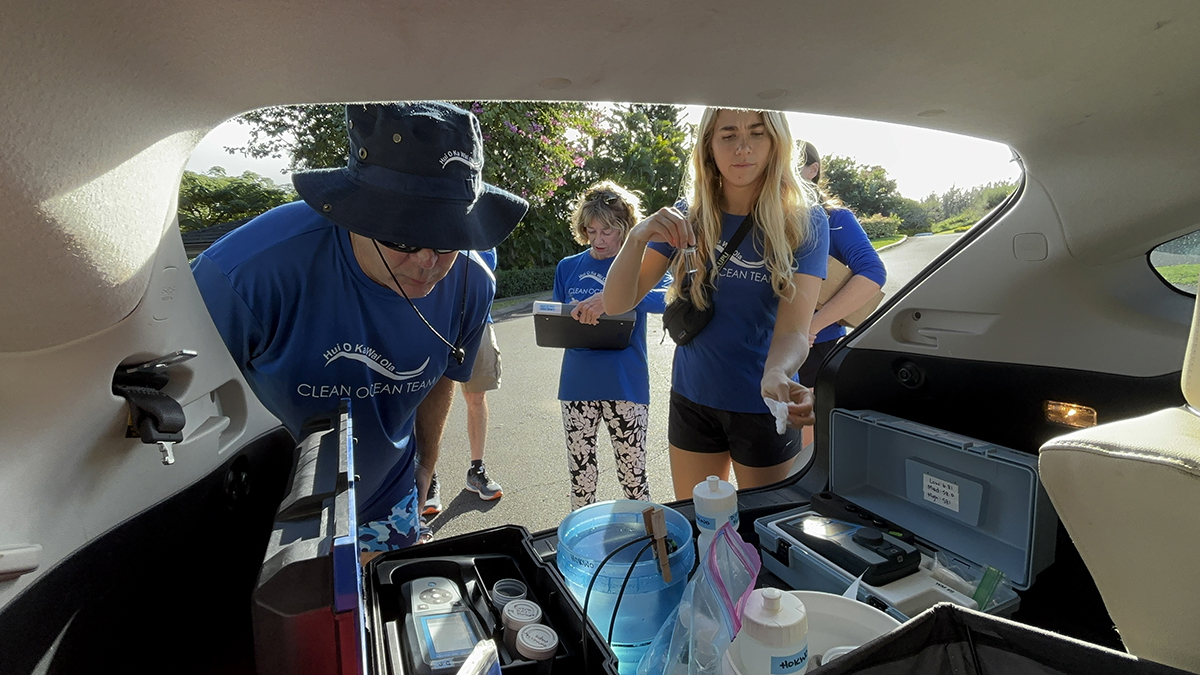
Volunteers collect water samples along Maui's coastline to test quality conditions.

Hui O Ka Wai Ola volunteers collect and analyze water samples from 41 locations across Maui every three weeks. (Photo Credit: Maui Nui Marine Resource Council)


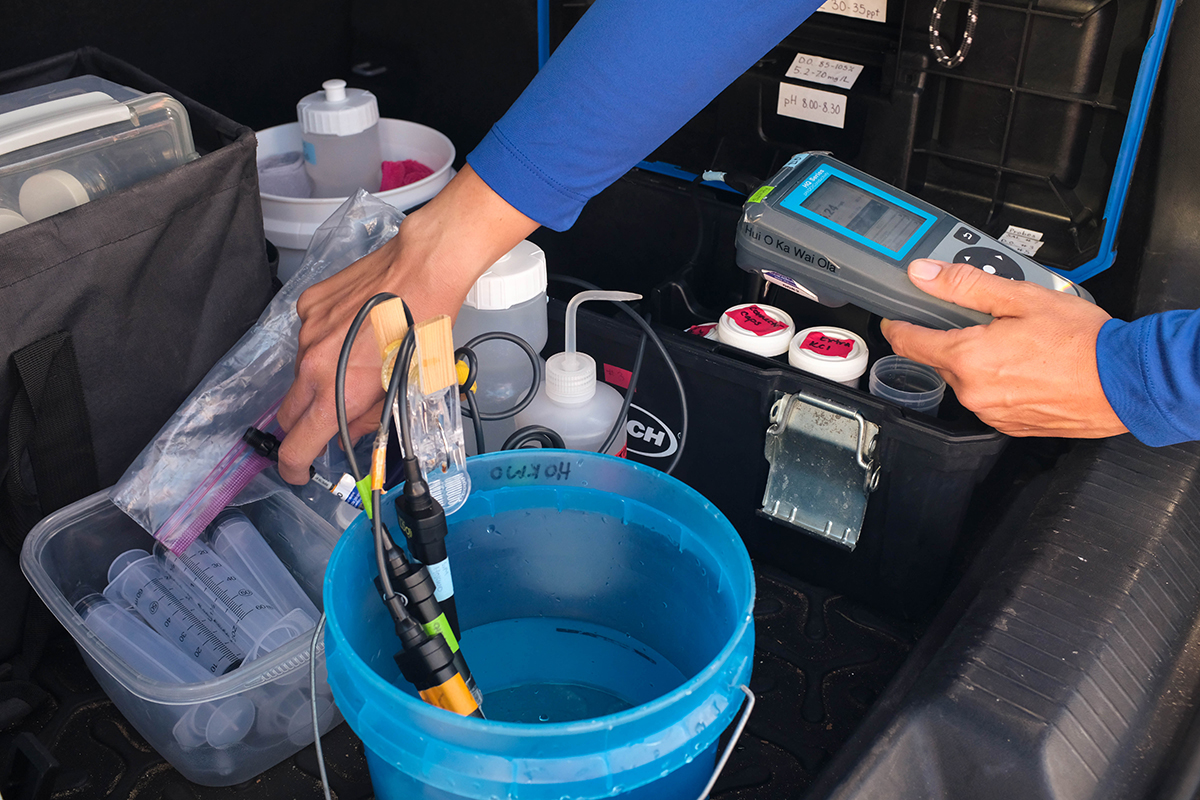
The North Kīhei team analyzes water samples in their mobile lab. (Photo Credit: Maui Nui Marine Resource Council)


Hui O Ka Wai Ola tests for 13 different parameters including: turbidity, pH, salinity, and water temperature. (Photo Credit: Maui Nui Marine Resource Council)

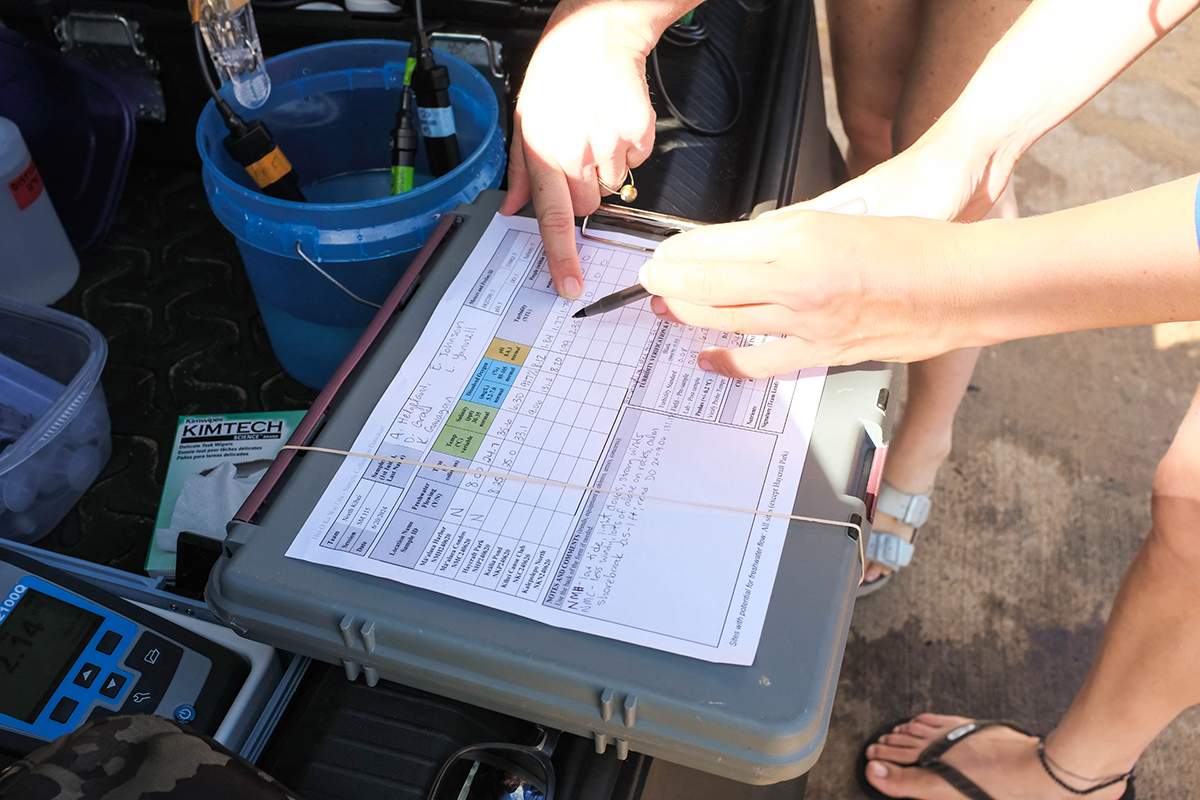
Immediately following collection, water samples are tested using a mobile lab and results are recorded before moving on to the next site. (Photo Credit: Maui Nui Marine Resource Council)

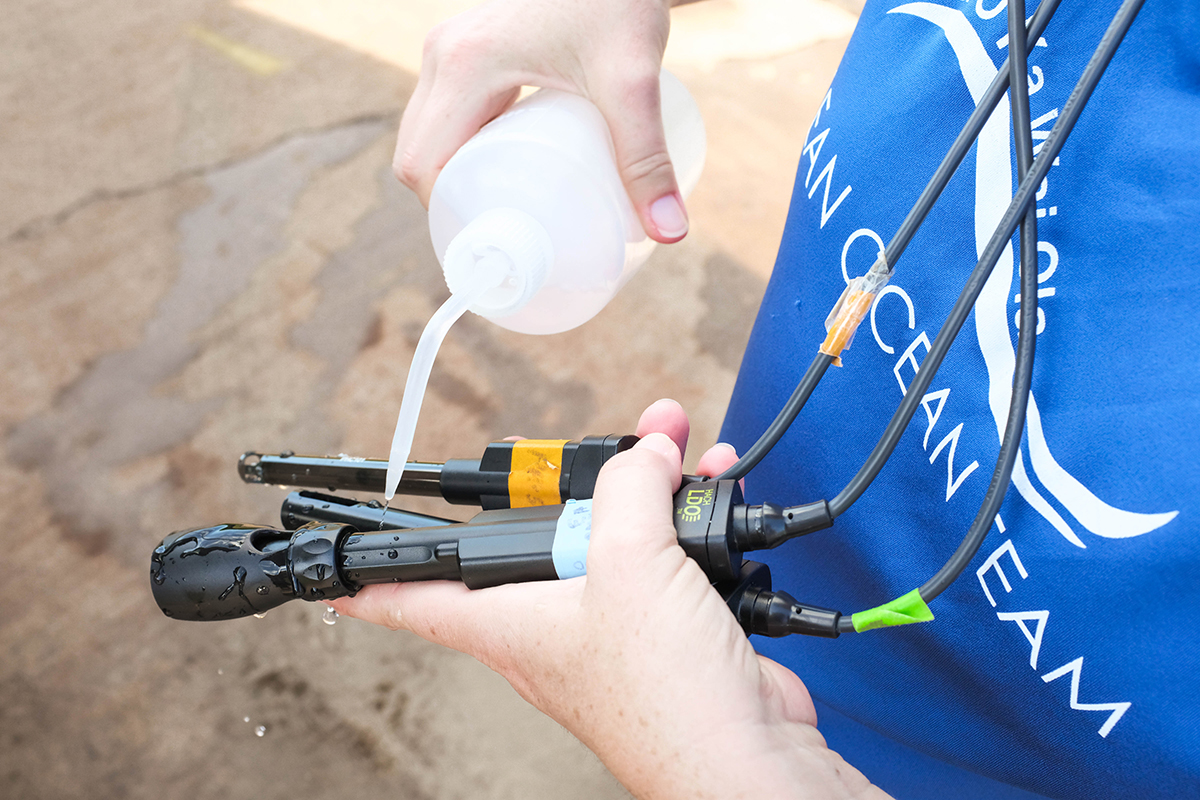
Testing instruments are cleaned with distilled water after data from each site is recorded. (Photo Credit: Maui Nui Marine Resource Council)   


What discoveries have surfaced from your water quality data?

Our data shows where things are getting better and where things need to be improved. If the water at one of our sites is visually looking brown, for example, our testing and data underscores what we are seeing and can tell us more details about what might have led to the current situation.  

Here is a great example at our Kahana Village site on the west side — Kahananui is a huge watershed and our data at Kahana Village was showing some of the highest turbidity issues across the west side of the island. After we flagged this issue, further research was done by partners which determined that the valves in the Kahananui retention basin were blocked, meaning that the water hadn’t been properly draining out for decades and was leading to large amounts of sediment input into our Kahana coastal waters.  Our data was used as the leverage point in a pitch for a grant from the National Fish & Wildlife Funds for $200,000 to address the needed valve repair. Once the valve was fixed, Maui County was able to continue proper maintenance of the basin to improve our coastal waters. So much sediment was cleaned out of the basin in 2018 and 2019, and we saw the notable decline of turbidity in our data. Six years later, we are still seeing improvements in coastal water quality in Kahana. I’m sure the coral ecosystems are grateful for that. 

What makes this success story especially powerful is how one infrastructure repair has had these lasting positive effects, proving that localized conservation efforts can create real, tangible results. I love to repeat a phrase I picked up from a colleague: you can only manage what you measure. In other words, data matters because you can’t protect what you don’t understand. 


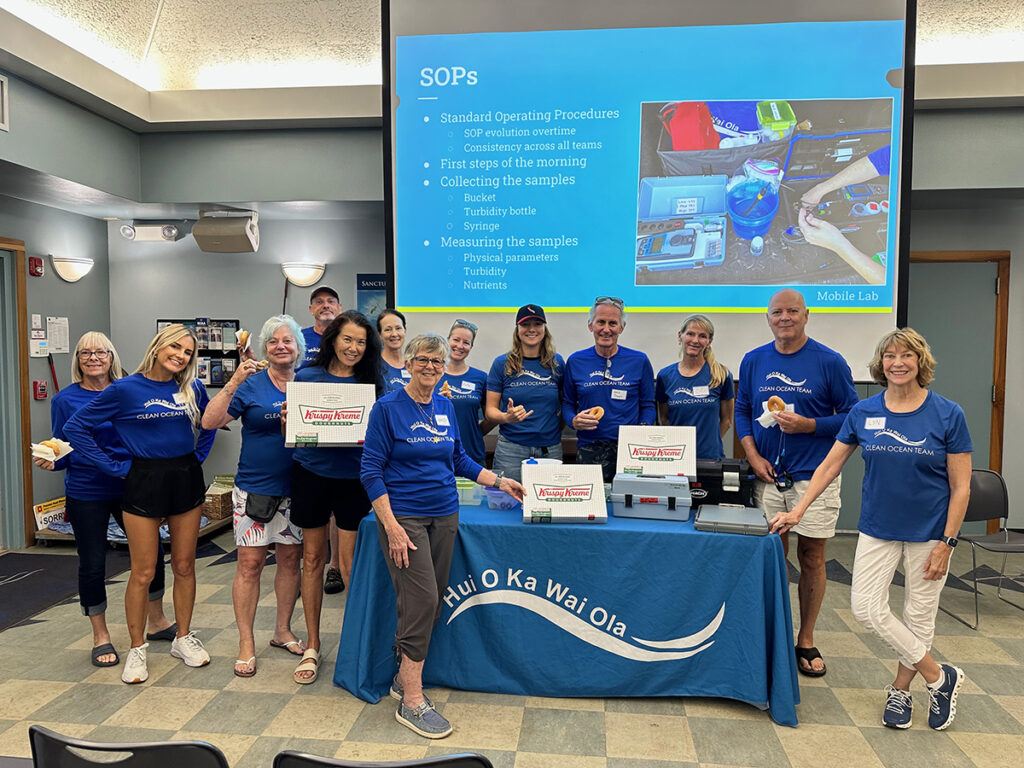
Hui volunteers participated in an annual refresher training in November 2024. (Photo Credit: Liz Yannell)

How can new volunteers get involved in upcoming work?

We encourage those considering becoming a volunteer to fill out our online application and come out and observe the field team a couple of times. Then, we’ll do some training which takes 3-4  hours and we also provide them with our volunteer handbook.  We’re very specific about how the samples get collected to ensure we are getting accurate, good quality data across all of our sampling teams. 

Volunteers go to the same site every three weeks to collect samples for testing.  The three week time frame gives us good variation in our data with changing groundwater flow, different moon cycles, tides, and season shifts, for example.  We currently have 7 teams across our 41 sites, with rotations on different days of the week along the leeward coast.  We’d love to welcome new members to our team whether it’s help in the field, the lab, or some other way we can utilize your skill set. 

Volunteer Sign-up Link:  https://www.huiokawaiola.com/join-us.html


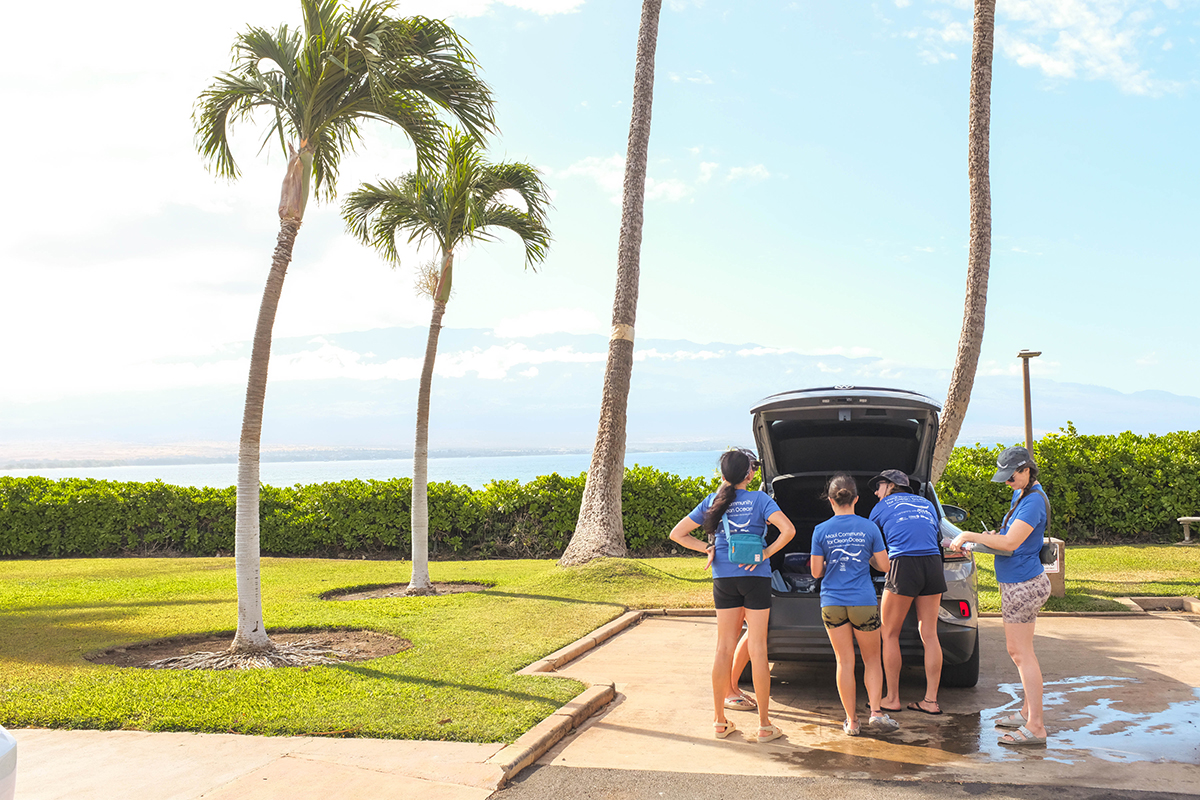
West Maui team members test samples at Oneola Beach in Kapalua. (Photo Credit: Maui Nui Marine Resource Council)


What’s the best part of your job?

Our program gives me so much hope for the future.  The experience of working within our Maui community is what I love most.  Our volunteers make our program more powerful. Each team of volunteers really becomes watchdogs for their sites, they know their sites better than anyone and they will notice when something is different out there and then bring it to the attention of the rest of our team.  Our volunteers are deeply engaged in their work. I love the sense of camaraderie and teamwork we have at the Hui.  It’s inspiring to see people care enough about our coastal waters to routinely dedicate their time to help us gather this essential data.


Do you have any favorite island treats you can recommend?

Komoda Bakery in Makawao is the best donut shop in Hawai’i. I love their stick donuts, malasadas and vanilla Long Johns. Their chiffon cake is legendary – it’s a treat we like for special celebrations! Komoda’s has been around for over a hundred years and they’re still such a successful family bakery because everything they make is so ‘ono.

Good Growth: Maui’s First Reef-Friendly Landscaping Summit

in /by

Photo by Josh Williams on Unsplash


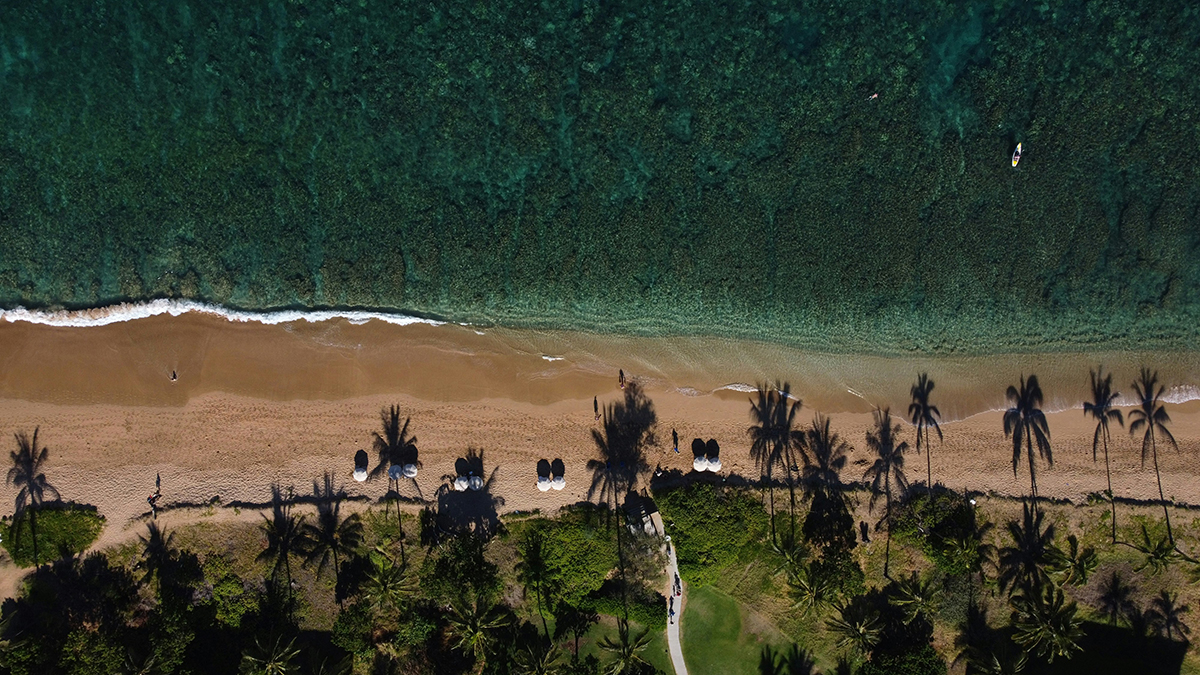
At the edge of Maui County’s shorelines, hotels and resorts have a significant influence on nearby marine ecosystems.

These oceanfront properties sit where mauka meets makai and their proximity to the ocean means landscaping practices on the property usually have a direct impact on nearby coastal ecosystems.

MNMRC’s Reef-Friendly Landscaping (RFL) program is aimed at equipping land managers and landcare professionals with the skills and tools they need to adpot healthier practices for both land and sea. After successfully working with the Four Seasons Resort Lānaʻi to earn its RFL Gold certification, and launching an official RFL course curriculum in 2024, the Maui Nui Marine Resource Council began to explore new ways to make Reef-Friendly Landscaping available to larger groups of participants.

“In the case of West Maui resorts, we started to see a growing interest in reef-friendly landscaping (RFL), as more properties were looking to shift to methods that were healthier both for the land and nearby marine life,” said Jill Wirt, RFL Director. The idea for an in-person summit came about when Trisha Keahulani Watson of ʻĀina Momona and Keolahou Hinau, Executive Director of the Pilikahakai Foundation reached out to MNMRC about offering the 10-subject curriculum over the course of two days in May.

“The Pilikahakai Foundation was established in direct response to the growing erosion and climate challenges facing Kāʻanapali Beach. We saw the need for a proactive, community-based approach to protect this place, not just for today but for future generations,” said Hinau. “The reef-friendly landscaping summit is a major step forward. It connects property owners, residents, and landcare professionals with practical, place-based knowledge to protect our shorelines.”


Thanks to a generous sponsorship from the Kāʻanapali Operations Association, the summit was hosted at the Marriott Maui Ocean Club, May 17-18, and welcomed landscaping professionals from Sheraton, Marriott Maui Ocean Club, Royal Lahaina Resort, and Hyatt Regency in addition to participants from Maui Nui Botanical Gardens and Reef Guardians Kauaʻi.

“In early talks with Trisha and Keolahou, it was clear that the first RFL summit should be in Kāʻanapali because a few places were already implementing practices similar to RFL,” said Wirt. “By offering an in-person summit, we wanted to create an opportunity for professionals to learn how to implement RFL and to share their own insight from sustainable practices at their properties.” Kāʻanapali was also strategically chosen for the potential to make a focused impact along the shoreline through a connected group of large, reef-friendly properties.

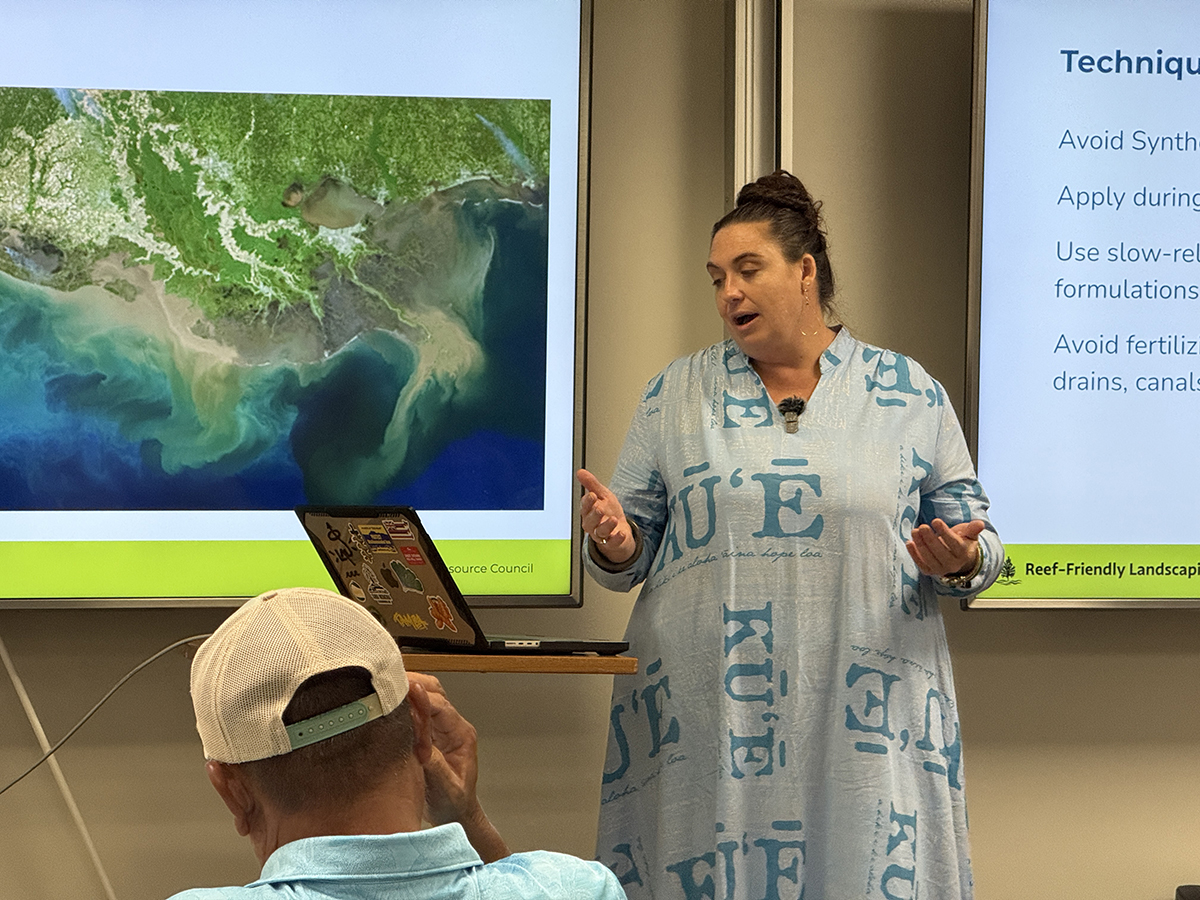
Over the course of two days, participants learned from local experts and cultural practitioners through a combination of classroom instruction, site visits, and hands-on training. Lessons covered topics including soil health, fertilizer alternatives, wetland preservation, and reef impacts.

The goal of the summit was to provide tools and resources to resorts so they could start incorporating reef-friendly (RFL) practices into daily landscaping operations. As more Kāʻanapali properties adopt RFL, the hope is that the area would not only have healthier soil and plant life but would also act as a “sponge” that absorbs nutrients and keeps pollutants out of the ocean and off of nearby reefs.


While the reef-friendly landscaping is still new, Wirt has seen encouraging signs of change. Recently, the Hyatt, in alignment with RFL standards, has successfully eliminated all synthetic chemicals from its landscaping methods through a focused effort that took a little over a year to accomplish.

Building on the growing interest in RFL, MNMRC and its partners are planning to host another summit in October. In addition to landscaping professionals from resorts, Wirt hopes to share the program with golf courses, home owner and condo associations, and other land managers interested in adopting more sustainable practices.

For more information about the Reef-Friendly Landscaping program or the October summit, please contact: [email protected]

Replanting at Kahoma Village to support Lahaina recovery, growth following wildfires

in , /by


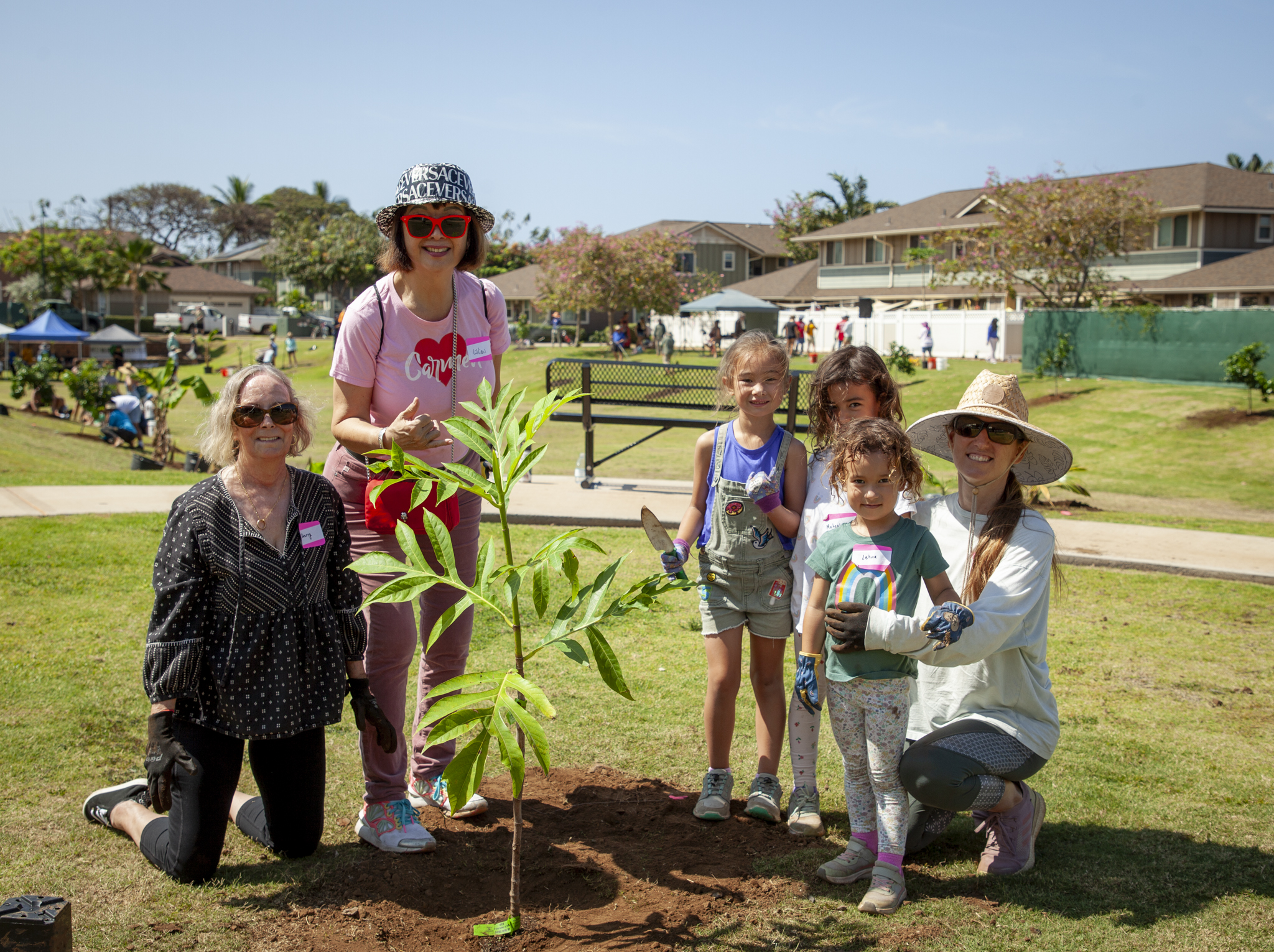
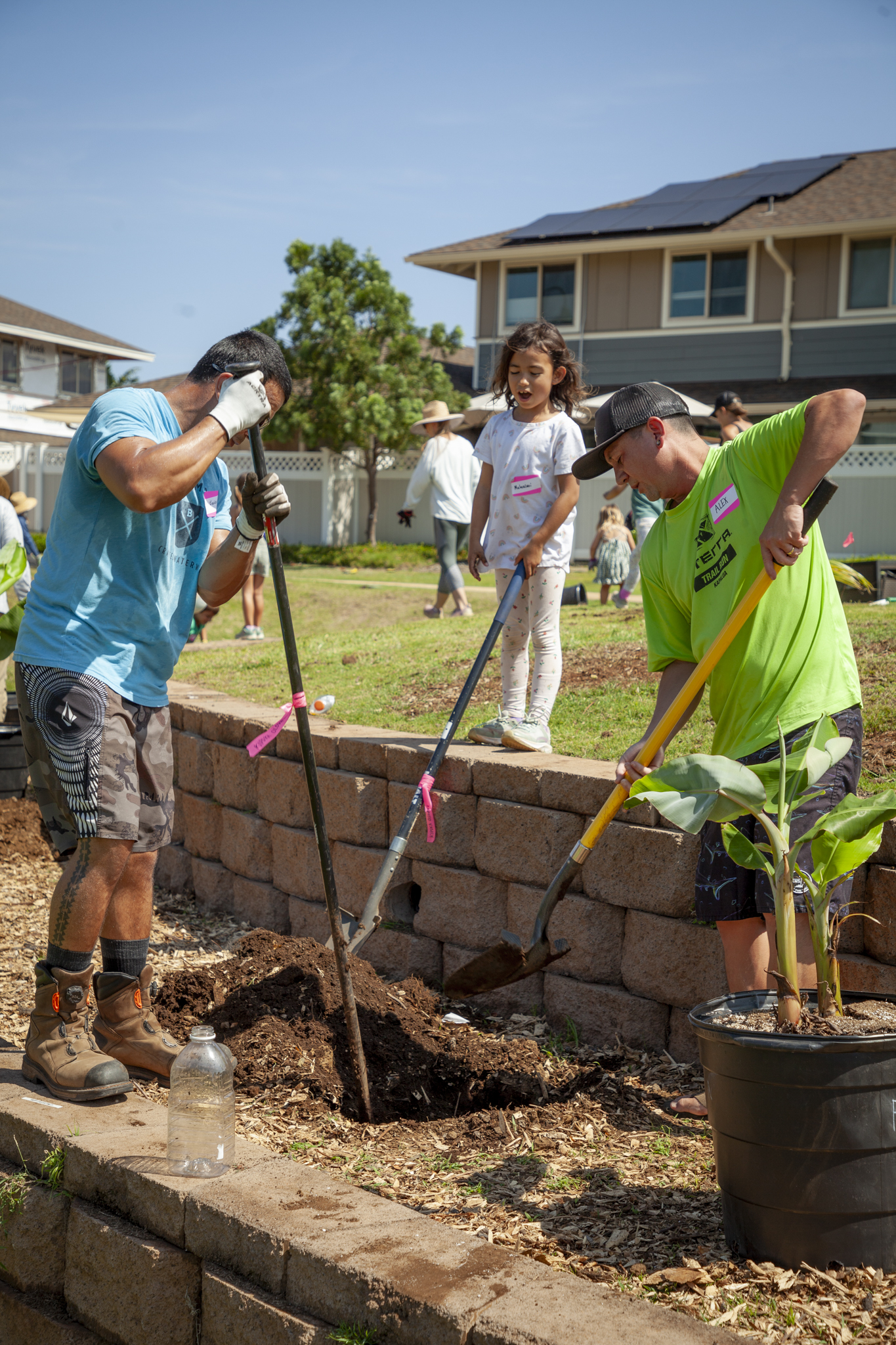
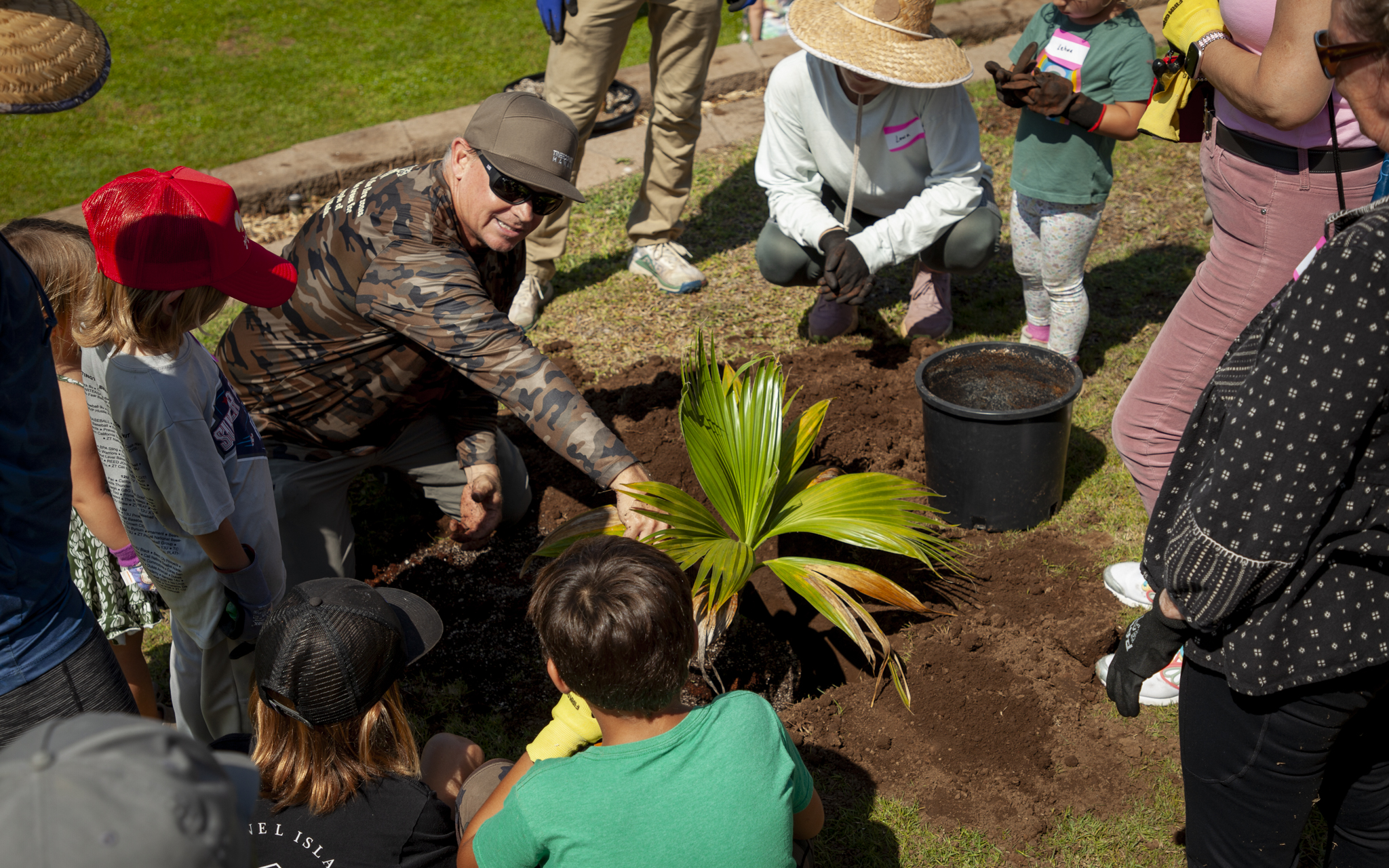
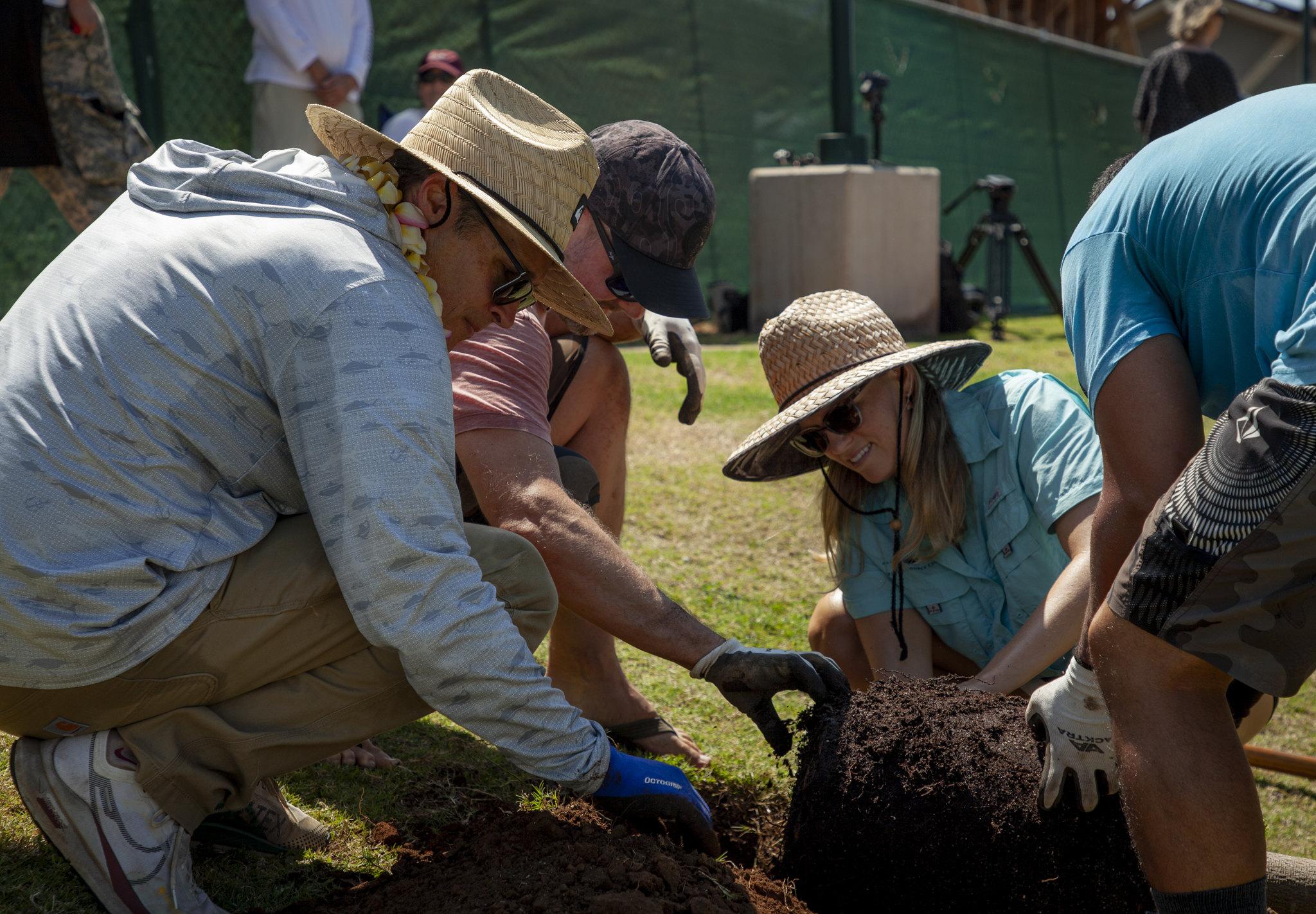
Nearly 200 Kahoma Village homeowners, community members, and local organizations gathered Saturday to restore the landscape in Lahaina by planting 100 native and resilient species to support ongoing post-wildfire recovery.

The replanting featured 19 different species, including ʻulu, puakenikeni, mango, various citrus trees and more.

The event was organized by Kahoma Village and Maui Nui Marine Resource Council, and focused on fostering environmental stewardship and strengthening community connection to the ʻāina. After the planting, participants enjoyed a lunch sponsored by Duke’s.

Over 200 volunteers helped to install native plants, trees, shrubs, and ground cover at Kahoma Village. (Photo Credit: Studio Asalt and Derek Sander)

The effort was made possible through funding from DLNR’s Division of Forestry and Wildlife’s Kaulunani Urban and Community Forestry Program. Also involved were Treecovery and Maui Nui Botanical Garden; Kīpuka Olowalu, who donated essential gardening tools; Marriott’s Maui Ocean Club, which provided expert landscaping support and equipment; and Surf and Turf Landscaping, which prepared the planting sites and ensured additional irrigation for optimal planting conditions. The plants were grown and cared for at Native Nursery over the past nine months.

Preparations for Saturday’s event began on Friday, April 25, when volunteers from Rotary Hawaiʻi, Rider Levitt Bucknell, Maui Bay Villas, and Marriott’s Maui Ocean Club and partners gathered to mark planting locations, set up irrigation and ready the site for a successful community effort.

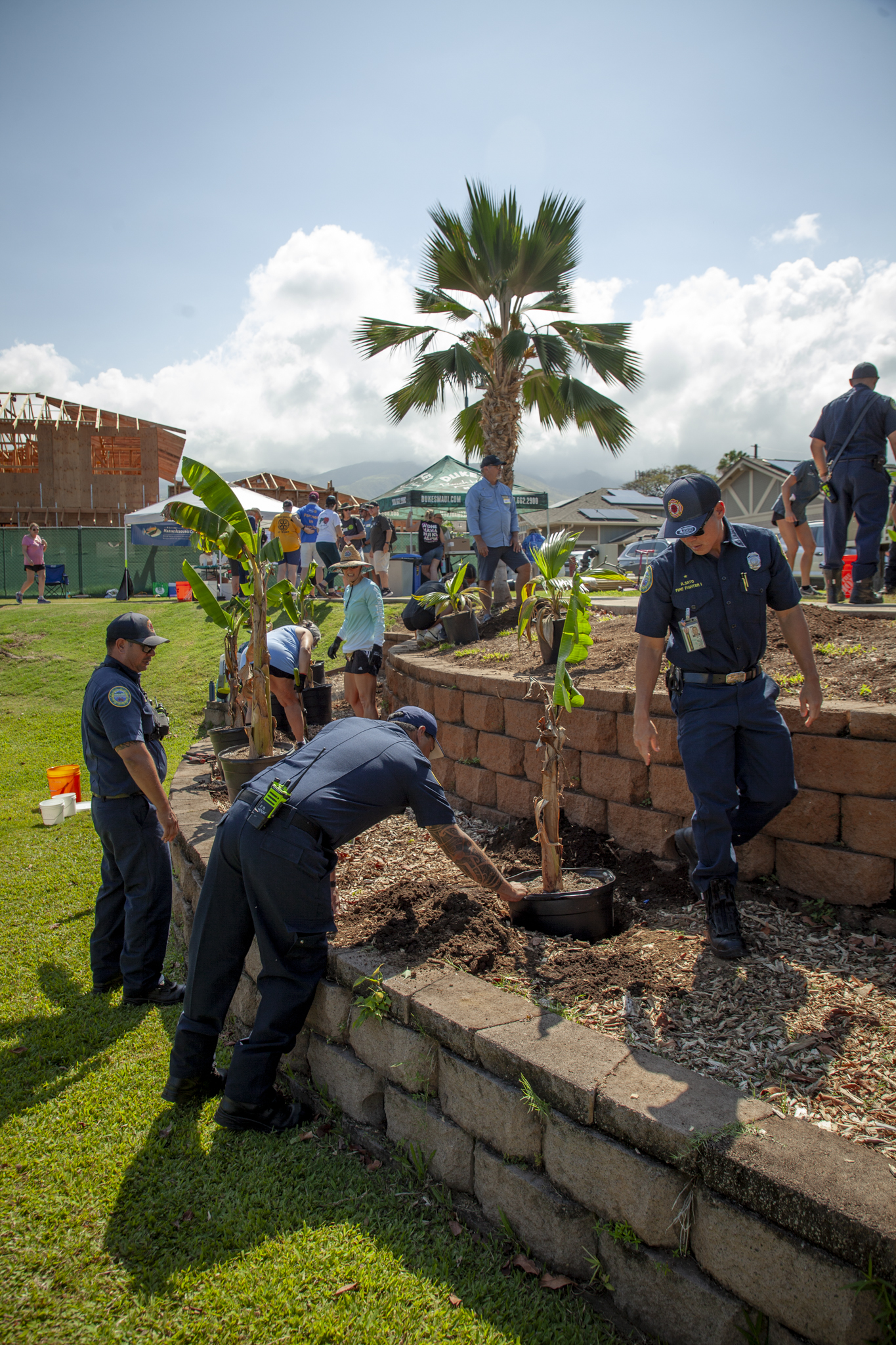
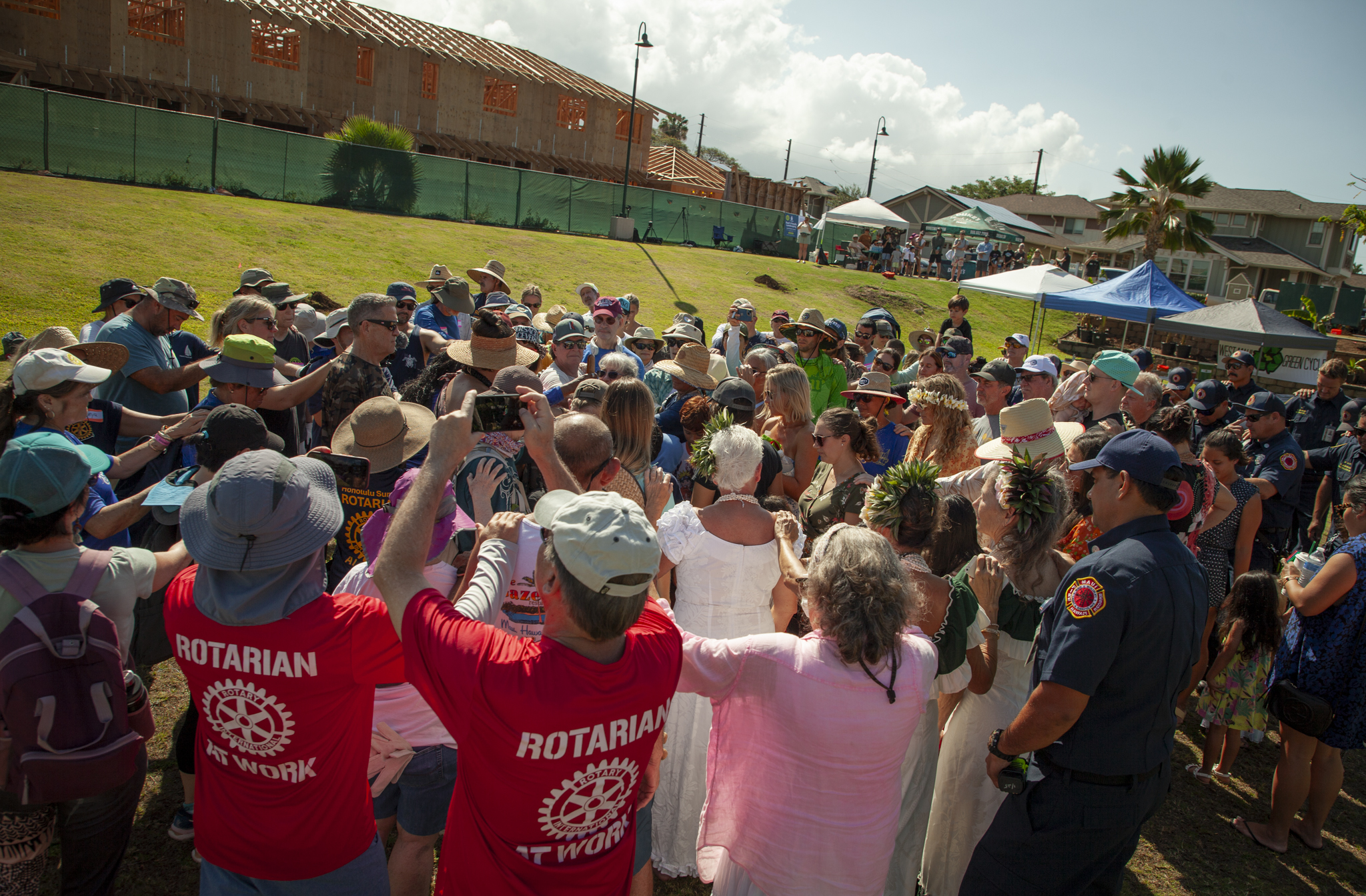
Community groups including representatives from the Maui Fire Department joined in on the planting effort. (Photo Credit: Studio Asalt and Derek Sander)

The project was made possible through a grant from the Kaulunani Ubran and Community Forestry Program of the DNLR Divison of Forestry and Wildlife, and the Urban & Community Forestry Program of the U.S.D.A. Forest Service, Region 5, State and Private Forestry. (Photo Credit: Studio Asalt and Derek Sander)


The planting day was a collaboration led by residents of Kahoma Village and the Maui Nui Marine Resource Council to revitalize a popular community park and commit to more sustainable land-based practices. (Photo Credit: Studio Asalt and Derek Sander)

Volunteers, community members, and local businesses and organizations gathered at the park space in Kahoma Village to begin the planting day with a blessing. (Photo Credit: Studio Asalt and Derek Sander)


The project was made possible through a grant from the Kaulunani Urban and Community Forestry Program of the DNLR Divison of Forestry and Wildlife, and the Urban & Community Forestry Program of the U.S.D.A. Forest Service, Region 5, State and Private Forestry.

Helping a Lāhainā Community Rebuild with Reef-Friendly Landscaping After the Wildfire

in /by

After losing four buildings in the Lāhainā wildfire, the residents of Kahoma Village turned to the Maui Nui Marine Resource Council (MNMRC) to help revitalize their community by using Reef-Friendly Landscaping (RFL) at a beloved park space bordered by the burned buildings. 

The park has served as a hub for the residents and was used for informal gatherings and celebrations. As part of the rebuild process after the 2023 fires, the community wants to use RFL to create a welcoming space for healing and resiliency in the ongoing recovery process. 

Through the generosity of a grant from the Kaulunani Urban and Community Forestry Program of the DLNR Division of Forestry and Wildlife program, MNMRC has been working with the community for over a year on plans to revitalize the park by installing fruit trees, shrubs, ground cover, and native plants in combination with the application of a locally-made compost tea and biochar. Our RFL program emphasizes using native plants and natural products like the ones planned for Kahoma Village to increase soil health, reduce erosion, and minimize the amount of chemical fertilizers and pesticides that wash onto local reefs. MNMRC has also been coordinating with partners like Native Nursery in Kula to grow plants that will be installed at Kahoma Village, including loulu lelo, ʻulu, and wiliwili.  

“We are honored to be helping our friends at Kahoma Village revitalize the park space that is so important to their community,” said Program Director, Jill Wirt. “Not only will it bring back an important place in West Maui but it will also protect local reefs because residents here are so committed to using practices that are healthier for the land and ocean.” 

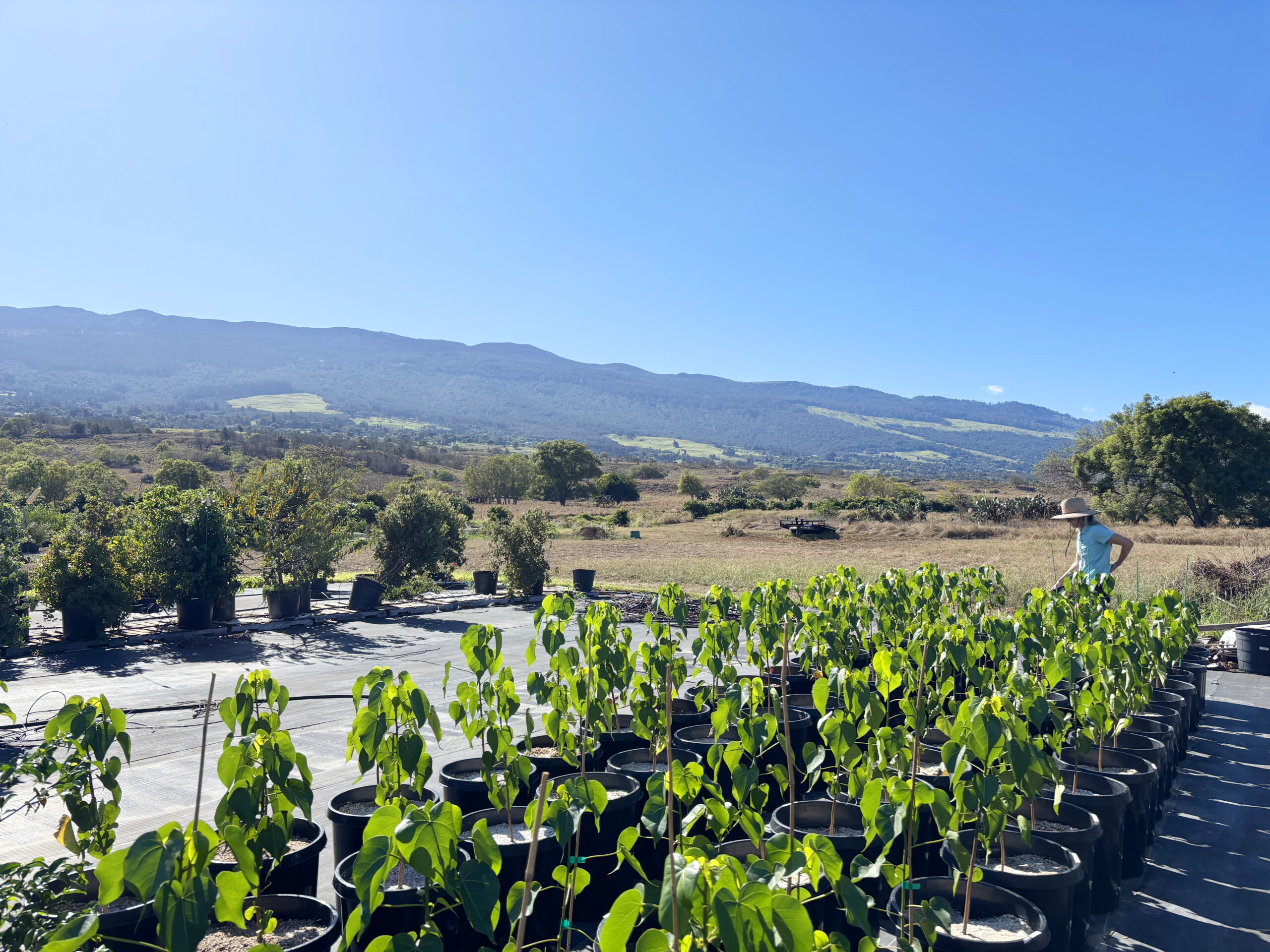
Native Nursery has partnered with MNMRC to grow plants and trees that will be installed at Kahoma Village. (Photo Credit: Maui Nui Marine Resource Council)

With the community standing behind reef-friendly landscaping, there is potential for an even greater impact by connecting land to sea. Wirt says that residents have expressed an interest in exploring coral restoration downstream of Kahoma Village near Mala Wharf. MNMRC already does water quality testing in the area and will continue doing reef surveys to see if there is an opportunity to connect land and water-based efforts on a larger scale. 

In the meantime, the first group of plants are scheduled to be installed by residents at a Community Planting Day on April 26. The public is invited to join the event and the community is looking for volunteers on Friday, April 25 to help prepare the park and plants for the next day.

There is has a big vision for what the space will do and be like once current construction ends and all plants are installed by the end of 2025 or early in 2026. People will be able to pick mangoes and avocados, host events, and even attend Reef-Friendly Landscaping workshops. Residents will continue to gather at the park for all kinds of occasions and the children in the community will continue to play there. It will continue being a major hub for all Kahoma Village residents, bringing a renewed sense of kuleana for the new plants. 


Sign up to volunteer on April 25 or 26!


This project was made possible by the support of the Kaulunani Urban and Community Forestry Program of the DLNR Division of Forestry and Wildlife, and the Urban & Community Forestry Program of the U.S.D.A. Forest Service, Region 5, State and Private Forestry.

AAUS Membership Will Create New Opportunities to Protect Maui’s Reefs

in /by

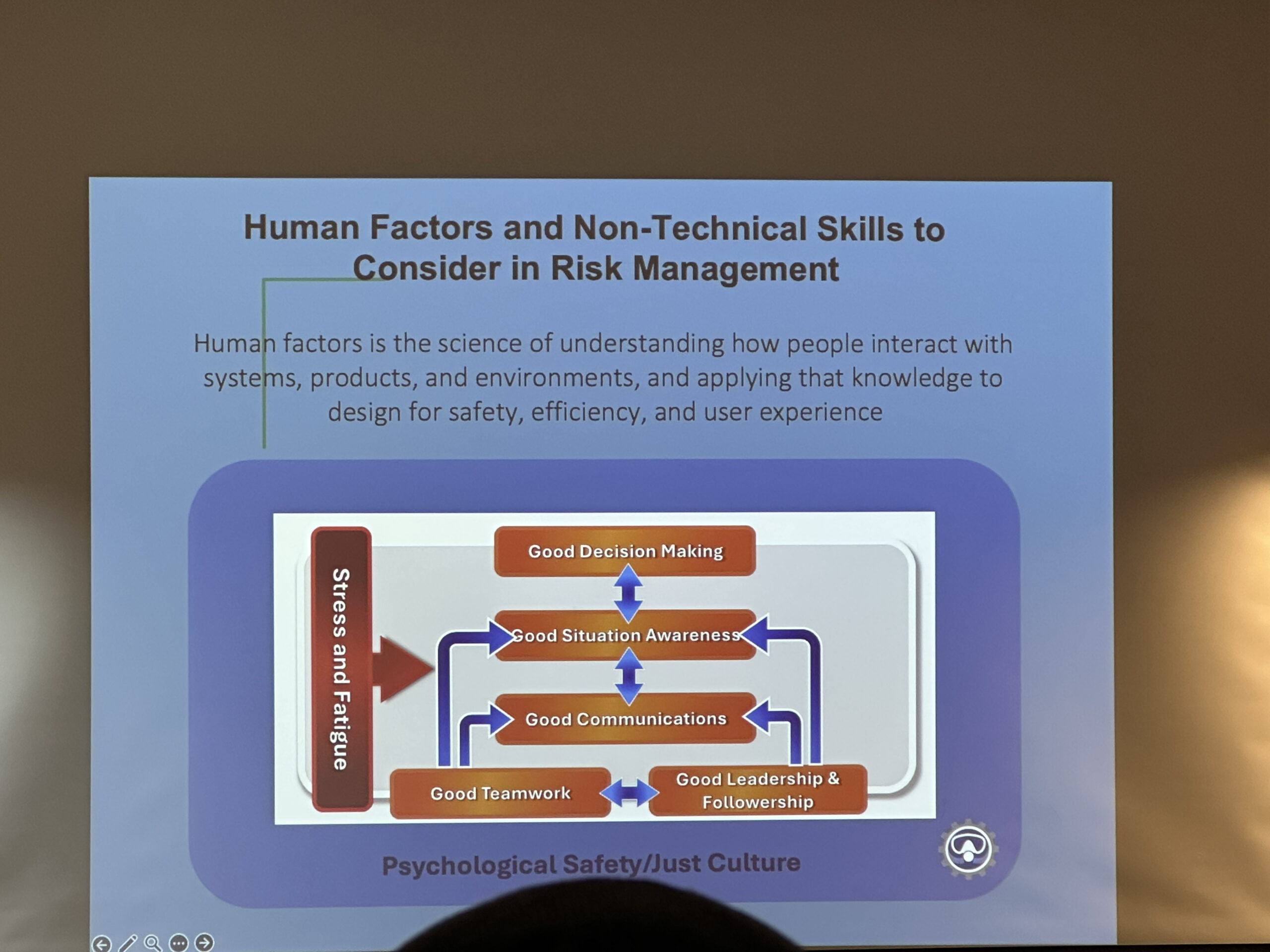
Protecting Maui’s reefs requires work done by a special class of divers who are focused on collecting scientific data. Scientific divers are often trained in marine biology, archaeology or another field of science and are diving with a mission to gather and share scientific knowledge. In the US, the American Academy of Underwater Sciences (AAUS) is the organization that sets scientific diving and safety standards.  

Our Science Director, John Starmer recently attended the 2025 AAUS Diving Symposium in Seattle, Washington to learn more about operating a diving safety program that meets AAUS standards as the first step in the Maui Nui Marine Resource Council’s (MNMRC) journey to become an AAUS member. “Becoming an AAUS organizational member or “OM” ensures other OMs that our diving safety program is AAUS-approved and makes it easier for our team to work with other member organizations like the University of Hawaiʻi,  NOAA, or the Division of Aquatic Resources (DAR),” said Starmer. “This means the Maui Nui Marine Resource Council can work with more partners and have a bigger impact on our local reefs.” 

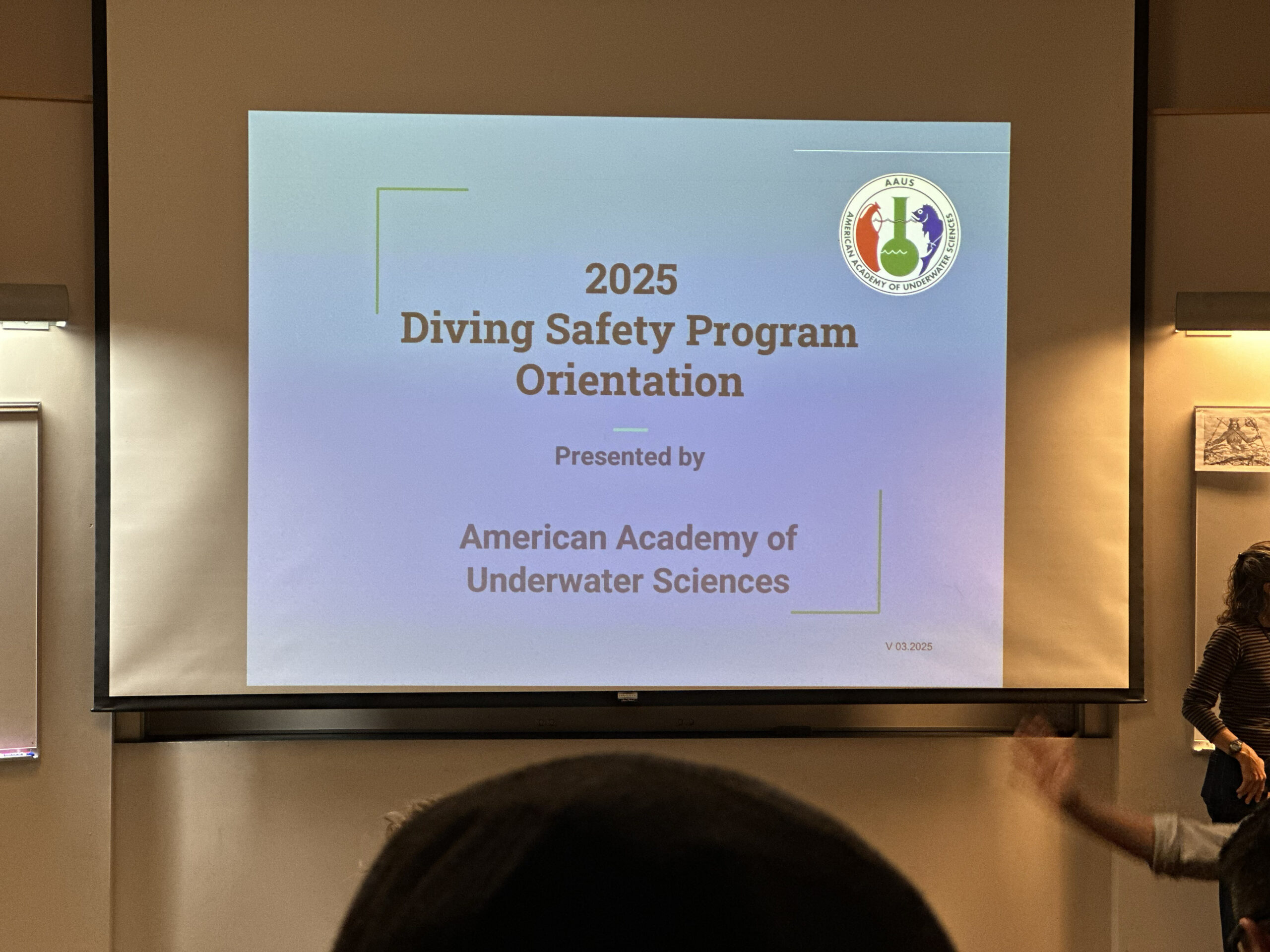
The Maui Nui Marine Resource Council is in the process of becoming an AAUS organizational member, which will improve diver safety and make it easier for its team to collaborate with other divers and organizations. (Photo Credit: John Starmer)


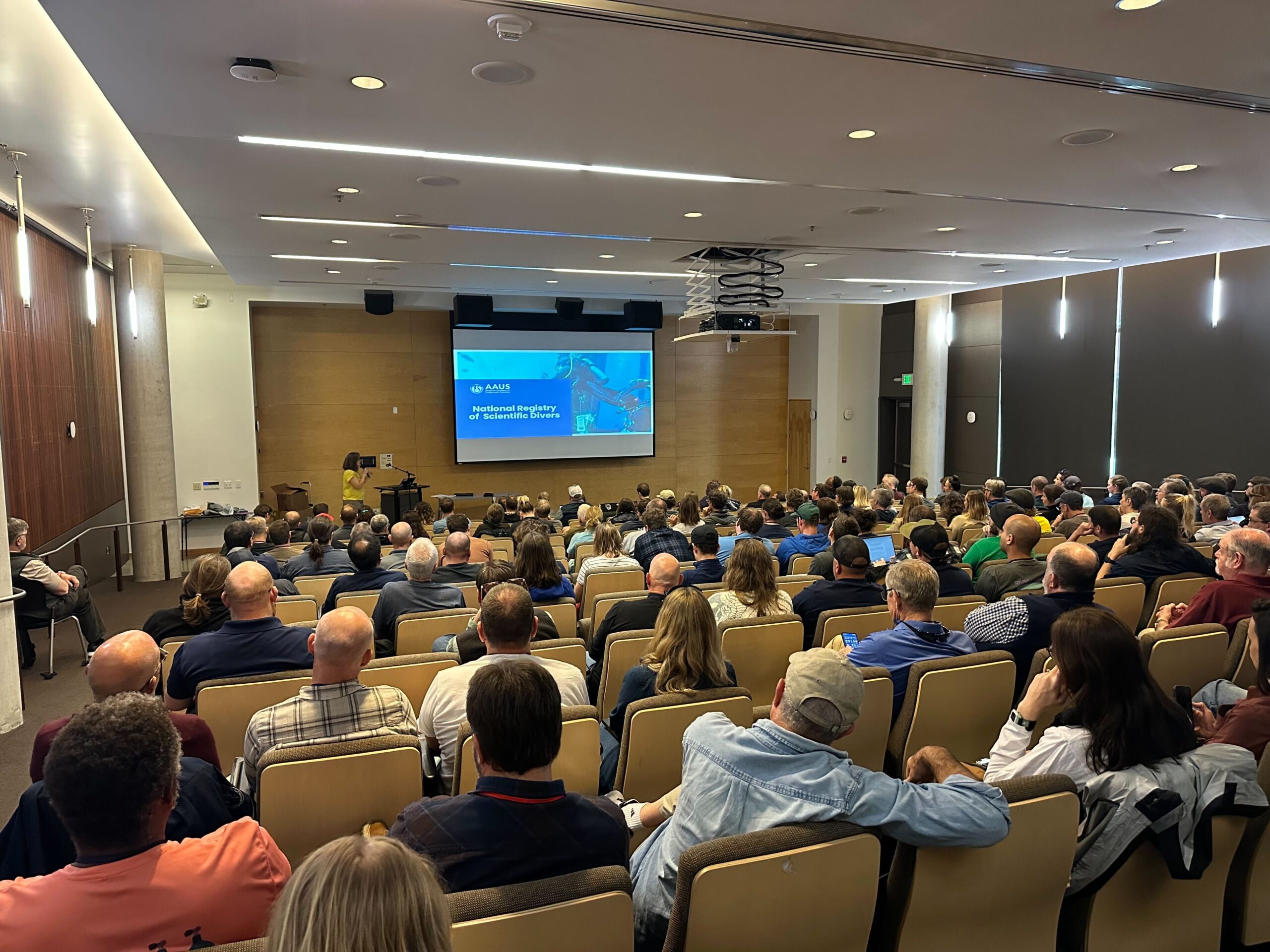
The American Academy of Underwater Sciences (AAUS) held its 2025 Symposium in Seattle, Washington. The 6-day gathering included presentations, scientific papers, and training opportunities in the field.


Approval from other organizations to work with their divers is referred to as “reciprocity.” In Hawaiʻi where our reefs are vulnerable, having reciprocity agreements in place means MNMRC is ready and able to take action in the event of a major disaster or reef-damaging event. “Imagine the reef got hit by a big ship grounding or hurricane. As an AAUS member we can partner (dive with) other organizations in the emergency response to help protect the reef from further damage and take action to help the reef heal afterwards.” 

The ability to easily provide reciprocity also opens up collaboration opportunities for visiting scientists from universities, aquariums, or government agencies, many of which are AAUS OMs. It is common for scientists to work in Maui on single or multi-year projects. By having an AAUS-certified program, the Maui Nui Marine Resource Council can offer a more straightforward way for them to connect and work with us.  


The American Academy of Underwater Sciences (AAUS) sets the highest level of safety standards for scientific divers, giving the profession a universal set of protocols and procedures to follow when out in the field. (Photo Credit: John Starmer)


While reciprocity provides motivation to join the Academy, the American Academy of Underwater Sciences (AAUS) sets the safety standards for scientific diving to “ensure every diver comes home safely.” “Although all diving is safer than it was just 50 years ago, there are dangers involved in any diving activity. Safety is the number one benefit to our diving program because we have access to decades of knowledge and experience from Academy members and hundreds of thousands of dives,” said Starmer. “The AAUS standards continue to be updated as new technologies are used for scientific diving. Becoming an OM allows us to apply up-to-date best practices, ensure we have a shared set of familiar processes when collaborating with other organizations, and, most importantly, make sure our divers keep themselves safe while supporting our coral reef conservation goals.” 

Testing Limu for Pollution Sources in South Maui

in /by


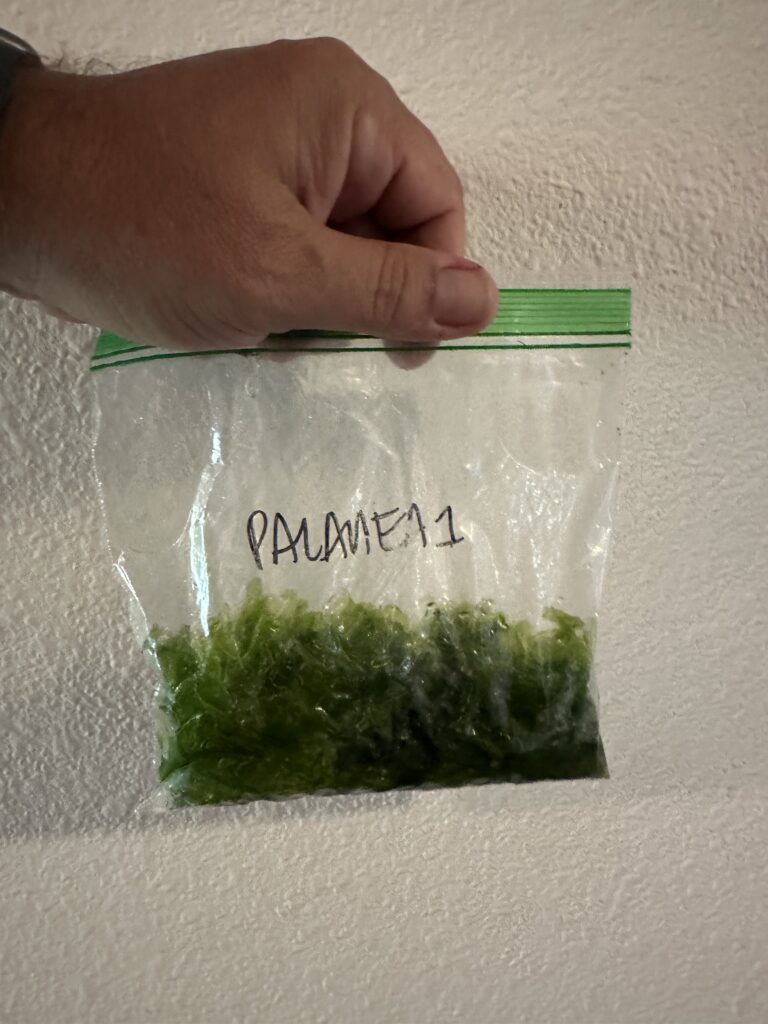
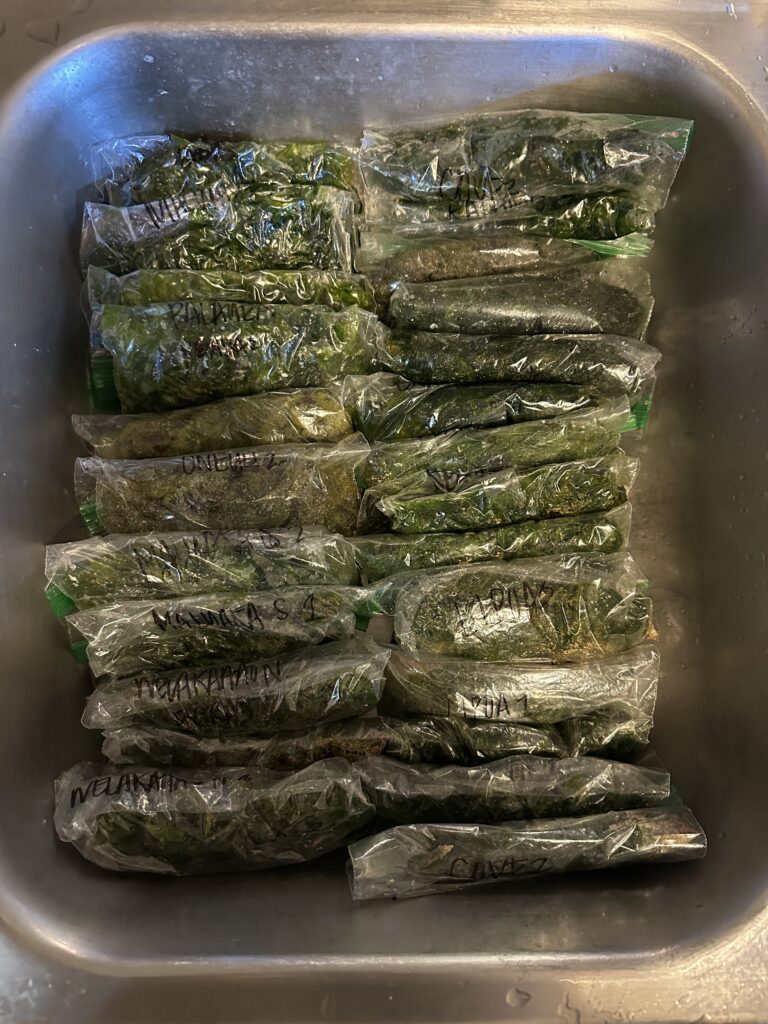
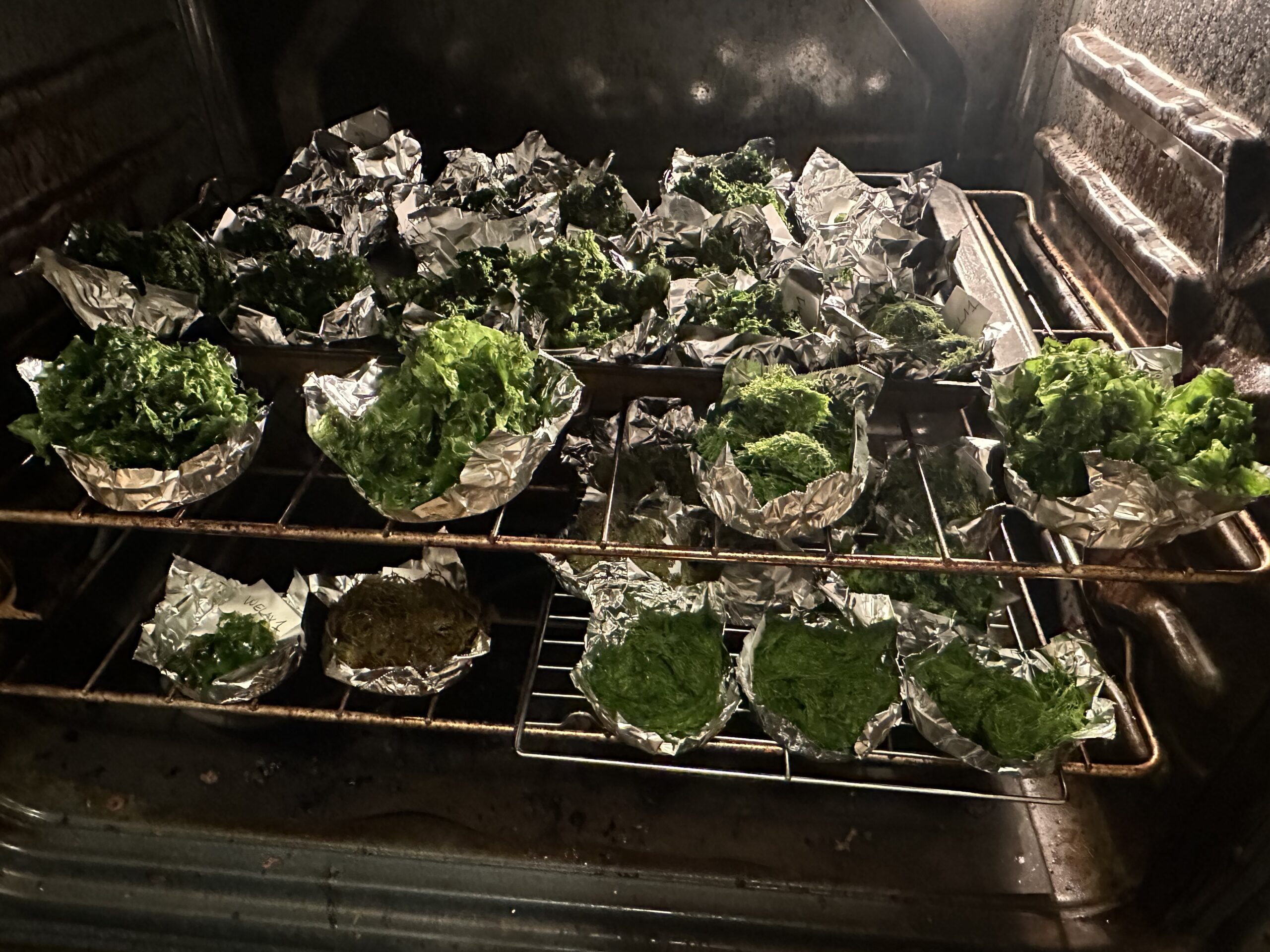
After our volunteer day in February, limu samples from 12 South Maui sites were dried at 180º and then packaged and sent to the University of Hawaiʻi at Mānoa’s School of Ocean and Earth Science and Technology (SOEST) for Nitrogen testing.

Generally, ocean water pollution comes from commercial fertilizer, wastewater, or a mix of the two. Analyzing how much Nitrogen is present in sample tissue can give us clues about which one is the culprit. Levels around 2% or less are considered a normal standard for Nitrogen, but elevated levels signal enrichment in the water.


When we look at our results from testing in 2024, the highest level we saw was a little under 4.5%. While this is not alarmingly high, it is above the 2% threshold and is cause for further investigation. The default assumption is that enrichment is caused by commercial fertilizer. When rain hits commercial fertilizers that have been applied to the ground the Nitrogen in it is dissolved. If it is not absorbed quickly enough into plants, it is absorbed into groundwater or caught in runoff, both of which end up in the ocean.

Another possible pollution source is wastewater. Bacteria in sewage treatment processes tend to soak up Nitrogen 14 isotopes. Both Nitrogen 14 and 15 isotopes are naturally occurring, but when the ratio between the two is abnormal, we start to look for the presence of wastewater in the area.

MNMRC has been testing limu since 2019, but the results from testing in 2025 is what will give us enough information to truly start identifying patterns and trends.


Volunteer Day Recap: Limu Sampling in South Maui

in , /by

Testing limu (marine algae) to learn about pollution sources in South Maui Waters

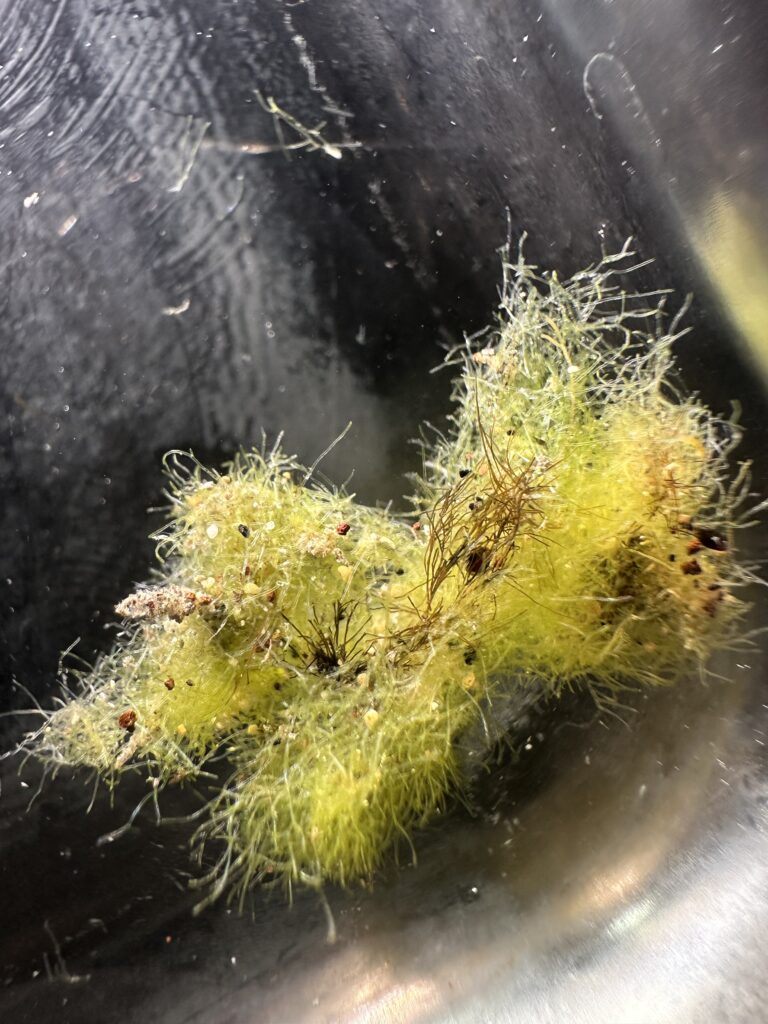
Since 2019 Maui Reefs has analyzed several types of limu (marine algae) that can indicate the presence of freshwater nutrient pollution along Kahului and the West and South Maui coastline. Studies conducted in previous years showed pollution was a concern in these areas, so we wanted to see if nitrogen (a fertilizer) was still in those waters and, if so, where that pollution might be coming from.

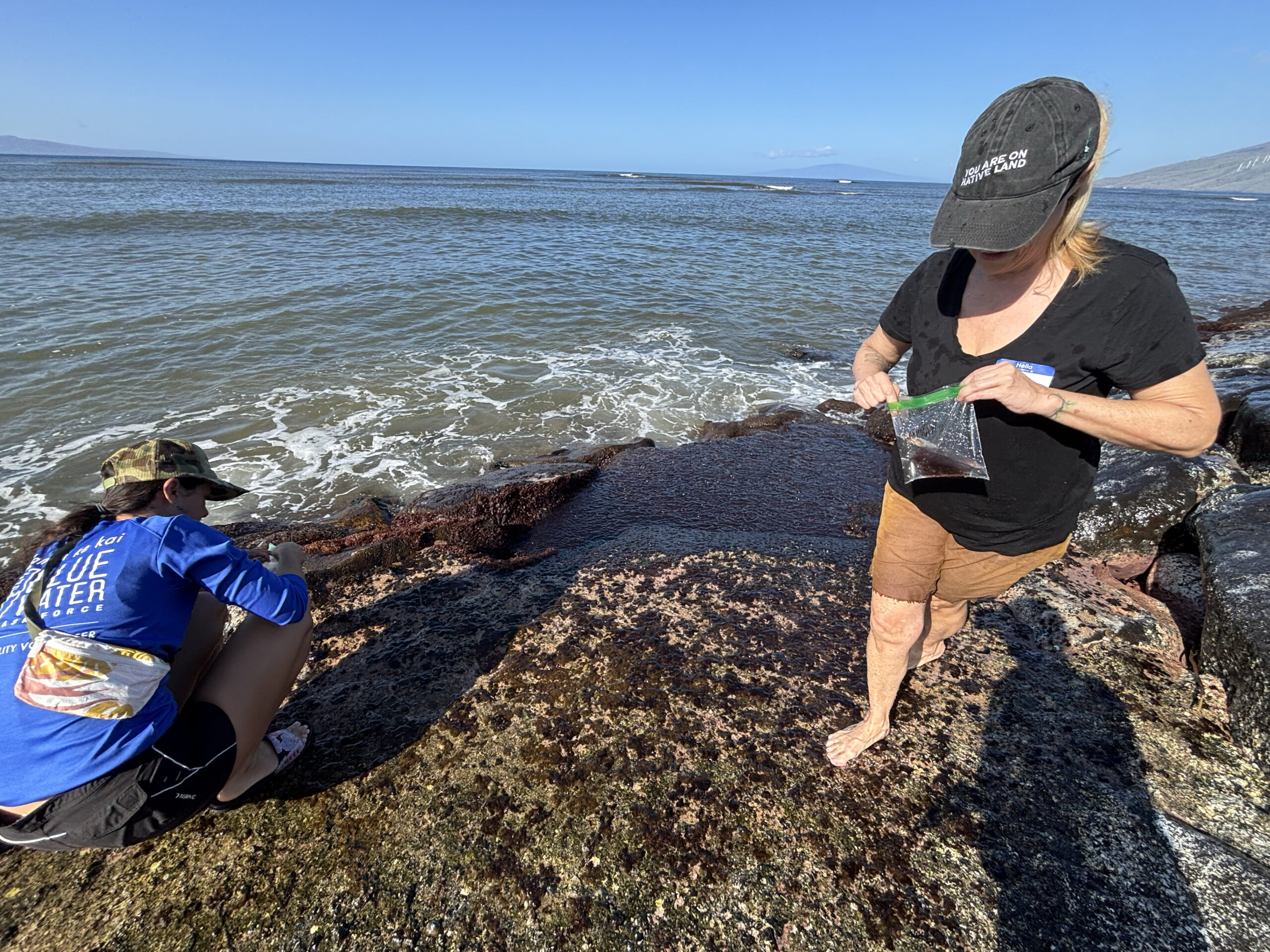
To help answer these questions, a group of Maui Reef volunteers went out on February 11 to collect samples from 12 sites along the South Maui coast. The specimens that will be tested by the University of Hawaiʻi at Mānoa for nitrogen, which can indicate potential pollution problems when found in excessive amounts

Like many plants, limu will absorb nitrogen as they need certain amounts to grow. When limu is analyzed for nitrogen, we can tell if nitrogen levels are too high for normal conditions. When too much nitrogen is present in the water, it harms reefs by causing algae to grow too quickly and to dangerously large sizes. Too much algae can smother a reef and severely reduce the oxygen needed to survive. Further analysis can also help determine if the nitrogen source is related to sewage or if it is coming from a natural source.

In order to spot patterns and trends in conditions, we generally need to have 3 year’s worth of data. Although Maui Reefs sampled limu in 2019, 2023, and 2024, not all sites were sampled each year. But, with the help of our amazing volunteers, we were able to quickly collect more samples than we have ever done in a single day! Now, we have a larger base of information  to build off of as we look to collect more samples in the coming months and analyze the new and old data to see what is happening in the waters off of South Maui.

Mahalo nui to all of our wonderful volunteers who made this work possible!

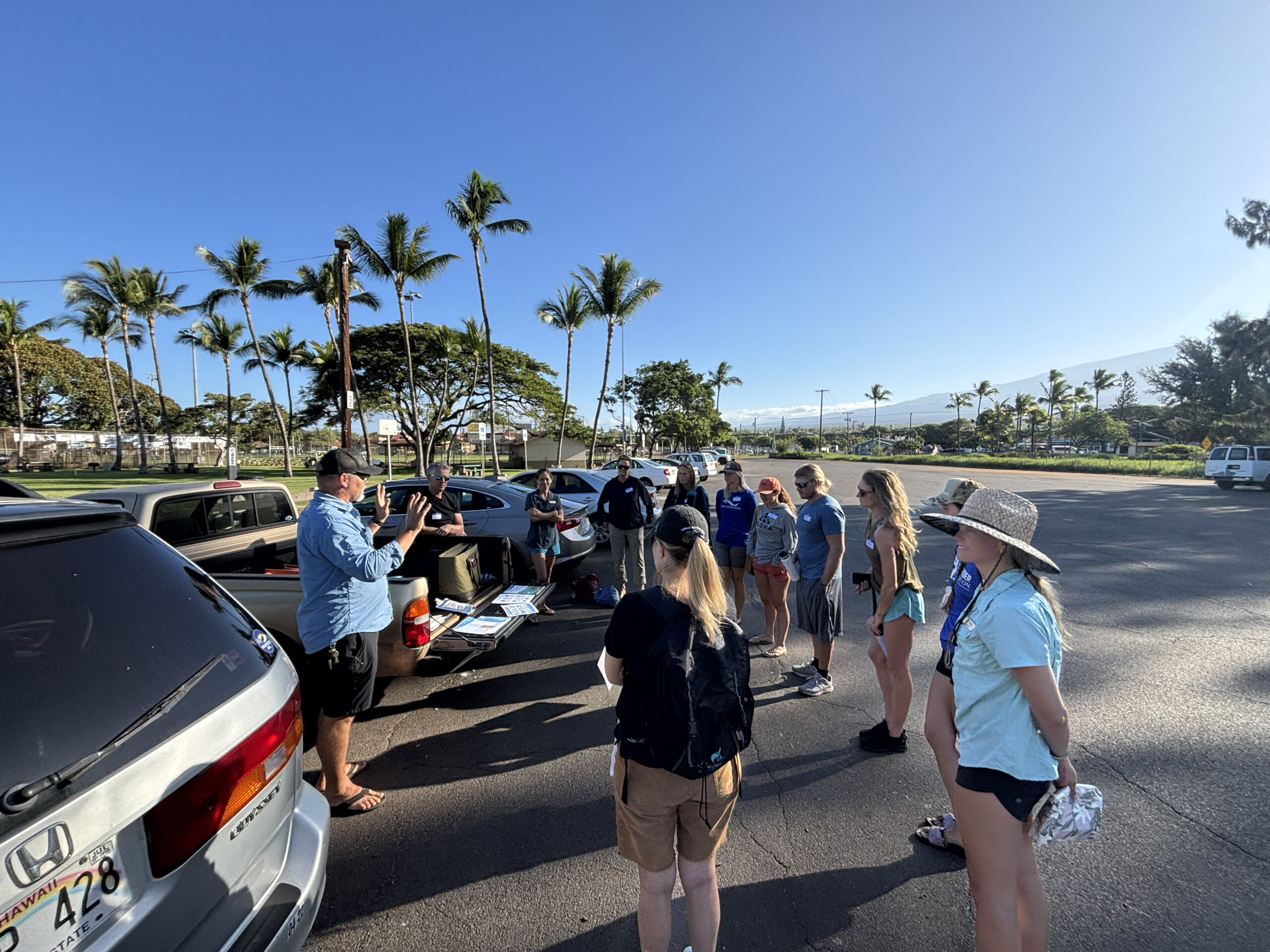
A group of volunteers listening to a training in the Kalama Park beach parking lot.

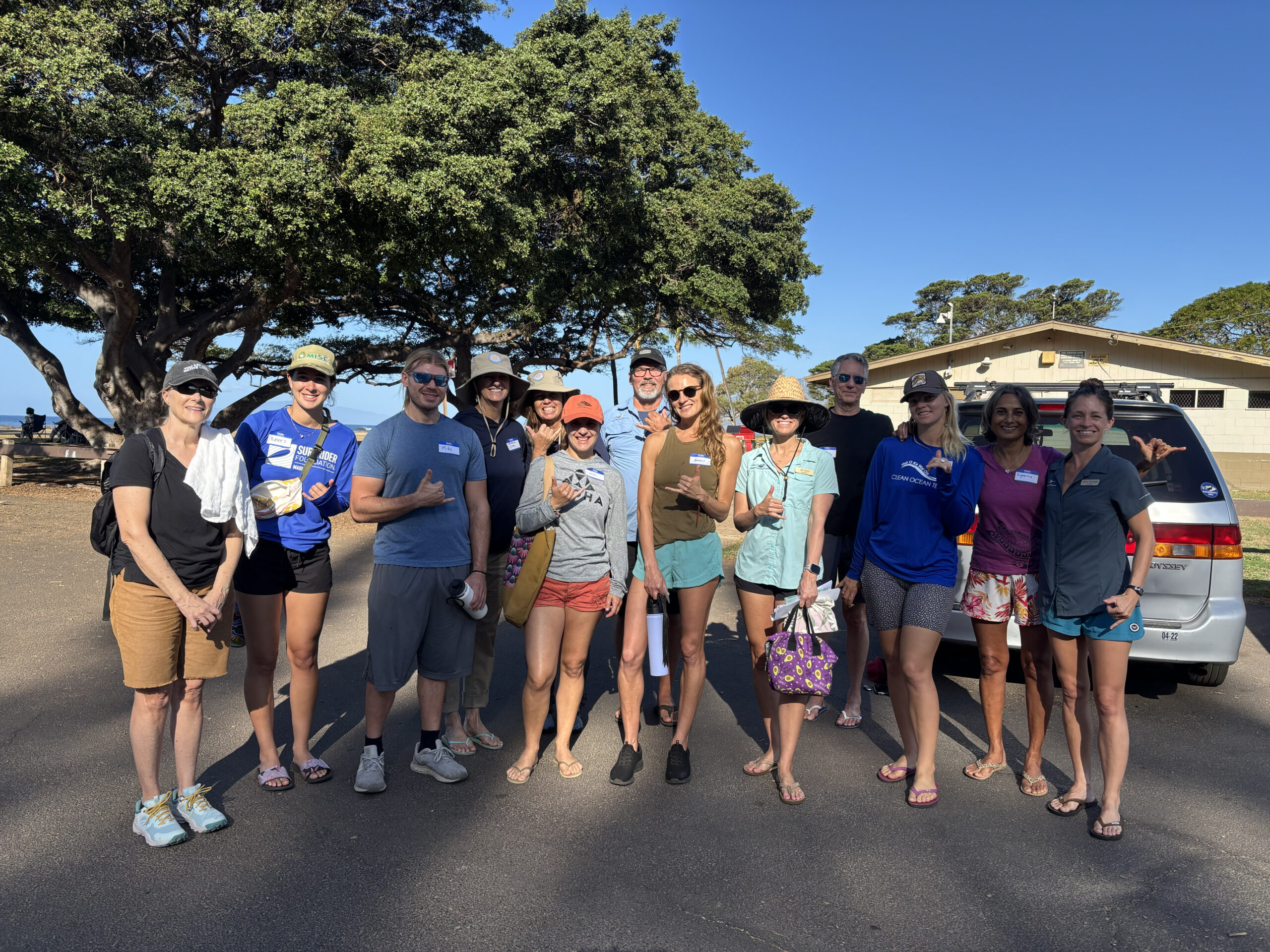
A group photo of 13 volunteers smiling posing in front of parked cars in the beach parking lot.

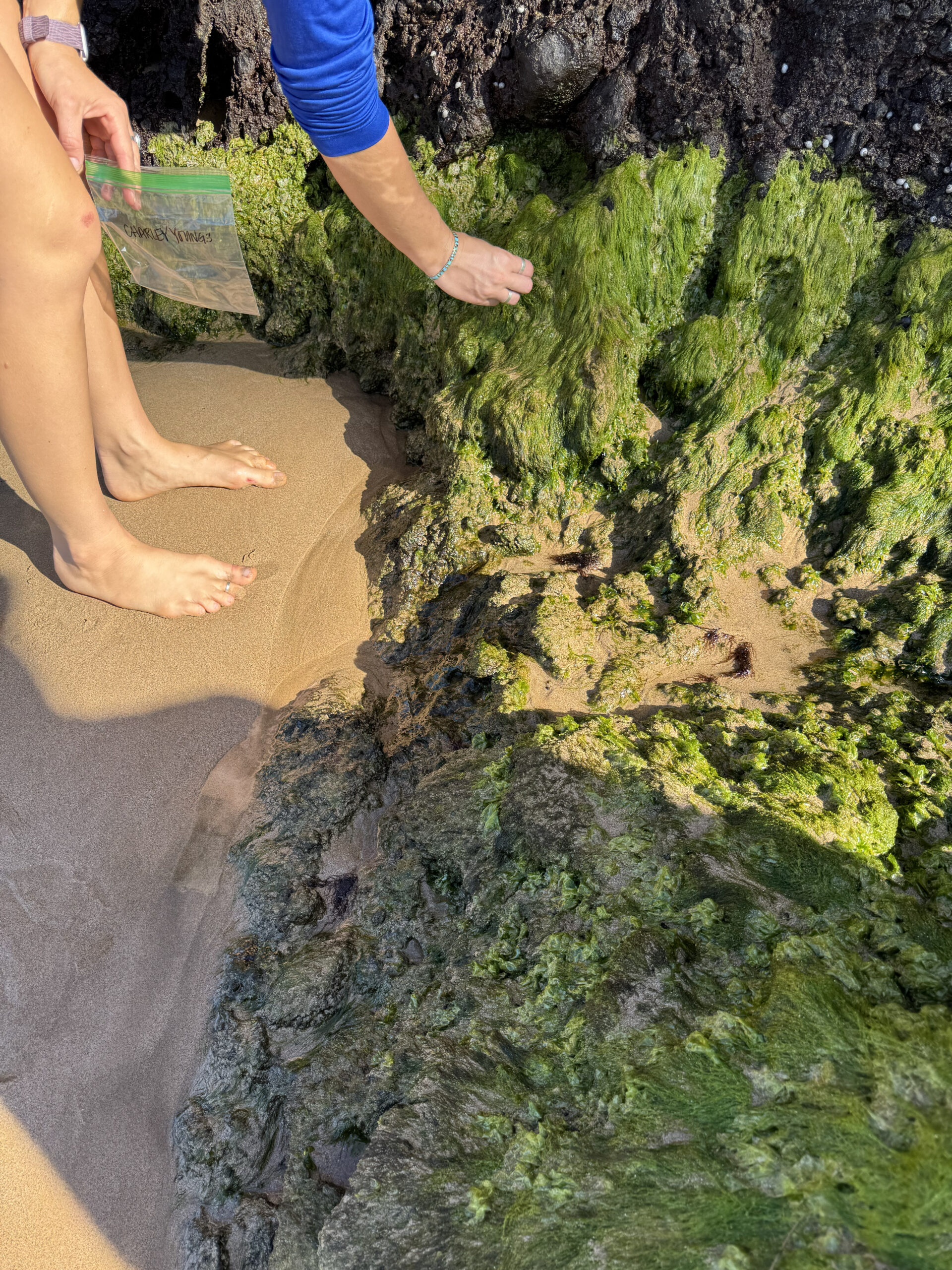
Volunteers collecting algae samples. One volunteer is crouching on a rock wall to collect samples. Another on the right is closing a ziploc bag with algae inside.

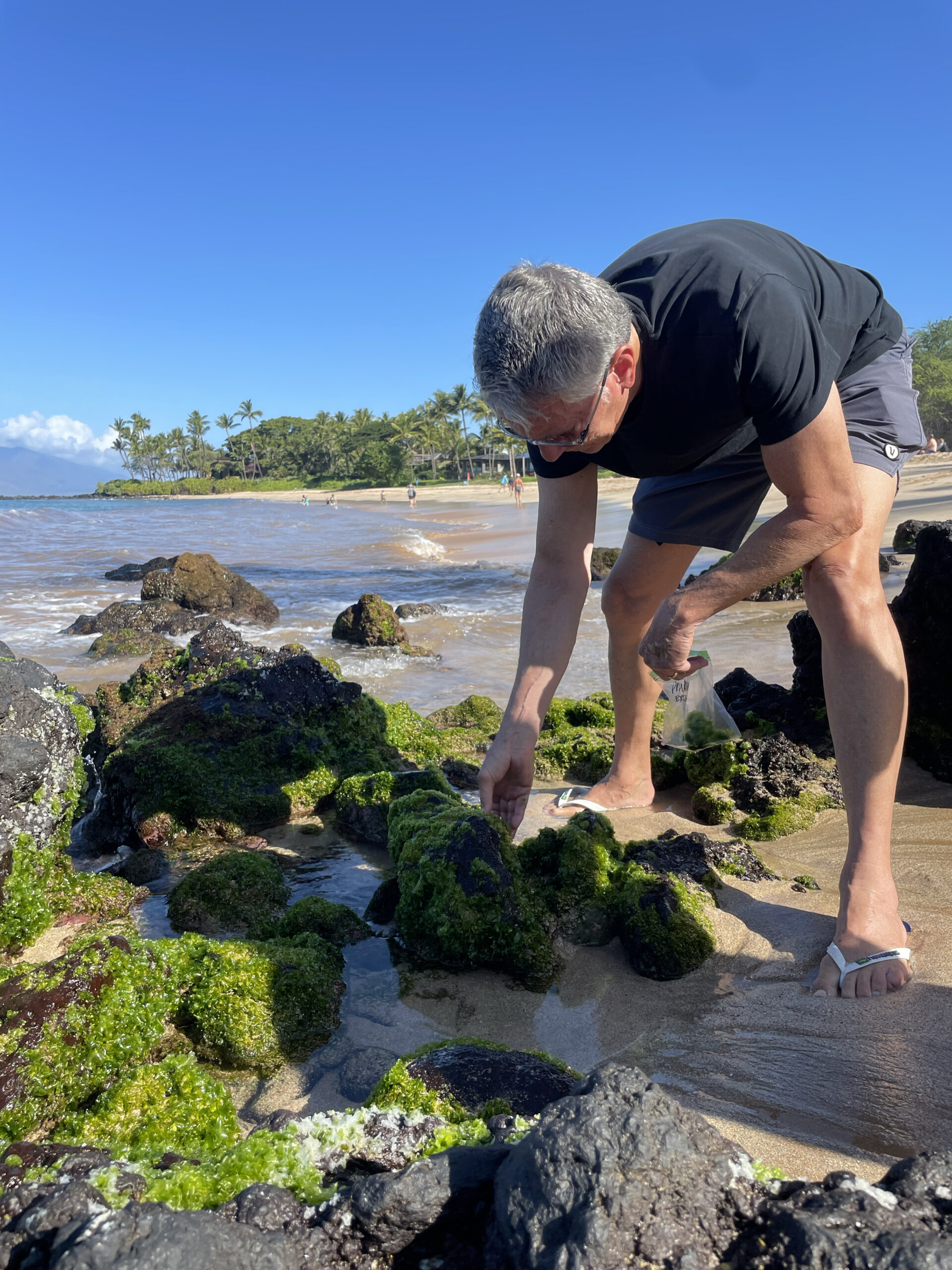
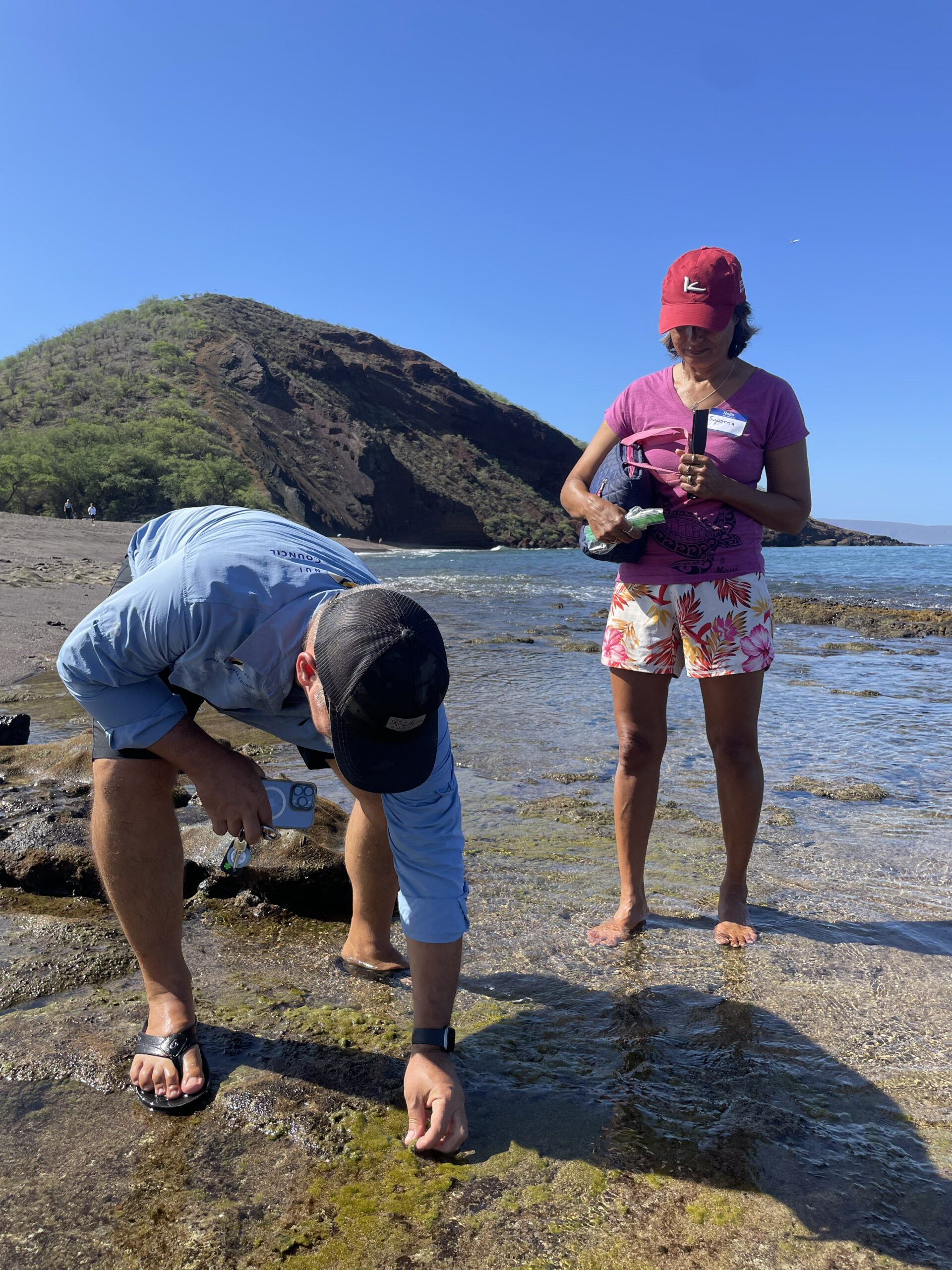
A volunteer picks limu off a rock with the shoreline and palm trees in the background.

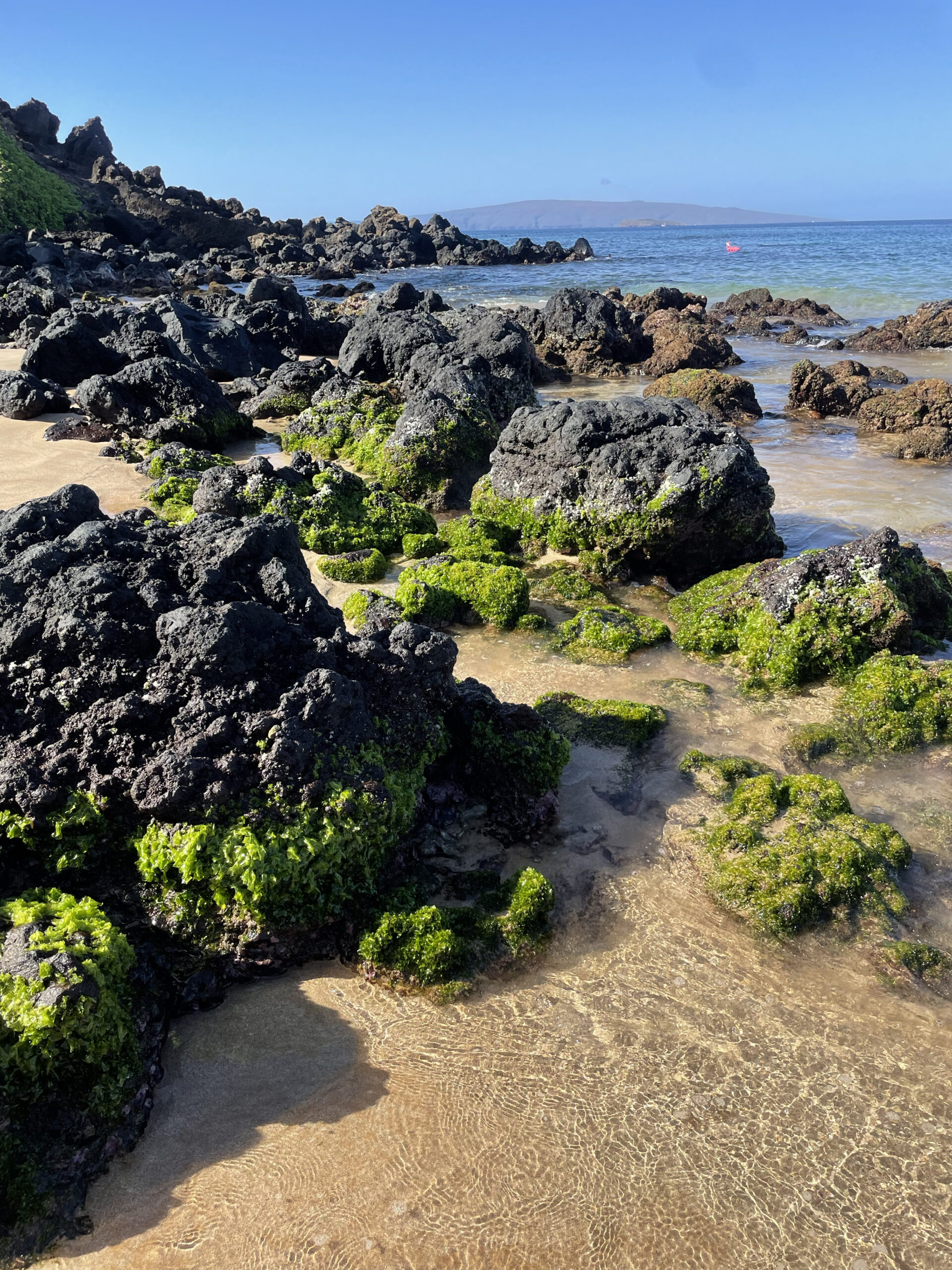
An image of black rocks on the shoreline covered in green algae.


A close up image of a volunteer picks green algae off of a black rock.

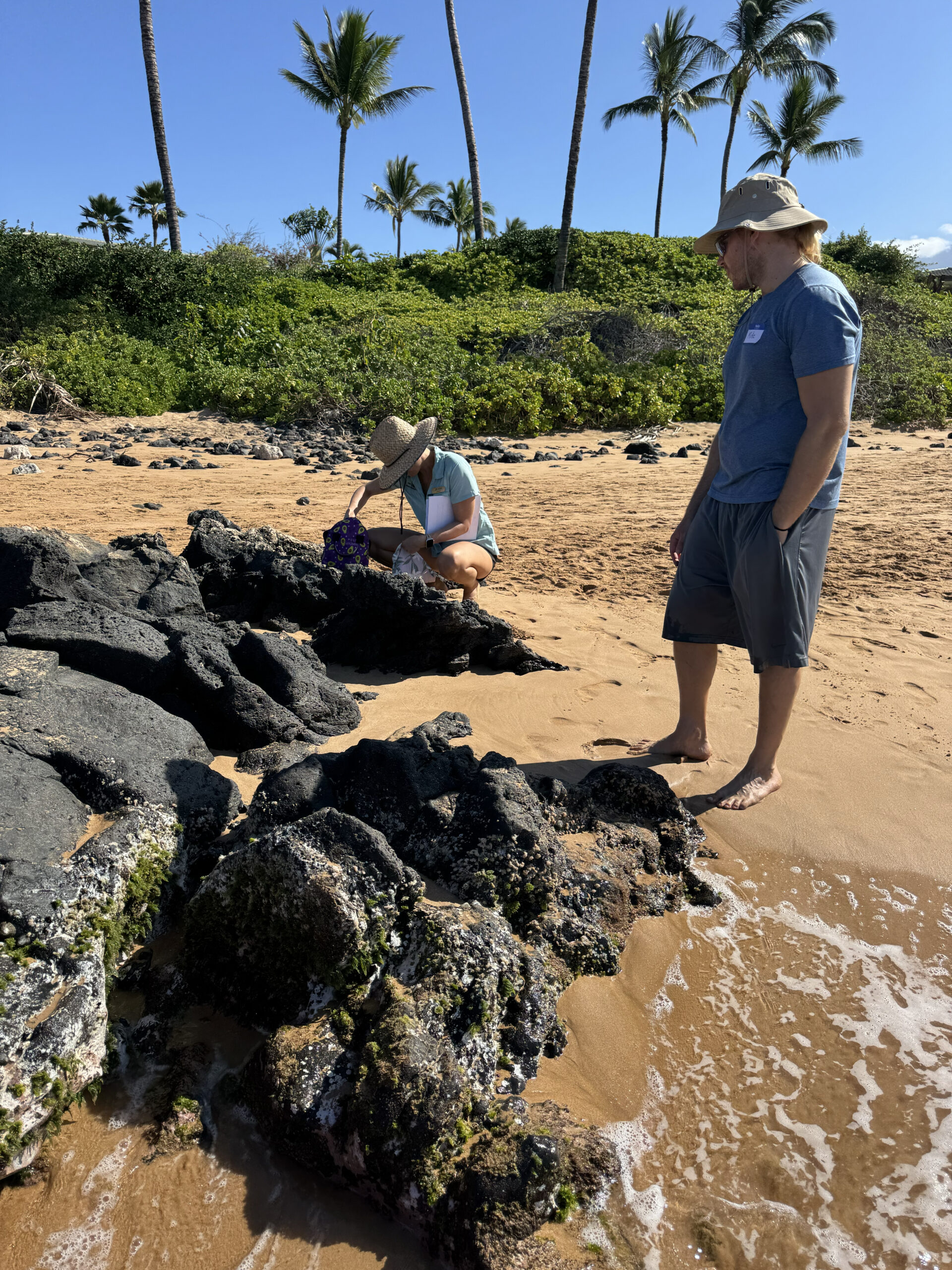
One volunteer looks on as another picks algae off of a rock on the shoreline.

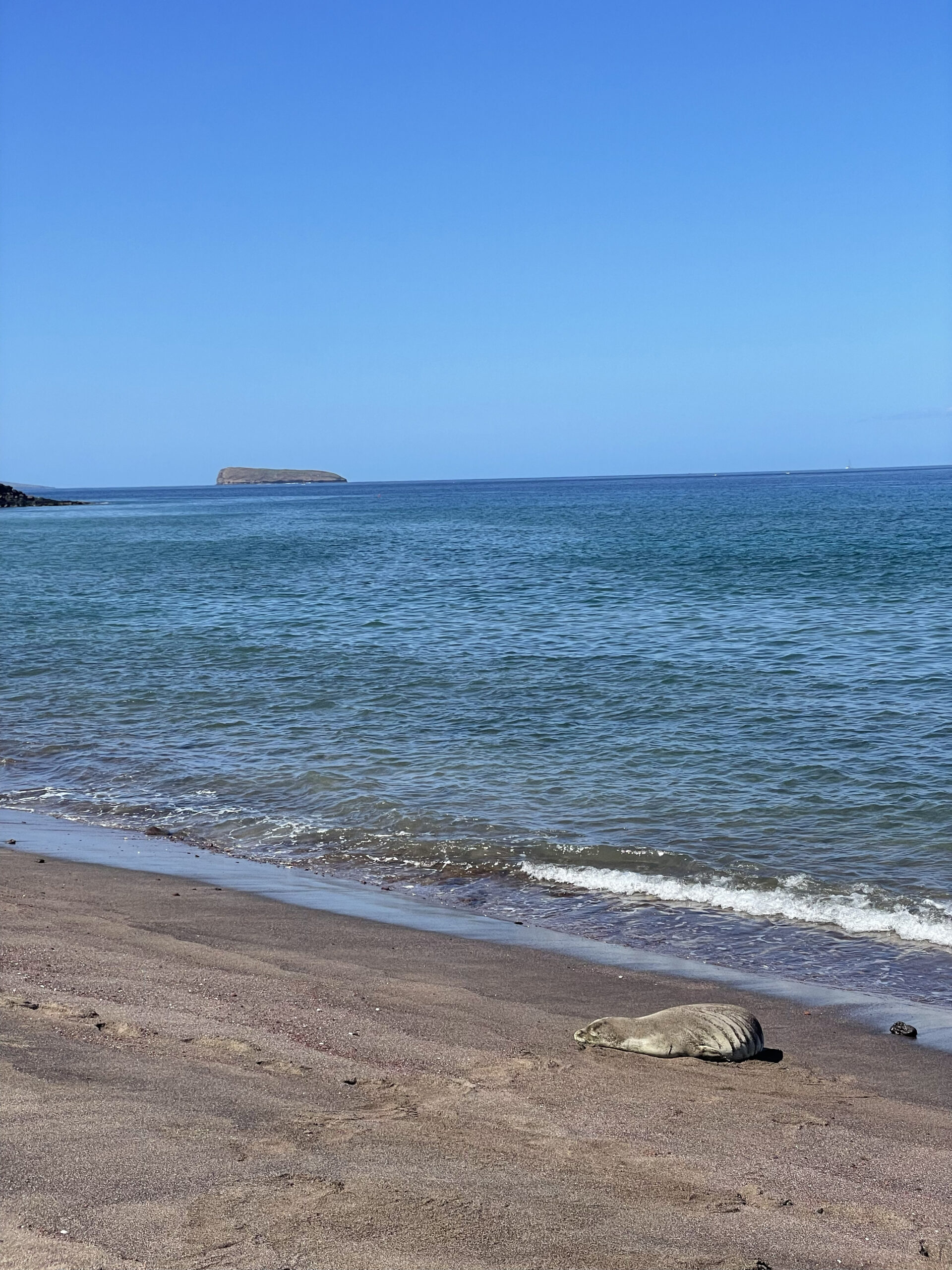
A Hawaiian Monk Seal lays on the sand with the beach and Molokini crater in the background.

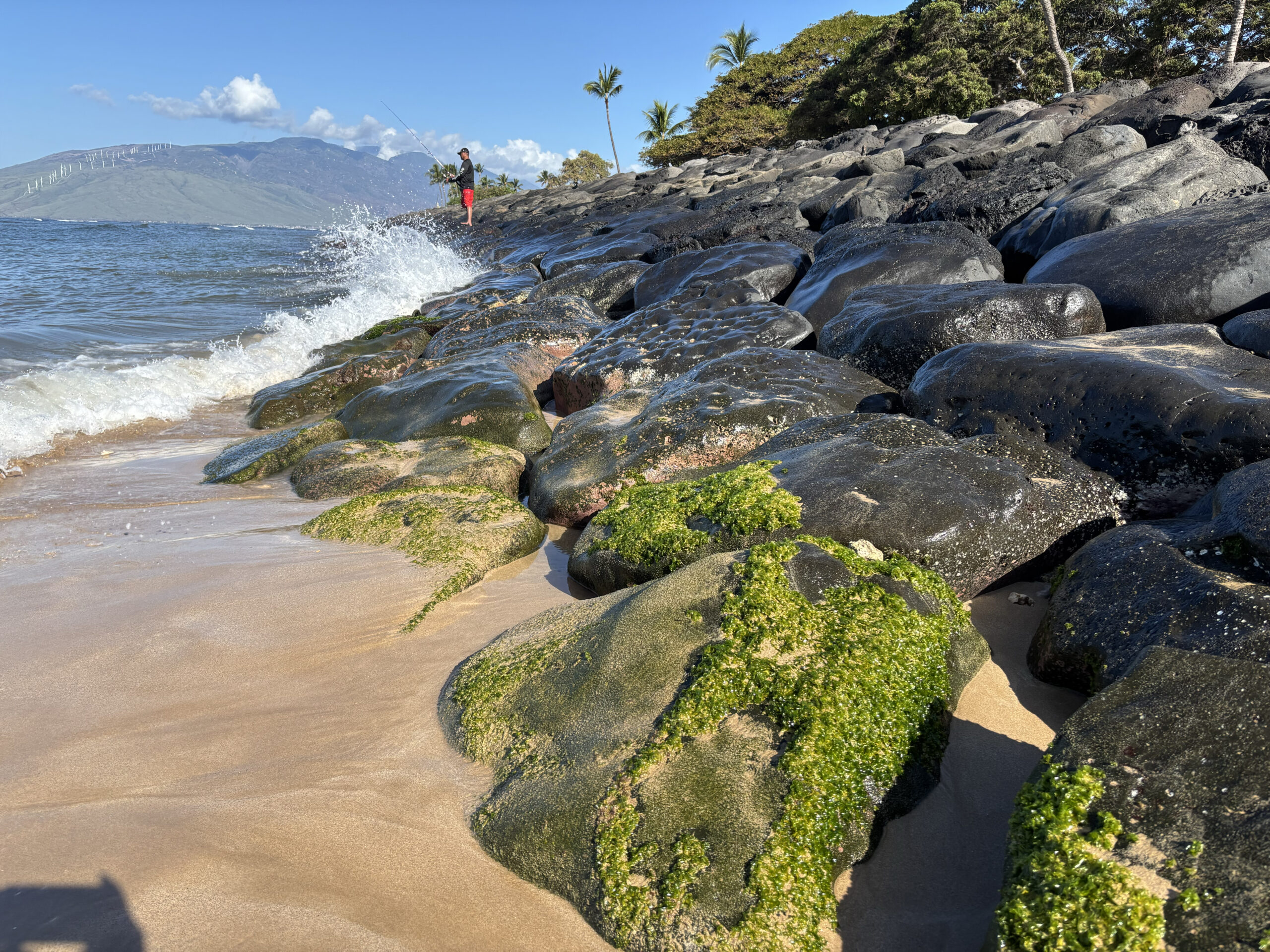
An image of large rocks on the shoreline, some of which are covered with green algae. A fisherman and the West Maui Mountains are in the background.

A volunteer bends to pick algae off rocky patches on the ground while another holding a bag and scraper looks on.

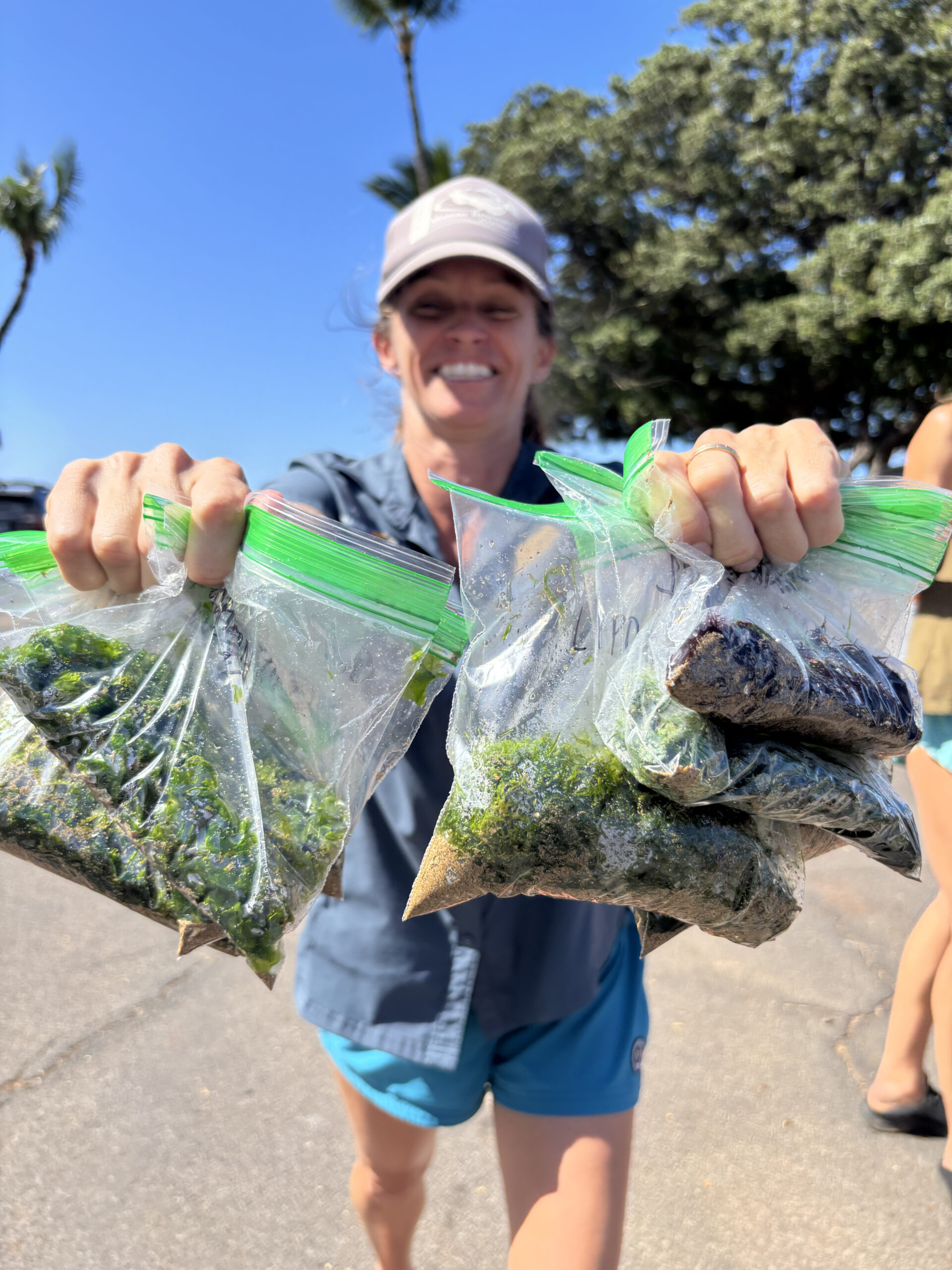
A volunteer holds up five ziploc bags full of algae samples for the camera.

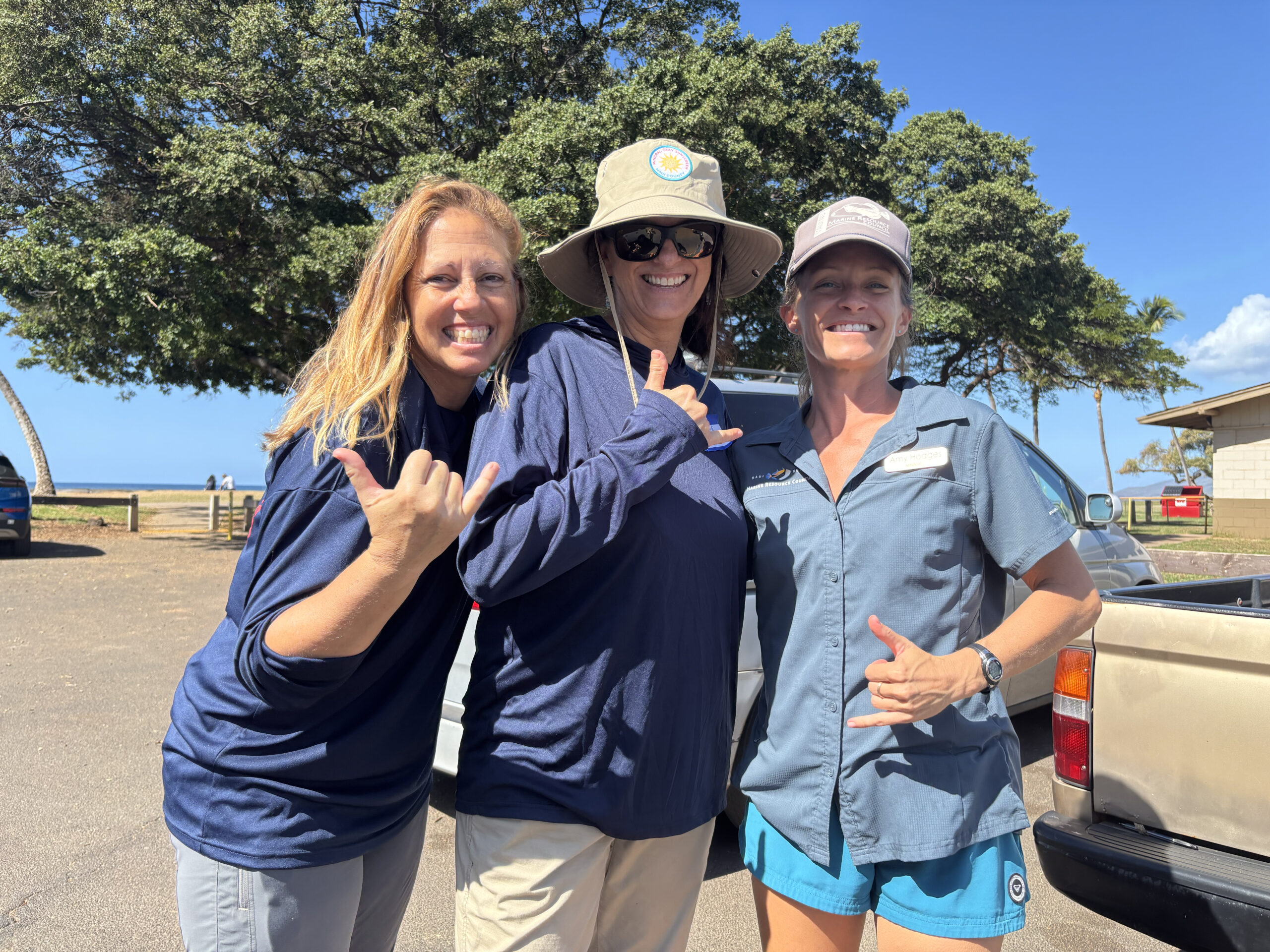
Three volunteers pose with shakas in front of cars at Kalama Beach parking lot at the end of the day.

Nine volunteers pose in front of parked cars with ziploc bags full of algae.


Talk Story with Jill Wirt

in , /by


Jill Wirt headshot with South Maui's beach and the West Maui mountains in the background.Jill Wirt is the Program Director at Maui Nui Marine Resource Council (MNMRC) and manages the Reef-Friendly Landscaping (RFL) and Coral Restoration programs. Since 2015 Jill has worked with many local environmental organizations, including MNMRC, which she joined in 2021. She received her Bachelor’s Degree in Environmental Science from San Diego State University and her Master’s Degree in Environmental Science and Management from U.C. Santa Barbara.

Tell us about your background and connection to Maui.

In 7th grade I had the chance to participate in an all-girls science camp held at Stanford University through an organization called TechTrek, sponsored by the American Association of University Women. The camp offered different science classes each day, with topics like robotics, microbiology, and marine biology. We went out on a boat for our marine biology lesson and from that moment on I knew I was a science girl. 

I took AP environmental science in high school and knew at that time it was going to be my path. I ended up getting my BS in environmental science at San Diego State. In 2013, I did an internship with the Pacific Whale Foundation here on Maui during undergrad and it helped direct me to the marine conservation side of things. After that, I did everything in my power to come back to Maui after graduation. I officially made the move in 2015 and worked in ecotourism on snorkel and whale watching boats along with working in hospitality as part of a naturalist program at the Ritz-Carlton in Kapalua. A few years later, I decided to pursue graduate studies in environmental science and management, specializing in coastal and marine resource management at UC Santa Barbara.

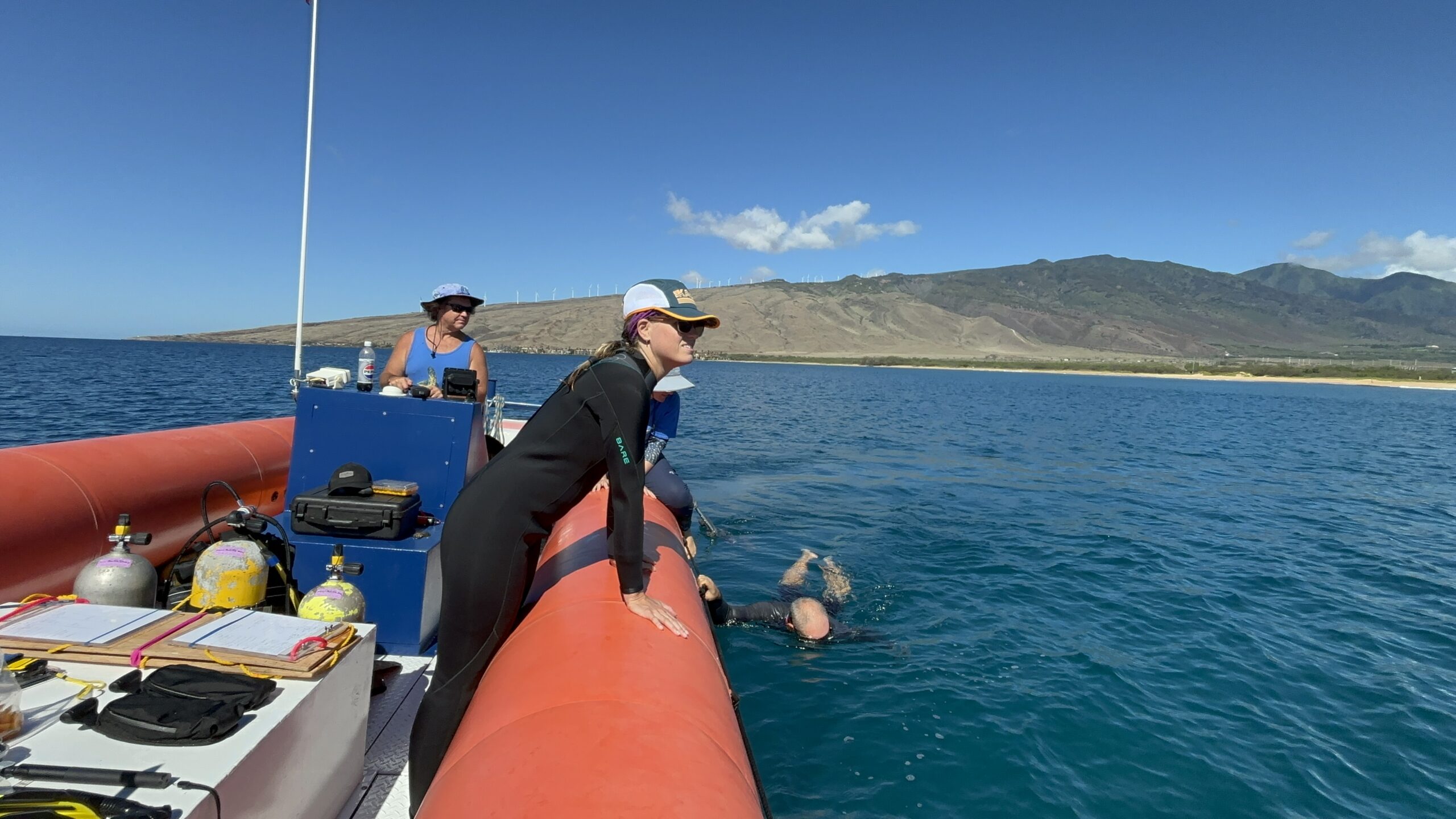
Jill is part of the MNMRC dive team that checks in on the health of reefs around Maui throughout the year. (Photo Credit: Maui Nui Marine Resource Council)


What inspires you most about the organization?

At Maui Nui Marine Resource Council, we all care very deeply about this special place we call home – and there’s this deep belief that when we take care of the land and the ocean, it will take care of us. That awareness comes from listening and slowing down, feeling that connection to the landscape. The community is so tight-knit, and so strong here, if you show up and help where there is a need, it can really make a difference. Being immersed in the local community here at MNMRC is such a big part of why we can do what we do. We truly try to always come from a supportive, open-minded, solutions-centered place, we want to help solve problems, whatever that may look like.


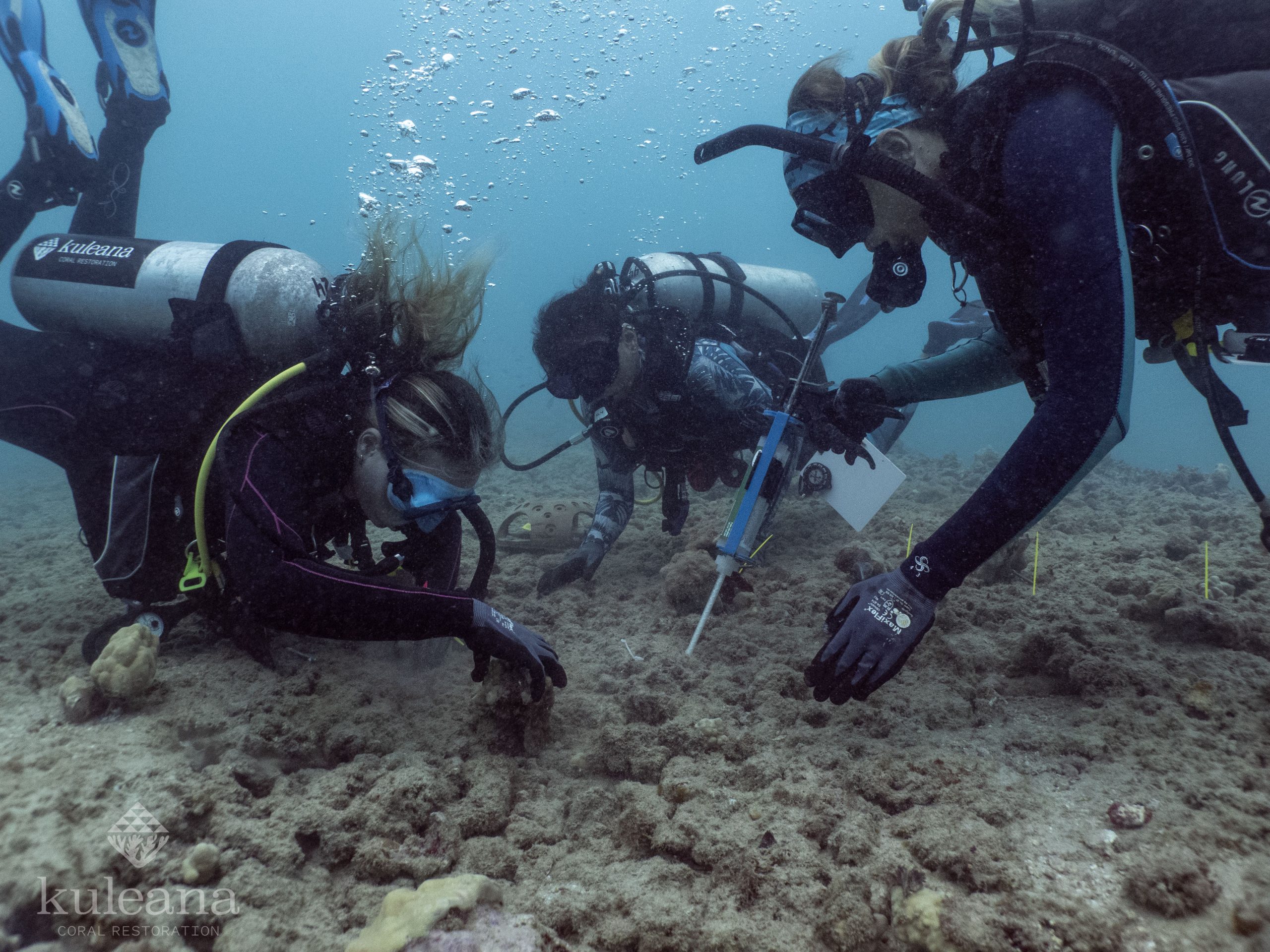
Jill working to reattach corals of opportunity during a training in O’ahu with Kuleana Coral in 2024. SAP #2024-09 (Photo Credit: Kuleana Coral)


Is there a current project you’re kicking off that will extend into the next year?

In 2023, Kuleana Coral Restoration, an organization based on Oʻahu, was looking to expand into Maui and bring alongside a local partner for their coral restoration work. We began working alongside them, looking into grants and locating sites across the island that could be viable for coral restoration work. We’ve also been working with community members for the past few years to locate the most ideal sites, and landed in Māʻalaea Bay offshore of Kihei and Kula Moku where there are some decent, patchy reef areas.

We look for areas that have a pavement-type substrate and for what we call ‘corals of opportunity’ (COO) that can be reattached to bare or exposed areas of the reef. COO are pieces of coral that have been dislodged, broken off, or turned over from the reef, and we take those and reattach them to bare areas of the reef, which hopefully will give them a better chance at life to reestablish coral cover and provide fish habitat. We are careful not to move corals from where we source them, always trying to keep them in one spot. With that in mind, all of the work is done on the boat or in the water directly above the site, we don’t transfer any of these corals to a lab or coral nursery on land. All of this work is done under permitting with Kuleana Coral Restoration who have shown success with these methods on Oʻahu.

Our priority is to focus on areas that are heavily impacted by land-based activities, restoring reefs to positively impact fish populations and improve overall reef health. These are small-scale efforts right now, with maybe 100 corals of opportunity that we will monitor over the next year. With the monitoring, we will look for variations due to temperature changes and storm swells, for example, assessing how the corals are doing over time. Kuleana Coral obtained a Special Activities Permit to perform this work on Maui, adding an amendment for the sites here. Moving forward, the goal is for us to obtain our own permit here at MNMRC so we can train community groups locally on Maui to continue with this important work.

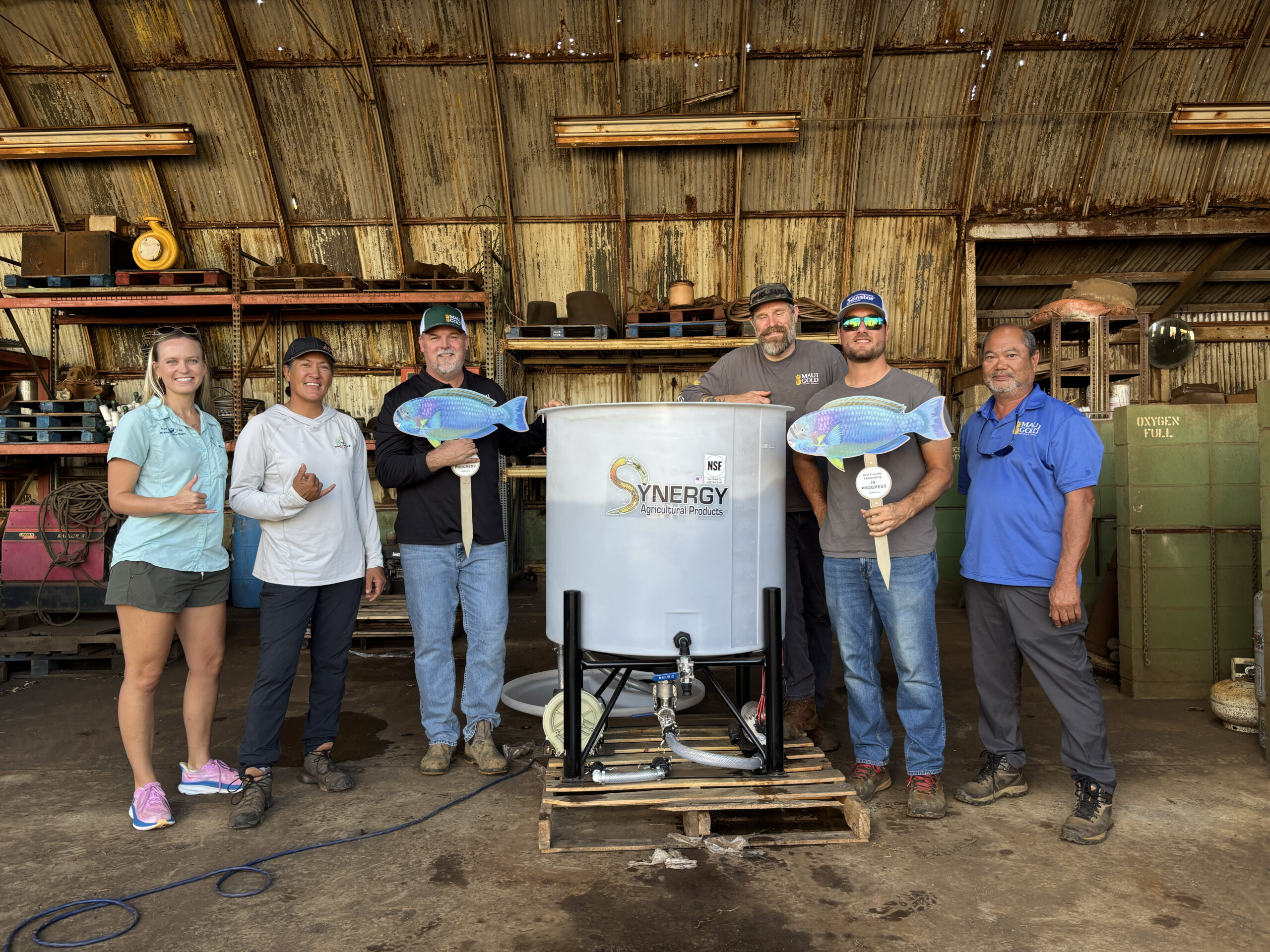
Through MNMRC’s Reef-Friendly Landscaping test plot program, Maui Gold Pineapple setup a soil amendment brewer at their farm in November 2024. The brewer will allow Maui Gold to produce the environmentally friendly product used on their RFL test plot.(Photo Credit: Maui Nui Marine Resource Council)

You head up MNMRC’s Reef-Friendly Landscaping program.  How can new volunteers get involved with upcoming work?

Kahoma Village, a residential community in Lahaina, lost four buildings during the 2023 wildfires. They approached us to help restore their green space, which acts like a detention basin and fills up with standing water, and they get invasive cane toads as a result. We tried to figure out trees and plants that could be planted to alleviate the flooding or ponding. As we started talking, we realized there was an opportunity to apply for a grant from the Division of Forestry and Wildlife to transform the green space into a true community gathering place filled with flowering trees, fruit trees, native shrubs, and groundcovers.  

We now have grant funding through April 2027, with the first phase of planting taking place this Spring.  On April 26, we will be kicking off the project with a community work day, coming together to plant mango, avocado, lychee, breadfruit, and plumeria trees as well as native palms and shrubs. We will do some prep beforehand so that on the community work day, we can all gather together to plant and learn and share more about the project. 

We will be collaborating with the landscapers at Kahoma Village to develop a plan to continue the use of environmentally-friendly techniques and practices moving forward throughout the property after the planting is complete. We are incorporating reef-friendly landscaping techniques, targeting problem areas and adjusting practices at the site, such as reducing water use, eliminating pesticides, and using locally-made soil amendments. These alternatives will have less negative impacts on the downstream environment and support local businesses to implement reef-friendly landscaping practices at scale. 

We will be looking for volunteers to help us plant. Keep an eye out for a registration link as April 26th approaches, we would love to see you there.

Jill meets with residents of Kahoma Village in Lahaina where MNMRC is helping the community install native trees and plants as a part of their wildfire recovery plans. (Photo Credit: Maui Nui Marine Resource Council)


Where do you spend your time when you’re not working?

I love hiking, snorkeling, and playing beach volleyball. I like to take beach walks in the morning, and one of my favorite spots is Kapukaulua (Baldwin Beach) on the North Shore in Pāʻia. I love the way the beach changes throughout the seasons. In the summer, sand moves down to one end of the beach, where there is a shallow lagoon, and at low tide, it closes off the connection to the ocean. Sometimes you’ll see multiple turtles trapped in this little lagoon, and then in the winter, the sand moves down to the other end of the beach. I also love the energy of the North Shore during the winter.

What do you enjoy most about living and working in this amazing place?

The ocean, of course! The immensity of the landscape. It’s so easy to feel connected to the environment here, and when it gives so much to us – peace, healing, humility, I think it makes it even more motivating to protect it. Especially here, the community relies on this precious environment and land. During my time here, I’ve seen that some of the best conservation projects begin with a small-scale project, or sharing food and coming together, and taking the time to slow down. It is crucial to know your local area, your neighbors, and your community’s needs.

What opportunities do you see on the horizon for the field of conservation?

There’s a lot of pressure to make individual changes, and those are important, but there is so much opportunity and growth for larger companies to step in and commit to making lasting changes in their business practices. I see more community-based work that is grounded in kilo (observation and learning) and mālama ʻāina (caring for the land) because the community members will be the ones who will support, manage, and continue generational learning in conservation. Being a part of MNMRC, we feel lucky to support that work and have it inform so many of the projects we do.  The more that all of us, industries and individuals alike, can come together, the more impactful the results will be. 

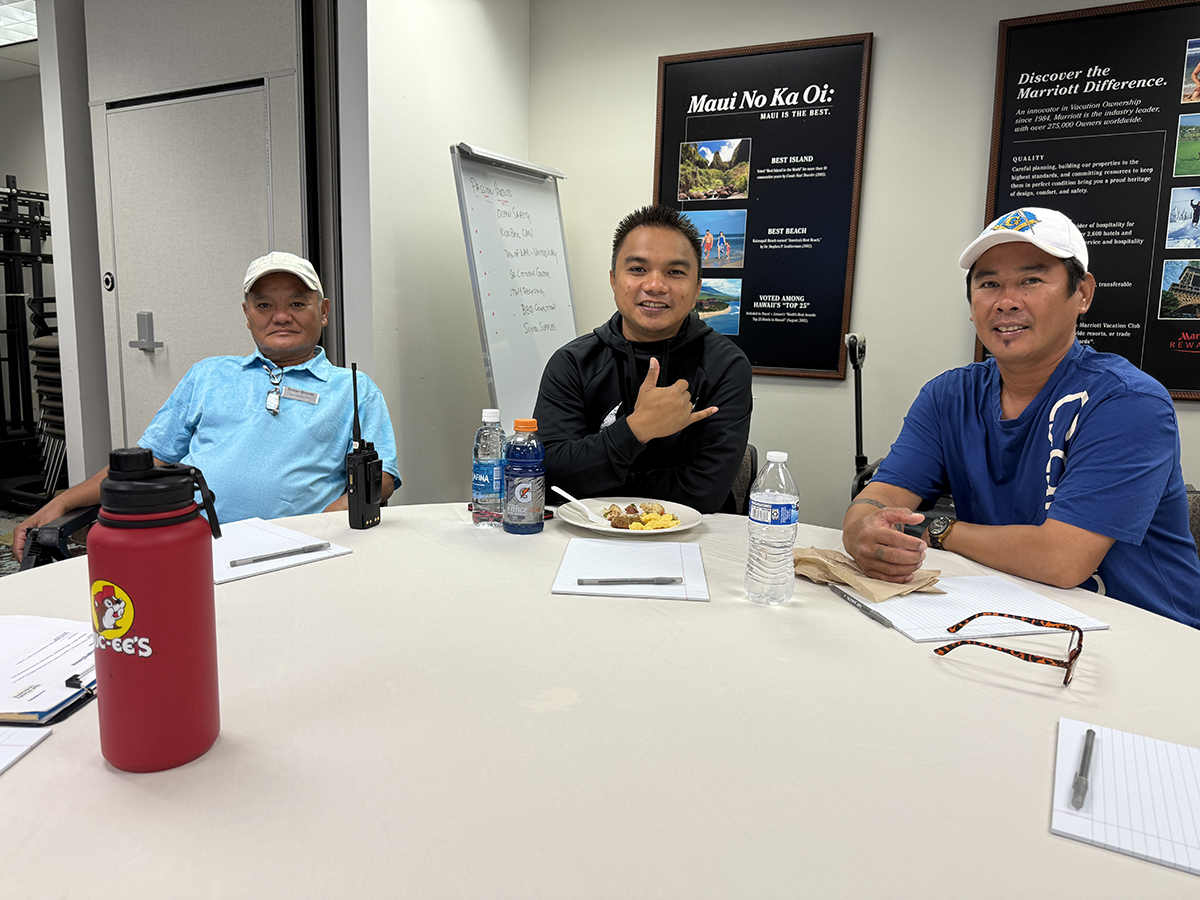
What’s your favorite island dessert? Any favorite food stops?

Roselani Kona Mud Pie Ice Cream! I am a big fan of Thai Mee Up (panang curry or pad thai with veggies and tofu) or Tin Roof’s mochiko chicken!

Speaker Series: Unlocking the Mysteries of Biodiversity on Hawaiian Coral Reefs

in , , /by

Join us on February 5 as Dr. John Burns of the University of Hawaiʻi at Hilo shares how the Multiscale Environmental Graphical Analysis (MEGA) Lab is using cutting-edge 3D technology to map and study reefs as the organization pursues its goal of mapping 1 million of the world’s best reefs by 2030.

Less than 20 percent of our oceans have ever been seen and in order to better prepare for a rapidly changing future, we need to know what we have so that we can understand where we need to go,” said Dr. Burns.

MEGA Lab layers their 3D reef reconstructions with an array of environmental data to improve understanding of the biology and ecology of the underwater habitats. This has helped show how coral reefs are changing over time, and how these changes impact associated reef organisms and the services communities depend on.

Map2Adapt aims to map 1 million of the world’s best reefs by 2030 while also training more than 10,000 citizen scientists to better support their communities. “Through Map2Adapt we are able to rapidly identify the state of our reefs, inform conservation restoration efforts, and integrate better management methods across the planet,” said Dr Burns. “Ultimately, our goal is to use innovative technologies to improve our understanding of reef biodiversity and develop techniques to help protect and preserve these ecosystems for future generations.”

MEGA lab also hosts a live streaming camera and a smart buoy to monitor ocean temperatures and coral reef health through a collaboration with UH Hilo and Aqualink off the coast of Kona, Hawaiʻi. The site utilizes infrastructure at the Natural Energy Laboratory of Hawaii Authority (NELHA) and the Fathom Octopus camera to provide 360 panning ability to optimize reef monitoring.


Save your spot, register today!


Meet the Speaker: Dr. John Burns, Associate Professor in Marine Science and Data Science, University of Hawaiʻi at Hilo

Dr. Burns is a research scientist who studies coral health and disease. His work has investigated the physiological impacts of disease on affected corals and how coral mortality affects the ecology and biology of coral reef ecosystems. John has been continuously searching for both global and localized drivers of coral diseases in order to promote healthy coral ecosystems in the face of global stressors such as climate change. His expertise led to his inclusion in the award-winning documentaries, Chasing Coral, Reefs at Risk, and Island Earth. John has recently developed innovative techniques to create three-dimensional maps of coral reefs to accurately measure how natural and human-induced disturbances impact ecosystem function. John’s research has been presented at scientific conferences around the globe and he has authored multiple publications in international peer-reviewed journals.