Blog Archives: MNMRC Community

Talk Story with Tova Callender

in , /by


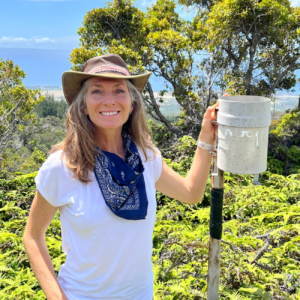
Tova Callender is a longtime partner of the Maui Nui Marine Resource Council and its newest board member. In her current role as the Ridge to Reef Coordinator for the Department of Land and Natural Resources, Division of Aquatic Resources (DNLR-DAR), Tova focuses on land-based solutions to protect Maui’s waters. Tova is also a member of the steering committee for Hui O Ka Wai Ola and is the watershed coordinator for the West Maui Ridge 2 Reef Initiative.

What first sparked your journey into environmental science?

I grew up running wild with my brothers on 100 acres of forest, fields, streams, and orchards in Ontario, Canada. That early connection to nature eventually led me to pursue a bachelor’s degree in environmental biology at McGill University followed by graduate studies at UC Santa Barbara. The close relationship I have felt to nature since I was young and my passion for the environment naturally evolved into my career focus.

I moved to Maui twenty years ago to work in sustainable agriculture in West Maui. That experience deepened my understanding of the island’s unique ecosystems and people, which led me to my current role as Ridge to Reef Coordinator for DLNR-DAR, where I focus on land-based solutions to protect our coastal waters.
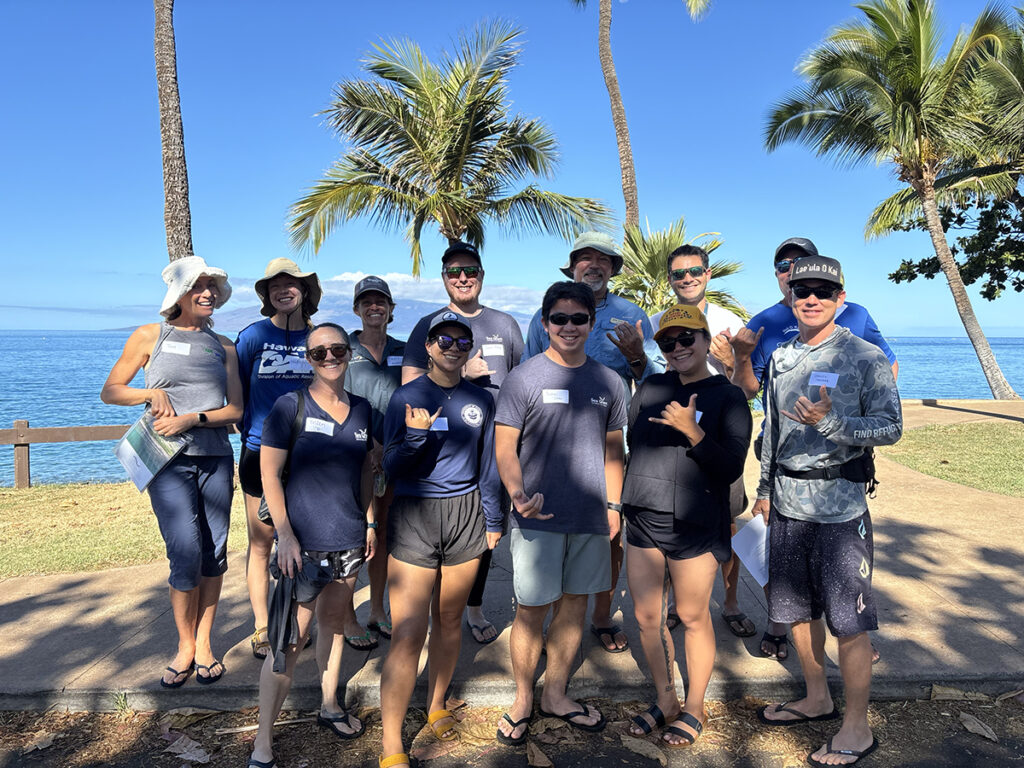
 

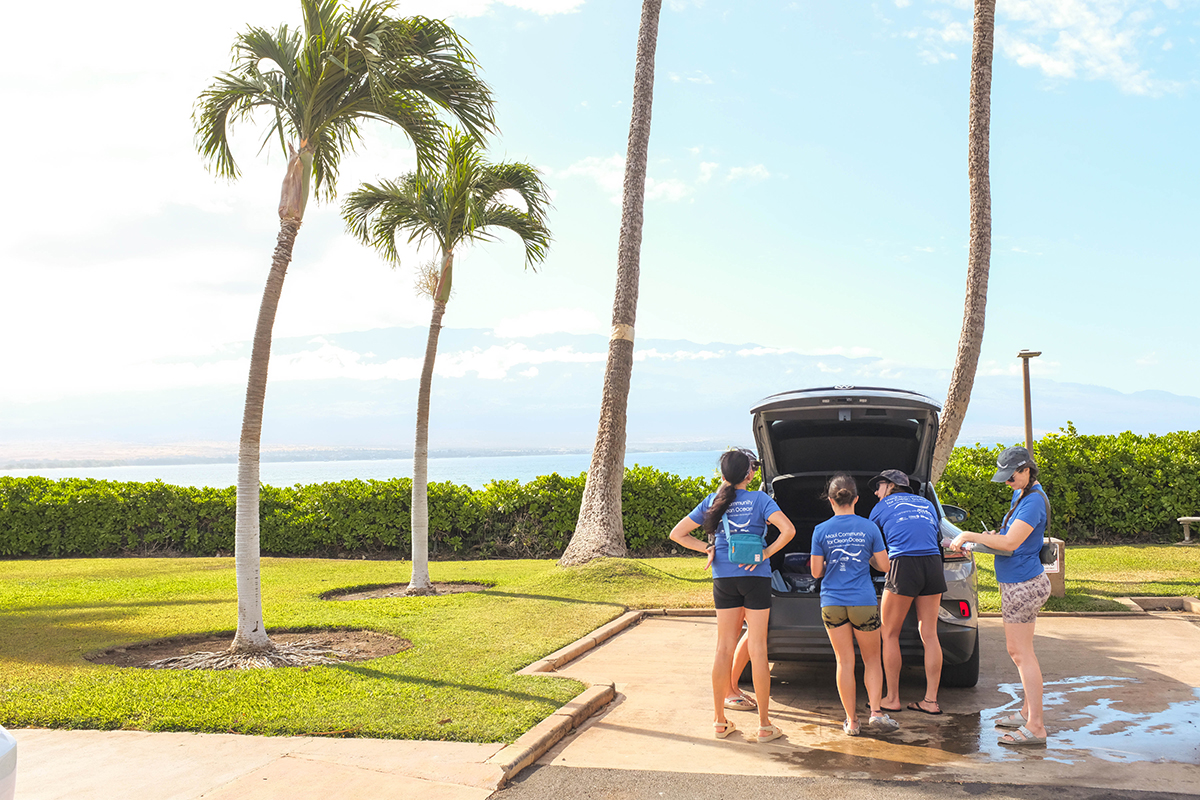
Tova (back row, left) participated in the Maui Nui Marine Resource Council’s limu volunteer day in Lāhainā in July.

Can you tell us more about your current work?

As Ridge to Reef Coordinator, I try to bring people together to find collaborative solutions to land and water issues, which are always closely tied together. It’s about facilitating connections between organizations, funders, and individuals—breaking down silos and recognizing where missions overlap. No landowner wants their soil washing into the ocean, and that shared concern opens the door for meaningful conversations and lasting partnerships.

Education is an element of what we do, especially around land-based pollution and community engagement. It’s important that people don’t feel overwhelmed by the scale of the problems we are collectively facing—individual actions really do make a difference.  Also, there is inevitable ongoing movement within positions on the island, with general managers transferring between properties, for example, so it’s critical to consistently focus on introducing the issues to new audiences—especially the land-ocean connection, what we refer to as working mauka (mountain) to makai (sea).
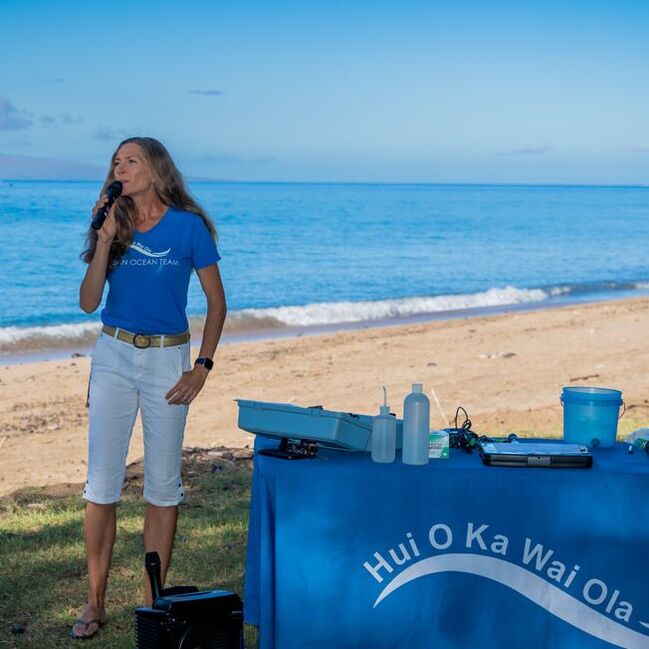
 

As a member of Hui O Ka Wai Ola’s steering committee, Tova advocates for data-based management solutions that protect coastal waters and local marine ecosystems. (Photo Credit: Hui O Ka Wai Ola)


You are on the steering committee for Hui O Ka Wai Ola. How has the Hui’s work impacted Maui’s waters?

Hui O Ka Wai Ola has been essential to watershed management on Maui—we wouldn’t have the water quality data we rely on without them. The work is deeply collaborative and gratifying. I chair the technical team, which meets every three weeks to ensure data collection and analysis align with community and environmental needs. Every two years, we publish a comprehensive report, with the next one coming out mid-2026.

The Kahana Nui Basin in West Maui is a great example that shows the impact of our data. Over time, the original retention basins had become less effective at preventing pollution from reaching the coastline. USGS studies had indicated that sediment-laden runoff from streams and gulches was contributing to coastal water degradation—a finding which was confirmed by our nearshore water quality assessments. By securing grant funding, working closely with landowners, the county, and the Soil and Water Conservation District, we were able to instigate the jump start needed to improve the functionality of those basins. Restoring retention capacity upstream significantly reduced pollutant loads, resulting in cleaner coastal waters and hopefully healthier reef ecosystems off Kahana. Maui County has since continued to make major investments in that area to keep the basin functioning optimally.  

This progress is the result of years of science, planning, and collective action—from identifying drainage issues back in 2013 to contracting heavy equipment operators to begin work in 2018 to the county continuing structural improvements today. It’s a reminder that every effort matters and together we can achieve a lot. Even when the challenges feel overwhelming, we really can create lasting change.
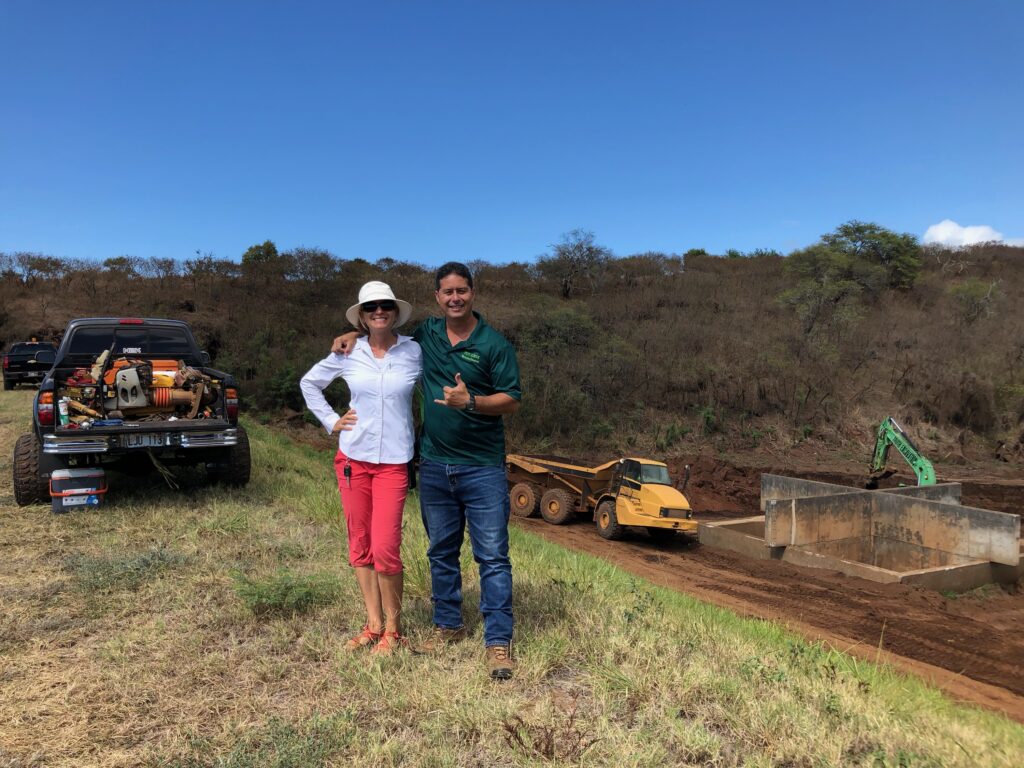
Tova at the Kahana Nui Basin clean out with Pomaikaʻi Kaniaupio-Crozier of Aloha Puʻu Kukui. (Photo Courtesy of Tova Callender)


During your time in Maui, what changes have you seen in the environmental landscape?

I have seen increased collaboration and a strong sense of ownership over our shared environment.  I have also seen improvements in land management and a focused commitment to reduce pollution before it reaches the ocean. 

Climate shifts are also noticeable—it’s warmer, the winds are less predictable, and brown water events are more frequent. The heavy rains in January that brought mud floods have caused persistent brown water in North Kihei. It’s late summer, and I still can’t swim at my local beach because the sediment continues to resuspend in the nearshore. These changes are tough to see, but they are motivating people to act and it’s clear we need to work together to address the issues.
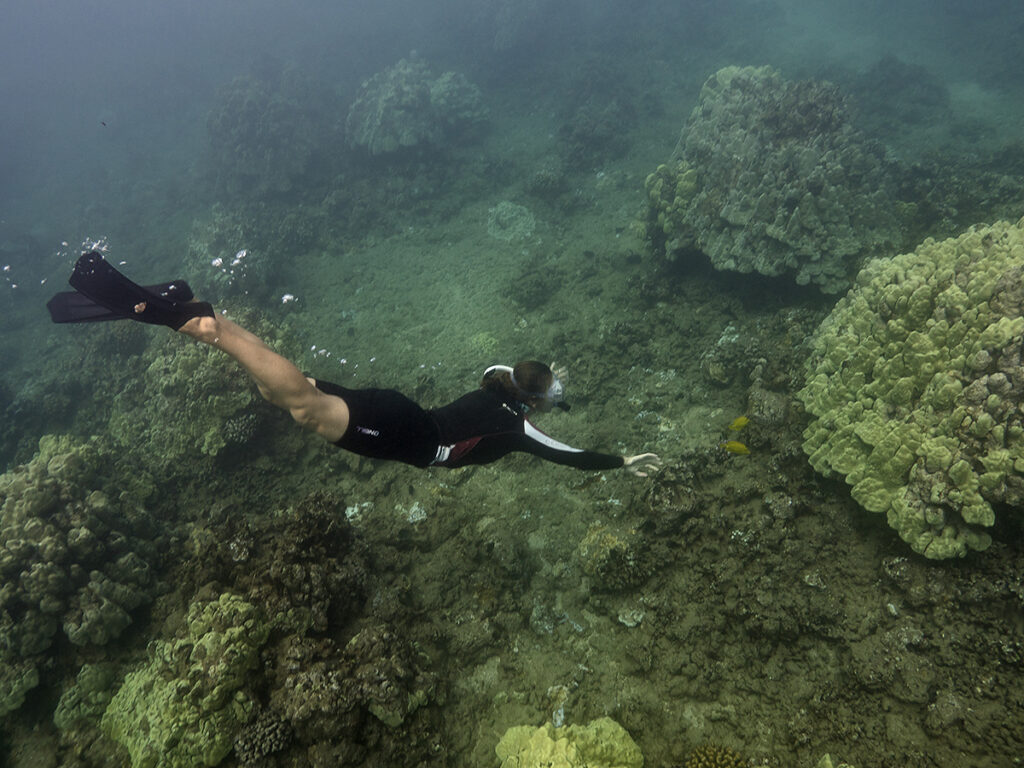
Tova enjoying time in the ocean. (Photo Courtesy of Tova Callender)

What do you love most about living and working here on the island?

Community and the proximity to nature. People on Maui tend to share a deep connection to the land and sea, and that shapes shared community values as well—family, relationships, and time spent being out in nature, all of which align with my sense of what makes life good. I’m inspired by the colors here—the blues and greens all around— the warm breeze, the sun, the welcoming air. Whether it’s biking, snorkeling, swimming, or just being outside, it’s all part of what makes this place so special to me. I love to travel, but I always love coming home.

Looking at the future of conservation, what makes you feel optimistic?

There are so many people who care, and real solutions do exist to the challenges we face. If we have the will, we can make progress—especially with so many incredible groups already taking action. But we’ll only solve these problems by working together and staying focused. Collaboration is essential to success.
Talk Story with Liz Yannell

in , /by


Liz Yannell is the Program Manager for Hui O Ka Wai Ola, a volunteer-powered water quality monitoring program supported by MNMRC. Liz manages all field, lab, and program logistics and often joins volunteers in the collection and analysis of coastal water samples in the field. Liz is also a member of MNMRC’s dive team that performs reef surveys throughout the year. She has a B.A. in environmental studies from Florida Gulf Coast University, and in 2022, Liz graduated from the Marine Options Program at UH Maui. 

What does the ocean mean to you?

The ocean has always felt like a best friend to me. I was born on Oʻahu, and we moved to South Florida when I was a kid. My grandparents lived on Hollywood Beach and then the Florida Keys. Since my mom was a teacher, every school break meant heading down to the Keys to stay with my grandparents. The Atlantic Ocean was at the end of their street—a place that I could freely play and explore the coast and coastal waters. I’m very much at home when I know the water is there. I remember how deeply connected I felt to the water as a kid, and there’s this sense of belonging when I’m by the ocean that has never faded.

I graduated from Florida Gulf Coast University with a degree in environmental studies with a focus on environmental education.  In part, it was the ocean that pulled me back to Hawaiʻi.  I eventually moved to Maui with my husband, and, after I took time off to raise my family, I decided it was the right time to dive into my love of the ocean and make marine science my career.  I enrolled at UH Maui College (UHMC) where I joined the Marine Option Program (MOP), a job-ready certificate program in marine science and conservation.


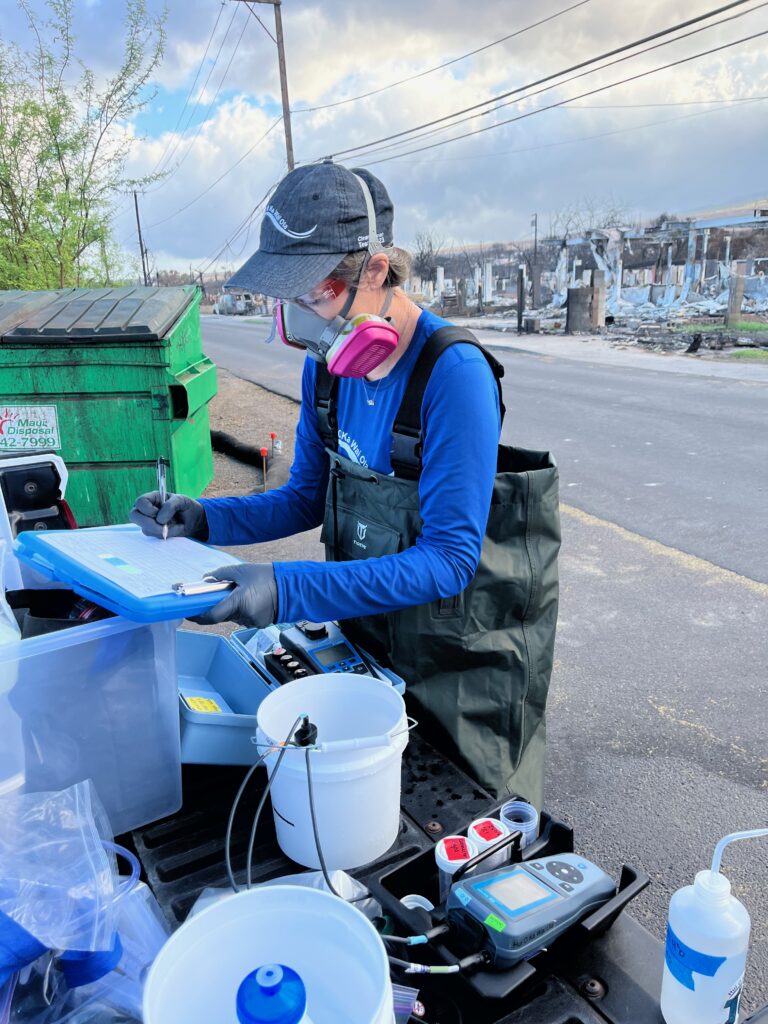
Hui O Ka Wai Ola was one of the first conservation groups to respond in the aftermath of the 2023 Lāhainā wildfire. Liz and Hui staff collected water samples at sites in and around the burn zone to monitor the effects of the fire on nearby waters. (Photo Credit: Tova Callender)


Can you tell us how Hui O Ka Wai Ola is connected with MNMRC?

Hui O Ka Wai Ola means Association Of The Living Waters in Hawaiian.  The Hui is unique in that we are a coalition program.  It was founded in 2014 as a way to come together to address concerns over coastal water quality, and our three main partners since the start  have been MNMRC, The Nature Conservancy of Hawai’i and the West Maui Ridge to Reef Initiative.  All three of those partners make up our steering committee, our technical team and our communications team with MNMRC also being our fiscal sponsor.  

What we do as a community-based organization is vital to understanding and protecting our island’s environment and ecosystem. Clean water is the foundation of a healthy reef, and Maui depends on its coral reef ecosystems for cultural, ecological, and economic well-being. Hui O Ka Wai Ola is on the ground, actively collecting the data needed to improve the health of our coastal waters. A key part of our work is adhering to the rigorous standards of our Quality Assurance Project Plan (QAPP), which ensures our data is credible, high-quality, and respected by decision-makers. Our data is shared and published widely — through the Hawai‘i Department of Health Clean Water Branch, the EPA, Aqualink, PacIOOS, and Zenodo — and is also available for free on our website, so that everyone in our community can access and use it.


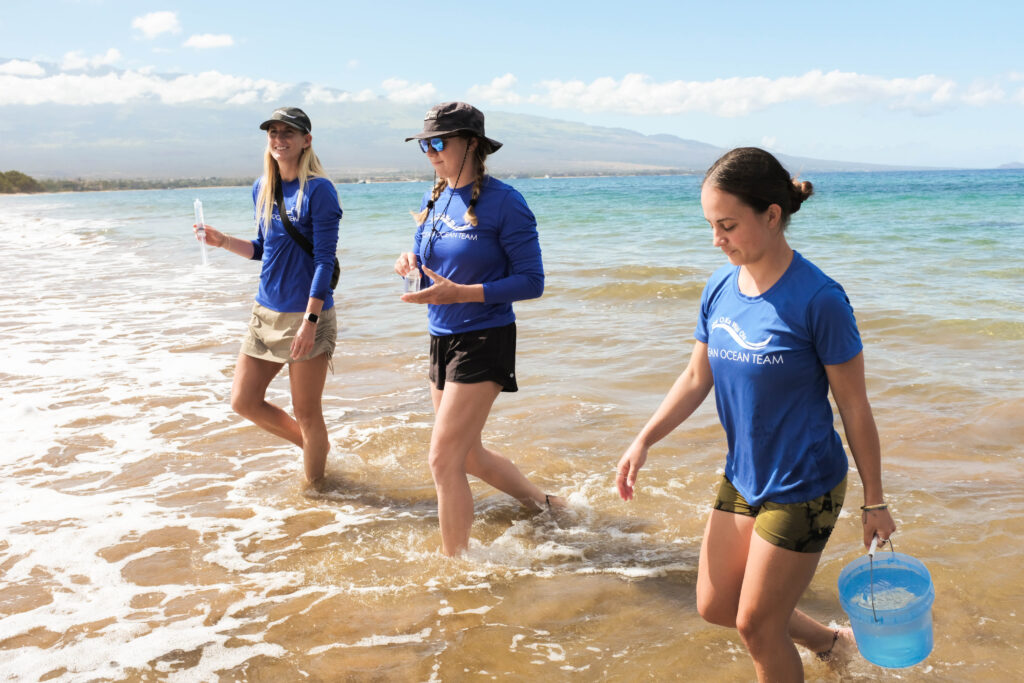
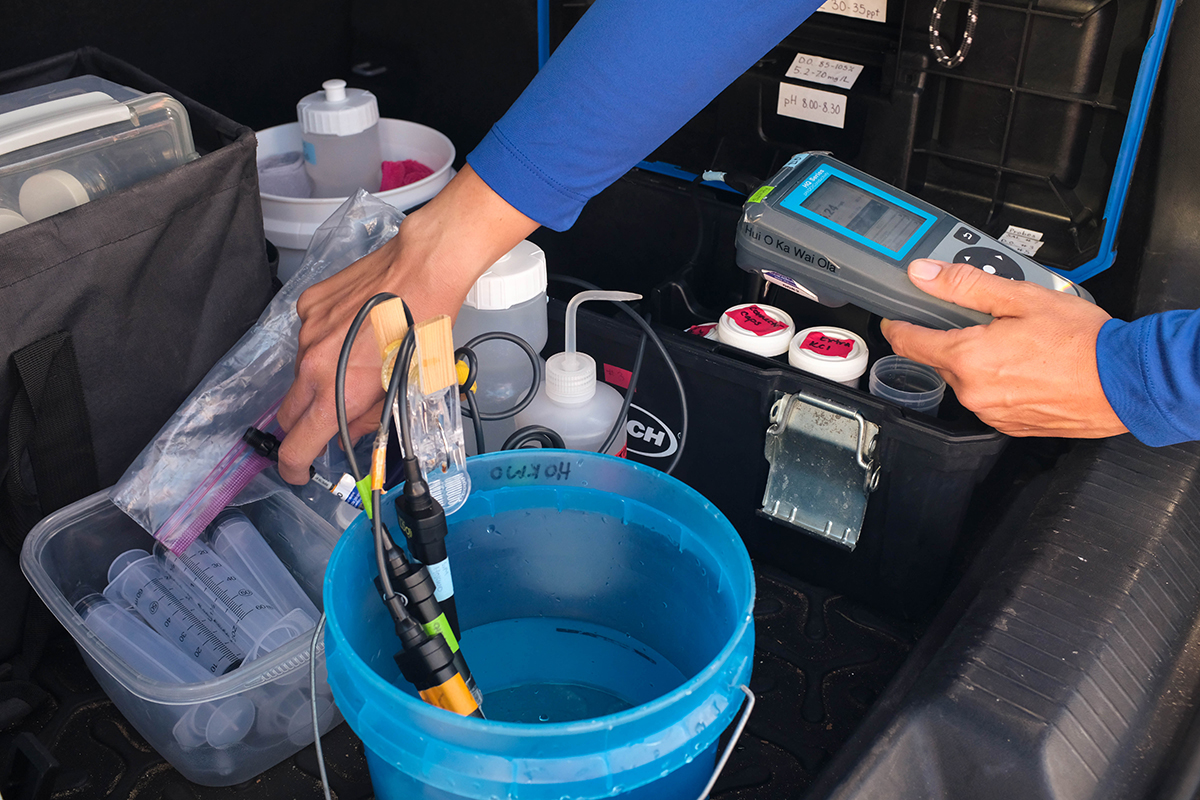
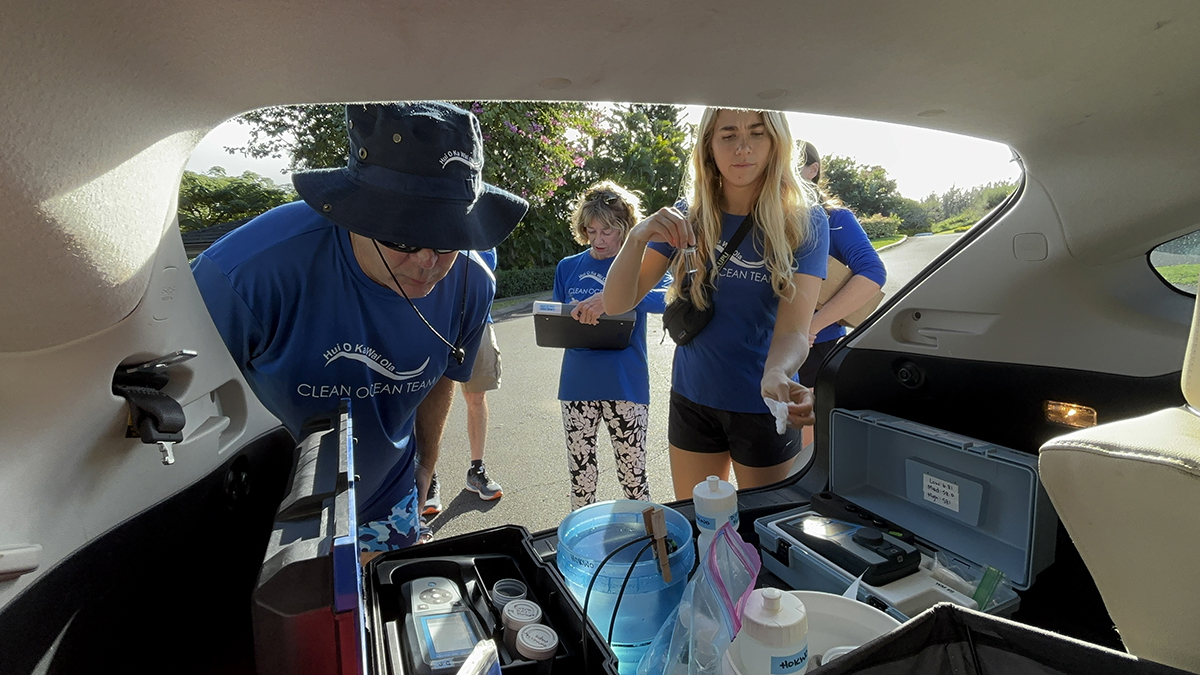
Volunteers collect water samples along Maui's coastline to test quality conditions.

Hui O Ka Wai Ola volunteers collect and analyze water samples from 41 locations across Maui every three weeks. (Photo Credit: Maui Nui Marine Resource Council)


The North Kīhei team analyzes water samples in their mobile lab. (Photo Credit: Maui Nui Marine Resource Council)


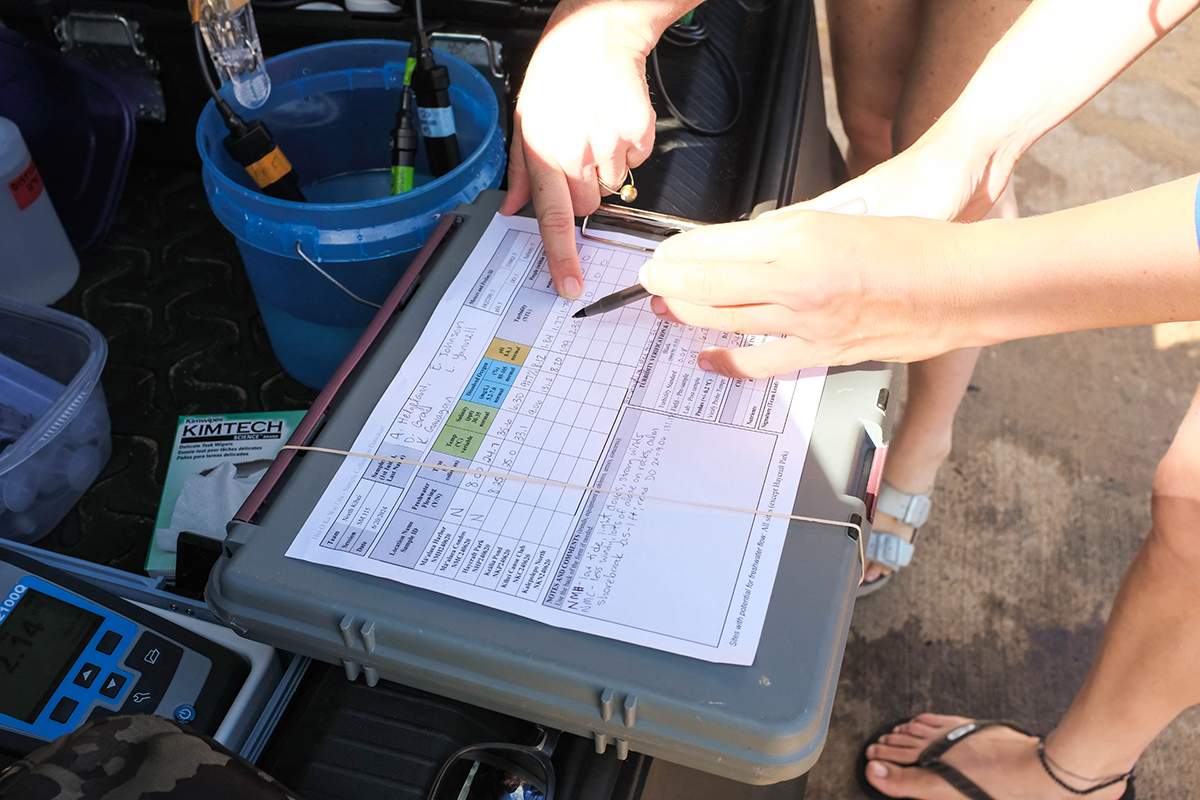
Hui O Ka Wai Ola tests for 13 different parameters including: turbidity, pH, salinity, and water temperature. (Photo Credit: Maui Nui Marine Resource Council)

Immediately following collection, water samples are tested using a mobile lab and results are recorded before moving on to the next site. (Photo Credit: Maui Nui Marine Resource Council)

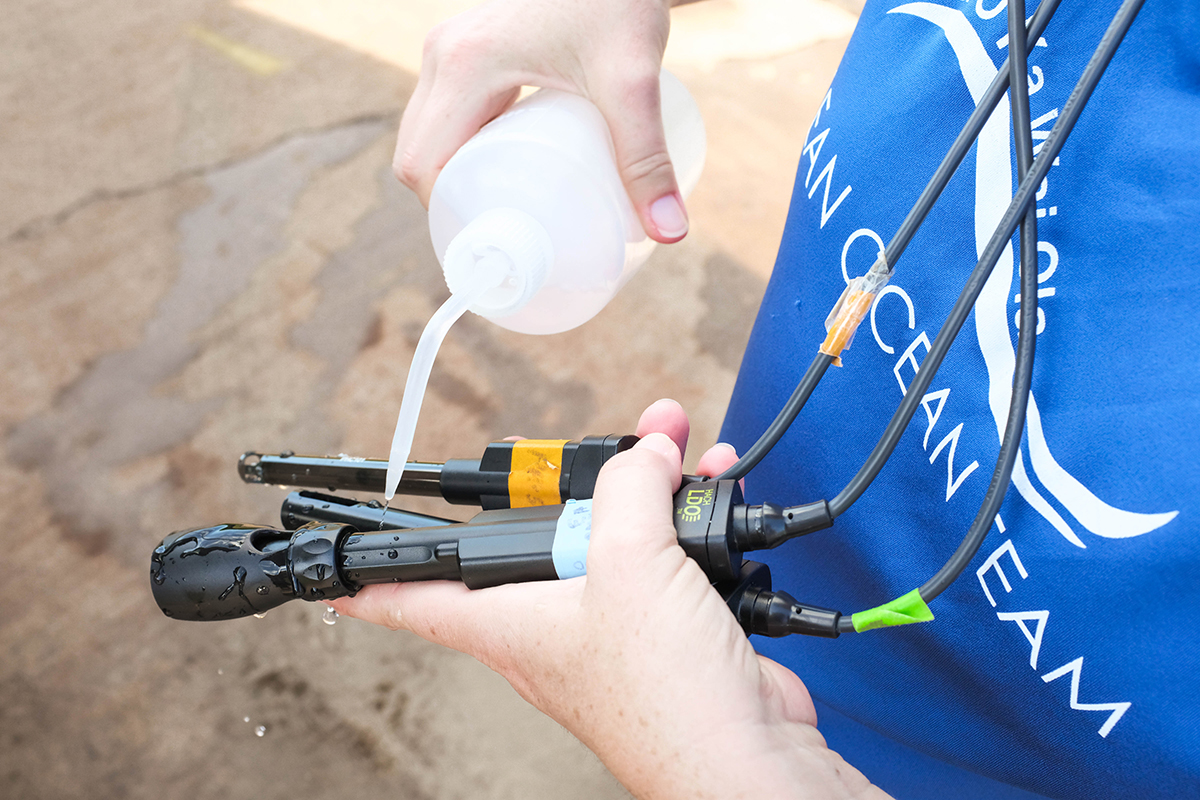
Testing instruments are cleaned with distilled water after data from each site is recorded. (Photo Credit: Maui Nui Marine Resource Council)   


What discoveries have surfaced from your water quality data?

Our data shows where things are getting better and where things need to be improved. If the water at one of our sites is visually looking brown, for example, our testing and data underscores what we are seeing and can tell us more details about what might have led to the current situation.  

Here is a great example at our Kahana Village site on the west side — Kahananui is a huge watershed and our data at Kahana Village was showing some of the highest turbidity issues across the west side of the island. After we flagged this issue, further research was done by partners which determined that the valves in the Kahananui retention basin were blocked, meaning that the water hadn’t been properly draining out for decades and was leading to large amounts of sediment input into our Kahana coastal waters.  Our data was used as the leverage point in a pitch for a grant from the National Fish & Wildlife Funds for $200,000 to address the needed valve repair. Once the valve was fixed, Maui County was able to continue proper maintenance of the basin to improve our coastal waters. So much sediment was cleaned out of the basin in 2018 and 2019, and we saw the notable decline of turbidity in our data. Six years later, we are still seeing improvements in coastal water quality in Kahana. I’m sure the coral ecosystems are grateful for that. 

What makes this success story especially powerful is how one infrastructure repair has had these lasting positive effects, proving that localized conservation efforts can create real, tangible results. I love to repeat a phrase I picked up from a colleague: you can only manage what you measure. In other words, data matters because you can’t protect what you don’t understand. 


Hui volunteers participated in an annual refresher training in November 2024. (Photo Credit: Liz Yannell)

How can new volunteers get involved in upcoming work?

We encourage those considering becoming a volunteer to fill out our online application and come out and observe the field team a couple of times. Then, we’ll do some training which takes 3-4  hours and we also provide them with our volunteer handbook.  We’re very specific about how the samples get collected to ensure we are getting accurate, good quality data across all of our sampling teams. 

Volunteers go to the same site every three weeks to collect samples for testing.  The three week time frame gives us good variation in our data with changing groundwater flow, different moon cycles, tides, and season shifts, for example.  We currently have 7 teams across our 41 sites, with rotations on different days of the week along the leeward coast.  We’d love to welcome new members to our team whether it’s help in the field, the lab, or some other way we can utilize your skill set. 

Volunteer Sign-up Link:  https://www.huiokawaiola.com/join-us.html


West Maui team members test samples at Oneola Beach in Kapalua. (Photo Credit: Maui Nui Marine Resource Council)


What’s the best part of your job?

Our program gives me so much hope for the future.  The experience of working within our Maui community is what I love most.  Our volunteers make our program more powerful. Each team of volunteers really becomes watchdogs for their sites, they know their sites better than anyone and they will notice when something is different out there and then bring it to the attention of the rest of our team.  Our volunteers are deeply engaged in their work. I love the sense of camaraderie and teamwork we have at the Hui.  It’s inspiring to see people care enough about our coastal waters to routinely dedicate their time to help us gather this essential data.


Do you have any favorite island treats you can recommend?

Komoda Bakery in Makawao is the best donut shop in Hawai’i. I love their stick donuts, malasadas and vanilla Long Johns. Their chiffon cake is legendary – it’s a treat we like for special celebrations! Komoda’s has been around for over a hundred years and they’re still such a successful family bakery because everything they make is so ‘ono.

Talk Story with Jill Wirt

in , /by


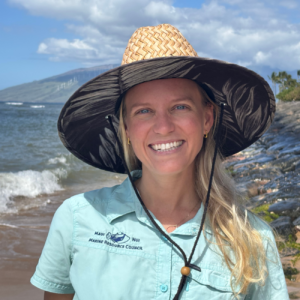
Jill Wirt headshot with South Maui's beach and the West Maui mountains in the background.Jill Wirt is the Program Director at Maui Nui Marine Resource Council (MNMRC) and manages the Reef-Friendly Landscaping (RFL) and Coral Restoration programs. Since 2015 Jill has worked with many local environmental organizations, including MNMRC, which she joined in 2021. She received her Bachelor’s Degree in Environmental Science from San Diego State University and her Master’s Degree in Environmental Science and Management from U.C. Santa Barbara.

Tell us about your background and connection to Maui.

In 7th grade I had the chance to participate in an all-girls science camp held at Stanford University through an organization called TechTrek, sponsored by the American Association of University Women. The camp offered different science classes each day, with topics like robotics, microbiology, and marine biology. We went out on a boat for our marine biology lesson and from that moment on I knew I was a science girl. 

I took AP environmental science in high school and knew at that time it was going to be my path. I ended up getting my BS in environmental science at San Diego State. In 2013, I did an internship with the Pacific Whale Foundation here on Maui during undergrad and it helped direct me to the marine conservation side of things. After that, I did everything in my power to come back to Maui after graduation. I officially made the move in 2015 and worked in ecotourism on snorkel and whale watching boats along with working in hospitality as part of a naturalist program at the Ritz-Carlton in Kapalua. A few years later, I decided to pursue graduate studies in environmental science and management, specializing in coastal and marine resource management at UC Santa Barbara.

Jill is part of the MNMRC dive team that checks in on the health of reefs around Maui throughout the year. (Photo Credit: Maui Nui Marine Resource Council)


What inspires you most about the organization?

At Maui Nui Marine Resource Council, we all care very deeply about this special place we call home – and there’s this deep belief that when we take care of the land and the ocean, it will take care of us. That awareness comes from listening and slowing down, feeling that connection to the landscape. The community is so tight-knit, and so strong here, if you show up and help where there is a need, it can really make a difference. Being immersed in the local community here at MNMRC is such a big part of why we can do what we do. We truly try to always come from a supportive, open-minded, solutions-centered place, we want to help solve problems, whatever that may look like.


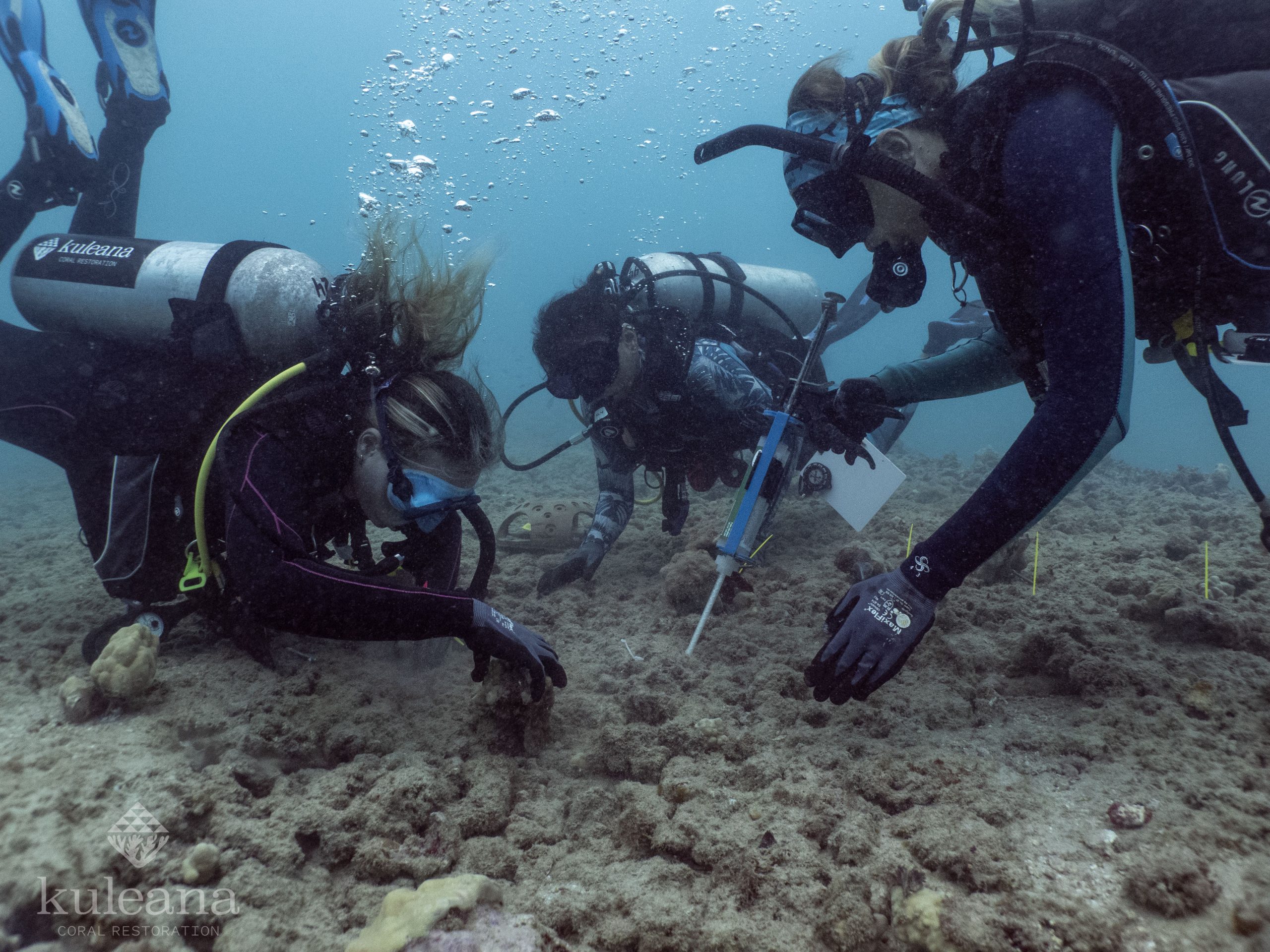
Jill working to reattach corals of opportunity during a training in O’ahu with Kuleana Coral in 2024. SAP #2024-09 (Photo Credit: Kuleana Coral)


Is there a current project you’re kicking off that will extend into the next year?

In 2023, Kuleana Coral Restoration, an organization based on Oʻahu, was looking to expand into Maui and bring alongside a local partner for their coral restoration work. We began working alongside them, looking into grants and locating sites across the island that could be viable for coral restoration work. We’ve also been working with community members for the past few years to locate the most ideal sites, and landed in Māʻalaea Bay offshore of Kihei and Kula Moku where there are some decent, patchy reef areas.

We look for areas that have a pavement-type substrate and for what we call ‘corals of opportunity’ (COO) that can be reattached to bare or exposed areas of the reef. COO are pieces of coral that have been dislodged, broken off, or turned over from the reef, and we take those and reattach them to bare areas of the reef, which hopefully will give them a better chance at life to reestablish coral cover and provide fish habitat. We are careful not to move corals from where we source them, always trying to keep them in one spot. With that in mind, all of the work is done on the boat or in the water directly above the site, we don’t transfer any of these corals to a lab or coral nursery on land. All of this work is done under permitting with Kuleana Coral Restoration who have shown success with these methods on Oʻahu.

Our priority is to focus on areas that are heavily impacted by land-based activities, restoring reefs to positively impact fish populations and improve overall reef health. These are small-scale efforts right now, with maybe 100 corals of opportunity that we will monitor over the next year. With the monitoring, we will look for variations due to temperature changes and storm swells, for example, assessing how the corals are doing over time. Kuleana Coral obtained a Special Activities Permit to perform this work on Maui, adding an amendment for the sites here. Moving forward, the goal is for us to obtain our own permit here at MNMRC so we can train community groups locally on Maui to continue with this important work.

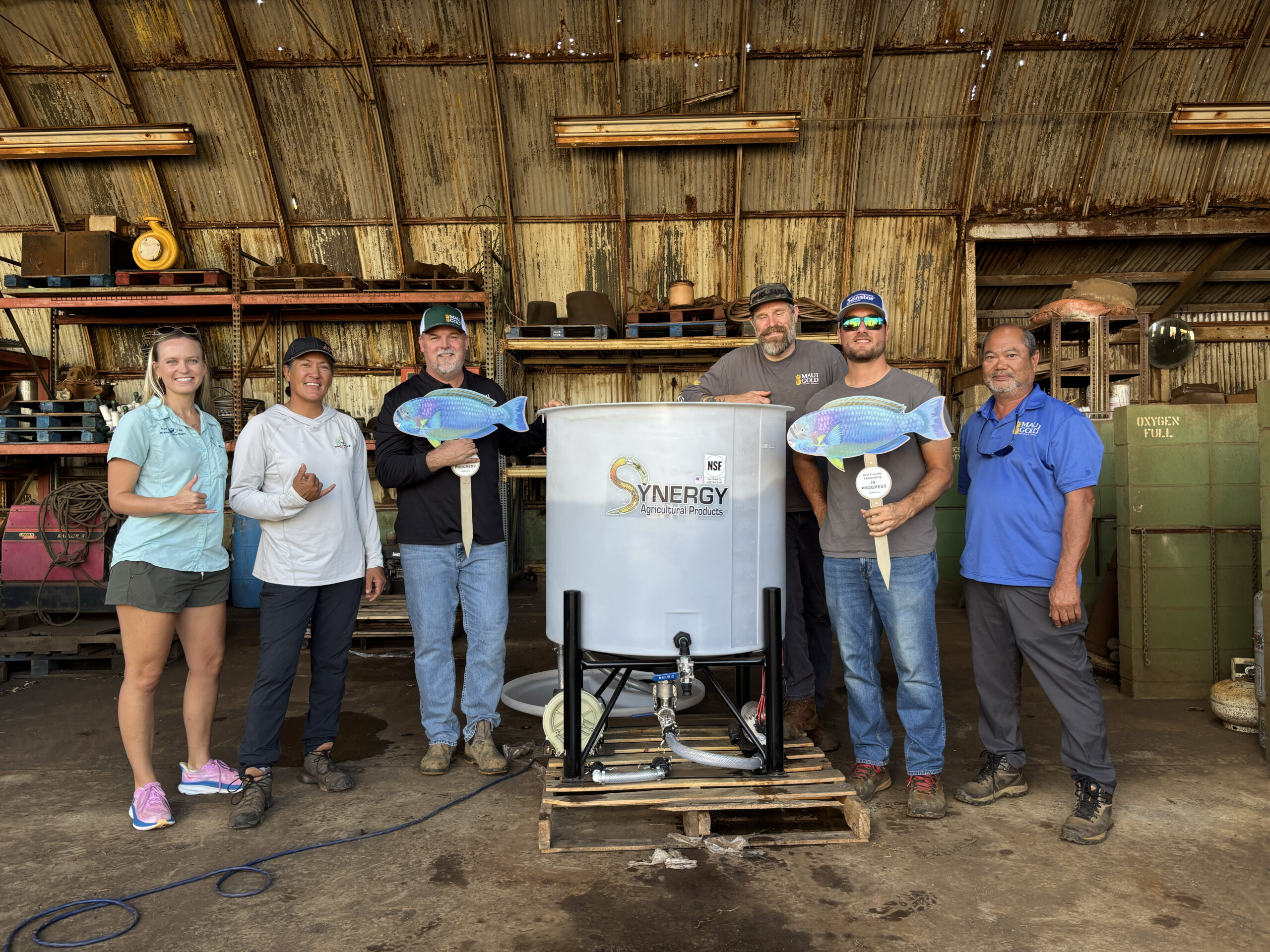
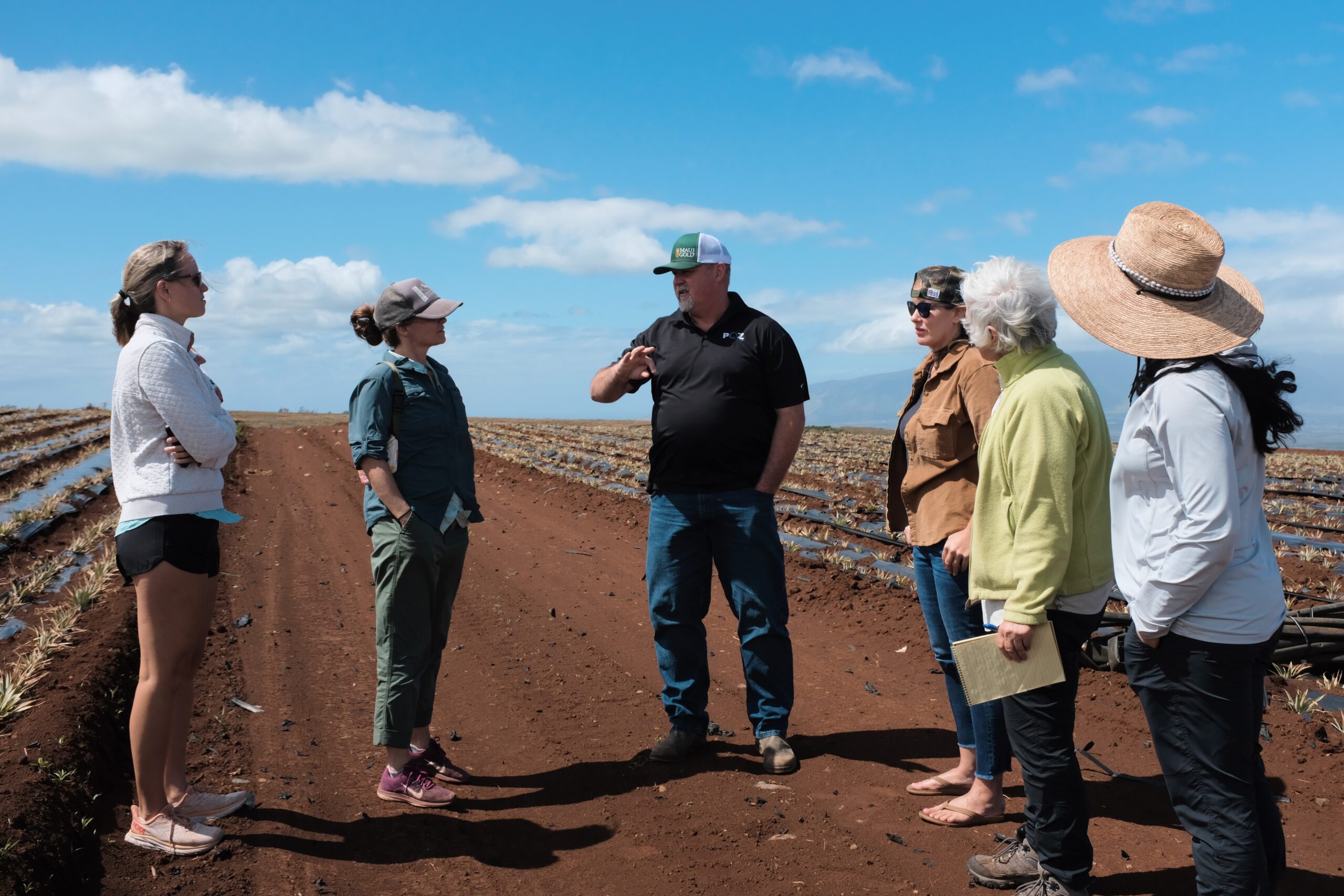
Through MNMRC’s Reef-Friendly Landscaping test plot program, Maui Gold Pineapple setup a soil amendment brewer at their farm in November 2024. The brewer will allow Maui Gold to produce the environmentally friendly product used on their RFL test plot.(Photo Credit: Maui Nui Marine Resource Council)

You head up MNMRC’s Reef-Friendly Landscaping program.  How can new volunteers get involved with upcoming work?

Kahoma Village, a residential community in Lahaina, lost four buildings during the 2023 wildfires. They approached us to help restore their green space, which acts like a detention basin and fills up with standing water, and they get invasive cane toads as a result. We tried to figure out trees and plants that could be planted to alleviate the flooding or ponding. As we started talking, we realized there was an opportunity to apply for a grant from the Division of Forestry and Wildlife to transform the green space into a true community gathering place filled with flowering trees, fruit trees, native shrubs, and groundcovers.  

We now have grant funding through April 2027, with the first phase of planting taking place this Spring.  On April 26, we will be kicking off the project with a community work day, coming together to plant mango, avocado, lychee, breadfruit, and plumeria trees as well as native palms and shrubs. We will do some prep beforehand so that on the community work day, we can all gather together to plant and learn and share more about the project. 

We will be collaborating with the landscapers at Kahoma Village to develop a plan to continue the use of environmentally-friendly techniques and practices moving forward throughout the property after the planting is complete. We are incorporating reef-friendly landscaping techniques, targeting problem areas and adjusting practices at the site, such as reducing water use, eliminating pesticides, and using locally-made soil amendments. These alternatives will have less negative impacts on the downstream environment and support local businesses to implement reef-friendly landscaping practices at scale. 

We will be looking for volunteers to help us plant. Keep an eye out for a registration link as April 26th approaches, we would love to see you there.

Jill meets with residents of Kahoma Village in Lahaina where MNMRC is helping the community install native trees and plants as a part of their wildfire recovery plans. (Photo Credit: Maui Nui Marine Resource Council)


Where do you spend your time when you’re not working?

I love hiking, snorkeling, and playing beach volleyball. I like to take beach walks in the morning, and one of my favorite spots is Kapukaulua (Baldwin Beach) on the North Shore in Pāʻia. I love the way the beach changes throughout the seasons. In the summer, sand moves down to one end of the beach, where there is a shallow lagoon, and at low tide, it closes off the connection to the ocean. Sometimes you’ll see multiple turtles trapped in this little lagoon, and then in the winter, the sand moves down to the other end of the beach. I also love the energy of the North Shore during the winter.

What do you enjoy most about living and working in this amazing place?

The ocean, of course! The immensity of the landscape. It’s so easy to feel connected to the environment here, and when it gives so much to us – peace, healing, humility, I think it makes it even more motivating to protect it. Especially here, the community relies on this precious environment and land. During my time here, I’ve seen that some of the best conservation projects begin with a small-scale project, or sharing food and coming together, and taking the time to slow down. It is crucial to know your local area, your neighbors, and your community’s needs.

What opportunities do you see on the horizon for the field of conservation?

There’s a lot of pressure to make individual changes, and those are important, but there is so much opportunity and growth for larger companies to step in and commit to making lasting changes in their business practices. I see more community-based work that is grounded in kilo (observation and learning) and mālama ʻāina (caring for the land) because the community members will be the ones who will support, manage, and continue generational learning in conservation. Being a part of MNMRC, we feel lucky to support that work and have it inform so many of the projects we do.  The more that all of us, industries and individuals alike, can come together, the more impactful the results will be. 

What’s your favorite island dessert? Any favorite food stops?

Roselani Kona Mud Pie Ice Cream! I am a big fan of Thai Mee Up (panang curry or pad thai with veggies and tofu) or Tin Roof’s mochiko chicken!

Talk Story with Suparna Vashisht

in , /by


Suparna Vashisht has spent over a decade driving social change in sustainability, conservation, and gender equality working in both the corporate and non-profit sectors. She has been a diver for over 20 years and a visitor to the island since 2000. 

What is your connection to MNMRC?

I had been aware of MNMRC for many years due to my frequent visits to Maui and interest in ocean conservation, but I became directly involved right after the Lahaina wildfire in 2023. MNMRC was working with the Australia-based tech startup, Flying Fish Technologies to get 3D photogrammetry done for the coral reefs in Maui to measure the impact of the fire. Through my own work with an ocean conservation organization, I was aware of photogrammetry and was thrilled MNMRC was using the technology to help Maui’s reefs. It made so much sense that they were getting someone to come out immediately after the fires to get a baseline of reef health at that time and then repeat the process after more of the debris made its way into the ocean. 

A neighbor of mine told me what MNMRC was doing with Flying Fish and that they were looking for support in housing and transporting these guys who were coming from Australia. So I helped out by providing transportation for the Flying Fish team and since then, I have been involved with MNMRC as much as I can with things like marketing, strategy, and other areas of my expertise.

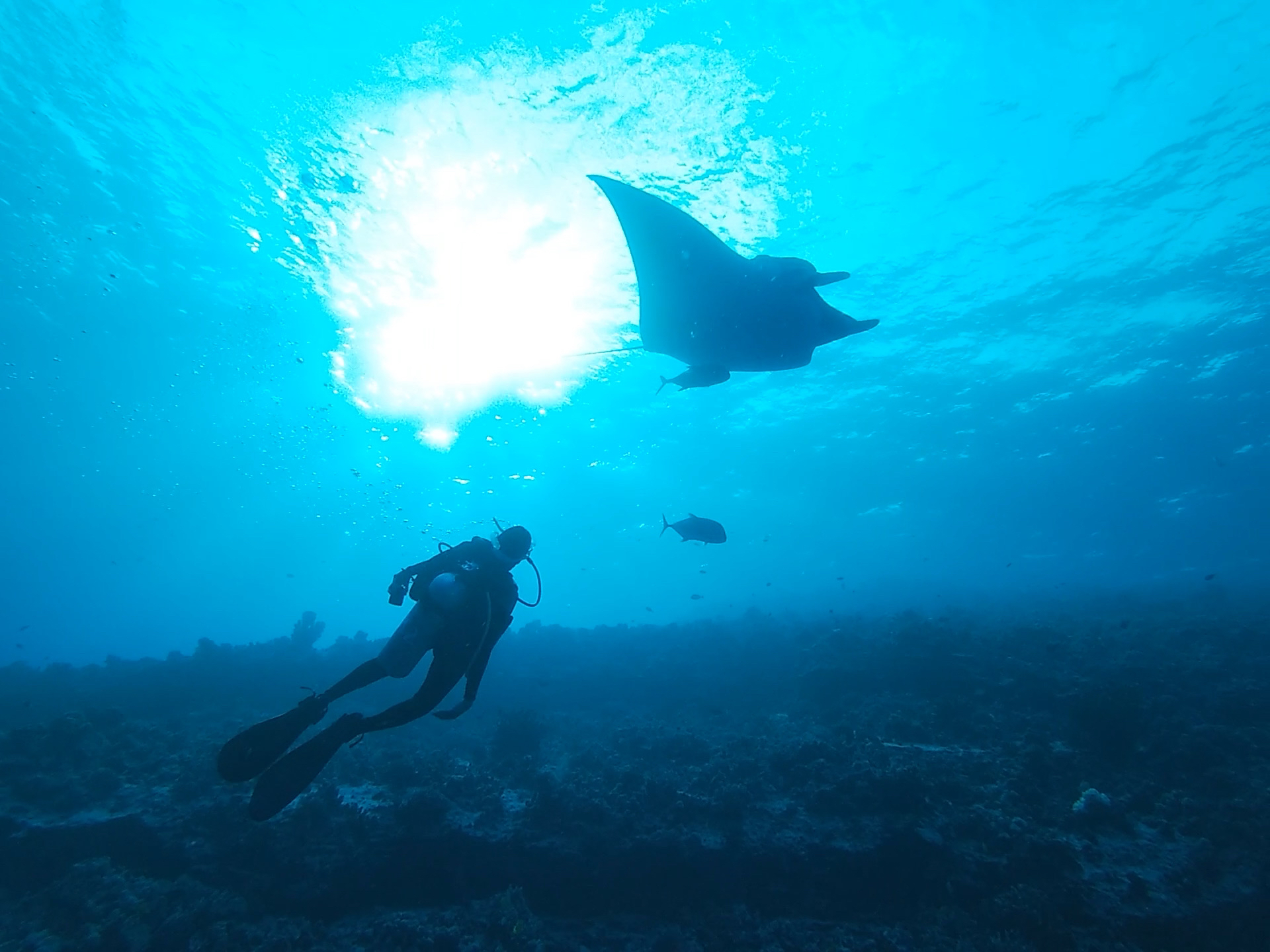
Suparna encounters a Manta Ray while diving off Molokini.

Tell us about what you do for work. What outside activities do you enjoy?

Well, I would say I’m semi-retired. I’ve worked for decades in senior executive positions in top 100 Fortune companies and then non-profit organizations. Before I semi-retired I worked for over seven years for an ocean conservation organization until early 2022. 

Now I volunteer my time at various organizations in Maui and elsewhere. I volunteer on a regular basis at the Maui Ocean Center Marine Institute (MOCMI), mostly helping with the rescue of sea turtles. When I started coming to Maui in 2000, I spent a lot of time in the water and I started seeing so many turtles entangled in hooks and fishing line. I wanted to do something about it, so I called MOCMI to report the turtles and I ended up calling so often that they got to know me on a first-name basis.  

I am also on the advisory board for Project Coyote, an organization that works to protect wild carnivores in North America. I first learned about them in 2014 and I was so impressed because there are not many organizations that work to save wildlife in North America. We are familiar with organizations that save elephants, lions, and tigers. But in North America, we have lost such a huge percentage of our wildlife like Black Bears, Grizzly Bears, wolves, and bison. It is called Project Coyote which is a bit of a polarizing term but the Coyote are also called “song dogs.” They hold deep cultural and spiritual significance for the indigenous people of North America and are an integral part of their myths and stories. They are an important member of the American wildlife we need to protect.

About 10 years ago, I founded “Women Back to Work” with a colleague. I am not as involved as I used to be; I have limited it to offering workshops to women returners through the San Jose Public Library.

Currently, I am working on getting funding for a re-use initiative in Maui that aims to replace single-use food ware at food establishments with reusable food ware. It has turned out to be a very complex project but that has never been a deterrent for me, so watch this space! 

Outside of ocean activities, like diving, snorkeling, kayaking, and paddleboarding, I love hiking. I am also a fencer and of course, I play pickleball. Who doesn’t play pickleball these days?

You have also spent quite some time trying to live a reduced-waste life. Can you tell us more about your journey?
I started my journey 20 years ago with plastic bags and single-use water bottles because I was shocked to learn that less than 9% of the plastic ever produced has been recycled and that around 50% of all plastic is produced for single use. Now, it is estimated that we’re dumping a garbage truck of plastic into the ocean every minute. I love the ocean so much that when I think about that visual, it just breaks my heart.  

We are extracting resources from a finite planet, and while I am not perfect at being “zero waste” we can always look at things we can do better. I began with reusable bags, then I replaced Ziploc bags and plastic wrap with glass boxes and wax paper. A big leap happened when I started keeping reusable silverware and steel or glass boxes in my car for restaurant leftovers. Once I started doing that, even strangers would comment on how my reusable boxes were such an obvious thing to do and that they were going to start doing it, too. This made me believe in the power of individual actions to bring about group action. I believed it, even more, when my sister started making all-purpose cleaner instead of buying it in single-use plastic bottles and when my husband, who used to groan and ask me why I was doing this, suggested using t-shirts and rags instead of single-use paper towels. I was gobsmacked.  

From there, we significantly reduced our waste by composting. I learned from one of my early sustainability non-profit jobs, that if you compost you can reduce your trash by up to 90%. I started with a little bin under the sink to collect food waste and used a basic compositing machine to turn it into fertilizer for our yard and fruit trees. It was a beautiful closed-loop system. We were eating the fruit, then putting the skin and cores into our compost pail, turning it into compost, and putting it into the yard where it fed the fruit trees. It became this endless virtuous loop and it was amazing. At that point, I did away with plastic liner bags because everything we were throwing away was dry. We also lowered our trash fees because we got a smaller trash bin. 

Other ways our family tries to minimize waste is by being mindful about buying new things.  Today, more things are produced than we can or need to physically use. I saw a statistic that said 75% of all Christmas gifts either get returned or donated. We found this to be true for us, so we instituted a “no gifts” policy. Just a generation ago, my parents used things until they broke down, then they repaired them. For them, it was an ethic and a value. It wasn’t that they couldn’t afford to buy something new. The thought was “If I can repair it why should I buy a new one?” They had much less “stuff” and they did splendidly.  


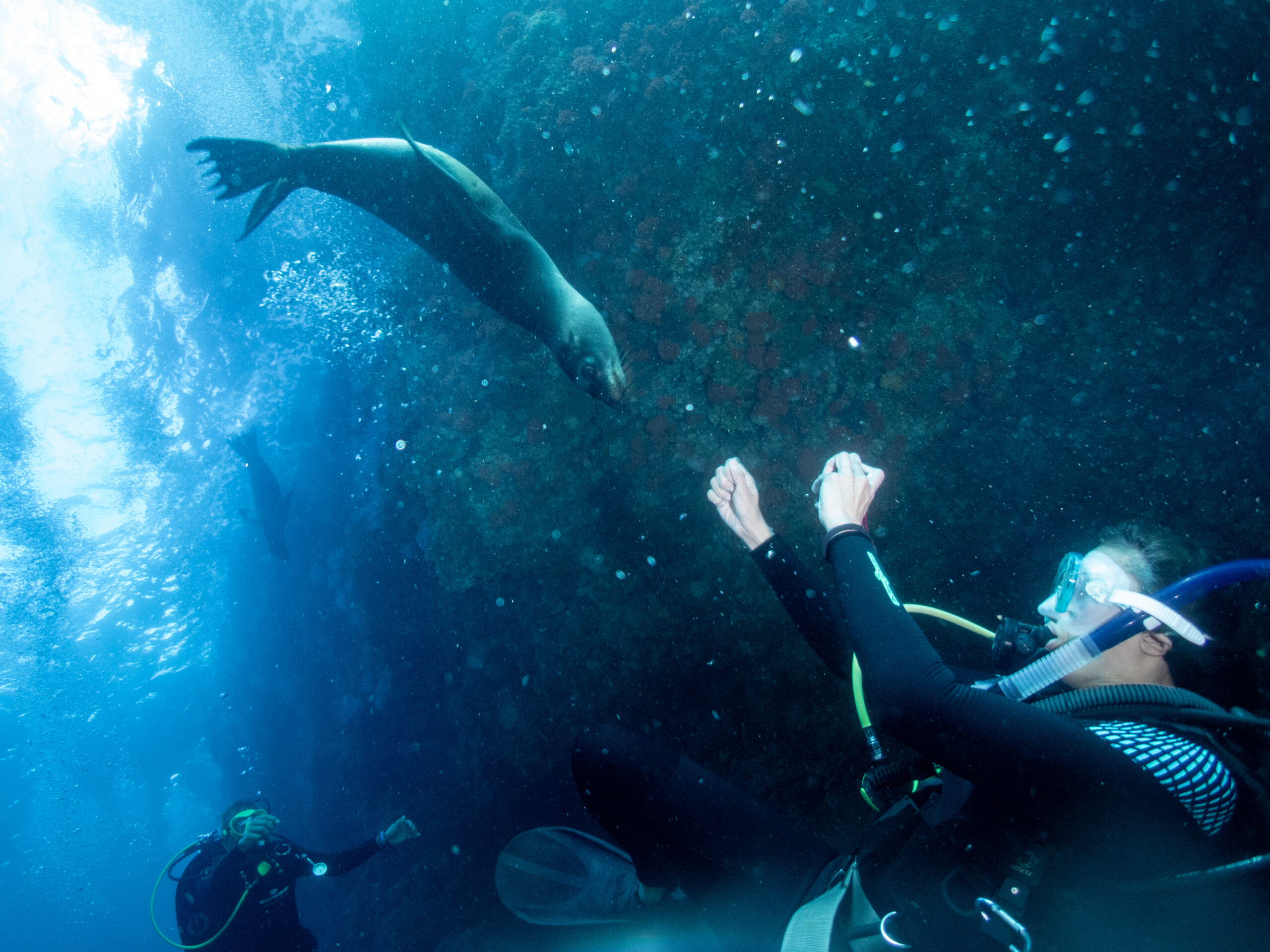
Suparna photographing a sea lion while diving in La Paz, Mexico

What is your favorite Maui moment?

That is an easy one. My favorite Maui moment is snorkeling and seeing the turtles everywhere just doing their thing. Some of them are very curious and friendly, and others are just floating around. Hanging out with them in the ocean is one of my favorite pastimes. Now that I think about it, seeing the whales, especially underwater, is also amazing. It is very rare to see them while diving, but I’ve been fortunate to see them 3 different times, even though it was briefly. Of course, I keep my distance and make sure to follow the laws and regulations, but to see them underwater is just thrilling. 

What is inspiring to you about MNMRC?

What I like is that they are so focused on protecting Maui’s waters. The thing I have learned is that it would be really nice if people could work collaboratively on big issues like ocean conservation. But on the other hand, because the ocean is so big, work needs to be done at a local level in all the places that need protection. Maui is no different. I think it’s great that MNMRC focuses on Maui and protecting its coral reefs and native fish especially because there is a high percentage of marine life that is endemic to Hawaii.  

I also think the recent initiative with Reef-Friendly Landscaping is phenomenal. I hope more of the hotels and golf courses embrace it. I know there will be resistance to it. We all have the stories we tell ourselves like, “I only use it once a year,” but we forget the cumulative effect it has on the environment is very high. 


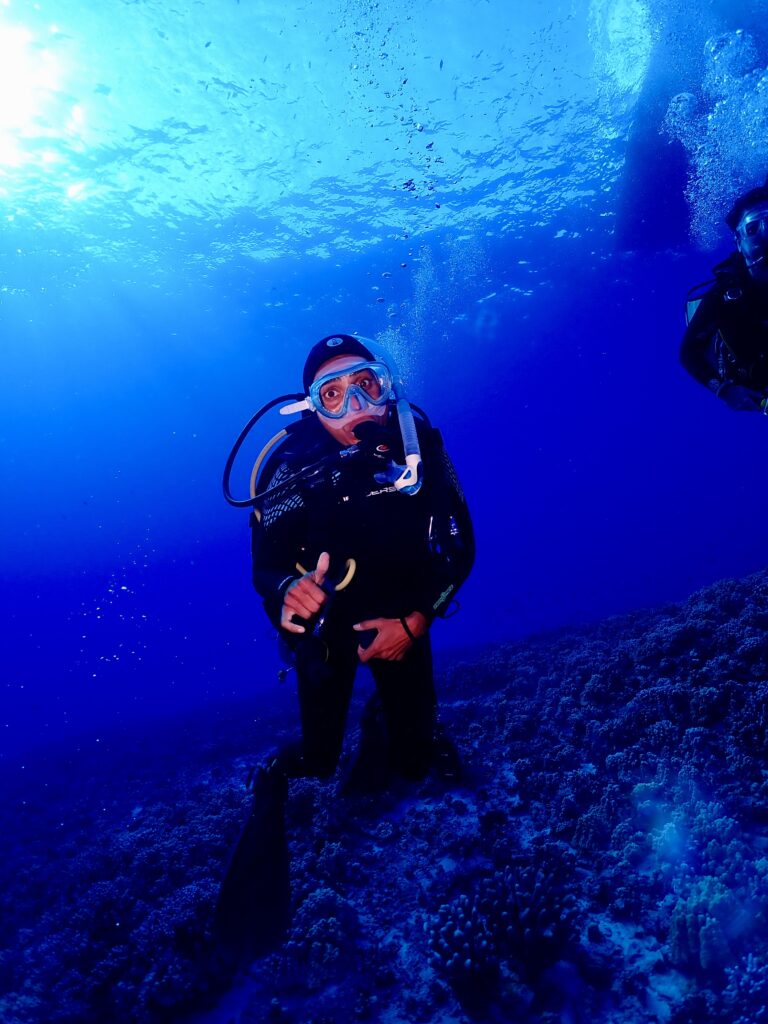
Diving off of Molokini in March 2022.

What is your favorite Maui restaurant, local business, spot, etc.?

I like to go to restaurants that are doing their part to reduce their impact on the environment. I also like to go to restaurants that are either entirely vegan or have vegan options. Some of my favorites are: 

That’s a Wrap, Abiki’s Carribbean Flavas, Maui Thai Bistro, Flatbread Pizza, Monsoon Bar & Grill, Moku Roots, and a new place called All Rice in the Piilani Shopping Center. 

I have to also give a shoutout to Johnathan and Shawna of Papio’s Place, which used to be in South Maui. Unfortunately, they closed last year but they were serving fantastic food and truly doing the right thing for the environment. I hope they start something new soon!

What would you say to others who are considering becoming involved with MNMRC?

The ocean is about 70% of the world but less than 1% of philanthropy goes to protecting it. It produces 50% of the air we breathe, absorbs 31% of carbon dioxide emissions, not to mention the other benefits like storm protection from coral reefs. To me, it is shocking that we are so short-sighted about taking care of what sustains us. Where would we be without forests, rivers, and the ocean? Less than 3% of philanthropy goes to the environment—the underlying thing that sustains us all. Don’t get me wrong. It is important to focus on things like poverty, education, health, and women’s rights but none of that would exist without a healthy environment. 

I have been diving in Maui for over 20 years and have seen first-hand the decline in reef health and fish population. These changes are not theoretical or something I read in a report. It makes me think about what I can do to help and increase awareness. I donate and offer my experience in marketing and strategy to MNMRC as a way to make a direct impact on the ocean. Do whatever you can to help and do it today—the health of our ocean cannot wait!

Talk Story with John Starmer

in , /by


John Starmer is the Science Director of MNMRC and has been a part of the organization for 3 years. Here, John shares more about MNMRC’s diving program and how limu (algae) can be indicators of environmental health along Maui’s coastlines.

How did you first become involved with MNMRC?

I started as a volunteer, helping with some new technology MNMRC had acquired.  Eventually, that led to a part-time role, and I’ve been here full-time for the past three years.  My background is in coral reef ecology and conservation.  After getting my Master’s degree at the University of Guam and a brief stint as a research biologist in Palau, I spent a decade in Saipan working for the coastal zone program to build a coral reef monitoring program for the CNMI, an effort supported by the US Coral Reef Initiative. During that time, I co-founded a non-profit that allowed me to support other NGOs and local governments in developing coral reef monitoring and marine protected area programs across Micronesia and in American Samoa. I eventually left that position to pursue my PhD at the University of Florida.

John talks with a member of the Flying Fish Technologies Team during their resurvey of South and West Maui reefs in August 2024.

What initially drew you to environmental science?

From as far back as I can remember, a connection with the intricacies of nature on land and sea was always part of my experience. I spent a lot of time around the ocean up and down the Atlantic coast as a kid, from Maine to the Carolinas to Florida. I can blame Jacques Cousteau and Hans Haas for some of my interest in the ocean environment and ecology.  Ecology is all about these ancient interconnected systems that we participate in, and even as a kid, it fascinated me. 

I grew up in Maryland, and the environmental issues surrounding the Chesapeake Bay, for example, and the decline and collapse of many of their fisheries – shad, striped bass, crabs, oysters – made a deep impression on me. I knew back then I wanted to be part of the solution. I enjoy being out in the elements, so a career in biology seemed like a natural fit for me.  I eventually studied biology at St. Mary’s College of Maryland, where I was introduced to coral reefs and scuba through a tropical marine ecology course. Right after undergrad, I did a brief stint at the original National Aquarium in Washington, DC taking care of their coral reef displays before heading out to Guam for grad school, where I studied chemical ecology.

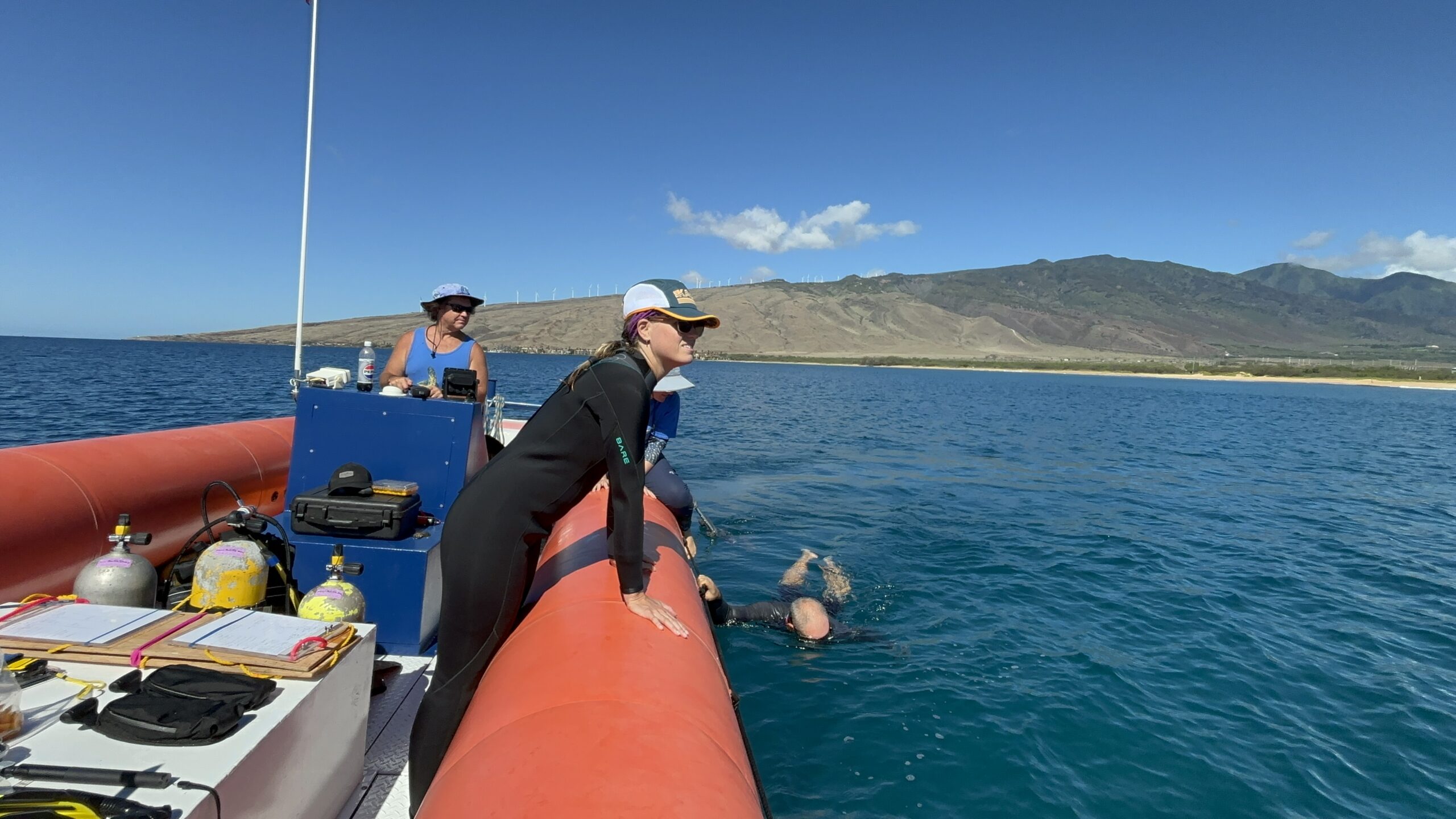
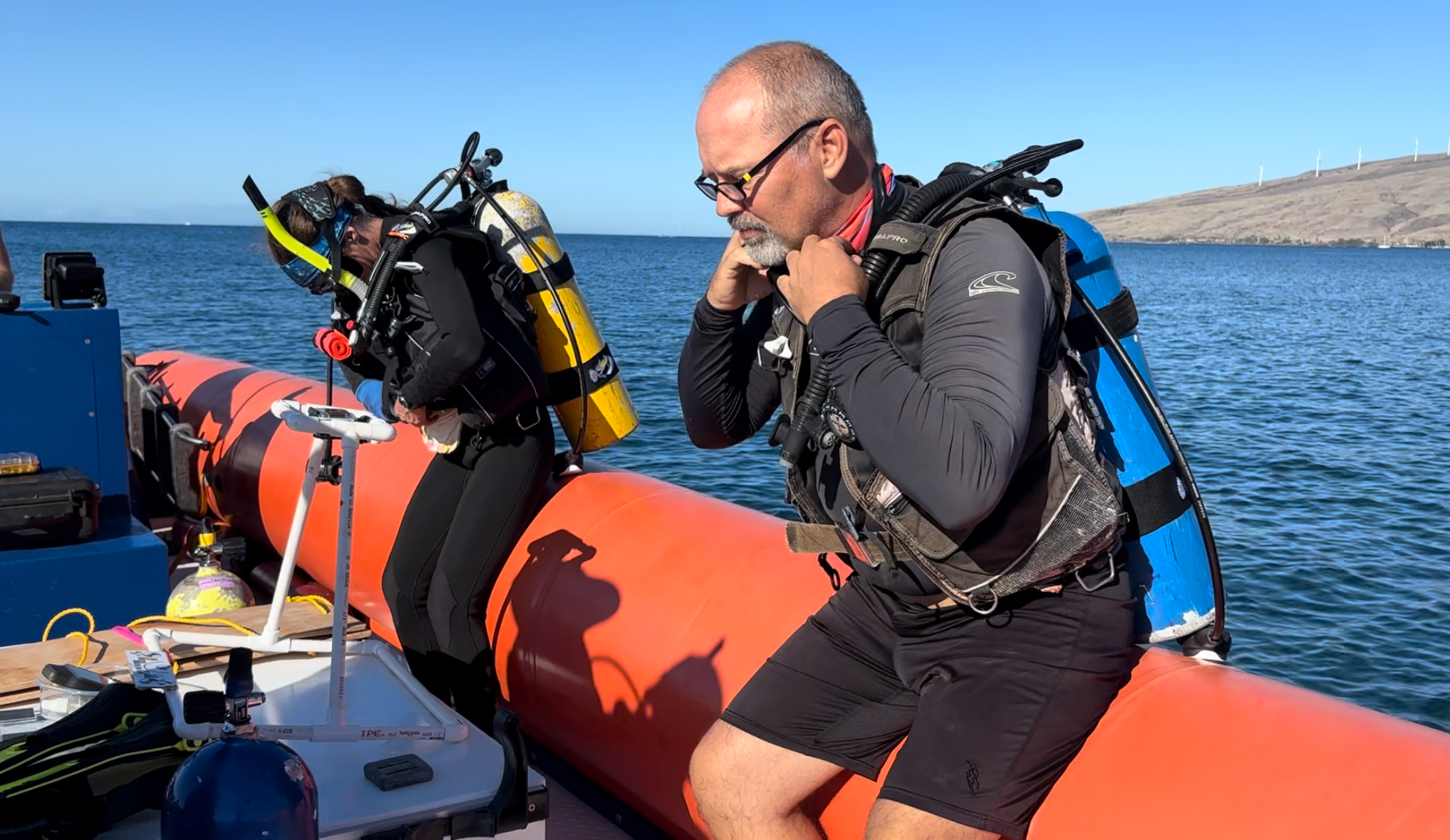
John and the MNMRC dive team perform CRAMP and FAHU reef monitoring surveys in South Maui.


You started the dive program at MNMRC.  Tell us more about that.

I’ve been diving for 30 years, a dive instructor for 15 years, and a dive safety officer for (now) three organizations.  I always say that when trying to understand the state of the marine environment, nothing is as effective as getting in the water and seeing things for yourself.  While the ongoing impactful conservation work on the land is vital, I saw we were missing a functional understanding of the conditions in the coral reefs we wanted to improve when I arrived at MNMRC. To address that, we needed to start looking at the reefs ourselves. 

While NOAA and the Department of Land and Natural Resources’ Division of Aquatic Resources (DAR) have been monitoring coral reefs throughout Hawaii for some time, there was a gap in South Maui where we are currently focused. After a couple of years of diving in the area, I can understand the survey gap as it is not an easy place to get out to survey.  Kona weather and brown water during the wet season don’t provide the conditions we need for surveys, so most of our dive time takes place in the dry season when conditions are most favorable.

One of our big challenges is finding a way to make this program sustainable, and in the usual MNMRC fashion, that means looking at partnerships. We are in the process of becoming members of the American Academy of Underwater Sciences, which will allow our team to dive with DAR, the University of Hawaiʻi, NOAA and other AAUS member organizations.

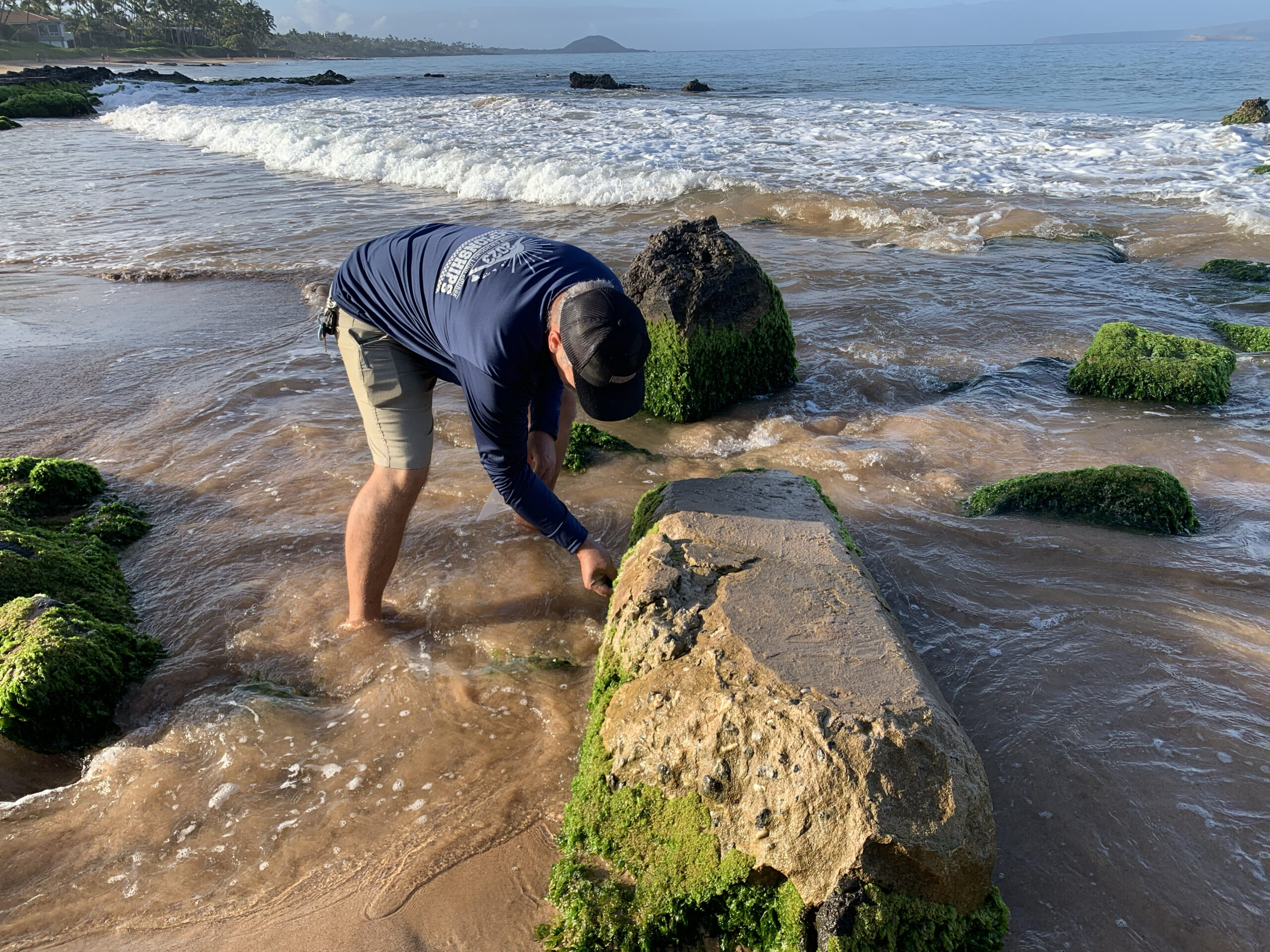
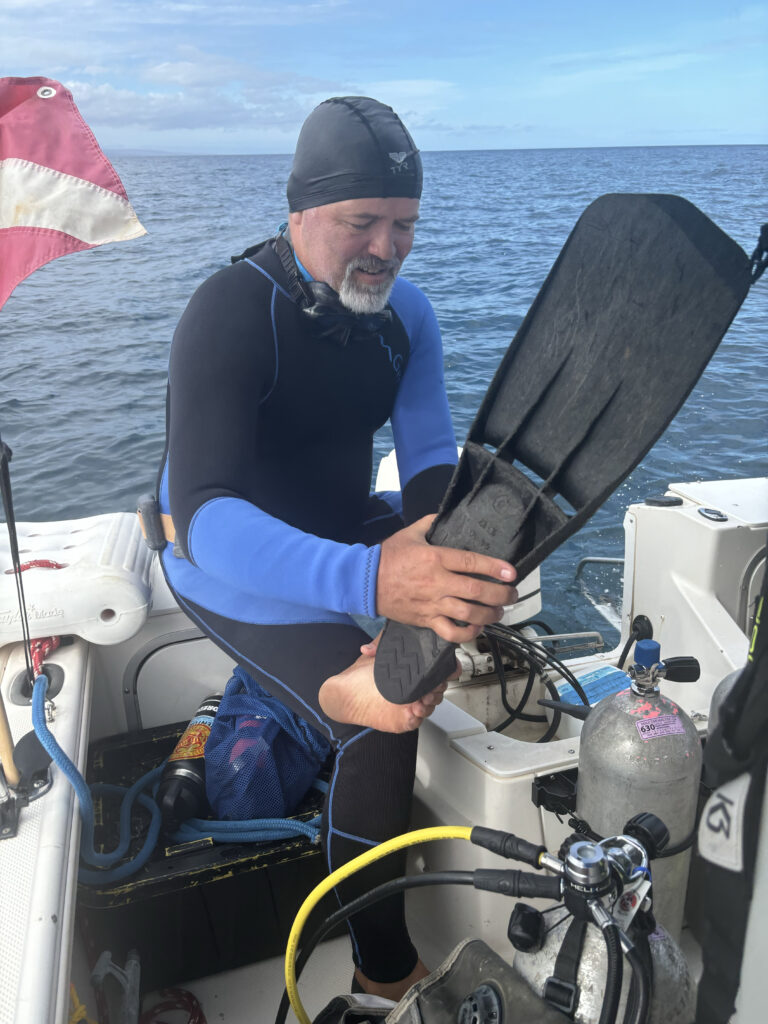
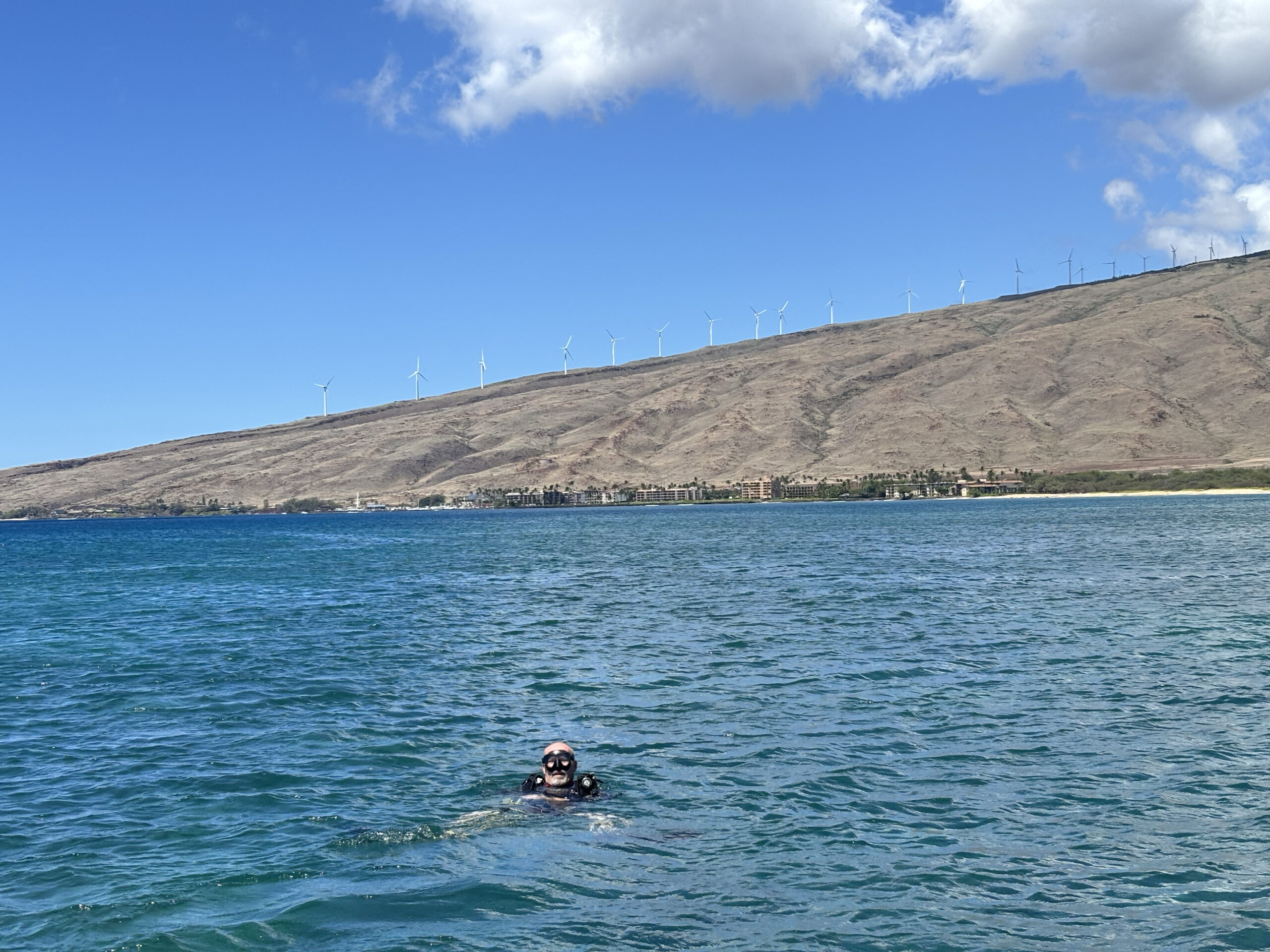
John collects limu (algae) samples at Keawakapu Beach.

Is there one project you’re working on that really excites you?
I’ve always been interested in “listening” to the organisms living in an area to understand the ecology of the place. What thrives (or what is missing) in an area can tell a lot about typical environmental conditions and hint at problems in the area. We’ve recently started studying the presence of nitrogen (a fertilizer) in marine algae, which helps us to trace where nutrients are coming from.  Are the levels reflective of excessive fertilizer use, sewage leaks, or something else?  We know groundwater picks up nitrogen from the land as it flows to the ocean. Certain marine algae (limu) like to grow near groundwater and soak up these nutrients.  While the algae clues us into where groundwater is flowing, if there are large amounts of limu, this can also hint at whether there are excess nutrients too. Laboratory analysis to understand nitrogen isotope ratios can let us know if that nitrogen came from natural sources, fertilizers, or sewage. 

We plan to continue annual sampling to understand whether conditions are changing at key sites. Is there an increase or decrease in the nutrient levels we’re seeing?  Problems facing our reefs often originate on land, so at MNMRC, we are always looking for solutions that address land-based issues. Our Reef-Friendly Landscaping Program, for example, encourages property managers to reduce intensive industrial fertilizer use as much of these fertilizers wash away before plants can absorb them. If we identify an area with high fertilizer use, we should be able to show a reduction in coastal nitrogen runoff after a shift to organic alternatives. We want to continue to use these limu as indicators of environmental health and to directly tie this work to management actions in the future.

John prepares to conduct the final reef monitoring survey of 2024.

What advice can you share with us about the current environmental situation?

When it comes to our coral reefs, the combination of polluted runoff, overfishing, and climate change are the major issues causing harm. While climate change is hard to tackle as an individual, focusing on what we can directly control, like choosing to fish pono or transitioning that festering septic tank, has immense value.  For example, limiting or avoiding catching or buying limu-eating fish like uhu, kala, and palani means there are more of these fish helping to maintain our reefs, keeping algae in balance, and making space for new corals to grow. I always like to focus on managing my sphere of influence. 

These days, it is really easy to downplay the effect our individual actions have. I understand wanting to throw up your hands and think, “I can’t do anything about what’s happening,” but I try to say, “think about what you can do.”  Each of our individual choices creates a collective effect.  The more waste you pour down the drain, for example, the more it all ends up in the ground, contributing to what we see downstream and eventually in the ocean, so something as simple as waste reduction and water conservation can make a big difference at the individual level.    

You also don’t have to go at it alone. My family and I volunteer our time with local conservation groups.  Participating in projects like restoring wetlands, loʻi kalo, or cleaning up a beach, for example, is a great way to work with your community to make a bigger impact.


John and the MNMRC dive team looking for potential community-based coral restoration areas (CBCRA) in South Maui.

What keeps you busy outside of work?

My two daughters are competitive swimmers here in Maui, and they swim as part of the interscholastic league and at the national level.  Many of my Saturdays are spent as a referee at their swim events, whistle in hand!  I’m also part of the Kihei Community Association in South Maui and sit on the Infrastructure and Transportation Committee.  I enjoy the chance this gives me to collaborate on finding solutions to community issues and concerns.

Any favorite food trucks or restaurants on the island you can point us towards?

I am not a food truck regular, but I always hit up Maui Fresh Streatery when they show up to an event.  I enjoy their crispy garlic furikake chicken bowl, but the thing I like about this particular food truck is they like trying new stuff – and it’s always ono (delicious).

Best spot to watch a sunset?

Watching sunsets at Keoneʻōʻio Bay (La Pérouse) while fishing with the family is always a treat.

Talk Story with Amy Hodges

in , /by


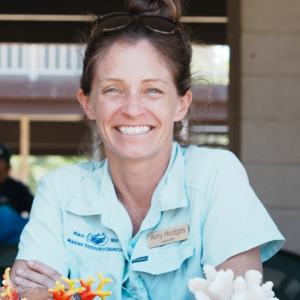
Headshot of Amy Hodges, MNMRC's Executive DirectorAmy Hodges is the Executive Director of MNMRC and has been a part of the organization for 12 years. Here, Amy shares how she got her start in conservation and the impact MNRMC is making in Maui’s community.

What drew you to the environmental space?

I grew up in Maine and went on to study biology and art at Bowdoin College. I have always felt a deep connection to the ocean and the program included a focus on coastal studies and marine biology, which was perfect for me. As a kid, I was constantly exploring Maine’s tidepools and rocky beaches. I developed a real interest in wildlife biology as well and at one time worked with a mobile vet service where we visited Maine’s islands via boat to care for local pets. I’ve recently completed my graduate studies in fish, wildlife, and conservation biology at Colorado State University and I look forward to putting these new skills to work for Maui.

How did you first become connected with MNMRC?

A good friend of mine in college grew up on the big island and after working there one summer I knew Hawai‘i was where I wanted to live. I eventually made the move to Maui a few years later and started working in a veterinary clinic here. I was also volunteering across the island with different conservation groups whenever I had the chance. One night, I was helping with a sea turtle nest watch, and through word of mouth, heard of a job opening at MNMRC. As they say, the rest is history. I’ve now been part of the organization for 12 years, which is really special.

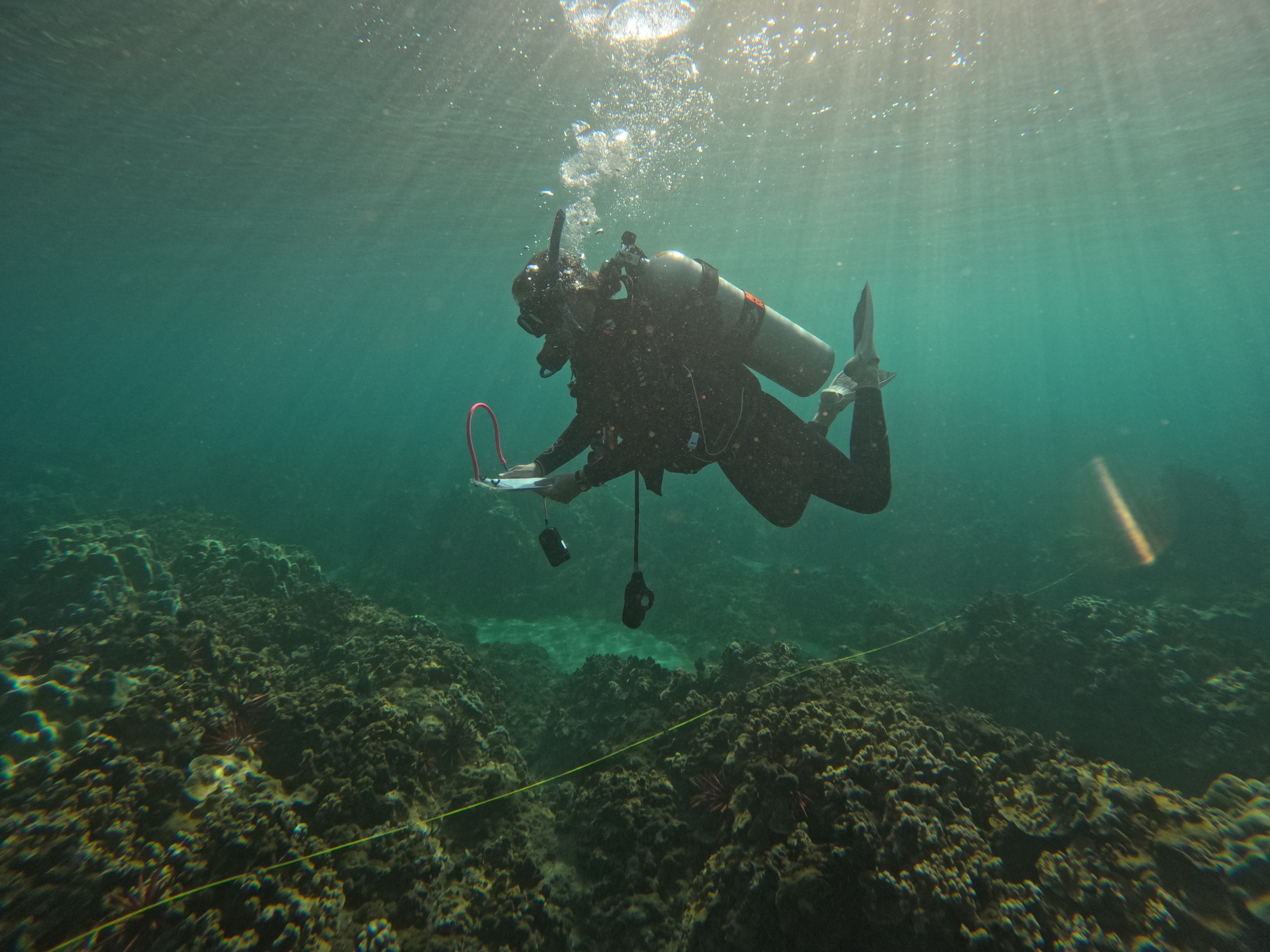
Amy dives over a reef transect holding a clipboard.

Tell us about a current project that excites you.

Our community-based coral restoration work is really inspiring. It’s a first for Maui and we are so proud to partner with Kuleana Coral Restoration on Oʻahu to bring this important work to our island. We have identified 8 potential sites that have the right habitat, depth and surrounding coral communities to support new coral growth. What I love most is the hands-on aspect of this work – locating optimal sites and then planting the baby corals where there is potential for them to thrive. With these direct coral interventions, we’re giving the coral a chance to survive and hopefully really thrive again while also creating new fish habitat. It’s a great example of using an innovative approach to support the health of our local coral reef ecosystems.

What impact is MNMRC making within the local community?

We work with a wide range of organizations and partners to bring our projects to fruition. I like to think we connect the dots so to speak, and bring people together to address and support needs that impact our community and our local ecosystems. We are an open-minded and naturally curious group and we love saying that we’ll try. Being a smaller team, we also have greater flexibility than maybe a larger organization, which allows us to turn around grant funding quickly, for example, or address an immediate need that arises.

One great example of our community work is our reef-friendly landscaping program led by MNMRC Program Director Jill Wirt. We are currently partnering with Soil Thrive and Maui Gold Pineapple Company on a 1-acre test plot of pineapple as part of this program, where we are using regenerative practices including a compost tea brewer to amend the soil. Our goal is to find organic alternatives to synthetic fertilizers and assist land managers in this transition. As a result, we see healthier soil, a reduction in polluted runoff and a healthier island.

I am really proud of MNMRC’s solutions-based work focused on ensuring a healthy coral reef, clean ocean water, and abundant native fish. If we all share a common vision of creating a more sustainable future with intention, we can make a bigger impact. Here in Hawaiʻi, we see how everything is connected.

A group of MNMRC, Maui Gold and SoilThrive Hawaii LLC team members visit a test plot site at Maui Gold
Is there something you wish more people knew about the current state of conservation?

There is an urgency now that wasn’t felt in the field even just twenty years ago. We are in a run, not walk situation at this point and we’re projecting major changes within the next few decades. The good news is that with the right policies and protections in place in combination with community support and funding availability, we can still make a big impact. But it takes everyone coming together to make it happen. I appreciate the can-do spirit of the community on Maui and our local partners for being willing to try new approaches with us.


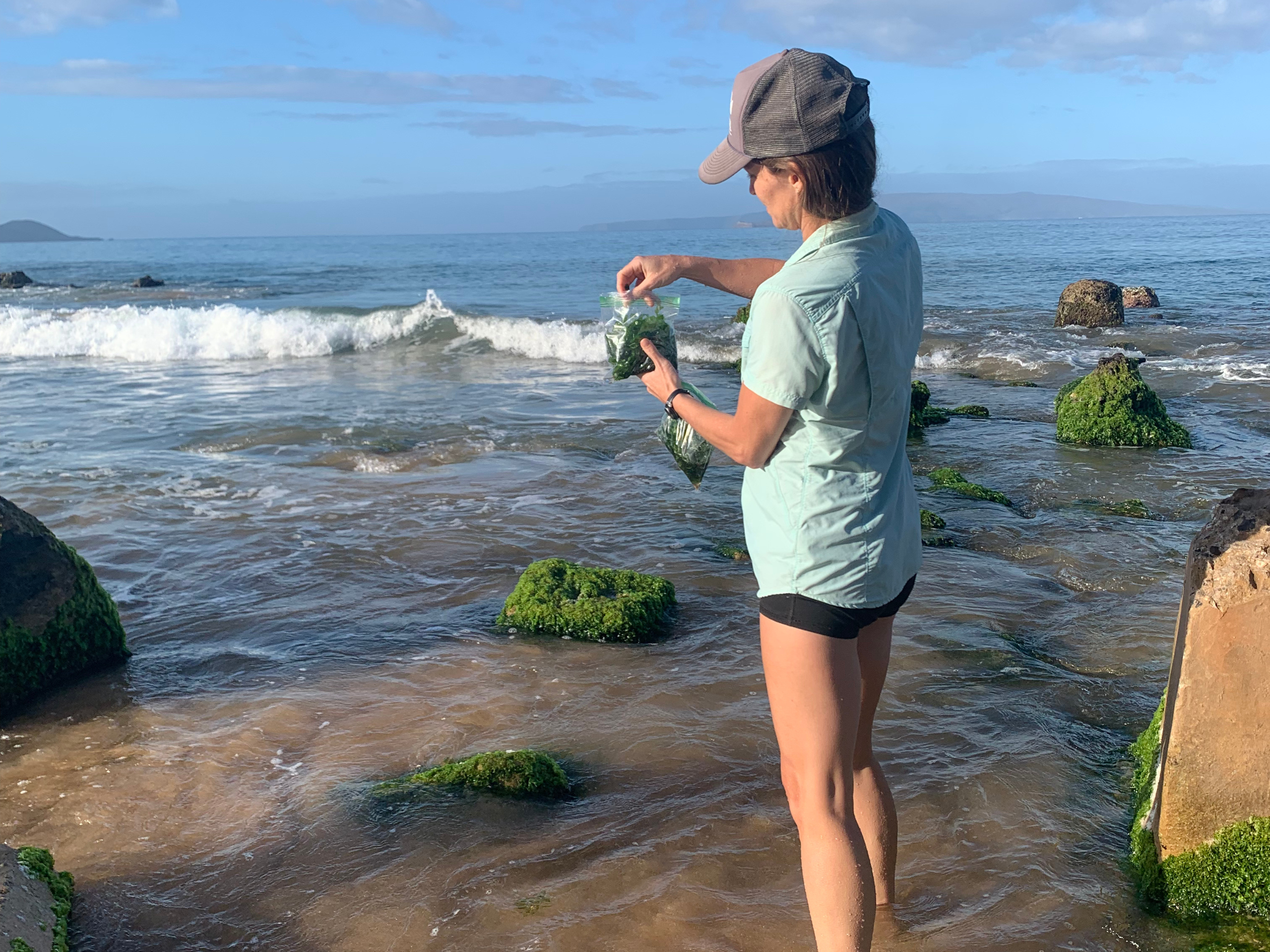
Amy collects alage samples from a beach and puts them into a plastic baggie

What are your favorite local spots on Maui?

My favorite restaurant is definitely Tiffany’s–especially their Happy Hour saimin combo. I also love the Waihe’e Coastal Dunes and Wetlands Refuge to walk and explore.

What would you like to say to the donors and supporters of MNMRC?

I want them to know how much I appreciate them sticking with us as we’ve grown as an organization. All the work we have done in the last 17 years is because of the people who were willing to stay the course. MNMRC’s accomplishments are really their accomplishments and I am thankful for each and every person who has committed to being in it with us for Maui and for the long haul.


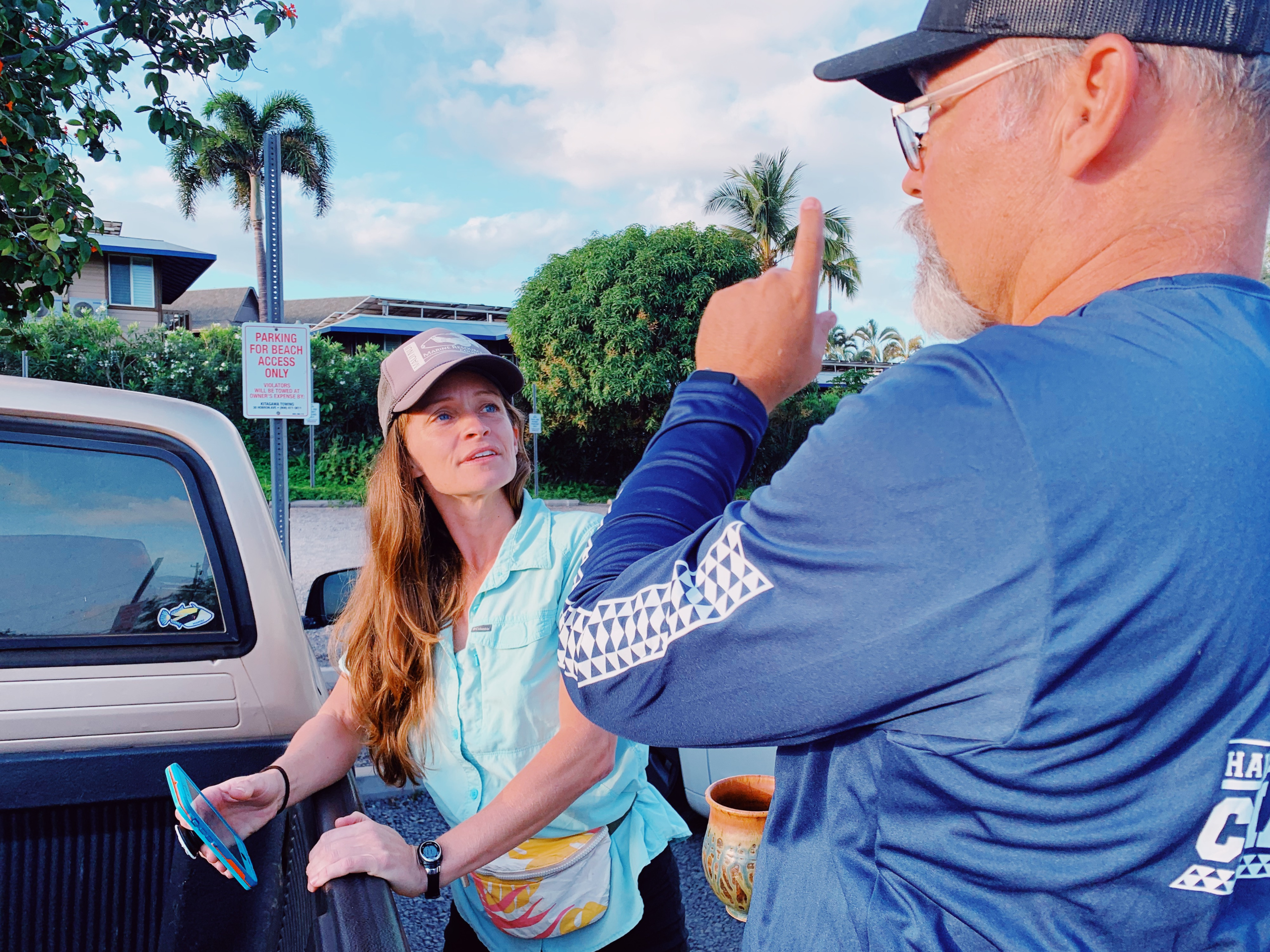
Amy talks with another team member near a truck

Talk Story with Alex Polson

in , /by


Alex Polson has been a frequent visitor to the island and a loyal supporter of MNMRC for the past three years.  Here, we learn more about his connection to the organization and Maui.

Tell us a little bit about how you got connected to MNMRC

About 3 years ago, after returning from a trip to Maui, I wanted to find a way that I could give back to the communities of the island. I did some searching on the web and came across MNMRC. As somebody who is very passionate about the environment and sustainability as a whole, I got the sense that MNMRC was the perfect charity to get involved with.

Tell us about what you do for work and what outdoor activities you enjoy.

I’m a software engineer at a company called Indeed, whose mission is to help people get jobs. I really appreciate their focus on people, not only those that are looking for jobs but their employees as well.

Outside of work, I like to spend time with my wife, daughter, and two dogs Sunny, a super mutt, and Oscar, a long-haired miniature dachshund. When I can, I also like to go running which I find allows me to see things from new perspectives that aren’t possible when driving.


Can you share how the ocean has impacted you?

I’ve lived in the Seattle area my whole life, so I have always been surrounded by water in some way. That said, I’ve always been afraid of it, mostly due to the waters of the Pacific Northwest being so cold and opaque. When I visited Hawaii for the first time, I found its warmth and transparency beautiful and refreshing, and my wife and I have grown to love snorkeling when we visit. I’ve been lucky enough to happen upon a few honu as they’ve been swimming by, keeping a safe distance of course. To be able to see the wildlife in their natural habitat is humbling, and has made me more aware of how important it is to keep our oceans healthy.

Tell us a bit more about your connection to Maui and the people.  What does Maui mean to you and why do you keep coming back?

I have been coming to the islands for almost 20 years now.  Like many travelers, I initially stayed in areas that were more touristy but the more I branched out, the more I began to feel a part of the local community. I’m the kind of person that likes to strike up conversations with strangers because I’m very curious and love to meet new people. I’ve had so many lovely chats with folks in the most random places, by recognizing some simple, common ground.

What is your favorite Maui moment?

A couple of years ago, my family and I made our way down to the Hoapilli Trail on the south of Maui. There’s a point on the trail where you step out of a copse of trees into a huge, barron, ancient lava flow. Hiking through it was another reminder of how remarkable nature is. On the other side of that flow was another group of trees that we didn’t quite get to before having to turn around. I hope to make it to those trees and beyond it to see what comes next. I love exploring and seeing what’s around the next corner.

What do you wish more people knew about supporting conservation causes?

It’s so easy to think short-term, but it’s so critical for us all to invest in long-term solutions for the generations to come. Seemingly small decisions such as using reef-safe sunscreen, recycling or reusing materials to avoid adding things to our landfills, can have large impacts if many of us make these sorts of choices. We each need to understand the impacts we’re having on our environment, and do what we can to reduce or eliminate those impacts. The more people that we can educate about conservation causes, the bigger the impact we can have.

What’s your favorite Maui restaurant?

Ever since we started visiting Kihei, we always make it at least once per trip (usually more) to the Kihei Caffe off of South Kihei Road. Everything that I’ve tried is delicious but my personal favorite is their Kalua pork Loco Moco with fried rice. I usually have a hard time deciding what to get, but it has it all. On our last trip, we discovered Da Kitchen, off of South Kihei Road, which is also delicious!

What would you say to others who are considering becoming involved with MNMRC?

If you’re passionate about environmental causes and you feel a connection to Maui, both the land and Hawaiian culture, MNMRC is an amazing cause doing amazing work. I can’t be on Maui all the time, but it’s definitely in good hands with MNMRC.

Talk Story with Hanalei Hoʻopai-Sylva

in , /by
This story is the first in a new series where we highlight individuals in the MNMRC community. Whether near or far, resident or visitor, we all share a passion for marine conservation in Maui Nui!


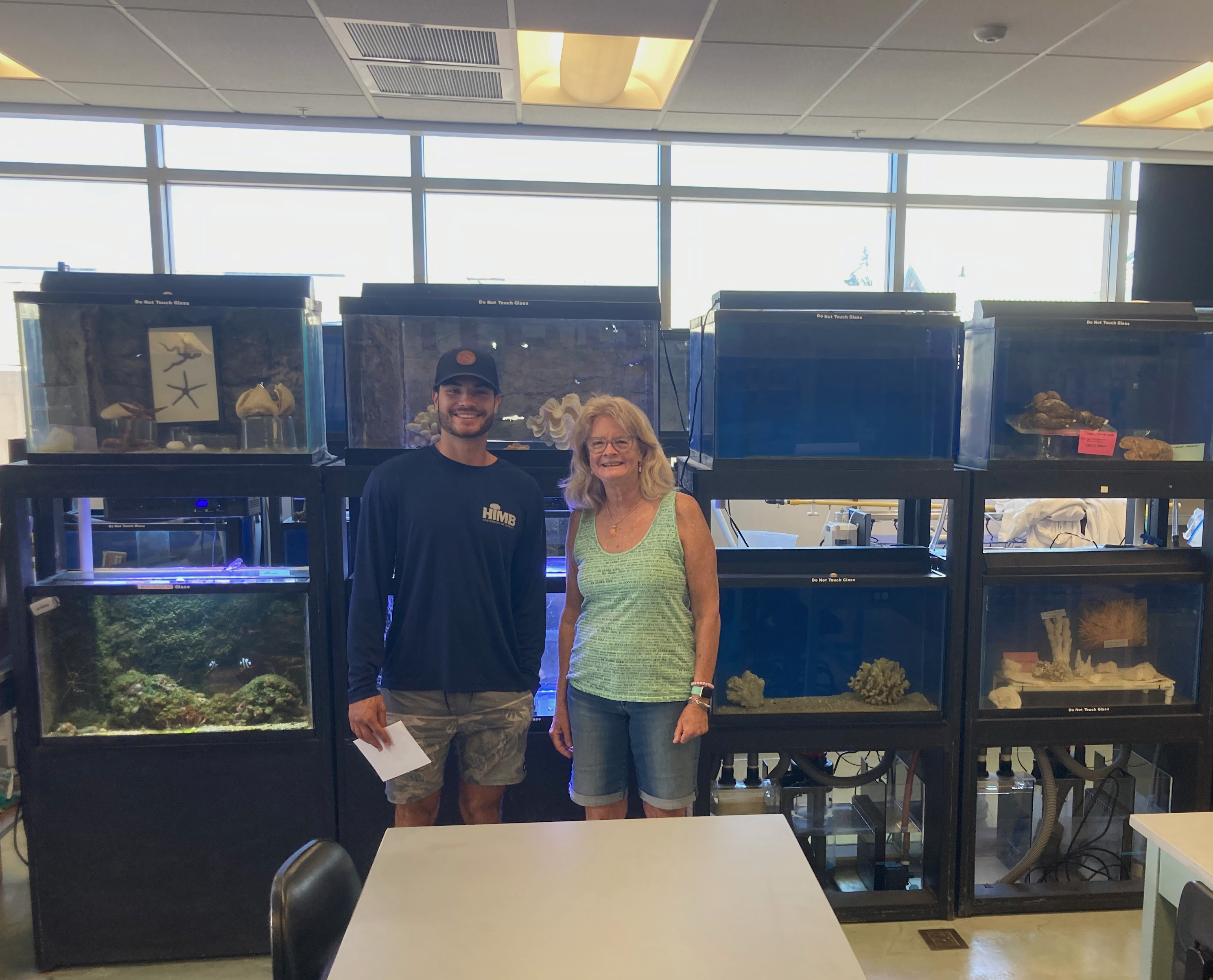
Hanalei Hoʻopai-Sylva was born and raised on Maui. As a fisherman, spear diver, and surfer, he was introduced to how important the marine ecosystem is to everyday life in Hawaiʻi from a young age. He is currently in graduate school at the University of Hawai’i at Mānoa studying coral reef health and previously worked for the Coral Resilience Lab. In April 2024, Hanalei was voted in as MNMRC’s newest board member.
First of all, congratulations on joining the MNMRC Board of Directors! How did you get connected to us?

Thank you! I’m really looking forward to being involved. Being from Maui, I saw MNMRC around town but it wasn’t until a friend who was into science encouraged me to attend a Know Your Ocean talk that I really discovered MNMRC. This was right before I was about to start college and it was a great talk which sparked my interest in pursuing science as a career. The speaker looked like a younger local surfer — someone I could really relate to. Just seeing someone like me, up there talking about the ocean in that type of role, it had a huge impact on me.

There are many conservation groups in Hawaiʻi. Why did you choose to be a board member for MNMRC?

I’ve been working closely with (board member) Ekolu Lindsey doing restoration work in Olowalu and he approached me with this opportunity. He knows that I want to eventually work in resource management on Maui. Ekolu has been really encouraging as I continue to learn and grow in this field.


How has the ocean impacted you?

As a young kid on Maui, I loved being in the water as much as possible with cousins, aunties, and uncles. When I got a bit older, I started bodyboarding and spearfishing. I always felt like the ocean brought me peace and it was somewhere I wanted to be. That definitely hasn’t changed.

What was your first catch?

I used to love spotting the bright red of the Menpachi (Soldier Fish) in the water when I was really young. I was in middle school when I learned to spearfish and Menpachi was the first fish I caught. I still like to spearfish when I can find the time.


How did you get started in reef science?
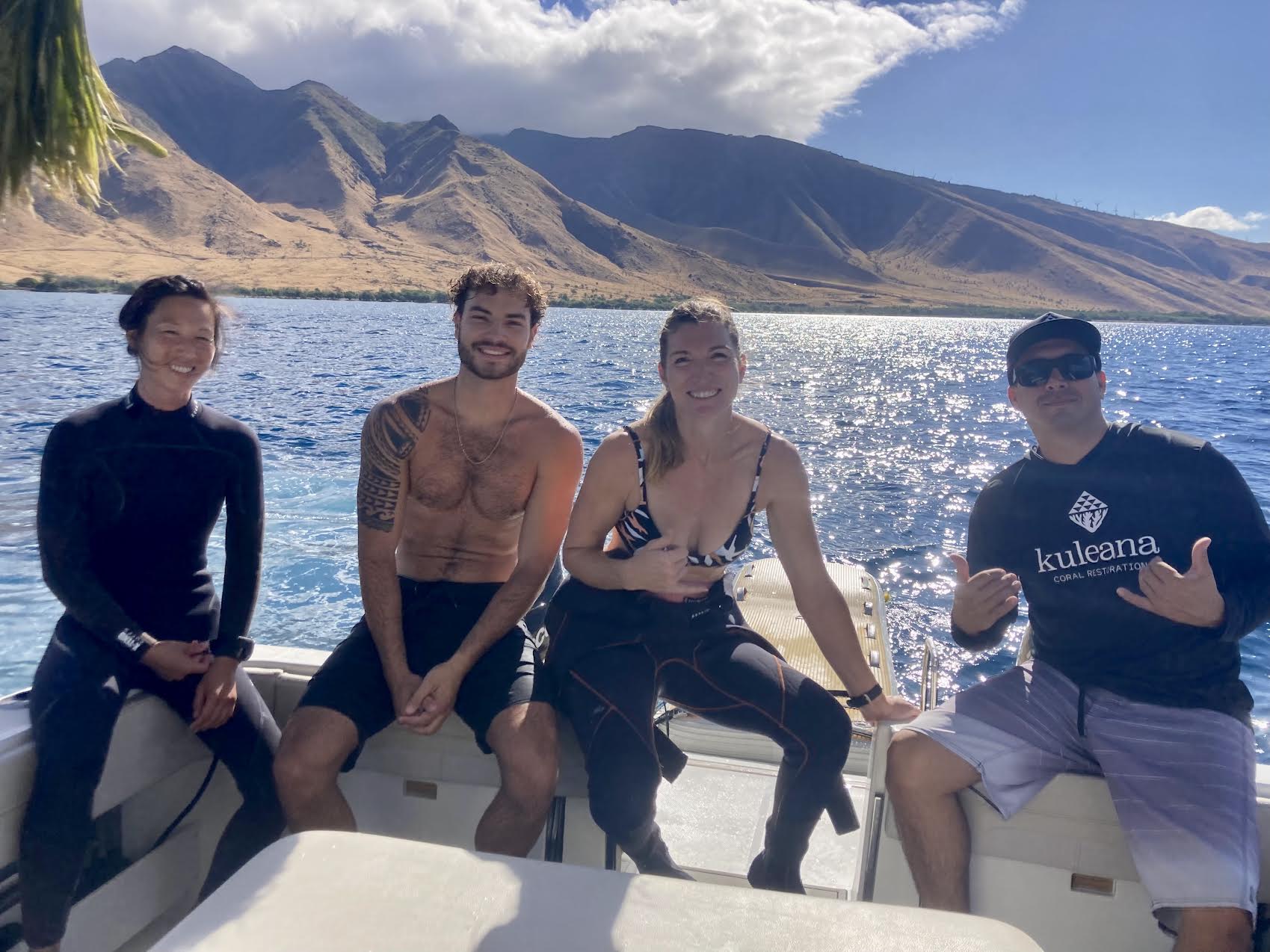
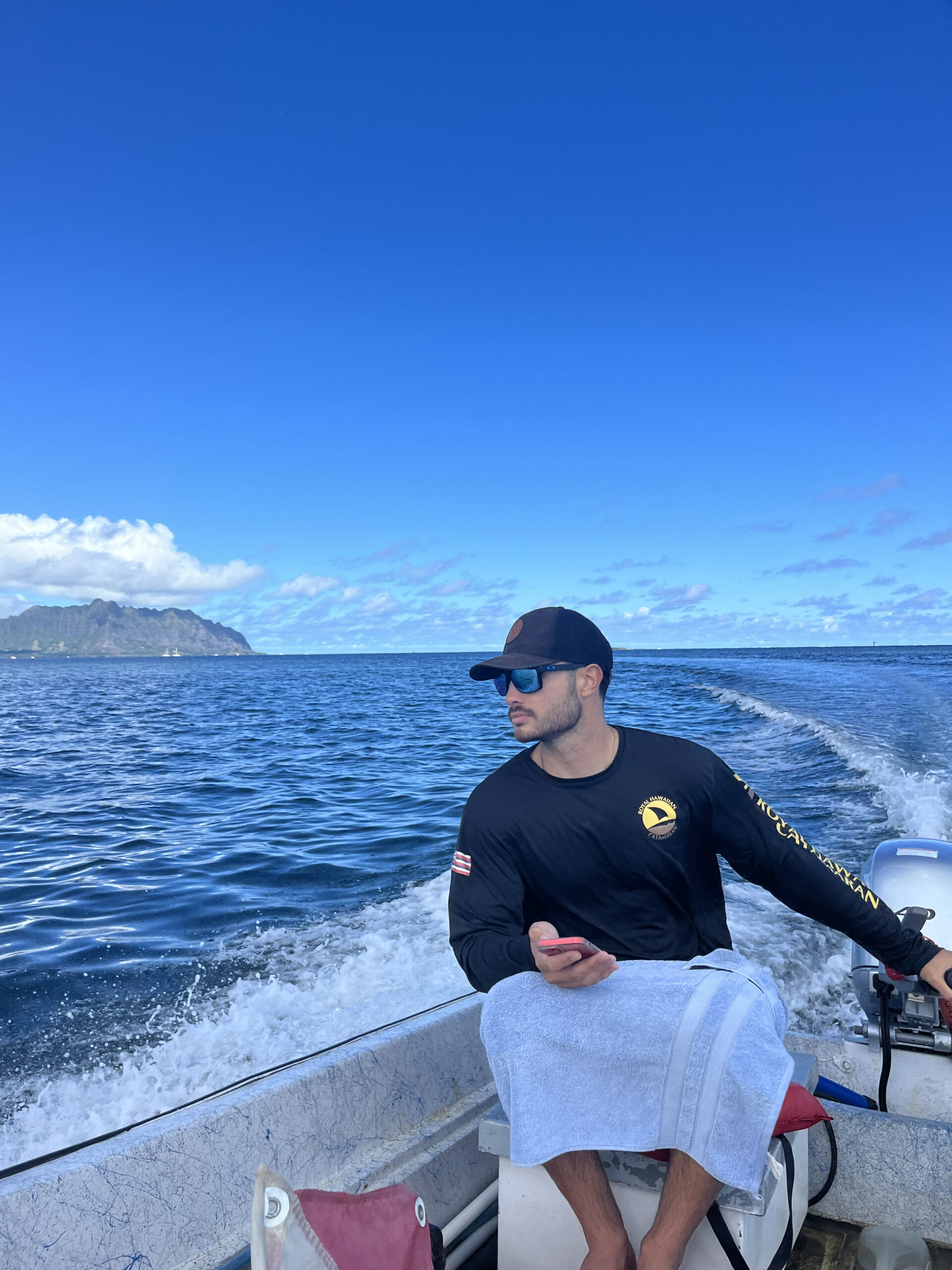
I was given an opportunity to be a coral reef researcher with the Coral Resilience Lab right after graduating with my B.S from UH Mānoa. Studying reefs wasn’t something I set out to focus on originally. My goal is to eventually work in resource management here in Hawaiʻi but working as a researcher was an introduction to the science world and helped me understand how research plays out.

I am motivated to represent local Hawaiians in decisions that impact our reefs. It is critical that we are part of the conversation when it comes to our lands and waters. My time at the lab has prepared me to continue working towards that goal.

What did you do at the Coral Resilience Lab?

I was the project manager for our Restore with Resilience (RWR) project in Olowalu, Maui, as well as a photogrammetry specialist for our RWR projects in Honolulu and Kāneʻohe. Depending on the day, I would help with community outreach, get in the water to conduct research, work on some writing or do data analysis.

The research I directly assisted with consisted of photographing outplanted corals at key sites and then using those images to create 3D models that could be used to monitor and track the coralʻs growth over time.

What do you wish more young people knew about working in science?
A career in science is more accessible than people might think. Once you get through some of the math and science basics that can be hard and might feel like a hurdle, you can specialize and focus on what really interests you, and that’s the exciting part.


You live in Honolulu – do you have any restaurant recommendations for us?

I live in the Kaimuki neighborhood, so I like to head over to Chubbie’s Burgers. It doesn’t disappoint!

How about a favorite watersport?

Right now, it’s surfing Diamond Head but really, whenever I’m in the water, I’m happy.