Blog Archives: Meetings & Events

Volunteer Day Recap: Limu Sampling in South Maui

in , /by

Testing limu (marine algae) to learn about pollution sources in South Maui Waters

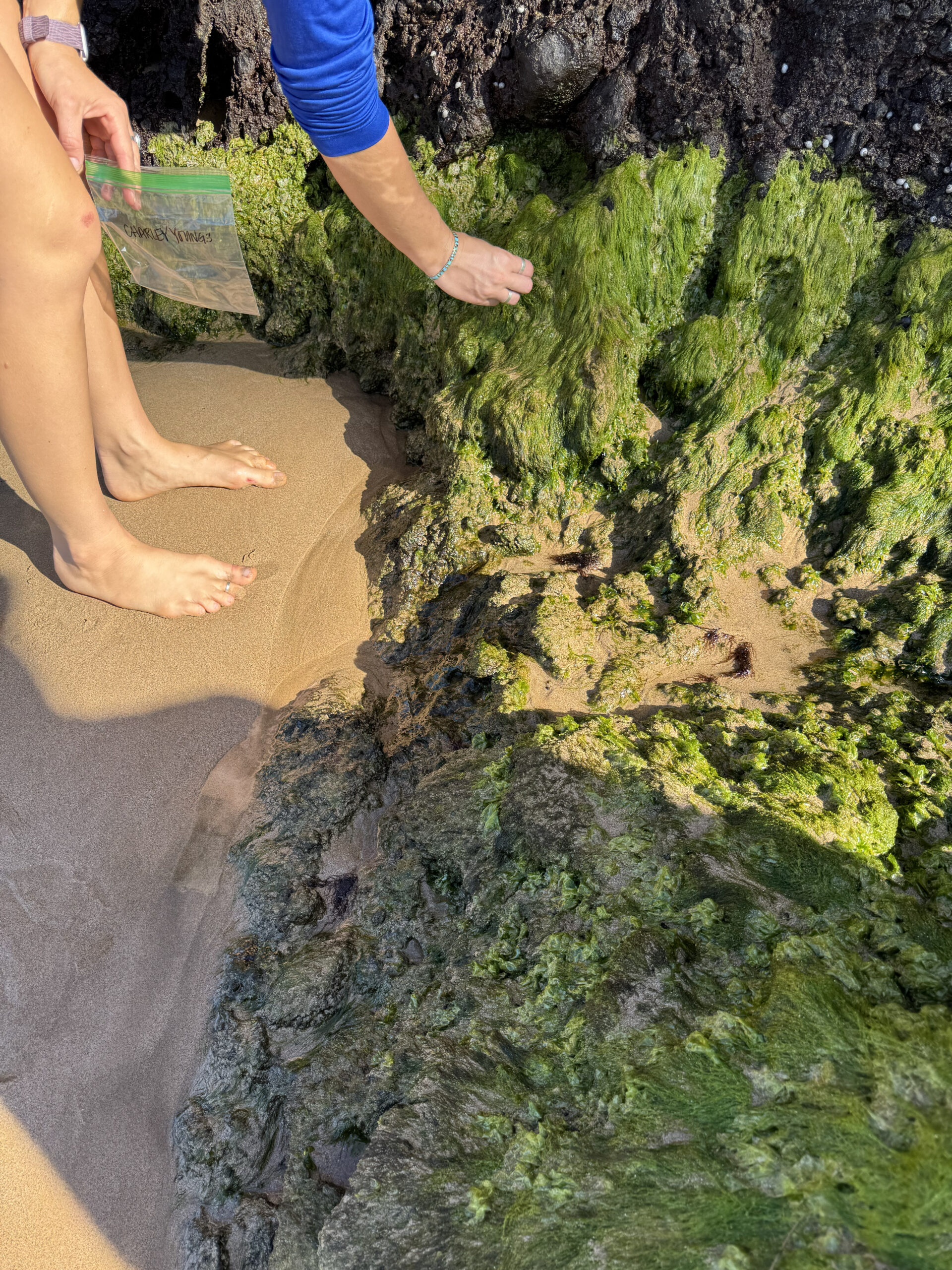
Since 2019 Maui Reefs has analyzed several types of limu (marine algae) that can indicate the presence of freshwater nutrient pollution along Kahului and the West and South Maui coastline. Studies conducted in previous years showed pollution was a concern in these areas, so we wanted to see if nitrogen (a fertilizer) was still in those waters and, if so, where that pollution might be coming from.

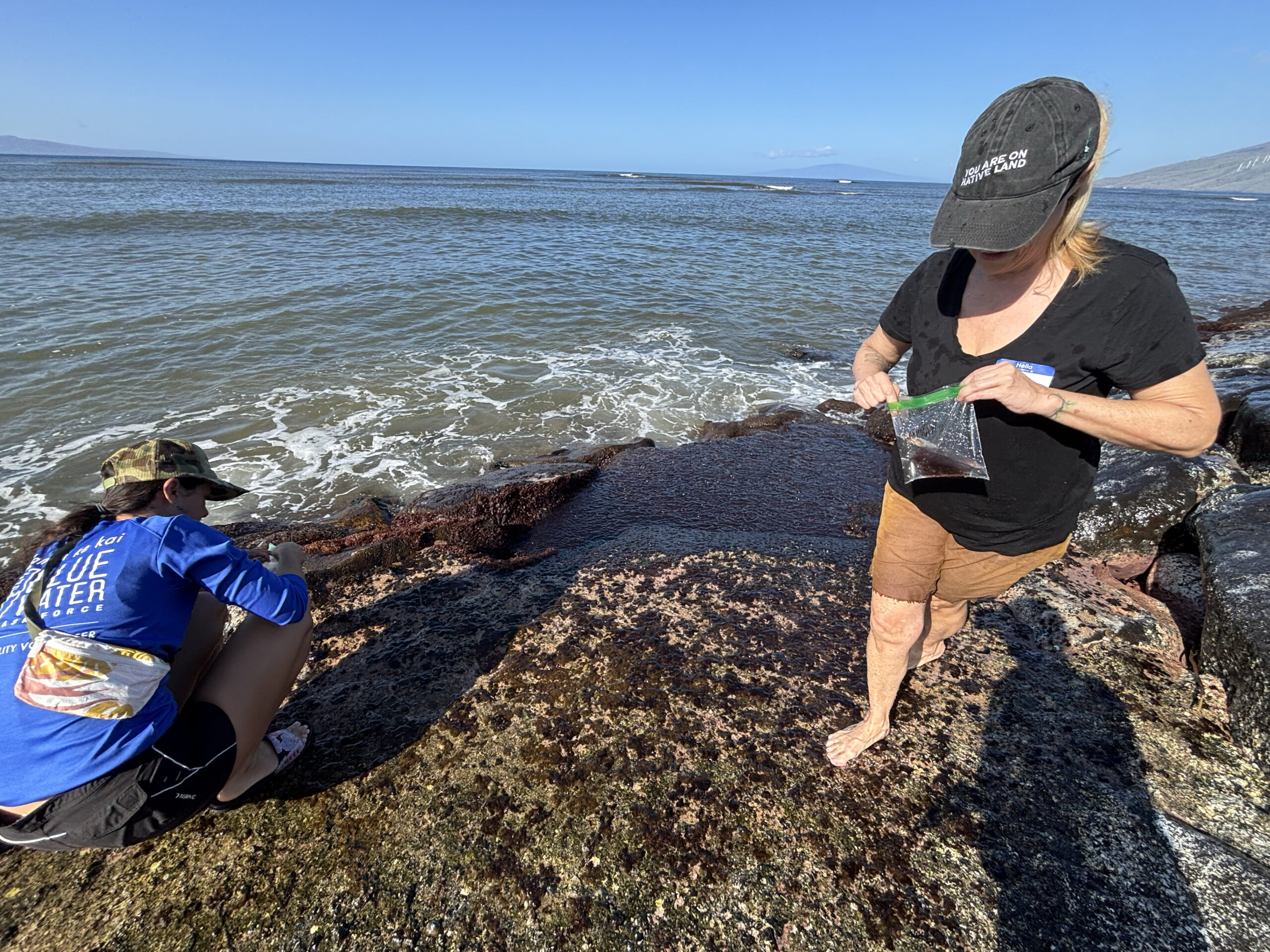
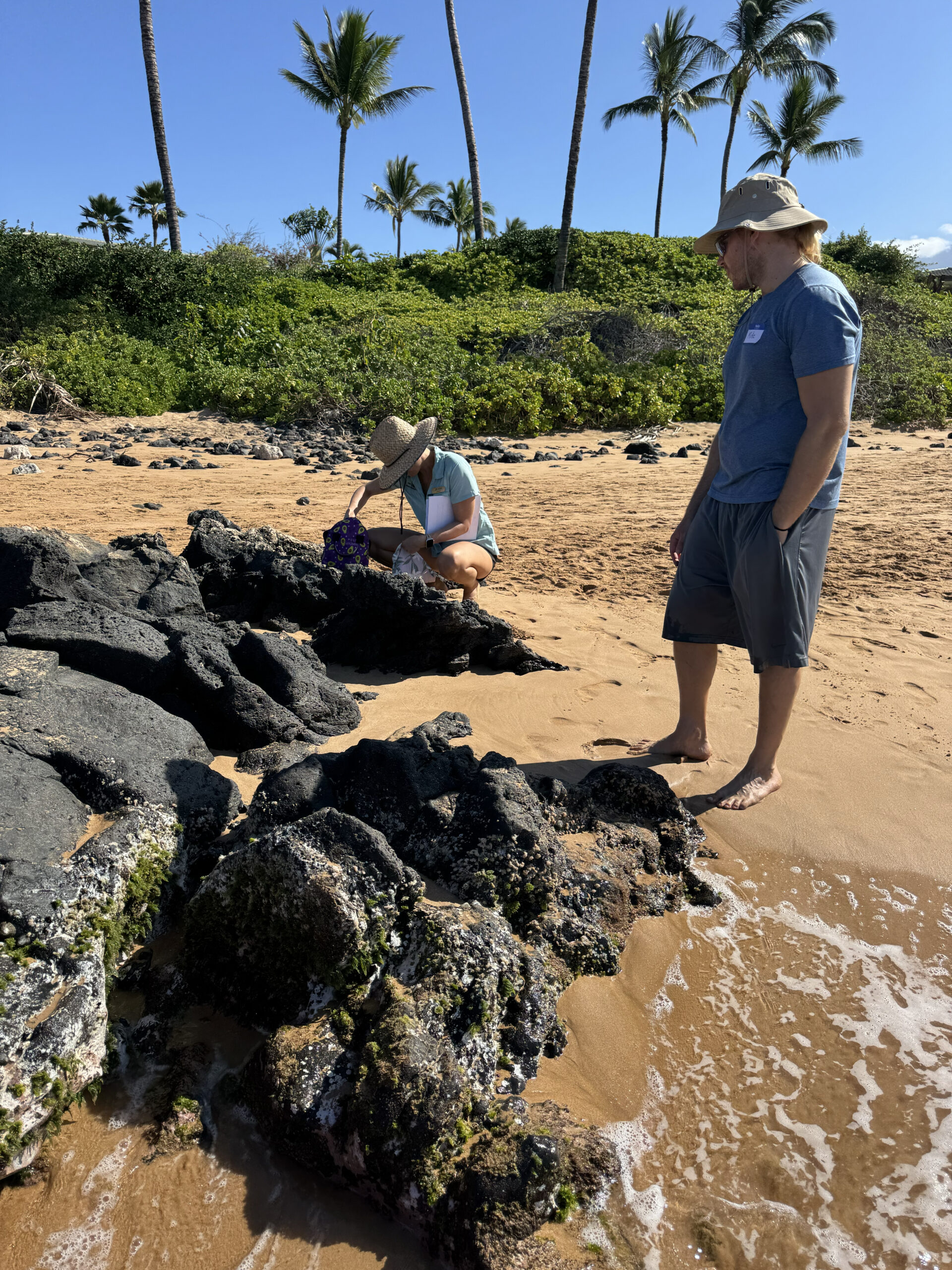
To help answer these questions, a group of Maui Reef volunteers went out on February 11 to collect samples from 12 sites along the South Maui coast. The specimens that will be tested by the University of Hawaiʻi at Mānoa for nitrogen, which can indicate potential pollution problems when found in excessive amounts

Like many plants, limu will absorb nitrogen as they need certain amounts to grow. When limu is analyzed for nitrogen, we can tell if nitrogen levels are too high for normal conditions. When too much nitrogen is present in the water, it harms reefs by causing algae to grow too quickly and to dangerously large sizes. Too much algae can smother a reef and severely reduce the oxygen needed to survive. Further analysis can also help determine if the nitrogen source is related to sewage or if it is coming from a natural source.

In order to spot patterns and trends in conditions, we generally need to have 3 year’s worth of data. Although Maui Reefs sampled limu in 2019, 2023, and 2024, not all sites were sampled each year. But, with the help of our amazing volunteers, we were able to quickly collect more samples than we have ever done in a single day! Now, we have a larger base of information  to build off of as we look to collect more samples in the coming months and analyze the new and old data to see what is happening in the waters off of South Maui.

Mahalo nui to all of our wonderful volunteers who made this work possible!

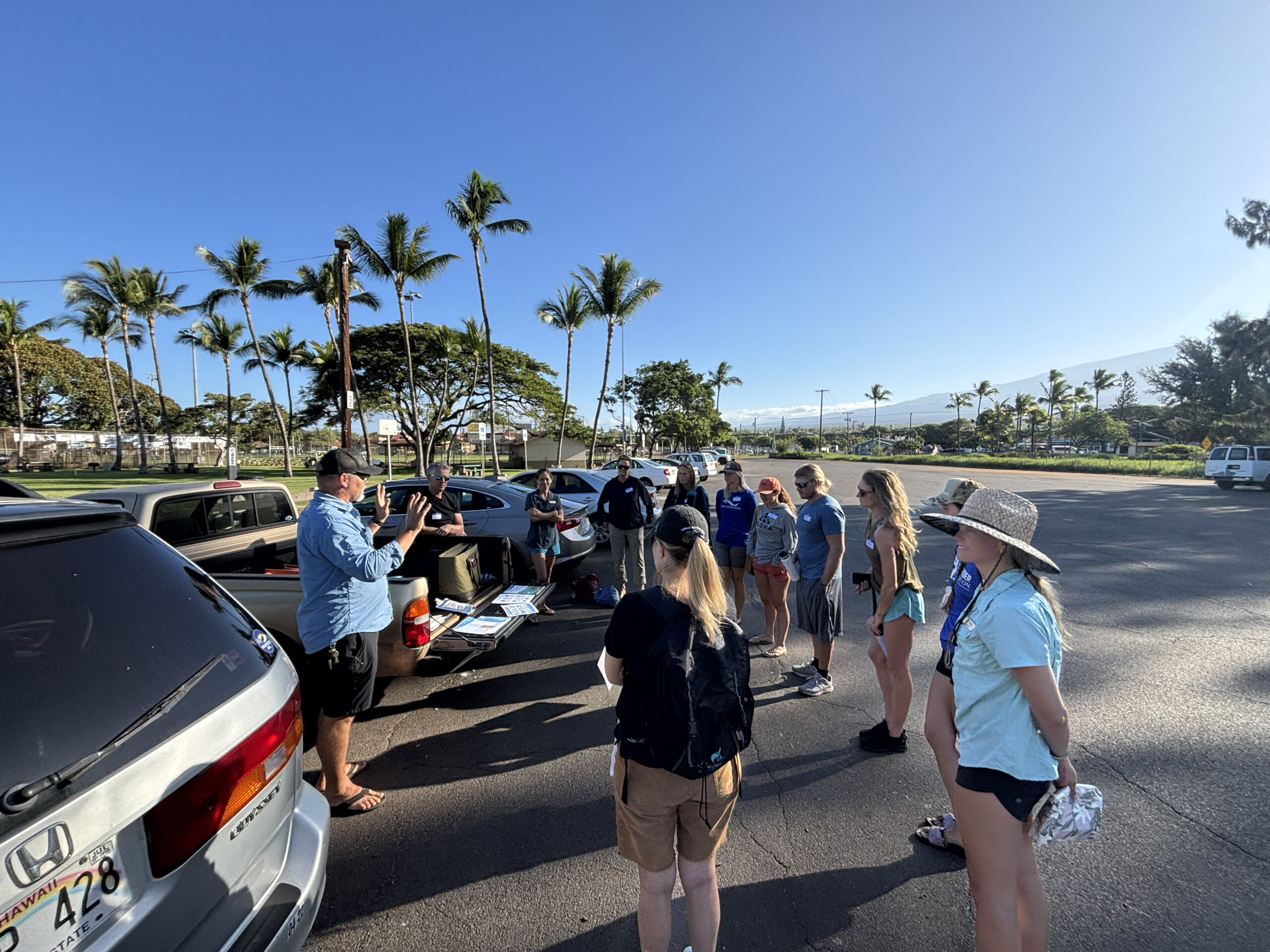
A group of volunteers listening to a training in the Kalama Park beach parking lot.

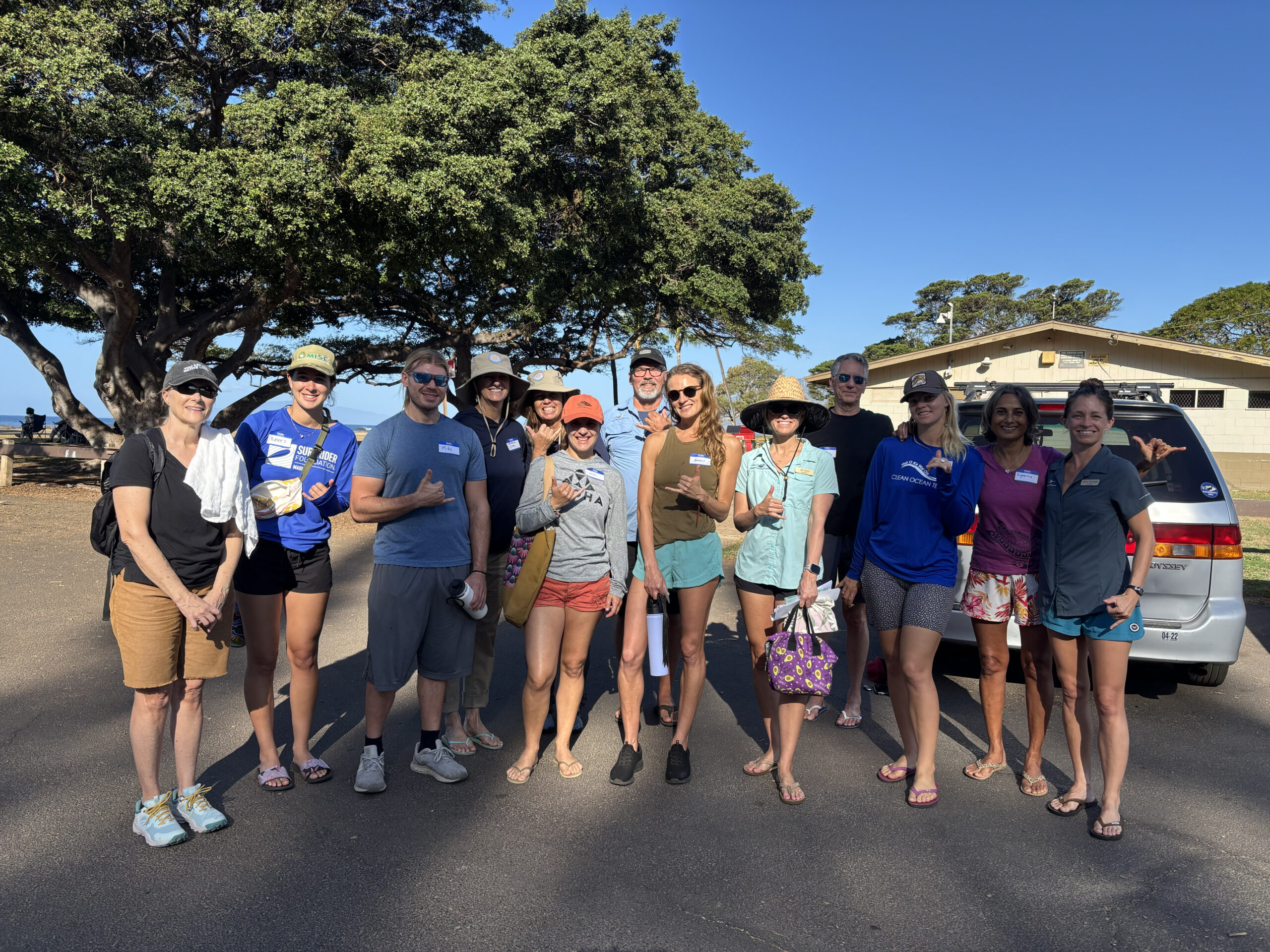
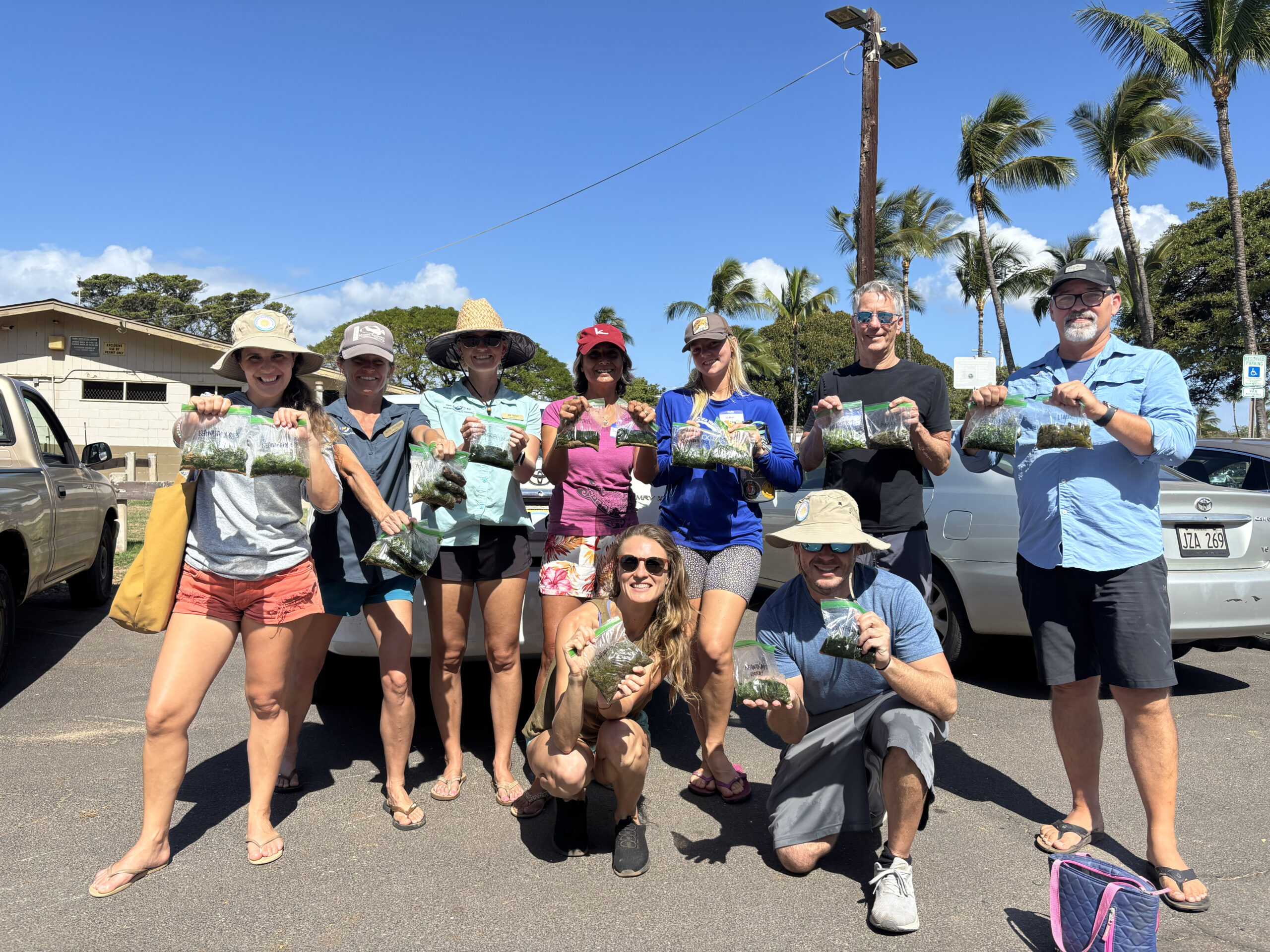
A group photo of 13 volunteers smiling posing in front of parked cars in the beach parking lot.

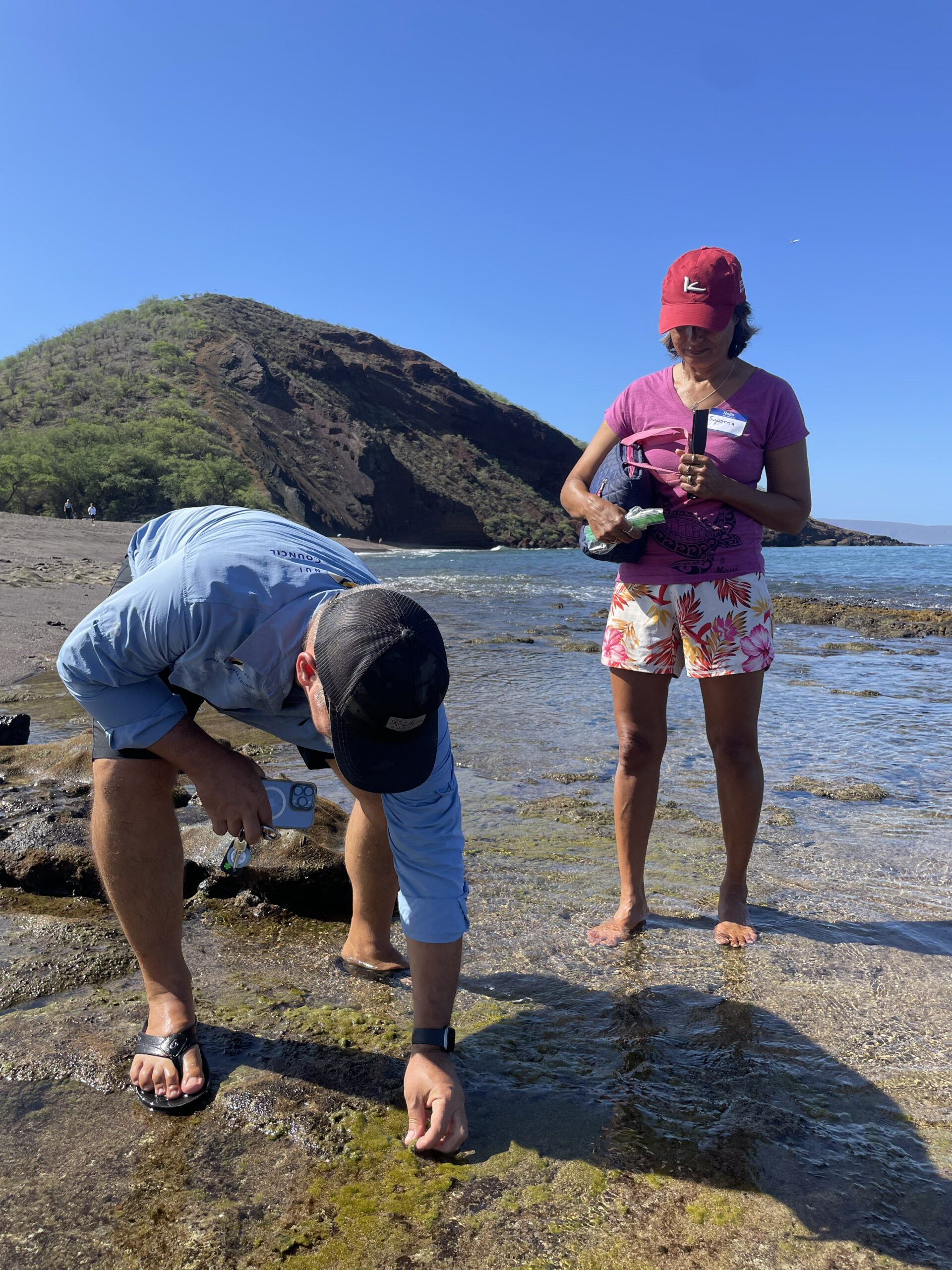
Volunteers collecting algae samples. One volunteer is crouching on a rock wall to collect samples. Another on the right is closing a ziploc bag with algae inside.

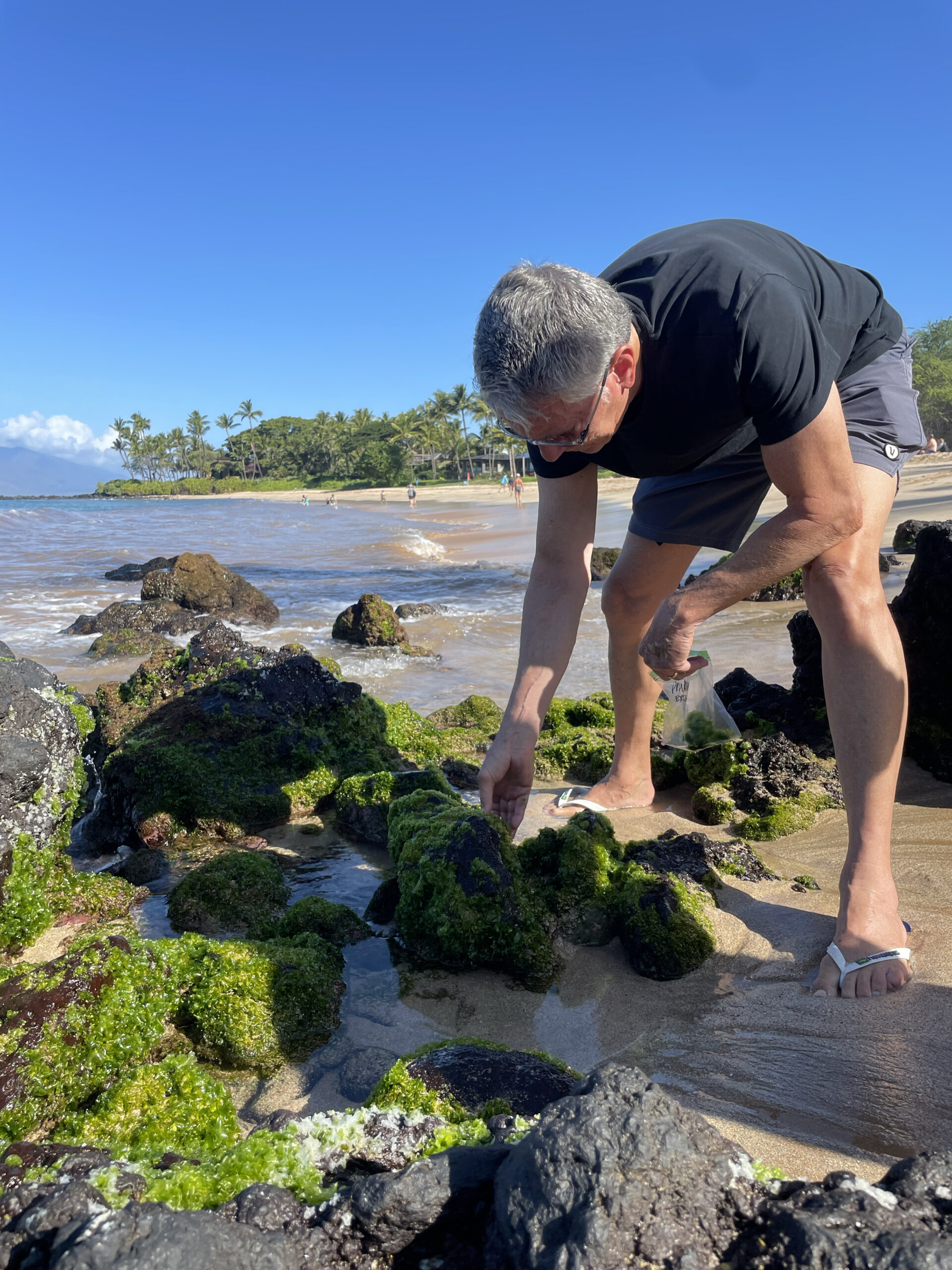
A volunteer picks limu off a rock with the shoreline and palm trees in the background.

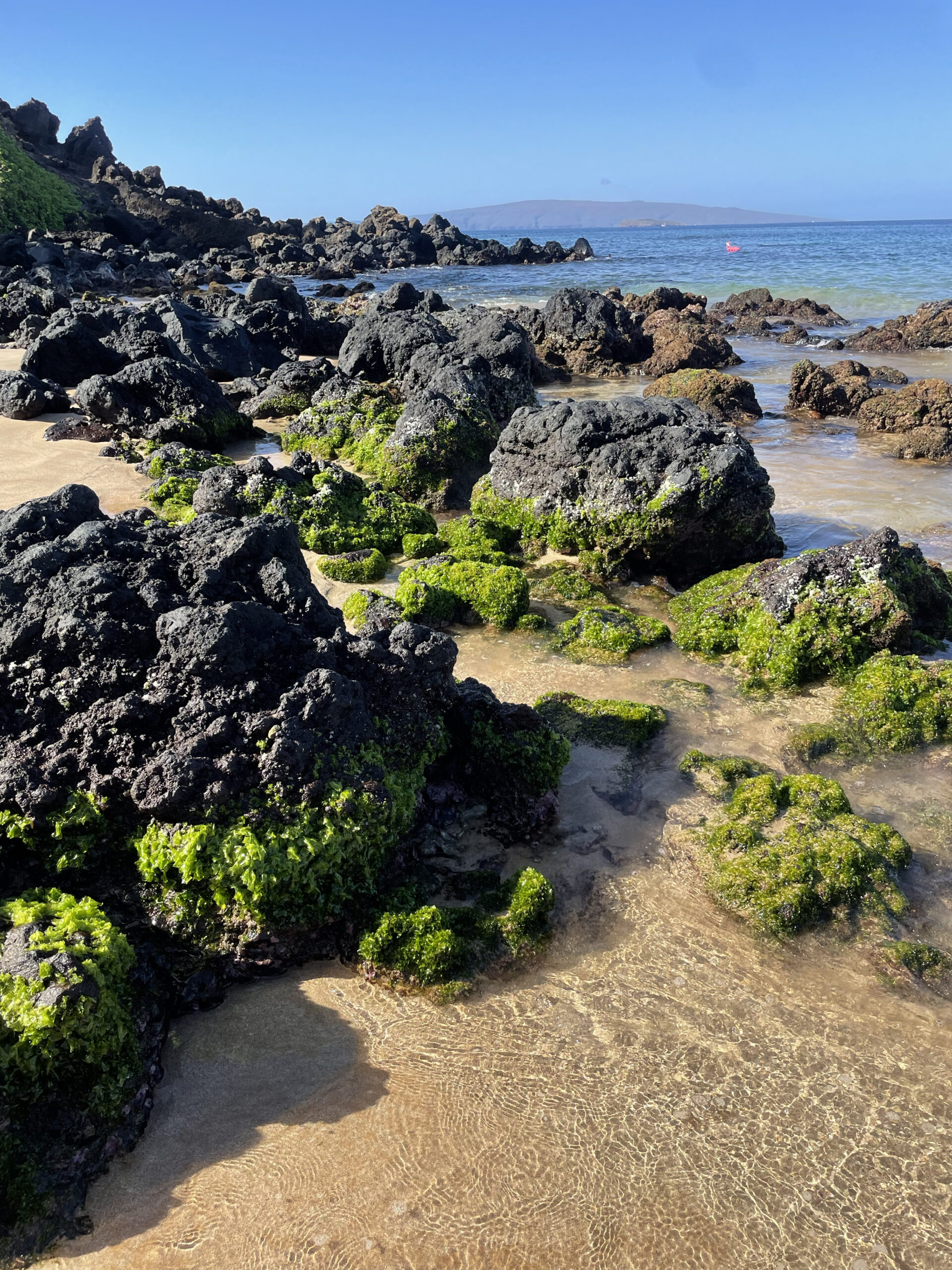
An image of black rocks on the shoreline covered in green algae.


A close up image of a volunteer picks green algae off of a black rock.

One volunteer looks on as another picks algae off of a rock on the shoreline.

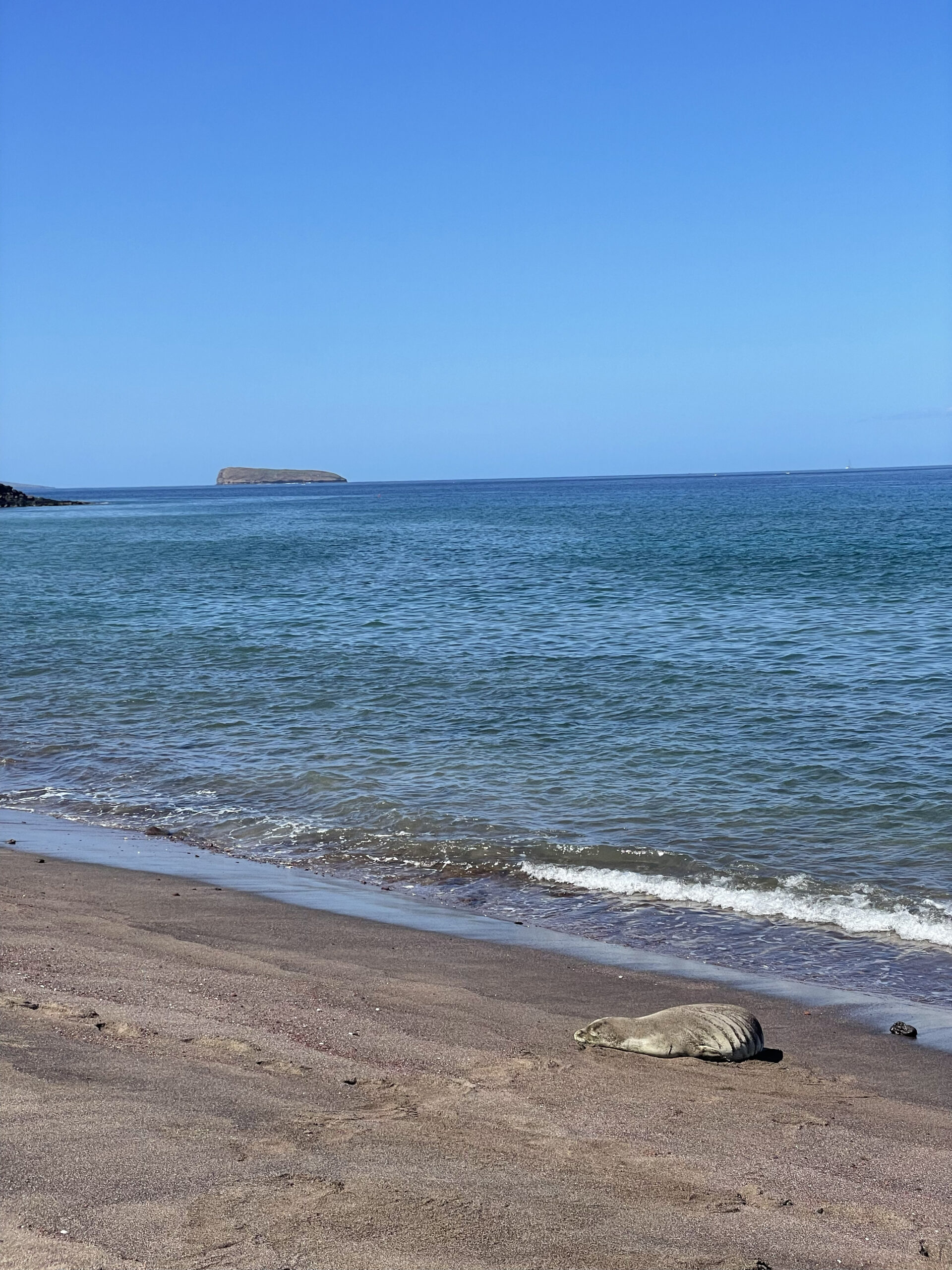
A Hawaiian Monk Seal lays on the sand with the beach and Molokini crater in the background.

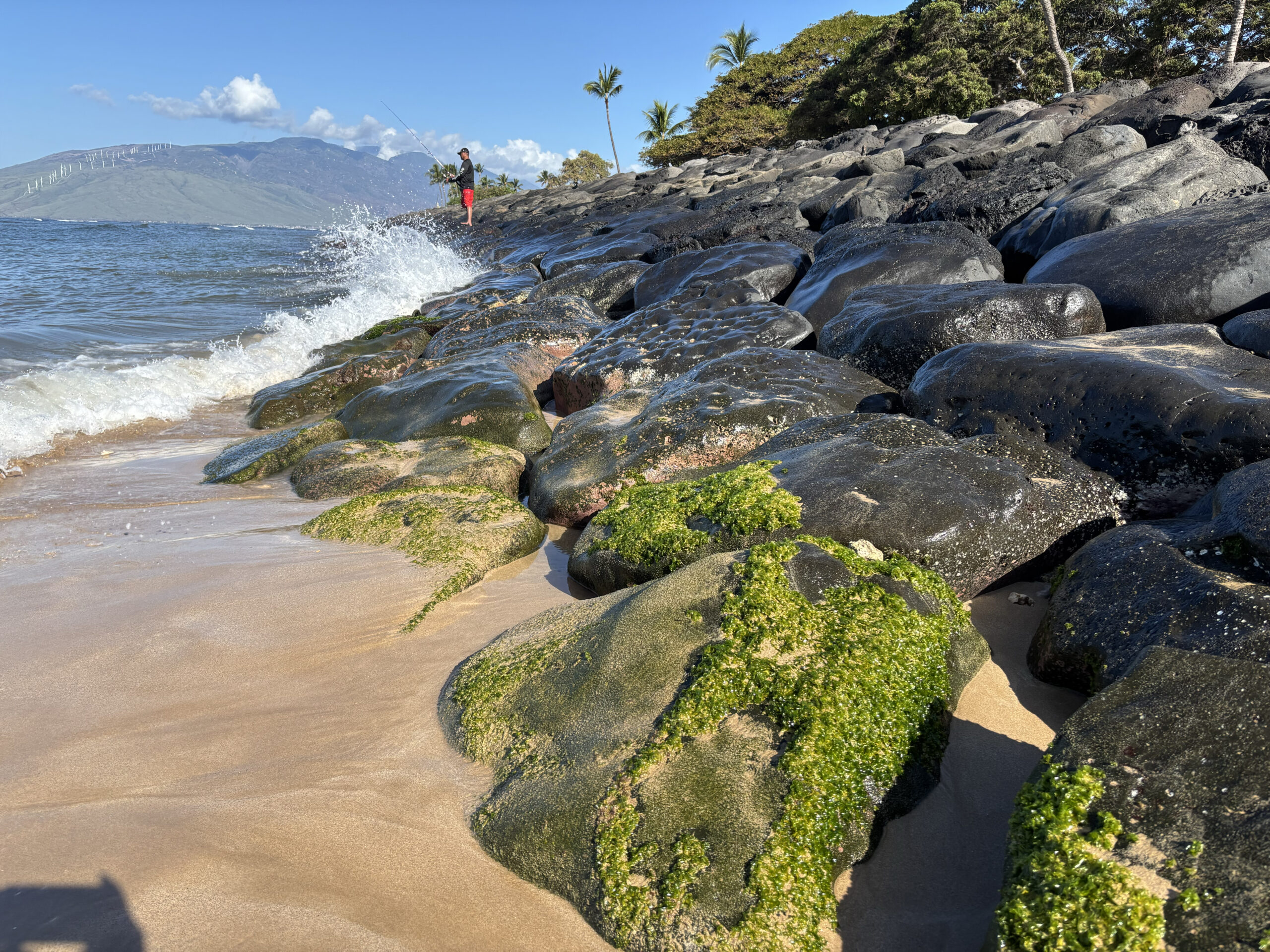
An image of large rocks on the shoreline, some of which are covered with green algae. A fisherman and the West Maui Mountains are in the background.

A volunteer bends to pick algae off rocky patches on the ground while another holding a bag and scraper looks on.

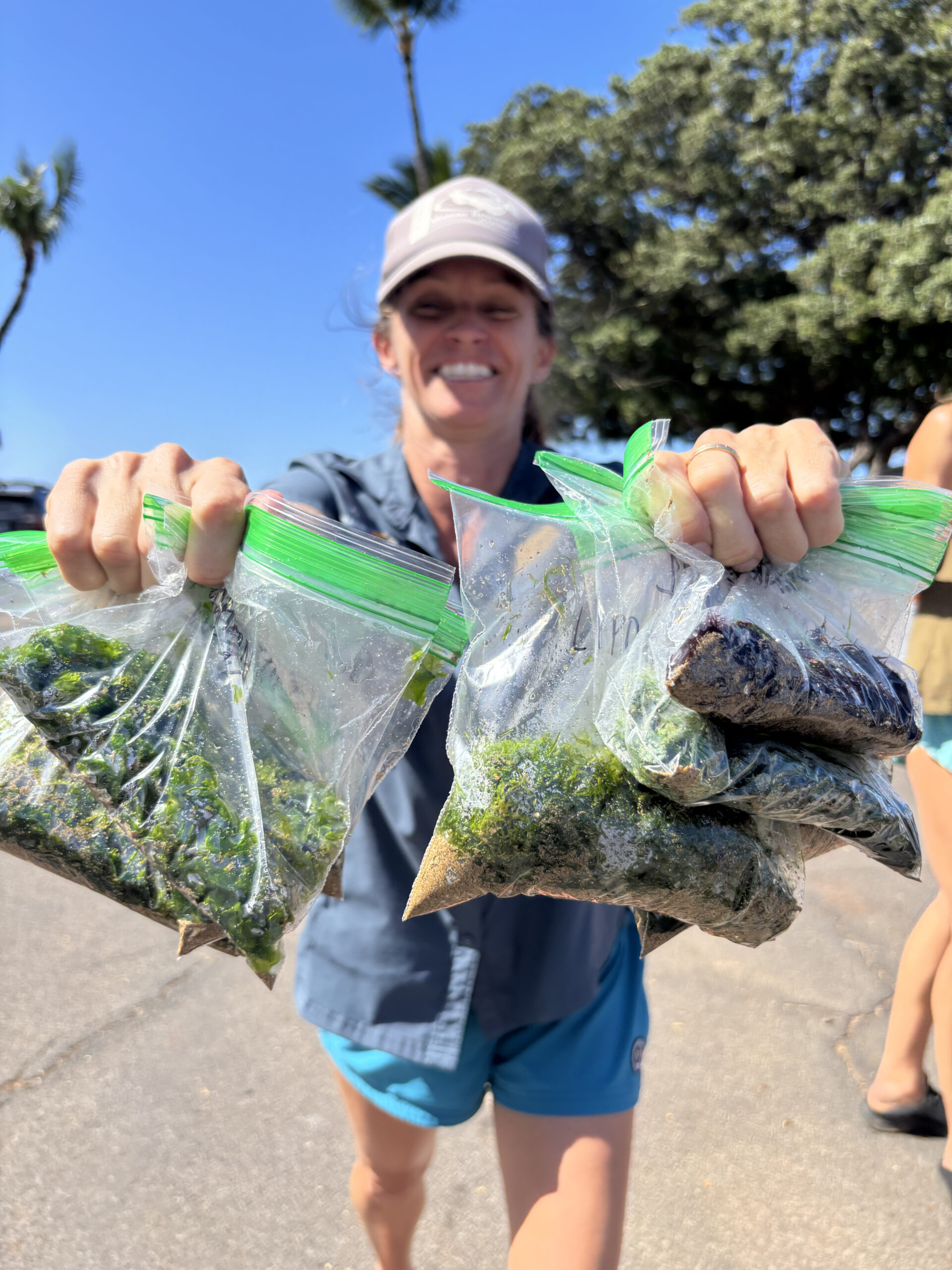
A volunteer holds up five ziploc bags full of algae samples for the camera.

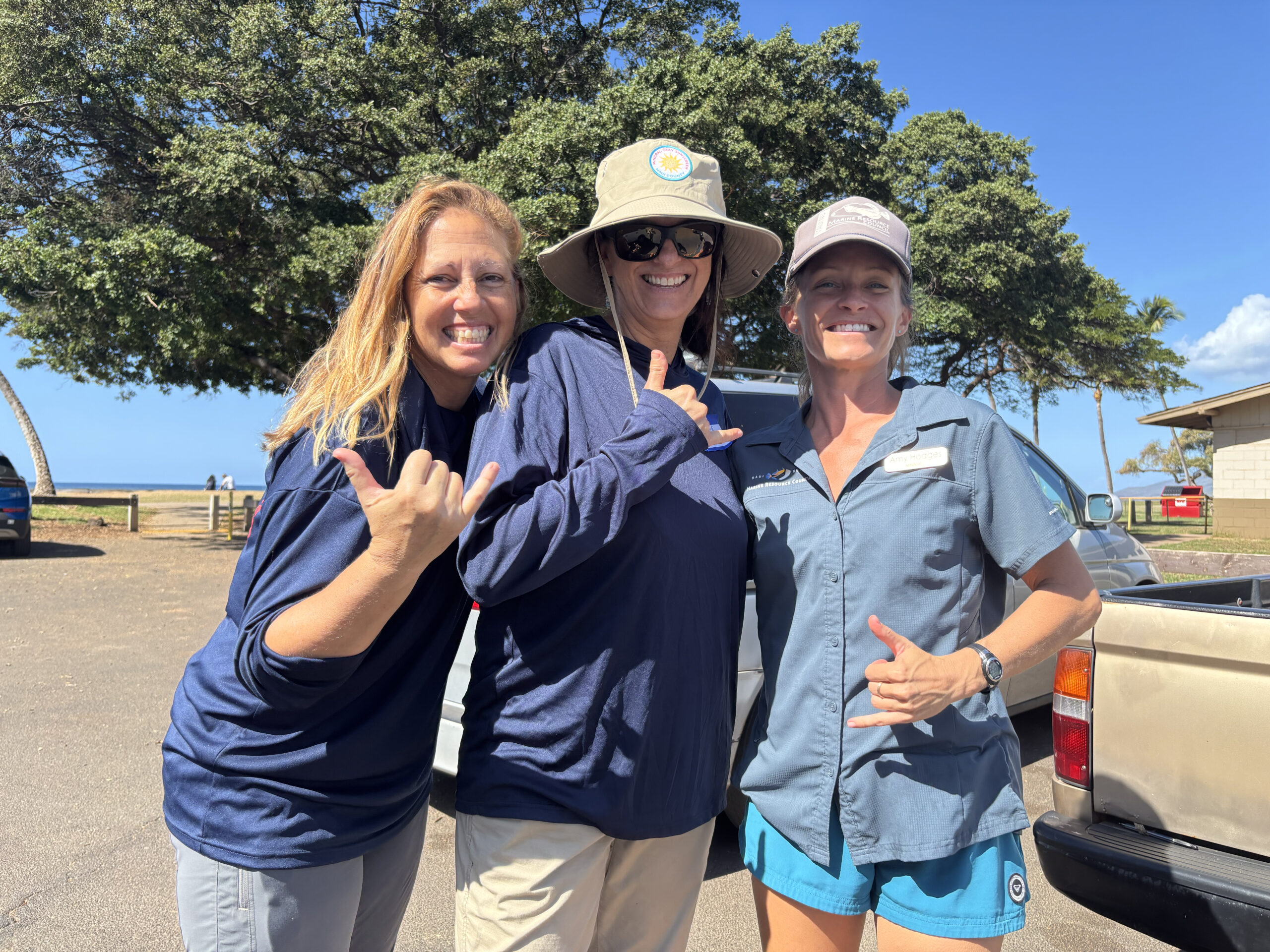
Three volunteers pose with shakas in front of cars at Kalama Beach parking lot at the end of the day.

Nine volunteers pose in front of parked cars with ziploc bags full of algae.


Speaker Series: Unlocking the Mysteries of Biodiversity on Hawaiian Coral Reefs

in , , /by

Join us on February 5 as Dr. John Burns of the University of Hawaiʻi at Hilo shares how the Multiscale Environmental Graphical Analysis (MEGA) Lab is using cutting-edge 3D technology to map and study reefs as the organization pursues its goal of mapping 1 million of the world’s best reefs by 2030.

Less than 20 percent of our oceans have ever been seen and in order to better prepare for a rapidly changing future, we need to know what we have so that we can understand where we need to go,” said Dr. Burns.

MEGA Lab layers their 3D reef reconstructions with an array of environmental data to improve understanding of the biology and ecology of the underwater habitats. This has helped show how coral reefs are changing over time, and how these changes impact associated reef organisms and the services communities depend on.

Map2Adapt aims to map 1 million of the world’s best reefs by 2030 while also training more than 10,000 citizen scientists to better support their communities. “Through Map2Adapt we are able to rapidly identify the state of our reefs, inform conservation restoration efforts, and integrate better management methods across the planet,” said Dr Burns. “Ultimately, our goal is to use innovative technologies to improve our understanding of reef biodiversity and develop techniques to help protect and preserve these ecosystems for future generations.”

MEGA lab also hosts a live streaming camera and a smart buoy to monitor ocean temperatures and coral reef health through a collaboration with UH Hilo and Aqualink off the coast of Kona, Hawaiʻi. The site utilizes infrastructure at the Natural Energy Laboratory of Hawaii Authority (NELHA) and the Fathom Octopus camera to provide 360 panning ability to optimize reef monitoring.


Save your spot, register today!


Meet the Speaker: Dr. John Burns, Associate Professor in Marine Science and Data Science, University of Hawaiʻi at Hilo

Dr. Burns is a research scientist who studies coral health and disease. His work has investigated the physiological impacts of disease on affected corals and how coral mortality affects the ecology and biology of coral reef ecosystems. John has been continuously searching for both global and localized drivers of coral diseases in order to promote healthy coral ecosystems in the face of global stressors such as climate change. His expertise led to his inclusion in the award-winning documentaries, Chasing Coral, Reefs at Risk, and Island Earth. John has recently developed innovative techniques to create three-dimensional maps of coral reefs to accurately measure how natural and human-induced disturbances impact ecosystem function. John’s research has been presented at scientific conferences around the globe and he has authored multiple publications in international peer-reviewed journals.


Speaker Series: Global & Local Coastal Water Quality Data Visualization: A new tool for the Maui community

in , , /by

Join us for a conversation on how Aqualink, a leading platform for real-time oceanographic data, is partnering with water quality monitoring organization Hui O Ka Wai Ola (HOKWO) to empower residents and scientists alike to track water quality and ocean conditions in real-time. Learn about new tools for monitoring sea surface temperature, wind, and wave conditions alongside HOKWO’s essential data on salinity, pH, and turbidity. The partnership aims to highlight the importance of “thinking globally, acting locally,” equipping Maui’s community with insights to safeguard its cherished beaches and reefs. Don’t miss this opportunity to learn more about the global network of ocean advocates and how you can make a meaningful impact in protecting Maui’s coastal waters! Register here:

Save your spot, register today!


Meet the Speaker: Caesar Hjertén, Project Manager at Aqualink
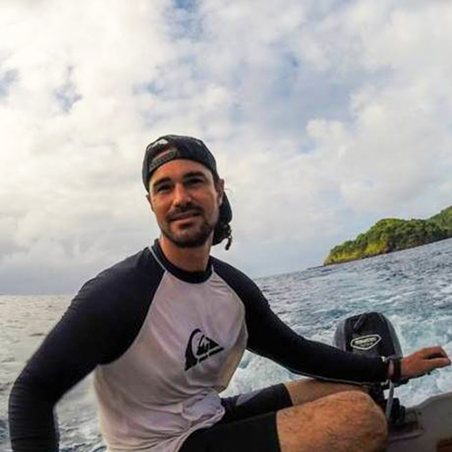
Caesar Hjertén

Caesar joined Aqualink in February 2022 with the goal of advancing the platform and increasing the organization’s impact. Caesar graduated from UH Hilo where he also played for the university’s soccer team. Caesar is passionate about our oceans and the environment. He likes to play sports, dive, surf, and other outdoor activities. At Aqualink, he manages the online platform, fleet of Smart Mooring buoys, and is Aqualink’s primary point of contact.


Meet the Speaker: Liz Yannell, Program Manager at Hui O Ka Wai Ola
Liz YannellLiz joined the Hui as Senior Team Leader in May 2022 and became the Program Manager in June 2023. She has a bachelor’s degree in environmental studies from Florida Gulf Coast University. In 2022, Liz graduated from the Marine Options Program at UH Maui and worked as the assistant in the marine lab on campus. As Program Manager, she is primarily responsible for coordinating various aspects of the program, including field, lab, and logistical support, coordinating fellow team leads, and managing the volunteer program. Her responsibilities include overseeing monitoring operations and data collection, entry, and record-keeping; team lead and volunteer training and coordination; preparing and maintaining supplies and equipment; and meeting with advisory Technical and Steering Committees to ensure successful continuity and growth of the program. She also often joins volunteers in collection and analysis of coastal water samples in the field. Liz is from O’ahu and currently lives in Kula with her two kids and husband. She loves all things ocean-related and is very passionate about coral reef conservation.

Volunteer Day Recap: Keālia Boardwalk

in , /by

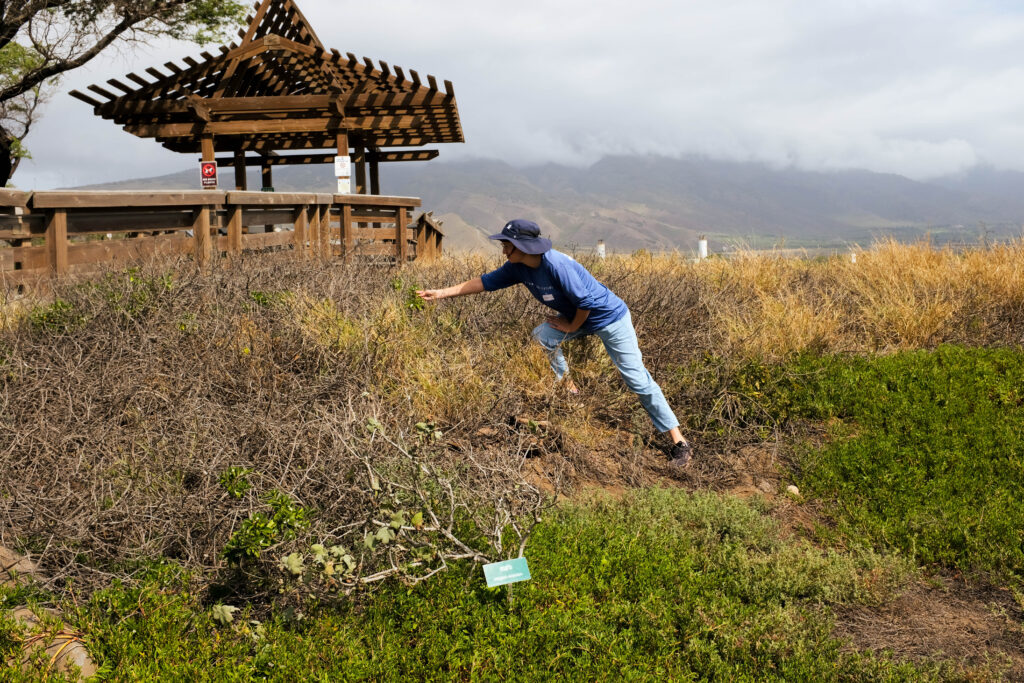
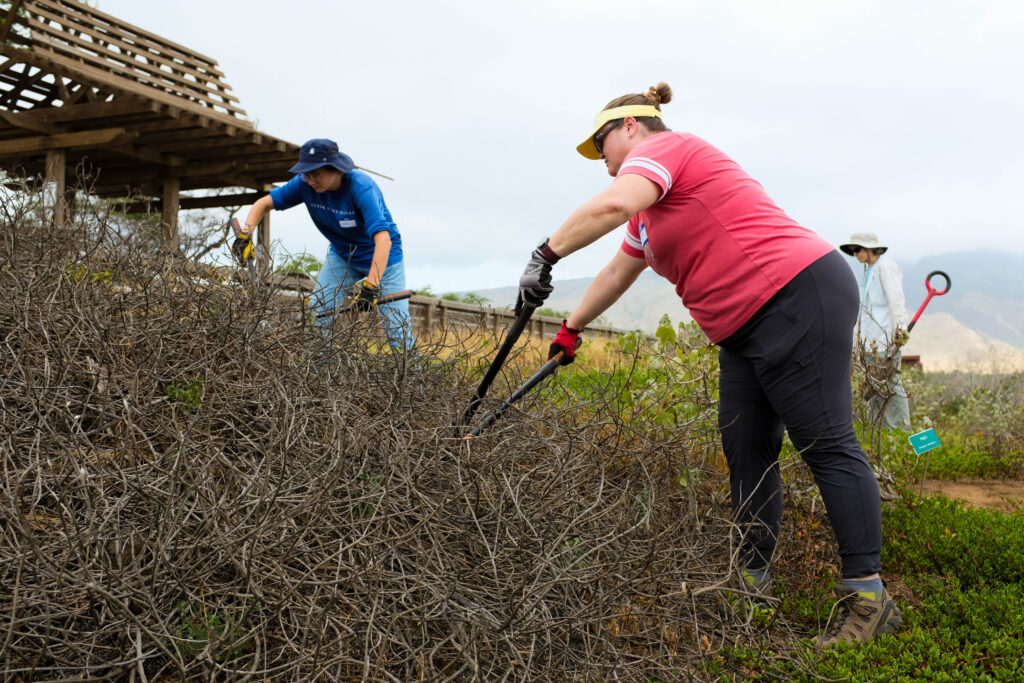
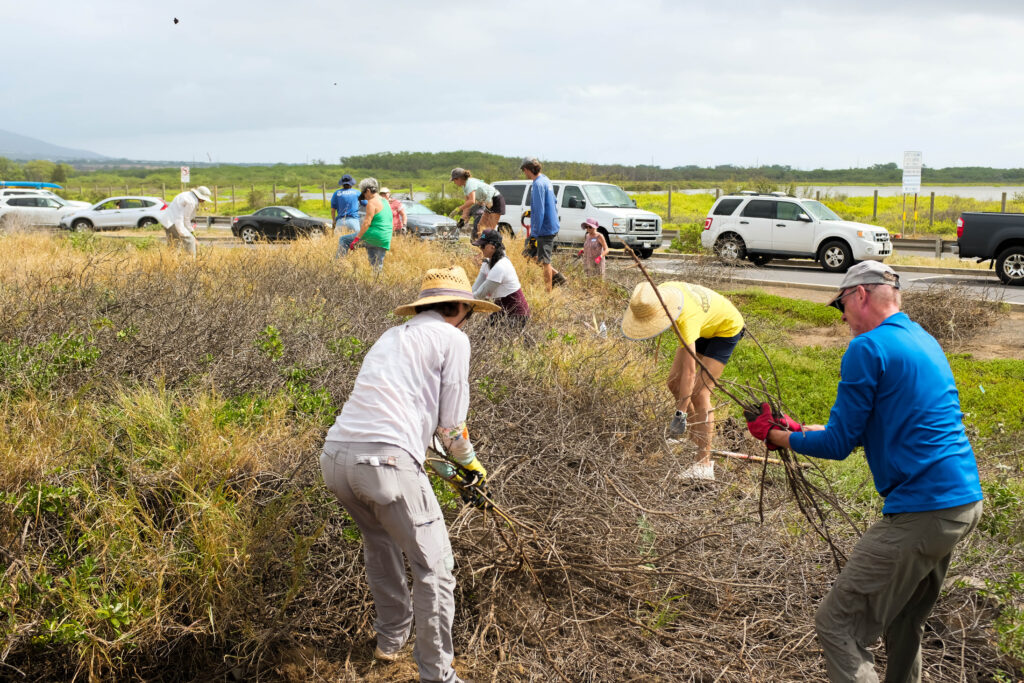
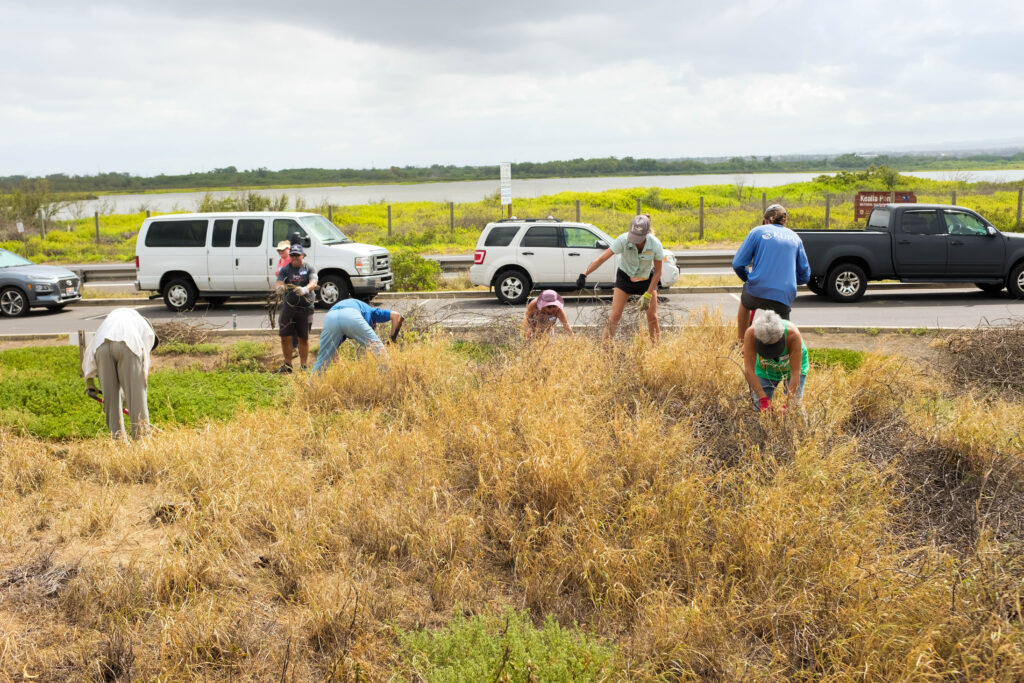
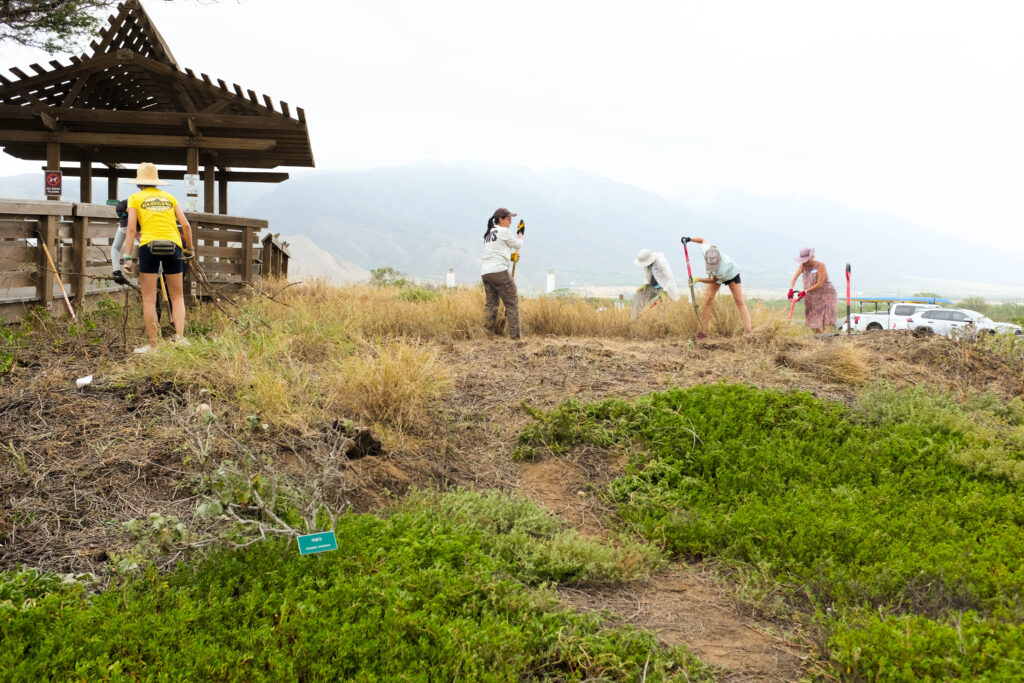
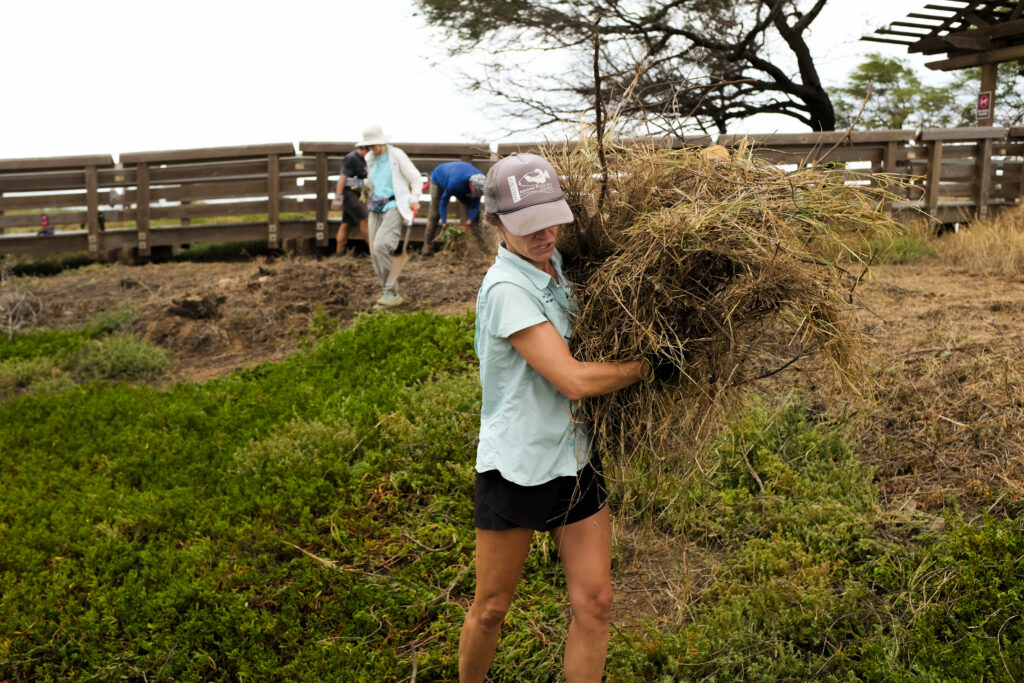
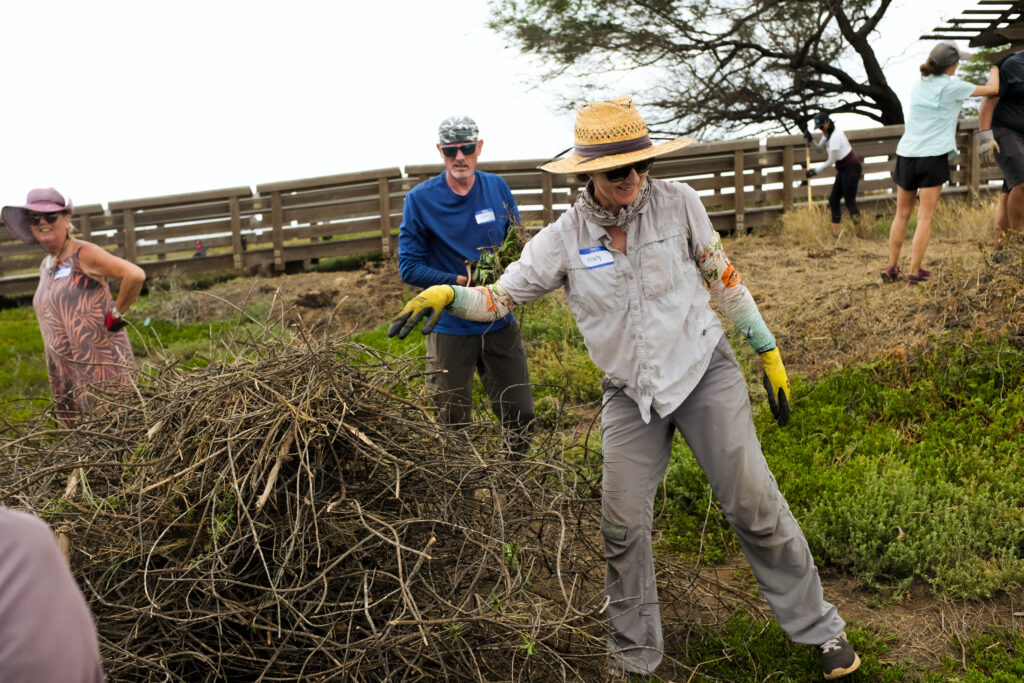
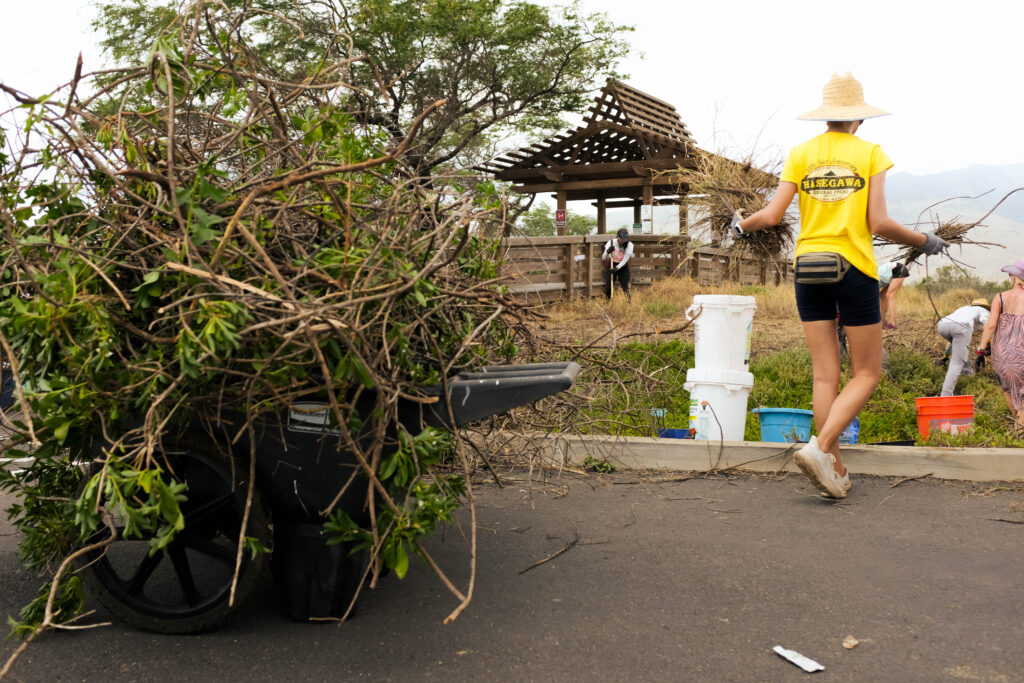
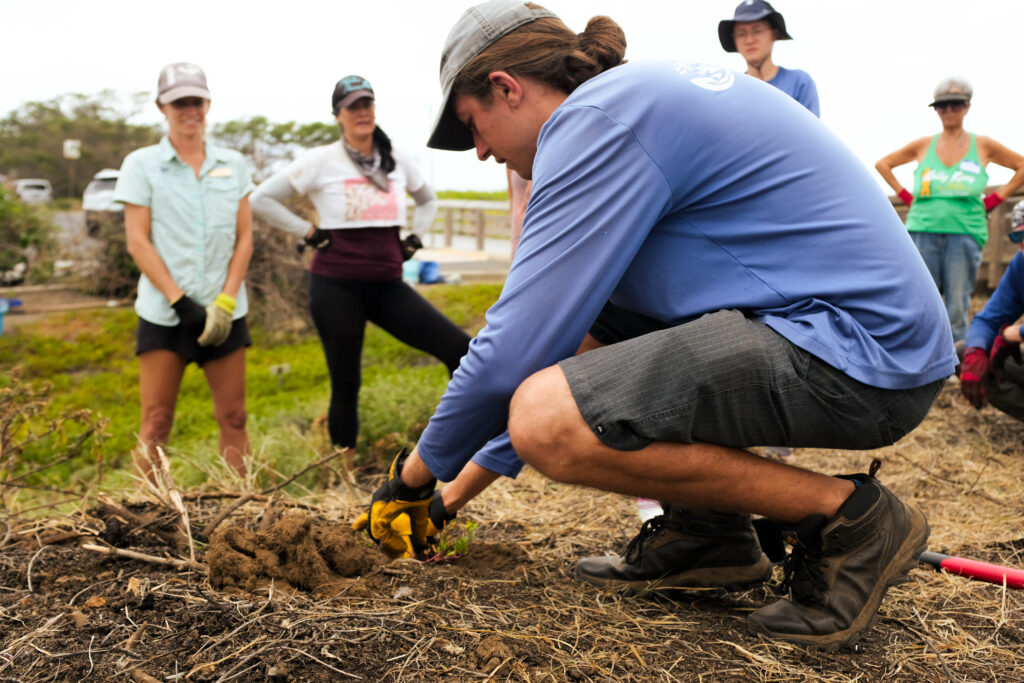
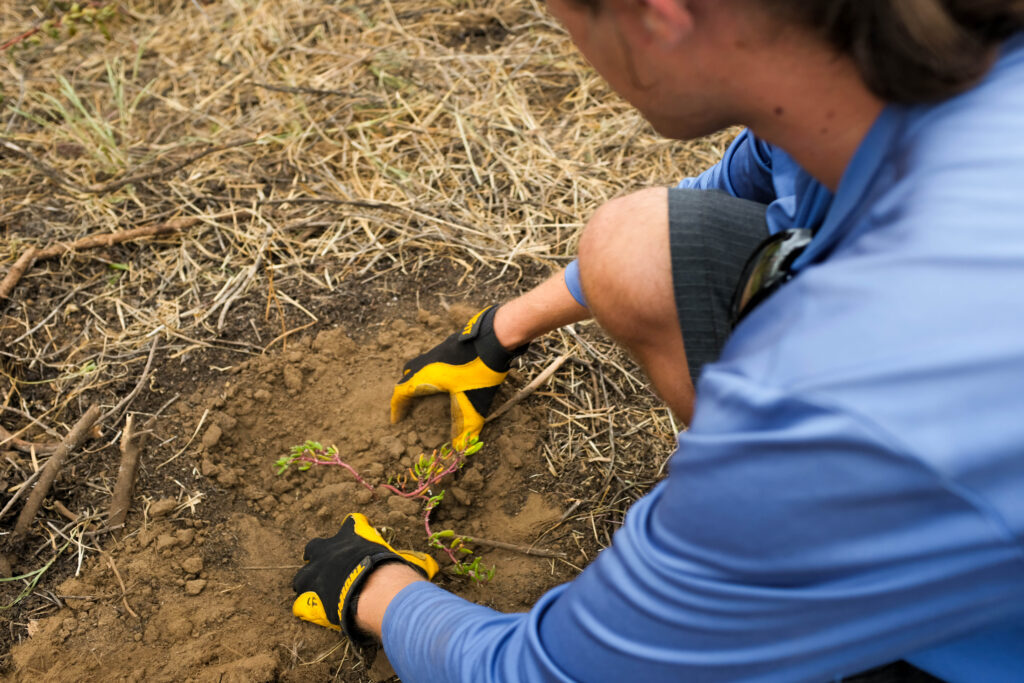
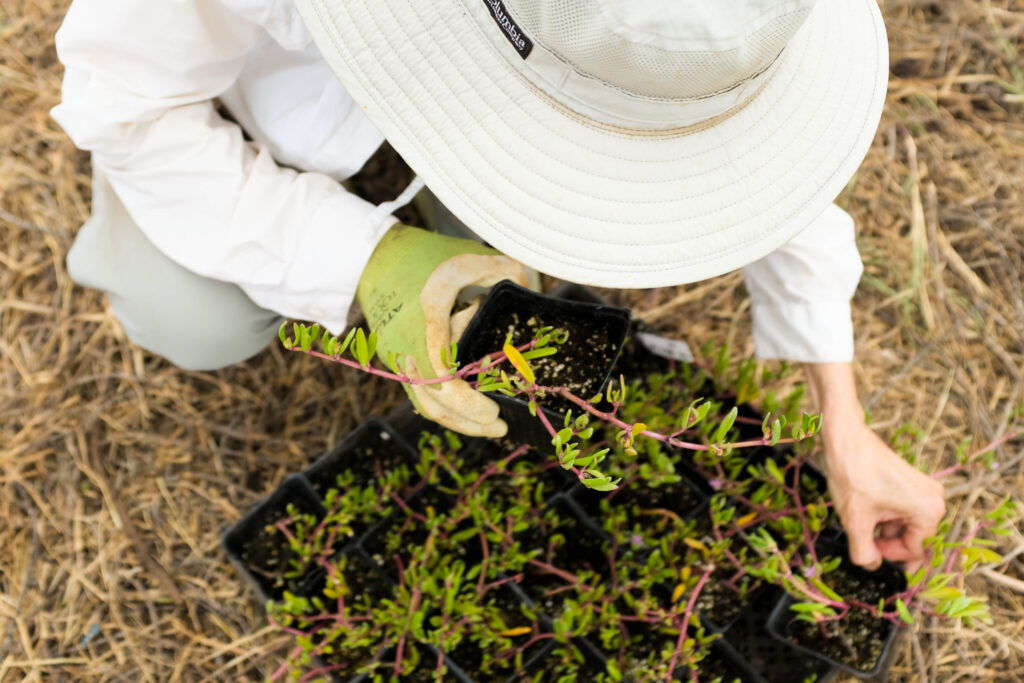
On Saturday, May 18 a group of MNMRC volunteers gathered at the Keālia Boardwalk to cut and uproot dead and invasive plants that had overtaken the area. The team worked with Allysa, Maddie, and Caden from the Keālia National Wildlife Refuge to clear out the equivalent of 5 large truckbeds of grass, roots, and other debris. At the end of the morning, volunteers worked together to plant Akulikuli around the newly cleared area, hoping to repopulate it with the healthy growth of a native plant.


Mahalo nui to all of our wonderful volunteers who joined us this month! We look forward to hosting you again at the next volunteer day.


Special Event: Mapping Leeward Coral Reefs Before the Impacts of Storm Runoff from the August 2023 Wildfires

in , /by

After the devastating wildfires in Lahaina and Upcountry Maui, the community has been trying to recover from the effects of this unimaginable event. Even as our community is on the mend, a second, disaster slowly approaching the island. The areas burned by the wildfires have been stripped of cover and soils and toxins are poised to wash downstream into our coastal waters and into groundwater. What the effect on our coral reefs, long-term water quality, and resources, such as food fish, will be is uncertain.

Maui Nui Marine Resource Council invites you to an important FREE Zoom webinar on Thursday, Sept. 14 at 6:00 p.m. to find out more about the effort to rapidly map the current, baseline conditions of coral reefs along leeward Maui where the impacts of fire-related runoff are expected to occur. Register here: https://bit.ly/LI_coral_maps

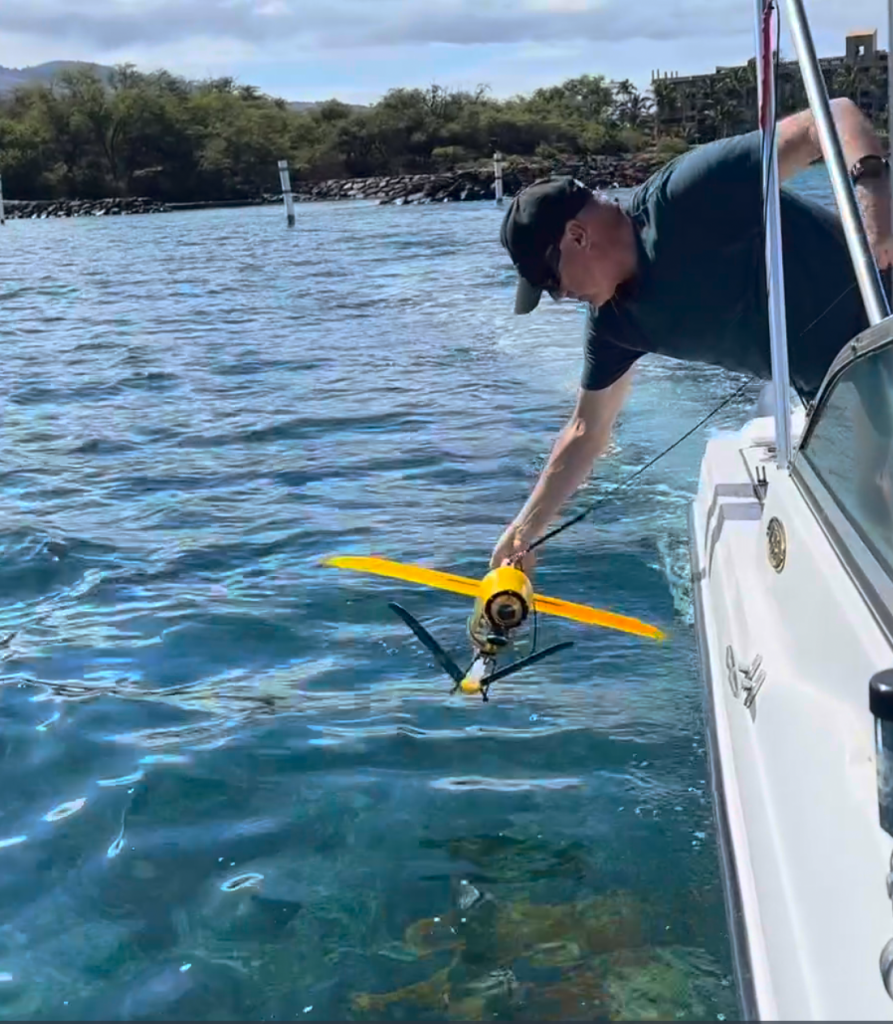
Brett KettleYou’ll meet Dr Brett Kettle of Flying Fish Technologies, who has pioneered coral reef protection for over three decades, both on the Great Barrier Reef (GBR) and internationally. Brett began to prototype his long-term vision for a high-speed, broad-scale underwater visual survey tool in 2017. His vision was to document more of the Great Barrier Reef than had ever been documented before and to use emerging technologies like AI/ML to accelerate the analysis of collected data. The result is the Vertigo3 glider, a towed ROV that can survey 10ha (25 acres) an hour while recording over 50,000 high-resolution images.

During the webinar, you’ll be introduced to how Vertigo3 functions and how it is being used to image extensive sections of Maui’s leeward reefs. These images will allow comparison of the current state of coral reefs that may already have been impacted with unaffected “control” regions and will allow accurate assessment of any effects when storms deliver runoff to our precious nearshore reefs. The technology also opens up a remarkable set of opportunities to view and study Maui’s reefs from above the water in ways that were impossible until now.

Save your seat for the Webinar: https://bit.ly/LI_coral_maps

Brett deploys the Vertigo3 Glider off of the Kihei Boat Ramp in Maui, Hawaii

Brett deploys the Vertigo3 Glider off of the Kihei Boat Ramp in Maui, Hawaii. Photo: John Starmer, MNMRC.

Know Your Ocean: Can a non-scientist do science? Global and local community science projects on Maui

in , /by

Can a non-scientist do science? Global and local community science projects on Maui

MA’ALAEA, MAUI — Increasingly, scientists are asking for the public’s help to understand a wide range of topics from earthquakes to water quality to where animals live and more. Learn more about community or “citizen” science and how you can contribute to aiding conservation work in particular, at a free Zoom presentation on Wednesday, April 6 at 5:30 pm. This free event is hosted by Maui Nui Marine Resource Council as part of its Know Your Ocean Speaker Series with support from the County of Maui Office of Sustainability and Climate Resilience.

Through presentations by guest speakers Dr. Mark Deakos, Cheryl King, John Starmer, and Jennifer Vander Veur, you’ll be introduced to some global citizen science projects that are relevant to Maui and hear about some long-running community science projects taking place in Maui County that are seeking volunteers.

“If you want to make a difference in understanding the effects of climate change, protect native habitats and the species they rely on, or simply become more aware of the world around you, citizen science is a great way to get involved and make a difference,” notes John Starmer, Chief Scientist at Maui Nui Marine Resource Council and Volunteer Coordinator at City Nature Challenge (CNC) on Maui.

Maui Nui Marine Resource Council is a Maui-based nonprofit that relies upon citizen volunteers for its Hui O Ka Wai Ola ocean water quality monitoring program at 29 locations along Maui’s shores.

John Starmer

Starmer is the Maui Coordinator for City Nature Challenge. Started in 2016 as a competition between San Francisco and Los Angeles, the City Nature Challenge (CNC) has grown into an international event, motivating people around the world to find and document wildlife in their cities. The challenge is organized by Community Science teams at the California Academy of Sciences and the Natural History Museum of Los Angeles County and occurs during a four-day period. From April 29 to May 2, participants take photos of wild plants and animals. From May 3 to May 8, participants identified what was found. During this friendly competition, the winner is the city that gathers the most observations of nature, finds the most species, and engages the most people in the event.


Mark Deakos

“Because our urban areas are a bit smaller than most cities (like San Francisco or Hong Kong), our Maui team decided to aggregate the whole island (plus Molokini Crater) for the purpose of the challenge,” says Starmer.


Dr. Mark Deakos is the Founder, President, and Chief Scientist of the Hawai‘i Association for Marine Education and Research (HAMER).  Mark will be focusing on his manta ray photo-identification catalog of over 600 individuals.

Cheryl King

Cheryl King will be summarizing information about two of her citizen scientist-related projects: SHARKastics (marine debris research and cleanups) and Hawaiian Hawksbill Conservation (the statewide in-water photo-identification catalog for critically endangered Hawaiian hawksbill sea turtles from 1998-present).  She’s also a Seabird Biology Technician with the Maui Nui Seabird Recovery Project, so will be presenting potential volunteer opportunities with seabirds and colony restoration.


“There are so many wonderful, diverse ways to get involved in helping our precious natural resources and habitats of Maui Nui, so we hope to inspire a new batch of volunteers to join the critical work that’s being done all around Maui every day,” says King.

Jennifer Vander Veur

Jennifer Vander Veur is the Senior Program Manager of the Coral Reef Alliance of Maui Nui. “We are proud to support a dedicated team of local volunteers in Maui, Hawai’i, as they work to protect the valuable coral reefs in their community,” says Vander Veur. Her program works with volunteers who grow and plant native vegetation at key locations near coastal streams, which act as natural barriers and trap sediment runoff before it reaches the ocean and coral reefs.


“Getting the public involved in science projects allows scientists to take on projects that they could not do on their own with the limited funding and time that are available to typical research projects,” says Starmer.

“Maui Nui Marine Resource Council is hosting this talk to help Maui residents and visitors learn about the opportunities to participate in citizen science projects and help our community better understand and protect our natural resources,” says Meredith Beeson, who organizes the Know Your Ocean Speaker Series at Maui Nui Marine Resource Council. “Please join this event to learn how you can get involved and make a difference.”

Know Your Ocean: Have You Taken “The Coral Pledge?”

in , , /by

Learn about the “The Coral Pledge,” a new initiative to reduce human impacts on Hawaiiʻs reefs year-round. The presenter was Dan Dennison, Senior Communications Manager for the Hawaii Dept. of Land and Natural Resources (DLNR). The Coral Pledge was created by the DLNR Division of Aquatic Resources and was introduced statewide earlier this month. The eveningʻs presentation included details about The Coral Pledge and featured a showing of “Saving Coral,” a half-hour television special created by DLNR to educate the public about threats to Hawaii’s coral reefs.

Dennison also provided updates on “30 x 30” which is a State of Hawaii commitment to effectively manage 30% of Hawaiiʻs nearshore ocean waters by 2030. At the conclusion of the evening, Maui Ocean Center also provided a special holiday treat for attendees: a viewing of the movie, “Humpbacks of Hawaii,” shown in 3D at The Sphere.

“The Coral Pledge provides a simple set of recommendations to help reduce human impacts to Hawai‘i reefs year-round, but particularly during bleaching events,” says Dennison. “While all ocean users can learn from the recommendations in The Coral Pledge, we especially encourage commercial tour operators and businesses who work in and around the ocean, and who regularly interact with visitors, to attend to learn about The Coral Pledge and hopefully to sign up to participate in this initiative.”

Click on the video below to watch the presentation:

About
Presented by Dan Dennison

Dan currently serves as the Senior Communications Manager for the Hawaii Dept. of Land and Natural Resources. He brings more than four decades of broadcast journalism experience to his current position. Prior to joining DLNR in 2014, Dan served as news director at six, top-rated television stations, in four states, including KHON2 and KHNL/K5 in Honolulu. He began his news management career in his native Colorado after being a television reporter and photographer for 25 years covering Western Colorado for Denver television stations. He has multiple Emmy awards, state broadcaster association awards, and Edward R. Murrow awards both as a reporter and news director. At DLNR, Dan has been responsible for the production of more than 1.000 videos to date, including seven television specials. He supervises a team of communications specialists who handle all internal/external communications, media relations, and social media. Dan has served on numerous state and national boards both as a broadcaster and now as a government communications professional. He is an avid hiker, bicyclist, snorkeler, and skier, and loves to play tennis and Frisbee. He says he is both blessed and honored to document the work of DLNR staff and its many partners in the mountains, forests, and waters that comprise Hawaii Nei. “The best job in the world,” he says.

Hui O Ka Wai Ola Reports on Six Years of Monitoring Maui’s Coastal Water Quality 2016-2022

in , , /by

KIHEI, HI – How do you know the water off your favorite beach is clean enough to swim in? You have a group of volunteers to thank for that.  Prompted by caring for the health of our residents, visitors, and the culturally important and ecologically sensitive coral reefs off our shores,  Hui O Ka Wai Ola (the Hui) has been keeping track of changes in water quality on Maui since 2016. (https://www.huiokawaiola.com/findings.html

Their data supports the efforts of the Department of Health to maintain a long-term record of nearshore water quality to inform efforts by state agencies and local nonprofit groups, like MNMRC, to reduce pollution impacts around the island. 


Water testing by HOKWO

The program, which follows strict quality control standards, measures physical qualities like water clarity, salinity, and temperature, as well as nutrient levels (which harm coral reefs if out of balance). A new collaborative project with the National Oceanographic and Atmospheric Administration (NOAA) is addressing a long-standing to-do from the Hawaii Coral Reef Initiative – evaluating pesticide contamination in the waters along our coast.

In he January 2023 MNMRC Know Your Ocean Speaker Series talk, Liz Yannell, the Hui’s Senior Team Lead, spoke about water quality observations taken over the last year and presented long-term trends from the past six years.  She also spoke about an ongoing collaborative project with the National Oceanographic and Atmospheric Administration (NOAA) to evaluate pesticide contamination in waters along our coast. View the talk here: https://www.youtube.com/watch?v=Ey3xHZ0u3Z4.

The Hui O Ka Wai Ola is a volunteer-based water quality monitoring organization that is a partnership between MNMRC, The Nature Conservancy, and the West Maui Ridge to Reef Initiative. The Hui’s members include volunteers from diverse backgrounds like scientists and community organizations. The Hawaii Department of Health is mandated to monitor coastal water quality around the islands and encourages partnerships with groups such as the Hui to improve data about pollutants threatening coral reefs and human health.

The Hui’s culture of collaboration and a deep interest in ocean health made for a natural partnership with  NOAA’s NCCOS (National Centers for Coastal Ocean Science) carrying out the fieldwork needed for a research study to address a long-standing gap in our understanding of Maui’s water quality, “current use” pesticides. Current use pesticides are still legally in use for pest control vs those, like DDT, that are no longer on the market in the US. Current use pesticides are one class of chemicals that has long been overlooked here in Maui.  Pollutants in the water are typically measured by collecting a one-time “grab sample” (i.e. a bottle of water). While these can provide good information, especially when repeated over time, the drawback to using grab samples is that low-level pollutants can be missed.  Passive samplers that absorb chemicals in the environment over time can be used to sample for a longer period of time. This minimizes the likelihood of missing the presence of a pollutant.  In the current project, silicone bands will be used to soak up any pesticides in the water at eighteen nearshore reefs along Leeward Maui. This work will provide a more comprehensive assessment of pesticide pollution in our coastal waters, and help guide pollution reduction actions if needed.

To view this talk, please visit https://www.youtube.com/watch?v=Ey3xHZ0u3Z4.

About Liz Yannell, Hui O Ka Wai Ola Senior Team Lead: 

Liz joined the Hui as Senior Team Leader in May 2022. She has a bachelor’s degree in environmental studies from Florida Gulf Coast University. In 2022, Liz graduated from the Marine Options Program at UH Maui and worked as an assistant in the marine lab on campus. She also often volunteered in the lab with Surfrider’s Blue Water Task Force.

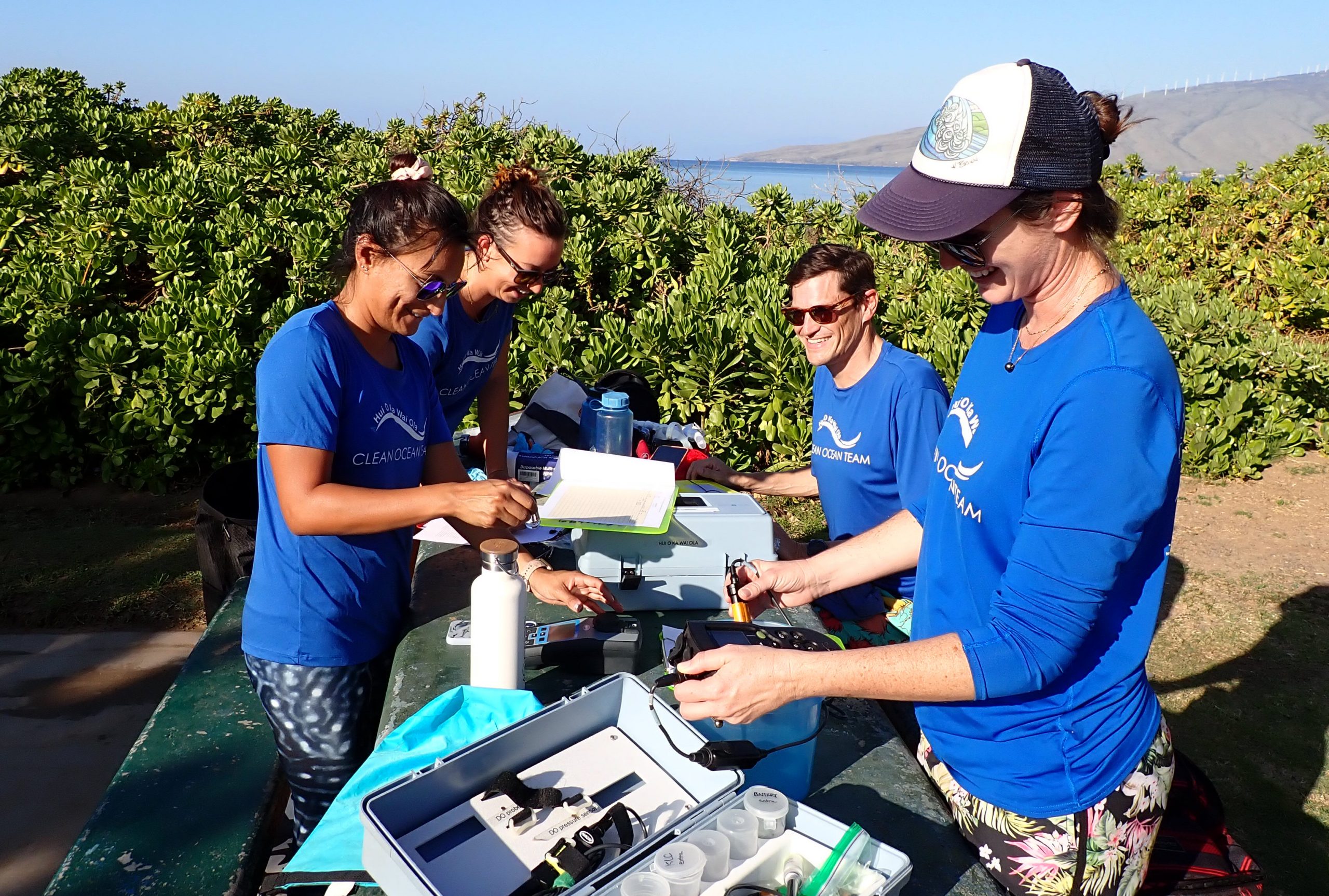
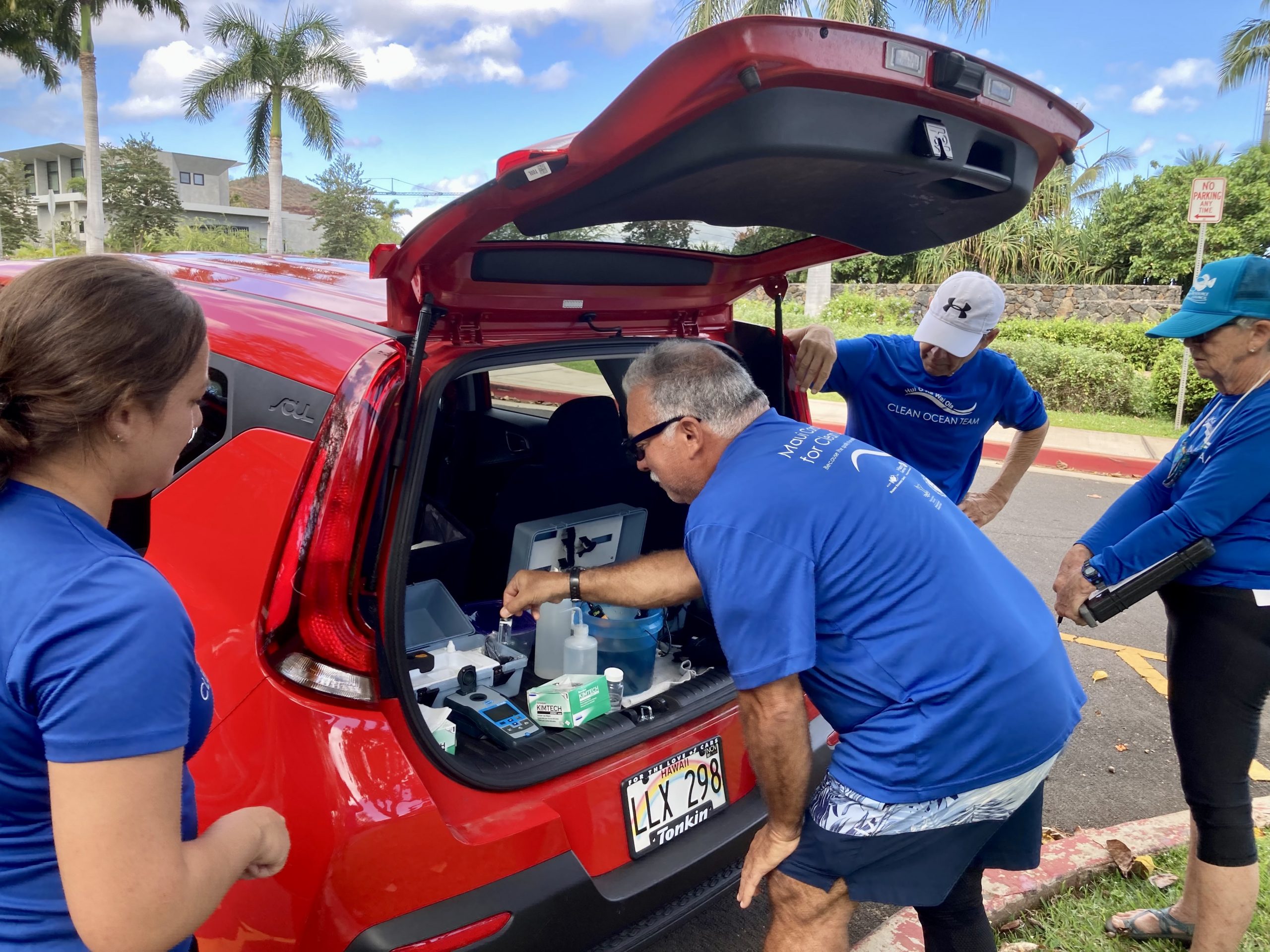
Water quality monitoring with the HOKWO mobile water quality lab.

Hui O Ka Wai Ola volunteers and staff (left to right: Ylenia St. Louis, Kristina McHugh, Dan Crevier, and Liz Yannell) go beyond their regular ocean water testing duties in support of NOAA’s current-use pesticide study. Their data will help the science team understand ocean conditions where the pesticide sampling bands are deployed. Photo Credit: Tova Callender Location: North Kihei

Free Presentation “Saving a Species: “Rehabilitation as a Conservation Tool for Hawaiian Monk Seals” Offered on Weds., Aug. 4

in , /by

Hawaiian monk seals are endangered, with fewer than 1,400 animals left on earth — yet they have recently been in the news, as videos and photos have surfaced showing the seals falling victim to harassment by visitors who get too close or attempt to touch them, sometimes for social media content. Learn more about Hawaiian monk seals at a free presentation called “Saving a Species: Rehabilitation as a Conservation Tool for Hawaiian Monk Seals” on Wednesday, August 4 at 5:30 pm HST via Zoom where two special guests from The Marine Mammal Center’s dedicated hospital for monk seals, Ke Kai Ola, on Hawai’i Island will highlight their conservation and outreach work.

The Center’s Lauren Van Heukelem, Response and Operations Coordinator, and Dr. Sophie Whoriskey, Hawaiian Monk Seal Conservation Veterinarian, will speak at this event, part of the “Know Your Ocean Speaker Series” which is hosted every month by Maui Nui Marine Resource Council.

Researchers estimate that about 30 percent of Hawaiian monk seals are alive today due to conservation efforts led by the National Oceanic and Atmospheric Administration (NOAA) and partners like the Center. The mission of The Marine Mammal Center focuses on global ocean conservation through rescue and rehabilitation, scientific research, and education.

Reserve a spot at the free presentation by visiting https://www.bitly.com/monksealwebinar

“We are hosting this special presentation with the awareness that public education is needed to help protect our Hawaiian monk seals from harassment or injury,” says Anne Rillero, Communications Manager at Maui Nui Marine Resource Council. “These animals are among the most endangered seals on earth.”

Dr. Whoriskey received her bachelor’s degree from Dalhousie University in Nova Scotia, Canada, and her veterinary medical degree from the Atlantic Veterinary College. She first came to The Marine Mammal Center in 2015 as the intern veterinarian in marine mammal medicine and pathology where she spent two years training with marine mammal medicine experts.

In 2020, she returned to the Center as a full-time Hawaiian Monk Seal Conservation Veterinarian. She leads the Center’s Hawaiʻi animal care operations, dedicated to the rehabilitation, conservation and research of the endangered Hawaiian monk seal.

Whoriskey has extensive field experience in remote and harsh environments and has participated in research projects from Alaska to Antarctica, all with a mission of advancing the global body of knowledge on marine mammal health.

Born and raised in Hawaiʻi, Van Heukelem received both her bachelor’s and master’s degrees from the University of Hawaiʻi at Mānoa in Marine Biology. She has participated in many research studies both in Hawaiʻi and the Northern Mariana Islands on various topics.

As the Response and Operations Coordinator, Van Heukelem oversees the monitoring of the endangered Hawaiian monk seal population on Hawaiʻi Island. She runs the Center’s 24-hour hotline for reporting seal sightings around the island and coordinates outreach and population assessments on a daily basis.

“On Hawai’i Island, we operate Ke Kai Ola, the only hospital dedicated to Hawaiian monk seals, providing support for monk seals found throughout the Hawaii archipelago,” says Van Heukelem. “Utilizing a 24-hour response hotline and a variety of education and outreach programs, we aim to advance conservation practices that empower our local community to protect this rare species.”

This presentation will focus on the center’s mission and work over the past 45 years in California and Hawaiʻi. Since opening Ke Kai Ola in 2014, The Marine Mammal Center has treated 36 Hawaiian monk seals and supports the work of NOAA’s Hawaiian Monk Seal Research Program by providing the only long-term care facility for this endangered animal.

These monthly virtual events are supported by the County of Maui Mayor’s Office of Economic Development.

The event’s emcee will be Darla Palmer-Ellingson, local radio show host of the public affairs program, Island Environment 360 Maui’s only commercially broadcast public affairs show on environmental and related Hawaiian cultural topics, aired on the stations of H-Hawaii Media.

To reserve your spot at this free Zoom webinar, please visit https://www.bitly.com/monksealwebinar
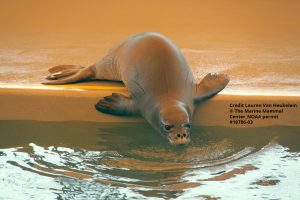
 

Eleu (PP08), a weaned female Hawaiian monk seal pup rescued from Papahānaumokuākea Marine National Monument Refuge, rests during rehabilitation at The Marine Mammal Center’s Ke Kai Ola hospital and visitor center in Kailua-Kona, HI. The young female seal’s name means one that is active, alert, energetic, lively and nimble. Credit Lauren Van Heukelem © The Marine Mammal Center, NOAA Permit #18786-03
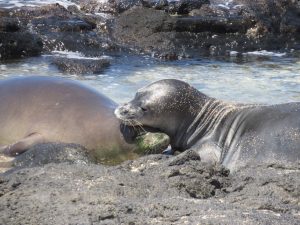
 

Hawaiian monk seals RK26 (on left) and RL50 (on right) rest on a beach. As the world’s largest marine mammal hospital, The Marine Mammal Center actively monitors endangered monk seals that frequent Big Island beaches to check on their condition, but its experts do not serve in a law enforcement capacity. Credit Sheila Latta © The Marine Mammal Center

“Sewage Impacts on Hawaiʻi’s Coastlines: Past, Present and Future” a “Know Your Ocean” Webinar

in /by

Part of Maui Nui Marine Resource Councilʻs Online “Know Your Ocean Speaker Series”

Watch the presentation on our YouTube channel: https://youtu.be/80r7tzV3RiU

What will determine the future impacts of sewage on Hawai’i’s nearshore ecosystems and public health? Daniel Amato, Ph.D., presented “Sewage Impacts on Hawaiʻi’s Coastlines: Past, Present and Future” which included recent research and the latest information on Hawaiʻi’s wastewater saga. The webinar took place on Wednesday, October 7 and was presented by Maui Nui Marine Resource Council as part of their monthly “Know Your Ocean Speaker Series.” Advance reservations are recommended as the Zoom webinar is limited to 100 attendees.

“My talk will share reports on how injection wells and cesspools continue to pollute Hawaiʻi’s waters, with an emphasis on recent Maui studies,” says Dr. Amato. ”I will also present recent decisions from the Hawaiʻi State Legislature and the current status of their effort to phase out cesspools.”

Dr. Amato will also discuss the current situation with sewage pollution in Hawai’i, and will present community efforts and new technological developments in sewage detection that show promise for the future.

A water quality specialist, Dr. Amato’s professional work focuses on the detection and impacts of land-based pollution in the Pacific Ocean and the development of new technology to assist in detecting the DNA of fecal indicator bacteria (FIB) in the water. Dr. Amato is a Marine Research Specialist at the University of Hawaiʻi at Manoa, an Environmental Scientist at Element Environmental LLC, and serves as the coordinator for Surfrider-Oahu’s Blue Water Task Force.

“We are offering this webinar by Dr. Amato to share important information about sewage and its impact on Maui’s coastlines, including ocean water quality and our nearshore coral reefs,” says Amy Hodges, Programs and Operations Manager at Maui Nui Marine Resource Council. “It’s a critically important topic, at a time when our coral reefs need the benefit of clean ocean water, to survive the impacts of climate change and warming water.”

“We thank the County of Maui Mayorʻs Office of Economic Development for supporting our Know Your Ocean Speaker Series,” says Hodges.

Want to learn more? Watch the presentation on YouTube – click below. You can also read about some ways to help in this article in Maui Times about wastewater in Maui County: https://mauitimes.news/flushing-money-down-the-drain/.

About Maui Nui Marine Resource Council:
Maui Nui Marine Resource Council is a community-based nonprofit organization celebrating 12 years of working for healthy coral reefs, clean ocean water, and abundant native fish throughout Maui County. Our work includes co-managing the Hui O Ka Wai Ola Ocean Water Quality Monitoring Program in South and West Maui, efforts to reduce pollution in Mā‘alaea Bay (through erosion-control efforts in the Pohakea watershed and using oysters to filter sediment and pollutants from ocean water), coral reef research, visitor education programs and more.