A free Zoom webinar offering “A Closer Look at Hawaiʻiʻs Sea Turtles” will be presented on Wednesday, September 9 from 5:30 to 7 pm Hawaii Standard Time as part of Maui Nui Marine Resource Councilʻs monthly “Know Your Ocean Speaker Series.” It will also air via Facebook Live at facebook.com/mnmrc, the Facebook page of Maui Nui Marine Resource Council.
The talk will feature presentations by Dr. Camryn Allen, a NOAA wildlife endocrinologist, and Shandell Brunson, NOAA’s sea turtle stranding coordinator for Hawaiʻi and the Pacific Islands region.
Dr. Allen is the Supervisory Marine Biological Researcher (JIMAR) at the Joint Institute for Marine and Atmospheric Research at NOAA Fisheries Pacific Island Fisheries Science Center in the Protected Species Division. She created a sea turtle endocrinology laboratory to examine sex ratios of sea turtles in the wild. Her talk will present findings on the ratio of male vs. female turtles at foraging grounds — and what that means for the potential impacts of climate change on our sea turtle populations.
Shandell Brunson is a biological sciences technician with the Marine Turtle Biology and Assessment Program and is NOAA’s sea turtle stranding coordinator for Hawaiʻi and the Pacific Islands region. She will share findings from sea turtle strandings in Hawai’i, including what’s being learned about threats from strandings, rehabilitations and deaths.
Our guest emcee is Darla Palmer-Ellingson, local radio show host of the public affairs program, Island Environment 360 Maui’s only commercially broadcast public affairs show on environmental and related Hawaiian cultural topics. The program is made possible by H-Hawaii Media.
This free online event is part of Maui Nui Marine Resource Councilʻs “Know Your Ocean Speaker Series” and is made possible with support from the County of Maui Mayorʻs Office of Economic Development.
Have you ever wondered why some people care — and others seemingly don’t — about protecting Maui’s coral reefs? Imagine if you could climb into their minds to understand what causes visitors and residents of Maui to be motivated (or not) to care for our reefs through their behaviors and actions. How would that help your community be more effective in protecting its reefs?
Find out more about the social and psychological factors that influence human behavior in our nearshore environments, based on a recent joint study conducted in West Maui by Polanui Hiu, The Nature Conservancy, and Stanford University.
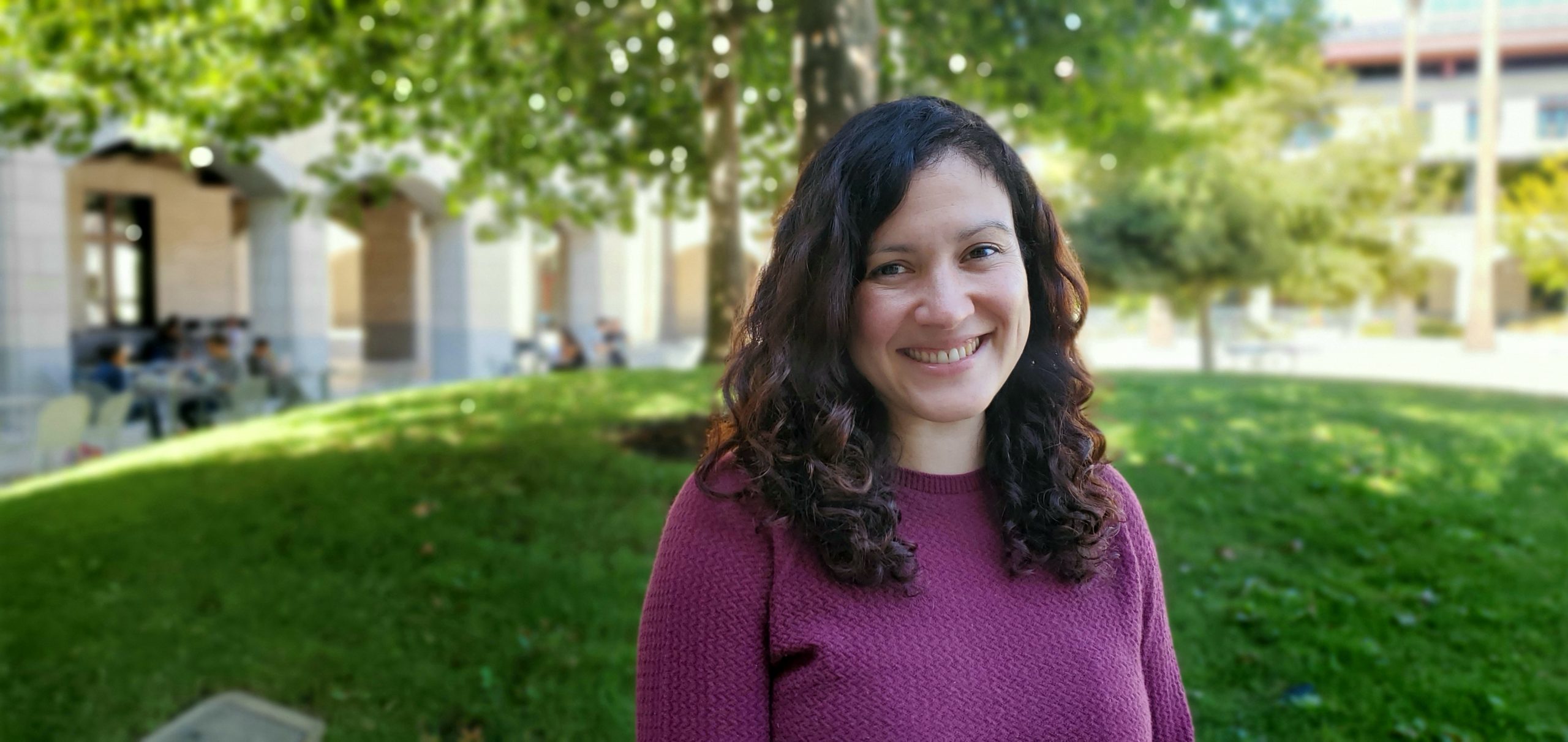
You’ll meet Francisca (Kika) Santana, the leader of the study and a fourth-year PhD candidate at Stanford’s Emmett Interdisciplinary Program in Environment and Resources. Her team surveyed 300 reef users and learned about their reef-based activities, perceptions of reef health, their social-psychological indicators (such as place attachment and self-efficacy), and pro-environmental behavioral intentions. Alana Yurkanin, Maui Marine Project Manager at The Nature Conservancy, will also share her insights on the survey results.
During the webinar, you’ll also be transported to Polanui, a small, popular beach in Lāhaina, protected by an offshore reef named Nā Papalimu O Pi‘ilani. For generations, this reef sustained Hawaiian families with its abundance of fish and edible limu (algae). Sadly, that abundance has vanished and Polanui now has the lowest fish biomass in Hawai’i, meaning its fish are smaller and fewer than all other sites surveyed across the state.
You’ll meet Ekolu Lindsey and the Polanui Hiu, a local community group that he co-founded that works to restore the resources and Hawaiian traditions once practiced along this shore. Find out about their work and the results of recent human use and creel surveys conducted at Polanui (surveys of beachgoer and angler activity in the nearshore waters of this area).
“Let’s learn together to find ways to be more effective in bringing about positive change for our reefs, both now while tourism is largely absent, and later when visitors begin to visit Maui again,” says Amy Hodges, Programs and Operations Manager at Maui Nui Marine Resource Council. “This free webinar is offered as part of our Know Your Ocean Speaker Series, offered online due to Covid-19.”
PRESENTERS:
Francisca (Kika) Santana is a fourth-year Ph.D. candidate in the Emmett Interdisciplinary Program in Environment and Resources (E-IPER). She studies how individuals and groups respond to environmental change and climate risk. Specifically, her research investigates how individuals make protective health decisions in response to wildfire smoke, what motivates coastal users to take pro-environmental action in a declining coral reef environment on Maui, Hawaiʻi, and how communities respond to land loss and restoration efforts in coastal Louisiana. She draws from theories and methods in sociology, environmental and social psychology, and decision science. Before pursuing her degree at Stanford, Francisca worked on energy and marine policy issues in the nonprofit and government sectors. She received a master’s degree in environmental science and management from UC Santa Barbara and a BA in history from Yale University.
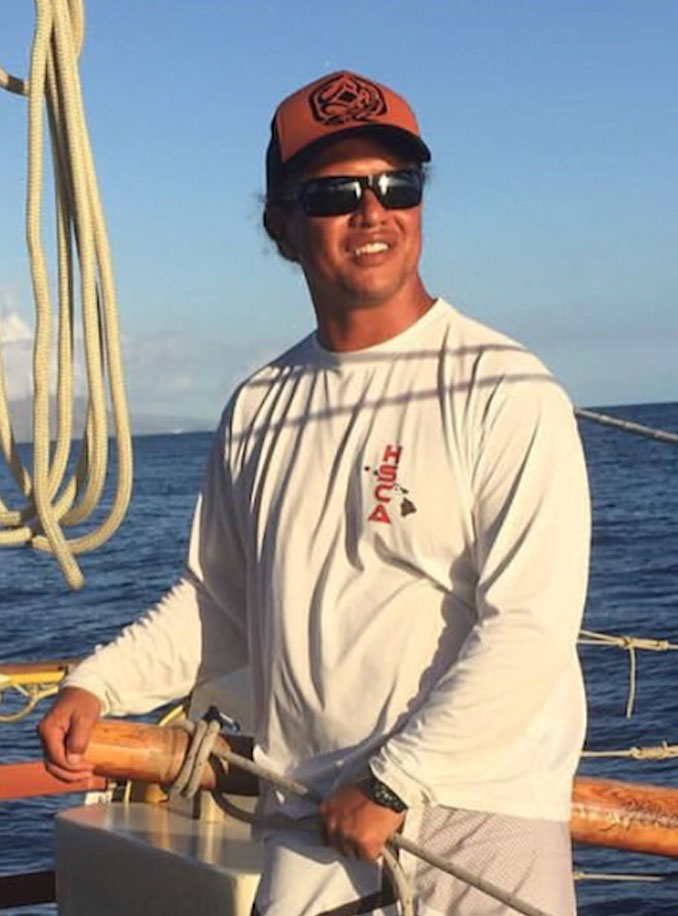
Edwin “Ekolu” Lindsey Raised on Maui (where he loved visiting his grandparents’ home in Lahaina to surf, swim, and fish in the waters of Polanui), Ekolu graduated from Kamehameha Schools on O‘ahu, and earned a B.B.A. at the University of Hawaiʻi at Mänoa. Ekolu’s parents — Ed Lindsey, a Native Hawaiian and lifelong schoolteacher, and Puanani Lindsey — co-founded Maui Cultural Lands in 2002. Ed Lindsey also co-founded Maui Nui Marine Resource Council in 2007 with marine biologist Robin Newbold. After his father passed away in 2009, Ekolu assumed the role of president of Maui Cultural Lands. He carries forward his family’s legacy of service and their vision of protecting and restoring Hawaiian cultural resources and the marine environment. In July 2015, he completed a ten-day, 500-mile journey aboard the voyaging canoe Hikianalia to the Papahänaumokuäkea Marine National Monument in the Northwestern Hawaiian Islands to conduct reef surveys and fish monitoring to help better manage Hawai‘i’s marine resources. Ekolu also cofounded Polanui Hiu, the first Community Managed Makai Area (CMMA) on Maui. Ekolu is a member of Maui Nui Marine Resource Council’s Board of Directors.
Alana Yurkanin Alana is the Maui Marine Project Manager at The Nature Conservancy and serves on the Steering Committee of Hui O Ka Wai Ola, a unique community-based ocean water quality monitoring program on Maui. Alana grew up in Hawai’i with a fisherman as a father. From all of her time spent in and around the ocean, she wanted to protect and continue to understand the environment along and beyond the coast – as well as the people and culture so intrinsically connected to our surroundings. In 2014, she completed a Master’s degree in Environmental Science and Management with a specialization in Coastal Marine Resource Management and a focus in Strategic Communications at the Bren School, UC Santa Barbara. During her program at Bren, she focused her studies on topics relevant to natural resource management, fisheries management strategies, storytelling, communication and media, coastal ecology, project management, and marine science. Additionally, she has a background in environmental education, marine science education, outdoor education, ecotourism, seamanship, team building, international aid work, performing arts, homesteading, and farming.
Special thanks to the County of Maui Mayor’s Office of Economic Development for helping to make this presentation possible.
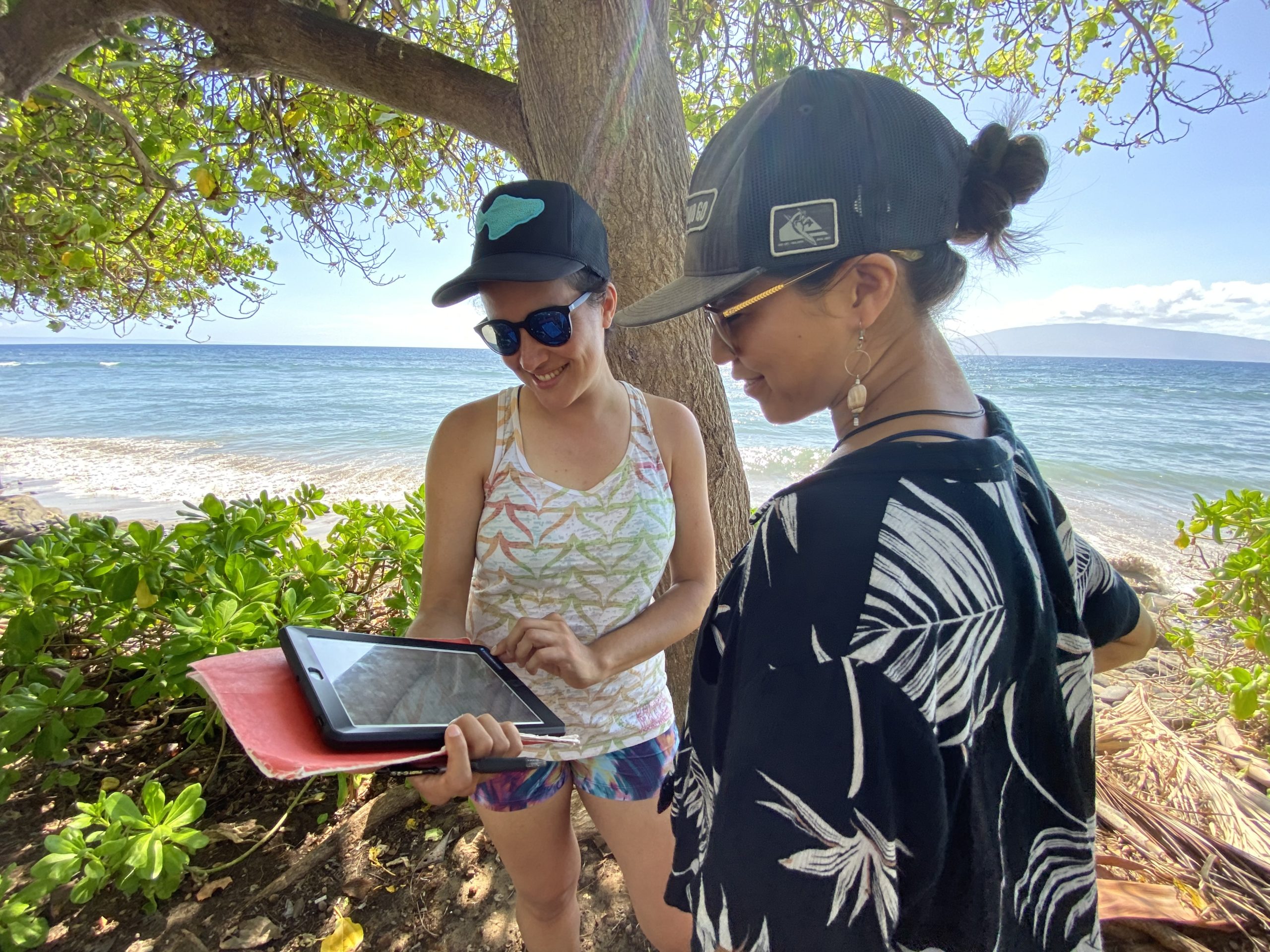
PHOTO CAPTION: Kika Santana (left) and Marie Janiszewski (right) review a survey response about reef-based activities, perceptions of reef health, their social-psychological indicators (such as place attachment and self-efficacy), and pro-environmental behavioral intentions.
Presented as part of Maui Nui Marine Resource Council’s Know Your Ocean Speaker Series
Photo by Keoki Stender
Perhaps you’ve heard of “roi roundups” – efforts by the community to spearfish and kill roi, commonly known as the peacock grouper, to remove these invasive fish from our local reefs.
Roi were introduced to Hawaii in the 1950s from French Polynesia with the idea that it could provide a food source for people. An aggressive predator that eats smaller reef fish, roi flourished – especially when Hawaii residents found that the fish carried ciguatera, a type of food poisoning, and avoided eating them.
Alarmed by roi’s voracious appetite for smaller native fish, and concerned that the ciguatoxin carried in roi can move up the food chain and spread to other species, communities throughout the main Hawaiian islands have organized roi roundups.
How much of a problem are roi? What are recent scientific studies finding about the impact of roi on native reef fish? Should we try to rid our reefs of roi? Watch the video to get answers to these and other questions about this invasive fish. This video was presented as part of MNMRC’s monthly “Know Your Ocean” Speaker Series.
Presented by:
Alan Friedlander, Chief Scientist, Pristine Seas, National Geographic Society, and director of the Fisheries Ecology Research Lab at the University of Hawaiʻi, and Russell Sparks, Aquatic Biologist, Department of Land and Natural Resources, Division of Aquatic Resources on Maui.
Our guest emcee was Darla Palmer-Ellingson, local radio show host of the public affairs program, Island Environment 360, made possible by H-Hawaii Media.
“We’ve heard concerns about a recent increase in roi sightings in the reefs of ‘Ahihi Kinau Natural Area Reserve, and thought this would be a good time to bring in these scientists to meet with the community to talk about roi,” said Robin Newbold, co-founder and chair of Maui Nui Marine Resource Council. “It’s always good to start with the latest scientific facts as we work towards answers and solutions.”
This free Zoom webinar is part of Maui Nui Marine Resource Council’s monthly “Know Your Ocean” Speaker Series now being held via Zoom due to COVID-19. Special thanks to the County of Maui Mayor’s Office of Economic Development for their support of the “Know Your Ocean” Speaker Series.
About Maui Nui Marine Resource Council
Maui Nui Marine Resource Council is a community-based nonprofit organization celebrating 12 years of working for healthy coral reefs, clean ocean water and abundant native fish throughout Maui County. Our work includes co-managing the Hui O Ka Wai Ola Ocean Water Quality Monitoring Program at 41 sites in South and West Maui, efforts to reduce pollution in Ma‘alaea Bay (through erosion-control efforts in the Pohakea watershed and using oysters to filter sediment and pollutants from ocean water), coral reef research, visitor education programs and more. Learn more at www.mauireefs.org.
About Darla Palmer-Ellingson:
With a strong passion for volunteerism on environmental issues, Darla produces and hosts Island Environment 360, Maui’s only commercially broadcast public affairs show on environmental and related Hawaiian cultural topics. Darla is a member of the County of Maui Citizens Advisory Committee on the Climate Crisis and a member of Vice President Al Gore’s Reality Project, Hawaii chapter. Her company, 360 Social Business, LLC provides website design, content, social media management, general business and marketing consulting.
The public is invited to a free presentation on Wednesday, January 2 that will explore artificial reefs and other offshore wave dissipation techniques that could be used to reduce coastal erosion on Maui. The presentation is part of Maui Nui Marine Resource Council’s monthly meeting series, which is free and open to all.
The presentation will take place from 5:30 to 7:00 pm at Pacific Whale Foundation’s classrooms at the Ma’alaea Harbor Shops at 300 Ma’alaea Road, Wailuku. Doors open at 5:00 pm. Refreshments will be served.
The presentation will be offered by Dr. Michael Foley, a Professional Engineer and leader of the Resilient Sustainable Engineering (RiSE) team at Oceanit, a company with headquarters in Honolulu that employs more than 160 scientists and engineers.
Considered one of the state’s leading experts on shoreline erosion, Foley has designed artificial reef systems to provide coastal protection and promote coral reef habitats. He has also been a key contributor to understanding issues and identifying solutions for beach erosion and sand depletion.
Dr. Foley grew up on Maui. He is an avid surfer, serves on the Board of Directors of the Hawaii Shore and Beach Preservation Association, and volunteers with the Surfrider Foundation. He earned his Ph.D. from the University of Hawaiʻi at Mānoa, specializing in the application of submerged breakwaters (artificial reefs) that provide coastal and harbor protection while simultaneously providing ecological and recreational value as coral reef habitat and surf breaks.
“Many of us on Maui are wondering what can be done about shoreline erosion and the loss of beaches and coastal areas,” says Amy Hodges, Programs Manager at Maui Nui Marine Resource Council. “Dr. Foley’s talk will explore some innovative options that could be considered to help reduce shoreline loss.”
According to the company’s website, “Oceanit is committed to pursuing responsible solutions to the world’s most difficult problems, blending interdisciplinary science, technology, engineering, and innovative thinking to benefit our global community. Through spin-outs, co-development partnerships, licensing, and direct manufacturing, Oceanit is able to deliver solutions to market. Oceanit calls this practice ‘Mind-to-Market’; delivering deep science to disruptive, real-world breakthroughs.”
With headquarters in Honolulu, Oceanit employs over 160 scientists and engineers in Hawai’i, California, Texas, and Washington, D.C and has built its culture upon values of Ohana, Curiosity, and Community. To learn more, visit www.oceanit.com.
Maui Nui Marine Resource Council is a nonprofit organization celebrating 11 years of working for healthy coral reefs, clean ocean water and abundant native fish. To learn more, visit www.mauireefs.org
Forensics and diagnostics are all part of the scientific study of coral reefs, which is why Bob Richmond Ph.D., Research Professor and Director of Kewalo Marine Laboratory at the University of Hawaii at Manoa, will be presenting a free talk titled, “Dr. Dolittle Meets CSI on the Coral Reefs of Maui” at the upcoming September 5 meeting of the Maui Nui Marine Resource Council. This event will take place from 5:30 to 7:30 pm at Pacific Whale Foundation’s classrooms at the ocean-facing lower level of the Ma’alaea Harbor Shops, 300 Ma’alaea Road, Ma’alaea (next to Maui Ocean Center).
Dr. Richmond’s talk will explain how his team is using diagnostics and forensics to identify causes of stress to Maui’s reefs at Olowalu, Waihikuli, amd Honokowai, along with ways to enhance the reef’s resistance to these stressors.
Dr. Richmond’s childhood fascination with Dr. Dolittle helped inspire his approach to studying reefs by “listening” to coral reefs and other reef creatures through the use of ecological indicators and molecular biomarkers.
“Maui has some of the most well developed coral reefs in the Main Hawaiian Islands, but these have been negatively affected by local and global stressors including land-based sources of pollution and sedimentation from watershed discharges, overfishing, and bleaching due to climate change,” said Dr. Richmond.
“Our research blends traditional ecological knowledge with ecology and molecular biology to both diagnose and treat the causes of coral reef decline,” he noted. “Our approach can best be described as Dr. Dolittle meets CSI (crime scene investigations) on coral reefs and uses a combination of diagnostics and forensics.”
“The results of our reef studies on reefs at Waihikuli, Honokowai and Olowalu will be presented and ideas for helping these reefs recover will be discussed,” he said.
Dr. Richmond is the Chair of the Maui Coral Reef Recovery Team, a group of Hawaii’s most recognized coral reef scientists, resource managers, fishers, cultural advisors and communitymembers, first convened by Maui Nui Marine Resource Council in 2010. The group wrote the Maui Coral Reef Recovery Plan, a 101-page science-based plan that outlines specific goals and steps to protect Maui’s coral reefs. Team members continue to meet regularly to provide guidance and monitor progress toward implementing the plan.
Dr. Richmond has spent the majority of his professional career studying coral reefs in Micronesia, Hawaii, Japan, Central America, the Galapagos Islands and the Caribbean. His research interests are in the area of marine conservation biology, with a focus on coral reefs. His research programs include studies of coral reproductive biology, ecotoxicology, coral reef ecology, the impacts of climate change and bridging sound science to policy development and implementation.
Dr. Richmond received a Ph.D. in Biological Sciences from the Dept. of Ecology and Evolution, SUNY at Stony Brook, and subsequently spent two years as a postdoctoral fellow at the Smithsonian Tropical Research Institute in Panama, 18 years on the faculty of the University of Guam Marine Laboratory, and has been a Research Professor at the Pacific Biosciences Research Center, University of Hawaii at Manoa, since 2004.
Maui Nui Marine Resource Council is funding Dr. Richmond’s studies of corals in Olowalu and Ma’alaea. A nonprofit organization founded in 2007, Maui Nui Marine Resource Council is working for clean ocean water, healthy coral reefs and an abundance of native fish for the islands of Maui County. To learn more, visit www.mauireefs.org.
A free presentation offering updates on the State of Hawaii’s management of Maui’s nearshore fisheries and coral reef resources will be featured at the Wednesday, March 7 meeting of the nonprofit Maui Nui Marine Resource Council. The talk will be presented by guest speaker Russell Sparks, Aquatic Biologist of State of Hawaii, Department of Land and Natural Resources, Division of Aquatic Resources. Sparksʻ presentation will also include an update on the status of Mauiʻs reefs following the bleaching event of 2015.
The meeting will take place from 5 to 7 pm at Pacific Whale Foundation’s Discovery Center Classrooms at Ma’alaea Harbor Shops at 300 Ma’alaea Rd, Wailuku (next to Maui Ocean Center). The talk is free and everyone is invited. Refreshments will be served.
Maui Nui Marine Resource Council (MNMRC) is a Maui-based nonprofit working for healthy coral reefs, clean ocean water and the restoration of abundant native fish in the nearshore waters of the islands of Maui County.
At the March 7 meeting, MNMRC staff will be offering updates on their recent and ongoing projects, including the expansion of a volunteer-based water quality monitoring program to include 48 sites in South and West Maui and a study of corals off Olowalu.
Sparks received his B.S. in Biology from Oregon State University. He received his M.S. in Marine Biology from University of Hawaii at Manoa in 1996. Since 1998 Russell has worked for the State of Hawaii, Department of Land and Natural Resources, Division of Aquatic Resources as an education specialist and more recently as an aquatic biologist. He is currently responsible for leading the design, implementation, and overall management of the Maui marine monitoring program, and for working with stakeholders and communities to develop marine management programs aimed at adaptively managing nearshore fisheries and coral reef resources.
The public is invited to attend a free presentation on harnessing local algae and sunlight to improve the quality of treated municipal wastewater at the Wednesday, February 7 meeting of the nonprofit Maui Nui Marine Resource Council.
The meeting will take place from 5 pm to 7 pm at Pacific Whale Foundation’s classrooms at the Harbor Shops at Maʻalaea at 300 Maʻalaea Road. Refreshments will be served.
Guest presenter, Travis Liggett, will be speaking about Algal Turf Scrubbers, a cutting-edge technology which can improve wastewater quality by harnessing local algae and sunlight to lower nutrient levels, increase oxygen concentration, and reverse acidification in wastewater.
“Algal Turf Scrubbers have a place on the island of Maui to provide an added stage of treatment to municipal wastewater before entering the marine environment via injection wells serving Kahului-Wailuku, Kihei-Wailea and Lahaina,” says Liggett.
Liggett holds a MS in Aerospace Engineering from University of Colorado Boulder and a BS in Mechanical Engineering from University of California, Berkeley. He served as an Algae Manager at Maui Tropical Algae Farm and also worked as an Aerospace Research Engineer with NASA. Mr. Liggett is working with Dr. Dean Calahan, a Smithsonian researcher focused on expanding the use of Algal Turf Scrubber technology.
Liggett holds a MS in Aerospace Engineering from University of Colorado Boulder and a BS in Mechanical Engineering from University of California, Berkeley. He served as an Algae Manager at Maui Tropical Algae Farm and also worked as an Aerospace Research Engineer with NASA.
The evening will also include a discussion about general wastewater issues on Maui, including the 12,000 cesspools located here, which handle 7.9 million gallons of untreated wastewater per day.
Dana Reed, West Maui Regional Coordinator of Hui O Ka Wai Ola, the ocean water quality testing program led by Maui Nui Marine Resource Council, The Nature Conservancy, West Maui Ridge 2 Reef and University of Hawaii Maui College, will be presenting some preliminary findings about ocean water quality at West Maui beaches and the Hui’s efforts to use algae (limu) to collect more information about Maui’s coastal water.
Enjoy some exceptionally delicious wood-fired pizza and support efforts to protect Maui’s coral reefs at a benefit for the nonprofit Maui Nui Marine Resource Council at Flatbread Company in Paia on Tuesday, January 30.
All pizzas purchased between 5 pm and 9 pm that day will help raise needed funds for Maui Nui Marine Resource Council’s work to restore healthy coral reefs, clean ocean water and abundant native fish for the islands of Maui County. The Flatbread Company will donate $3.50 for each large flatbread and $1.75 for each small flatbread sold during the benefit, whether the pizza is for takeout or in-restaurant dining.
A silent auction will take place during the event. The staff of Maui Nui Marine Resouce Council will be on hand to meet the public and talk about their nonprofit organization’s work including sunscreen pollution prevention, improving wastewater management, testing ocean water quality and establishing community managed marine areas.
Individuals who join Maui Nui Marine Resource Council as members with a $50 donation will receive a free Maui Nui Marine Resource Council totebag and two free MauiReefs.org bumperstickers.
The Flatbread Company is located at 89 Hana Highway in Paia.
Celebrating 10 years, Maui Nui Marine Resource Council is a nonprofit 501(c)(3) organization established by marine biologist Robin Newbold and the late Uncle Edwin Lindsay, a kapuna and community activist. To learn more, visit www.mauireefs.org.
When: Wednesday, January 3
Time: 5 pm to 7 pm
Where: Pacific Whale Foundationʻs classrooms at the Maʻalaea Harbor Shops, 300 Maʻalaea Road, Wailuku
Cost: Free and open to all. Refreshments will be served.
Start the New Year by attending the January 3, 2018 meeting of Maui Nui Marine Resource Council, featuring a guest presentation by research biologist Dr. Arthur Medeiros about the Auwahi Forest Restoration Project.
Auwahi leeward forest was previously known to be among the most diverse of Hawaiian ecosystems. Currently, Auwahi is among the world’s most endangered tropical dry forests.
“As part of our work to prevent sediment run-off that threatens Mauiʻs coral reefs, we support the efforts to restore the dryland forests of Maui,” says Robin Newbold, co-founder and Chair of Maui Nui Marine Resource Council. “Forests and trees play an important role in preventing soil from becoming runoff that washes into the ocean during rainstorms.”
The January meeting will include updates on Maui Nui Marine Resource Councilʻs projects including:
– A study of the DNA of corals off Olowalu to evaluate the coralsʻ reactions to environmental stressors
– Ongoing ocean water quality testing at 36 sites along South and West Mauiʻs shorelines
– Efforts to prevent sediment run-off, including best practices guidelines for construction sites
Enjoy some exceptionally delicious pizza at Flatbread Company at 89 Hana Highway in Paia on Tuesday, January 30 between 5 pm and 10 pm and help raise needed funds for Maui Nui Marine Resource Council’s work to restore healthy coral reefs, clean ocean water and abundant native fish for the islands of Maui County. The Flatbread Company will donate $3.50 for each large flatbread and $1.75 for each small flatbread sold during the benefit. Come join the fun, and meet our MNMRC team and learn about MNMRC’s newest projects and programs for 2018.

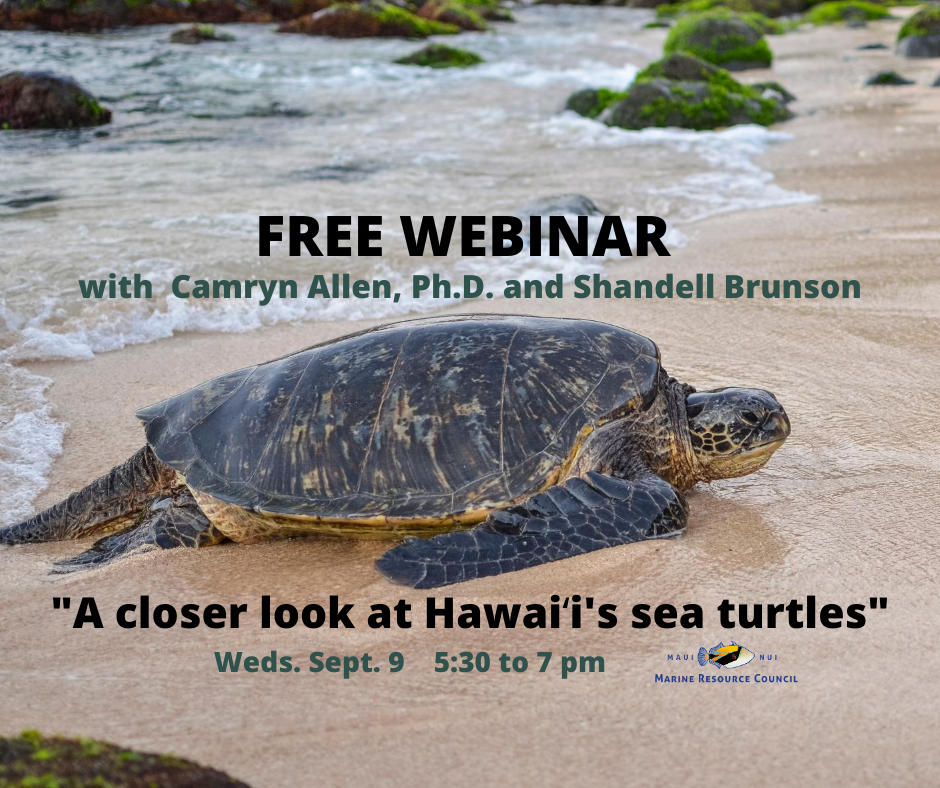 A free Zoom webinar offering “A Closer Look at Hawaiʻiʻs Sea Turtles” will be presented on Wednesday, September 9 from 5:30 to 7 pm Hawaii Standard Time as part of Maui Nui Marine Resource Councilʻs monthly “Know Your Ocean Speaker Series.” It will also air via Facebook Live at facebook.com/mnmrc, the Facebook page of Maui Nui Marine Resource Council.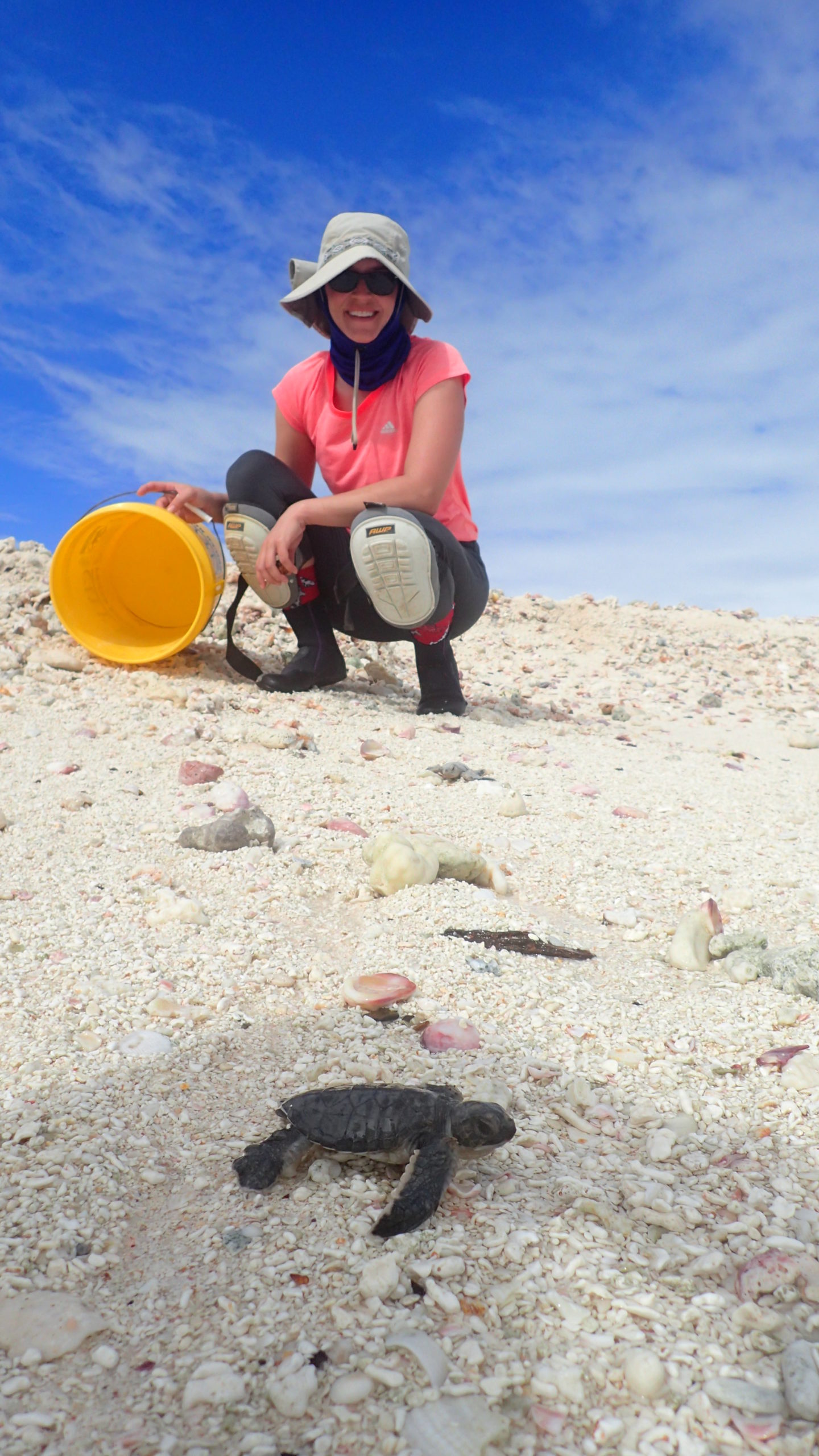
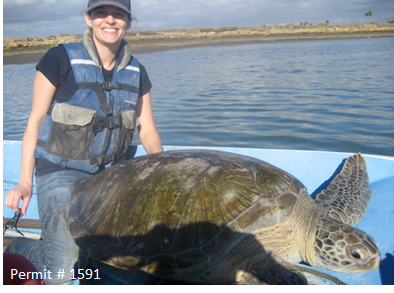 Photos at left: Dr. Camryn Allen at work in the field.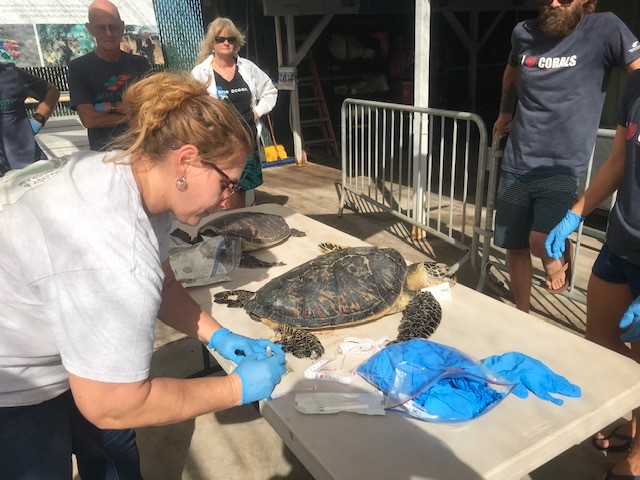
 The presentation will be offered by Dr. Michael Foley, a Professional Engineer and leader of the Resilient Sustainable Engineering (RiSE) team at Oceanit, a company with headquarters in Honolulu that employs more than 160 scientists and engineers.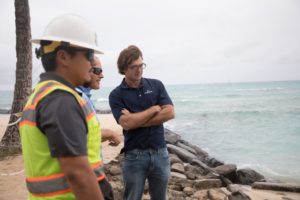
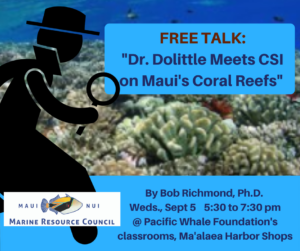 Dr. Richmond’s talk will explain how his team is using diagnostics and forensics to identify causes of stress to Maui’s reefs at Olowalu, Waihikuli, amd Honokowai, along with ways to enhance the reef’s resistance to these stressors.
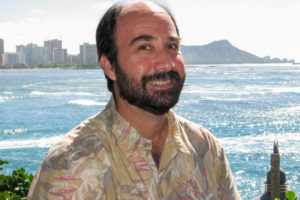 Dr. Richmond is the Chair of the Maui Coral Reef Recovery Team, a group of Hawaii’s most recognized coral reef scientists, resource managers, fishers, cultural advisors and communitymembers, first convened by Maui Nui Marine Resource Council in 2010. The group wrote the Maui Coral Reef Recovery Plan, a 101-page science-based plan that outlines specific goals and steps to protect Maui’s coral reefs. Team members continue to meet regularly to provide guidance and monitor progress toward implementing the plan.