Blog Archives: Blog

Herbivore management program at Kahekili shows encouraging results for the areaʻs coral reef

in /by

It’s often been said that “reef management” is a misleading term. After all, it’s not the reefs that need guidance; it’s human behavior that needs to be managed. One good example of the impact of humans working together as a community to protect reefs is the Herbivore Management Program at Maui’s Kahekili Beach Park. Three decades of detailed coral monitoring that has occurred there had led to informed and effective management actions.

A poster presentation by Darla White and Russell Sparks (Hawaii Department of Land and Natural Resources, Division of Aquatic Resources) and Ivor Williams (NOAA National Marine Fisheries Service, Coral Reef Ecosystem Division) showed the results of management of the herbivore fisheries at Kahekili and its impacts on the resilience of the reef.

You can view the poster at:
https://www.eposters.net/pdfs/the-kahekili-herbivore-fisheries-management-area-enhancing-resilience-of-a-reef-showing-signs-of.pdf
According to the poster, Dr. Eric Brown initiated monitoring at Kahekili Beach Park in the early 90s, In 1999, through the UH Coral Reef Assessment and Monitoring Program (CRAMP), the area was converted into one of a statewide network of intensively monitored reef sites. Hawaiiʻs Department of Aquatic Resources (DAR), part of the state Department of Land and Natural Resources (DLNR), has since worked to complete annual re-assessments of this site in collaboration with UH CRAMP.  It is through this intensive effort to measure change on the reefs in this area, that DAR developed clear concerns over rapid declines in coral cover, increases in algae growth, and reduced level of critically important herbivorous fishes.
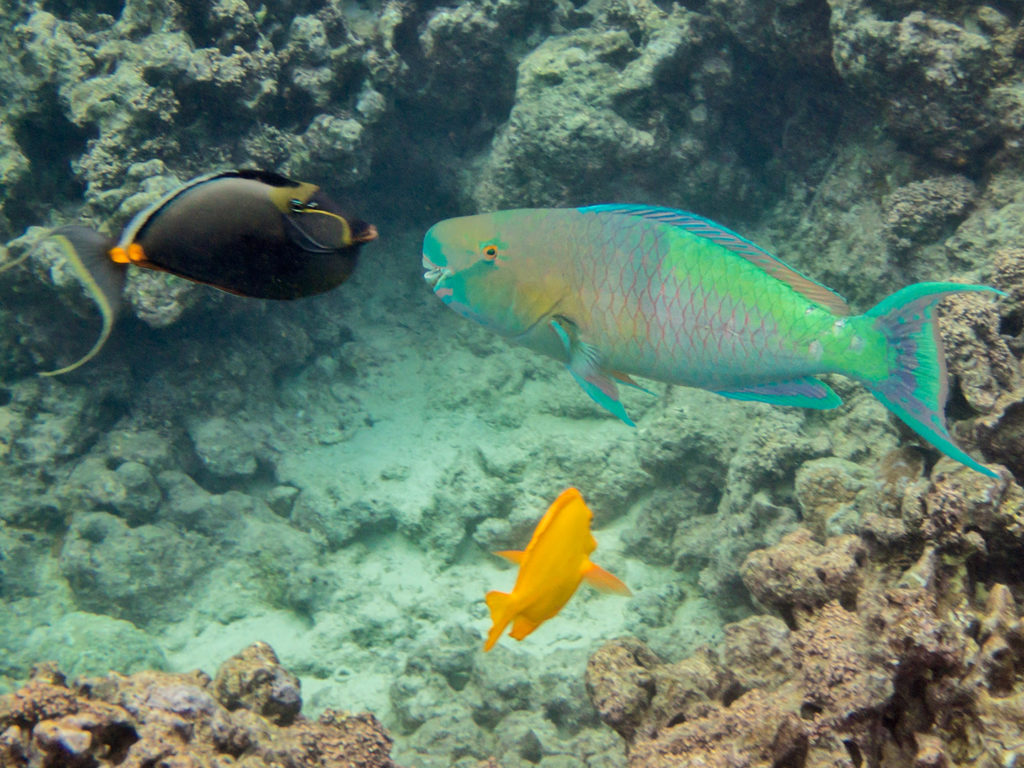
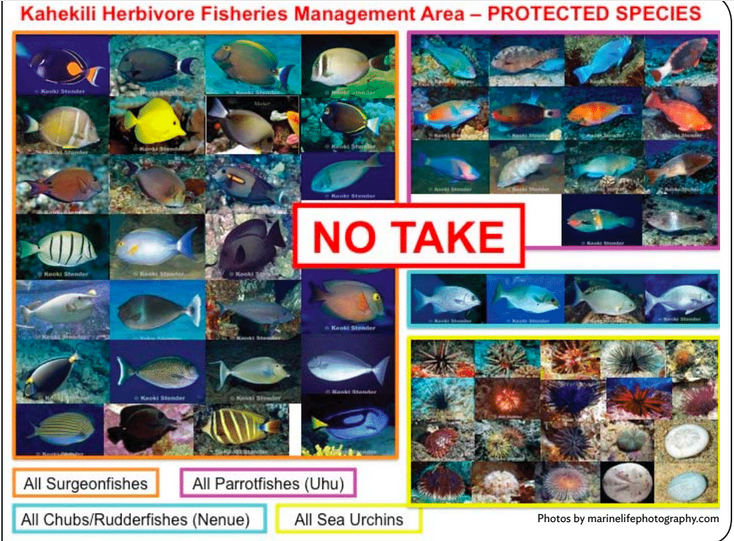
Herbivorous fish are fish that consume algae and seaweed. These fish include surgeonfish, parrotfish and chubs. The fish were being harvested for human food, leaving the reef defenseless against the onslaught of algae. The increase in algae resulted in the declining coral cover.

As a result, the DAR initiated discussions about the herbivore management area and got very good support from local long-time fishing families from the area, and from recreational fishing advocates such as Darrel Tanaka, Brain Yoshikawa and others. As a result, fishing for herbivores (such as parrotfish) was banned at Kahekiki, along with the taking of sea urchins. The program also prohibited the feeding of fish, because such activity decreases fishes’ natural appetite for seaweed.

Furthermore, marine biologist advocates such as Liz Foote and many others have helped move the effort forward and helped involve citizens and educate the public to improve compliance.

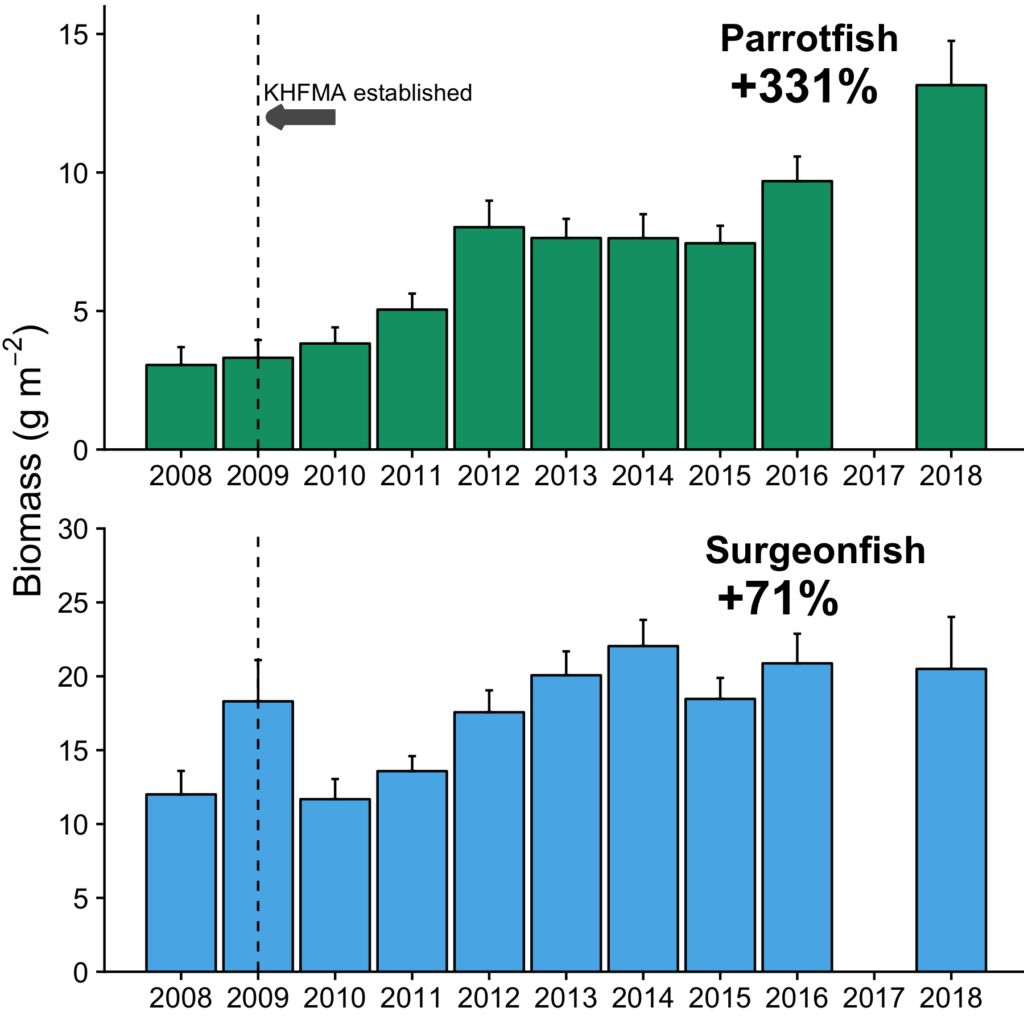
These new controls and outreach efforts have worked. Since the management area went into effect in 2009, there has been a 331% increase in parrotfish biomass at this reef, meaning that parrotfish have been growing to a larger size (which means they are better algae grazers) and are found in greater numbers. Surgeonfish increased 71% from 2008/09 to 2018 in this area. (See poster at https://www.eposters.net/pdfs/the-kahekili-herbivore-fisheries-management-area-enhancing-resilience-of-a-reef-showing-signs-of.pdf.)

Best of all, the seaweed and microalgae were reduced greatly, down to almost nothing. Success!

Current evaluation of the effectiveness of the area has been conducted with a partnership between DLNR/DAR and the NOAA science center (Dr. Ivor Williams).  This collaborative effort has allowed DAR  to conduct extensive yearly monitoring assessments and measure the response of the area to the management efforts.

Which takes us back to the question of managing reefs vs. managing humans. Human behavior can be managed, through education and effective management rules.  The results at Kahekili offer hope for what can be accomplished at other reefs throughout Maui Nui.


How the 2015 bleaching event impacted Maui’s corals

in /by

Maui Nui Marine Resource Council was honored to host a presentation by Russell Sparks, Aquatic Biologist, State of Hawaii’s Department of Aquatic Resources ( Department of Land and Natural Resources) at our March 2018 meeting.

Sparks presented reports on the toll of the 2015 coral bleaching event that occurred in Hawai’i and worldwide due to El Nino conditions.

Sheltered from cooling breezes and waves, Maui’s leeward shores saw especially warm ocean conditions in 2015 and bleaching events were widespread. That summer, biologists watched in horror as a massive 400 year old coral nicknamed “Big Mama” succumbed to bleaching and perished in November of 2015.

DCIM100GOPRO

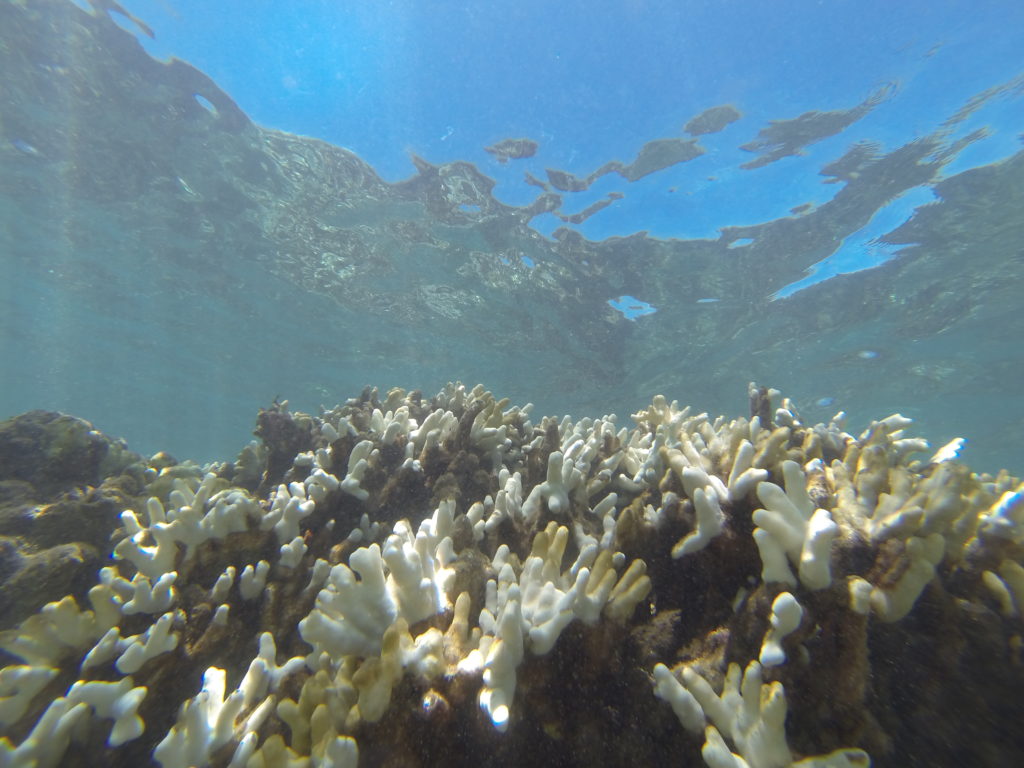
Sparks noted that almost all of the cauliflower coral off Maui’s coasts bleached. Lobe coral suffered the most impacts of bleaching and bleaching-related deaths. Smaller colonies of corals had higher rates of mortality, while bigger colonies showed more fragmentation during the bleaching event.

Biologists noted that some reefs did not die, and are striving to learn why they showed greater resistance.

Following this event, marine biologists have noted that there’s been a shift toward smaller sized coral colonies across the leeward nearshore areas of Maui.

In order for corals to adapt and survive into the future with the ongoing global warming concerns, we all need to do more to help reefs develop resiliency to these changes.  Corals can survive and adapt if we reduce local threats such as overfishing, sedimentation and nutrient pollution.  Support local efforts to address these man made local threats and coral reefs should better adjust to the warming world oceans.

Learn more about why corals bleach. 

Please follow this link to learn more about MNMRC’s work for clean ocean water to give our corals the best environment possible for survival.

Why do corals bleach?

in /by


There are many news stories about coral bleaching that’s occurring around the world. But what exactly is coral bleaching — and what can you do about it?

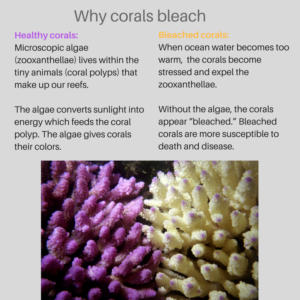
To understand, we need to look at the mutually beneficial (symbiotic) relationship that corals have with a type of microscopic one-celled algae known as zooxanthellae.

The algae lives right within the tiny living animals known as coral polyps that make up our reefs. The corals provide a home for the algae. In turn, the algae converts sunlight into energy and provides that nourishment to the coral polyp. The algae also gives corals their colors. It’s a win-win for both the coral polyp and the algae.

DCIM100GOPRO


Corals do best when ocean water is between 73 degrees F and 84 degrees  F. If the water becomes too warm or if it contains toxic chemicals, the corals expel their symbiotic algae. Without the algae, the corals appear white or “bleached.”

Unfortunately, bleached corals are more susceptible to death and disease.

Severe bleaching events occurred in Hawaii in 2014 and 2015, when ocean temperatures reached 88 degrees F.

In August 2014, warm weather in the North Pacific Ocean caused bleaching throughout the Hawaiian islands. More severe bleaching occurred in the summer of 2015.

Official reports state that 20 to 40% of Maui’s corals were lost following the 2015 bleaching event.

What can you do to prevent coral bleaching?

First, become an advocate in the fight to stop climate change. Do all you can to reduce your carbon footprint. Install a solar PV system at your home. Switch to LED lights. Buy a fuel-efficient hybrid or an electric car fueled with solar power. Drive less, and bike or walk more. Choose foods from local farms or local sources. Eat one or more vegetarian meals per week.

Second, help address other serious causes of stress to our coral reefs. For example, sediment run-off and near shore ocean water pollution are not international problems. These problems begin right here on the islands of Maui County and can be solved right here by people working together.

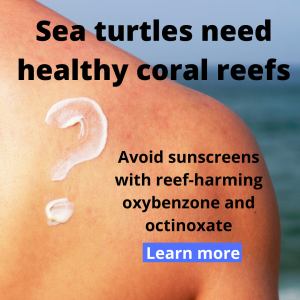
Last, avoid sunscreens with oxybenzone and octinoxate, two chemicals known to damage or kill corals. For more info visit here.

Learn more! Read the State of Hawaii Coral Bleaching Recovery Plan.

Best places to view sea turtles on Maui

in /by

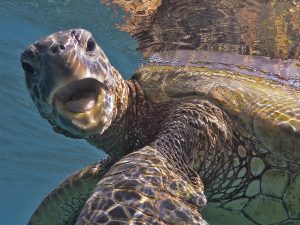
Graceful reptilian residents of Maui’s coral reefs, Hawaii’s sea turtles appear to be almost unafraid of humans. Encountering them in the wild is part of the wonder of snorkeling or diving on Maui.

Please help protect these beautiful animals. Stay back 10 feet or more when watching sea turtles in the ocean or on land. Yes, on land — Maui’s green turtles can often be sighted basking on quiet beaches, usually in the evenings and mornings.

Photo: Don McLeish

What are Maui’s best places for viewing sea turtles? Check out these spots:

1. Makena Landing (South Maui)
2. Maluaka Beach (South Maui)
3. Keawakapu Beach (South Maui)
4. Ulua Beach (South Maui)
5. Kaʻanapali Beach’s Puu Kekaa (Black Rock) – (West Maui)
6. The point between Napili Bay and Honokeana Cove (West Maui)
7. Kapalua Bay (West Maui)
8. Honolua Bay (West Maui)
9. Ho’okipa Bay (Northshore) – to view sea turtles basking on shore

Get Maui snorkeling and diving tips. 


What kind of turtles will you see?
The turtles that you’re most likely to encounter are Hawaiian green turtles (Chelonia mydas), named “Honu” in Hawaiian. Named not for the color of their shells (which feature radiating streaks and dappled shades of black, grey, brown, gold and green), these turtles are called “green” due to the color of their fat, tinted green by their herbivorous diet of algae and limu.

Adult green turtles can weigh 300 to 350 pounds. No matter their size, green turtles are graceful swimmers, with strong paddle-like flippers and a streamlined carapace (shell). Small fish sometimes congregate around their shells to pick off bits of algae for food.

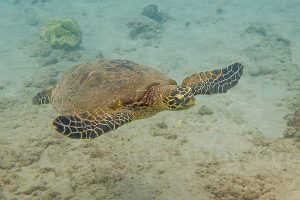
Less frequently sighted are the endangered hawksbill turtles (Eretmochelys imbricata) or “Honuʻea” in Hawaiian. These turtles live and feed in our nearshore waters, especially in areas with healthy coral reefs. Their narrow beaks enable them to forage for sea sponges—one of their favorite food items.

Hawksbill turtle. Photo by Don Bloom, Tropical Light Photography

Learn more about what we’re doing to protect the reefs that these sea turtles call home.

Protect the turtles
When watching sea turtles, please stay back at least 10 feet on land and in water. While they can hold their breath while resting on the ocean floor, swimming sea turtles must frequently come to the surface to breathe. Never crowd them or block their way to the surface.

Hawaii’s green turtles are protected by the U.S. Endangered Species Act as a threatened species; our hawksbill turtles are protected as an endangered species. It is illegal to harass, harm, pursue, kill or capture these animals. Harassment includes touching, attempting to ride on or trying to feed turtles. Please ensure that photos are taken from a responsible and respectful distance. Any efforts to photograph turtles must not disturb or alter natural behavior.

To report illegal or suspicious activity, call 1-800-853-1964 or (808) 643-DLNR (3567). Email photos and videos to [email protected].

Entanglement in fishing line is a serious threat to our local sea turtles. Entangled turtles may not be able to reach the surface to breathe and can drown. Marine debris such as plastic bags can be mistaken for food. Do your part and retrieve fishing line, nets and gear, as well as trash, from coastal areas.

Who to call if you see an injured, sick or dead turtle:
Lanai: State of Hawaii DLNR-DOCARE Lanai (808-565-7916)
Maui (Kihei Area – Maalaea to Makena): Maui Ocean Center Marine Institute (808-286-2549)
Maui (All Other Areas): Maui Community College – Marine Option Program in partnership with NMFS (808-286-2899)
Molokai: State of Hawaii DLNR-DOCARE Molokai (808-553-5190)

Visit NOAAʻs injured turtles website 

Download a free sea turtle reference card — and get tips on protecting Maui’s reefs while you snorkel
Visit our snorkeler’s resource page at mauireefs.org/snorkel

Be safe!
Check all local ocean conditions carefully before entering the water. If surfers are present, the surf is likely too big for safe snorkeling. Always swim with a buddy. Our list of “Best Places to View Sea Turtles” is based on the likelihood of seeing turtles, and does not imply that conditions are safe or recommended for swimming, snorkeling or diving.

Photo: Don Bloom, Tropical Light Photography.

Help us protect Maui’s coral reefs and marine wildlife
Sea turtles are just some of the residents of the coral reefs of Maui.  If you enjoy watching these intriguing marine reptiles please support Maui Nui Marine Resource Council in our work to protect coral reefs, restore clean ocean water and bring back an abundance of native fish to our nearshore waters. We’re a nonprofit organization now in our 14th year of working to help protect Maui County’s coastal waters and reefs.

Learn more about Maui Nui Marine Resource Council.

Donate to support Maui Nui Marine Resource Council’s visitor education programs.


Aquatic Biologist Russell Sparks of Hawaii Department of Aquatic Resources to be Guest Speaker at March Meeting of Maui Nui Marine Resource Council

in , /by

A free presentation offering updates on the State of Hawaii’s management of Maui’s nearshore fisheries and coral reef resources will be featured at the Wednesday, March 7 meeting of the nonprofit Maui Nui Marine Resource Council. The talk will be presented by guest speaker Russell Sparks, Aquatic Biologist of State of Hawaii, Department of Land and Natural Resources, Division of Aquatic Resources. Sparksʻ presentation will also include an update on the status of Mauiʻs reefs following the bleaching event of 2015.

The meeting will take place from 5 to 7 pm at Pacific Whale Foundation’s Discovery Center Classrooms at Ma’alaea Harbor Shops at 300 Ma’alaea Rd, Wailuku (next to Maui Ocean Center). The talk is free and everyone is invited. Refreshments will be served. 

Maui Nui Marine Resource Council (MNMRC) is a Maui-based nonprofit working for healthy coral reefs, clean ocean water and the restoration of abundant native fish in the nearshore waters of the islands of Maui County. 

At the March 7 meeting, MNMRC staff will be offering updates on their recent and ongoing projects, including the expansion of a volunteer-based water quality monitoring program to include 48 sites in South and West Maui and a study of corals off Olowalu. 

Sparks received his B.S. in Biology from Oregon State University. He received his M.S. in Marine Biology from University of Hawaii at Manoa in 1996. Since 1998 Russell has worked for the State of Hawaii, Department of Land and Natural Resources, Division of Aquatic Resources as an education specialist and more recently as an aquatic biologist. He is currently responsible for leading the design, implementation, and overall management of the Maui marine monitoring program, and for working with stakeholders and communities to develop marine management programs aimed at adaptively managing nearshore fisheries and coral reef resources.

To learn more, visit www.mauireefs.org. 

Using Algal Turf Scrubbers  to Improve Wastewater Quality to be Subject of February 7 Meeting of Maui Nui Marine Resource Council

in /by

The public is invited to attend a free presentation on harnessing local algae and sunlight to improve the quality of treated municipal wastewater at the Wednesday, February 7 meeting of the nonprofit Maui Nui Marine Resource Council. 

The meeting will take place from 5 pm to 7 pm at Pacific Whale Foundation’s classrooms at the Harbor Shops at Maʻalaea at 300 Maʻalaea Road. Refreshments will be served. 

Guest presenter, Travis Liggett, will be speaking about Algal Turf Scrubbers, a cutting-edge technology which can improve wastewater quality by harnessing local algae and sunlight to lower nutrient levels, increase oxygen concentration, and reverse acidification in wastewater. 

“Algal Turf Scrubbers have a place on the island of Maui to provide an added stage of treatment to municipal wastewater before entering the marine environment via injection wells serving Kahului-Wailuku, Kihei-Wailea and Lahaina,” says Liggett. 

Liggett holds a MS in Aerospace Engineering from University of Colorado Boulder and a BS in Mechanical Engineering from University of California, Berkeley. He served as an Algae Manager at Maui Tropical Algae Farm and also worked as an Aerospace Research Engineer with NASA.  Mr. Liggett is working with Dr. Dean Calahan, a Smithsonian researcher focused on expanding the use of Algal Turf Scrubber technology.

Liggett holds a MS in Aerospace Engineering from University of Colorado Boulder and a BS in Mechanical Engineering from University of California, Berkeley. He served as an Algae Manager at Maui Tropical Algae Farm and also worked as an Aerospace Research Engineer with NASA.

The evening will also include a discussion about general wastewater issues on Maui, including the 12,000 cesspools located here, which handle 7.9 million gallons of untreated wastewater per day.

Dana Reed, West Maui Regional Coordinator of Hui O Ka Wai Ola, the ocean water quality testing program led by Maui Nui Marine Resource Council, The Nature Conservancy, West Maui Ridge 2 Reef and University of Hawaii Maui College, will be presenting some preliminary findings about ocean water quality at West Maui beaches and the Hui’s efforts to use algae (limu) to collect more information about Maui’s coastal water.


Please Support Protection of Maui’s Coral Reefs at Flatbread Company Benefit on Tuesday, January 30

in , /by

Enjoy some exceptionally delicious wood-fired pizza and support efforts to protect Maui’s coral reefs at a benefit for the nonprofit Maui Nui Marine Resource Council at Flatbread Company in Paia on Tuesday, January 30.

All pizzas purchased between 5 pm and 9 pm that day will help raise needed funds for Maui Nui Marine Resource Council’s work to restore healthy coral reefs, clean ocean water and abundant native fish for the islands of Maui County. The Flatbread Company will donate $3.50 for each large flatbread and $1.75 for each small flatbread sold during the benefit, whether the pizza is for takeout or in-restaurant dining.

A silent auction will take place during the event. The staff of Maui Nui Marine Resouce Council will be on hand to meet the public and talk about their nonprofit organization’s work  including sunscreen pollution prevention, improving wastewater management, testing ocean water quality and establishing community managed marine areas.

Individuals who join Maui Nui Marine Resource Council as members with a $50 donation will receive a free Maui Nui Marine Resource Council totebag and two free MauiReefs.org bumperstickers.

The Flatbread Company is located at 89 Hana Highway in Paia.

Celebrating 10 years, Maui Nui Marine Resource Council is a nonprofit 501(c)(3) organization established by marine biologist Robin Newbold and the late Uncle Edwin Lindsay, a kapuna and community activist. To learn more, visit www.mauireefs.org.

January Meeting of Maui Nui Marine Resource Council to Feature Guest Presentation on Auwahi Forest by Dr. Arthur Medeiros

in /by

MAʻALAEA, MAUI, HI — The January meeting of the nonprofit Maui Nui Marine Resource Council will feature a guest presentation by research biologist Dr. Arthur Medeiros about the Auwahi Forest Restoration Project.

The meeting and presentation will take place on Wednesday, January 3 from 5 pm to 7 pm at Pacific Whale Foundationʻs classrooms at the Maʻalaea Harbor Shops, 300 Maʻalaea Road, Wailuku. The event is free and open to the public. Refreshments will be served.

“The Auwahi leeward forest was previously known to be among the most diverse of Hawaiian ecosystems,” reports www.auwahi.org, the website of the Auwahi Forest Restoration Project. “Currently, Auwahi is among the world’s most endangered tropical dry forests with 9 species listed as Endangered with the U.S. Fish and Wildlife Service and 7 listed as endangered with IUCN Red List status.”

Born and raised in Hawaiʻi, Dr. Medeiros is a research biologist with U.S. Geological Survey and has over 30 years of field experience studying Hawaiian ecosystems. He works with private and public landowners and the public to develop community- and science-based forest restoration projects, including Auwahi dryland forest.

“As part of our work to prevent sediment run-off that threatens Mauiʻs coral reefs, we support the efforts to restore the dryland forests of Maui,” says Robin Newbold, co-founder and Chair of Maui Nui Marine Resource Council. “Forests and trees play an important role in preventing soil from becoming runoff that washes into the ocean during rainstorms.”

Maui Nui Marine Resource Council is celebrating 10 years of working to restore coral reefs, clean coastal water and abundant native fish to Mauiʻs nearshore areas. The January meeting will include updates on their projects including

– A study of the DNA of corals off Olowalu to evaluate the coralsʻ reactions to environmental stressors
– Ongoing ocean water quality testing at 36 sites along South and West Mauiʻs shorelines
– Efforts to prevent sediment run-off, including best practices guidelines for construction sites

To learn more, visit www.mauireefs.org.

Maui Nui Marine Resource Council January Meeting

in /by

When: Wednesday, January 3
Time: 5 pm to 7 pm
Where: Pacific Whale Foundationʻs classrooms at the Maʻalaea Harbor Shops, 300 Maʻalaea Road, Wailuku
Cost: Free and open to all. Refreshments will be served.

Start the New Year by attending the January 3, 2018 meeting of Maui Nui Marine Resource Council, featuring a guest presentation by research biologist Dr. Arthur Medeiros about the Auwahi Forest Restoration Project.

Auwahi leeward forest was previously known to be among the most diverse of Hawaiian ecosystems. Currently, Auwahi is among the world’s most endangered tropical dry forests.

“As part of our work to prevent sediment run-off that threatens Mauiʻs coral reefs, we support the efforts to restore the dryland forests of Maui,” says Robin Newbold, co-founder and Chair of Maui Nui Marine Resource Council. “Forests and trees play an important role in preventing soil from becoming runoff that washes into the ocean during rainstorms.”

The January meeting will include updates on Maui Nui Marine Resource Councilʻs projects including:
– A study of the DNA of corals off Olowalu to evaluate the coralsʻ reactions to environmental stressors
– Ongoing ocean water quality testing at 36 sites along South and West Mauiʻs shorelines
– Efforts to prevent sediment run-off, including best practices guidelines for construction sites

Flatbread Company Benefit for MNMRC to be held on Tuesday, January 30, 2018

in /by

Enjoy some exceptionally delicious pizza at Flatbread Company at 89 Hana Highway in Paia on Tuesday, January 30 between 5 pm and 10 pm and help raise needed funds for Maui Nui Marine Resource Council’s work to restore healthy coral reefs, clean ocean water and abundant native fish for the islands of Maui County. The Flatbread Company will donate $3.50 for each large flatbread and $1.75 for each small flatbread sold during the benefit. Come join the fun, and meet our MNMRC team and learn about MNMRC’s newest projects and programs for 2018.