Blog Archives: Blog

Know Your Ocean: Can a non-scientist do science? Global and local community science projects on Maui

in , /by

Can a non-scientist do science? Global and local community science projects on Maui

MA’ALAEA, MAUI — Increasingly, scientists are asking for the public’s help to understand a wide range of topics from earthquakes to water quality to where animals live and more. Learn more about community or “citizen” science and how you can contribute to aiding conservation work in particular, at a free Zoom presentation on Wednesday, April 6 at 5:30 pm. This free event is hosted by Maui Nui Marine Resource Council as part of its Know Your Ocean Speaker Series with support from the County of Maui Office of Sustainability and Climate Resilience.

Through presentations by guest speakers Dr. Mark Deakos, Cheryl King, John Starmer, and Jennifer Vander Veur, you’ll be introduced to some global citizen science projects that are relevant to Maui and hear about some long-running community science projects taking place in Maui County that are seeking volunteers.

“If you want to make a difference in understanding the effects of climate change, protect native habitats and the species they rely on, or simply become more aware of the world around you, citizen science is a great way to get involved and make a difference,” notes John Starmer, Chief Scientist at Maui Nui Marine Resource Council and Volunteer Coordinator at City Nature Challenge (CNC) on Maui.

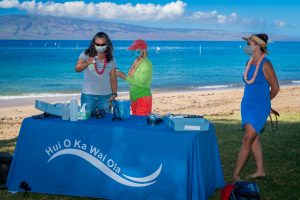
Maui Nui Marine Resource Council is a Maui-based nonprofit that relies upon citizen volunteers for its Hui O Ka Wai Ola ocean water quality monitoring program at 29 locations along Maui’s shores.

John Starmer

Starmer is the Maui Coordinator for City Nature Challenge. Started in 2016 as a competition between San Francisco and Los Angeles, the City Nature Challenge (CNC) has grown into an international event, motivating people around the world to find and document wildlife in their cities. The challenge is organized by Community Science teams at the California Academy of Sciences and the Natural History Museum of Los Angeles County and occurs during a four-day period. From April 29 to May 2, participants take photos of wild plants and animals. From May 3 to May 8, participants identified what was found. During this friendly competition, the winner is the city that gathers the most observations of nature, finds the most species, and engages the most people in the event.
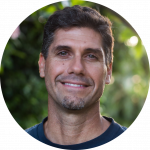
 

Mark Deakos

“Because our urban areas are a bit smaller than most cities (like San Francisco or Hong Kong), our Maui team decided to aggregate the whole island (plus Molokini Crater) for the purpose of the challenge,” says Starmer.


Dr. Mark Deakos is the Founder, President, and Chief Scientist of the Hawai‘i Association for Marine Education and Research (HAMER).  Mark will be focusing on his manta ray photo-identification catalog of over 600 individuals.
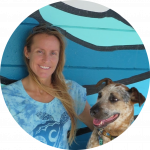
Cheryl King

Cheryl King will be summarizing information about two of her citizen scientist-related projects: SHARKastics (marine debris research and cleanups) and Hawaiian Hawksbill Conservation (the statewide in-water photo-identification catalog for critically endangered Hawaiian hawksbill sea turtles from 1998-present).  She’s also a Seabird Biology Technician with the Maui Nui Seabird Recovery Project, so will be presenting potential volunteer opportunities with seabirds and colony restoration.


“There are so many wonderful, diverse ways to get involved in helping our precious natural resources and habitats of Maui Nui, so we hope to inspire a new batch of volunteers to join the critical work that’s being done all around Maui every day,” says King.
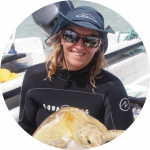
Jennifer Vander Veur

Jennifer Vander Veur is the Senior Program Manager of the Coral Reef Alliance of Maui Nui. “We are proud to support a dedicated team of local volunteers in Maui, Hawai’i, as they work to protect the valuable coral reefs in their community,” says Vander Veur. Her program works with volunteers who grow and plant native vegetation at key locations near coastal streams, which act as natural barriers and trap sediment runoff before it reaches the ocean and coral reefs.


“Getting the public involved in science projects allows scientists to take on projects that they could not do on their own with the limited funding and time that are available to typical research projects,” says Starmer.

“Maui Nui Marine Resource Council is hosting this talk to help Maui residents and visitors learn about the opportunities to participate in citizen science projects and help our community better understand and protect our natural resources,” says Meredith Beeson, who organizes the Know Your Ocean Speaker Series at Maui Nui Marine Resource Council. “Please join this event to learn how you can get involved and make a difference.”
West Maui Water Quality Lab Destroyed in Lahaina Wildfire

in /by

This past week’s events have left us all reeling as our community suffered an entirely unexpected and devastating blow after wildfires swept through and destroyed the West Maui town of Lahaina.  As we come up for air and try to assess the next steps, we are grateful that, while none of our West Maui volunteers or employees lost their lives in this tragedy, no one in this close-knit community is unaffected by the effects of the Lahaina Wildfire.  Among the structural losses from these fires was our water quality lab, used by the Hui O Ka Wai Ola to analyze coastal water quality samples from West Maui.

As we look to the future, our volunteers are determined to continue their water quality testing. We’ve transferred spare equipment from our South Maui lab and one of our volunteers is temporarily housing a makeshift lab in their home. While we have always appreciated the dedication of our Hui members to their mission, we are looking for permanent housing for the lab and working to raise the ~$20,000 that will be needed to replace the equipment and supplies that were destroyed.

We are coordinating with our partner organizations in the non-profit and local government sectors to see how we should extend our water quality sampling to understand how the new pollutants of concern will affect our nearshore waters. While new tests will be useful, the importance of the Hui’s six-year baseline cannot be understated. The Hui’s data provides a multi-year baseline that will allow us to understand how and where water quality changes as a result of the Lahaina Wildfire.

If you are moved and able to support our efforts to, please consider donating to help us rebuild the Hui’s water quality lab with a tax-deductible donation:  https://www.mauireefs.org/lahaina-wqlab/

Coming out of COVID: Recording spinner dolphins post-pandemic restrictions.

in , /by

Please join Maui Nui Marine Resource Council for our Know Your Ocean Speaker Series, August edition on Wednesday, August 2 at 5:30 PM!

Register here: https://bit.ly/dolphinwebinar

This webinar provides an assessment of spinner dolphin acoustic activity in Maui Nui post-COVID-19 boating and travel restrictions. Underwater sound was recorded in 2021-2022 in three bays frequently used by spinner dolphins for their daytime rest: Mānele, Hulopoʻe, and Honolua. Spinner dolphins were recorded in each location, with the most dolphin acoustic activity occurring in Honolua, and less activity in Hulopoʻe. These analyses will help wildlife managers identify important spinner dolphin daytime habitats and track habitat-use changes that may occur due to varying levels of human disturbance.


Meghan McElligottMegan McElligott is a 5th-year doctoral candidate at the University of Hawaiʻi at Mānoa in the Marine Biology Graduate Program. Her work focuses on using passive acoustics (underwater sound recordings) to monitor when and where Hawaiian spinner dolphins get their daily rest. The goal of her research is to help wildlife managers determine the best ways to protect spinner dolphins from human disturbance.
Reef Friendly Landscaping Comes to Kealia Pond National Wildlife Refuge

in /by

Through the generosity of the Flora Family Foundation’s grant award, MNMRC was able to expand the RFL program to a new sector, Keālia Pond National Wildlife Refuge. As one of Maui’s last remaining intact wetlands, and a vital piece of a
healthy functioning coastal ecosystem, Keālia Wetland is an ideal location to demonstrate the efficacy of treating the land with organic methods to produce desired landscape results while mutually benefiting the surrounding environment.
The RFL program initiated a test plot at the Keālia Pond National Wildlife Refuge in partnership with Environmental Solutions Maui, the company that produces the soil amendment and performs soil monitoring.  The test plot aims to support native plant restoration and reduce reliance on chemical pesticides to combat invasive weeds.

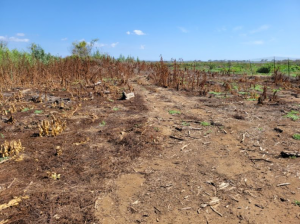
Kealia Pond restoration plot with invasive species removed prior to revegetation work.

One of the primary interests of this project is to assess the effectiveness of these amendments in controlling weed growth in a protected area, as an alternative to synthetic chemicals. Scientific research consistently demonstrates that mycorrhizal fungi improve soil structure by binding soil particles together, forming stable aggregates, and
enhancing aeration. These fungi also establish symbiotic relationships with plant roots, improving nutrient availability and stress tolerance, creating a more favorable environment for plant growth. Weeds that thrive in low-nutrient conditions are less likely to form these beneficial bonds, giving an advantage to native plants that succeed them in ecological succession. Additionally, some studies have shown that weeds forming mycorrhizal bonds can be adversely affected by them, as they struggle to regulate nutrient exchange effectively. With these principles in mind, our pilot project aims to determine if we can assist native plant species in competing with or surpassing the invasive species that currently require herbicide use. If successful, this approach could reduce the need for manual weeding and save labor hours.

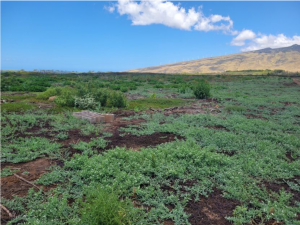
Kealia pond restoration plot with native wetland plants.

Another essential aspect of improving soil structure is increasing water retention capacity, leading to water conservation and improved drought tolerance. Enhancing the soil’s ability to retain water can support sustainable water usage in the
protected area. Our overarching goal is to develop a sustainable system that optimizes soil health while being environmentally friendly and economically viable within the protected area.

Although the test plot is still in progress, preliminary and intermediate soil samples have shown increases in soil microbiology, supporting plant health and creating more favorable environments for native plants to thrive. Over the coming four months, SoilThrive will be delivered to the staff at Keālia to apply the amendment at an application rate of 50 gallons per week for three weeks in the inoculation phase, and then one time per month for the remaining three months. Additional soil samples will be taken to assess the success of establishing the microbes, as well as final soil samples at the end of the four-month test plot period.

Highlights from our 15th year of working to protect Maui’s reefs

in , /by

Founded in 2007, Maui Nui Marine Resource Council (MNMRC) is a nonprofit organization working for healthy coral reefs, clean ocean water, and abundant native fish for the islands of Maui County (Maui Nui).

Maui Nui Marine Resource Council has much to be thankful for as we look back over our 2022 accomplishments. We celebrated 15 years of working with our community partners to protect Maui’s nearshore environment. Thanks to generous donors and grant funding, we added new program areas, moved projects toward completion, and much more. Below are some highlights from the past year.

Download the full .pdf report with additional details here.

2022 Annual Report Cover


Reef Friendly Landscaping

Success at one of the RFL test plots.

Our Reef Friendly Landscaping (RFL) is made up of three programs that include our test plot program, RFL certification program for private properties, and collaboration, education, and outreach.

The liquid biological soil amendment, aka SoilThrive, test plot program worked with seven community partners: the County of Maui Parks and Recreation; Wailea Community Association; Mākena Golf and Beach Club, Kamaole Sands, Four Seasons Resort, and Maluaka Beach to allow these properties to trial organic method on their properties. Funding from HTA and MVCB will add eleven additional test sites in 2023.

The RFL certification recognizes properties that are transitioning to organic landscaping practices. Three properties were finalizing the certification process at the end of 2022.

Mauka to Makai : Ungulate Fencing

Deer fencing on Kaonoulu Ranch

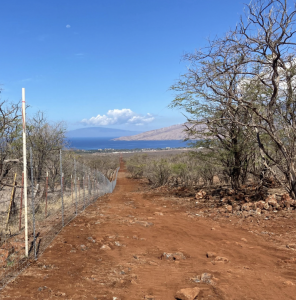
MNMRC worked with Kaonoulu Ranch to have 8 ft tall ungulate fencing installed running mauka to makai. This is in addition to extensive fencing efforts that the ranch and other partners are working to install. Every little or big bit helps. This area is adjacent to gulches that flow sediment and nutrients to the ocean when it rains.

Fencing is paired with the harvest of the invasive axis deer from within the perimeters. The fencing helps control deer herd movements to preferred areas and makes harvesting easier. This combined effort will reduce erosion and allow grasses to regrow and stabilize the soil. An added bonus is that fire breaks can be made at the same time as the fencing is installed.

Mauka to Makai : Pohakea and Ma’alaea

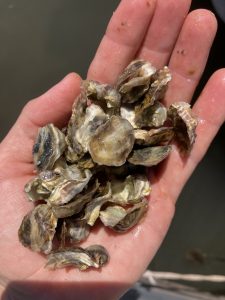
Juvenile oysters filter sediment from Ma'alaea Harbor

Juvenile oysters filter sediment from the waters of Ma’alaea Harbor

In early 2022 we completed our vetiver planting project in Pohakea, adding this drought-resistant grass to erosion-prone areas to mitigate sediment flow into Maalaea Bay during heavy rain. On the makai side, our oyster bioremediation project is helping to clean the water in the bay. Three-thousand juvenile oysters were added in late 2022. Adult oysters filter up to 50 gallons each day.

Our oysters come from UH Hilo’s Pacific Aquaculture and Coastal Resource Center and are bred as triploid to prohibit them from reproducing and instead focus on growing big and filtering lots of water, and also ensures they don’t pose any threat to native species.

Sunscreen Ban Effects

Testing for sunscreen residue on Maui's beaches

MNMRC Program Manager, Meredith Beeson, testing for environmental sunscreen residue on Maui’s Beaches

Maui’s ban on non-mineral sunscreen took effect on October 1, 2022. We are working with Dr. Craig Downs to determine the effectiveness of this ban. We took water samples from 5 Maui beaches in September before the ban went into effect, and we will do the same in 2023 to compare sunscreen chemical levels before and after the ban.

If we see a decrease in the banned chemicals, we will know this type of legislation is effective, and if not, MNMRC and its partners will know that more public outreach is needed to decrease these contamination levels and protect our coral reef ecosystems.

Community-based Water Quality Testing: Hui O Ka Wai Ola

This year marked the sixth year of Hui O Ka Wai Ola as a community-based water quality monitoring program that was launched and conducted by MNMRC, The Nature Conservancy, and West Maui Ridge to Reefs Initiative in partnership with the State of Hawaii Department of Health Clean Water Branch. “The Hui” tests the water to inform the state, county, and community about coastal water quality.

The well-trained community volunteers test physical parameters including temperature, salinity, pH, dissolved oxygen, and turbidity in a mobile lab on site. They also prepare samples that are analyzed by the SOEST Lab for Analytical Biogeochemistry at UH Mānoa for organic and inorganic nutrients such as Total Nitrogen, Nitrates, Nitrites, Total Phosphorus, Phosphate, Silicate, and Ammonia.

Aqualink : Realtime Oceanographic Data

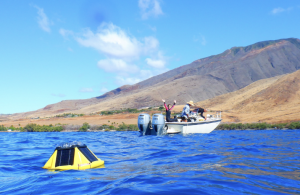
AquaLink buoy in the foreground at Olowalu.

We have deployed three Aqualink buoys in the ocean near Kalama Park in Kula Kai (Kihei), Ma’alaea Bay, and Olowalu. These satellite-linked buoys record ocean temperatures just below the surface and also at the same depth as most of our corals. We can watch this real-time data and know if there is a threat of a bleaching event.

Along with temperature, they also measure wind direction and speed and wave height, direction, and frequency at the surface. Best of all, this live data is available to the public anytime, at https:aqualink.org. We encourage all our water-user partners to take advantage of these condition reports.

Outreach and Education

MNMRC educated visitors about marine life and conservation with the County of Maui’s help. Travelers were met with ads as they first arrived on the island at the Kahului Airport. Terminal window signs shared information about reef health, snorkel tips, and sunscreen use. In baggage claim, four short videos encouraged visitors to respect the ocean while they waited for their luggage.

The ads feature reef-friendly messaging including Stand only on sand, Coral is alive – Keep fins up Coral is Alive- Keep your Paddle Up, Mineral only sunscreen, Wear a rashguard – Use less Sunscreen, Protecting Coral Reefs, Welcome to Maui – Enjoy wildlife from a distance. The ads were also heavily promoted on Spectrum TV and our Facebook and Instagram.

Financial Statement

Over the past year, MNMRC again demonstrated our ability to provide the greatest impact for coral reefs with every dollar raised. In 2022, we spent 79% of our income on program services. According to CharityWatch, a charity organization devoting 75% of its income to program services is considered “highly efficient.” We are proud to have exceeded this standard which would qualify us for a CharityWatch rating of “Excellent.”  View the .pdf report for details.

Looking forward to 2023

This coming year will see the continuation of many of our longer-term projects such as Reef Friendly Landscaping, ungulate fencing to reduce erosion and sediment pollution, and, of course, Hui O Ka Wai Ola will continue to keep you informed about water quality. New efforts include the start of coral reef monitoring along South Maui from Kīhei to Mākena, the growth of Reef Friendly Landscaping to include homeowners, and increased efforts to address flooding in Kīhei.

We continue to appreciate and rely on the support of our donors who allow us to engage in the work to support clean water, abundant fish, and healthy coral reefs on Maui. Thank you for supporting us last year and please consider continuing to support MNMRC in 2023.


Know Your Ocean: Making use of Natural Sounds Underwater.

in , /by

Dr. Simon Freeman, Program Director at the Advanced Research Projects Agency-Energy (ARPA‑E), presented “Signals in noise: Adventures in using natural sounds underwater.” at our June Know Your Ocean speaker series event.  He gave an overview of some of the work his group has performed over the years, focusing on situations where they were able to find helpful information contained in natural ocean soundscapes including those produced by coral reef ecosystems. He then discussed what could happen in the future using natural underwater sounds to quantify carbon capture in the ocean as part of his efforts in working for the Department of Energy. Simply click on the video below to watch the presentation.

Royal Lāhaina Resort and Honokeana Cove Achieve Reef Friendly Landscaping Silver Certification.

in /by
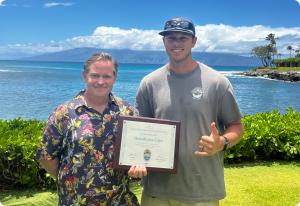
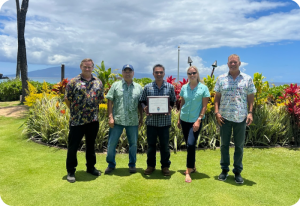
Two resort properties on Maui, the Royal Lāhaina Resort and Bungalows and Honokeana Cove, have received the “Silver” certification from the MNMRC Reef-Friendly Landscaping program for being the first to adopt organic practices. The program, managed by MNMRC, promotes the use of organic alternatives to synthetic pesticides, herbicides, and fertilizers for commercial and residential properties. This initiative benefits the environment and the well-being of people living and working on these properties. For more information, check out the  RFL commercial properties program and the newly launched RFL residential program.
The properties achievement was featured in the Maui times. Read the article here.

Honokeana Cove landscaper, Raymond Watson, with MNMRC RFL advisor Duane Sparkman. (Photo: Royal Lahaina Resort)

Royal Lahaina Resort Landscaping staff with MNMRC's RFL Program manager. (left to right: Duane Sparkman, Blaine Ikeda, Arnel DelaCruz, Jill Wirt, Stephen Hinck Photo: Royal Lahaina Resort.)

Royal Lahaina Resort Landscaping staff with MNMRC’s RFL Program manager. (left to right: Duane Sparkman, Blaine Ikeda, Arnel DelaCruz, Jill Wirt, Stephen Hinck Photo: Royal Lahaina Resort.)

Protecting Paradise – See why the community volunteers of the Hui O Ka Wai Ola do what they do.

in /by

The South Maui Team Lead for the community water quality monitoring group Hui O Ka Wai Ola, Ylenia St Louis, produced a video that explores why the Hui staff and volunteers have been sampling and testing water quality at sites along Leeward Maui’s coast since 2016.

You can learn more about the program and how to volunteer here: https://www.mauireefs.org/what-we-do/water-quality-testing-program/.

Know Your Ocean: Conservation of the Hawaiian Monk Seal: Efforts to Save a Species

in , /by

Hawaiian monk seals, the ‘llio holo I ka uaua or “dog that runs in rough water” are a type of seal found nowhere else in the world. They are critically endangered, but conservation efforts are supporting their slow recovery. Learn about what is being done to save this uniquely Hawaiian species and how you can help insure their survival.  Our speaker will dive into the natural history of monk seals, what conservation looks like here in the islands, and share one of Maui’s very own success stories of male RL72.


Ashley Hechavarria

Presented by Ashley Hechavarria

Ashley works for the Marine Mammal Center and dispatches the Hawaiian monk seal sighting hotline on Maui Island and builds relationships with the Maui community. She brings over a decade of experience working as a naturalist and wildlife biologist specializing in marine mammal rehabilitation and release in Florida, as well as coordinating conservation efforts on Maui. She earned her B.S. in Environmental Science and Policy from the University of South Florida, where she also aided in marine paleo-biology research.

Photo Credit: Monk seal photo by NOAA on Unsplash

Know Your Ocean: Molokini During COVID-19: A Look at Research Conducted at the Island During Height of the Pandemic

in , /by

At the height of the pandemic, when no one was visiting Molokini, a small team of scientists had the opportunity to study the wildlife at the crater. And their findings are eye-opening. Led by Maui resident Russell Sparks, Aquatic Biologist, Department of Land and Natural Resources, Division of Aquatic Resources on Maui, a small team of scientists with expertise in coral reef ecology and animal movement studies in the Hawaiian Islands studied the ecosystem at Molokini for a little over a full year: from a period of COVID-19 pandemic shut down in April 2020, to a period of moderate activity resumption in November 2020 and into a full return of tourism in May of 2021.

The team includes Alan Friedlander, Chief Scientist, Pristine Seas, National Geographic Society, and a researcher at the Hawaiʻi Institute of Marine Biology. Friedlander has studied Molokini extensively for nearly two decades and is the co-author of five research publications on Molokini conducted in collaboration with the Maui Division of Aquatic Resources. Other members include Kevin Weng, Associate Professor at the Virginia Institute of Marine Science, Whitney Goodell, National Geographic Fellow and marine ecologist with the Fisheries Ecology Research Lab, University of Hawaiʻi, and Laura Gajdzik, scientist at the Division of Aquatic Resources.

Click on the video below to watch the presentation.

You can read the final publication that resulted from this study here: https://journals.plos.org/plosone/article?id=10.1371/journal.pone.0283683