Blog Archives: News Releases

Maui Nui Marine Resource Council Awarded $210,000 Grant to Help Address Recurring Coastal Flooding in Kihei, HI 

in /by

National Fish & Wildlife Foundation and NOAA announced 49 new grants from the National Coastal Resilience Fund. Maui Nui Marine Resource Council is proud to be named as one of the grant recipients, for our project titled “Conducting Site Assessments and Planning to Address Recurring Coastal Flooding (HI)”. This project was awarded $210,000, with $225,000 to be provided by Maui Nui Marine Resource Council in matching funds, for a total project cost of $435,000. 

This project will address recurring stormwater flooding in Hapapa watershed impacting the coastal community of Kīhei, Hawai‘i.

Through this project, Maui Nui Marine Resource Council will work with the community and stakeholders to conduct site assessments and planning of proposed nature-based solutions, including Regenerative Stormwater Conveyance methods, to address this flooding. Our project will create a workplan for site design, with the goal of preventing property and infrastructure damage due to stormwater flooding and protecting wetland bird habitat, native plant species, nearshore coral reef ecosystems and marine wildlife.

“Maui Nui Marine Resource Council is very grateful to be named as a recipient of this grant,” said Mike Fogarty, Executive Director of Maui Nui Marine Resource Council. “We have witnessed the flooding in Kihei for years and the subsequent sediment pollution on the adjacent coral reefs. We look forward to working with the community to create plans to help solve these issues, and benefit our wetlands, reefs, bird habitats and native plants, as well as the homes and infrastructure of our community.”

“Despite low average annual rainfall (10”), Kihei experiences recurring stormwater flooding,” reports Amy Hodges, Project and Operations Manager at MNMRC. “It originates at higher elevations on leeward Haleakeala and discharges via gulches to Kihei’s coastline. Our project focuses on Hapapa watershed’s three gulches (Kulanihakoi, Waipuilani and Keokea) which are responsible for most of Kihei’s stormwater flooding.”

To learn more about Maui Nui Marine Resource Council, please visit www.mauireefs.org.

Here is the official announcement from National Fish and Wildlife Foundation and NOAA:

WASHINGTON, D.C. (November 18, 2021) – The National Fish and Wildlife Foundation (NFWF) and NOAA today announced $39.5 million in new grants from the National Coastal Resilience Fund (NCRF) that will support coastal resilience projects in 28 states and U.S. territories. The 49 grants announced today will generate more than $58.3 million in matching contributions for a total conservation impact of nearly $97.8 million.

The NCRF increases and strengthens natural infrastructure to protect coastal communities while also enhancing habitats for fish and wildlife. Established in 2018, the NCRF invests in conservation projects that restore or expand natural features such as coastal marshes and wetlands, dune and beach systems, oyster and coral reefs, forests, coastal rivers and floodplains, and barrier islands that minimize the impacts of storms and other naturally occurring events on nearby communities. A complete list of the 2021 grants is available at https://www.nfwf.org/sites/default/files/2021-11/NFWFncrf20211117GSfinal.pdf.

NCRF is a partnership between NFWF, NOAA, Shell Oil Company, TransRe, the U.S. Environmental Protection Agency (EPA), AT&T and Occidental, with additional funding support from the U.S. Department of Defense (DoD). This year marks the first year of participation from Occidental. 

“NOAA is proud to support critical projects in coastal communities, helping them to adapt to coastal change and better prepare for climate-driven hazards,” said Rick Spinrad, Ph.D., NOAA administrator. “NOAA is committed to improving the resilience of our nation’s coastline to mitigate the effects of climate change, protecting people and improving the environment.”

“The grants announced today will help communities from Maine to Hawaii strengthen coastal landscapes, adapt to a changing climate, sustain local wildlife and harness the benefits of natural habitats to increase community resilience to future storms and floods,” said Jeff Trandahl, executive director and CEO of NFWF. “Grants awarded through the NCRF will help reduce flooding by increasing water retention capacity through restored floodplains, mangroves and wetlands. Restored beach dunes, barrier islands and oyster reefs will provide living barriers to storm surge and wave intensity, all while providing habitat for fish and wildlife.”

NFWF, in partnership with NOAA and joined initially by Shell and TransRe, launched the NCRF in 2018 to support on-the-ground projects that engage communities and reduce their vulnerability to growing risks from coastal storms, sea-level rise, flooding, erosion and extreme weather through strengthening natural ecosystems that also benefit fish and wildlife.

“In the wake of Hurricane Ida, investments like these underscore the importance of using nature’s ecosystems to improve the resilience of our working coast,” said Colette Hirstius, Shell’s senior vice president, Gulf of Mexico. “By working together, we can best preserve and protect our environment in a way that supports our local communities, businesses, and the place that we call home.”

“Since 2018 we have seen the positive results that are possible, and we believe that practical projects will continue to do good for the environment and for the communities they touch,” said Ken Brandt, TransRe’s president and CEO. “NFWF have shown effective leadership in the projects they select, fund and support, and we continue to support their efforts, and all the efforts of the communities involved.”

Increasingly severe hurricanes and erosion put coastal communities at far higher risk of flooding, storm damage, compromised infrastructure and loss of life. Coastal ecosystems and natural features that have historically provided a defense against the impacts of coastal storms and flooding are being lost to coastal development and sea-level rise.

 NCRF supports projects that restore or enhance natural infrastructure in ways that benefit both wildlife populations and coastal communities. By investing in these nature-based solutions to increasing environmental stressors, the NCRF seeks to increase the resilience of both human and wildlife communities to coastal flooding events.

“EPA is proud to support community-driven projects that strengthen resilience and climate adaptation strategies in the Gulf of Mexico region,” said EPA Assistant Administrator for Water Radhika Fox. “With this funding, we will advance efforts to identify hazards and better protect Gulf communities—especially low income neighborhoods and communities of color that are often hurt first and worst by the climate crisis.”

“The Department of Defense views climate as a real and existential national security threat and as such is developing new plans and strategies to combat the climate crisis and sustain military readiness” said Ron Tickle, deputy assistant secretary of defense (real property). “The recently released Climate Adaptation Plan, for example, lays out key activities and actions DoD will take to preserve operational capabilities and ensure the Military Services can operate under changing climate conditions. Through our partnership with NFWF and the NCRF, DoD advances multiple strategic priorities in the Plan, including enhancing adaptation and resilience through collaboration and creating resilient natural infrastructure. By promoting natural infrastructure solutions and leveraging our shared interests, DoD and NFWF will advance resilience projects at Tyndall Air Force Base, Florida, and Naval Weapons Station Earle, New Jersey. Together, these projects will restore coastal habitats near the installations to protect our training lands, critical infrastructure, and neighboring communities from climate change impacts.”

While the NCRF prioritizes direct restoration projects to increase natural infrastructure function, the projects supported by the 49 grants announced today span activities from community engagement in planning and prioritization to building capacity for coastal engineering and design development to help communities understand their best options. The NCRF employs a ‘pipeline’ approach to investments to meet communities where they are in the process of increasing their resilience and working with them through the implementation of high-impact projects to meet their goals.

“Network planning for extreme weather is critical for the millions of people who rely on the connectivity we provide,” said Shannon Carroll, director of global environmental sustainability at AT&T. “Contributing to the NCRF allows us to support resilience projects that will help protect our network, the communities we serve, and fish and wildlife habitats. This is important work, especially for underserved neighborhoods that are often most vulnerable to flooding and storms.”

A short video about the National Coastal Resilience Fund can be viewed at https://www.nfwf.org/media-center/videos/partnerships-conservation-video-series/national-coastal-resilience-fund

About the National Fish and Wildlife Foundation

Chartered by Congress in 1984, the National Fish and Wildlife Foundation (NFWF) protects and restores the nation’s fish, wildlife, plants and habitats. Working with federal, corporate and individual partners, NFWF has funded more than 5,000 organizations and generated a total conservation impact of $6.8 billion. Learn more at www.nfwf.org.

About NOAA

NOAA is celebrating 50 years of science, service, and stewardship in fulfilling a mission to understand and predict changes in the Earth’s environment, from the depths of the ocean to the surface of the sun, and to conserve and manage our coastal and marine resources. Join us on Twitter, Facebook, Instagram and our other social media channels. Visit our news and features page.

About the U.S. Environmental Protection Agency

The U.S. Environmental Protection Agency (EPA) leads the nation’s environmental science, research, education, and assessment efforts. The mission of the Environmental Protection Agency is to protect human health and the environment. Since 1970, EPA has been working for a cleaner, healthier environment for the American people. For more information, visit www.epa.gov.

About U.S. DoD REPI Program

The Department of Defense (DoD)’s Readiness and Environmental Protection Integration (REPI) Program fosters multi-agency initiatives and collaboration to preserve compatible land uses and promote resilience around military installations and ranges. These efforts preserve and enhance Department of Defense (DoD) assets and capabilities in support of military readiness through the creation of unique cost-sharing partnerships with state and local governments and private conservation organizations. The REPI Program is administered by the Office of the Secretary of Defense (OSD). Learn more at www.repi.mil.

About Shell Oil Company

Shell companies have operations in more than 70 countries and territories with businesses including oil and gas exploration and production; production and marketing of liquefied natural gas and gas to liquids; manufacturing, marketing and shipping of oil products and chemicals and renewable energy projects. Over the past 100 years, Shell has helped preserve and protect habitat and species through hundreds of conservation projects and initiatives. Collaborating with key organizations and environmental NGOs has enabled Shell to leverage its efforts to ensure the highest possible impact – including the protection of more than 13 million acres of wetlands.

About TransRe

TransRe is the brand name for Transatlantic Holdings, Inc. and its subsidiaries (including Transatlantic Reinsurance Company). TransRe, wholly owned by Alleghany Corporation (NYSE-Y), is a reinsurance organization headquartered in New York with operations worldwide. Since 1977, TransRe has offered its clients the capacity, expertise and creativity necessary to structure programs across the full spectrum of property and casualty risks. Visit www.transre.com for additional information.

About Occidental

Occidental is an international energy company with assets in the United States, Middle East, Africa and Latin America. We are one of the largest oil producers in the U.S., including a leading producer in the Permian and DJ basins, and offshore Gulf of Mexico. Our midstream and marketing segment provides flow assurance and maximizes the value of our oil and gas. Our chemical subsidiary OxyChem manufactures the building blocks for life-enhancing products. Our Oxy Low Carbon Ventures subsidiary is advancing leading-edge technologies and business solutions that economically grow our business while reducing emissions. We are committed to using our global leadership in carbon management to advance a lower-carbon world. Visit oxy.com for more information.

About AT&T

AT&T Inc. (NYSE:T) is a diversified, global leader in telecommunications, media and entertainment, and technology. AT&T Communications provides more than 100 million U.S. consumers with entertainment and communications experiences across mobile and broadband. Plus, it serves high-speed, highly secure connectivity and smart solutions to nearly 3 million business customers. WarnerMedia is a leading media and entertainment company that creates and distributes premium and popular content to global audiences through its consumer brands, including: HBO, HBO Max, Warner Bros., TNT, TBS, truTV, CNN, DC Entertainment, New Line, Cartoon Network, Adult Swim and Turner Classic Movies. Xandr, now part of WarnerMedia, provides marketers with innovative and relevant advertising solutions for consumers around premium video content and digital advertising through its platform. AT&T Latin America provides pay-TV services across 10 countries and territories in Latin America and the Caribbean and wireless services to consumers and businesses in Mexico.

Contact: 
Rob Blumenthal, 202-857-0166, NFWF, [email protected]
Jennie Lyons, 202-603-9372, NOAA, [email protected]
Help support clean ocean water and healthy coral reefs at benefit for Maui Nui Marine Resource Council at Flatbread Company on November 23

in /by

PAIA, HI — Enjoy some exceptionally delicious wood-fired pizza and support efforts to protect Maui’s coral reefs at a Benefit Night for the nonprofit Maui Nui Marine Resource Council at Flatbread Company in Paia on Tuesday, November 23.

All pizzas purchased between 5 pm and 9 pm that day will help raise needed funds for Maui Nui Marine Resource Council’s work to restore healthy coral reefs, clean ocean water and abundant native fish to the islands of Maui County. The Flatbread Company will donate $3.50 for each large flatbread and $1.75 for each small flatbread sold during the benefit, whether the pizza is for takeout or in-restaurant dining. The Flatbread Company is located at 89 Hana Highway in Paia.

Maui Nui Marine Resource Council is a nonprofit organization celebrating 14 years of working with the local community to create culturally appropriate, effective science-based solutions to serious local threats facing our reefs. Projects include:

• Ocean water quality monitoring at 29 Maui beaches through the community-based program Hui O Ka Wai Ola
• Improving ocean water quality in Māʻalaea Bay by using caged oysters to filter sediment and other pollutants from the ocean water
• Preventing sediment and pollution runoff from Pohakea watershed into Māʻalaea Bay
• Educating visitors about protecting coral reefs by using only mineral-based sunscreens, avoiding walking or standing on corals, and keeping snorkel fins up and away from the reef while snorkeling
• Promoting reef friendly landscaping that avoids the use of reef-harming herbicides and pesticides

“We recognize that Tuesday evening will be a time when folks are preparing for their Thanksgiving feasts, so why not take a break from cooking dinner by ordering a delicious wood-fired Flatbread pizza — and experience the added satisfaction of helping to raise funds to protect Mauiʻs coastal waters and coral reefs,”  said Anne Rillero, Communication, Community Outreach and Development Manager at Maui Nui Marine Resource Council. “Each pizza sold during this benefit night will make a difference — whether you choose to dine at the Flatbread Company restaurant or take the pizza home.”

To learn more about Maui Nui Marine Resource Council, visit www.mauireefs.org.

Free November 3 presentation will share ocean water quality data from
 29 Maui beaches and its impact on watershed management planning

in /by

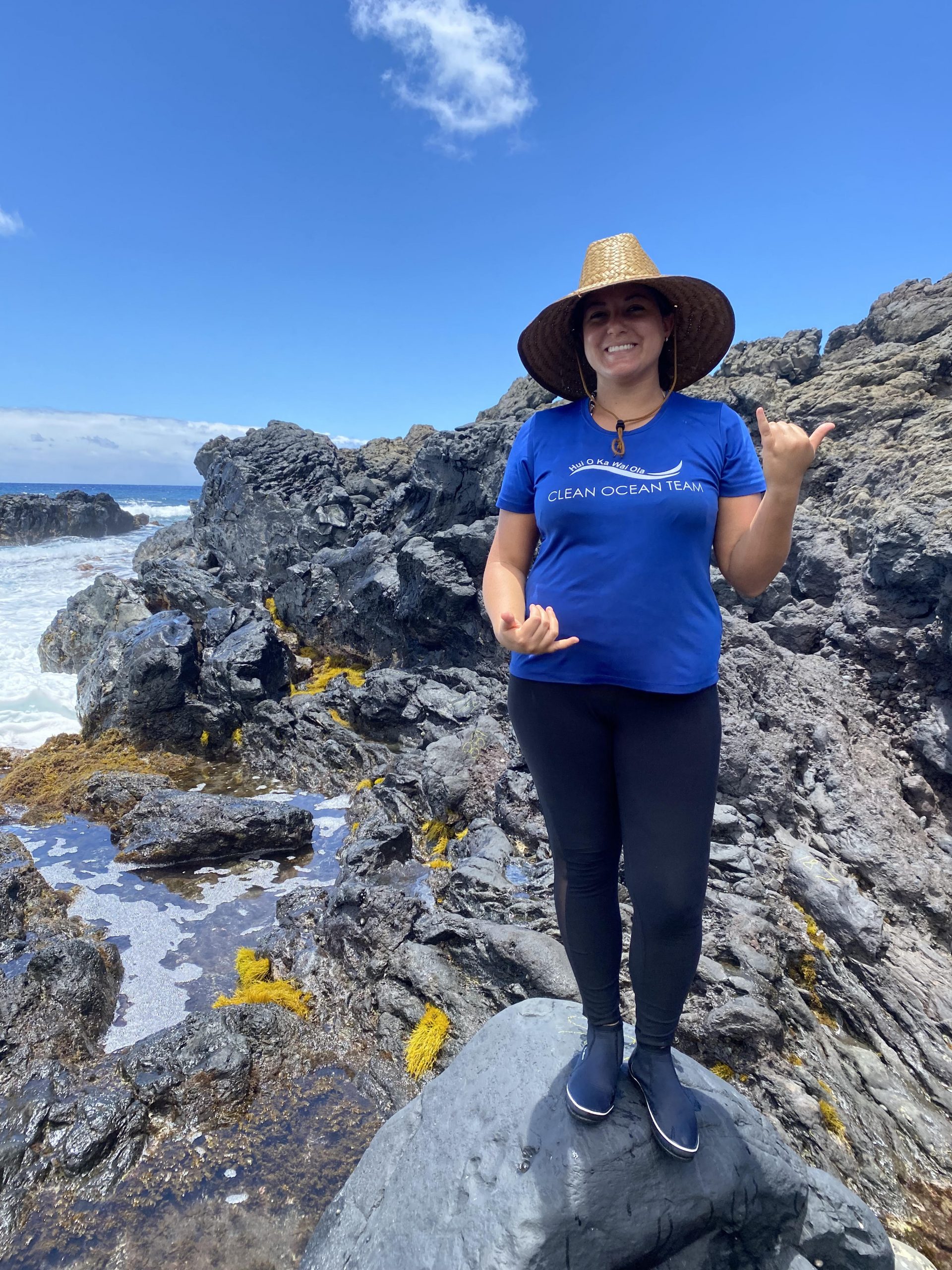
KIHEI, HI — Every three weeks year-round, more than 20 Maui residents leave their homes in the early morning hours to help monitor the ocean water quality along the coasts of South and West Maui.

Carrying portable lab equipment in their cars, they work in small teams, wading knee deep into the ocean to gather water samples. Inital testing is completed in their cars, with additional testing taking place at indoor labs and at the University of Hawai‘i Manoa.

This unique volunteer-based program known as Hui O Ka Wai Ola (“Association Of The Living Waters”) has been gathering data in this way for five years, including through most of the Covid-19 pandemic.

What are they discovering about Mauiʻs coastal waters?

Learn more about this community-based effort and its findings at a free Zoom presentation on Wednesday, November 3 at 5:30 pm, hosted by Maui Nui Marine Resource Council as part of its “Know Your Ocean Speaker Series.”

The presentation will be conducted by Tiara Stark, Senior Team Lead of the Hui O Ka Wai Ola Program. Stark is responsible for overseeing all of the Hui O Ka Wai Ola water quality monitoring tasks and regularly accompanies the volunteers on their monitoring expeditions. She will describe the coastal water quality trends that Hui O Ka Wai Ola has identified, and explain how these findings are helping to drive watershed management actions in our community.

Starkʻs presentation will include a snapshot of the findings at each of the projects’ 29 monitoring locations, so that attendees will be able to learn the latest about ocean water quality at their favorite beaches.

Stark notes that almost all of the 29 locations where Hui O Ka Wai Ola monitors ocean water quality are failing to meet State of Hawai‘i Department of Health standards.

“This is frustrating to our community, because we all want clean ocean water for our shorelines,” says Stark. “But with all of the data weʻve been gathering, weʻve acquired important information about whatʻs likely happening upslope from the ocean in our watersheds thatʻs creating the problems that weʻre seeing.”

“The data weʻve gathered will help shape better management strategies for our watersheds with the aim of achieving cleaner ocean water to benefit our coral reefs, our nearshore fish populations and marine wildlife, and the people of Maui County who love being in and around the ocean,” says Stark.

Hui O Ka Wai Ola was co-founded in 2016 through a partnership of Maui Nui Marine Resource Council, The Nature Conservancy, and West Maui Ridge to Reef Initiative.

The three organizations worked closely with the State of Hawai‘i Department of Health Clean Water Branch to establish consistent protocols that would ensure that the Hui O Ka Wai Ola data would be readily accepted for reports by county, state and federal agencies, including the U.S. Department of Environmental Protection.

Maui Nui Marine Resource Council, The Nature Conservancy, and West Maui Ridge to Reef Initiative continue to manage the program together.

Learn more about Hui O Ka Wai Ola and how you can volunteer at www.huiokawaiola.com.


Presenter Tiara Stark


Free Talk “Spying on Spinners: What We Can Learn From Listening” Focuses on Study of Spinner Dolphins of Maui, Moloka‘i, Lāna‘i, and the ‘Au‘au channel

in /by

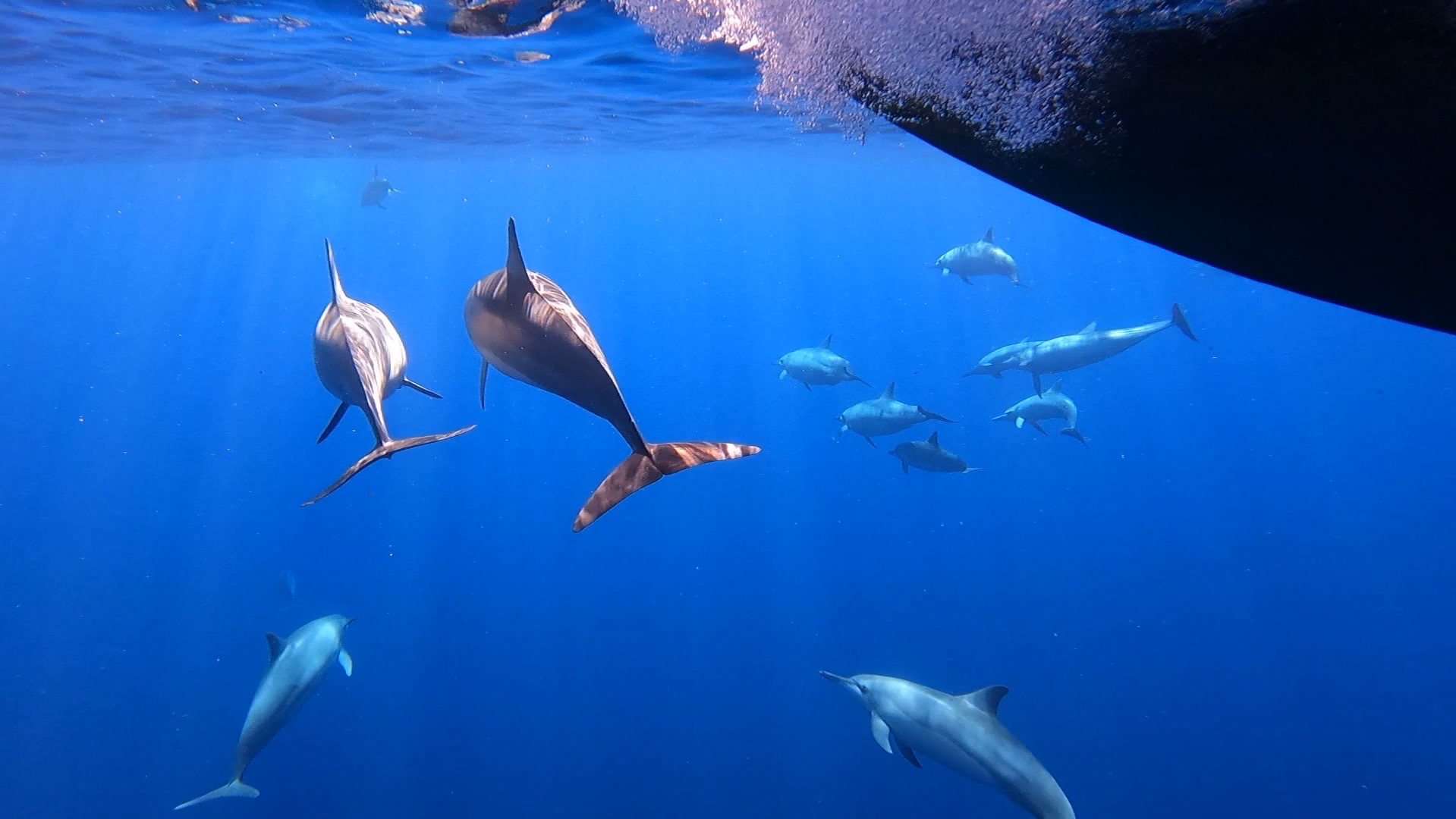
KIHEI—  A free presentation called “Spying on Spinners: What We Can Learn from Listening” on Wednesday, Oct. 13 at 5:30 p.m. via Zoom will take a look at research conducted in the Maui Nui region (Maui, Moloka‘i, Lāna‘i and the ‘Au‘au Channel) that listened to spinner dolphins to learn more about their behaviors.  Reserve your spot. 

The presentation is part of Maui Nui Marine Resource Council’s monthly Know Your Ocean Speaker Series.

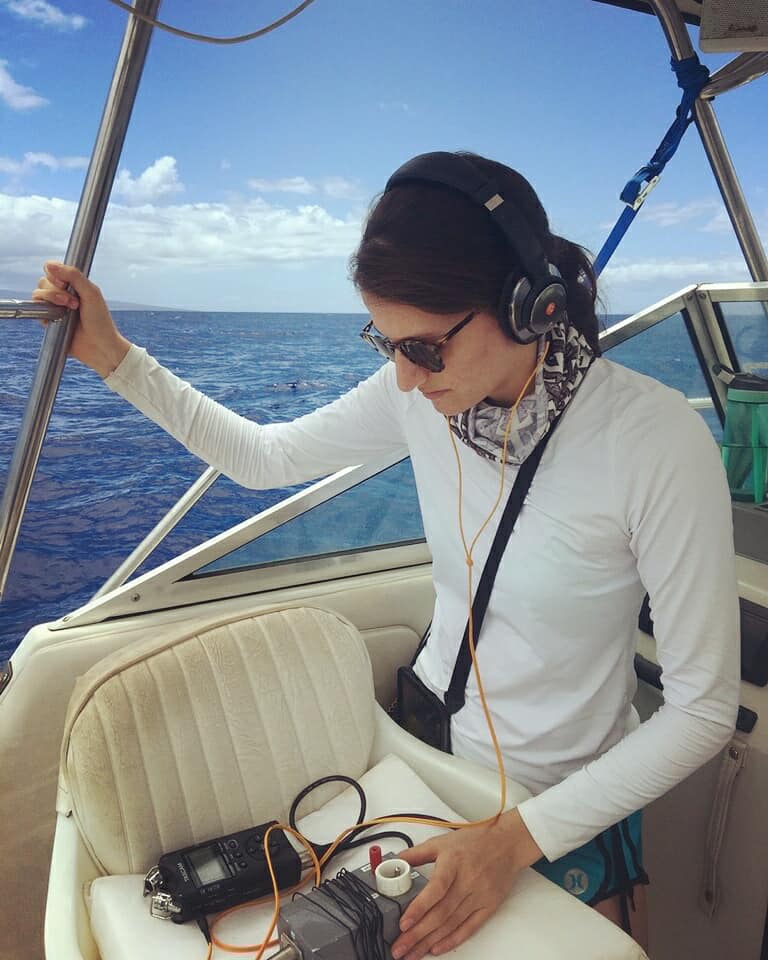
Megan McElligott, a fourth-year doctoral candidate at the University of Hawaiʻi at Mānoa in the Marine Biology Graduate Program, will be the guest speaker. She will discuss her recent work for her master’s thesis, titled “Investigating Spinner Dolphin (Stenella longirostris) Occurrence and Acoustic Activity in the Maui Nui Region” which was recently published in Frontiers in Marine Science. 

She will discuss how the acoustic recordings in her study confirmed that spinner dolphins use Mānele Bay and Honolua Bay for their daily resting behavior, as well as their use of the ʻAuʻau channel for resting.

“Hawaiian spinner dolphins rest during the day in the islands’ coastal waters where they are susceptible to human disturbance,” reports McElligott. She notes that spinner dolphins are nocturnal and hunt in offshore waters at night. During the day, they use areas close to shore to socialize, nurture their young, shelter from predators, and rest in preparation for nightly hunting.

The goal of McElligott’s research is to help wildlife managers determine the best ways to protect spinner dolphins from human disturbance.

McElligott’s research was one of the studies examined by NOAA Fisheries leading up to their new rule finalized on September 28, 2021  that prohibits swimming with, approaching, or remaining within 50 yards of a Hawaiian spinner dolphin. The rule applies to any vessel, person, or object (including all boats, canoes, stand-up paddleboards, drones, or any other means) that is within 2 nautical miles from shore in the main Hawaiian Islands and in designated waters bounded by the islands of Lāna‘i, Maui, and Kahoʻolawe. This final rule will officially be in effect on October 28, 2021, 30 days after it was published in the Federal Register. Learn more about this new law and its exceptions at https://www.fisheries.noaa.gov/feature-story/new-regulation-protects-hawaiian-spinner-dolphins-against-disturbance.

McElligott’s study was conducted using a combination of passive acoustic monitoring and vessel surveys to document spinner dolphin occurrence and movements. Bottom-moored acoustic recorders were deployed at eight locations in Maui Nui, and at one previously established resting bay off west O‘ahu for comparison. The amount of whistles, clicks, and burst pulses at each location was quantified and averaged by the hour of the day.

“What we observed in Maui Nui is different from what we see off Oʻahu and Hawaiʻi island,” says McElligott. “I will also talk about what we aim to investigate with our current data collection efforts in Mānele, Hulopoʻe, and Honolua.”

To learn more this species’ behavior and McElligott’s research, tune in to Maui Nui Marine Resource Council’s “Know Your Ocean Speaker Series” on Oct. 12 at 5:30 p.m. via Zoom.
These monthly virtual events are supported by the County of Maui Mayor’s Office of Economic Development.|

The event’s emcee will be Darla Palmer-Ellingson, local radio show host of the public affairs program, Island Environment 360 Maui’s only commercially broadcast public affairs show on environmental and related Hawaiian cultural topics, aired on the stations of H-Hawaii Media.

NOAA Fisheries is also proposing to establish time-area closures to reduce disturbance in five nearshore areas designated as essential daytime habitats for spinner dolphins. This regulation would prohibit entering restricted areas between 6 a.m. and 3 p.m. daily in parts of Kealakekua, Hōnaunau, Kauhakō (Ho‘okena), and Makako Bays on Hawai‘i Island, and La Perouse Bay on Maui.

Since this is a proposed rule, a decision on whether to finalize the rule will not happen until after the public has an opportunity to comment. The public comment period for the proposed time-area closures will be open until December 27, 2021, 90 days after publication in the Federal Register. To learn more, visit https://www.fisheries.noaa.gov/action/proposed-rule-establish-time-area-closures-hawaiian-spinner-dolphins-essential-habitats-main

Reserve your spot for this presentation.


Free Presentation: “The Palau Pledge and Visitor Fee: A Concept to Help Maui Address Over-tourism?”

in /by

KIHEI— The children of Palau have written a passport pledge for every arriving visitor to sign, holding them ecologically and culturally responsible while touring the island and as to protect and preserve one of the world’s biggest marine protected areas. Would you take the Palua Pledge?

The public is invited to a free presentation called “The Palau Pledge and Visitor Fee: A Concept to Help Maui Address Over-tourism?” on Wednesday, September 1 at 5:30 p.m. via Zoom. Palau Legacy Project co-founder Jennifer Koskelin Gibbons and Project Management Coordinator at Friends of Palau National Marine Sanctuary, Adora Nobuo, will be the guest speakers for the next “Know Your Ocean Speaker Series,” which is hosted every month by the Maui Nui Marine Resource Council. 

Reserve a spot at the free presentation by clicking here

The presenters will discuss the effects of over-tourism and ecotourism on marine life, share information about the Palau Pledge and environmental fee, how they work to support the Palau National Marine Sanctuary and the impacts they’ve seen, and future plans to further support the PNMS. 

In addition to being the co-founder of the internationally acclaimed and award winning Palau Pledge, Gibbons also directed and guided the Palau National Marine Sanctuary Campaign through to its successful outcome when the PNMS act was signed into law in 2015. 

Palau now has the largest percentage of protected marine territory in the world. It’s also the first nation on earth to change its immigration laws for the cause of environmental protection.

Gibbons has more than a decade of strategic marketing and project management experience in New York, Guam and Palau. Most recently Jennifer held the position of executive director of the Palau Chamber of Commerce where she spearheaded the first independent presidential debates and economic symposium to develop better collaboration between the public and private sectors.

Nobuo joined the Friends of the Palau National Marine Sanctuary and Palau Pledge team in 2019. Currently, she is working with businesses to make sustainable business practices a habit through a program soon to launch as the Palau Business Pledge.

She also works with in-school programs and speaks at community engagements to promote Palau Pledge that supports the PNMS and Palau’s conservation ethos. Adora’s work experience includes being at the Palau National Congress and working with the passage of the PNMS law, working as the Executive Director for the Palau Chamber of Commerce promoting the interests of the private businesses and as a Public Relations Manager and counselor at the Palau Community College.

The Palau National Marine Sanctuary went into effect on Jan. 1, 2021, closing off 80 percent of Palau’s Exclusive Economic Zone (EEZ) most extractive activities like fishing. The remaining 20 percent of Palau’s EEZ is designated as a Domestic Fishing Zone that will support food security and bring more economic benefits to the people of Palau.

Protecting the cultural and natural resources of Palau includes managing tourism and educating visitors, implementing conservation projects, and paving a positive future for Palau children. About 543,412 pledges have been taken.

To learn more about the Palau Pledge, tune in to Maui Nui Marine Resource Council’s “Know Your Ocean Speaker Series” on Sept. 1 via Zoom.

These monthly virtual events are supported by the County of Maui Mayor’s Office of Economic Development.

The event’s emcee will be Darla Palmer-Ellingson, local radio show host of the public affairs program, Island Environment 360 Maui’s only commercially broadcast public affairs show on environmental and related Hawaiian cultural topics, aired on the stations of H-Hawaii Media.

To reserve your spot at this free Zoom webinar, please visit bit.ly/PalauPledgeWebinar.

Free Presentation “Saving a Species: “Rehabilitation as a Conservation Tool for Hawaiian Monk Seals” Offered on Weds., Aug. 4

in , /by

Hawaiian monk seals are endangered, with fewer than 1,400 animals left on earth — yet they have recently been in the news, as videos and photos have surfaced showing the seals falling victim to harassment by visitors who get too close or attempt to touch them, sometimes for social media content. Learn more about Hawaiian monk seals at a free presentation called “Saving a Species: Rehabilitation as a Conservation Tool for Hawaiian Monk Seals” on Wednesday, August 4 at 5:30 pm HST via Zoom where two special guests from The Marine Mammal Center’s dedicated hospital for monk seals, Ke Kai Ola, on Hawai’i Island will highlight their conservation and outreach work.

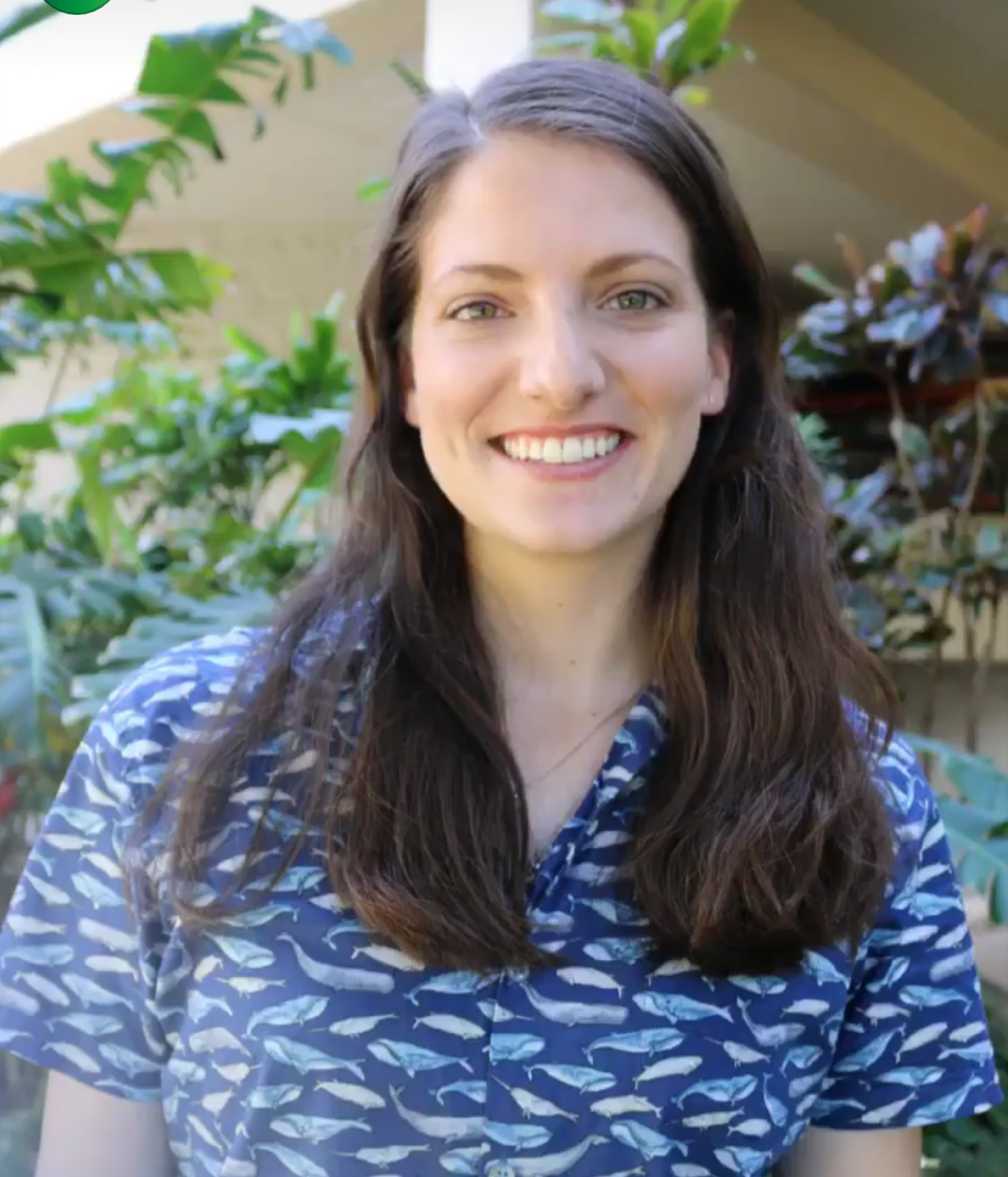
The Center’s Lauren Van Heukelem, Response and Operations Coordinator, and Dr. Sophie Whoriskey, Hawaiian Monk Seal Conservation Veterinarian, will speak at this event, part of the “Know Your Ocean Speaker Series” which is hosted every month by Maui Nui Marine Resource Council.

Researchers estimate that about 30 percent of Hawaiian monk seals are alive today due to conservation efforts led by the National Oceanic and Atmospheric Administration (NOAA) and partners like the Center. The mission of The Marine Mammal Center focuses on global ocean conservation through rescue and rehabilitation, scientific research, and education.

Reserve a spot at the free presentation by visiting https://www.bitly.com/monksealwebinar

“We are hosting this special presentation with the awareness that public education is needed to help protect our Hawaiian monk seals from harassment or injury,” says Anne Rillero, Communications Manager at Maui Nui Marine Resource Council. “These animals are among the most endangered seals on earth.”

Dr. Whoriskey received her bachelor’s degree from Dalhousie University in Nova Scotia, Canada, and her veterinary medical degree from the Atlantic Veterinary College. She first came to The Marine Mammal Center in 2015 as the intern veterinarian in marine mammal medicine and pathology where she spent two years training with marine mammal medicine experts.

In 2020, she returned to the Center as a full-time Hawaiian Monk Seal Conservation Veterinarian. She leads the Center’s Hawaiʻi animal care operations, dedicated to the rehabilitation, conservation and research of the endangered Hawaiian monk seal.

Whoriskey has extensive field experience in remote and harsh environments and has participated in research projects from Alaska to Antarctica, all with a mission of advancing the global body of knowledge on marine mammal health.

Born and raised in Hawaiʻi, Van Heukelem received both her bachelor’s and master’s degrees from the University of Hawaiʻi at Mānoa in Marine Biology. She has participated in many research studies both in Hawaiʻi and the Northern Mariana Islands on various topics.

As the Response and Operations Coordinator, Van Heukelem oversees the monitoring of the endangered Hawaiian monk seal population on Hawaiʻi Island. She runs the Center’s 24-hour hotline for reporting seal sightings around the island and coordinates outreach and population assessments on a daily basis.

“On Hawai’i Island, we operate Ke Kai Ola, the only hospital dedicated to Hawaiian monk seals, providing support for monk seals found throughout the Hawaii archipelago,” says Van Heukelem. “Utilizing a 24-hour response hotline and a variety of education and outreach programs, we aim to advance conservation practices that empower our local community to protect this rare species.”

This presentation will focus on the center’s mission and work over the past 45 years in California and Hawaiʻi. Since opening Ke Kai Ola in 2014, The Marine Mammal Center has treated 36 Hawaiian monk seals and supports the work of NOAA’s Hawaiian Monk Seal Research Program by providing the only long-term care facility for this endangered animal.

These monthly virtual events are supported by the County of Maui Mayor’s Office of Economic Development.

The event’s emcee will be Darla Palmer-Ellingson, local radio show host of the public affairs program, Island Environment 360 Maui’s only commercially broadcast public affairs show on environmental and related Hawaiian cultural topics, aired on the stations of H-Hawaii Media.

To reserve your spot at this free Zoom webinar, please visit https://www.bitly.com/monksealwebinar


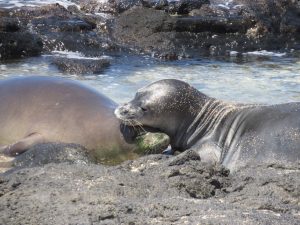
Eleu (PP08), a weaned female Hawaiian monk seal pup rescued from Papahānaumokuākea Marine National Monument Refuge, rests during rehabilitation at The Marine Mammal Center’s Ke Kai Ola hospital and visitor center in Kailua-Kona, HI. The young female seal’s name means one that is active, alert, energetic, lively and nimble. Credit Lauren Van Heukelem © The Marine Mammal Center, NOAA Permit #18786-03


Hawaiian monk seals RK26 (on left) and RL50 (on right) rest on a beach. As the world’s largest marine mammal hospital, The Marine Mammal Center actively monitors endangered monk seals that frequent Big Island beaches to check on their condition, but its experts do not serve in a law enforcement capacity. Credit Sheila Latta © The Marine Mammal Center

Free July 7 Zoom Presentation by Dr. Craig Downs and Hawaii Senator Mike Gabbard: “Education vs. Enforcement: Next Steps Beyond the Enactment of Hawaii’s Sunscreen Law”

in /by

KIHEI, HI— Hawaii’s ban on sunscreens containing the reef-harming chemicals oxybenzone and octinoxate went into effect on January 1, but is the law effective in protecting our local coral reefs and marine animals as intended? Is the ban being enforced? What’s the latest scientific evidence about the chemicals that are replacing these two ingredients in some brands of sunscreen? Are new laws needed?

Get the answers to these important questions on Wednesday, July 7 at 5:30 p.m. via a free Zoom presentation featuring special guest speakers: Dr. Craig Downs, whose groundbreaking research educated the world about sunscreen chemicals and their role in coral reef decline; and Hawaii Senator Mike Gabbard, who authored the legislation that resulted in Hawaii’s ban on the sale of sunscreens that contain the chemicals oxybenzone and octinoxate.

The presentation titled “Education vs. Enforcement: Next Steps Beyond the Enactment of Hawaii’s Sunscreen Law” is sponsored by the County of Maui Mayor’s Office of Economic Development and hosted by Maui Nui Marine Resource Council as part of the organization’s “Know Your Ocean Speaker Series.”

This event is free, but advanced reservations are required. To reserve your spot, please visit https://bit.ly/SunscreenWebinar.

Downs graduated from Hiram College with a B.A. in philosophy and biology, received his M.Sc. from Syracuse University, and received his Ph.D. from the University of Hawaii in cell and molecular biology. He has published over 50 scientific papers and a number of book chapters in scientific textbooks, and is the co-editor of the CRC press veterinary book, Diseases of Corals, as well as founded a number of companies and nonprofits relating anywhere from animal welfare to environmental conservation and exploration.

Downs has held positions as research professor at University of Hawaii’s School of Medicine and Sweet Briar College. He is currently an invited professor at Sorbonne University (France) and is the Executive Director of Haereticus Environmental Laboratory, a non-profit scientific organization dedicated to increasing the scientific, social and economic knowledge of natural environmental habitats in order to better conserve and restore threatened environmental habitats and resources.

Gabbard, who has represented District 20 since 2006, which includes Kapolei, Makakilo, and portions of Kalaeloa, Waipahu, and Ewa, has authored 54 bills that became law relating to energy efficiency, renewable energy, endangered species protection, industrial hemp, the environment, public safety, and more.

One of those bills that became law in 2018, SB 2571, is the ban of sale or distribution in the state of any sunscreen that contains oxybenzone or octinoxate, or both. Last session, Gabbard introduced SB 366, which would ban the sale, offer of sale, or distribution in Hawaii of any sunscreen that contains two more chemicals, avobenzone or octocrylene.

The speakers plan to address whether or not sunscreen pollution is a symptom of unsustainable tourism and coastal development, how we get visitors and residents to comply with the new sunscreen law, and who is responsible for enforcing it.

This panel will also provide information and tips on how you can help to protect the marine environment.

Maui Nui Marine Resource Council’s “Know Your Ocean Speaker Series” events are held monthly via Zoom. Support for these events is provided by the County of Maui Mayor’s Office of Economic Development.

The virtual event’s emcee will be Darla Palmer-Ellingson, local radio show host of the public affairs program, Island Environment 360 Maui’s only commercially broadcast public affairs show on environmental and related Hawaiian cultural topics, aired on the stations of H-Hawaii Media.

To reserve your spot at this free Zoom webinar, please visit https://bit.ly/SunscreenWebinar.

Free presentation: “Purifying Kihei’s Wastewater with 
Green Infrastructure as an Alternative to Injection Wells”

in /by

Three new low cost, low energy, pilot green infrastructure systems that will be constructed in Kihei this summer to purify water coming out of the Kihei Wastewater Reclamation Facility will be the topic of a free Zoom presentation by Paul Sturm, Executive Director of Ridge to Reefs, on Wednesday, June 9 at 5:30 pm. This new system will harness the power of plants, soil and microbial activity to purify wastewater to approach drinking water standards, dramatically expanding its potential uses and reducing the need for disposal via injection wells.

This talk will be presented via Zoom as part of Maui Nui Marine Resource Council’s monthly “Know Your Ocean Speaker Series.” These monthly virtual events are supported by the County of Maui Mayor’s Office of Economic Development.

To reserve your spot, please visit  https://bit.ly/KiheiWastewater.

Sturm will be presenting plans for the three new Kihei Wastewater Disposal Pilot projects that Ridge to Reefs will construct this summer with support from support from National Fish and Wildlife Foundation and assistance from John Astilla, founder and owner of Sunshine Vetiver Solutions and construction support from Ali’i Farm Service. The pilot projects will be aesthetically pleasing and odor-free, bearing a closer resemblance to gardens rather than treatment facilities.

“Through natural processes, we will reduce the amount of wastewater that needs to be disposed of; any remaining wastewater will come as close as possible to drinking water standards, expanding opportunities for its re-use,” says Sturm. “Our Ridge to Reefs Kihei Wastewater Disposal Pilot will be up and running within two months, ready to demonstrate the effectiveness of Ridge to Reef’s nature-based solutions as viable, affordable alternatives to groundwater injection disposal.”

“We believe this system has the potential to reduce land-to-sea pollution from wastewater, to benefit Maui’s local coral reefs,” says Sturm.

Ridge to Reefs (RTR) is a nonprofit 501(c)(3) formed in 2011 to help protect and restore coastal and coral reef ecosystems by reducing land-to-sea pollution with green infrastructure. The organization uses natural methods and innovative engineering to solve pressing environmental and social problems. Their expertise includes treating polluted storm and wastewater by establishing green infrastructure solutions such as constructed wetlands, rain gardens and bioreactors. Using proven natural methods and state-of-the-art engineering, Ridge to Reefs has installed systems in Maryland, Virginia, Puerto Rico, Palau and American Samoa. To learn more, visit https://www.ridgetoreefs.org/

The event’s emcee will be Darla Palmer-Ellingson, local radio show host of the public affairs program, Island Environment 360 Maui’s only commercially broadcast public affairs show on environmental and related Hawaiian cultural topics, aired on the stations of H-Hawaii Media.

“As a nonprofit working for healthy coral reefs and clean ocean water, Maui Nui Marine Resource Council is extremely proud to host this presentation, as our community works on solutions to reduce pollution to our nearshore waters, to help our coral reefs survive,” says Mike Fogarty, Executive Director of Maui Nui Marine Resource Council. “We are happy to see this innovative science-based pilot project come to Kihei, to use natural materials to better treat wastewater and reduce its pollution impacts on our ocean waters.”

To reserve your spot at this free Zoom webinar, please visit https://bit.ly/KiheiWastewater.

About Paul Sturm: 


Paul founded Ridge to Reefs (non-profit organization) in 2011 to support local creation and implementation of watershed plans primarily in the Chesapeake Bay and in coral reef watersheds – with the goal to achieve tangible environmental outcomes.

Paul and his team are currently testing a low cost, low energy, nature-based alternative septic system with University of Hawaii and have constructed similar systems in Puerto Rico and American Samoa. He has worked on innovative methods to control sediment transport using vegetation and stormwater using plants and biochar amendments. Recent efforts have also focused on improving food security, soil health and agricultural resilience in the face of climate change.

Paul is a former Center for Watershed Protection Director/Biologist and spent 11 years working on watershed plans, implementation projects and code changes in the Chesapeake Bay watershed and around the country. Prior to that, he spent 6 years researching the effectiveness of implementation of agricultural and urban BMP’s and developed methods to track and target pollution source areas in agricultural watersheds.

Paul participated in the development of the EPA Sponsored Illicit discharge detection manual. He directly assisted the development of field assessment protocols for the Outfall Reconnaissance Inventory (ORI) and the development of the field form as well as the water chemistry testing protocol that was developed for the manual. The manual was produced for EPA and distributed to officials in all 50 states to help guide NPDES compliance methods for Phase I and Phase II communities. Paul also helped conduct a webcast for EPA that included over 1000 attendees. Paul conducted the field portion of the training where videos of the outfall reconnaissance inventory methods were presented for several outfalls. Paul also answered technical questions from participants in the webcast.

Paul has contributed to more than 20 publications and has presented more than 60 lectures around the U.S., Canada and the Caribbean. These include participation as a trainer at four National Watershed Institutes, invited speaker at four US Coral Reef Task Meetings in Washington, D.C. and San Juan, Puerto Rico, three National River Rallies, three Army Corp of Engineers Water in the Watersheds Courses in Davis, CA and a Coastal Zone Management Course for the Institute of Marine Affairs in Trinidad and Tobago. Paul has led trainings in stream assessment, stormwater retrofitting, erosion, code change, illicit discharge detection and elimination, and sediment and erosion control.


Public Invited to Free Talk on Conserving Hawaii’s Coral Reefs through Sea Urchin Aquaculture

in /by

Want to learn about how to conserve Hawaii’s corals through sea urchin aquaculture? The public is invited to a free presentation called “Aquaculture of Native Sea Urchins to Control Invasive Macroalgae” on Wednesday, May 12 at 5:30 p.m. via Zoom.

David L. Cohen of the State of Hawaii Dept. of Land and Natural Resources Division of Aquatic Resources (DAR) will be the guest speaker for the next “Know Your Ocean Speaker Series,” which is hosted every month by the Maui Nui Marine Resource Council.

Reserve a spot at the free presentation at https://bit.ly/UrchinWebinar 

Cohen manages the sea urchin hatchery on Oahu for DAR and the Research Corporation of the University of Hawaii’s Pacific Cooperative Studies Unit (PCSU). He holds a Bachelor of Science in General Biology from Connecticut State University.

From 1985 to 1992, Cohen worked in shellfish aquaculture and as a commercial oysterman in New England. Since moving to Hawaii, he has grown food fish and shrimp and worked with captive bred ornamental fish.

In 2010 he started work with PCSU and DAR developing hatchery methods to grow native sea urchins to control non-native invasive macroalgae. The hatchery continues to produce urchins in support of coral restoration, and Cohen said he continues to learn about the ways in which “aquaculture can produce food, enrich our lives, and help restoremthe environment.”

An overgrowth of seaweed can block sunlight that corals need to live, making it difficult for the reef and other marine life to survive, which is why projects like these are essential.

The Hawaiian collector sea urchins, which are raised in DAR’s hatchery, are known for being natural “algae-munchers.” Raising urchins is a long process— It takes about four months for tiny larvae to grow to the size needed before being transferred to Kane‘ohe Bay.

The first step is for divers to remove mass amounts of invasive algae with an underwater vacuum that sucks the seaweed up onto a barge, and then to place juvenile sea urchins on the corals so they can eat the algae in areas that the vacuum couldn’t reach.

DAR, NOAA Fisheries, and the U.S. Fish and Wildlife Service have been working together to clean up the reef in areas at Kane’ohe Bay since 2011.

To learn more about the aquaculture process of urchin nurseries, tune in to Maui Nui Marine Resource Council’s “Know Your Ocean Speaker Series” on May 12 via Zoom. These monthly virtual events are supported by the County of Maui Mayor’s Office of Economic Development.

The event’s emcee will be Darla Palmer-Ellingson, local radio show host of the public affairs program, Island Environment 360 Maui’s only commercially broadcast public affairs show on environmental and related Hawaiian cultural topics, aired on the stations of H-Hawaii Media.

To reserve your spot at this free Zoom webinar, please visit https://bit.ly/UrchinWebinar

Free Presentation on “Growing Up Fast: A Land-Based Coral Nursery for Restoring Hawaii’s Reefs” Offered During Earth Week

in /by


KIHEI, HI— In honor of Earth Day and Earth Week, the public is invited to a free presentation on “Growing Up Fast: A Land-Based Coral Nursery for Restoring Hawaii’s Reefs” on Zoom on Wednesday, April 21 at 5:30 pm.

The presenter will be coral specialist Christina Jayne of the Dept. of Land and Natural Resources Division of Aquatic Resources Hawaii Coral Restoration Nursery. The talk is hosted by Maui Nui Marine Resource Council, as part of its monthly “Know Your Ocean Speaker Series.”

Coral reef restoration is the process of raising new corals — often from fragments of coral salvaged from the wild — in a protected, nurturing environment, then transplanting them out into the ocean to grow and form new reefs. When combined with efforts to improve coral reef habitat, it is viewed as a way to help coral reefs survive the stresses of climate change and warming ocean waters.

For the past two years, Jayne has worked for the Dept. of Land and Natural Resources Division of Aquatic Resources as a coral restoration specialist at the Hawaii Coral Restoration Nursery on Oahu with director David Gulko. Before moving to Honolulu, she earned her bachelor’s in Marine Biology from the University of California San Diego and her masters from Scripps Institution of Oceanography at UC San Diego.“Hawaii’s reefs are extremely unique and Hawaiian corals have some of the slowest growth rates in the world, which is why the State has taken an innovative, land-based approach to coral restoration,” notes Jayne.
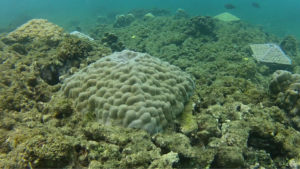
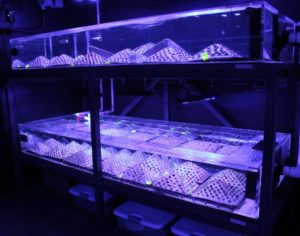

Hawaii’s first state coral nursery, which is managed by DAR, opened in 2016 at the Anuenue Fisheries Research Center on Oahu.

Corals are brought to the Coral Restoration Nursery and are rapidly grown using a series of aquarium-based techniques that help them to generate large coral colony modules in a fraction of the time it would take naturally, which can be out-planted back on the reef.

The nursery typically uses corals for out-planting from harbors because of their lower ecological value compared to corals from natural areas, says DAR, and they may also be more resilient to any challenges and environmental changes.

University of Hawaii Sea Grant researchers are also conducting experiments at the Anuenue facility to understand different environmental conditions, like light and water movement, that are useful for growing corals quickly. Creating the best environment for the corals to grow rapidly will help to restore local reefs after disturbance events such as bleaching or physical damage.

Maui Nui Marine Resource Council’s “Know Your Ocean Speaker Series” events are held monthly via Zoom. Support for these events is provided by the County of Maui Mayor’s Office of Economic Development.

The virtual event’s emcee will be Darla Palmer-Ellingson, local radio show host of the public affairs program, Island Environment 360 Maui’s only commercially broadcast public affairs show on environmental and related Hawaiian cultural topics, aired on the stations of H-Hawaii Media.

To reserve your spot at this free Zoom webinar, please visit https://bit.ly/coralnurserywebinar