Blog Archives: News Releases

Maui Nui Marine Resource Council Receives $300,000 in Grant Funding from National Fish and Wildlife Foundation

in /by

KIHEI – Maui Nui Marine Resource Council will receive $300,000 in grant funding from the National Fish and Wildlife Foundation (NFWF). This funding is part of $1.5 million in grants to support efforts to improve the health and resilience of coral reefs in Florida, Hawai‘i, Guam and Puerto Rico. MNMRC is one of eight organizations to receive funding.

The grants were awarded through the Coral Reef Conservation Fund (CRCF), a 20-year conservation partnership between NFWF and NOAA’s Coral Reef Conservation Program (CRCP), with major funding for a third year from Aramco Americas.
The funding awarded to MNMRC will support NFWF’s three primary focus areas to help protect functioning and resilient coral reef system in an increasingly urbanized and changing coastal environment: 

  • Increasing the resiliency of ecologically important reefs by reducing human-based threats like land-based sources of pollution and overfishing 
  • Promoting active restoration efforts to restore degraded reefs 
  • Investing in innovation and tools for managers to increase their capacity and decision-making power

Specifically, MNMRC will implement recommendations in the Southwest Maui Watershed Plan to reduce nonpoint source pollutants including chemicals, sediment and excess nutrients that affect coral health in Ma’alaea Bay.

“The projects supported by this grant will help the Kihei reef tract from both on land and in the water. It’s a combination of preventative actions, mitigation, and long-term monitoring,” said Amy Hodges, Programs Manager for MNMRC.

Additionally, MNMRC has been working with Kaonoulu Ranch on the slopes of Haleakala to reduce erosion and sedimentation caused by feral axis deer. The ranch has installed over eight miles of fencing to control movement of the deer for harvest, and this project will add an additional 1,800 feet, 1/3rd of a mile, of fencing to the project. With the NFWF grant, MNMRC will also explore new bio-friendly fertilizers in the Hapapa Watershed to enhance the resiliency of the Kihei reef tract by reducing pollutants from land-based run-off.

Downslope of the ranch, MNMRC will work with stakeholders to plan the removal of sediment from Kulanihakoi Gulch, a major source of run-off and sedimentation that poses threats to the Kihei reef tract. The project aims to remove about 650 cubic yards of sediment. This will help reduce Kīhei’s coastal stormwater flooding, benefitting wetland bird habitat, and protecting coral reefs and marine wildlife by reducing sediment runoff into Kīhei’s coastal waters.

In a similar vein, MNMRC’s Reef Friendly Landscaping program will also benefit from this grant. This program encourages commercial property owners to switch from traditional landscaping practices to organic solutions, reducing the use of harmful chemicals that can make their way into nearshore waters.

“Maui Nui Marine Resource Council is honored to receive this grant,” said Michael Fogarty, executive director of MNMRC. “We’ve been working around Ma’alaea for a while now, and this funding will greatly enhance our ability to protect the bay while exploring new projects in South Maui.”

The press release issued by the National Fish and Wildlife Foundation announcing the grants can be found here

About Maui Nui Marine Resource Council

Maui Nui Marine Resource Council (MNMRC) is a Maui-based non-profit organization working for clean ocean water, healthy coral reefs and a restoration of abundant native fish for the islands of Maui County. MNMRC is recognized for its ability to work with the community to plan, fund, enact and manage culturally appropriate, science-based solutions to serious problems undermining nearshore ocean water quality and threatening local coral reefs. To learn more, visit www.mauireefs.org.
Pilot Project to Use Maui-made Biological Soil Amendment to Improve Turf Landscapes and Reduce Chemical Use Shows Promising Initial Results

in /by

KAHULUI, HI — A pilot project to evaluate the benefits of using compost tea on turf landscapes at three sites on Maui is showing promising results – and may ultimately help local landscapers and property owners reduce their need for synthetic fertilizers, herbicides, pesticides and irrigation, reports Maui Nui Marine Resource Council (MNMRC). The project is conducted by MNMRC in collaboration with Environmental Solutions Maui (ESM), as part of MNMRC’s Reef Friendly Landscaping project.

The biological soil amendment, called SoilThrive™, is a microbe- and nutrient-rich liquid produced at ESM in Upcountry Maui by brewing microbe-rich compost in water. The amendment is applied to soils and plant surfaces to rebuild healthy soil biology, which results in improved soil health, an increase in plant-available nutrients and soil structure, reduced compaction, and reduced disease.

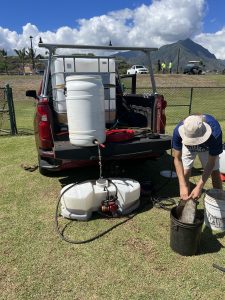
SoilThrive™ preparation for application.

Maui Nui Marine Resource Council reached out to the County of Maui Department of Parks and Recreation, the Wailea Community Association and the Makena Golf and Beach Club to establish three test sites where the soil amendment would be applied to turf landscapes at no charge to the property owner. The three sites where the compost tea has been applied include a small ball-field at the county-owned Keopuolani Park in Kahului; a section of a turf field used for event parking in Wailea owned by Wailea Community Association; and three tee boxes on the South Course of the Mākena Golf and Beach Club.

The ESM SoilThrive™ team assessed each site’s soil health by drawing soil samples and analyzing microbial activity, and utilized the results to custom-brew the biological amendment to address the site’s soil deficiencies.

“At each site, they found that the initial soil samples showed high levels of bacteria, and little else,” said Jill Wirt, Project Manager at Maui Nui Marine Resource Council. “Healthy soil has a rich mixture of beneficial bacteria, fungi, and protozoa; most of which were lacking at each site.”

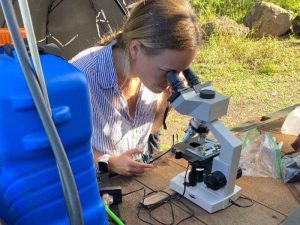
MNMRC’s Jill Wirt examines beneficial microbes in a soil sample at a site treated with SoilThrive™.

“The biological soil amendment consists of compost suspended in water with added ‘microbe food’ that is brewed through aeration over an extended period of time in order to drastically increase beneficial microbes,” explains ESM soil scientist Jonathan Klassen. The liquid is then applied via spraying within 24 hours of brewing. The solution sticks to plant and soil surfaces while permeating deep into the soil where the microbes are most effective.

“As soil health is restored, the soil can retain more water, reducing irrigation needs,” says Wirt.  “Healthy landscapes start with healthy soils, which is why we are utilizing this locally made soil amendment.”

Since the start of the pilot, the scientists at ESM have applied five rounds of the amendment to each site, allowing beneficial microbes to establish themselves and multiply. Intermediate soil samples have shown increased microbial activity and a higher fungi to bacteria ratio than nearby control areas, indicating the liquid amendment is successful in establishing soil microbiology.

While the results will be evaluated over a one- year period, the initial results are promising. Parks Beautification Manager Michael-James Mendiola comments, “Usually at this time of year [during the summer], we see patchy brown spots where irrigation doesn’t reach, but we haven’t had any issues with that so far, specifically on the field that’s being treated.”

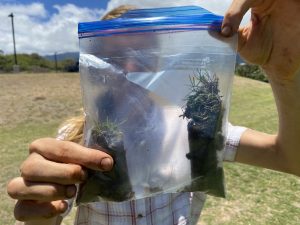
A comparison of topsoil depth between control site (left) and SoilThrive™ site (right).

“This biological soil amendment is an organic alternative that can be used holistically to replace synthetic fertilizers as well as chemical pesticides and herbicides,” said Wirt. “Synthetic fertilizers and chemical pesticides and herbicides pose a multitude of threats to coral reefs and human health.”

According to Wirt, fertilizers contribute to excess nutrient runoff causing algal blooms, while pesticides and herbicides can disrupt hormones in fish and coral causing reproductive issues. Conventional landscaping practices using harmful chemicals are also detrimental to human health, contributing to health issues such as asthma, learning disabilities, birth defects, and several types of cancer.

“Our reefs are facing a lot of stressors from global threats such as rising ocean temperatures due to climate change and pollution from land-based runoff, so it’s important we try to reduce our local impacts as much as possible,” urges Wirt. “The results of this pilot project with the liquid amendment are promising so far, especially with the potential of reduced irrigation needs – a very important benefit as Maui’s drought conditions worsen.”

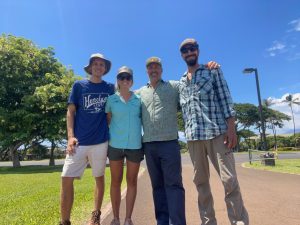
From left to right: Jonny Klassen (ESM), Jill Wirt (MNMRC), Jason Dennis (ESM), and Nick Sickles (ESM).

The pilot project will be completed in early 2023 with final soil sample results from a year of using the biological soil amendment in the place of synthetic fertilizers and chemical pesticides and herbicides.

Maui Nui Marine Resource Council is a 501(c)(3) nonprofit on Maui working toward clean ocean water, healthy coral reefs, and abundant native fish for Maui Nui. Their Reef Friendly Landscaping program also offers certifications for properties who are utilizing reef friendly landscaping practices. If you would like to be involved in this program and certified as a Reef Friendly Landscaping property, please email [email protected].

Molokini During COVID-19: Free Webinar Looks at Research Conducted at the Island During Height of the Pandemic

in /by

KIHEI – With no boats around at the one of the most popular snorkeling sites in Hawaii, Molokini thrived. At least that’s what a small team of researchers discovered when they studied the island during the height of the COVID-19 pandemic.

The public is invited to learn more about this unique study in a free webinar on September 28 at 5:30 PM HT. Researchers involved in the study will share their findings which compare Molokini during the pandemic vs past and present times. This presentation is part of Maui Nui Marine Resource Councilʻs monthly Know Your Ocean Speaker Series, sponsored by the County of Maui. Registration is free but is required in advance of the webinar. Register here: https://us02web.zoom.us/webinar/register/WN_fBY0v5QCQ_eqwAMVfYAGWg

Molokini Marine Preserve is normally visited by approximately 1,000 tourists every day. During COVID-19 when tourism was switched off and there were no tour boats and no snorkelers at Molokini, researchers had a once-in-a-lifetime opportunity to understand how human activity affects how wildlife uses the reserve.

“Many animals are afraid of humans, but since people visit Molokini every day, we didn’t know how they would use the habitat if we were absent,” said Kevin Weng, Associate Professor at the Virginia Institute of Marine Science. “Covid caused a ‘natural experiment’ that dramatically reduced human presence, allowing us to see wildlife in a more pristine system.”


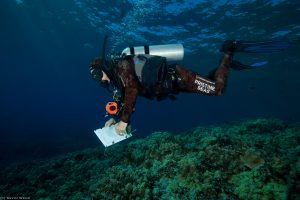
Photo by Kevin Weng

“Tourism at Molokini provides benefits to the local economy and gives people an appreciation for what a healthy marine ecosystem looks like,” said Alan Friedlander, Chief Scientist for the National Geographic Society’s Pristine Seas program. “What is needed is the right balance of tourism at Molokini so that both people and wildlife benefit from this exceptional place.”

The study was made possible by more than 55 donors who collectively contributed cash, lodging, airfare, boat use and vehicles for the four researchers working on the project. In all, more than $3,500 was raised through a fundraising effort led by Maui Nui Marine Resource Council, as well as the value of the in-kind contributions.

Led by Maui resident Russell Sparks, Aquatic Biologist, Department of Land and Natural Resources, Division of Aquatic Resources on Maui, a small team of scientists with expertise in coral reef ecology and animal movement studies in the Hawaiian Islands studied the ecosystem at Molokini for a little over a full year: from a period of COVID-19 pandemic shut down in April 2020, to a period of moderate activity resumption in November 2020 and into a full return of tourism in May of 2021.


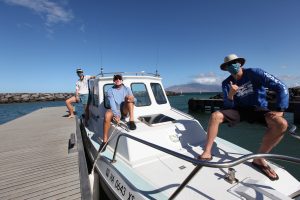
Photo by Kevin Weng

The team includes Alan Friedlander, Chief Scientist, Pristine Seas, National Geographic Society, and a researcher at the Hawaiʻi Institute of Marine Biology. Friedlander has studied Molokini extensively for nearly two decades and is the co-author of five research publications on Molokini conducted in collaboration with the Maui Division of Aquatic Resources. Other members include Kevin Weng, Associate Professor at the Virginia Institute of Marine Science, Whitney Goodell, National Geographic Fellow and marine ecologist with the Fisheries Ecology Research Lab, University of Hawaiʻi, and Laura Gajdzik, scientist at the Division of Aquatic Resources.

“Maui Nui Marine Resource Council is humbled to have been involved in supporting this unique study,” said Meredith Beeson, Project and Research Coordinator at MNMRC. “We’re excited at the chance to share the eye-opening findings with the public.”

Register for the webinar.

More about the researchers:

Russell Sparks is an Aquatic Biologist for the Maui District Office of the Division of Aquatic Resources (DAR). He has worked for the Maui DAR since 1998 and has helped develop the Maui Marine Monitoring program, as well as helped to move forward several important marine resource management efforts. He is the DAR Biologist in charge of managing the Molokini MLCD and has worked very closely with marine tour operators over the years to implement vessel passenger reporting, and more recently to coordinate schedules to help reduce crowding and other concerns within the MLCD.

Kevin Weng studies the spatial ecology, migration and habitat requirements of fishes and seeks to provide scientific guidance for management and conservation. Present work includes studies of reef fish life history to inform size limit regulations, the effects of human presence on fish communities in the context of tourism, and participation in the Holomua: Marine 30×30. He gathers data through rebreather diving, freediving, scuba diving, fishing and observation. He works at the Virginia Institute of Marine Science at the College of William & Mary.

Whitney Goodell is a marine ecologist and geospatial analyst with National Geographic Pristine Seas. She is based in Honolulu, Hawaii, and earned her Master of Science in the Fisheries Ecology Research Lab at the University of Hawaii at Mānoa in 2015. She uses tools such as underwater surveys and remote cameras to observe biological communities of the ocean, from shallow nearshore habitats down to the deep ocean seafloor. By evaluating biological information in a spatial context, Goodell enjoys building a better understanding of patterns and relationships that drive biological distributions in the ocean, and applying this information to improved stewardship of our marine ecosystems.

Over the past 40 years Dr. Alan Friedlander has spent 12,000 hours underwater—from coral reefs to the poles and to depths of thousands of meters. Dr. Friedlander is Chief Scientist for the National Geographic Society’s Pristine Seas program, and a researcher at the Hawai‘i Institute of Marine Biology at the University of Hawai‘i. He leads research efforts to help understand and conserve iconic, special places in the ocean and is an expert in marine ecology, fisheries, and conservation. His work on marine protected areas ranges from small locally community-managed areas to some of the largest protected areas on the planet. Over the past decade, Alan has led 35 expeditions to some of the last wild places in the ocean, which has resulted in the creation of 25 large marine protected areas encompassing 6.5 million square kilometers. Alan received his Ph.D. from the University of Hawai‘i and was a National Research Council Postdoctoral Associate. He is a Fellow of the Royal Geographical Society, Fellow of the Explorers Club, and along with the National Geographic Pristine Seas Team, was awarded the 2014 Environmental Hero Award by the Environmental Media Association and the 2016 Crystal Compass National Award from the Russian Geographical Society.

Dr. Laura Gajdzik is a marine biologist and works as a biometrician for the Division of Aquatic Resources (DAR) in Honolulu. Her scientific background is in fish ecology, specifically about coral reef fish. During her latest postdoctoral research, Laura used underwater surveys (including scuba diving and environmental DNA sampling) to assess biodiversity patterns in coral reefs of the Red Sea and she worked on how to include climate change information in the design of marine protected areas. At DAR, her role is to provide statistical support for the analysis of marine and estuarine data from the Main Hawaiian Islands to better manage our aquatic resources for the generations to come.

Chase Great White Sharks with World-Renowned Photographer David Fleetham in Next Know Your Ocean Speaker Series Webinar

in /by

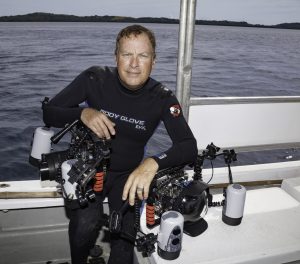
KIHEI – For most oceangoers, coming across a great white shark would probably spark fear. But for underwater photographer and former National Geographic assignment photographer David Fleetham, these sharks sparked fascination and sent him on a journey around the world to photograph them and dispel the fear that comes with sharks.

Fleetham shares stories and photographs from his 30-year-long mission to learn more about great white sharks and nail down an iconic image of a misunderstood myth.

“For me, the path to good photos of great white sharks has been one with many twists and turns,” said Fleetham. “In terms of perceptions, cage diving with the sharks has become an industry in many parts of the world and has changed our view of these impressive fish.”

Born in Vancouver, Canada in 1958, Fleetham is one of the most published underwater photographers in the world. He began diving and photographing underwater in 1976 and has called Hawaii home since 1986. For the first ten years he photographed in the cold, rich waters of British Columbia, Canada, and worked as a PADI Instructor and USCG Certified boat captain in various dive businesses in the Pacific Northwest and Hawaii. From Hawaii, David has been on assignments to Indonesia, the Galapagos Islands, South Africa, the Bahamas, Micronesia, Australia, Sri Lanka, the Sea of Cortez, China, the Red Sea, the Socorro Islands, numerous locations in the South Pacific and Caribbean, and back to the cold waters of British Columbia.

“Sharks are vital for ocean ecosystems, including coral reefs, where they help maintain a sound balance in the food web,” said Meredith Beeson, Project and Research Coordinator at Maui Nui Marine Resource Council. “Changing public perception and protecting these animals is crucial if we want to continue to enjoy the reefs around Maui Nui, and we’re excited to hear what David has to share from his experience working on this.”

More about David Fleetham’s Work:

Fleetham’s photographs have been published around the globe, with over two hundred magazine covers to date. In 1991 his photograph of a sandbar shark appeared on the cover of LIFE. It is the only underwater image to ever be published on the cover. His award winning work has been published by National Geographic, The Cousteau Society, and every North American diving publication.

In 2010 Fleetham’s image of a manatee was selected from 50,000 entries as the grand prizewinner in the professional division of the National Wildlife Federation’s photography contest. Galleries and agents in over 50 countries reproduce Fleetham’s images thousands of times each year. The American Museum of Natural History, The Smithsonian Museum, The North Carolina Museum of Natural History, The London Zoo, Hong Kong Museum, The Maui Ocean Center, The Waikiki, Vancouver, Monterey Bay, New Jersey State, and Ripley’s Aquariums and the Aquarium of the Americas all display his work.

Fleetham is a founding member of The Ocean Artists Society, whose members include James Cameron, Wyland, David Doubilet, and Al Giddings. You can see his work on his website, and he can be found on Instagram @davidfleetham.

Maui Nui Marine Resource Council Welcomes Chase Martin

in /by

KIHEI, HI – Maui Nui Marine Resource Council (MNMRC) is pleased to welcome its newest member to the team. Chase Martin joins the organization as Communications, Community Outreach, and Development Manager, filling the position previously occupied by Anne Rillero. After five years of bringing her expertise in marketing and community outreach and expanding MNMRC’s presence in the local community, Rillero retired at the end of July, but remains active in the Maui community.

Martin comes to MNMRC by way of Scripps Institution of Oceanography at UC San Diego, where he spent nearly four years working to communicate the breadth of scientific research happening at Scripps. He brings expertise in social media, writing, website management, press relations, and outreach. Previously, he worked in communications roles for FishWise in Santa Cruz, Calif., and Conservation International in Washington, D.C. Martin holds a Bachelor of Arts in Journalism from the University of Georgia and a Masters of Advanced Studies in Marine Biodiversity and Conservation from Scripps.

“I’m thrilled to join Maui Nui Marine Resource Council and the local efforts to protect the islands’ natural resources,” said Martin. “I have much to learn in making this move but I’m looking forward to integrating myself into the community and the culture.”

Martin has a deep passion for the ocean, a characteristic that has been with him since his upbringing in the Southeast U.S., where he grew up fishing, beach combing, and exploring the coasts of southern Georgia and northern Florida. In his free time, Martin enjoys bodyboarding, freediving, cooking, and painting.

“Chase brings great communications experience to the team,” said Mike Fogarty, Executive Director of Maui Nui Marine Resource Council. “We’re excited to welcome him aboard and look forward to his work with us.”  

Take a Virtual Dive with Hawaii’s Whale Sharks in Next Know Your Ocean Speaker Series Webinar

in /by

KIHEI, HI — Hawaiian waters are popular for ocean migrants, from humpback whales to green sea turtles to great white sharks, but did you know that the largest fish in the world visits the islands as well? Whale sharks, which can grow up to 60 feet, have eluded residents and scientists alike, but Kona-based Hawaii Uncharted Research Collective (HURC) is working to understand more about these gentle giants.

The public is invited to learn about HURC and these animals in a free presentation, “A look at whale sharks in Hawaii: A research effort for the conservation of an endangered species,” led by HURC founder Maria Harvey. The Zoom presentation will be held on Wednesday, Aug. 3 at 5:30 pm as part of Maui Nui Marine Resource Councilʻs monthly Know Your Ocean Speaker Series, sponsored by the County of Maui. Admission is free, but advanced registration is required. To register, visit https://bit.ly/ WhaleSharkWebinar.

Harvey founded HURC in 2017 with a mission to conduct research on whale sharks and other marine organisms in Hawaiian waters, focusing on population dynamics, ecology, animal behavior and human impacts. HURC merges community engagement with scientific research, relying on citizen science and field studies to better understand how and why these sharks use Hawaii’s offshore areas. Findings from this research will support local and global efforts to conserve whale sharks and their environment.

Her presentation will cover how and why Hawaii Uncharted Research Collective was formed and will give viewers a glance at the organization’s research projects. It will also provide information on localized and global threats to whale sharks, dive into some of HURC’s results so far, and discuss the future of the organization and other conservation efforts.

“Hawaii Uncharted Research Collective provides an avenue to couple my research and education background with my love for the Hawaiian Islands, ocean conservation, and the charismatic whale sharks that inhabit the deep blue waters of the Pacific,” said Harvey. “I’m excited to share the story of HURC and what we’ve accomplished since our founding.”

Whale sharks are found worldwide in tropical seas, preferring open waters where they can be found filter feeding with their large mouths on some of the smallest marine organisms, plankton. They are currently listed as “endangered,” mainly due to fishing pressure, accidental catch and vessel strikes. Capable of living upwards of 100 years, very little is known about these animals, especially those in Hawaiian waters. HURC’s research hopes to contribute to worldwide scientific investigations into these mysterious and threatened animals.

“Hawaii truly is a remarkable place for marine wildlife,” said Mike Fogarty, Executive Director of Maui Nui Marine Resource Council. “We’re excited to share Maria’s work with the larger public and hear ways that residents and visitors alike can contribute to local efforts to research and protect these charismatic sharks.”

To reserve your spot, visit https://bit.ly/WhaleSharkWebinar.

About Maria Harvey:
Maria Harvey graduated from the University of Hawaii in 2009 with a bachelor’s degree in Marine Science and is currently working on her graduate degree in Fish, Wildlife and Conservation Biology. Maria’s love for the ocean, education, wilderness and research has taken her all over the world in recent years. Notably, Maria has worked in Alaska, Hawaii, Canada, Mexico and Cape Cod. During her travels, she has worked as a Captain, naturalist, expedition guide and assistant researcher, and is currently a level-4 marine animal disentanglement specialist. Her work and studies have encompassed a variety of species, including spinner dolphins, humpback whales, right whales, bottlenose dolphins, leatherback turtles and whale sharks. In recent years, Maria has been a guest lecturer and distinguished speaker for private universities and cruise operations, including the University of Pennsylvania’s Veterinary School, Georgetown University and UnCruise Adventures.

In her free time, Maria loves to travel and backpack. Just last year, she completed the 211-mile John Muir Trail. When she isn’t on the water or hiking, she loves to spend time with her two beloved golden retrievers, Samantha and Palmer. One day, Maria would love to own an animal sanctuary in honor of her favorite four-legged critter, Melvin the pig (Instagram: @melvinpig).

Free Presentation on “Nature Based Solutions to Cesspools and Injection Wells — Latest Findings from Field Research” Offered on Wed. July 6

in /by

KIHEI, HI – Are there effective nature-based solutions that can help replace the 90,000 cesspools in the state of Hawaii that are currently releasing nearly 53 million gallons of raw, untreated human waste into the environment each day?

Can nature-based methods also provide quick-to-install alternatives to the injection wells located throughout the state that are used for wastewater disposal, often to the detriment of nearshore ocean waters and coral reefs?

Get the answers to these questions at a free Zoom webinar on Wed. July 6 at 5:30 pm. The presenters will be Paul Sturm, founder and Executive Director of the nonprofit organization Ridge to Reefs, and John Astilla, a local farmer and founder/owner of Sunshine Vetiver Solutions.

The presentation is part of Maui Nui Marine Resource Council’s monthly Know Your Ocean Speaker Series, supported by the County of Maui. Admission is free, but advance reservations are required.

To reserve your spot, visit https://bit.ly/RidgeToReefsWebinar.


Sturm will discuss a nature-based treatment system for cesspool conversion which has been shown to be highly effective in six months of testing with University of Hawaii. It relies upon native plant and restoration plant species which use evapotranspiration to reduce the concentration and volume of effluent released to the environment and functions as a zero discharge system.

Astilla and Sturm will also discuss the results of a pilot project adjacent to the Kihei wastewater plant that demonstrates an alternative to injection wells that is less costly, highly effective and more space efficient. This pilot project demonstrates techniques that can be used to treat effluent from any of Maui’s three wastewater plants.

Cesspools are little more than holes in the ground that discharge raw, untreated human waste into the environment, where it finds its way into groundwater drinking supplies, rivers and the ocean. There are about 12,000 cesspools on Maui and 1,400 on Molokai. In 2017, the Hawai‘i State Legislature passed Act 125, which mandates that by January 1, 2050, all cesspools in the State, unless granted exemption, shall upgrade or convert to a septic or aerobic treatment unit, or connect to a sewer system (Act 125, 2017). 

But replacing a cesspool with an approved septic system requires a significant cash outlay for most homeowners, with an average cost of more than $23,000 per cesspool replacement.

“More than 53 million gallons of human sewage enters Hawaii’s environment each day through cesspools; this sewage contaminates groundwater drinking water supplies and our coastal ocean waters, creating algae blooms and harm to corals,” says Sturm. “That’s why Ridge to Reefs has focused on finding affordable nature-based alternatives to cesspools, to ease the financial burden on homeowners and businesses, and provide a solution to this pollution issue.”

Sturm and Astilla will also be describing an affordable, nature-based methods to replace the use of injection wells to re-use or dispose of treated wastewater. These methods have been tested at a pilot site near the Kihei Wastewater Reclamation Facility. Results of this pilot project will be presented during the Zoom webinar.

“Throughout the state of Hawaii, more than 500 injection wells, most of which were dedicated to the disposal of treated sewage effluent, had been installed by 1985,” reports Sturm. “Unfortunately, this effluent has been found to enter our coastal waters, where it contributes to coral reef deterioration.”

“We are pleased to provide a nature-based alternatives that are affordable, easily installed and scalable to provide a safe way to take up treated wastewater and keep it out of the ocean,” says Sturm. “This method offers a stopgap solution which can be integrated into until more extensive piping and infrastructure can be constructed to direct the treated wastewater to agricultural and landscaping purposes.”

“We are pleased to bring this informative talk to the public, as it presents real answers to the problems that threaten our reefs and drinking water supplies,” says Mike Fogarty, Executive Director of Maui Nui Marine Resource Council. “To ensure clean ocean water along our coasts and the conditions needed for healthy coral reefs, Maui must address its wastewater problems and implement alternatives to cesspools and injection wells now – our reefs simply can’t wait.”

To register for this talk, please visit https://bit.ly/RidgeToReefsWebinar


About Paul Sturm:

About Paul Sturm:
Paul Sturm is the founder and Executive Director of the nonprofit organization Ridge to Reefs. Founded in 2011, Ridge to Reefs works to protect and restore coastal and coral reef ecosystems by reducing land-to-sea pollution with nature based solutions. His expertise includes treating polluted storm and wastewater by establishing green infrastructure solutions such as constructed wetlands, rain gardens and bioreactors. Ridge to Reefs currently has projects in the Chesapeake Bay, Hawaii, Puerto Rico, Palau, and American Samoa.

Paul has spent over 25 years working on watershed plans, implementation projects, sustainable agriculture and code changes in the Chesapeake Bay watershed and around the country. Early in his career, he spent 6 years researching the effectiveness of implementation of agricultural and urban Best Management Practices and developed methods to track and target pollution source areas in agricultural watersheds.

Leeward Maui Coastal Water Quality Report Released

in /by

New 2016 – 2021 report released by Hui O Ka Wai Ola community-based water quality monitoring program

MĀ‘ALAEA, HI – A comprehensive report detailing findings about coastal ocean water quality at dozens of leeward Maui locations over a six-year period was released this week by Hui O Ka Wai Ola, a citizens’ ocean water quality monitoring program.

The 32-page Coastal Water Quality Report 2016-2021 focuses on data gathered by more than 60 volunteers and staff in coastal waters from Honolua Bay to Pāpalaua and from Mā’alaea to ‘Āhihi-Kīna’u Natural Area Reserve. The report reveals high levels of turbidity and nitrates in many areas along the coast and includes recommendations for reducing these pollutant levels.

Hui O Ka Wai Ola is a program conducted by scientists and highly trained community volunteers who monitor water quality every three weeks. The program is coordinated by Maui Nui Marine Resource Council (MNMRC), The Nature Conservancy (TNC), and West Maui Ridge to Reef Initiative (R2R). The group shares the data it collects with the Hawai’i Department of Health (DOH) to improve understanding of coastal waters.

“Since 2016, we have collected and analyzed over 3,200 water quality samples from 48 sites,” reports Tova Callender, R2R’s Watershed and Coastal Management Coordinator. “In a nutshell, what we’ve found is that these coastal waters are often degraded by land-based pollutants, including sediments, fertilizers, and wastewater. Sadly, these pollutants – which can cause brown water events and algae blooms – impact the quality of our lives and can smother, weaken and kill coral reefs.”

“The data in this report can help the community focus its efforts on reducing pollutant levels in areas that need it most,” says Amy Hodges, Programs and Operations Manager at MNMRC. “At Maui Nui Marine Resource Council, this data has led us to focus on efforts to reduce sediment and nitrate pollution in Māʻalaea Bay and sediment runoff along the North Kihei coast.”

“Though there are many areas of concern, there are also some bright spots,” notes Kim Falinski, TNC’s Coastal and Estuarine Scientist. “Most notably at Kapalua, nitrate levels have dropped in the last two years, and the turbidity levels have declined at Keālia Pond, likely due to the wetlands’ ability to filter and absorb pollutants before they reach the ocean.”

Hui O Ka Wai Ola testing protocols align with DOH standards so data collected can be combined with DOH data for an expanded understanding of coastal waters. The data is also available to researchers, advocacy groups, and the public at www.huiokawaiola.com (https://www.huiokawaiola.com/) , PacIOOS, and Zenodo.

To download a free copy of the Hui O Ka Wai Ola Coastal Water Quality Report 2016-2021, please visit https://www.huiokawaiola.com/findings.html

Some findings included in the Coastal Water Quality Report 2016-2021:

• The highest nitrate levels of all the monitored sites were found at Kīhei’s Cove Park, where levels are more than 2x higher than any other leeward Maui site. Studies show wastewater influence from the Kīhei Wastewater Reclamation Facility (WRF) is a likely driver of elevated nitrates near Cove Park [Dailer 2010, Hunt 2007]. Surprisingly, nitrate levels at Cove Park have been consistent from 2017 to 2021, including during the COVID-19 pandemic.

• Second to Cove Park are the nitrate levels from Mā‘alaea to North Kīhei.

• Nitrate levels at two sample sites within the ‘Āhihi-Kīna‘u Natural Area Reserve appear to be increasing, and there is evidence of pharmaceuticals at the south site, possibly from swimmers or from the large cesspool there.

• Nitrate levels far exceed DOH standards at Kapalua, Ka‘ōpala, Nāpili, Pōhaku, and Hanakaʻōʻō Canoe Beach. However, nitrate levels at Kapalua have dropped significantly in the last two years.

• Elevated nitrate levels at leeward Maui sites are associated with fertilizers and wastewater that seep into groundwater systems and emerge through springs on the ocean floor. Elevated nitrate levels can cause algae blooms and smother, weaken, and kill coral reefs.

• Turbidity and nitrate levels were consistently low in the coastal waters adjoining Keālia Pond, likely due to the wetlands’ ability to filter nitrates and sediment from freshwater flows including stormwater runoff.

• Ulua Beach in Wailea has turbidity levels that are so low that on average a snorkel partner 10 feet away will almost always be visible. Unfortunately, Ulua Beach also has elavated levels of nitrates. Contaminated groundwater is the likely source of the nitrates at Ulua Beach.

• Turbidity is a measure of water clarity. High turbidity diminishes water quality and threatens coral reefs. The report notes that high turbidity levels in leeward Maui are associated with coastal erosion, rains that carry sediments to coastal waters, and resuspension.

For additional information, download a free copy of the Hui O Ka Wai Ola Coastal Water Quality Report 2016-2021 at www.huiokawaiola.com.

Hui O Ka Wai Ola Sponsors and Funders

Hui O Ka Wai Ola (Association of Living Waters) is a Maui-based program, whose work is funded by generous individuals, businesses, and organizations.

Lab space provided by:
Lāhainaluna High School, Hawaiian Island Humpback Whale National Marine Sanctuary, Da Hawaiian Store and Pineapple Properties Maui, LLC.

Past and current sponsors and grant funders who made this report possible include:
Bayside Catering, County of Maui, Coastal Planners LLC, Duke’s Maui LLC, Flatbread Company, Hawaii Community Foundation, Hawaiian Paddle Sports, Hawaii Tourism, Host Hotels and Resorts, Jersey Mike’s Subs, Ka’anapali Ocean Resort Charitable Trust, Lilly Pulitzer, Lush Fresh Handmade Cosmetics – Charity Pot, Honua Kai – West Maui Community Fund, Inc, Marty Dread, Maui Sky Diving, Maui Brewing Company, Maui Classic Charters, Maui Ku’ia Estate Chocolate Inc., Maui Marathon & Maui Half Marathon, Maui Ocean Center, Napili Bay and Beach Foundation, National Fish and Wildlife Foundation, North Beach-West Maui Benefit Fund Inc., Pacific Whale Foundation, Plaza Home Mortgage, Pride of Maui, Robert F. Orr Foundation, The GoodCoin Foundation/Target, The Makana Aloha Foundation, The EACH Foundation, Media TheFoundation, Vitalitea Hawaii, and Westin Ka’anapali Ocean Resort Villas,

We thank the individuals and families whose contributions support our community-based ocean water quality monitoring program. Mahalo — we couldnʻt do it without you!

“Rally for the Reefs” webinar on Thursday, June 16 will focus on saving the reefs of Māʻalaea Bay

in /by

Speakers Stuart Coleman, Rep. Angus McKelvey and Maui County Councilmember Kelly King will provide updates on Māʻalaea wastewater treatment options

MĀʻALAEA, HI – Longtime Māʻalaea resident Peter Cannon remembers that during his childhood, “the coral reefs of Māʻalaea Bay were like the robust and healthy reefs that you see today at the ʻĀhihi-Kīnaʻu Natural Area Reserve.” He recalls that local families enjoyed harvests of ribbon limu from the bay, and there was an abundance of native fish and opae.

Since the 1970s, the coral reefs in Māʻalaea Bay have degraded so severely that Hawaii’s Division of Aquatic Resources (DAR) has described the situation as “a case study in total system collapse.” In their report, “Status and Trends of Maui’s Coral Reefs” DAR in partnership with the Coral Reef Assessment and Monitoring Program reported on their 1999 monitoring in Māʻalaea Bay and noted that the “end result of reef degradation is evident in Māʻalaea Bay.”

The report noted that in 1972, “Māʻalaea coral reefs were described as being ‘striking in their diversity and in the presence of rare corals species’. As late as 1993, estimated coral cover was 50- 75% close to the site where cover is now 8%. Therefore, in just a few decades, the Māʻalaea reef has transformed from a healthy and diverse ecosystem into a badly degraded habitat overgrown by algae and with little surviving coral.”

The report also noted that fish stocks in in Māʻalaea are now in very poor condition, and the reefs have been invaded by alien and invasive algae species.

Declining ocean water quality in Māʻalaea Bay is a major contributor of the decline. A new report for the years 2019 – 2022 by the Hui O Ka Wai Ola community-based ocean water quality monitoring program indicates that Māʻalaea Bay has excessive levels of nitrates, second only to the levels in Kihei Cove, of all the sites the program monitors along the leeward Maui coast.

What can Maui County residents and visitors do to improve the ocean water quality and save the reefs of Māʻalaea Bay? Learn about the steps that are proposed — and how individuals can help – at an online Rally for the Reefs webinar to be held on Thursday, June 16 at 5:30 pm via Zoom.

Admission is free, but reservations are required. To reserve your spot, visit https://bit.ly/Rally4Reefs.

The “Rally for the Reefs” webinar will feature presentations by:

Stuart Coleman
Founder and Executive Director of WAI (Wastewater Alternatives & Innovations)
Coleman will discuss modern wastewater alternatives and innovations that will make it possible to reduce the pollution that has been harming the corals in Māʻalaea Bay.

Maui County Councilmember Kelly Takaya King
(Holds the County Council seat for South Maui)
Councilmember King will discuss the funding for the improved wastewater treatment system for Māʻalaea in the County’s 2023 budget and the steps ahead to make this system a reality.

State Representative Angus L.K. McKelvey
(Representing West Maui – Māʻalaea – North Kihei)
Representative McKelvey will explain how the State can help establish improved wastewater treatment in Māʻalaea, and why the proposed wastewater treatment project in Māʻalaea could serve as a model for other small communities throughout Hawaii that are looking for replacements for cesspools, injection wells and septic systems.

“The community has been working hard to identify and address the problems that have undermined the ocean water quality of Māʻalaea Bay and harmed the coral reefs,” said Mike Fogarty, Executive Director of Maui Nui Marine Resource Council. “We’ve now reached critical junctures that will decide if and when some of the proposed solutions to the problems of water pollution and reef loss will be addressed. We need to act now to save Māʻalaea’s reefs before it’s too late. Please attend the Rally for the Reefs to learn what can and should be done.”

The Rally for the Reefs webinar is sponsored by WAI, Maui Ocean Center, Māʻalaea Village Association, Maui Nui Marine Resource Council, Maui Ocean Center Marine Institute and Sierra Club Maui Group.

To register to attend this free Zoom event, please visit https://bit.ly/Rally4Reefs.

Public invited to free presentation on first community-based marine conservation network on Maui

in /by

Kihei, HI – The public is invited to a free presentation on “Weaving the Net – How the Maui Nui Makai Network is connecting communities for a healthy land and sea of tomorrow” to be held on Wed. June 1 at 5:30 pm via Zoom.

At this free event, speakers Maile Shannon and Scott Crawford will share the story of the Maui Nui Makai Network, including ongoing projects and its vision for the future. The Network includes nine member communities that actively manage coastal areas of Maui Nui, incorporating native Hawaiian values, knowledge and experiences into management practices. Through the Network, member sites share and learn from their diverse experiences, lessons and best practices to help each other mālama (care for) specific makai (seaward) areas.

The presentation is hosted by Maui Nui Marine Resource Council as part of its “Know Your Ocean Speaker Series” with support by the County of Maui Office of Climate Change, Resiliency, and Sustainability (CCRS).

While the presentation is free, pre-registration is required. To register, visit https://bit.ly/MNMNWebinar

The speakers for this presentation are:

Maile Shannon, the current Chair of the Maui Nui Makai Network. She has been involved in ‘āina-based work since 1999. Formerly a farmer/rancher, Shannon has worked and volunteered as a conservationist in the nonprofit world since 2009 while raising her children Marcus, Shannon, and Hunter.

Scott Crawford, the current Secretary of the Maui Nui Makai Network. He has served as the Executive Director of Kipahulu Ohana, Inc. for 20 years, helping to manage Kapahu Living Farm traditional wetland taro farm, and the Malami i ke Kai program, including the proposed Kipahulu Moku Community Based Subsistence Fishing Area. He also works with other  Network members from East Maui: Na Mamo O Mu’olea and Ke Ao Hali‘i (Save Hana Coast) and he helps to manage the Hana Farmers Market.

“We are pleased to host this event, to help the public learn about the Maui Nui Makai Network’s community-based approach to protecting the marine resources found along the shorelines of Maui County,” said Robin Newbold, Co-founder and Chair of Maui Nui Marine Resource Council. “We supported the creation of this Network in its early days and are pleased to be one of four Kākoʻo members, as we watch it grow and thrive, incorporating Hawaiian traditions to create an effective modern-day approach to protecting our nearshore reefs, marine wildlife and coastal waters.”

To register for this event, please visit https://bit.ly/MNMNWebinar

About Maui Nui Marine Resource Council
Maui Nui Marine Resource Council (MNMRC) is a Maui-based non-profit organization working for clean ocean water, healthy coral reefs and a restoration of abundant native fish for the islands of Maui County. MNMRC is recognized for its ability to work with the community to plan, fund, enact and manage culturally appropriate, science-based solutions to serious problems undermining nearshore ocean water quality and threatening local coral reefs. To learn more, visit www.mauireefs.org.
 

Maile Shannon


Scott Crawford