Posts

Free Webinar: “Exploring the Octopus: How to Learn from Animal Behavior”

in /by

Photo courtesy Don Bloom

“Exploring the Octopus: How to Learn from Animal Behavior” is Topic of November 18 “Know Your Ocean Speaker Series” Free Webinar

Octopuses explore the world around them with their flexible arms, which can touch — and actually taste — to help them quickly identify prey. Maui Nui Marine Resource Council invites the public to learn more about the specialized octopus cells that make this unique ability possible at a free Zoom webinar titled “Exploring the Octopus: How to Learn from Animal Behavior” on Wednesday, November 18 at 3 pm. This presentation is part of MNMRC’s monthly “Know Your Ocean Speaker Series.”

The guest speaker will be Peter Kilian, Research Assistant and Aquatic Animal Technician at the Bellono Lab at the Department of Molecular and Cellular Biology at Harvard University. The lab studies how diverse organisms sense and respond to changes in their environment.

Peter will be sharing his work on a paper which he co-authored that was recently published in Cell titled, “Molecular Basis of Chemotactile Sensation in Octopus.” Stories about this report, which describes how octopus can both touch and taste with their arms, have appeared in numerous newspapers, magazines, tv news shows and online journals, including The New York Times, CNN, Smithsonian Magazine and others.

As a research assistant and aquatic animal technician at Bellono Lab, Peter spends most of his time working with fish, sharks, cephalopods, and various other marine invertebrates to try and learn how and why they behave the way they do.

“So many of us on Maui are fascinated with octopuses, especially after ‘My Octopus Teacher’ launched on Netflix,” says Meredith Beeson, Project and Research Coordinator at Maui Nui Marine Resource Council. “We are excited to host this presentation by Peter Kilian, which will describe how Harvard researchers looked at the octopus at the molecular level to learn how the nervous system in the octopus’ arms — which operate largely independently from its centralized brain — allows these animals to both touch and taste their prey.”

The guest emcee will be Darla Palmer-Ellingson, local radio show host of the public affairs program, Island Environment 360 Maui’s only commercially broadcast public affairs show on environmental and related Hawaiian cultural topics. Her  program is made possible by H-Hawaii Media.

Maui Nui Marine Resource Council offers its monthly “Know Your Ocean Speaker Series” via Zoom, usually on the first Wednesday of the month. This month’s presentation was delayed due to Election Day and Veteran’s Day. Please note that this event will start at 3 pm, earlier than other “Know Your Ocean Speaker Series” talks, because the speaker is located in Massachusetts. If you wish to view the presentation, but cannot attend at 3 pm, please email [email protected] to receive emailed information about where and how to view the presentation later in the day.

To make a reservation for the live Zoom presentation, please visit https://bit.ly/OctopusTalk

The “Know Your Ocean Speaker Series” is made possible with support from the County of Maui Mayorʻs Office of Economic Development.

About our speaker:
Peter Kilian, Research Assistant and Aquatic Animal Technician at the Bellono Lab at the Department of Molecular and Cellular Biology at Harvard, has been interested in the mystery of animal behavior since a young age. His drive to work with animals originates from countless trips to the local zoo and aquarium when he was growing up. This curiosity continued to evolve in college, where Peter dove into his passion for animal work. While in college he spent time working as a beekeeper, a penguin aquarist at the New England Aquarium, and a pygmy octopus husbandry specialist in the mariculture lab at the Marine Biological Laboratory in Woods Hole, MA. He has since graduated from college, and now works full time in the Bellono Lab at Harvard as a research assistant and aquatic animal technician. He spends most of his time working with fish, sharks, cephalopods, and various other marine invertebrates to try and learn how and why they behave the way they do.



Maui Nui Marine Resource Council Wins $3,000 Award in Hogan/American Savings Bank Nonprofit Business Plan Competition

in /by

MĀ‘ALAEA, HI – The nonprofit Maui Nui Marine Resource Council (MNMRC) was awarded a $3,000 prize in the 2020 Hogan/American Savings Bank Nonprofit Business Plan Competition for a business plan titled, “Vision for Pohakea.”

“The goal of our Vision for Pohakea plan is to reduce sediment and pollutants in Māʻalaea Bay and Māʻalaea Harbor,” explains Amy Hodges, Programs and Operations Manager at Maui Nui Marine Resource Council. “Pohakea is the name of the 4,000+ acre watershed upslope from Māʻalaea Bay. Pohakea watershed has several gulches that all discharge into Māʻalaea Bay and the harbor. “

MNMRC’s business plan was one of only 8 plans selected as finalists from more than 40 other Hawai‘i nonprofit business plans submitted. Finalists were invited to present their plans to a panel of judges via Zoom, at a Chamindade University event held on October 14. MNMRC’s plan was presented by Amy Hodges, MNMRC’s Programs and Operations Manager, and Ekolu Lindsey, MNMRC Board Member.

MNMRC was awarded 4th place overall and a $3,000 prize, which it will use to help fund the “Vision for Pohakea” plan.

The plan explains that Māʻalaea Bay is a community resource — a place where people surf, fish, swim, paddle, whalewatch and embark on ocean adventures. “Unfortunately, the water quality in Mā‘alaea Bay is compromised by storm water and sediment run-off, as well as other pollution originating from land,” notes the plan. “This nearshore ocean pollution adversely impacts areas in Māʻalaea Bay that are important for recreation, and also undermines the health of coral reefs and sea turtle feeding areas just outside the harbor.”

To improve Māʻalaea Bay’s deteriorating ocean water quality, MNMRC is installing caged oysters in the bay. Oysters are natural filter feeders, with a single oyster capable of filtering 40 to 60 gallons of water per day, removing sediment and other pollutants. The first oysters were installed in early 2020, with new oysters added throughout the year. They are monitored every two weeks and are found to be thriving.

The second part of the project takes place in the Pohakea Watershed, implementing projects outlined in the Pohakea Stormwater Management Plan, which MNMRC commissioned Maui Environmental Consulting to produce in 2018.

MNMRC has been writing grants and raising funds to enact this plan over a multi-year period. Maui Nui Marine Resource Council applied for and received a $300,000 Resilient Communities Grant in 2019, made possible by the National Fish and Wildlife Foundation (NFWF) and the Wells Fargo Foundation, to enhance forest reserve resiliency through fuels management in the Pohakea watershed.

With funds from this grant, Maui Nui Marine Resource Council will establish and improve fuel breaks in strategically placed corridors to mitigate the pervasive cycle of wildfire and protect 3,414 acres of Forest Reserve in Māʻalaea,  part of the Pohakea watershed. That work is slated to begin later this year.

Additional funding for this project is provided by Hawaiʻi Tourism through the Aloha ʻĀina program and the County of Maui Mayor’s Office of Economic Development.


Ocean water quality is measured at several shoreline sites along Mā‘alaea Bay through the Hui O Ka Wai Ola citizen-based water quality monitoring program, co-founded and co-managed by Maui Nui Marine Resource Council, The Nature Conservancy and West Maui Ridge to Reef Initiative, working closely with the State of Hawai‘i Department of Health Clean Water Branch.

To gather baseline data about current ocean water quality throughout Māʻalaea Bay, MNMRC is also conducting regular kayak-based ocean water monitoring throughout the bay, using an electronic monitoring probe that provides a stream of data in real-time. The probe was purchased thanks to a generous grant from Lush Cosmetics Charity Pot.

Other support for implementing the “Vision for Pohakea” plan comes from a grant from the County of Maui Mayor’s Office of Economic Development.

To learn more about the Vision for Pohakea plan and how you can support it, please visit www.mauireefs.org.


Caption:
Maui Nui Marine Resource Council’s team takes a break from their work with the oysters at Māʻalaea Bay to display their award from the 2020 Hogan/American Savings Bank Nonprofit Business Plan Competition. From left to right: Grace Silver, Amy Hodges and Meredith Beeson.


Please note: The views and conclusions contained in this document are those of the authors and should not be interpreted as representing the opinions or policies of the U.S. Government or the National Fish and Wildlife Foundation and its funding sources. Mention of trade names or commercial products does not constitute their endorsement by the U.S. Government, or the National Fish and Wildlife Foundation or its funding sources.

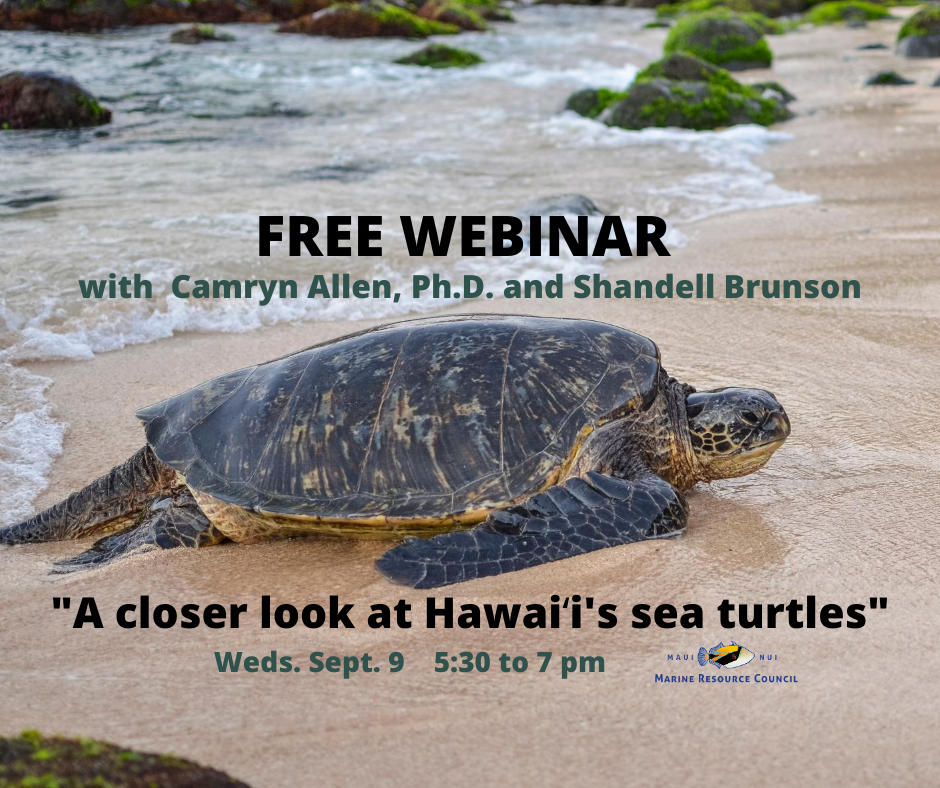
“A Closer Look at Hawaiʻi’s Sea Turtles” is Topic of Sept. 9 “Know Your Ocean Speaker Series” Webinar

in , /by

A free Zoom webinar offering “A Closer Look at Hawaiʻiʻs Sea Turtles” will be presented on Wednesday, September 9 from 5:30 to 7 pm Hawaii Standard Time as part of Maui Nui Marine Resource Councilʻs  monthly “Know Your Ocean Speaker Series.” It will also air via Facebook Live at facebook.com/mnmrc, the Facebook page of Maui Nui Marine Resource Council.

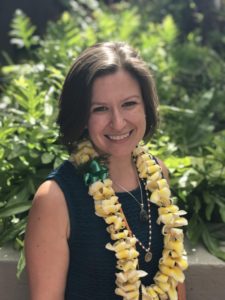
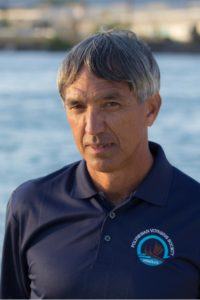
The talk will feature presentations by Dr. Camryn Allen, a NOAA wildlife endocrinologist,  and Shandell Brunson, NOAA’s sea turtle stranding coordinator for Hawaiʻi and the Pacific Islands region.

Dr. Allen is the Supervisory Marine Biological Researcher (JIMAR) at the Joint Institute for Marine and Atmospheric Research at NOAA Fisheries Pacific Island Fisheries Science Center in the Protected Species Division. She created a sea turtle endocrinology laboratory to examine sex ratios of sea turtles in the wild.  Her talk will present findings on the ratio of male vs. female turtles at foraging grounds — and what that means for the potential impacts of climate change on our sea turtle populations.

Shandell Brunson is a biological sciences technician with the Marine Turtle Biology and Assessment Program and is NOAA’s sea turtle stranding coordinator for Hawaiʻi and the Pacific Islands region. She will share findings from sea turtle strandings in Hawai’i, including what’s being learned about threats from strandings, rehabilitations and deaths.

Our guest emcee is Darla Palmer-Ellingson, local radio show host of the public affairs program, Island Environment 360 Maui’s only commercially broadcast public affairs show on environmental and related Hawaiian cultural topics. The program is made possible by H-Hawaii Media.

This free online event is part of Maui Nui Marine Resource Councilʻs “Know Your Ocean Speaker Series” and is made possible with support from the County of Maui Mayorʻs Office of Economic Development.

Advance reservations are for the Zoom webinar.  To make your free reservation, please visit https://bit.ly/HawaiiSeaTurtles.

The talk will also be presented on Maui Nui Marine Resource Councilʻs Facebook Live page at https://www.facebook.com/MNMRC.

Questions will be accepted from the audience on both Zoom and Facebook.


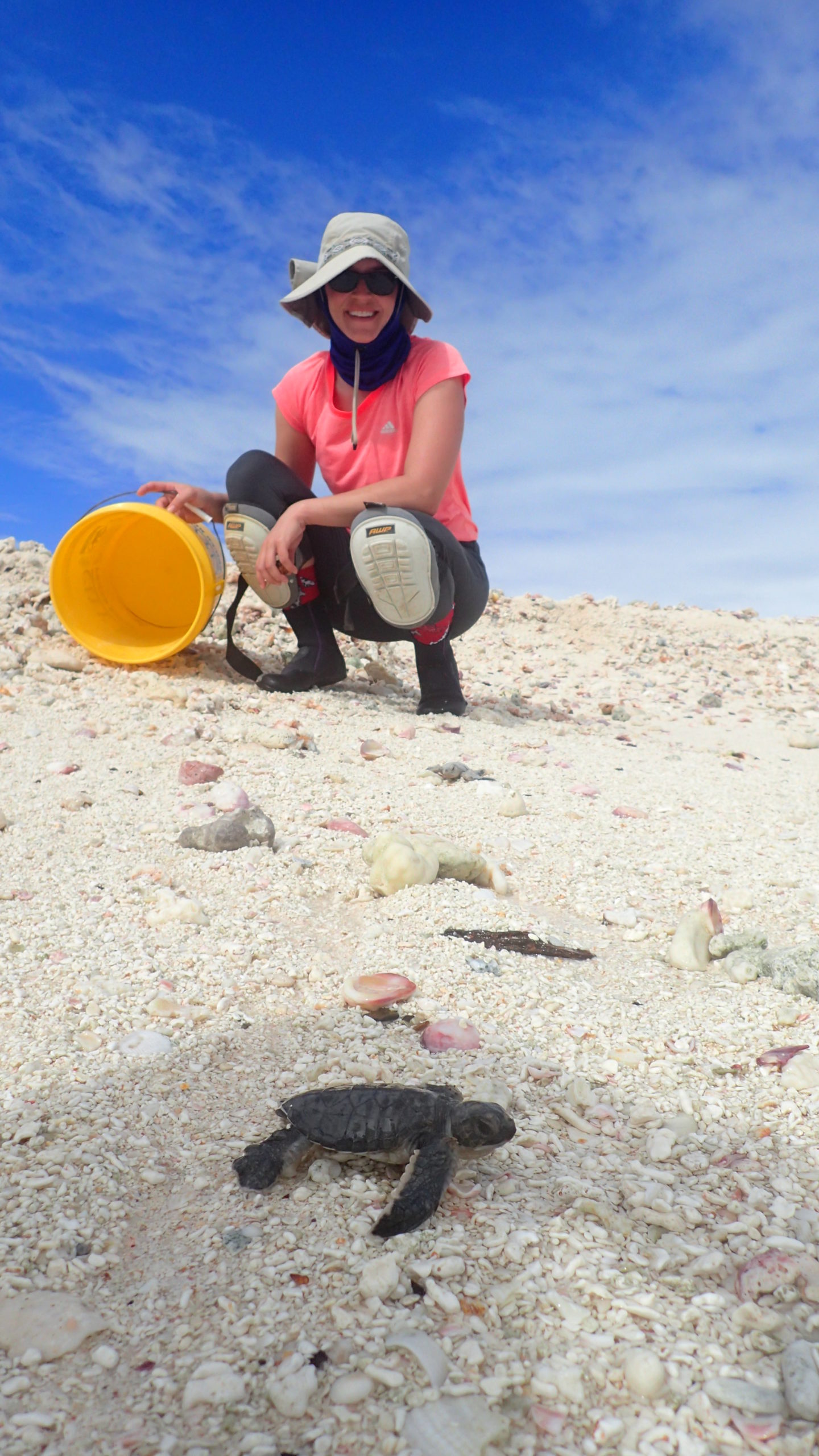
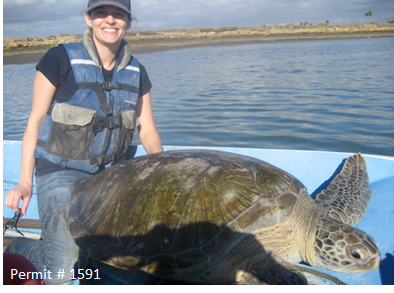
Photos at left: Dr. Camryn Allen at work in the field.


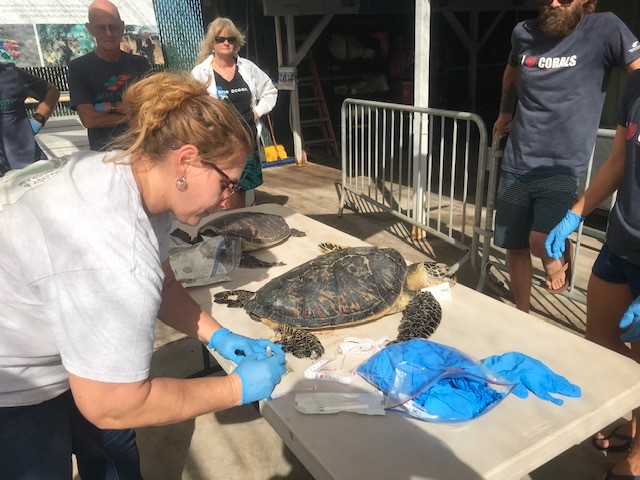
Photo below: Shandell Brunson at a training with Maui Ocean Center Marine Institute (MOCMI) last November.

Oyster Spat Collected to Raise Next Generation of Oysters for Māʻalaea Ocean Water Improvement Project

in /by

A small bag of 100 tiny Hawaiian oysters, gathered in mid-August under State of Hawai‘i permit by staff of Maui Nui Marine Resource Council (MNMRC), represents the “next generation” in the nonprofit organization’s work to use oysters to filter and clean ocean water in Māʻalaea Bay. The project to improve ocean water quality in Māʻalaea is supported by the County of Maui Mayorʻs Office of Economic Development.

What’s amazing is that the tiny oysters appeared to have “volunteered” for the job.

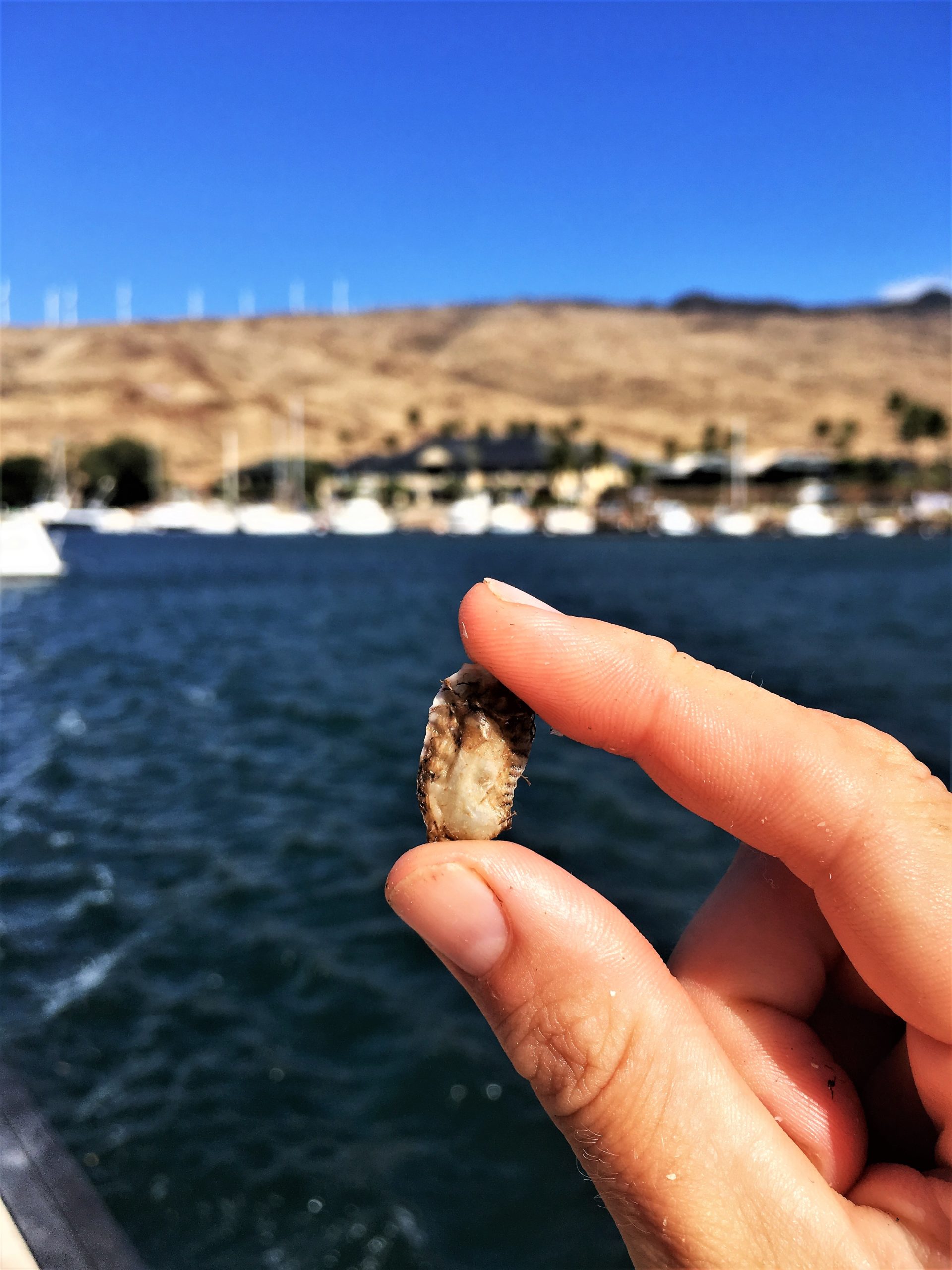
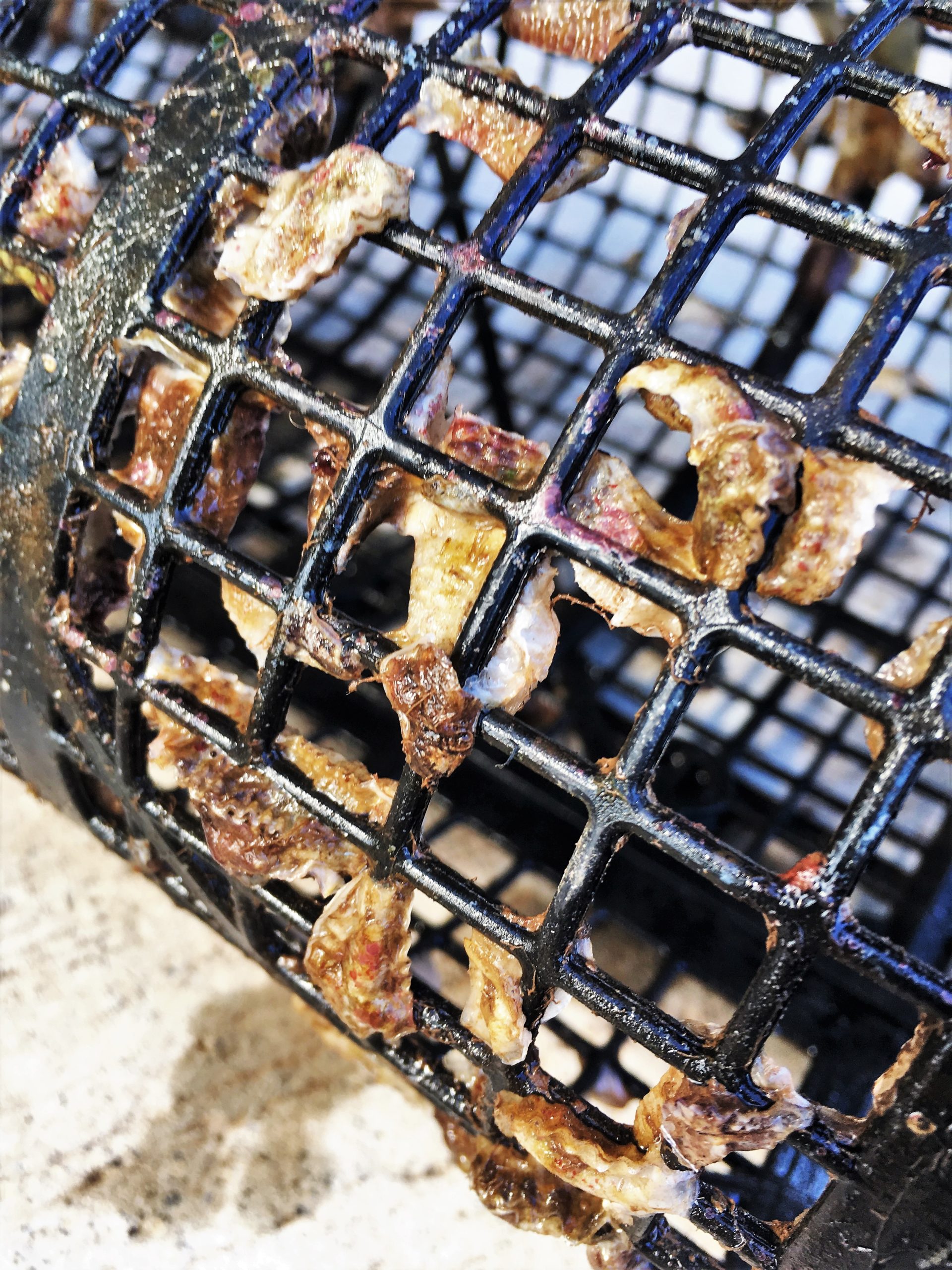
Months ago, Maui Nui Marine Resource Council Programs and Operations Manager Amy Hodges was amazed to see that floating oyster larvae from native Hawaiian oysters (Dendostrea sandvicensis) had begun to voluntarily attach themselves to the outside of oyster cages that the organization had installed in Māʻalaea Harbor. Over a period of months, they grew into tiny oysters called “spat.”

“It was MNMRC’s goal to incorporate using Hawaiian oysters, which are native to Hawaiʻi, for this project starting in December 2020. And here they were, appearing on our cages,” noted Hodges. “These baby oysters were truly a gift from nature.”

MNMRC coordinated with the Pacific Aquaculture and Coastal Resources Center (PACRC) in Hilo, a project of the University of Hawai‘i at Hilo, to follow the right protocol to safely collect and ship these oysters to PACRC for spawning and propagation. The State of Hawaiʻi Department of Agriculture office on Maui inspected the oysters before they were shipped.

The tiny oysters will be well-fed and protected at PACRC, where they will spawn and their progeny will grow larger more quickly than those in the wild. They will be shipped back to Maui in December to be raised in cages as part of MNMRC’s oyster bioremediation project.

MNMRC expects to receive about 3,000 mature Hawaiian oysters from PACRC by the end of 2020.

Hodges explains that oysters are extremely effective natural filter feeders, with each oyster capable of filtering 40 to 60 gallons of water per day, removing sediment and other pollutants. “Our goal is to use the oysters to improve the ocean water quality to Māʻalaea Bay, to provide cleaner, healthier water for the coral reefs and local fish populations,” says Hodges. “The goal is to make Māʻalaea Bay a better place for fishing, paddling, surfing, swimming and beach days for the entire community. We’re glad to have the oysters ‘volunteering’ to help us reach that goal.”

When MNMRC launched its project in early 2020, the team installed cages of Pacific oysters, which are commonly found throughout Hawai‘i, but are not native. The Pacific oysters are larger than Hawaiian oysters and are triploids, meaning they are sterile and cannot reproduce. After seeing that the Pacific oysters survived the polluted water in which they were placed, and the Hawaiian oysters appeared on the oyster cages,  MNMRC’s team decided to go forward with including smaller native Hawaiian oysters in the project, using oyster spat gathered from Māʻalaea Bay. “We believe that these oysters are well suited to the unique conditions of this area,” said Hodges.

All of the oysters are being used to clean polluted water and are unsafe to eat. The oysters may carry Vibrio bacteria which can cause watery diarrhea, often accompanied by abdominal cramping, nausea, vomiting, fever and chills. Vibrio is a naturally occurring bacteria and can be found in warm coastal waters and harbors, where it infects oysters.

The cages housing the oysters are clearly marked with warning tags stating, “Toxic. Do Not Eat. Research in Progress. Do Not Remove. Maui Nui Marine Resource Council.”

It is illegal to catch, take, kill, possess, remove, sell, or offer for sale oysters or clams from the waters of the state of Hawai‘i according to fishing regulations HAR 13-83 and HAR 13-85. Violators shall be punished as provided by law. Maui Nui Marine Resource Council is permitted through the State of Hawai‘i for its oyster project.

Maui Nui Marine Resource Council is a community-based nonprofit organization celebrating 12 years of working for healthy coral reefs, clean ocean water and abundant native fish throughout Maui County. MNMRC’s work includes co-managing the Hui O Ka Wai Ola Ocean Water Quality Monitoring Program in South and West Maui, efforts to reduce pollution in Mā‘alaea Bay through erosion-control efforts in the Pōhākea watershed, coral reef research, visitor education programs and more. Learn more at www.mauireefs.org.

Support for this project was provided by Hawaii Tourism through the Aloha ʻĀina program and the County of Maui Mayorʻs Office of Economic Development. 


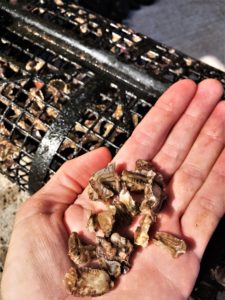
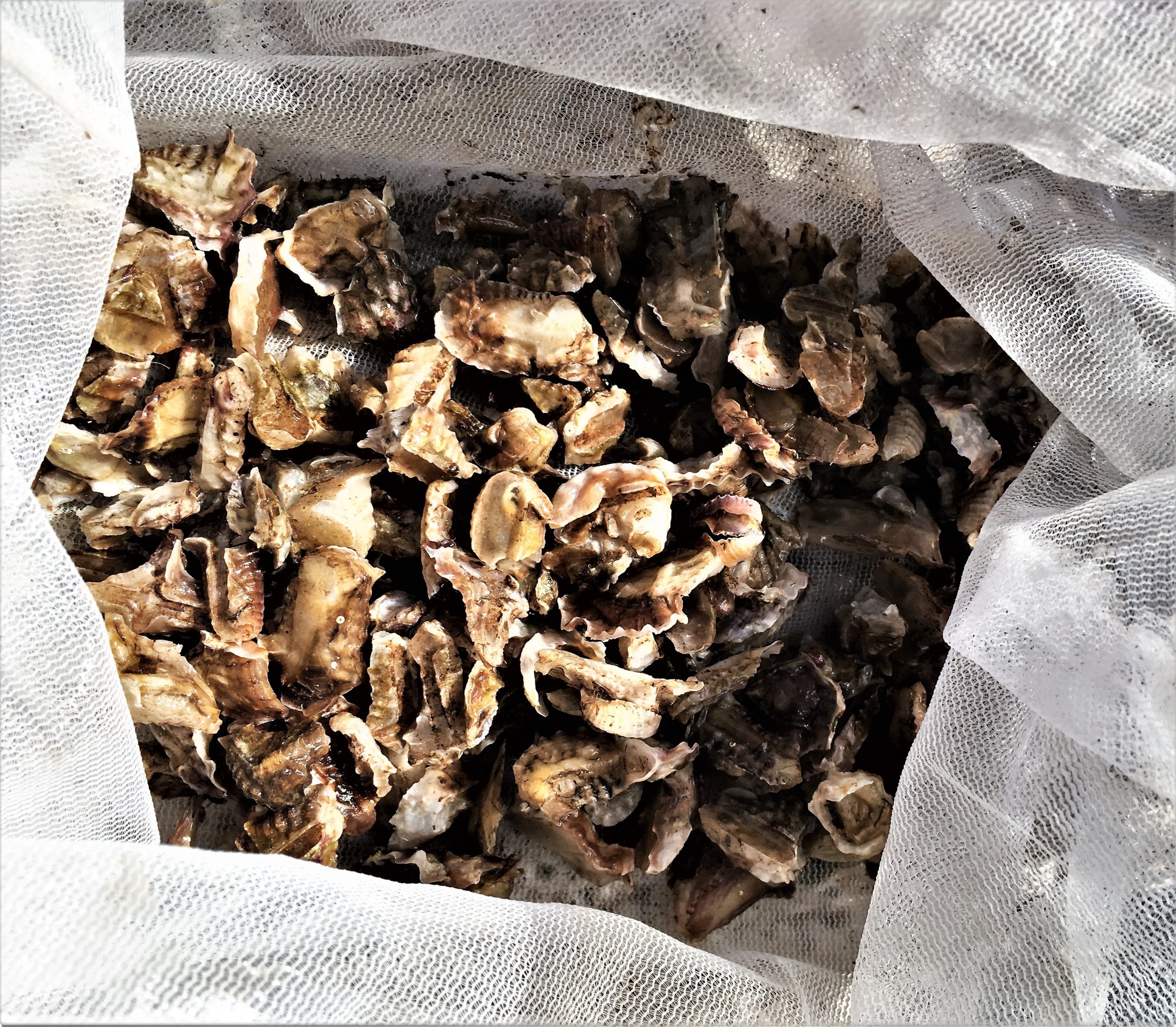
Hawaiian oysters collected under permit in Mā‘alaea Harbor by Maui Nui Marine Resource Council will be propagated at the Pacific Aquaculture and Coastal Resources Center in Hilo, and their progeny returned to Maui as part of an oyster bioremediation project to help improve ocean water quality in Mā‘alaea Bay. Photo credit: Maui Nui Marine Resource Council


 The tiny Hawaiian oysters first appeared as spat (baby oysters) on the outside of cages that Maui Nui Marine Resource Council had installed in the harbor. “It almost seems like they were ʻvolunteeringʻ to be part of our project,” says Amy Hodges, Programs and Operations Manager at Maui Nui Marine Resource Council. Photo credit: Maui Nui Marine Resource Council.


 A bag of 100 tiny oysters was collected under State of Hawai‘i permit, then inspected by the Department of Agriculture on Maui, before shipment to the Pacific Aquaculture and Coastal Resources Center in Hilo, to be raised under ideal conditions for spawning and propagation. Photo credit: Maui Nui Marine Resource Council. 


Know Your Ocean: Why some people care about Maui’s reefs — and others don’t.

in , /by

Have you ever wondered why some people care — and others seemingly don’t — about protecting Maui’s coral reefs? Imagine if you could climb into their minds to understand what causes visitors and residents of Maui to be motivated (or not) to care for our reefs through their behaviors and actions. How would that help your community be more effective in protecting its reefs?

Find out more about the social and psychological factors that influence human behavior in our nearshore environments, based on a recent joint study conducted in West Maui by Polanui Hiu, The Nature Conservancy, and Stanford University.

You’ll meet Francisca (Kika) Santana, the leader of the study and a fourth-year PhD candidate at Stanford’s Emmett Interdisciplinary Program in Environment and Resources. Her team surveyed 300 reef users and learned about their reef-based activities, perceptions of reef health, their social-psychological indicators (such as place attachment and self-efficacy), and pro-environmental behavioral intentions. Alana Yurkanin, Maui Marine Project Manager at The Nature Conservancy, will also share her insights on the survey results.

During the webinar, you’ll also be transported to Polanui, a small, popular beach in Lāhaina, protected by an offshore reef named Nā Papalimu O Pi‘ilani. For generations, this reef sustained Hawaiian families with its abundance of fish and edible limu (algae). Sadly, that abundance has vanished and Polanui now has the lowest fish biomass in Hawai’i, meaning its fish are smaller and fewer than all other sites surveyed across the state.

You’ll meet Ekolu Lindsey and the Polanui Hiu, a local community group that he co-founded that works to restore the resources and Hawaiian traditions once practiced along this shore. Find out about their work and the results of recent human use and creel surveys conducted at Polanui (surveys of beachgoer and angler activity in the nearshore waters of this area).

“Let’s learn together to find ways to be more effective in bringing about positive change for our reefs, both now while tourism is largely absent, and later when visitors begin to visit Maui again,” says Amy Hodges, Programs and Operations Manager at Maui Nui Marine Resource Council. “This free webinar is offered as part of our Know Your Ocean Speaker Series, offered online due to Covid-19.”


PRESENTERS:

Francisca (Kika) Santana is a fourth-year Ph.D. candidate in the Emmett Interdisciplinary Program in Environment and Resources (E-IPER). She studies how individuals and groups respond to environmental change and climate risk. Specifically, her research investigates how individuals make protective health decisions in response to wildfire smoke, what motivates coastal users to take pro-environmental action in a declining coral reef environment on Maui, Hawaiʻi, and how communities respond to land loss and restoration efforts in coastal Louisiana. She draws from theories and methods in sociology, environmental and social psychology, and decision science. Before pursuing her degree at Stanford, Francisca worked on energy and marine policy issues in the nonprofit and government sectors. She received a master’s degree in environmental science and management from UC Santa Barbara and a BA in history from Yale University.


Edwin “Ekolu” Lindsey
Raised on Maui (where he loved visiting his grandparents’ home in Lahaina to surf, swim, and fish in the waters of Polanui), Ekolu graduated from Kamehameha Schools on O‘ahu, and earned a B.B.A. at the University of Hawaiʻi at Mänoa. Ekolu’s parents — Ed Lindsey, a Native Hawaiian and lifelong schoolteacher, and Puanani Lindsey — co-founded Maui Cultural Lands in 2002. Ed Lindsey also co-founded Maui Nui Marine Resource Council in 2007 with marine biologist Robin Newbold. After his father passed away in 2009, Ekolu assumed the role of president of Maui Cultural Lands.  He carries forward his family’s legacy of service and their vision of protecting and restoring Hawaiian cultural resources and the marine environment. In July 2015, he completed a ten-day, 500-mile journey aboard the voyaging canoe Hikianalia to the Papahänaumokuäkea Marine National Monument in the Northwestern Hawaiian Islands to conduct reef surveys and fish monitoring to help better manage Hawai‘i’s marine resources. Ekolu also cofounded Polanui Hiu, the first Community Managed Makai Area (CMMA) on Maui. Ekolu is a member of Maui Nui Marine Resource Council’s Board of Directors.


Alana Yurkanin
Alana is the Maui Marine Project Manager at The Nature Conservancy and serves on the Steering Committee of Hui O Ka Wai Ola, a unique community-based ocean water quality monitoring program on Maui. Alana grew up in Hawai’i with a fisherman as a father. From all of her time spent in and around the ocean, she wanted to protect and continue to understand the environment along and beyond the coast – as well as the people and culture so intrinsically connected to our surroundings. In 2014, she completed a Master’s degree in Environmental Science and Management with a specialization in Coastal Marine Resource Management and a focus in Strategic Communications at the Bren School, UC Santa Barbara. During her program at Bren, she focused her studies on topics relevant to natural resource management, fisheries management strategies, storytelling, communication and media, coastal ecology, project management, and marine science. Additionally, she has a background in environmental education, marine science education, outdoor education, ecotourism, seamanship, team building, international aid work, performing arts, homesteading, and farming.

Special thanks to the County of Maui Mayor’s Office of Economic Development for helping to make this presentation possible.

PHOTO CAPTION:
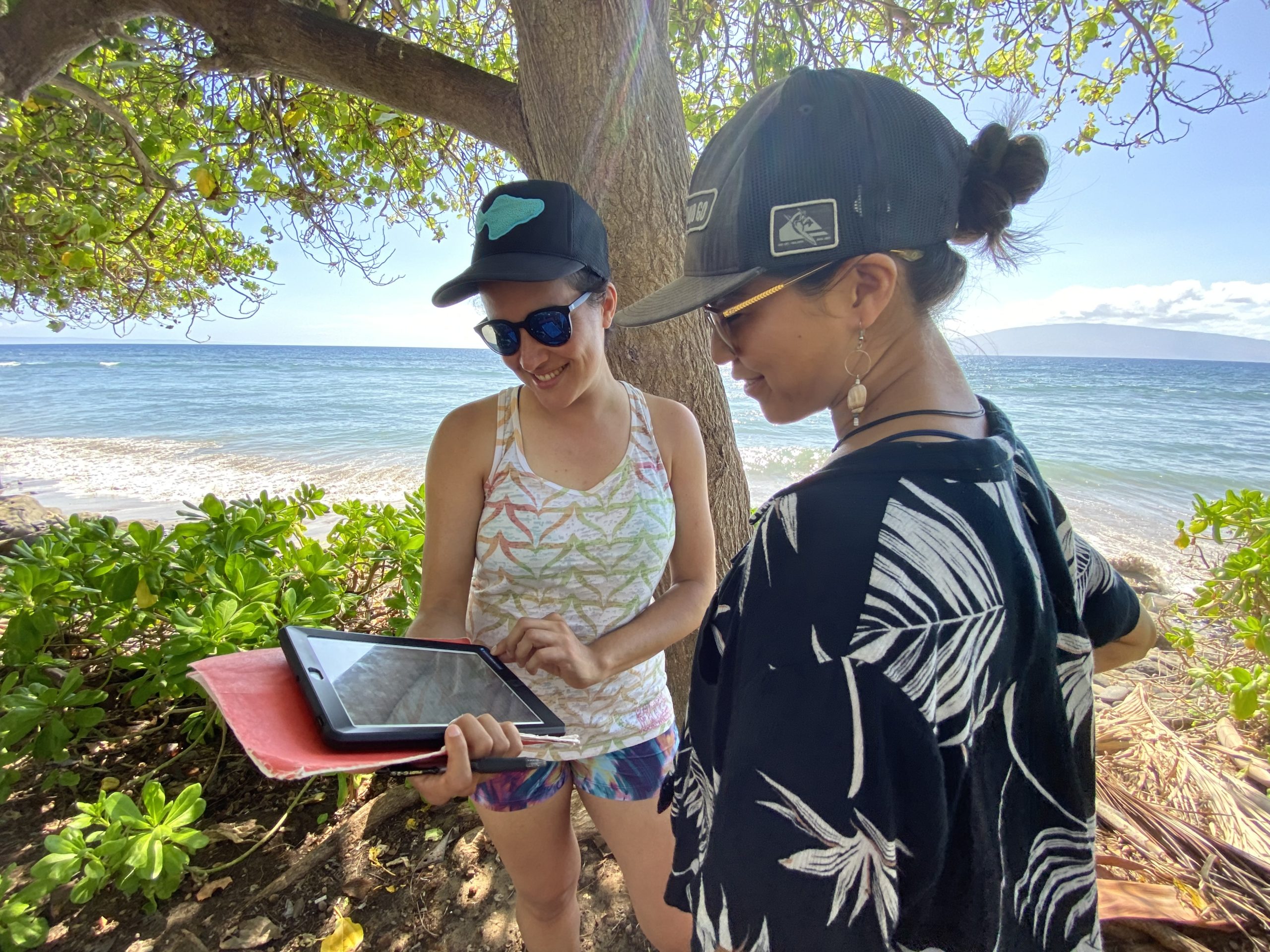
Kika Santana (left) and Marie Janiszewski (right) review a survey response about reef-based activities, perceptions of reef health, their social-psychological indicators (such as place attachment and self-efficacy), and pro-environmental behavioral intentions.

Scientists to Study “Molokini Without Tourists”

in /by

Maui Nui Marine Resource Council Helping to Raise Funds
 to Support This Once-in-a-Lifetime Research Opportunity

According to a 2007 report published in the scientific journal Ecological Applications, Molokini Marine Life Conservation District was considered the most effective marine protected area in Hawaiʻi1,2. However, during the past decade, Molokini’s ecosystem health has declined, likely related to pressures from intensive tourism at this mid-ocean reef system3,4.

During this time of COVI D-19, when tourism is switched off and there are no tour boats or snorkelers at Molokini, there is a once-in-a-lifetime opportunity to study how human activity impacts marine life in the Molokini Marine Life Conservation District.

The question: now that there is no tourism, is the wildlife changing how it uses the reserve?

“Molokini Crater is one of the most dramatic natural areas in the main Hawaiian Islands, and harbors coral reefs as well as fishes, sharks, manta rays and other wildlife,” says Maui resident Russell Sparks, Aquatic Biologist, Department of Land and Natural Resources, Division of Aquatic Resources on Maui. “Under normal conditions, tourism activity is very high at Molokini, with diving and snorkeling boats visiting continually. Now, there is no tourism.”

“How have important species changed their use of Molokini’s reef habitats in the absence of tourism?” asks Sparks. “We now have the opportunity to find out.”

Led by Sparks, a small team of scientists with expertise in animal tracking, underwater survey methods, wildlife ecology and past Molokini research experience is hoping to answer this question.

The team of Hawaiʻi-based scientists has extensive experience with coral reef ecology and animal movement studies in the Hawaiian Islands: Kevin Weng, Associate Professor at the Virginia Institute of Marine Science; Alan Friedlander, Chief Scientist, Pristine Seas, National Geographic Society, and director of the Fisheries Ecology Research Lab at the University of Hawaiʻi; and Whitney Goodell, National Geographic Fellow and marine ecologist with the Fisheries Ecology Research Lab, University of Hawaiʻi.

Friedlander has studied Molokini extensively and is the co-author of five research publications on Molokini conducted in collaboration with the Maui Division of Aquatic Resources.

The scientists plan to work at Molokini this summer (May and June) to conduct diver surveys of fishes and other wildlife. They will install a network of tracking receivers and tag animals with telemetry devices. Vessel activity will be counted using a time-lapse camera. This builds on previous work conducted by Friedlander’s lab in collaboration with the Maui Division of Aquatic Resources1,2,3,4 and offers a unique opportunity to compare current conditions with a robust, existing baseline.

The local nonprofit Maui Nui Marine Resource Council is raising funds for the team of scientists to conduct this study. The organization has set up a GoFundMe page for this project at gofundme.com/f/molokini-during-covid-19-research-study.

“Molokini is normally visited by 1,000 tourists every day and is one of the most visited marine protected areas in the world,” reports Robin Newbold, Co-founder and Chair of Maui Nui Marine Resource Council. “Many Maui residents are wondering what’s happening there now that the tourists are gone. We’re excited that these scientists have stepped forward to collect data relating to this important question.”

Newbold explains that the scientists are donating their time and resources for this study and have organized some parts of the expedition. However, they require support in a number of areas, since the urgent nature of the project has prevented the normal routes of science funding and planning.

The scientists have permits to travel and go to work at Molokini. They have a boat and captain, science equipment and telemetry tags ready to go.

As of July 15, they are seeking the use of a car or rental car, and a place to park an 18 foot boat overnight and when not in use. If you can help, please email [email protected].

“On behalf of the scientists, we are asking for help from the community for this project,” says Newbold. “Perhaps you have a car that’s not being used that you could share with the researchers.”

“We also welcome cash donations,” says Newbold. “100% of the donations collected by Maui Nui Marine Resource Council for this project will go directly to this research.” To donate, visit GoFundMe at gofundme.com/f/molokini-during-covid-19-research-study.

Maui Nui Marine Resource Council is a nonprofit 501 (c)(3) organization working for healthy coral reefs and clean ocean water for Maui’s nearshore areas. To learn more, visit www.mauireefs.org.
———————-
1 Friedlander AM, Brown EK, Monaco ME. 2007. Coupling ecology and GIS to evaluate efficacy of marine protected areas in Hawaii. Ecological Applications 17:715-730.

2 Friedlander AM, Donovan MK, Koike H, Murakawa P, Goodell W. 2019. Characteristics of effective Marine Protected Areas in Hawai‘i. Aquatic Conservation: Marine and Freshwater Ecosystems. Aquatic Conservation, 29(S2):103-117. DOI: 10.1002/aqc.3043

3 Filous, A., Friedlander, A.M., Koike, H., Lammers, M., Wong, A., Stone, K. and Sparks, R.T., 2017. Displacement effects of heavy human use on coral reef predators within the Molokini Marine Life Conservation District. Marine Pollution Bulletin 121:274-281.

4 Filous A, Friedlander A, Wolfe B, Sparks R. 2017. Movement patterns of reef predators in a small isolated Marine Protected Area with implications for resource management. Marine Biology, 164(1). DOI: 10.1007/s00227-016-3043-3

Photo credit:
 Molokini photographed by Bossfrog, 4 December 2015, under Creative Commons, via Wikipedia.

50th Anniversary of Earth Day

in /by

Due to COVID-19, big gatherings are not part of Earth Day 2020, the 50th Anniversary of Earth Day. But there’s so much you can do at home in honor of Earth Day to help shape a better future for our planet and our island home.

Check out these ideas:

1. Get informed. Learn what sea level rise caused by climate change will do to the shorelines, reefs and your favorite beaches in Maui County. Visit the Hawaii Sea Level Rise Viewer at https://www.pacioos.hawaii.edu/shoreline/slr-hawaii/.

2. Share what you’re observing here in Hawaii — beach loss, shoreline erosion, declining coral reefs, fewer reef fish — with friends and family worldwide. We need an informed public to understand what’s at stake and to vote for candidates who will actively work to fight climate change.

3. Help keep Maui County’s corals as resilient and as healthy as possible by keeping reef-harming chemicals out of the ocean. Choose sunscreens that don’t contain reef-harming oxybenzone and octinoxate. Learn more at https://www.mauireefs.org/sunscreens/

4. Remember, whatever you use in your home or yard will eventually find its way into the ocean. Pledge to stop using pesticides and herbicides in your landscaping, home and place of business. If you live in a condo, talk with your property manager about choosing non-toxic alternatives.

5. Dispose of unwanted or expired prescription medicines properly — never flush them down your toilet. When medications are flushed down a toilet or drain, they enter our wastewater treatment systems, which are not designed to remove medications. Some medications such as hormones and antidepressants include endocrine disrupting compounds (EDCs), which interfere with the reproduction and normal growth of many aquatic species, including fish.

Visit https://www.cvs.com/content/safer-communities-locate to find the CVS location nearest you that will accept unwanted medications.

6. Join the movement to prevent plastic pollution. Carry a set of lightweight cutlery in your purse or car so you can skip single use plastic utensils. Consider packaging as well as price when you shop. Learn more about the bill passed recently by the Maui County Council that bans nearly all sales and use of plastic disposable food ware in Maui County. Encourage Maui County Mayor Michael Victorino’s to approve it.

https://www.mauinews.com/news/local-news/2020/04/near-ban-on-plastic-disposable-utensils-okd/

7. Help prevent sediment-laden stormwater runoff; it is harmful to Maui’s nearshore reefs. In your yard, cover bare soil with mulch or plants to prevent runoff. Create a small soil berm in a ring around new plants to contain water. Incorporate permeable materials (like permeable pavers) into your patios, driveway, and walkways.

8. Educate the next generation. Check out the American Museum of Natural History’s curated list of Earth Day videos and plan an Earth Day watch party with your family. https://www.youtube.com/playlist?list=PLrfcruGtplwH76Sryqpk7nXf0YIEM0piZ

Humanity is working together in amazing ways to fight the coronavirus pandemic. The impossible is possible if we all work together for our planet. Happy Earth Day!

Free Oct. 7 Webinar by Daniel Amato, Ph.D. on “Sewage Impacts on Hawaiʻi’s Coastlines: Past, Present and Future”

in /by

What will determine the future impacts of sewage on Hawai’i’s nearshore ecosystems and public health? Learn more at a free Zoom webinar titled “Sewage Impacts on Hawaiʻi’s Coastlines: Past, Present and Future” by Daniel Amato, Ph.D., which will include recent research and latest information on Hawaiʻi’s wastewater saga. The webinar will take place on Wednesday October 7 at 5:30 pm and is free and open to the public. It is presented by Maui Nui Marine Resource Council as part of their monthly “Know Your Ocean Speaker Series.” Advance reservations are recommended as the Zoom webinar is limited to 100 attendees. Make your free reservation at https://bit.ly/MauiSewage

“My talk will share reports on how injection wells and cesspools continue to pollute Hawaiʻi’s waters, with an emphasis on recent Maui studies,” says Dr. Amato. ”I will also present recent decisions from the Hawaiʻi State Legislature and the current status of their effort to phase out cesspools.”

Dr. Amato will also discuss the current situation with sewage pollution in Hawai’i, and will present community efforts and new technological developments in sewage detection that show promise for the future.

A water quality specialist, Dr. Amato’s professional work focuses on the detection and impacts of land-based pollution in the Pacific Ocean and the development of new technology to assist in detecting the DNA of fecal indicator bacteria (FIB) in the water.Dr. Amato is a Marine Research Specialist at the University of Hawaiʻi at Manoa, an Environmental Scientist at Element Environmental LLC, and serves as the coordinator for Surfrider-Oahu’s Blue Water Task Force.

“We are offering this webinar by Dr. Amato to share important information about sewage and its impact on Maui’s coastlines, including ocean water quality and our nearshore coral reefs,” says Amy Hodges, Programs and Operations Manager at Maui Nui Marine Resource Council. “It’s a critically important topic, at a time when our coral reefs need the benefit of clean ocean water, to survive the impacts of climate change and warming water.”

“We thank the County of Maui Mayorʻs Office of Economic Development for supporting our Know Your Ocean Speaker Series,” says Hodges.

For reservations for this talk, visit https://bit.ly/MauiSewage.

About Maui Nui Marine Resource Council:
Maui Nui Marine Resource Council is a community-based nonprofit organization celebrating 12 years of working for healthy coral reefs, clean ocean water and abundant native fish throughout Maui County. Our work includes co-managing the Hui O Ka Wai Ola Ocean Water Quality Monitoring Program in South and West Maui, efforts to reduce pollution in Mā‘alaea Bay (through erosion-control efforts in the Pohakea watershed and using oysters to filter sediment and pollutants from ocean water), coral reef research, visitor education programs and more. Learn more at www.mauireefs.org.


Christina Lizzi Joins Maui Nui Marine Resource Council as Executive Director

in /by

KIHEI, HI – Maui Nui Marine Resource Council (MNMRC), a community-based nonprofit celebrating 11 years of working for healthy coral reefs, clean ocean water and abundant native fish for the islands of Maui County, has announced that Christina Lizzi, Esq. has joined the organization as Executive Director.

Christina received her Juris Doctor from the University of Hawaii at Mānoa William S. Richardson School of Law, graduating summa cum laude with certificates in environmental law and Native Hawaiian rights. She earned her B.A. from George Washington University, magna cum laude. She most recently served as a judicial law clerk for Associate Justice Sabrina S. McKenna and Associate Justice Richard W. Pollack at the Hawaiʻi Supreme Court. She is also a lecturer in law at the William S. Richardson School of Law and a member of the IUCN World Commission on Environmental Law.

Christina brings both local and international experience to her position with MNMRC. During law school, she was a delegate of Richardson’s Environmental Law Program to the 2016 IUCN World Conservation Congress; studied for a semester at O.P. Jindal Global Law School in Sonipat, India; externed at the National Green Tribunal of India in New Delhi; and was a Sam L. Cohen International Human Rights Fellow. Locally, Christina assisted the Hawaiʻi State Environmental Council with drafting updates to Hawaiʻi Administrative Rules Chapter 11-200, Environmental Impact Statement Rules, which were recently signed into law. Christina also spent four years working at the University of Hawaiʻi Center on Disability Studies on a variety of projects to increase employment opportunities for people with disabilities statewide. Prior to moving to Hawaiʻi in 2012, Christina was a policy analyst and national community organizer on fisheries issues at Food & Water Watch, a non-profit organization based in Washington, D.C.

“Christina has demonstrated a tremendous commitment to the environment and to the well-being of Hawaiʻi,” said Robin Newbold, co-founder and Chair of Maui Nui Marine Resource Council. “Her professionalism, excellent communication skills, ability to bring people together, experience with environmental nonprofits, and love of the ocean are qualities that will serve our organization well as we expand our projects and programs on behalf of our local coral reefs.” 


“It is a great honor to be joining MNMRC,” Christina expressed. “We are at an environmental turning point. The actions we take today as a community are critical to ensuring future generations will have an opportunity not only to enjoy Maui’s water-based lifestyle and to continue traditional and customary practices as those today do, but so that tomorrow’s keiki may thrive in renewed relationship with the environment, with healthy coral reefs, clean water, and abundant native fish for years to come. I look forward with hope, humility, and enthusiasm to leading MNMRC’s efforts to achieve this vision.”

Maui Nui Marine Resource Council is best known for its role as a co-founder and managing partner of Hui O Ka Wai Ola, a unique volunteer-based ocean water quality monitoring program that routinely tests ocean water quality at 39 locations in South and West Maui. Other current work includes a pilot project to utilize oysters to remove pollutants and sediment from the ocean water at Maʻalaea Harbor, a program to install firebreaks and native plants in the 4,000 acre Pohakea watershed above Maʻalaea to prevent wildfires that contribute to sediment runoff into Maʻalaea Bay, a visitor education program about protecting coral reefs, a monthly speaker series on topics pertaining to marine conservation and Mauiʻs environment, and support of coral reef research in Olowalu and Maʻalaea.

Maui Nui Marine Resource Council also helped establish and continues to support the Maui Nui Makai Network, a bottom’s up approach to protecting coastal reef and fish populations patterned after traditional Hawaiian approaches. The organization also assembled the Maui Coral Reef Recovery team — a group of eminent scientists, fishers, county government and community representatives — to write a Coral Reef Recovery Plan and provide guidance on its implementation.

To learn more about Maui Nui Marine Resource Council, visit www.mauireefs.org.

An Evening with Nainoa Thompson: “Mālama Honua (Care for Island Earth): In a Changing World, Hope Comes With Action”

in /by

Maui Nui Marine Resource Council is pleased to present a special event on Tuesday, October 8 at 6:00 pm at ʻIao Theater: “An Evening with Nainoa Thompson: “Mālama Honua (Care for Island Earth): In a Changing World, Hope Comes With Action.”

President of the Polynesian Voyaging Society and a master in the traditional Polynesian art of non-instrument navigating, Nainoa Thompson led Hōkūleʻa’s global “Mālama Honua (Care for Island Earth) Voyage.” Inspired by his kūpuna, his teachers, he has dedicated his life to exploring the deep meaning of voyaging. On long voyages, Nainoa came to appreciate the Hawaiian concept of “mālama” (caretaking).

“Our ancestors learned that if they took care of their canoe and each other,” Nainoa often told his crew, “and if they marshaled their resources of food and water, they would arrive safely at their destination.”

Nainoa is the recipient of numerous community awards, including the Unsung Hero of Compassion, awarded to him by His Holiness XIV Dalai Lama on behalf of the organization Wisdom in Action, the Native Hawaiian Education Association’s Manomano Ka ‘Ike (Depth and Breadth of Knowledge) Educator of the Year Award, the NOAA National Marine Sanctuary Foundation Lifetime Achievement Award, the BLUE Ocean Film Festival Legacy Award, the Peter Benchley Ocean Award for Excellence in Marine Exploration, the National Geographic Society’s Hubbard Medal, and the Explorers Club Medal.

Don’t miss this inspiring presentation on Tuesday, Oct. 8 at the historic ʻIao Theater in Wailuku. It is presented as part of the “Know Your Ocean” Speaker Series, presented by the nonprofit Maui Nui Marine Resource Council with support from the County of Maui Mayor’s Office of Economic Development and Maui Visitors Bureau. Tickets are $10 – $20 per person with reserved seating. Doors open at 5:30 pm. Presentation at 6:00 pm.

For tickets, please visit https://bit.ly/NainoaThompson.