Posts

“Rally for the Reefs” webinar on Thursday, June 16 will focus on saving the reefs of Māʻalaea Bay

in /by

Speakers Stuart Coleman, Rep. Angus McKelvey and Maui County Councilmember Kelly King will provide updates on Māʻalaea wastewater treatment options

MĀʻALAEA, HI – Longtime Māʻalaea resident Peter Cannon remembers that during his childhood, “the coral reefs of Māʻalaea Bay were like the robust and healthy reefs that you see today at the ʻĀhihi-Kīnaʻu Natural Area Reserve.” He recalls that local families enjoyed harvests of ribbon limu from the bay, and there was an abundance of native fish and opae.

Since the 1970s, the coral reefs in Māʻalaea Bay have degraded so severely that Hawaii’s Division of Aquatic Resources (DAR) has described the situation as “a case study in total system collapse.” In their report, “Status and Trends of Maui’s Coral Reefs” DAR in partnership with the Coral Reef Assessment and Monitoring Program reported on their 1999 monitoring in Māʻalaea Bay and noted that the “end result of reef degradation is evident in Māʻalaea Bay.”

The report noted that in 1972, “Māʻalaea coral reefs were described as being ‘striking in their diversity and in the presence of rare corals species’. As late as 1993, estimated coral cover was 50- 75% close to the site where cover is now 8%. Therefore, in just a few decades, the Māʻalaea reef has transformed from a healthy and diverse ecosystem into a badly degraded habitat overgrown by algae and with little surviving coral.”

The report also noted that fish stocks in in Māʻalaea are now in very poor condition, and the reefs have been invaded by alien and invasive algae species.

Declining ocean water quality in Māʻalaea Bay is a major contributor of the decline. A new report for the years 2019 – 2022 by the Hui O Ka Wai Ola community-based ocean water quality monitoring program indicates that Māʻalaea Bay has excessive levels of nitrates, second only to the levels in Kihei Cove, of all the sites the program monitors along the leeward Maui coast.

What can Maui County residents and visitors do to improve the ocean water quality and save the reefs of Māʻalaea Bay? Learn about the steps that are proposed — and how individuals can help – at an online Rally for the Reefs webinar to be held on Thursday, June 16 at 5:30 pm via Zoom.

Admission is free, but reservations are required. To reserve your spot, visit https://bit.ly/Rally4Reefs.

The “Rally for the Reefs” webinar will feature presentations by:

Stuart Coleman
Founder and Executive Director of WAI (Wastewater Alternatives & Innovations)
Coleman will discuss modern wastewater alternatives and innovations that will make it possible to reduce the pollution that has been harming the corals in Māʻalaea Bay.

Maui County Councilmember Kelly Takaya King
(Holds the County Council seat for South Maui)
Councilmember King will discuss the funding for the improved wastewater treatment system for Māʻalaea in the County’s 2023 budget and the steps ahead to make this system a reality.

State Representative Angus L.K. McKelvey
(Representing West Maui – Māʻalaea – North Kihei)
Representative McKelvey will explain how the State can help establish improved wastewater treatment in Māʻalaea, and why the proposed wastewater treatment project in Māʻalaea could serve as a model for other small communities throughout Hawaii that are looking for replacements for cesspools, injection wells and septic systems.

“The community has been working hard to identify and address the problems that have undermined the ocean water quality of Māʻalaea Bay and harmed the coral reefs,” said Mike Fogarty, Executive Director of Maui Nui Marine Resource Council. “We’ve now reached critical junctures that will decide if and when some of the proposed solutions to the problems of water pollution and reef loss will be addressed. We need to act now to save Māʻalaea’s reefs before it’s too late. Please attend the Rally for the Reefs to learn what can and should be done.”

The Rally for the Reefs webinar is sponsored by WAI, Maui Ocean Center, Māʻalaea Village Association, Maui Nui Marine Resource Council, Maui Ocean Center Marine Institute and Sierra Club Maui Group.

To register to attend this free Zoom event, please visit https://bit.ly/Rally4Reefs.
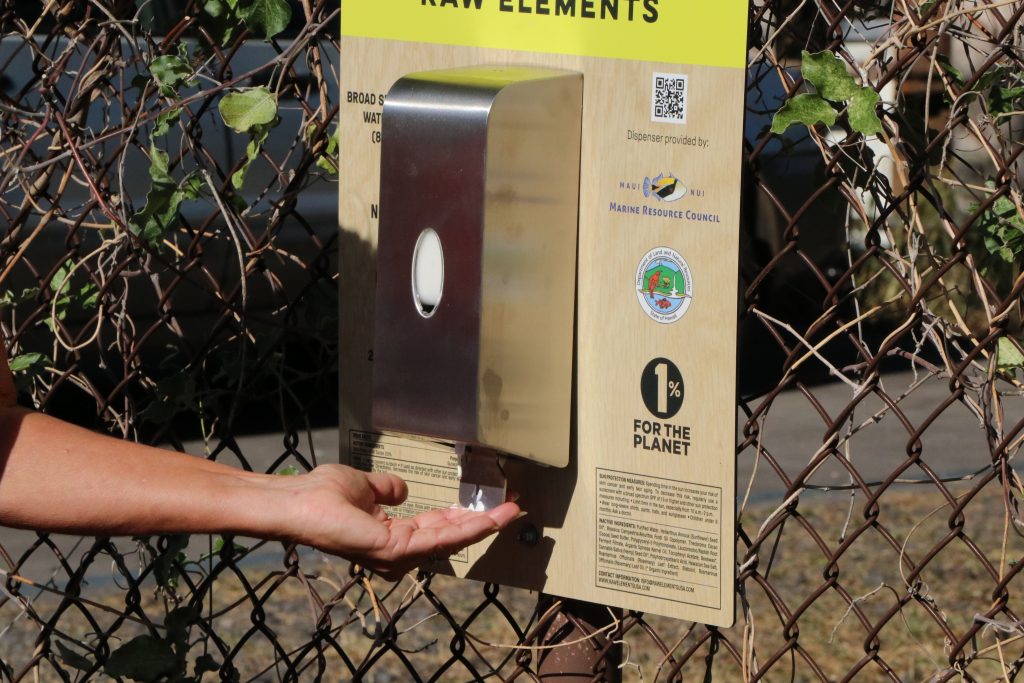
New Sunblock Dispensers Urge South Maui Ocean-Goers to “Love the Ocean the Right Way” on Valentine’s Day

in /by

KIHEI – Four mineral sunblock dispensers are up on this Valentine’s Day on south Maui shores, encouraging all to “love the ocean the right way.” Two are at the ‘Āhihi-Kīna‘u  Natural Area Reserve and a pair are to be installed at Mākena State Park. Thousands of people enter the ocean at these locations every day.

The dispensers hold non-nano, zinc, mineral sunscreen. Products with these active ingredients are safe for people and marine life because those elements already exist in sea water. Dermatologists say mineral-based products are the most effective protection for people, as they block out both UVB and UVA rays from the sun.

The Maui installations were inspired by a sunblock dispenser at Waialea Bay at Hāpuna State Recreation Area on Hawai‘i Island. Kelli Lundgren, board member of the Robert F. Orr Charitable Foundation, decided Maui needed dispensers. “As a volunteer at ‘Āhihi-Kīna‘u I’ve communicated with hundreds of visitors about the effectiveness and protection of mineral sunscreens. As people understand the mineral alternative and discover that sprays and bottles labeled “reef safe” actually can be harmful, they wanted an alternative.”

The Robert F. Orr Charitable Foundation through the Maui Nui Marine Resource Council, and with support from the State of Hawai‘i and County of Maui, helped with the placement of dispensers at the Maui beaches. “I hope this will be the start of additional protection for Maui’s corals, fishes, and other abundant, beautiful, and essential sea life,” Lundgren added.

“Once people try mineral sunscreens, they see how easy they are to use,” said Mike Fogarty, Executive Director at Maui Nui Marine Resource Council. “We hope these dispensers give people an introduction to a better way of protecting themselves and marine life. Using mineral-based sunscreens also help protect the fish that many in our community rely on for food.”

Beginning on October 1, Maui County will be the first place in the country to ban the sale and use of sunscreen products with petrochemicals as active ingredients. Many of those products are labeled as “reef safe” with no scientific backing to the claims. The historic ordinance was passed unanimously by the Maui County Council and was signed into law by Mayor Michael Victorino last December.

It is intended to protect reefs and ocean food sources from continuous, daily chemical contamination. A 2018 state-wide law only banned the sale of two chemicals but allowed the continued sale of many other chemical ingredients.The Maui ordinance is stronger because it allows only the sale of mineral products. It prohibits the sale or use of any chemical compounds currently in use as well as any new compounds created in  the future.

Council member Kelly King introduced the bill and commented, “Non-mineral sunscreens are an aggressive pollutant. Our coral reefs are our first defense against climate change and sea level rise. This includes impacts such as erosion, runoff from storms and development, and seepage from wastewater injection wells. Our ordinance is one important step toward protecting the health and resilience of our reefs and marine life by removing a significant ecological stressor. Making a better choice in sun protection is one thing we can  all do immediately. What better day than Valentine’s to make a change and show your love for the kai?”
Peter Landon, of the DLNR Division of Forestry and Wildlife, manages ‘Āhihi-Kīna‘u Natural Area Reserve. Landon said, “Thanks for the generous donations and everyone’s work on this issue. The     installation of these dispensers is a welcome addition to our outreach efforts, giving us a way to help visitors who were unaware of the chemical sunscreen pollutants, or thought they bought something ‘reef safe’. We appreciate it when people hear our messageand want to do the right thing.”

Raw Elements USA supplied the dispensers and product. Chis Wagaman of the company remarked, “We’re honored and proud to be a part of this project with great people participating in positive change for Maui. It is incredible to see the steps taken to educate and provide an incredible experience for everyone who goes into the ocean.”
# # #

To view video please click on photo or view at this link: https://vimeo.com/677415105

More information about mineral sunscreens and reefs:  https://www.mauireefs.org/sunscreens

More information about Maui’s ordinance: https://www.mauicounty.gov/DocumentCenter/View/130826/Ord-5306

Media Contact:  Dan Dennison 
Senior Communications Manager 
Hawai’i Dept. of Land and Natural Resources 
[email protected] 
808-587-0396

Maui Nui Marine Resource Council Launches Campaign to Encourage Chemical-Free Landscaping to Protect Coral Reefs and Marine Wildlife

in /by

MAUI, HI – As part of its work to protect and promote healthy coral reefs, clean ocean water and abundant native fish in Maui County, Maui Nui Marine Resource Council has launched an educational campaign to encourage private and public landowners, golf courses and landscapers to switch to organic land management. The organization launched this campaign after gathering research on the impacts that toxic pesticides, fungicides, herbicides and synthetic fertilizers have on coral reefs and marine wildlife.

“Many people want to help protect the ocean, but they aren’t aware that they can do that through organic land management,” says Grace Silver, Project and Research Coordinator at Maui Nui Marine Resource Council. “This campaign will educate and encourage private and public landowners to give up use of landscape chemicals to protect the ocean environment and create a healthier and thriving microclimate on their own land.”

Maui Nui Marine Resource Council is working with Beyond Pesticides, National Organic Farming Association and local organic land management experts to provide the community with helpful information for landowners and land management experts to make the switch to organic land management. Because cumulative impacts can be so detrimental, every single property that makes the switch will make a difference towards creating a cleaner and healthier environment around them.

“Numerous scientific studies have shown that the use of synthetic chemicals on land have significant and adverse impacts to coral reef ecosystems and aquatic species,” reports Silver. “Some of these negative impacts include coral reef bleaching, eutrophication, biomagnification, reproduction inhibition and increased disease in fish and marine wildlife.”

“Through our research, we’ve found that a majority of chemicals applied to our land for landscaping and pest control often end up in the ocean,”  explains Meredith Beeson, Project and Research Coordinator at Maui Nui Marine Resource Council. “Once these chemicals make their way into aquatic environments, they harm coral reefs by hindering their ability to feed and reproduce.”

“In order to protect our oceans, this chemical runoff needs to be reduced (or ideally stopped) from reaching the ocean,” says Beeson. “The solution is organic land management.”

According to a study published in the Journal of Agricultural and Environmental Ethics by David Pimentel, less than 0.1% of pesticides applied for pest control reach their target pests. Thus, more than 99.9% of pesticides used move into the environment where they adversely affect public health and beneficial biota, and contaminate soil, water, and atmosphere of the ecosystem.

Problems caused by landscaping chemicals and synthetic fertilizers entering the marine environment include:
• Tumor-causing diseases in turtles, as documented by the University of Hawaii, Manoa by Celia Smith and Walter Zimmermann.
• Creation of dead zones through the process of eutrophication, as documented by InTeGrate in “Managing Runoff to Reduce the Dead Zone.”
• Degradation of coral reefs, leading to economic impacts, as documented by University of Hawaii, Manoa in “Economic Value of Hawaii’s Nearshore Reefs.”
• Death of zooxanthelle (coral symbiont) which leads to coral bleaching, as documented by the Marine Pollution Bulletin by C.M. Shaw, J. Brodie, and J.F. Mueller.
• Potential human health impacts through chemical exposure, as documented by the Agency for Toxic Substances and Disease Registry.

“Whether you have a small yard or run a large-scale farm, organic land management can help protect Maui’s coral reefs and aquatic organisms” says Beeson. “Another benefit of organic landscaping is that it ultimately allows the land to sustain itself without large amounts of human intervention, saving time, energy and money in the long run.”

Maui Nui Marine Resource Council has created a webpage at https://www.mauireefs.org/what-we-do/pesticides/ with resources to help land managers, owners and landscapers obtain more information on organic land management. These resources focus on common issues found in Maui County.


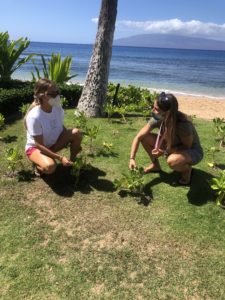
Maui Nui Marine Resource Council staff members Meredith Beeson and Grace Sliver examine landscaping plants and discuss organic land care methods as part of our new Pesticide Education Program. 

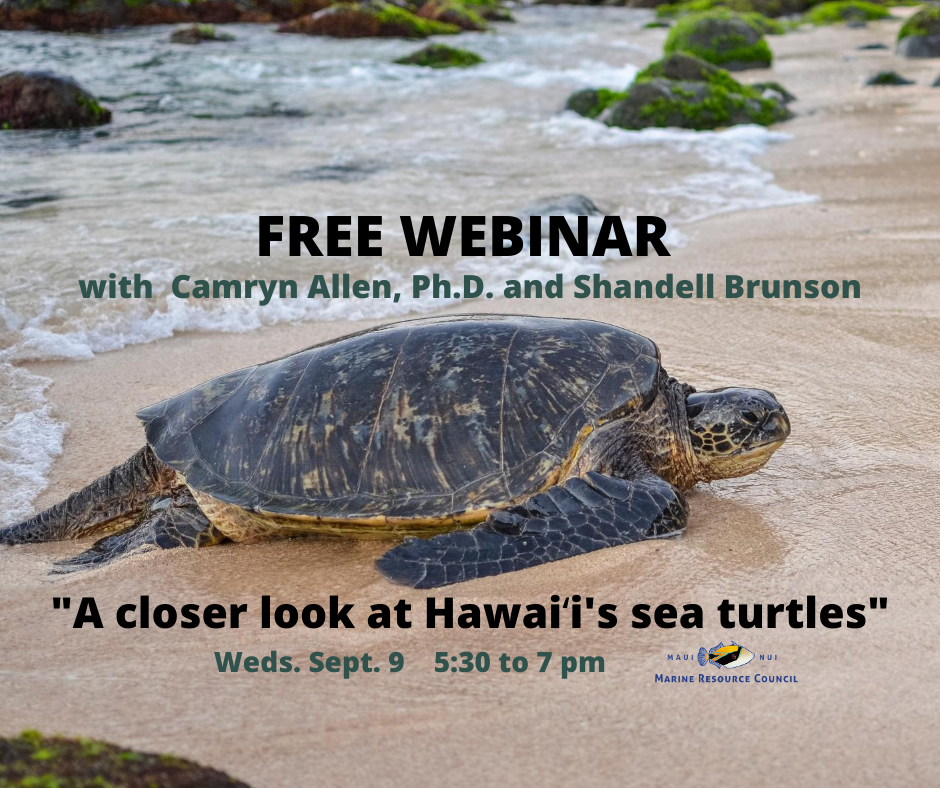
“A Closer Look at Hawaiʻi’s Sea Turtles” is Topic of Sept. 9 “Know Your Ocean Speaker Series” Webinar

in , /by

A free Zoom webinar offering “A Closer Look at Hawaiʻiʻs Sea Turtles” will be presented on Wednesday, September 9 from 5:30 to 7 pm Hawaii Standard Time as part of Maui Nui Marine Resource Councilʻs  monthly “Know Your Ocean Speaker Series.” It will also air via Facebook Live at facebook.com/mnmrc, the Facebook page of Maui Nui Marine Resource Council.

The talk will feature presentations by Dr. Camryn Allen, a NOAA wildlife endocrinologist,  and Shandell Brunson, NOAA’s sea turtle stranding coordinator for Hawaiʻi and the Pacific Islands region.

Dr. Allen is the Supervisory Marine Biological Researcher (JIMAR) at the Joint Institute for Marine and Atmospheric Research at NOAA Fisheries Pacific Island Fisheries Science Center in the Protected Species Division. She created a sea turtle endocrinology laboratory to examine sex ratios of sea turtles in the wild.  Her talk will present findings on the ratio of male vs. female turtles at foraging grounds — and what that means for the potential impacts of climate change on our sea turtle populations.

Shandell Brunson is a biological sciences technician with the Marine Turtle Biology and Assessment Program and is NOAA’s sea turtle stranding coordinator for Hawaiʻi and the Pacific Islands region. She will share findings from sea turtle strandings in Hawai’i, including what’s being learned about threats from strandings, rehabilitations and deaths.

Our guest emcee is Darla Palmer-Ellingson, local radio show host of the public affairs program, Island Environment 360 Maui’s only commercially broadcast public affairs show on environmental and related Hawaiian cultural topics. The program is made possible by H-Hawaii Media.

This free online event is part of Maui Nui Marine Resource Councilʻs “Know Your Ocean Speaker Series” and is made possible with support from the County of Maui Mayorʻs Office of Economic Development.

Advance reservations are for the Zoom webinar.  To make your free reservation, please visit https://bit.ly/HawaiiSeaTurtles.

The talk will also be presented on Maui Nui Marine Resource Councilʻs Facebook Live page at https://www.facebook.com/MNMRC.

Questions will be accepted from the audience on both Zoom and Facebook.


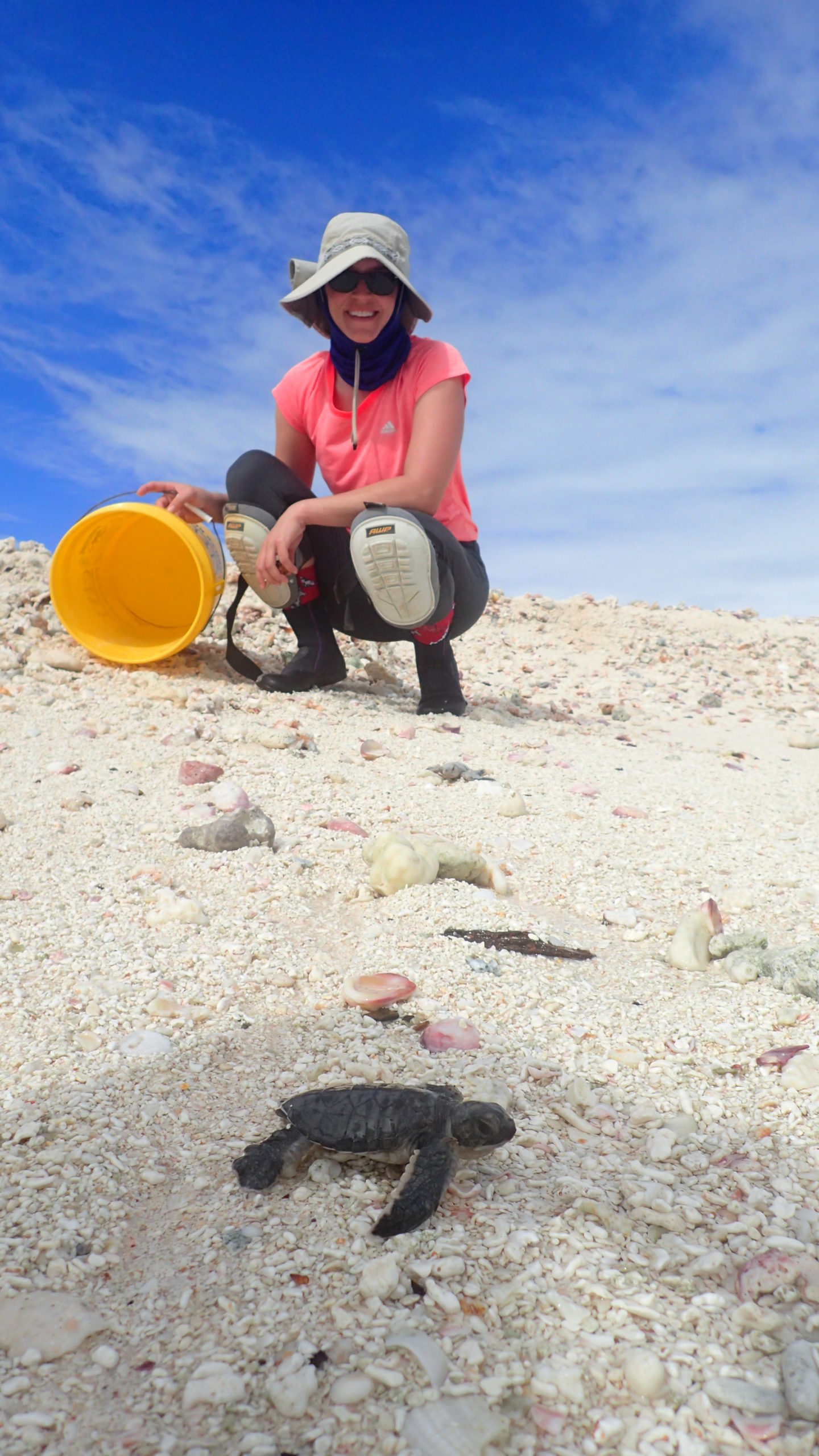
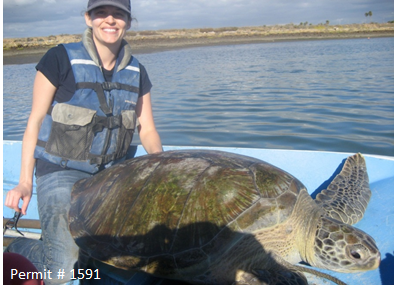
Photos at left: Dr. Camryn Allen at work in the field.


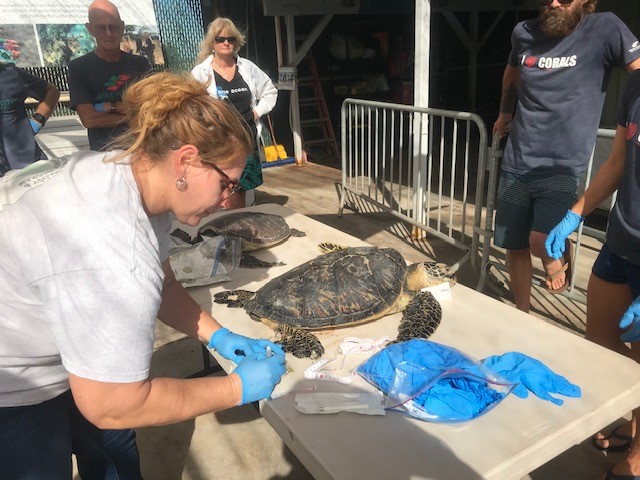
Photo below: Shandell Brunson at a training with Maui Ocean Center Marine Institute (MOCMI) last November.

Oyster Spat Collected to Raise Next Generation of Oysters for Māʻalaea Ocean Water Improvement Project

in /by

A small bag of 100 tiny Hawaiian oysters, gathered in mid-August under State of Hawai‘i permit by staff of Maui Nui Marine Resource Council (MNMRC), represents the “next generation” in the nonprofit organization’s work to use oysters to filter and clean ocean water in Māʻalaea Bay. The project to improve ocean water quality in Māʻalaea is supported by the County of Maui Mayorʻs Office of Economic Development.

What’s amazing is that the tiny oysters appeared to have “volunteered” for the job.

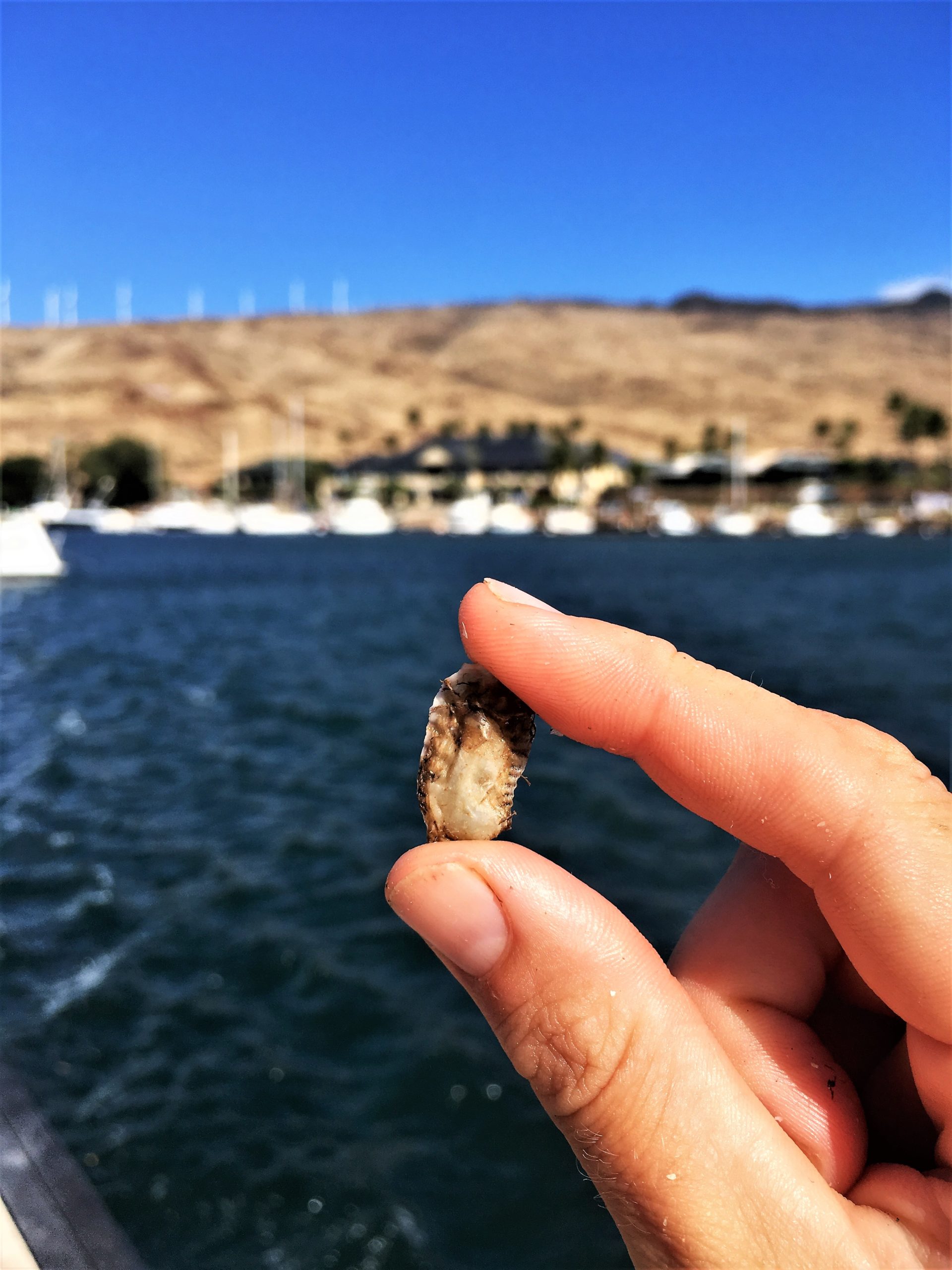
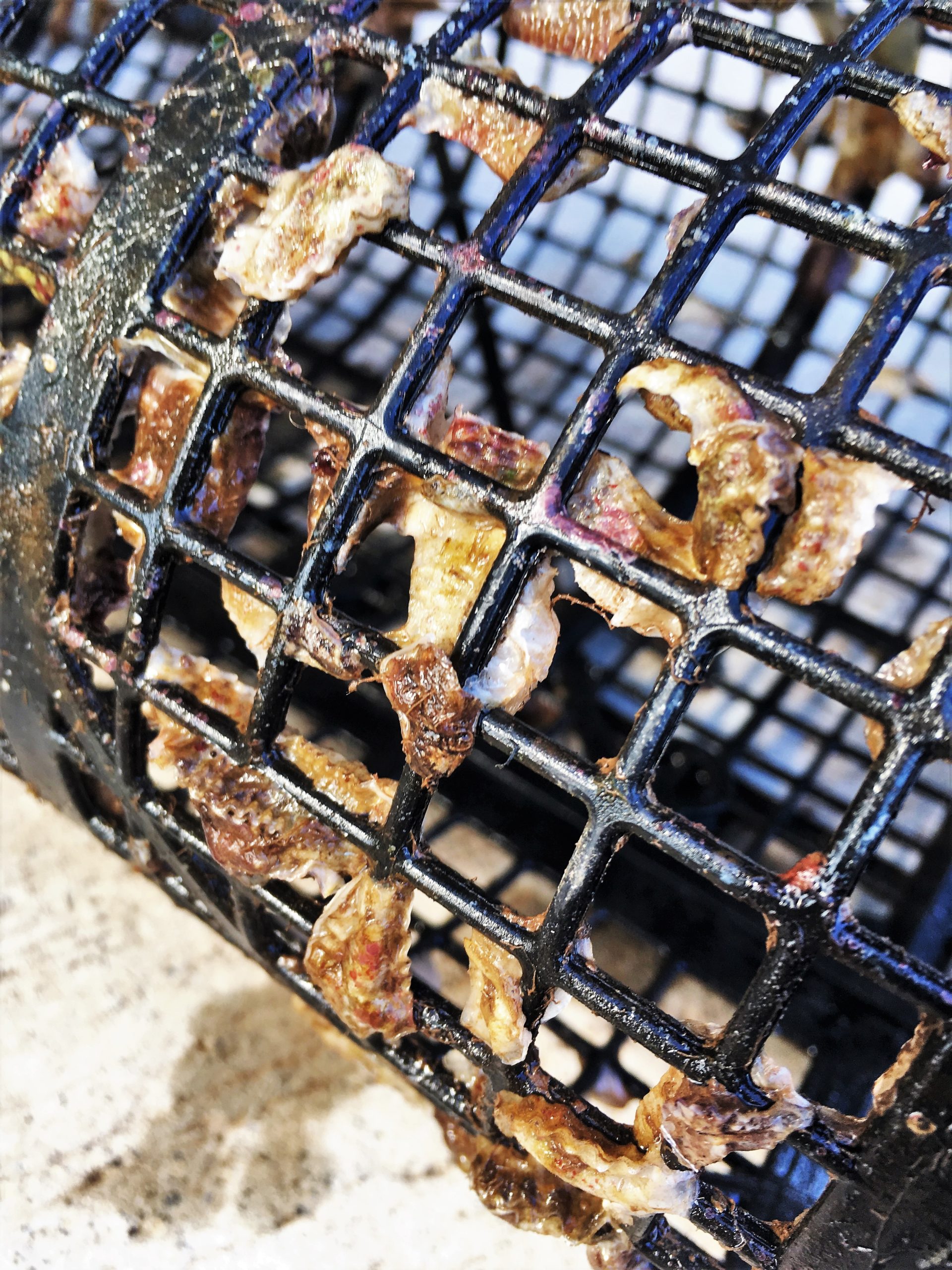
Months ago, Maui Nui Marine Resource Council Programs and Operations Manager Amy Hodges was amazed to see that floating oyster larvae from native Hawaiian oysters (Dendostrea sandvicensis) had begun to voluntarily attach themselves to the outside of oyster cages that the organization had installed in Māʻalaea Harbor. Over a period of months, they grew into tiny oysters called “spat.”

“It was MNMRC’s goal to incorporate using Hawaiian oysters, which are native to Hawaiʻi, for this project starting in December 2020. And here they were, appearing on our cages,” noted Hodges. “These baby oysters were truly a gift from nature.”

MNMRC coordinated with the Pacific Aquaculture and Coastal Resources Center (PACRC) in Hilo, a project of the University of Hawai‘i at Hilo, to follow the right protocol to safely collect and ship these oysters to PACRC for spawning and propagation. The State of Hawaiʻi Department of Agriculture office on Maui inspected the oysters before they were shipped.

The tiny oysters will be well-fed and protected at PACRC, where they will spawn and their progeny will grow larger more quickly than those in the wild. They will be shipped back to Maui in December to be raised in cages as part of MNMRC’s oyster bioremediation project.

MNMRC expects to receive about 3,000 mature Hawaiian oysters from PACRC by the end of 2020.

Hodges explains that oysters are extremely effective natural filter feeders, with each oyster capable of filtering 40 to 60 gallons of water per day, removing sediment and other pollutants. “Our goal is to use the oysters to improve the ocean water quality to Māʻalaea Bay, to provide cleaner, healthier water for the coral reefs and local fish populations,” says Hodges. “The goal is to make Māʻalaea Bay a better place for fishing, paddling, surfing, swimming and beach days for the entire community. We’re glad to have the oysters ‘volunteering’ to help us reach that goal.”

When MNMRC launched its project in early 2020, the team installed cages of Pacific oysters, which are commonly found throughout Hawai‘i, but are not native. The Pacific oysters are larger than Hawaiian oysters and are triploids, meaning they are sterile and cannot reproduce. After seeing that the Pacific oysters survived the polluted water in which they were placed, and the Hawaiian oysters appeared on the oyster cages,  MNMRC’s team decided to go forward with including smaller native Hawaiian oysters in the project, using oyster spat gathered from Māʻalaea Bay. “We believe that these oysters are well suited to the unique conditions of this area,” said Hodges.

All of the oysters are being used to clean polluted water and are unsafe to eat. The oysters may carry Vibrio bacteria which can cause watery diarrhea, often accompanied by abdominal cramping, nausea, vomiting, fever and chills. Vibrio is a naturally occurring bacteria and can be found in warm coastal waters and harbors, where it infects oysters.

The cages housing the oysters are clearly marked with warning tags stating, “Toxic. Do Not Eat. Research in Progress. Do Not Remove. Maui Nui Marine Resource Council.”

It is illegal to catch, take, kill, possess, remove, sell, or offer for sale oysters or clams from the waters of the state of Hawai‘i according to fishing regulations HAR 13-83 and HAR 13-85. Violators shall be punished as provided by law. Maui Nui Marine Resource Council is permitted through the State of Hawai‘i for its oyster project.

Maui Nui Marine Resource Council is a community-based nonprofit organization celebrating 12 years of working for healthy coral reefs, clean ocean water and abundant native fish throughout Maui County. MNMRC’s work includes co-managing the Hui O Ka Wai Ola Ocean Water Quality Monitoring Program in South and West Maui, efforts to reduce pollution in Mā‘alaea Bay through erosion-control efforts in the Pōhākea watershed, coral reef research, visitor education programs and more. Learn more at www.mauireefs.org.

Support for this project was provided by Hawaii Tourism through the Aloha ʻĀina program and the County of Maui Mayorʻs Office of Economic Development. 


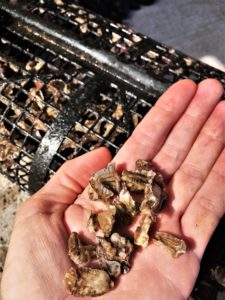
Hawaiian oysters collected under permit in Mā‘alaea Harbor by Maui Nui Marine Resource Council will be propagated at the Pacific Aquaculture and Coastal Resources Center in Hilo, and their progeny returned to Maui as part of an oyster bioremediation project to help improve ocean water quality in Mā‘alaea Bay. Photo credit: Maui Nui Marine Resource Council


 The tiny Hawaiian oysters first appeared as spat (baby oysters) on the outside of cages that Maui Nui Marine Resource Council had installed in the harbor. “It almost seems like they were ʻvolunteeringʻ to be part of our project,” says Amy Hodges, Programs and Operations Manager at Maui Nui Marine Resource Council. Photo credit: Maui Nui Marine Resource Council.


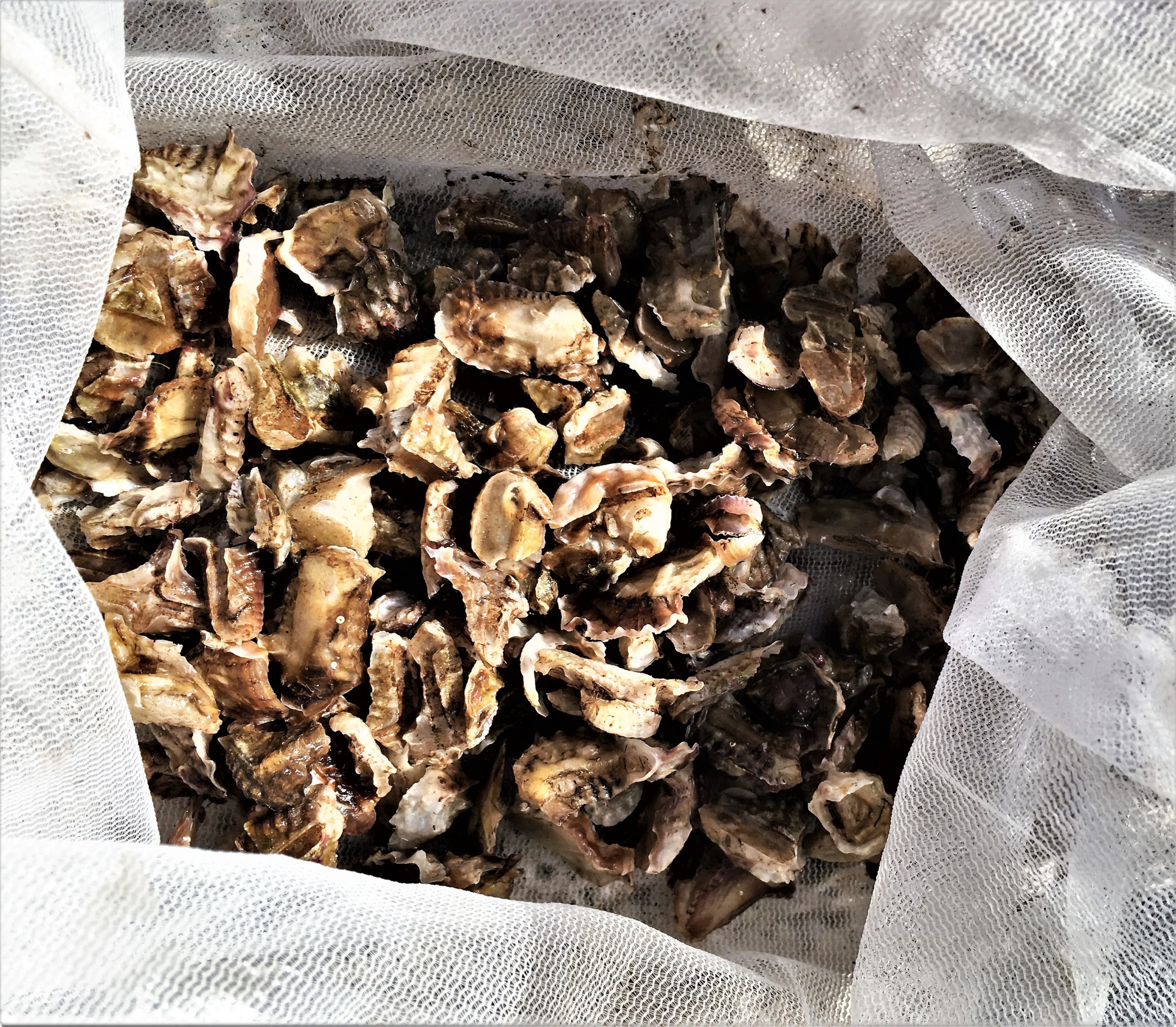
 A bag of 100 tiny oysters was collected under State of Hawai‘i permit, then inspected by the Department of Agriculture on Maui, before shipment to the Pacific Aquaculture and Coastal Resources Center in Hilo, to be raised under ideal conditions for spawning and propagation. Photo credit: Maui Nui Marine Resource Council. 


Scientists to Study “Molokini Without Tourists”

in /by

Maui Nui Marine Resource Council Helping to Raise Funds
 to Support This Once-in-a-Lifetime Research Opportunity

According to a 2007 report published in the scientific journal Ecological Applications, Molokini Marine Life Conservation District was considered the most effective marine protected area in Hawaiʻi1,2. However, during the past decade, Molokini’s ecosystem health has declined, likely related to pressures from intensive tourism at this mid-ocean reef system3,4.

During this time of COVI D-19, when tourism is switched off and there are no tour boats or snorkelers at Molokini, there is a once-in-a-lifetime opportunity to study how human activity impacts marine life in the Molokini Marine Life Conservation District.

The question: now that there is no tourism, is the wildlife changing how it uses the reserve?

“Molokini Crater is one of the most dramatic natural areas in the main Hawaiian Islands, and harbors coral reefs as well as fishes, sharks, manta rays and other wildlife,” says Maui resident Russell Sparks, Aquatic Biologist, Department of Land and Natural Resources, Division of Aquatic Resources on Maui. “Under normal conditions, tourism activity is very high at Molokini, with diving and snorkeling boats visiting continually. Now, there is no tourism.”

“How have important species changed their use of Molokini’s reef habitats in the absence of tourism?” asks Sparks. “We now have the opportunity to find out.”

Led by Sparks, a small team of scientists with expertise in animal tracking, underwater survey methods, wildlife ecology and past Molokini research experience is hoping to answer this question.

The team of Hawaiʻi-based scientists has extensive experience with coral reef ecology and animal movement studies in the Hawaiian Islands: Kevin Weng, Associate Professor at the Virginia Institute of Marine Science; Alan Friedlander, Chief Scientist, Pristine Seas, National Geographic Society, and director of the Fisheries Ecology Research Lab at the University of Hawaiʻi; and Whitney Goodell, National Geographic Fellow and marine ecologist with the Fisheries Ecology Research Lab, University of Hawaiʻi.

Friedlander has studied Molokini extensively and is the co-author of five research publications on Molokini conducted in collaboration with the Maui Division of Aquatic Resources.

The scientists plan to work at Molokini this summer (May and June) to conduct diver surveys of fishes and other wildlife. They will install a network of tracking receivers and tag animals with telemetry devices. Vessel activity will be counted using a time-lapse camera. This builds on previous work conducted by Friedlander’s lab in collaboration with the Maui Division of Aquatic Resources1,2,3,4 and offers a unique opportunity to compare current conditions with a robust, existing baseline.

The local nonprofit Maui Nui Marine Resource Council is raising funds for the team of scientists to conduct this study. The organization has set up a GoFundMe page for this project at gofundme.com/f/molokini-during-covid-19-research-study.

“Molokini is normally visited by 1,000 tourists every day and is one of the most visited marine protected areas in the world,” reports Robin Newbold, Co-founder and Chair of Maui Nui Marine Resource Council. “Many Maui residents are wondering what’s happening there now that the tourists are gone. We’re excited that these scientists have stepped forward to collect data relating to this important question.”

Newbold explains that the scientists are donating their time and resources for this study and have organized some parts of the expedition. However, they require support in a number of areas, since the urgent nature of the project has prevented the normal routes of science funding and planning.

The scientists have permits to travel and go to work at Molokini. They have a boat and captain, science equipment and telemetry tags ready to go.

As of July 15, they are seeking the use of a car or rental car, and a place to park an 18 foot boat overnight and when not in use. If you can help, please email [email protected].

“On behalf of the scientists, we are asking for help from the community for this project,” says Newbold. “Perhaps you have a car that’s not being used that you could share with the researchers.”

“We also welcome cash donations,” says Newbold. “100% of the donations collected by Maui Nui Marine Resource Council for this project will go directly to this research.” To donate, visit GoFundMe at gofundme.com/f/molokini-during-covid-19-research-study.

Maui Nui Marine Resource Council is a nonprofit 501 (c)(3) organization working for healthy coral reefs and clean ocean water for Maui’s nearshore areas. To learn more, visit www.mauireefs.org.
———————-
1 Friedlander AM, Brown EK, Monaco ME. 2007. Coupling ecology and GIS to evaluate efficacy of marine protected areas in Hawaii. Ecological Applications 17:715-730.

2 Friedlander AM, Donovan MK, Koike H, Murakawa P, Goodell W. 2019. Characteristics of effective Marine Protected Areas in Hawai‘i. Aquatic Conservation: Marine and Freshwater Ecosystems. Aquatic Conservation, 29(S2):103-117. DOI: 10.1002/aqc.3043

3 Filous, A., Friedlander, A.M., Koike, H., Lammers, M., Wong, A., Stone, K. and Sparks, R.T., 2017. Displacement effects of heavy human use on coral reef predators within the Molokini Marine Life Conservation District. Marine Pollution Bulletin 121:274-281.

4 Filous A, Friedlander A, Wolfe B, Sparks R. 2017. Movement patterns of reef predators in a small isolated Marine Protected Area with implications for resource management. Marine Biology, 164(1). DOI: 10.1007/s00227-016-3043-3

Photo credit:
 Molokini photographed by Bossfrog, 4 December 2015, under Creative Commons, via Wikipedia.

50th Anniversary of Earth Day

in /by

Due to COVID-19, big gatherings are not part of Earth Day 2020, the 50th Anniversary of Earth Day. But there’s so much you can do at home in honor of Earth Day to help shape a better future for our planet and our island home.

Check out these ideas:

1. Get informed. Learn what sea level rise caused by climate change will do to the shorelines, reefs and your favorite beaches in Maui County. Visit the Hawaii Sea Level Rise Viewer at https://www.pacioos.hawaii.edu/shoreline/slr-hawaii/.

2. Share what you’re observing here in Hawaii — beach loss, shoreline erosion, declining coral reefs, fewer reef fish — with friends and family worldwide. We need an informed public to understand what’s at stake and to vote for candidates who will actively work to fight climate change.

3. Help keep Maui County’s corals as resilient and as healthy as possible by keeping reef-harming chemicals out of the ocean. Choose sunscreens that don’t contain reef-harming oxybenzone and octinoxate. Learn more at https://www.mauireefs.org/sunscreens/

4. Remember, whatever you use in your home or yard will eventually find its way into the ocean. Pledge to stop using pesticides and herbicides in your landscaping, home and place of business. If you live in a condo, talk with your property manager about choosing non-toxic alternatives.

5. Dispose of unwanted or expired prescription medicines properly — never flush them down your toilet. When medications are flushed down a toilet or drain, they enter our wastewater treatment systems, which are not designed to remove medications. Some medications such as hormones and antidepressants include endocrine disrupting compounds (EDCs), which interfere with the reproduction and normal growth of many aquatic species, including fish.

Visit https://www.cvs.com/content/safer-communities-locate to find the CVS location nearest you that will accept unwanted medications.

6. Join the movement to prevent plastic pollution. Carry a set of lightweight cutlery in your purse or car so you can skip single use plastic utensils. Consider packaging as well as price when you shop. Learn more about the bill passed recently by the Maui County Council that bans nearly all sales and use of plastic disposable food ware in Maui County. Encourage Maui County Mayor Michael Victorino’s to approve it.

https://www.mauinews.com/news/local-news/2020/04/near-ban-on-plastic-disposable-utensils-okd/

7. Help prevent sediment-laden stormwater runoff; it is harmful to Maui’s nearshore reefs. In your yard, cover bare soil with mulch or plants to prevent runoff. Create a small soil berm in a ring around new plants to contain water. Incorporate permeable materials (like permeable pavers) into your patios, driveway, and walkways.

8. Educate the next generation. Check out the American Museum of Natural History’s curated list of Earth Day videos and plan an Earth Day watch party with your family. https://www.youtube.com/playlist?list=PLrfcruGtplwH76Sryqpk7nXf0YIEM0piZ

Humanity is working together in amazing ways to fight the coronavirus pandemic. The impossible is possible if we all work together for our planet. Happy Earth Day!

June 5 Meeting of Maui Nui Marine Resource Council 
to Feature Free Presentation on Carrying Capacity Study of Popular Oahu Snorkeling Site

in /by

When considering Maui’s most popular reefs, how many snorkelers are too many? What’s the impact of hundreds or possibly thousands of snorkelers per day at our reefs? How do we determine the right amount of snorkelers at our local reefs?

If you’ve wondered about the answers to these questions, Maui Nui Marine Resource Council invites you to a free talk that will share methodology and findings from a carrying capacity study of O‘ahu’s heavily visited Hanauma Bay by researchers from The Coral Reef Ecology Lab (CREL). The free presentation will take place at the Wednesday, June 5 meeting of Maui Nui Marine Resource Council from 5:30 pm to 7:30 pm at The Sphere at Maui Ocean Center. Doors open at 5 pm. Seating is limited so advance reservations are strongly recommended. To reserve, visit https://bit.ly/snorkelers

The featured guest presenters will be Sarah Jane Leicht Severino, Research Associate, and Ku‘ulei Rodgers, PhD, Principal Investigator of The Coral Reef Ecology Lab (CREL) at the University of Hawai‘i, Hawai‘i Institute of Marine Biology campus. They will speak about CREL’s Hanauma Bay Biological Carrying Capacity study, which quantifies the extent of human influence and determines the acceptable limits of disturbance to the marine resources of Hanauma Bay. For the past year, CREL has performed observational and manipulative experimentation within the Bay documenting the interactions between visitors and the marine environment as they relate to human use, coral tramping, sedimentation, and visual water clarity.
“The findings of the Hanauma Bay research should prove valuable in helping communities throughout Maui County evaluate the impacts of snorkelers at our popular reefs,” says Amy Hodges. “This talk is an excellent opportunity to explore how Maui County might most effectively answer the question of how many snorkelers — and under what circumstances — are too many snorkelers  at our local reefs?” 

About Dr. Ku’ulei Rodgers:

Dr. Ku‘ulei Rodgers has been working at the Hawai‘i Institute of Marine Biology’s (HIMB) Coral Reef Ecology Lab since 1992 under the direction of Drs. Paul Jokiel and Fenny Cox, as an HIMB faculty member since 2005 and as the Principal Investigator of the Coral Reef Ecology Lab since 2016. Over 100 of her articles have been published in peer-reviewed journals, published reports, and conference proceedings. She was in the top five most read PeerJ journal articles in 2017.

Since 2005, she has provided graduate advising, mentoring, and training for 15 graduate students, 40 undergraduates, interns, and technicians, and 2 post-docs. Ku‘ulei has been heavily involved as Principal Investigator, Co-Principal Investigator or research assistant on 25 funded projects since her appointment, conducting research at sites on every island. She has secured funding through grants of over $3.5 million assisting in student support and research needs.

Many of her research projects are of an interdisciplinary nature involving close collaborations with over 20 UH researchers from the oceanography, engineering, and zoology departments and over 50 cooperative relationships with managers and scientists from federal and state agencies, non-governmental organizations, and private industry. Her research has been widely disseminated through extensive media coverage with well over 200 documented local television news interviews, newspaper articles, and media events, global webcast video coverage, national and international newspaper and web articles and radio interviews

Ku‘ulei was one of the co-founders along with Dr. Paul Jokiel, Dr. Eric Brown, and Will Smith of the ongoing Coral Reef Assessment and Monitoring Program established in 1999 and continues to serve as PI along with the State Division of Aquatic Resources.

About Sarah Jane Leicht Severino:
Sarah Jane Leicht Severino earned her MS in Marine Science at Hawai‘i Pacific University (HPU) in 2015. For her master’s research she developed a technique, the Fluorescence Census Technique (FCT), that utilizes the natural fluorescent pigmentation found within some species of corals to non-destructively census their smallest size classes in-situ under daylight conditions.

After graduate school, Sarah worked as a First Mate on HPU’s Research Vessel, Kaholo, for two years. In addition to managing fieldwork on HPU’s Research Vessel, she was recruited by the Navy to manage field operations for a project studying the structure of marine resources within the main Pearl Harbor shipping channel.  The FCT was used in the Pearl Harbor shipping channel to quickly and accurately quantify the abundance and recruitment patterns of juvenile coral colonies on their natural reef substrate. 

Since starting in the Coral Reef Ecology Lab, Sarah has been working toward establishing a biological carrying capacity for Hanauma Bay Marine Life Conservation District (MLCD). By analyzing historical data and performing several field experiments, she seeks to quantify changes in the benthic community of reefs at Hanauma Bay in response to pressure from human use.

About Maui Nui Marine Resource Council:

Established in 2007, Maui Nui Marine Resource Council (MNMRC) is an award-winning nonprofit 501(c)(3) organization working for healthy coral reefs, clean ocean water and abundant native fish for the islands of Maui County.

During the past 11 years since our organization’s establishment, we have been based on Maui and have achieved recognition for working with our local community to create culturally appropriate, effective science-based solutions to serious local threats facing our reefs. Many problems facing Maui County’s local reefs originate on land, which is why our projects and programs are community-based and work from mountains (mauka) to sea (makai). To learn more, visit www.mauireefs.org.

Free presentation about Kahoʻolawe –“Kūkulu Ke Ea A Kanaloa — The life and spirit of Kanaloa builds and takes form” at April 3 meeting

in /by

Missed this event? View it here:

https://vimeo.com/332580699


The public is invited to a free presentation focusing on Kahoʻolawe titled, “Kūkulu Ke Ea A Kanaloa — The life and spirit of Kanaloa builds and takes form.” The talk will be presented by Dean Tokishi, Ocean Resources Specialist III, Kaho’olawe Island Reserve Commission, at the Wednesday, April 3 meeting of Maui Nui Marine Resource Council.  This event will take place at a new venue: The Sphere at Maui Ocean Center. 

“Kanaloa Kaho‘olawe’s rich history, complex present and hopeful future can be seen and felt,” said Tokishi. “My talk will cover everything from the island’s use as a prison colony, a ranch, and military live fire training site to the extensive unexploded ordinance clean-up project and the efforts to restore an entire island ecosystem, mauka to makai.”

The meeting and presentation will take place at Maui Ocean Center at The Sphere, a new high-tech dome-shaped presentation space, offering reclining movie-theater style seats and state-of-the-art visuals and acoustics. (Learn more about The Sphere at www.mauioceancenter.com) Doors open at 5 pm; please enter by the Administrative Office entrance at Maui Ocean Center. The presentation will take place from 5:30 pm to 7 pm. Admission is free and the public is invited. By order of the fire marshal, only 118 guests can be accommodated, so admission is on a first-come, first-served basis.

“Many on Maui look across the channel to Kahoʻolawe and wonder about its history, and what the island is like now,” says Amy Hodges, Program Manager at Maui Nui Marine Resource Council. “Thereʻs also a lot of curiosity about the reefs and marine resources of Kahoʻolawe. How are they surviving after the years of extreme sediment runoff caused by the decades of military bombing of Kahoʻolawe? We are grateful that Dean Tokishi will be sharing his manaʻo and knowledge about Kahoʻolawe with us all.”

“Please join us for this free talk, which will include time for questions from the audience,” says Hodges. “Iʻm confident that weʻll all learn much and come away inspired by the work that KIRC is doing to restore and protect Kahoʻolawe and its marine resources.”

“We thank Dean Tokishi in advance for this presentation, and also thank Maui Ocean Center for hosting this event,” says Hodges.

About Dean Tokishi:
Growing up on Maui, Dean graduated from Maui High School and later received a Bachelorʻs Degree in Marine Science from the University of Hawaii at Hilo. For three years he was involved in the restoration of Kahoʻolawe during the ordnance removal project. In January of 2003 he obtained a position with the Kahoʻolawe Island Reserve Commission (KIRC) in monitoring, managing and protecting all of the Reserves marine resources. Currently Dean serves as KIRCʻs Ocean Resources Program Manager where he is given the opportunity to educate others on the importance of these marine resources.

About Kahoʻolawe Island Reserve Commission (KIRC)
From its inception by the State of Hawaiʻi in 1993, KIRC was funded through the Kahoʻolawe Island Rehabilitation Trust Fund – originating from a portion of the federal funding allocated to the Navy’s unexploded ordnance clearance project (ending in 2003). In 2014, KIRC partnered with PKO (Protect Kahoʻolawe ʻOhana) and OHA (Office of Hawaiian Affairs) to publish a collaborative plan for the Kahoʻolawe Island Reserve through 2026 (entitled I Ola Kanaloa!). With refined goals and objectives adopted by each organization, KIRC presented its self-sustainability financial plan to the Hawaiʻi State Legislature in 2016. Supported by an Aloha Kahoʻolawe campaign, which called for memberships, shared information and public testimony to affirm KIRC’s restoration and access programs, the State authorized permanent funding for KIRC staff and additional CIP funding for KIRC operations in 2018. Programs that bring community volunteers to the Reserve continue to rely on funds raised through donations, grants and memberships. Learn more at https://www.kahoolawe.hawaii.gov/home.php

About Maui Nui Marine Resource Council
Celebrating 11 years, Maui Nui Marine Resource Council is a Maui-based nonprofit organization working for healthy coral reefs, clean ocean water and the restoration of native fish for the islands of Maui County. To learn more, visit www.mauireefs.org.

Special thanks to Maui Ocean Center for donating use of The Sphere for this presentation.


Dean Tokishi poses at the cliffs of Kamohio, located along the southern shore of Kahoʻolawe.

Dean Tokishi installs underwater sediment traps to monitor the rate of terrestrial run off that is
coming off of Kaho‘olawe and into the marine environment.

Dean Tokishi records data on coral and fish density and abundance along a line transect, as part
of his work to understand the condition of Kahaoʻolaweʻs nearshore reefs and to educate the public
about them.


Why do corals bleach?

in /by


There are many news stories about coral bleaching that’s occurring around the world. But what exactly is coral bleaching — and what can you do about it?

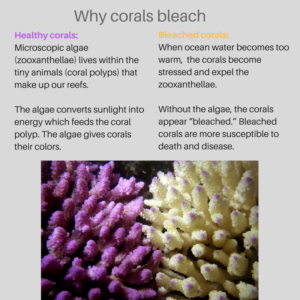
To understand, we need to look at the mutually beneficial (symbiotic) relationship that corals have with a type of microscopic one-celled algae known as zooxanthellae.

The algae lives right within the tiny living animals known as coral polyps that make up our reefs. The corals provide a home for the algae. In turn, the algae converts sunlight into energy and provides that nourishment to the coral polyp. The algae also gives corals their colors. It’s a win-win for both the coral polyp and the algae.

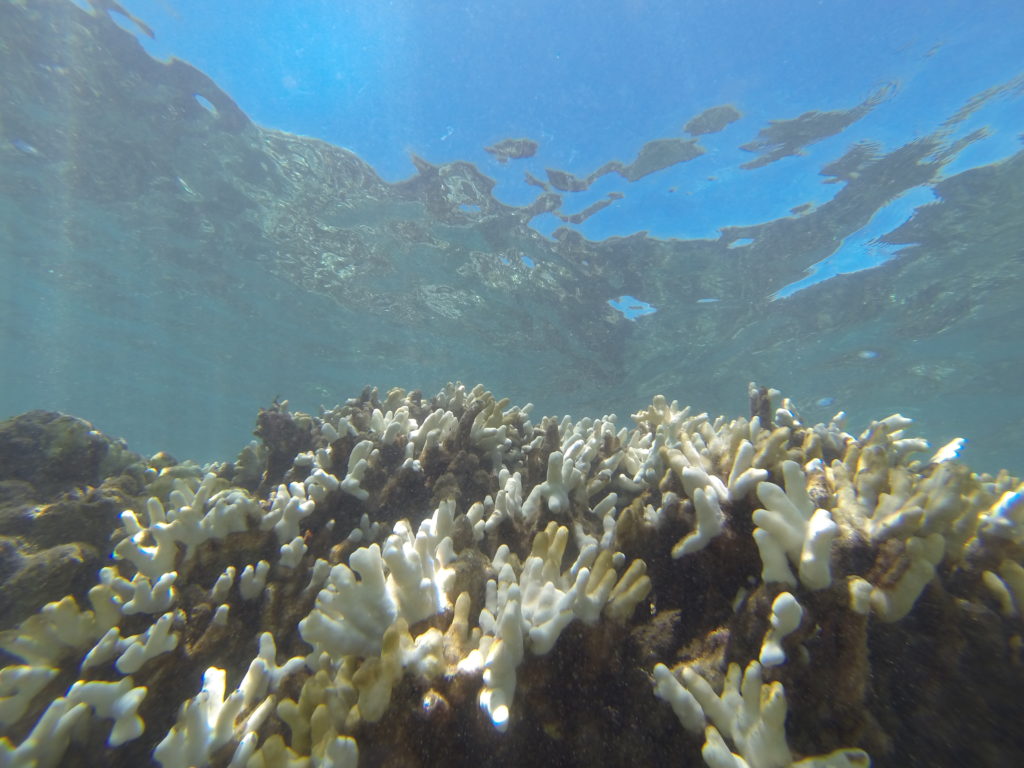
DCIM100GOPRO


Corals do best when ocean water is between 73 degrees F and 84 degrees  F. If the water becomes too warm or if it contains toxic chemicals, the corals expel their symbiotic algae. Without the algae, the corals appear white or “bleached.”

Unfortunately, bleached corals are more susceptible to death and disease.

Severe bleaching events occurred in Hawaii in 2014 and 2015, when ocean temperatures reached 88 degrees F.

In August 2014, warm weather in the North Pacific Ocean caused bleaching throughout the Hawaiian islands. More severe bleaching occurred in the summer of 2015.

Official reports state that 20 to 40% of Maui’s corals were lost following the 2015 bleaching event.

What can you do to prevent coral bleaching?

First, become an advocate in the fight to stop climate change. Do all you can to reduce your carbon footprint. Install a solar PV system at your home. Switch to LED lights. Buy a fuel-efficient hybrid or an electric car fueled with solar power. Drive less, and bike or walk more. Choose foods from local farms or local sources. Eat one or more vegetarian meals per week.

Second, help address other serious causes of stress to our coral reefs. For example, sediment run-off and near shore ocean water pollution are not international problems. These problems begin right here on the islands of Maui County and can be solved right here by people working together.

Last, avoid sunscreens with oxybenzone and octinoxate, two chemicals known to damage or kill corals. For more info visit here.

Learn more! Read the State of Hawaii Coral Bleaching Recovery Plan.