Blog Archives: Uncategorized

Hawaiʻi’s first reef-friendly landscaping certification course to be hosted by Maui Nui Marine Resource Council

in , /by

KAHULUI, HI–The Maui Nui Marine Resource Council (MNMRC) will launch its inaugural Reef-Friendly Landscaping certification course on May 22, 2024. The hybrid online and in-person course will teach professional landscapers, property managers, and agricultural businesses how to move away from synthetic products and transition to reef-friendly land-care practices. 

Enrollment is open through May 15, 2024 and is available for 50% off the course price for the first 10 students. 

As a community, we know that implementing sustainable practices and reducing land-based sources of pollution is key to preserving the longevity of our island home,” said Program Director, Jill Wirt. “By creating this course, MNMRC aims to make it easier for industry professionals to adopt land-care practices that are better for both our land and our reefs.”

The 10-subject curriculum will be taught by local experts in reef-friendly landscaping, combined with expertise from the Northeast Organic Farming Association’s (NOFA) Organic Land Care (OLC) program. Subject topics will include site analysis, design, and management; native, exotic, and invasive plants; wetlands and Hawaiian land care; and energy, pollution, and climate change. 

Before launching its certification course, MNMRC partnered with 12 local properties to test reef-friendly landscaping practices over 3 months in 2023. Early results showed positive results at each property, with many seeing an increase in plant growth and a decrease in pests and diseases. “The results from our pilot program were exciting because they demonstrate how the landscaping industry could create a positive, lasting impact on our land and reefs if professionals adapt natural products and reef-friendly practices,” said Wirt. “It is encouraging to see that a thriving landscaping industry can also mean healthy land and reefs in Maui County.”

Click this link to enroll in the course or email [email protected] for more information

Community-Based Restoration for Maui’s Coral Reefs

in , /by

Despite its critical role in our daily lives, one of Maui’s greatest natural treasures often goes unnoticed beneath the ocean’s surface. Coral reefs are not only home to an array of marine life but are also a key part of the island’s culture and economy. Like many reefs worldwide, Maui’s reefs face a host of threats including warming water temperatures, harmful human activity, and pollution. 

The Maui Nui Marine Resource Council (MNMRC) has a long history of taking action to protect local reefs, from forming the Maui Coral Recovery Team to creating Hawaiʻi’s first reef-friendly landscaping certification program. Most recently, our staff had the opportunity to learn from our partner organization, Kuleana Coral about the restoration techniques they have successfully used at several sites around Oʻahu.

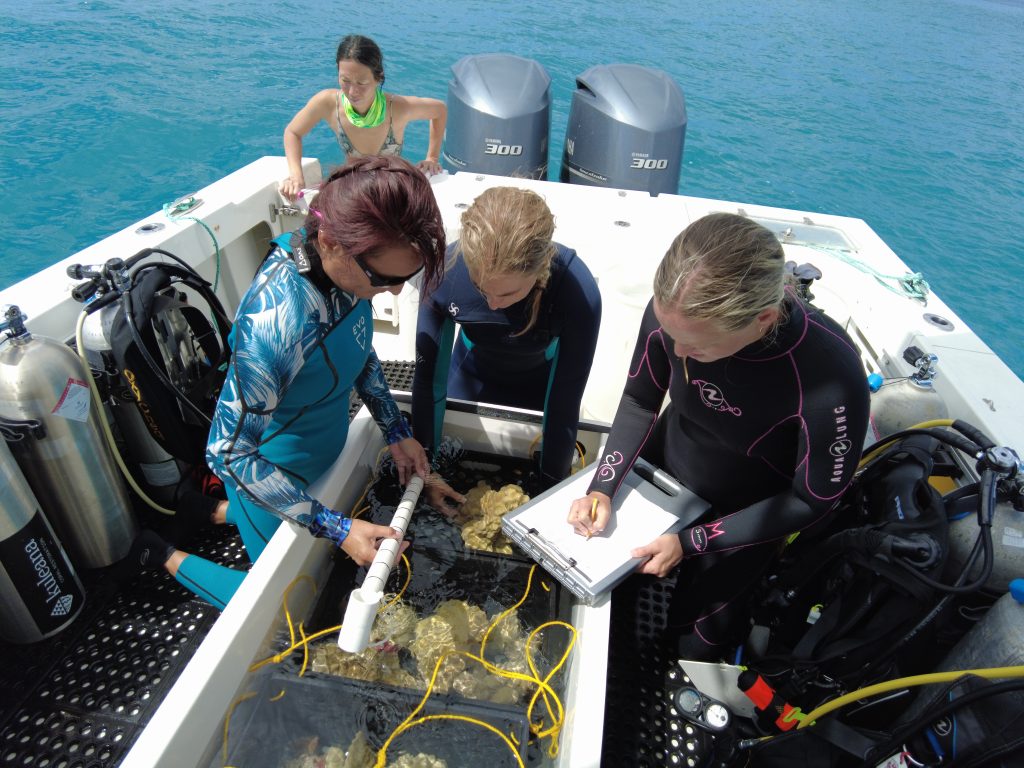
Maui Nui Marine Resource Council staff on a boat assessing corals of opportunity.

MNMRC staff Ylenia St. Louis, Christiane Keyhani, and Jill Wirt learn assess corals of opportunity.

“The vision behind Kuleana Coral’s training program is to make it easier for communities across Hawaii to establish Community Based Coral Restoration Areas (CBCRA),” said Alika Garcia, Co-founder and Executive Director of Kuleana Coral. “By providing this training, we aim to equip organizations with skills to complement their land-based restoration efforts and to support their community’s vision for restoration in their area.” 

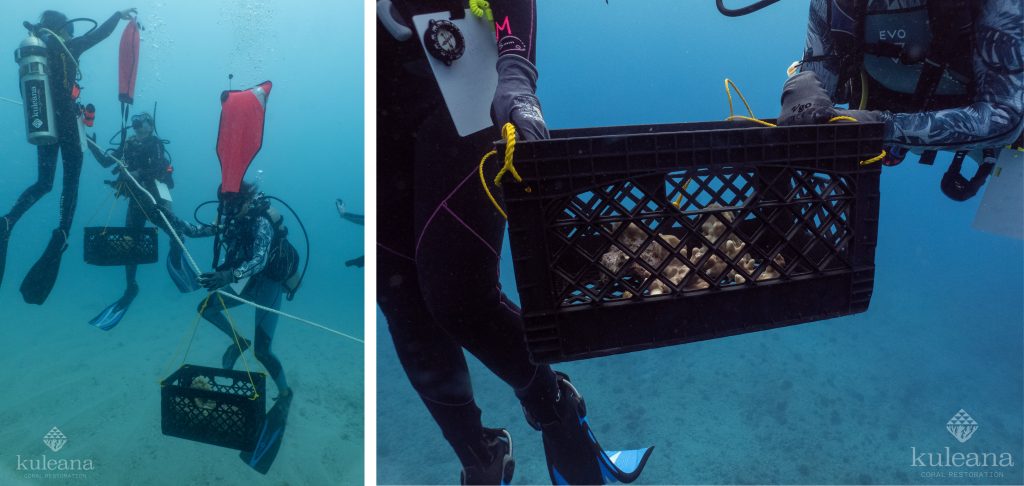
Three staff members from MNMRC traveled to Oʻahu in March 2024 to complete the training program, which included one day of in-class learning and three days of dive training and technique instruction. The day of in-class instruction covered best practices for selecting a restoration site, which types of coral are ideal to work with and how to identify them, and how to collect “corals of opportunity,” which are pieces that have either broken off or become dislodged from the larger colony and withstand a low chance of survival without intervention. These are the pieces used for restoration activities and are only collected if they are already unattached when found. 

Left: MNMRC staff use lift bags and crates to collect corals of opportunity. Right: Coral of opportunity. (Photo Credit: Kuleana Coral)

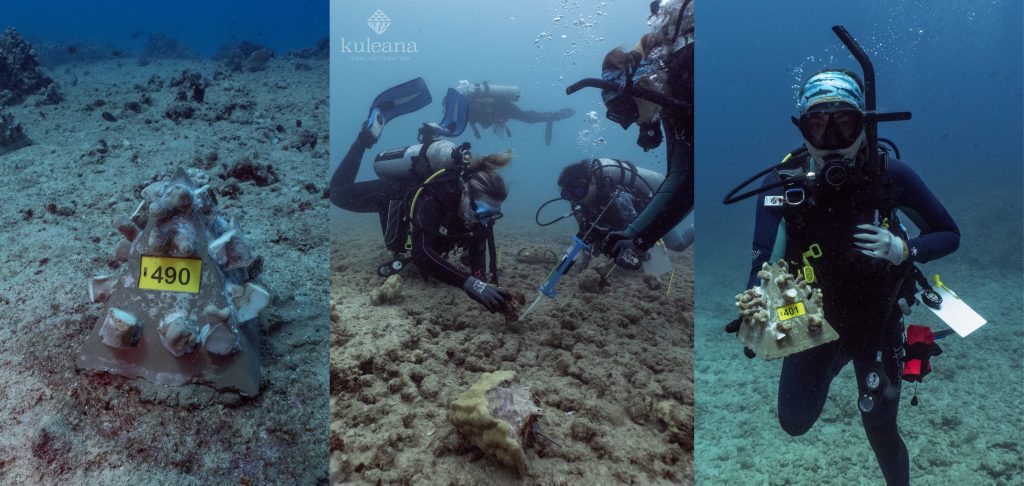
After the day of in-class learning, MNMRC staff were trained in two restoration techniques: fragmenting and large rescued coral colonies (LRCs). Fragmenting happens when a grapefruit-sized coral of opportunity is cut into smaller pieces that are around 1-1.5 inches in length. After the fragments are made, they are glued to a “module,” such as a concrete pyramid, with five to six fragments on each of its four sides. These pyramids will then be outplanted into the existing reef habitat if available or other hard substrate that coral can attach to and eventually spread out on. 

The second technique, large rescued coral colonies, is used when a larger piece of coral–around the size of a watermelon–has been dislodged but can be reattached to the reef or other hard substrate. In this method, a pin is inserted into the colony where no live coral tissue is present while a hole is drilled into the bare reef area or other exposed, hard surface in which the pin can be inserted and the large coral reattached. 

Left: Closeup of an outplanted module. Center: MNMRC staff reattach an LRC to the reef. Right: Hui O Ka Wai Ola Program Director, Christiane Keyhani holds a completed module ready for outplanting. (Photo Credit: Kuleana Coral)

While there are a host of additional measures needed to save our reefs, Jill Wirt, MNMRC’s Program Director, believes restoration methods like fragmenting and reattaching LRCs could prove to be a powerful way to support the community’s vision for the reefs in their area. “We know the goals and priorities of each area will be different, whether it is creating more fish habitats, thermal resilience, more coral cover, or something else,” said Wirt. “By making these restoration techniques available and connecting them to existing land-based restoration efforts, we hope to work with our community to make the change they want to see in their local reefs.”

With restoration training complete, MNMRC is now preparing to apply for State permits that will allow them to conduct restoration work in South Maui. “Kuleana Coral has done an amazing job of showing us how restoration is possible through their Oʻahu sites,” said Wirt. “Now that we can bring these skills to Maui, applying for the required permits to operate on the island is the next step to make this resource available to the community.”

VIDEO (Instagram): Kuleana Coral Restoration Training Recap

Note: Please do NOT touch any live coral without obtaining a permit! Special permits are required for handling coral in Hawaiʻi [SAP 2024-09]

Why Muliwai? The Science of Keeping Dirt off the Reef

in , /by

In South Maui, erosion caused by habitat degradation, overgrazing, and wildfires makes it easy for mud to wash into gulches and ultimately, nearby coral reefs. The accumulation of dirt on the reef, or “sedimentation,” can kill corals by settling directly on them and smothering them. It can also cloud the water, effectively blocking the sunlight corals need for photosynthesis, which is the primary way corals produce their food.


Since November 2023, MNMRC has been studying several muiliwai along South Maui’s coast to understand better how much dirt is being washed into the ocean and which areas release the largest amounts of sediment into the water.

A muliwai, also called an estuary, is a place that connects and is in-between land and sea habitats. Here, freshwater and saltwater mix together, and in South Maui, they are also where many of the gulches, also known as intermittent streams, empty out during heavy rains. Since November, the water-level loggers MNMRC has deployed at three muliwai in South Maui have produced insights into the behaviors unique to each location. 

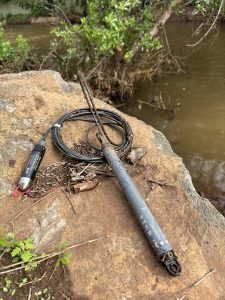
A picture of a water-level logger on a rock in a South Maui muliwai

Water-level loggers were deployed at 3 muliwai sites throughout South Maui. (Photo Credit: John Starmer)

“One of the things we are looking for at each muliwai is variability,” said John Starmer, MNMRC’s Chief Scientist. “Identifying the differences between muliwai and during different periods at the same muliwai gives us a better picture of how and how much mud is running off the mountain.” Stamer points to results from the Laie water-level loggers in January as an example. When heavy rains hit the island at the beginning of the year, the water in the muliwai was clear, indicating that the wetlands above it most likely absorbed and filtered out much of the sediment before it could reach the shore. But the next time heavy rains came, the water in the muliwai was brown, indicating that the wetlands had absorbed whatever sediment it could, but the rest ran down the mountain. Details like these are clues for Starmer and his team to figure out which areas in South Maui are priorities for preventing sediment from entering the ocean.

Additionally, Starmer has noticed that muliwai sometimes act as “ponding basins,” containing sediment during moderate rain events. “In some cases, the muliwai have shown that they can hold mud and sediment back, preventing it from washing into the nearby ocean,” said Starmer. “We saw this happen in November when rains hit the South side of Maui. Our direct observations and results from the water-level loggers showed the dune that seals off the muliwai was never breached meaning the runoff stayed in the muliwai and ultimately off the nearby reef.”

Studying the muliwai also helps MNMRC understand how well current prevention efforts work. “In theory, all of our mitigation efforts are making an impact but it is important to make sure we are measuring how much sediment is running off the mountain to have the data to ensure we are targeting the right areas and  evaluate how well we are moving towards meeting our goals.”

Reef-Safe Landscaping Shows Promise for Maui Properties

in , /by

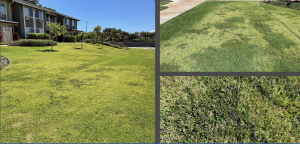
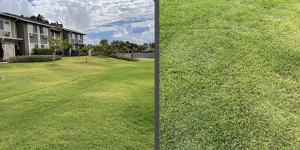
After three months of switching to a non-toxic, reef-friendly soil amendment, local properties saw promising improvements in the health of their plants and landscaping. The toxic chemicals in widely used conventional products often end up in the ocean through runoff and groundwater, harming reefs and marine life. MNMRC’s pilot reef-friendly landscaping program aimed to address this major source of pollution at its root.

Property that uses conventional landscaping chemicals with lawn weeds and unhealthy growth

Prior to using reef-safe soil, a test plot shows significant patches of lawn weeds and uneven coloring. Credit: MNMRC Pilot Report


Property that uses reef-safe landscaping shows dramatic decrease in lawn weeds and increase in healthy growth

After four months of using reef-safe soil, the test plot shows a significant decrease in lawn weeds and has more even coloring. Credit: MNMRC Pilot Report


In 2023, MNMRC developed a 10-course curriculum taught by industry experts to educate property owners on the practices and benefits of alternative landscaping methods. In addition to the curriculum, participants in the pilot program were offered access to SoilThrive, a locally made, non-toxic, biological soil amendment or “compost tea”, which was supplied for their test plot, free of charge. The compost tea worked as both a foliar feed, a technique of applying liquid fertilizer directly to plant leaves, and as a solution for preventing pests and disease.

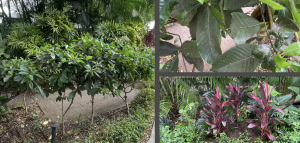
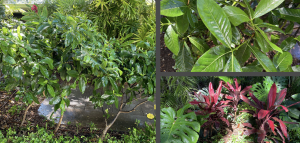
From October 2023 to December 2023, the compost tea was applied to test plots at developments, resorts, and farms across the island. At the end of the pilot period, every property reported improvements in an array of categories including pest populations, weed patches, plant growth, and disease resistance.


Plants prior to use of compost tea show heavy white fly cover.

Plants prior to use of compost tea show heavy white fly cover. Credit: MNMRC Pilot Report


Plants after use of compost tea show dramatic reduction in white flies and increase in new growth.

Plants after use of compost tea show dramatic reduction in white flies and increase in new growth. Credit: MNMRC Pilot Report


At the time of writing, Kahoma Village has signed a contract to utilize compost tea to treat the Whitefly on their Hibiscus. Hale Roayle, Mahina Surf, Napili Shores, Ledcor Group, Kamalani Condos, and Legend Farms are in discussions for more reef-friendly landscaping in 2024.

Searching for Groundwater Pollution at Oneuli

in , /by

Groundwater is a common way for pollution and other harmful substances to enter coastal waters. It can carry anything from toxic chemicals to nutrients that cause excessive algae growth into the ocean, wreaking havoc on marine ecosystems and coral reefs. Our team took the first step to test for pollution by towing Manta devices along the Makena coastline to identify if and where groundwater could be entering the sea.

Groundwater will typically rise to the top of the ocean, and its temperature is cooler than that of seawater. The graph below shows the results of our Manta survey with areas in white representing cooler water temperatures, indicating that groundwater is likely present. Areas in blue or green are where temperature readings were warmer and consistent with that of normal seawater. The lighter shades of blue or green show temperatures between normal ground and seawater readings, indicating areas where the two are mixed.


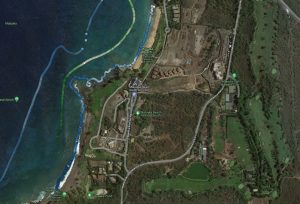
Map of groundwater presence and possible pollution in Oneuli

Salinity at Maluaka. Credit: John Starmer


Making sure Maui’s waters are healthy is vital to our economy and day-to-day lives. By confirming the presence of groundwater, we’ve taken the critical first step to being able to test for harmful pollutants in our coastlines. Once we’re able to identify where groundwater is entering the ocean, we can focus our testing efforts around those areas to identify what kinds of pollutants are being brought in (if any) and then determine where the source or cause of those pollutants are originating on land.

Drought Conditions Turn Kealia Pond Pink

in , /by

A pink pond doesn’t sound natural… but it is! … especially if that pond is salty… very salty.  A whole group of salt “loving” organisms (aka halophiles) ranging from bacteria and archaea to algae to shrimp to fish and birds have adapted to life in water that most other organisms would say “No thank you!” to living in. The recent pink makeover at Kealia Pond is an example of where water got too salty for some of the typical inhabitants and the halophiles got happy and took over.


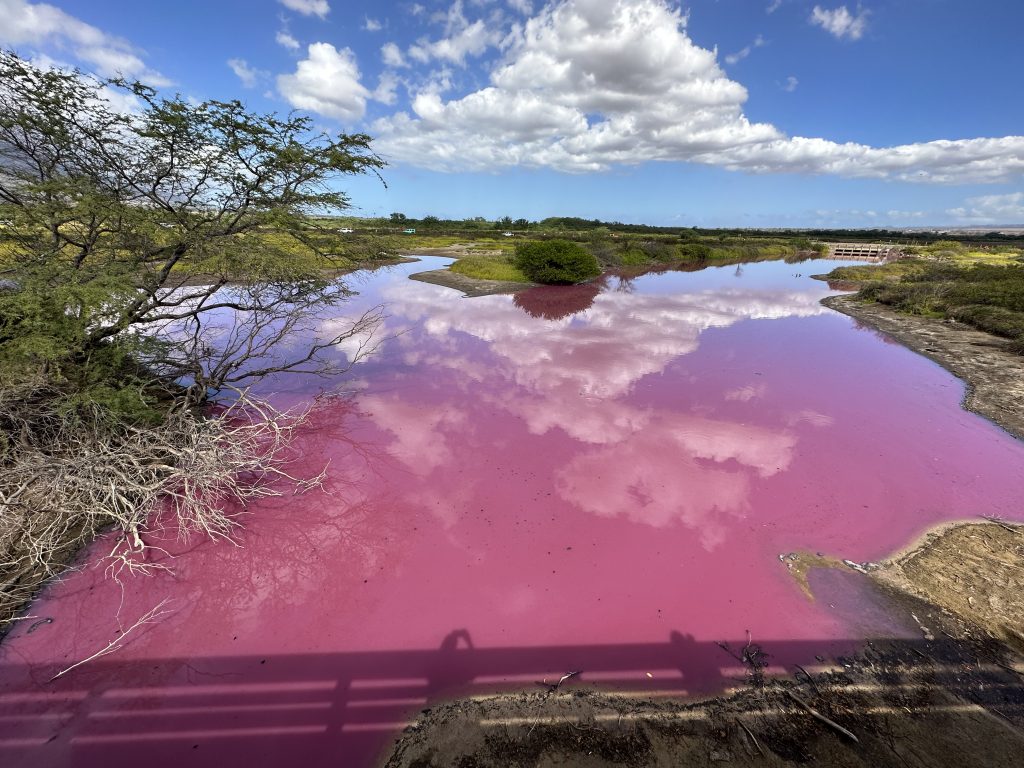
Pink water at Kealia Pond in November 2023.

The water turned pink at Kealia Pond in November 2023. Early analysis suggests it could be due to Halobacterium salinarum or one of its close relatives. PC: John Starmer


Why did the Kealia Pond turn pink?

So what is turning the water pink at Kealia?  While a definitive ID is still not available, a good suspect is Halobacterium salinarum or one of its close relatives.  The red-to-pink color of Halobacterium comes from bacteriorhodopsin, which helps capture light energy for photosynthesis. This protein is unique to archaea and one of the things that separates them from true bacteria.

Halobacterium, despite the name, is a type of halophilic (salt-loving) archaea, not a bacterium. The archaea were only split out from bacteria about 50 years ago and now are recognized to comprise one of the three domains of life, alongside true bacteria and eukaryotes (everything from single-celled algae to sea turtles). Archaea were first discovered in ‘extreme environments’ like salt ponds and thermal hot springs. They are now recognized as abundant and common in most environments from seawater to soil to animal skin and digestive tracts.  Interestingly, none of the species found to date are considered to cause disease.

Is this natural?

Kealia Pond is a dynamic landscape that floods and dries as the seasons change and water becomes more or less abundant. The name Kealia means salt-encrusted place and reflects that during the dry season, patches of white salt remain behind as water evaporates from large areas of this shallow wetland.  The only surface drainage for the pond that remains connected to the sea passes under the National Wildlife Refuge boardwalk. This drainage channel gets scoured out when high water breaks through the sand plug that usually closes off the channel from the ocean in Ma’alaea Bay. Because the channel is deeper, it still holds water even as the shallower parts of the pond and nearby mudflats earn their name and show off white patches of salt crystals scattered across the surface.

The conditions that led to the Halobacterium bloom are considered a natural, though unexpected, result of a long dry summer evaporating the pond and raising its salinity – about twice that of seawater at the moment. Pink salt ponds are a common occurrence around the world thanks to Halobacterium and other halophilic organisms can turn these ponds a range of colors. A small pond along Hana Highway in Kahului has exhibited the same sorts of color changes over the years, but its less striking color changes and small size have kept it from getting much attention.

Is this a Red Tide? / Is this Dangerous?

Is there any need to be concerned about what’s going on at Kealia Pond? Red tides or harmful algal blooms (HABS) are known to affect wildlife and humans by producing toxins. HABS, however, are caused by different organisms – often dinoflagellates or cyanobacteria – and are frequently associated with high nutrient levels in the water. These organisms cannot survive in the high salinity in the pond and have been discounted as the source of the color change. Interestingly, the archaea as a whole, including Halobacterium, are not known to cause any human disease, despite being among the most common organisms on earth.

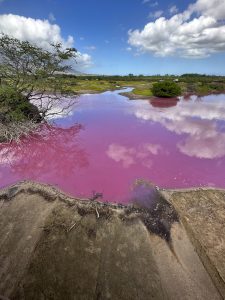
Vertical image of Pink water at Kealia Pond in November 2023.Will the pond stay pink forever?

The Halobacterium are thriving right now thanks to the current high salinity at in the pond. Because conditions are optimal for the growth of these halophiles, rather than typical green algae, the pond will likely stay pink as long as the salinity remains high. When rains come and drop the salinity, the pond will certainly return to a more sedate and typical color as algae take over as the dominant plankton in the pond.


Enjoy learning more about Maui Nui’s natural resources?

Consider making a donation to MNMRC to help us continue doing work like this and more!

The Hui O Ka Wai Ola, Community-Based Ocean Water Quality Monitoring Program Celebrates its 100th Sampling Session

in /by

Have you been wondering if the brown water along North Kihei has persisted much longer past the winter storms than usual? Thanks to the long-term coastal water quality monitoring data of Hui O Ka Wai Ola, we have the data that shows it has. Maui’s volunteer-based ocean water quality monitoring program Hui O Ka Wai Ola (HOKWO) has been evaluating water quality in Maui since 2016. The Maui Nui Marine Resource Council, The Nature Conservancy, and West Maui Ridge to Reef Initiative are the three organizations that co-founded and co-manage this unique community program. The program celebrated a special milestone: its 100th sampling week in South Maui.

At a beachside ceremony on Monday, July 17 at the Hawaiian Islands Humpback Whale National Marine Sanctuary in Kihei, the 100th sample was collected from Kalepolepo Beach Park by HOKWO program volunteers Scott Graves and Harry Hecht alongside Team Lead Maile Sharpe. The event was attended by Senator Angus McKelvey, Representative Terez Amato, Councilmember Tom Cook, Mayor Bissen’s Executive Assistant Sharon Banaag, all of whom assisted HOKWO Staff Liz Yannell and Ylenia St-Louis in testing the 100th water sample for turbidity, temperature, salinity, dissolved oxygen, and pH. The HOKWO program was presented with a Certificate in Appreciation of HOKWO Commemorating the 100th Water Sampling from the Hawaii State Legislature by Rep. Amato and Sen. McKelvey. 
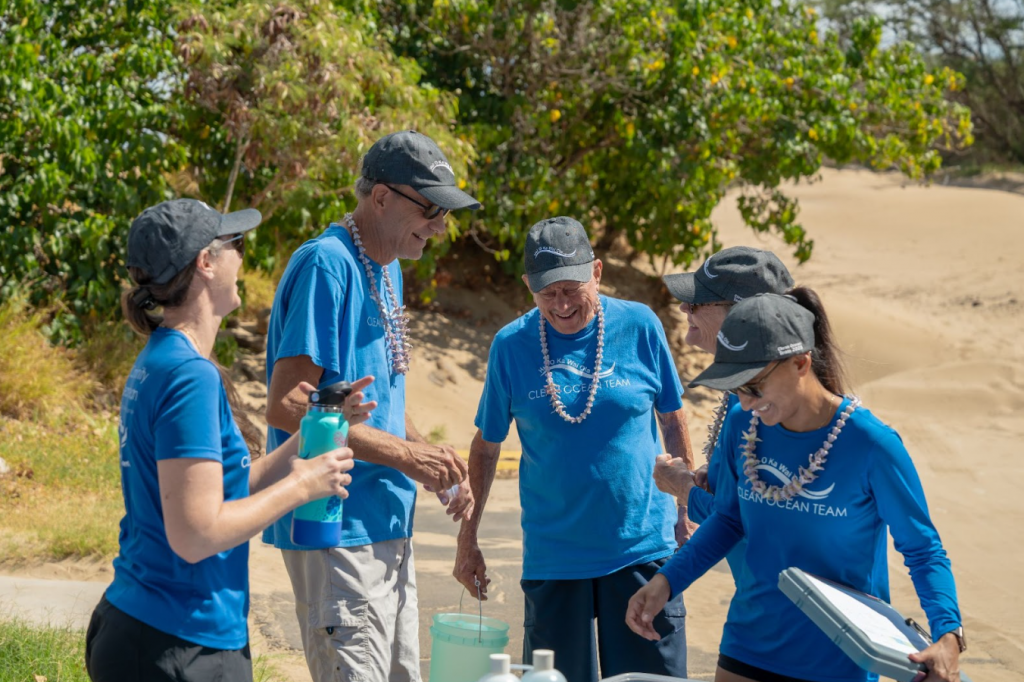
The Hui O Ka Wai Ola water quality monitoring team prepares to collect the 100th water sample from South Maui at Kalepolepo Beach Park, Kihei, July 17.
Left to Right: HOKWO Program Manager Liz Yannell, volunteer Scott Graves, volunteer Harry Hecht, HOKWO Team Lead Maile Sharpe, HOKWO Team Lead Ylenia St-Louis.
Photo credit: Levity Photography

The HOKWO program tests coastal water quality at 31 sites along South and West Maui and 2 sites on Lana‘i every three weeks. Each sampling session in West Maui covers 18 sites stretching from Honolua Bay to Pāpalaua. Each South Maui sampling session covers 13 sites from Mā‘alaea to the ‘Āhihi-Kīna‘u Natural Area Reserve. The program continues to add or pause sites as needed. Two West Maui sites have been revived, one at Olowalu to support a coral restoration project and the other at Ukumehame to address concerns about coastal erosion. In a program first, two new sites were added in June this year on Lāna‘i to provide data to address community water quality concerns on that island. The sampling process takes a week to complete. During the sampling week, about a dozen volunteers wake up to head out in small groups to collect samples and measure water quality on-site with monitoring equipment they bring to each site in their mobile labs, and samples are then shipped to O‘ahu for nutrient analysis at the UH School of Ocean and Earth Science and Technology laboratory.  

The spark that created the program came in 2013-2014 when now County Councilmember Tamara Paltin and volunteer Dana Reed noticed an increase in brown water events at DT Fleming Beach in West Maui, which led to beach closures. Concerned about the water quality, Reed, who had learned how to test ocean water for turbidity through a University of Hawaiʻi Maui College course, started gathering and testing samples. She met Paltin, who shared her worries and had previously reported the issue to the Department of Health. Their initial data wasn’t accepted due to the lack of a Quality Assurance Project Plan (QAPP). Undeterred, Reed and Paltin continued documenting water quality, and with the help of Reed’s husband Bill Rathfon and others, they identified Mahana Estates as the source of the sediment runoff. Through persistent efforts, they brought attention to the problem, leading to a county-mandated shutdown of the project and the improvement of the County’s Best Management Practices (BMPs). This experience highlighted the importance of water quality data, and culminated in the group’s effort to create a citizen’s monitoring group to supplement the data being provided by the State Department of Health.

To establish a community-based water quality monitoring program, the partner groups collaborated and sought guidance from research scientist Carl Berg. They learned the requirements set by the EPA and the state Department of Health for collecting and analyzing water samples, leading to a meeting involving various organizations and community groups. As a result, Hui O Ka Wai Ola, meaning “Association Of The Living Waters,” was launched as a partnership between Maui Nui Marine Resource Council, The Nature Conservancy, and West Maui Ridge to Reef Initiative. The program’s fiscal management and oversight of finances and payroll were entrusted to Maui Nui Marine Resource Council.

Grants obtained from the National Fish & Wildlife Foundation facilitated the creation of the program to purchase water sampling equipment for West Maui and later enabled the program’s expansion to South Maui. It took time to develop the required QAPP and train volunteers to correctly gather and analyze the samples. The first official samples of the new Hui O Ka Wai Ola program were collected in June of 2016.

Today Hui O Ka Wai Ola is led by a steering committee of representatives of the three partner organizations and run by five part-time staff, Liz Yannell, HOKWO Program Manager, Ylenia St-Louis and Maile Sharpe, South Maui Team Leads, Emily Johnson and Jess Erwin, West Maui Team Leads, along with over 30 dedicated volunteers. Community support has come from the Hawaiian Islands Humpback Whale National Marine Sanctuary, Lahainaluna High School, Da Hawaiian Store, and Pineapple Properties LLC who have all provided lab space to the group for its indoor laboratories. The County of Maui has provided funding every year since 2016, along with several other local companies, foundations, and groups. At the event today, HOKWO volunteers received gift certificates from Duke’s Beach House Maui as a mahalo for their efforts.
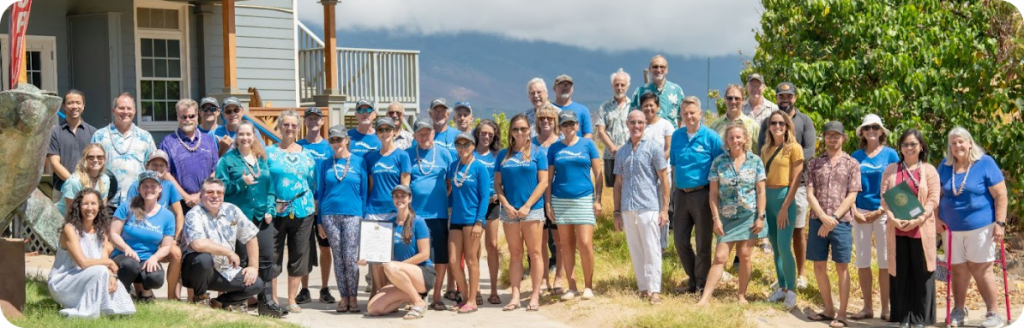
Hui O Ka Wai Ola’s 100th Coastal Water Quality Sampling in South Maui, July 17 2023, Kihei. Photos credit: Levity Photography

The results of the program are shared by Hui O Ka Wai Ola with the community through the website, partner data portals, and regular presentations about water quality conditions along Maui’s leeward coast. A recent presentation can be viewed on the Maui Nui Marine Resource Council’s YouTube channel (https://bit.ly/hokwo2022). ​Since 2016, Hui O Ka Wai Ola has collected and analyzed over 3,200 water quality samples from 48 sites and has found that Maui’s coastal waters are often degraded by land-based pollutants, including sediments, fertilizers, and wastewater. In 2022, HOKWO released a findings report “Coastal Water Water Quality Report 2016-2021”. The report also highlights bright spots, such as Kapalua where nitrate levels have dropped significantly in the last two years, Camp Olowalu where turbidity levels declined, and Keālia Pond where pollutant levels are low, likely due to the wetlands’ ability to filter and absorb pollutants before they reach the ocean. Additional information about the program as well as the data they collect can be found at https://www.huiokawaiola.com/


The program continues to expand its efforts to include new equipment and testing methods to further identify sources of water quality impairment along Maui’s coasts. Its most recent initiative “Brown Water Watch” encourages anyone in Maui County to share pictures of brown water events (https://bit.ly/huibww). Follow along on Instagram @brownwaterwatch.
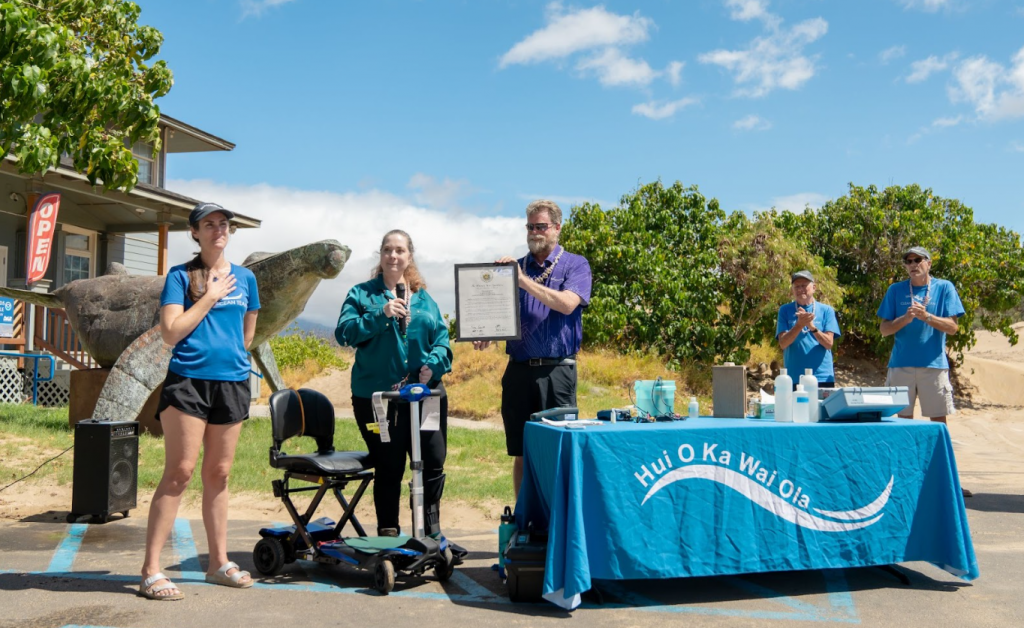
Representative Amato and Senator McKelvey present HOKWO Program Manager Liz Yannell with a Certificate in Appreciation from the Hawaii State Legislature at the HOKWO 100th Sampling Ceremony in Kihei, July 17. Photo credit: Levity Photography

Language from the HI State Legislature – Certificate in Appreciation of Hui O Ka Wai Ola Commemorating the 100th Water Sampling.

  • Whereas, Hui O Ka Wai Ola (Association of the Living Waters) is a collaboration of water quality champions dedicated to measuring and sharing the status of Maui Nui’s ocean water; and
  • Whereas, this outstanding group of community member volunteers, scientists, supporters, and partner groups has worked tirelessly to preserve and protect our environment; and
  • Whereas, since 2016, Hui O Ka Wai Ola has collected and analyzed over 3,200 water quality samples from 48 sites; and
  • Whereas, Hui O Ka Wai Ola Volunteers and leaders have employed rigorous scientific methods to protect our community, our oceans and our reefs; and
  • Whereas, These champions of the environment and protectors of health and reefs have today completed their 100th water sampling; now, therefore,
  • The Thirty-Second Legislature of the State of Hawai’i, this 17th of July 2023, that this body hereby congratulates Hui O Ka Wai Ola and all of its members and supporters for their hard work, dedication, and selfless efforts to protect our waters. We extend our respect, appreciation and warmest aloha.

Signed: The 32nd Legislature, 2023

Representative Terez Amato

Senator Angus L.K. McKelvey

Scott K. Saiki, Speaker of the House

Ronald D. Kouchi, President of the Senate

Brian L. Takeshita, House Chief Clerk

Carol Taniguchi, Senate Chief Clerk

New Sunblock Dispensers Urge South Maui Ocean-Goers to “Love the Ocean the Right Way” on Valentine’s Day

in /by

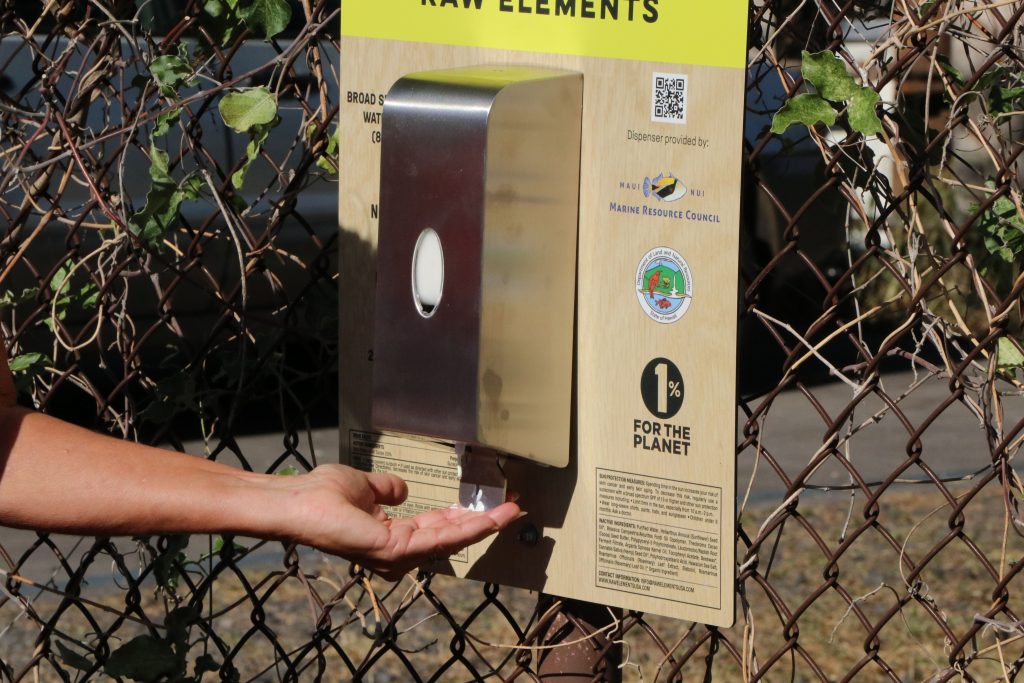
KIHEI – Four mineral sunblock dispensers are up on this Valentine’s Day on south Maui shores, encouraging all to “love the ocean the right way.” Two are at the ‘Āhihi-Kīna‘u  Natural Area Reserve and a pair are to be installed at Mākena State Park. Thousands of people enter the ocean at these locations every day.

The dispensers hold non-nano, zinc, mineral sunscreen. Products with these active ingredients are safe for people and marine life because those elements already exist in sea water. Dermatologists say mineral-based products are the most effective protection for people, as they block out both UVB and UVA rays from the sun.

The Maui installations were inspired by a sunblock dispenser at Waialea Bay at Hāpuna State Recreation Area on Hawai‘i Island. Kelli Lundgren, board member of the Robert F. Orr Charitable Foundation, decided Maui needed dispensers. “As a volunteer at ‘Āhihi-Kīna‘u I’ve communicated with hundreds of visitors about the effectiveness and protection of mineral sunscreens. As people understand the mineral alternative and discover that sprays and bottles labeled “reef safe” actually can be harmful, they wanted an alternative.”

The Robert F. Orr Charitable Foundation through the Maui Nui Marine Resource Council, and with support from the State of Hawai‘i and County of Maui, helped with the placement of dispensers at the Maui beaches. “I hope this will be the start of additional protection for Maui’s corals, fishes, and other abundant, beautiful, and essential sea life,” Lundgren added.

“Once people try mineral sunscreens, they see how easy they are to use,” said Mike Fogarty, Executive Director at Maui Nui Marine Resource Council. “We hope these dispensers give people an introduction to a better way of protecting themselves and marine life. Using mineral-based sunscreens also help protect the fish that many in our community rely on for food.”

Beginning on October 1, Maui County will be the first place in the country to ban the sale and use of sunscreen products with petrochemicals as active ingredients. Many of those products are labeled as “reef safe” with no scientific backing to the claims. The historic ordinance was passed unanimously by the Maui County Council and was signed into law by Mayor Michael Victorino last December.

It is intended to protect reefs and ocean food sources from continuous, daily chemical contamination. A 2018 state-wide law only banned the sale of two chemicals but allowed the continued sale of many other chemical ingredients.The Maui ordinance is stronger because it allows only the sale of mineral products. It prohibits the sale or use of any chemical compounds currently in use as well as any new compounds created in  the future.

Council member Kelly King introduced the bill and commented, “Non-mineral sunscreens are an aggressive pollutant. Our coral reefs are our first defense against climate change and sea level rise. This includes impacts such as erosion, runoff from storms and development, and seepage from wastewater injection wells. Our ordinance is one important step toward protecting the health and resilience of our reefs and marine life by removing a significant ecological stressor. Making a better choice in sun protection is one thing we can  all do immediately. What better day than Valentine’s to make a change and show your love for the kai?”

Peter Landon, of the DLNR Division of Forestry and Wildlife, manages ‘Āhihi-Kīna‘u Natural Area Reserve. Landon said, “Thanks for the generous donations and everyone’s work on this issue. The     installation of these dispensers is a welcome addition to our outreach efforts, giving us a way to help visitors who were unaware of the chemical sunscreen pollutants, or thought they bought something ‘reef safe’. We appreciate it when people hear our messageand want to do the right thing.”

Raw Elements USA supplied the dispensers and product. Chis Wagaman of the company remarked, “We’re honored and proud to be a part of this project with great people participating in positive change for Maui. It is incredible to see the steps taken to educate and provide an incredible experience for everyone who goes into the ocean.”
# # #

To view video please click on photo or view at this link: https://vimeo.com/677415105

More information about mineral sunscreens and reefs:  https://www.mauireefs.org/sunscreens

More information about Maui’s ordinance: https://www.mauicounty.gov/DocumentCenter/View/130826/Ord-5306

Media Contact:  Dan Dennison 
Senior Communications Manager 
Hawai’i Dept. of Land and Natural Resources 
[email protected] 
808-587-0396

Jill Wirt Joins Maui Nui Marine Resource Council as Project and Research Coordinator

in /by

Robin Newbold, Board Chair and co-founder of Maui Nui Marine Resource Council (MNMRC), has announced that Jill Wirt has joined MNMRC’s staff as Project and Research Coordinator.

Wirt holds a masters degree specializing in coastal and marine resource management from the Bren School of Environmental Science & Management – University of California, Santa Barbara. She obtained her bachelor’s degree at San Diego State University in Environmental Sciences.

Processed with VSCO with e2 preset

While pursuing her masters degree, Wirt worked for Maui Nui Marine Resource Council as a Communication & Programs Assistant, where she coordinated with resort properties to arrange for the installation of the “Protect Maui’s Coral Reefs” informational signs, now located at 39 Maui shoreline locations. She also led marine debris educational programs. Wirt has also worked as a naturalist with Pacific Whale Foundation, The Ritz-Carlton Bacara, Santa Barbara, and The Ritz-Carlton, Kapalua. She was the co-investigator for a NOAA Marine Debris Grant awarded to Pacific Whale Foundation, and was the social media coordinator for Skyline Eco-Adventures on Maui. After completing her masters, Wirt was an Eco-Entrepreneurship Fellow through the Bren School, where she laid the foundation to start her own nonprofit, Bringing Young Women to the Ocean, to engage and encourage young women to pursue marine science and other STEM fields through camps and mentor programs.

Wirt will be managing Maui Nui Marine Resource Council’s “Reef Friendly Landscaping” project, which is working in South Maui to encourage resorts, hotels, golf courses, businesses and homeowners to move away from synthetic fertilizers, herbicides and pesticides that are causing harm to Maui’s nearshore coral reefs and populations of native fish and marine wildlife. The program offers “Reef Friendly Landscaping” certification to businesses, with complimentary consulting by a local organic landscaping expert to help properties move toward safer land care practices.

Wirt will also assist with field monitoring of Maui Nui Marine Resource Council’s Oyster Bioremediation Project in Må’alaea Bay, a vetiver-planting effort planned for this fall in Pohakea Watershed, along with grant writing and grant management. As part of Maui Nui Marine Resource Council’s ongoing support of the Maui Nui Makai Network, a network of community and partner groups that care for ecosystems on which Hawai’i’s people depend, Wirt will provide assistance with their social media and outreach.

“We are delighted to have Jill join our team, with her passion for protecting the marine environment and her experience in helping to enact conservation and educational programs,” says Newbold. “She will be a tremendous asset to our small, hard-working community-based organization, where we rely upon each of our staff to bring their talents, determination and unwavering commitment to the important work we do to protect Maui’s coral reefs, nearshore ocean waters and native fish populations.”

To learn more about Maui Nui Marine Resource Council, please visit www.mauireefs.org.

The Maui News: Maui nonprofits win cash prizes for new projects

in , /by

Maui nonprofits win cash prizes for new projects

Reported by The Maui News NOV 28, 2020
Chaminade University’s Hogan Entrepreneurial Program and American Savings Bank recently awarded a total of $34,000 to eight Hawaii nonprofit organizations as part of its 2020 Nonprofit Business Plan Competition. Held every other year, the competition is open to nonprofit organizations planning to start new ventures that will benefit society.

Forty teams participated in this year’s competition. Eight finalists and an honorary student were selected. Among this year’s winning nonprofits and projects are two from Maui County:

• Third place ($5,000) went Assistive Technology Resource Centers of Hawai’i — The Music Club. In November 2019, a group of persons with disabilities interested in music gathered on a Thursday evening to “jam” and get to know one another. It was highly successful, with more individuals with disabilities joining monthly. That was the genesis of The Music Club which is open to all PWD who either play an instrument, want to play an instrument, sing, or simply enjoy experiencing music. The objective includes providing a fun, safe, and nurturing environment for individuals with disabilities to explore their musical creativity without the fear of being judged or intimidated.

• Fourth Place ($3,000) went to Maui Nui Marine Resource Council — Vision for Pohakea (featured in a separate community story in The Maui News on Nov. 14).

The cash prizes were donated by the Hogan Family Foundation and American Savings Bank.

Read more.