Blog Archives: Uncategorized

Maui Now: Presentation July 7: “Next Steps Beyond Enactment of Hawaiʻi’s Sunscreen Law”

in , /by

CAPTION: Dr. Craig Downs, Executive Director of Haereticus Environmental Laboratory, gathers coral samples at Honolua Bay on Maui. His groundbreaking research educated the world about sunscreen chemicals and their role in coral reef decline. Downs will be one of the speakers at the free Zoom presentation on “Education vs. Enforcement: Next Steps Beyond the Enactment of Hawaiʻi’s Sunscreen Law” that will be hosted by Maui Nui Marine Resource Council on Wednesday, July 7 at 5:30 pm. Joining him as a presenter will be Hawaiʻi Senator Mike Gabbard, who authored the legislation that resulted in Hawaiʻi’s ban on the sale of sunscreens that contain the chemicals oxybenzone and octinoxate. Image courtesy of Maui Nui Marine Resource Council.

ARTICLE:
Hawaiʻi’s ban on sunscreens containing the reef-harming chemicals oxybenzone and octinoxate went into effect on January 1, but questions relating to enforcement, effectiveness, impacts of replacement chemicals and whether new laws are needed have surfaced.

These topics will be discussed on Wednesday, July 7 at 5:30 p.m. via a free Zoom presentation featuring special guest speakers:

  • Dr. Craig Downs, whose groundbreaking research educated the world about sunscreen chemicals and their role in coral reef decline; and
  • Hawaiʻi Senator Mike Gabbard, who authored the legislation that resulted in Hawaiʻi’s ban on the sale of sunscreens that contain the chemicals oxybenzone and octinoxate.

The presentation titled “Education vs. Enforcement: Next Steps Beyond the Enactment of Hawaiʻi’s Sunscreen Law” is sponsored by the County of Maui Mayor’s Office of Economic Development and is hosted by Maui Nui Marine Resource Council as part of the organization’s “Know Your Ocean Speaker Series.”

This event is free, but advanced reservations are required.

Read more: 

Maui Nui Marine Resource Council Helps Provide Jobs to 70 Maui and Moloka’i Residents Through Maui CARES Funding

in , /by

MAUI, HI – A unique collaboration of seven Maui and Moloka’i nonprofits working in partnership with Maui Nui Marine Resource Council and the County of Maui Mayor’s Office of Economic Development provided employment and workforce training for more than 70 unemployed or underemployed residents in November.

The program was made possible through the Maui CARES program, funded by the Federal CARES Act.

The workers participated in conservation and restoration projects in Olowalu, Waihe’e, Keanae, Kipahulu, Hana and Moloka’i. All of the projects were rooted in Hawaiian cultural practices and values which serve as the foundation of our community. Their efforts helped to protect nearshore coral reefs and important Hawaiian cultural sites.

A Zoom presentation about the projects, including sneak previews of video recorded for a film about the unique collaboration, will be offered on Wednesday, January 27 at 5:30 pm. The presentation is free. Reservations are required.

“Mahalo to Mayor Victorino and his staff at the County of Maui Office of Economic Development for directing federal CARES Act funding to this hui of seven nonprofit groups to do this very worthwhile, important work,” said Ekolu Lindsey, President of Maui Cultural Lands. “Covid’s economic devastation has been real for many on Maui and Moloka’i. This program provided the real benefit of wages at a time when families desperately needed income. It also offered the added benefits of skills development, cultural connection and the satisfaction of protecting coral reefs.”

As the fiscal sponsor, Maui Nui Marine Resource Council oversaw the administration of the Maui CARES funding for the projects and managed the rapid employment of nearly 70 Maui residents.

“Maui Nui Marine Resource Council was grateful for the opportunity to help provide employment, health insurance and career development to prepare Maui County residents for future opportunities in the growing fields of environmental protection, resource management and climate change adaptation,” says Mike Fogarty, Acting Director of Maui Nui Marine Resource Council. “

The seven nonprofit partners each tackled labor-intensive projects that helped to improve the health of the coral reefs offshore and improve nearshore ocean water quality. “Many people are surprised to learn that protecting coral reefs doesn’t begin in the ocean; it begins upslope,” comments Fogarty. “Upslope is where the problems begin with sediment washing off the land during rainstorms, and getting transported into the sea, where it creates problems for the corals, including blocking their ability to generate food for themselves or to reproduce.”

The group of seven nonprofits worked on ways, both traditional and new, to prevent sediment pollution in the ocean. On Moloka’i, Ka Honua Momona worked to restore two ancient fishponds, which will help trap sediment before it reaches the open ocean – with the benefit of also producing fish for local people.

In East Maui, Kipahulu ‘Ohana improved a lo’i, or wetland taro farm. The taro plants will slow the flow of stormwater, allowing time for sediment in the water to settle, rather than flow out to sea. The Kipahulu ‘Ohana team also worked on a 9-acre agricultural plot including orchard, field crop and pasture production supporting free food distributions to the communities of Kipahulu, Kaupo and Kahikinui and will conducted social monitoring at an ‘opihi rest area along the shore, to help ensure a sustainable supply of ʻopihi for the future.

The organizations and their projects are:

Hawaiian Islands Land Trust: Kalepa Stream Sediment Reduction Project
This project worked to lower sediment loads in the nearshore waters off Waihe’e by removing invasive species along approximately 3,900 linear feet of Kalepa Stream.

Kipahulu ‘Ohana
Taro fields serve to reduce the volume and velocity of flowing water, which in turn, reduces the size and volume of material transported to the coastal habitats. Sediment trapped in the protective canals and pits can be recovered for agricultural use. The taro cultivated adds to food security, strengthens cultural interactions and improves public health through dietary value and exercise. This project took place in the Kipahulu Moku, and included management of traditional wetland taro farm in Haleakala National Park (restoring, clearing, planting, weeding, harvesting, mowing, weedeating), plus irrigation system maintenance, invasive species removal and biological and social monitoring of shoreline areas including an ‘opihi rest area.

Kipuka Olowalu: Olowalu Cultural Reserve
This project reestablished washed out and damaged lo’i (taro fields), rebuilt vanished lo’i and prepared lo’i for planting. Workers removed overgrowth, fire hazards and invasive plants; planted native plants and crops and repaired the poi shed, washroom and bathrooms. The goal was to assist in the restoration and rejuvenation of the mauka to makai leased lands in the Olowalu Cultural Reserve to the traditional native practitioner uses.

Ke Ao Hali‘i KAH
This project implemented the Land Management Plan created for 27 acres of land at Mokae/Kaholaiki acquired by KAH through the county’s Open Space Fund and the state Legacy Land Conservation Program, and another ~2 acres of contiguous land, directly above Hamoa Beach. The project included invasive plant removal and native habitat restoration for seabirds and insects, and a biological survey of ‘opihi as a baseline for a possible ‘opihi rest area in the future.

Na Moku ‘Aupuni O Ko‘olau Hui
The primary purpose of the project was to develop a model of what needs to be known about every localized watershed unit, and to develop community-based technology infrastructure for collecting and synthesizing that information in a way that can be adapted by the other community organizations in other parts of the County for their ongoing monitoring needs. This project included watershed management and stream maintenance, as well as stream and ditch monitoring in the East Maui Irrigation system to establish accurate data for stream and ditch flow and loss as a basis for making sound future management decisions related to this resource and delivery infrastructure.

Na Mamo o Mu‘olea – Hana Moku, Mu‘olea ahupua‘a
This project focused on land and shoreline management on a county parcel (which Nā Mamo O Mū’olea has a 50 year lease). It included removal of invasive plants around a rock wall that is on the historical registry, and preparation for wall restorations, maintenance of two heiau on the property, installation of new fencing around an area designated for native trees and medicinal plants, and maintenance and repair of feral animal controls.

Ka Honua Momona (KHM)
Fishponds serve as effective buffers between land and sea. Due to permitting issues, selection of existing fishponds for restoration is the most practical approach. KHM worked on rehabilitating and managing production on two sacred ancient Hawaiian fishponds (each ~ 30 acres) on Molokaʻi. Through this project, KHM continued its work to restore the fishponds and ancient natural and cultural resources by removing invasive plants, planting food and native plants, caring for the ‘aina and doing community outreach where safe and appropriate.

About Maui Nui Marine Resource Council
Maui Nui Marine Resource Council is a nonprofit working for healthy coral reefs, clean ocean water and abundant native fish. To learn more, visit www.mauireefs.org.

Public Warned About Oysters Unfit for Human Consumption

in , /by

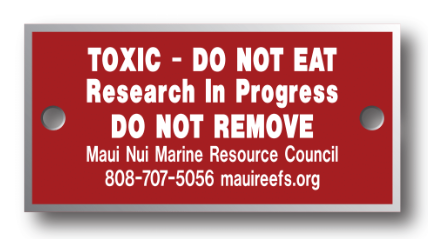
The nonprofit Maui Nui Marine Resource Council reports that oysters destined for a research project were stolen last week and may have subsequently been sold at below-market prices on Maui. The stolen oysters were being used to clean polluted water and are unsafe to eat. They are “no bargain for those who consume them, because they can cause severe illness,” reports Mike Fogarty, Acting Director of Maui Nui Marine Resource Council.

According to the Center for Disease Control and Prevention (CDC), uncooked oysters can carry Vibrio bacteria which can cause watery diarrhea, often accompanied by abdominal cramping, nausea, vomiting, fever and chills. Vibrio is a naturally occurring bacteria and can be found in any warm coastal waters and harbors, where it infects oysters.

Vibro symptoms usually occur within 24 hours of ingestion and last about 3 days. IV fluids may be necessary if nausea and vomiting cannot be controlled. About 80% of infections occur between May and October when water temperatures are warmer. Vibrio cases have occurred in Hawai‘i, including a large outbeak of vibrio gastroenteritis in 1972 caused by the consumption of uncooked crab. The Center for Disease Control and Prevention says that vibriosis causes an estimated 80,000 illnesses and 100 deaths in the United States every year. One species, Vibrio vulnificus, can cause life-threatening wound infections, reports the CDC website.  Many people with Vibrio vulnificus infection require intensive care or limb amputations, and about 1 in 5 people with this infection die, sometimes within a day or two of becoming ill.

The CDC also reports that it’s impossible to tell if an oyster is bad by looking at it. “Always choose oysters raised in clean water, provided by a reputable source,” says Fogarty. “If you have reason to believe that the oysters you’ve purchased or consumed were stolen, please call Maui Nui Marine Resource Council at 808.707.5056 to report it.”

“The oysters that were stolen were purchased with money raised by our community, to help clean polluted ocean water and benefit our local coral reefs,” says Fogarty. “We are heartbroken that this has occurred, but most of all, we are concerned about residents of our community who may consume these oysters and fall ill.”

Fogarty notes that it is illegal to catch, take, kill, possess, remove, sell, or offer for sale oysters or clams from the waters of the state of Hawai‘i according to fishing regulations HAR 13-83 and HAR 13-85. Violators shall be punished as provided by law. Maui Nui Marine Resource Council is permitted through the State of Hawaii for its oyster project.

Maui Nui Marine Resource Council is a community-based nonprofit organization celebrating 12 years of working for healthy coral reefs, clean ocean water and abundant native fish throughout Maui County. Our work includes co-managing the Hui O Ka Wai Ola Ocean Water Quality Monitoring Program in South and West Maui, efforts to reduce pollution in Mā‘alaea Bay through erosion-control efforts in the Pohakea watershed, coral reef research, visitor education programs and more. Learn more at www.mauireefs.org.

On Maui, the “World’s Best Island,” Citizens Volunteer to Support Clean Ocean Water

in , /by

PRNewswire/ — For 20 years, Maui has been voted the world’s #1 island in the annual Conde Nast Readers’ Choice Awards. In addition to spectacular beaches, breathtaking scenery and a rich cultural heritage, Maui can also boast about the dozens of residents who are so passionate about clean ocean water that they volunteer year-round to help monitor Maui?s coastal water quality.

“Our volunteers are keenly aware that clean ocean water is essential for healthy coral reefs, and important for all who enjoy recreating in our coastal waters,” explains Robin Newbold, chair and co-founder of Maui Nui Marine Resource Council (MNMRC) an award-winning Maui-based nonprofit.

Three years ago, MNMRC joined forces with The Nature Conservancy and West Maui Ridge to Reef Initiative to launch a unique community-based ocean water quality monitoring program called Hui O Ka Wai Ola (Association of Living Waters). The program partners with Hawaii’s State Department of Health Clean Water Branch to provide quality-assured data that can be relied upon by local, state and federal government, as well as community groups and researchers.

“Our goal is to generate scientific data that identifies where Maui’s nearshore ocean water quality is impaired or declining, so we can work with the community to identify the causes and find solutions,” said Newbold.

With over 40 trained volunteers and donations from the community, including support from the County of Maui Mayor’s Office of Economic Development and Hawaii Tourism Authority, the program personnel are able to regularly test ocean water quality at 41 locations in South and West Maui year’round.

The volunteers test for water clarity, as well as pH, dissolved oxygen, water temperature, and nutrients including nitrogen and phosphorous. The resulting data is shared openly on the www.HuiOKaWaiOla.com website and at community meetings.

“In West Maui, the primary water quality issue is sediment in the water, which research has shown is due to the legacy of plantation agriculture which caused top soil to erode into streams and gulches,” says James Strickland, Program Manager of Hui O Ka Wai Ola. “In South Maui, the major issue is excessive nutrients, from sources such as fertilizers and wastewater. Both sediment and nutrients degrade coral reefs.”

The program is supported by Hawaii Tourism Authority, County of Maui Mayor’s Office of Economic Development, foundations and donors.

For info, visit www.mauireefs.org or www.huiokawaiola.com

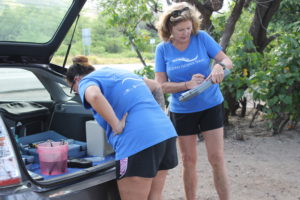
Photo caption: Along the coast of Maui, a group of trained volunteers practices gathering ocean water quality samples through the unique community-based Hui O Ka Wai Ola (Association of Living Waters) monitoring program. Nearly 40 volunteers sample water quality at 41 beaches in South and West Maui every three weeks year-round. Data from the program is readily accepted by the State of Hawaii Department of Health Clean Water Branch and is shared publicly at www.huiokawaiola.com and at www.mauireefs.org.

Free talk about Kahoʻolawe titled, “Kūkulu Ke Ea A Kanaloa — The life and spirit of Kanaloa builds and takes form.” by Dean Tokishi at our April 3, 2019 meeting

in /by

Special thanks to Akaku Community Media for filming the free presentation focusing about Kahoʻolawe titled, “Kūkulu Ke Ea A Kanaloa — The life and spirit of Kanaloa builds and takes form.” by Dean Tokishi, Ocean Resources Specialist III, Kaho’olawe Island Reserve Commission, at our Wednesday, April 3, 2019 meeting of Maui Nui Marine Resource Council. This event was held at The Sphere at Maui Ocean Center.

Didnʻt get to attend? Good news, you can view it here, thanks to Akaku!


https://vimeo.com/332580699

Hui O Ka Wai Ola Ocean Water Quality Testing Program Expands Again – Now Testing 48 Maui Sites

in /by

The volunteer-based Hui O Ka Wai Ola ocean water quality testing program has expanded again, with the addition of 12 more testing sites in South Maui in early March 2018.  With this expansion, the program is now covering 48 shoreline locations where trained volunteers routinely test water quality on Maui every 2 to 3 weeks.

The Hui O Ka Wai Ola program, whose name means “Association of the Living Waters,” is the first community-based water quality monitoring to measure for nutrients (including nitrogen and phosphorus), along with turbidity, salinity, dissolved oxygen, pH and temperature in Maui’s coastal waters.

The program first launched in June 2016 in West Maui with 17 sites. One West Maui site was added in February 2017 (Napili Bay), and 6 additional West Maui sites were added in June 2017.

The program expanded to include a dozen new test sites in South Maui in November 2017. The latest expansion in 2018 added another 12 South Maui sites. In all, the group of volunteers are testing 48 sites on Maui.

A Partnership at Work
The program is made possible through the volunteers’ efforts and a joint partnership of Maui Nui Marine Resource Council, The Nature Conservancy, West Maui Ridge to Reef Initiative and the State of Hawaii Department of Health. Financial support for the program is provided by the partners, along with the County of Maui Office of Economic Development, National Fish and Wildlife Foundation, North Beach West Maui Benefit Fund, Napili Bay and Beach Foundation, Pride of Maui, Maui Ocean Center and individual donors and supporters

“Our goal is to support the State of Hawaii Department of Health and Maui County efforts to improve coastal water quality so that coral reefs and native fish populations thrive, and our residents and visitors are safe,” said Robin Newbold, co-founder and chairwoman of the Maui Nui Marine Resource Council. “We want to help identify problem areas, so remedial action may be taken as needed.”

Trained Volunteers and a Quality Assurance Plan
To prepare for the expansion in March, a group of ten new volunteers completed intensive training in the classroom, in the lab and in the field. The volunteers work under the guidance of experienced team leaders and regional coordinators. The sampling follows strict guidelines set under a Quality Assurance plan approved by the Department of Health. A QA officer reviews the data before it is submitted.

The volunteers bring equipment to the field for onsite testing; they also freeze and ship water samples to the SOEST (UH School of Ocean and Earth Science and Technology) laboratory on Oahu for additional analysis.

Poor Water Quality Undermines the Health of our Reefs
Hui O Ka Wai Ola’s program tests water samples for nutrients, such as nitrogen and phosphorous compounds, which can indicate pollution from wastewater and runoff from agriculture, landscaping and golf courses. High nutrient content in the water can cause an increase in growth of invasive algae, which could damage coral reefs.

In addition, research has shown that sustained, nutrient rich, lower pH submarine groundwater discharging onto nearshore coral reefs off West Maui lowers the pH of seawater and exposes corals to nitrate concentrations 50 times higher than normal. Rates of coral calcification — the rate at which coral polyps produce calcium carbonate which forms the hard structure of the reef — are substantially decreased. As a result, the reef degrades faster and the reef ecosystem is more likely to collapse.

“With many of Maui’s coral reefs in significant decline, it is critical that we reduce stressors to our reefs on a local scale as quickly as possible,” notes Tova Callender, coordinator supporting the West Maui Ridge to Reef Initiative. “Our water quality studies will help us understand the source of pollutants, which is the first step in addressing the stress to the reefs caused by impaired water quality and will hopefully make our reefs more resilient to climate change.“

Data provided by Hui O Ka Wai Ola will be used to supplement Health Department water quality monitoring on Maui and can be viewed on the group’s website, www.huiokawaiola.com.

Currently, only one Health Department employee tests water quality for the entire island due to budget constraints, said Dana Reed, the West Maui regional coordinator for the program. She said that supplementing the department’s testing for enterococcus bacteria, a marker for potentially harmful bacteria in the water, with nutrient data will provide a better view of changing water quality conditions that can harm coral reefs and humans.

Community Support Sought
The cost of testing for each site is about $3,800 per year, which includes analysis and the shipping of samples to Oahu. Maui Nui Marine Resource Center is asking companies, canoe clubs, community organizations and individuals to each sponsor a site with a $3,800 donation. To donate, visit https://www.mauireefs.org/membership-and-giving/adopt-a-beach/

The goal of Hui O Ka Wai Ola is to bring more awareness to local coastal water quality issues and support better-informed decisions and policies regarding water quality.

To learn more, visit HuiOKaWaiOla.com.