Posts

Free November 3 presentation will share ocean water quality data from
 29 Maui beaches and its impact on watershed management planning

in /by

KIHEI, HI — Every three weeks year-round, more than 20 Maui residents leave their homes in the early morning hours to help monitor the ocean water quality along the coasts of South and West Maui.

Carrying portable lab equipment in their cars, they work in small teams, wading knee deep into the ocean to gather water samples. Inital testing is completed in their cars, with additional testing taking place at indoor labs and at the University of Hawai‘i Manoa.

This unique volunteer-based program known as Hui O Ka Wai Ola (“Association Of The Living Waters”) has been gathering data in this way for five years, including through most of the Covid-19 pandemic.

What are they discovering about Mauiʻs coastal waters?

Learn more about this community-based effort and its findings at a free Zoom presentation on Wednesday, November 3 at 5:30 pm, hosted by Maui Nui Marine Resource Council as part of its “Know Your Ocean Speaker Series.”

The presentation will be conducted by Tiara Stark, Senior Team Lead of the Hui O Ka Wai Ola Program. Stark is responsible for overseeing all of the Hui O Ka Wai Ola water quality monitoring tasks and regularly accompanies the volunteers on their monitoring expeditions. She will describe the coastal water quality trends that Hui O Ka Wai Ola has identified, and explain how these findings are helping to drive watershed management actions in our community.

Starkʻs presentation will include a snapshot of the findings at each of the projects’ 29 monitoring locations, so that attendees will be able to learn the latest about ocean water quality at their favorite beaches.

Stark notes that almost all of the 29 locations where Hui O Ka Wai Ola monitors ocean water quality are failing to meet State of Hawai‘i Department of Health standards.

“This is frustrating to our community, because we all want clean ocean water for our shorelines,” says Stark. “But with all of the data weʻve been gathering, weʻve acquired important information about whatʻs likely happening upslope from the ocean in our watersheds thatʻs creating the problems that weʻre seeing.”

“The data weʻve gathered will help shape better management strategies for our watersheds with the aim of achieving cleaner ocean water to benefit our coral reefs, our nearshore fish populations and marine wildlife, and the people of Maui County who love being in and around the ocean,” says Stark.

Hui O Ka Wai Ola was co-founded in 2016 through a partnership of Maui Nui Marine Resource Council, The Nature Conservancy, and West Maui Ridge to Reef Initiative.

The three organizations worked closely with the State of Hawai‘i Department of Health Clean Water Branch to establish consistent protocols that would ensure that the Hui O Ka Wai Ola data would be readily accepted for reports by county, state and federal agencies, including the U.S. Department of Environmental Protection.

Maui Nui Marine Resource Council, The Nature Conservancy, and West Maui Ridge to Reef Initiative continue to manage the program together.

Learn more about Hui O Ka Wai Ola and how you can volunteer at www.huiokawaiola.com.


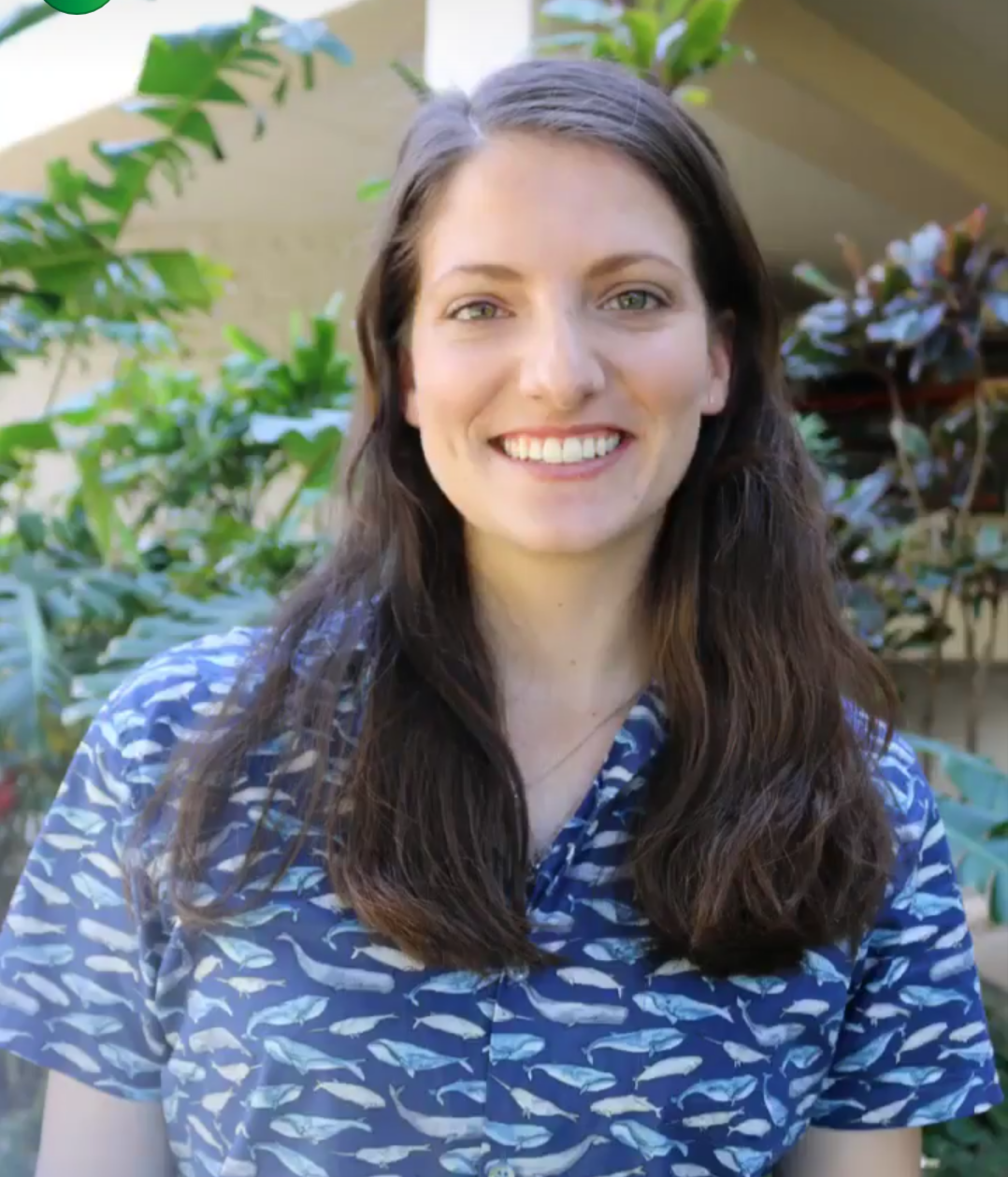
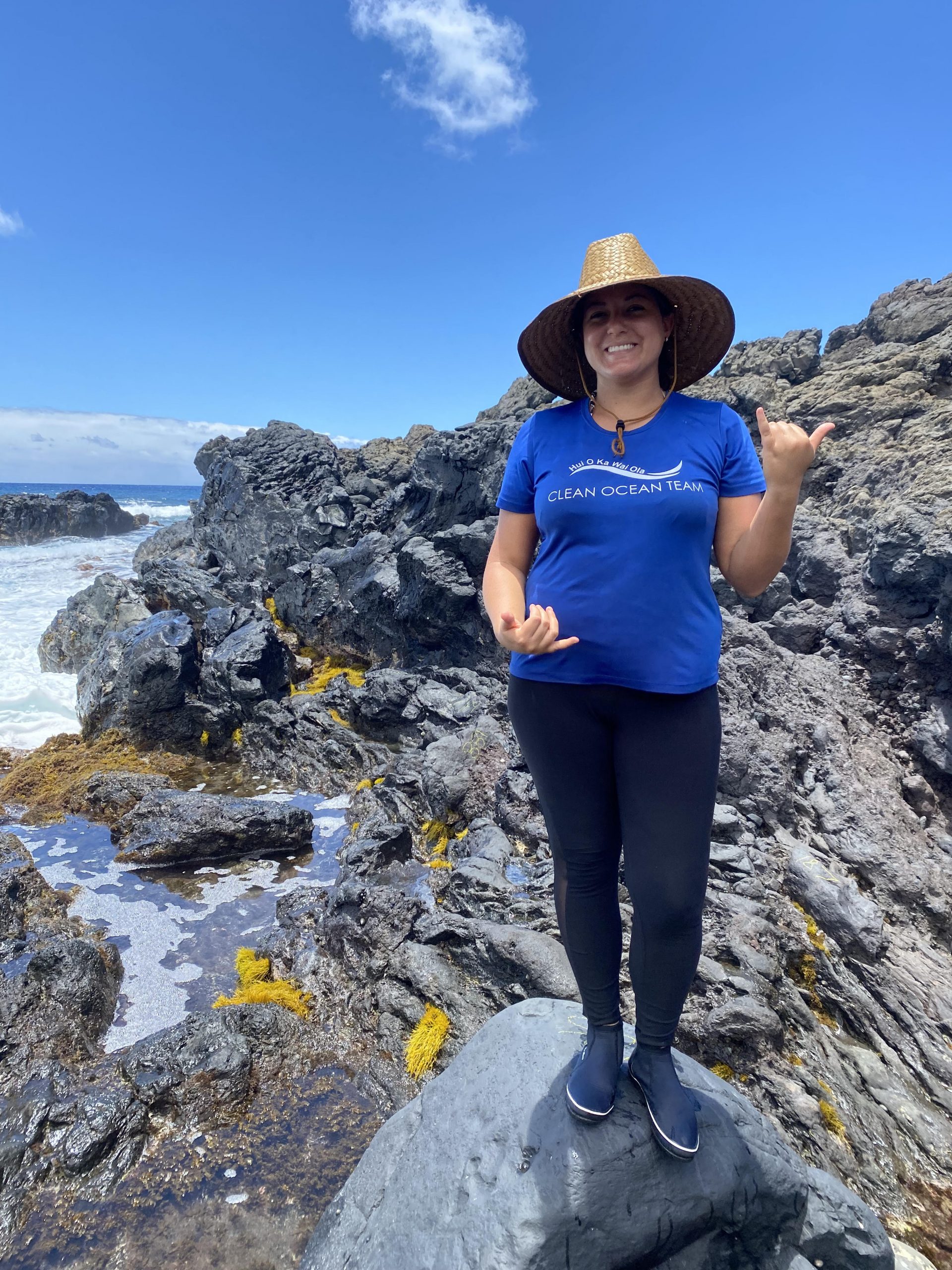
Presenter Tiara Stark
 

Free Talk “Spying on Spinners: What We Can Learn From Listening” Focuses on Study of Spinner Dolphins of Maui, Moloka‘i, Lāna‘i, and the ‘Au‘au channel

in /by

KIHEI—  A free presentation called “Spying on Spinners: What We Can Learn from Listening” on Wednesday, Oct. 13 at 5:30 p.m. via Zoom will take a look at research conducted in the Maui Nui region (Maui, Moloka‘i, Lāna‘i and the ‘Au‘au Channel) that listened to spinner dolphins to learn more about their behaviors.  Reserve your spot. 

The presentation is part of Maui Nui Marine Resource Council’s monthly Know Your Ocean Speaker Series.

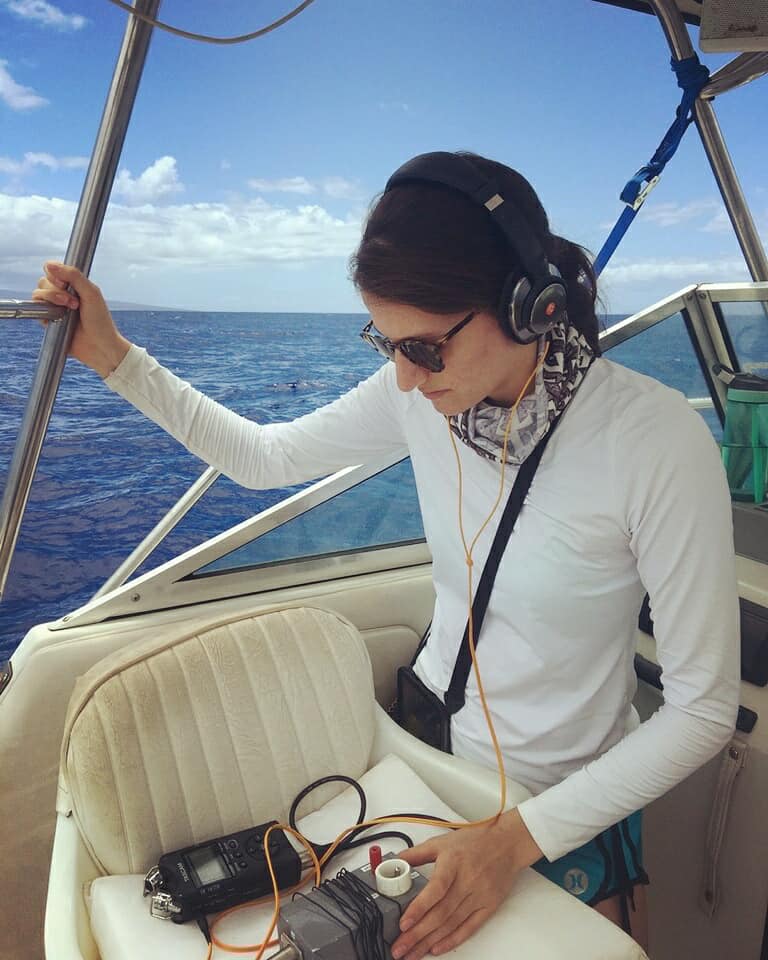
Megan McElligott, a fourth-year doctoral candidate at the University of Hawaiʻi at Mānoa in the Marine Biology Graduate Program, will be the guest speaker. She will discuss her recent work for her master’s thesis, titled “Investigating Spinner Dolphin (Stenella longirostris) Occurrence and Acoustic Activity in the Maui Nui Region” which was recently published in Frontiers in Marine Science. 

She will discuss how the acoustic recordings in her study confirmed that spinner dolphins use Mānele Bay and Honolua Bay for their daily resting behavior, as well as their use of the ʻAuʻau channel for resting.

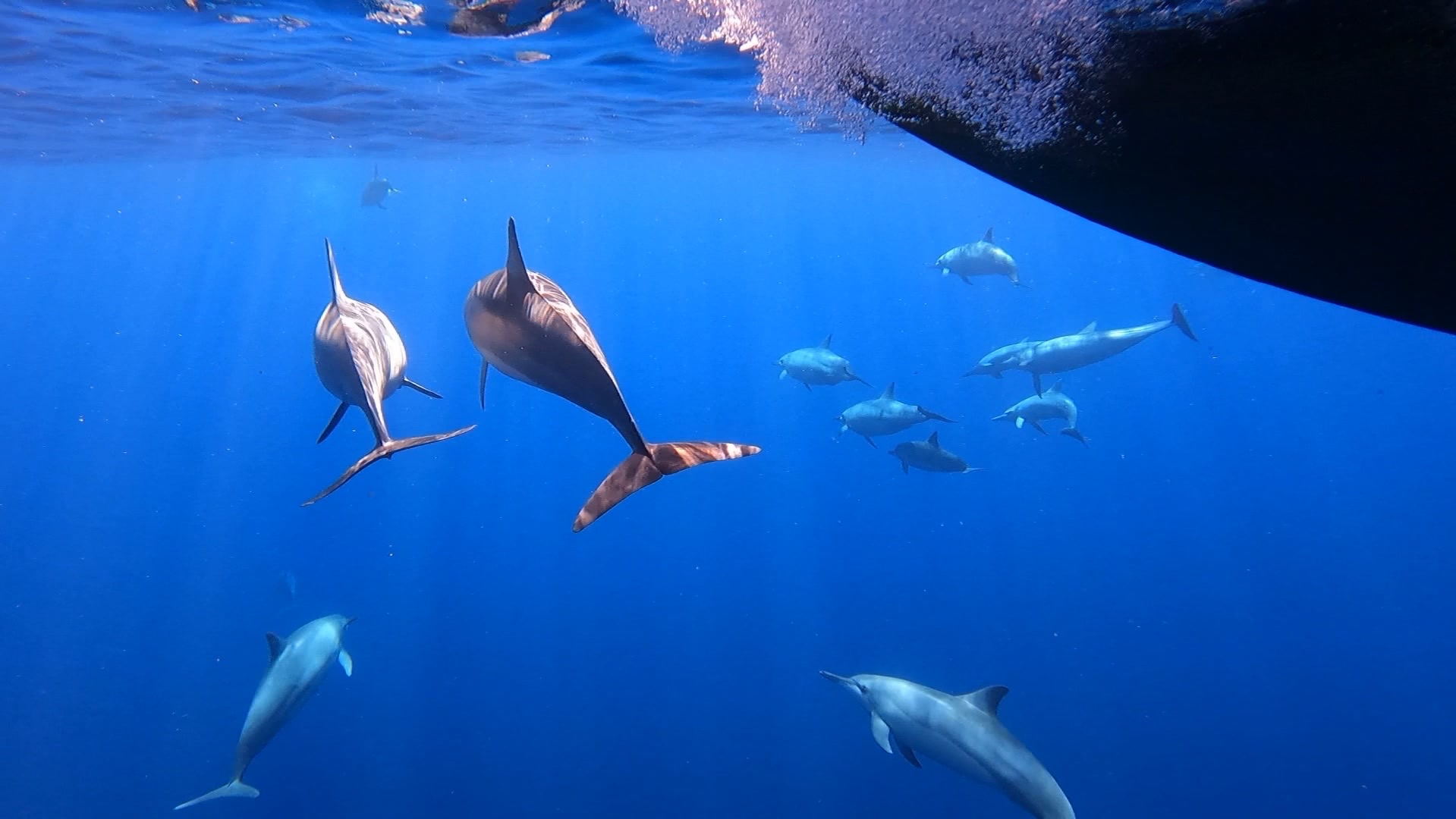
“Hawaiian spinner dolphins rest during the day in the islands’ coastal waters where they are susceptible to human disturbance,” reports McElligott. She notes that spinner dolphins are nocturnal and hunt in offshore waters at night. During the day, they use areas close to shore to socialize, nurture their young, shelter from predators, and rest in preparation for nightly hunting.

The goal of McElligott’s research is to help wildlife managers determine the best ways to protect spinner dolphins from human disturbance.

McElligott’s research was one of the studies examined by NOAA Fisheries leading up to their new rule finalized on September 28, 2021  that prohibits swimming with, approaching, or remaining within 50 yards of a Hawaiian spinner dolphin. The rule applies to any vessel, person, or object (including all boats, canoes, stand-up paddleboards, drones, or any other means) that is within 2 nautical miles from shore in the main Hawaiian Islands and in designated waters bounded by the islands of Lāna‘i, Maui, and Kahoʻolawe. This final rule will officially be in effect on October 28, 2021, 30 days after it was published in the Federal Register. Learn more about this new law and its exceptions at https://www.fisheries.noaa.gov/feature-story/new-regulation-protects-hawaiian-spinner-dolphins-against-disturbance.

McElligott’s study was conducted using a combination of passive acoustic monitoring and vessel surveys to document spinner dolphin occurrence and movements. Bottom-moored acoustic recorders were deployed at eight locations in Maui Nui, and at one previously established resting bay off west O‘ahu for comparison. The amount of whistles, clicks, and burst pulses at each location was quantified and averaged by the hour of the day.

“What we observed in Maui Nui is different from what we see off Oʻahu and Hawaiʻi island,” says McElligott. “I will also talk about what we aim to investigate with our current data collection efforts in Mānele, Hulopoʻe, and Honolua.”

To learn more this species’ behavior and McElligott’s research, tune in to Maui Nui Marine Resource Council’s “Know Your Ocean Speaker Series” on Oct. 12 at 5:30 p.m. via Zoom.
These monthly virtual events are supported by the County of Maui Mayor’s Office of Economic Development.|

The event’s emcee will be Darla Palmer-Ellingson, local radio show host of the public affairs program, Island Environment 360 Maui’s only commercially broadcast public affairs show on environmental and related Hawaiian cultural topics, aired on the stations of H-Hawaii Media.

NOAA Fisheries is also proposing to establish time-area closures to reduce disturbance in five nearshore areas designated as essential daytime habitats for spinner dolphins. This regulation would prohibit entering restricted areas between 6 a.m. and 3 p.m. daily in parts of Kealakekua, Hōnaunau, Kauhakō (Ho‘okena), and Makako Bays on Hawai‘i Island, and La Perouse Bay on Maui.

Since this is a proposed rule, a decision on whether to finalize the rule will not happen until after the public has an opportunity to comment. The public comment period for the proposed time-area closures will be open until December 27, 2021, 90 days after publication in the Federal Register. To learn more, visit https://www.fisheries.noaa.gov/action/proposed-rule-establish-time-area-closures-hawaiian-spinner-dolphins-essential-habitats-main

Reserve your spot for this presentation.


Free Presentation “Saving a Species: “Rehabilitation as a Conservation Tool for Hawaiian Monk Seals” Offered on Weds., Aug. 4

in , /by

Hawaiian monk seals are endangered, with fewer than 1,400 animals left on earth — yet they have recently been in the news, as videos and photos have surfaced showing the seals falling victim to harassment by visitors who get too close or attempt to touch them, sometimes for social media content. Learn more about Hawaiian monk seals at a free presentation called “Saving a Species: Rehabilitation as a Conservation Tool for Hawaiian Monk Seals” on Wednesday, August 4 at 5:30 pm HST via Zoom where two special guests from The Marine Mammal Center’s dedicated hospital for monk seals, Ke Kai Ola, on Hawai’i Island will highlight their conservation and outreach work.

The Center’s Lauren Van Heukelem, Response and Operations Coordinator, and Dr. Sophie Whoriskey, Hawaiian Monk Seal Conservation Veterinarian, will speak at this event, part of the “Know Your Ocean Speaker Series” which is hosted every month by Maui Nui Marine Resource Council.

Researchers estimate that about 30 percent of Hawaiian monk seals are alive today due to conservation efforts led by the National Oceanic and Atmospheric Administration (NOAA) and partners like the Center. The mission of The Marine Mammal Center focuses on global ocean conservation through rescue and rehabilitation, scientific research, and education.

Reserve a spot at the free presentation by visiting https://www.bitly.com/monksealwebinar

“We are hosting this special presentation with the awareness that public education is needed to help protect our Hawaiian monk seals from harassment or injury,” says Anne Rillero, Communications Manager at Maui Nui Marine Resource Council. “These animals are among the most endangered seals on earth.”

Dr. Whoriskey received her bachelor’s degree from Dalhousie University in Nova Scotia, Canada, and her veterinary medical degree from the Atlantic Veterinary College. She first came to The Marine Mammal Center in 2015 as the intern veterinarian in marine mammal medicine and pathology where she spent two years training with marine mammal medicine experts.

In 2020, she returned to the Center as a full-time Hawaiian Monk Seal Conservation Veterinarian. She leads the Center’s Hawaiʻi animal care operations, dedicated to the rehabilitation, conservation and research of the endangered Hawaiian monk seal.

Whoriskey has extensive field experience in remote and harsh environments and has participated in research projects from Alaska to Antarctica, all with a mission of advancing the global body of knowledge on marine mammal health.

Born and raised in Hawaiʻi, Van Heukelem received both her bachelor’s and master’s degrees from the University of Hawaiʻi at Mānoa in Marine Biology. She has participated in many research studies both in Hawaiʻi and the Northern Mariana Islands on various topics.

As the Response and Operations Coordinator, Van Heukelem oversees the monitoring of the endangered Hawaiian monk seal population on Hawaiʻi Island. She runs the Center’s 24-hour hotline for reporting seal sightings around the island and coordinates outreach and population assessments on a daily basis.

“On Hawai’i Island, we operate Ke Kai Ola, the only hospital dedicated to Hawaiian monk seals, providing support for monk seals found throughout the Hawaii archipelago,” says Van Heukelem. “Utilizing a 24-hour response hotline and a variety of education and outreach programs, we aim to advance conservation practices that empower our local community to protect this rare species.”

This presentation will focus on the center’s mission and work over the past 45 years in California and Hawaiʻi. Since opening Ke Kai Ola in 2014, The Marine Mammal Center has treated 36 Hawaiian monk seals and supports the work of NOAA’s Hawaiian Monk Seal Research Program by providing the only long-term care facility for this endangered animal.

These monthly virtual events are supported by the County of Maui Mayor’s Office of Economic Development.

The event’s emcee will be Darla Palmer-Ellingson, local radio show host of the public affairs program, Island Environment 360 Maui’s only commercially broadcast public affairs show on environmental and related Hawaiian cultural topics, aired on the stations of H-Hawaii Media.

To reserve your spot at this free Zoom webinar, please visit https://www.bitly.com/monksealwebinar


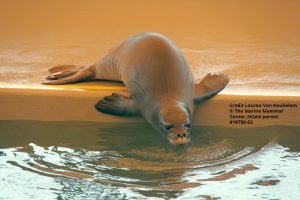
Eleu (PP08), a weaned female Hawaiian monk seal pup rescued from Papahānaumokuākea Marine National Monument Refuge, rests during rehabilitation at The Marine Mammal Center’s Ke Kai Ola hospital and visitor center in Kailua-Kona, HI. The young female seal’s name means one that is active, alert, energetic, lively and nimble. Credit Lauren Van Heukelem © The Marine Mammal Center, NOAA Permit #18786-03


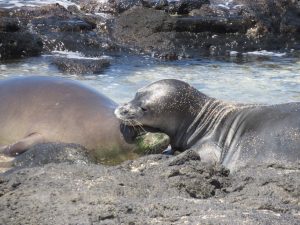
Hawaiian monk seals RK26 (on left) and RL50 (on right) rest on a beach. As the world’s largest marine mammal hospital, The Marine Mammal Center actively monitors endangered monk seals that frequent Big Island beaches to check on their condition, but its experts do not serve in a law enforcement capacity. Credit Sheila Latta © The Marine Mammal Center

The Maui News: Maui has the highest number of tiger sharks, attacks in state

in /by

Not only does Maui have the highest number of tiger sharks in the state, the area also sees the most shark attacks, according to local scientists who have tracked and studied Hawaii sharks for decades.

Shark bite frequency by island from 1995 to 2021 shows that Maui outpaces any other Hawaiian island with about 40 nonfatal bites and five fatal bites, research from the Hawaii Institute of Marine Biology shows. Oahu is second with slightly more than 20 nonfatal bites. Hawaii island is third with about 15 nonfatal bites.

Despite shark attacks off Maui in November, December and February, shark expert Kim Holland said he and colleagues are surprised that there aren’t more attacks, given how many tiger sharks are actually in the water.

“One of the things that has to come across in this conversation: The amazing thing to me and my colleagues is not how many shark attacks there are in Hawaii, it’s how few shark attacks there are in Hawaii,” he said. “If you think of how many tens of thousands of person hours of ocean users there are in the water and how common we know large sharks are, the fact that we have two (attacks per year) to five (attacks) to zero to eight to two to four to zero attacks per year is really astounding.”

Read more

Free July 7 Zoom Presentation by Dr. Craig Downs and Hawaii Senator Mike Gabbard: “Education vs. Enforcement: Next Steps Beyond the Enactment of Hawaii’s Sunscreen Law”

in /by

KIHEI, HI— Hawaii’s ban on sunscreens containing the reef-harming chemicals oxybenzone and octinoxate went into effect on January 1, but is the law effective in protecting our local coral reefs and marine animals as intended? Is the ban being enforced? What’s the latest scientific evidence about the chemicals that are replacing these two ingredients in some brands of sunscreen? Are new laws needed?

Get the answers to these important questions on Wednesday, July 7 at 5:30 p.m. via a free Zoom presentation featuring special guest speakers: Dr. Craig Downs, whose groundbreaking research educated the world about sunscreen chemicals and their role in coral reef decline; and Hawaii Senator Mike Gabbard, who authored the legislation that resulted in Hawaii’s ban on the sale of sunscreens that contain the chemicals oxybenzone and octinoxate.

The presentation titled “Education vs. Enforcement: Next Steps Beyond the Enactment of Hawaii’s Sunscreen Law” is sponsored by the County of Maui Mayor’s Office of Economic Development and hosted by Maui Nui Marine Resource Council as part of the organization’s “Know Your Ocean Speaker Series.”

This event is free, but advanced reservations are required. To reserve your spot, please visit https://bit.ly/SunscreenWebinar.

Downs graduated from Hiram College with a B.A. in philosophy and biology, received his M.Sc. from Syracuse University, and received his Ph.D. from the University of Hawaii in cell and molecular biology. He has published over 50 scientific papers and a number of book chapters in scientific textbooks, and is the co-editor of the CRC press veterinary book, Diseases of Corals, as well as founded a number of companies and nonprofits relating anywhere from animal welfare to environmental conservation and exploration.

Downs has held positions as research professor at University of Hawaii’s School of Medicine and Sweet Briar College. He is currently an invited professor at Sorbonne University (France) and is the Executive Director of Haereticus Environmental Laboratory, a non-profit scientific organization dedicated to increasing the scientific, social and economic knowledge of natural environmental habitats in order to better conserve and restore threatened environmental habitats and resources.

Gabbard, who has represented District 20 since 2006, which includes Kapolei, Makakilo, and portions of Kalaeloa, Waipahu, and Ewa, has authored 54 bills that became law relating to energy efficiency, renewable energy, endangered species protection, industrial hemp, the environment, public safety, and more.

One of those bills that became law in 2018, SB 2571, is the ban of sale or distribution in the state of any sunscreen that contains oxybenzone or octinoxate, or both. Last session, Gabbard introduced SB 366, which would ban the sale, offer of sale, or distribution in Hawaii of any sunscreen that contains two more chemicals, avobenzone or octocrylene.

The speakers plan to address whether or not sunscreen pollution is a symptom of unsustainable tourism and coastal development, how we get visitors and residents to comply with the new sunscreen law, and who is responsible for enforcing it.

This panel will also provide information and tips on how you can help to protect the marine environment.

Maui Nui Marine Resource Council’s “Know Your Ocean Speaker Series” events are held monthly via Zoom. Support for these events is provided by the County of Maui Mayor’s Office of Economic Development.

The virtual event’s emcee will be Darla Palmer-Ellingson, local radio show host of the public affairs program, Island Environment 360 Maui’s only commercially broadcast public affairs show on environmental and related Hawaiian cultural topics, aired on the stations of H-Hawaii Media.

To reserve your spot at this free Zoom webinar, please visit https://bit.ly/SunscreenWebinar.

Public invited to free webinar on “Shark Research in Hawaii – With an Emphasis on Maui” by Dr. Kim Holland on Wednesday, March 3

in /by

KIHEI, HI – Recent shark attacks that occurred off the coast of Maui in November (2020), December (2020) and January (2021), as well as an incident in February (2021) which involved a large shark biting a kayak, have many ocean users concerned and curious about the sharks found in our nearshore waters. The public is invited to learn more about our local sharks at a free Zoom presentation titled “Shark Research in Hawaii – With an Emphasis on Maui’ by Dr. Kim Holland. Dr. Holland is the Research Professor at the Hawaii Institute of Marine Biology, (HIMB) at University of Hawaii at Manoa and the founder of the Shark Research Group at HIMB.

This free talk is hosted by Maui Nui Marine Resource Council’s “Know Your Ocean Speaker Series” and will take place on Wednesday, March 3 at 5:30 pm via Zoom. The presentation is free, but advance reservations are required. To reserve your spot, please visit https://bit.ly/SharkWebinar

For over 40 years Dr. Holland’s research has focused on the biology and movement patterns of large marine fishes such as tuna, billfishes and sharks. He has been a pioneer in helping to develop and deploy cutting edge tracking technologies that allow unprecedented insight into the movement patterns of marine fishes.
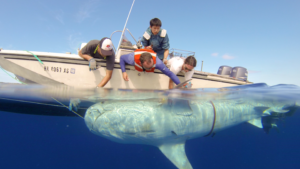
His presentation will include a brief overview of tracking technologies with an emphasis on what has been learned about the movements of sharks around Maui Nui.

“While many Maui residents and visitors are fearful about sharks, it’s important to remember that sharks play an important role in maintaining Hawaii’s ocean ecosystems,” said Anne Rillero, Communications, Community Outreach and Development Manager at Maui Nui Marine Resource Council. “We’re looking forward to learning more about Dr. Holland’s findings and insights about Hawaii’s sharks.”

Maui Nui Marine Resource Council’s “Know Your Ocean Speaker Series” events are held monthly via Zoom. Support for these events is provided by the County of Maui Mayor’s Office of Economic Development.

The emcee for this event is Darla Palmer-Ellingson, local radio show host of the public affairs program, Island Environment 360 Maui’s only commercially broadcast public affairs show on environmental and related Hawaiian cultural topics, aired on the stations of H-Hawaii Media.

To reserve your spot at this free Zoom webinar, please visit https://bit.ly/SharkWebinar


Experts tag a tiger shark with a tracking device in the waters off Maui. The satellite tag gets attached to the shark’s dorsal fin and sends a signal every time the fin surfaces the water. Photo Credit: HIMB

Public invited to free Zoom presentation about unique collaboration of 7 environmental projects funded by Maui CARES

in /by

Program provided employment for more than 70 Maui and Molokai residents

“It’s like Maui County’s own version of the Civilian Conservation Corps”

KIHEI, HI – During the Great Depression, the government-sponsored Civilian Conservation Corps (CCC) provided paychecks for 3 million unemployed young men and provided valuable labor for conservation projects across the country.

With unemployment at record levels due to COVID-19, a new program followed this historical CCC model and put more than 70 Maui and Molokai residents to work in November, providing seven local conservation nonprofits with needed labor to benefit coral reefs, cultural resources and the environment.

The public is invited to a free presentation on Weds. January 27 at 5:30 pm on Zoom to learn about this unique collaborative employment and workforce training program and the impact it had on our local environment. The presentation will include videos, photos and firsthand accounts of the projects and accomplishments, with information on how the projects incorporated traditional Hawaiian cultural practices and modern technology to prevent sediment pollution in the ocean and protect valuable cultural resources.

It’s free, but registration is required. To sign up, visit https://bit.ly/mauiCARES

This unique collaborative employment and workforce training program was made possible through the County of Maui Office of Economic Development’s Maui CARES program, which was funded by the Federal CARES Act. As the fiscal sponsor, Maui Nui Marine Resource Council oversaw the administration of the Maui CARES funding for the projects and managed the rapid employment of more than 70 new hires with the help of simplicityHR by ALTRES.

The workers participated in conservation and restoration projects in Olowalu, Waihe’e, Keanae, Kipahulu, Hana and Moloka’i. All of the projects were rooted in Hawaiian cultural practices and values which serve as the foundation of our community. Their work was filmed by Inflatable Film of Kula. The evening will include video premieres exclusively for webinar attendees.

“Through this presentation, attendees will be immersed in a virtual experience to feel the importance of Kuleana, ʻOhana, Kōkua, Aloha ʻAina, Mālama ʻAina, and Hānai ʻAina, said Ekolu Lindsey, President of Maui Cultural Lands and a principal organizer of this program. “Be inspired to follow in the footsteps of those who have come before us, as we share our legacies with you.”

The participating nonprofits include:

Ka Honua Momona on Molokai worked to restore two ancient fishponds, which will help trap sediment before it reaches the open ocean – with the benefit of also producing fish for local people.

Kipahulu ‘Ohana in East Maui improved a lo’i, or wetland taro farm. The taro plants will slow the flow of stormwater, allowing time for sediment in the water to settle, rather than flow out to sea.

Hawaiian Islands Land Trust in Waihe’e worked to remove invasive species along approximately 3,000 linear feet of Kalepa Stream to lower sediment loads in the nearshore waters off Waihe’e and protect offshore corals.

Ke Ao Hali‘i (KAH) in Hana worked on 27 acres of publicly owned land at Mokae/Kaholaiki and another ~2 acres of contiguous land, directly above Hamoa Beach. Their project included invasive plant removal and native habitat restoration for seabirds and insects, and a biological survey of ‘opihi as a baseline for a possible ‘opihi rest area in the future.

Kipuka Olowalu in West Maui reestablished washed out and damaged lo’i (taro fields), rebuilt vanished lo’i and prepared lo’i for planting in the Olowalu Cultural Reserve. Workers removed overgrowth, fire hazards and invasive plants; planted native plants and crops and repaired infrasturcture.

Na Moku ‘Aupuni O Ko‘olau Hui in East Maui worked on watershed management and stream maintenance, as well as stream and ditch monitoring in the East Maui Irrigation system to establish accurate data for stream and ditch flow and loss as a basis for making sound future management decisions related to this resource and delivery infrastructure.

Each of the nonprofits will be presenting their work and accomplishments through photos, video and stories from the field.

Na Mamo o Mu‘olea in East Maui focused on land and shoreline management on a county parcel (which Nā Mamo O Mū’olea has a 50 year lease). It included removal of invasive plants around a rock wall that is on the historic registry, and preparation for wall restorations, maintenance of two heiau on the property, installation of new fencing around an area designated for native trees and medicinal plants, and maintenance and repair of feral animal controls.

“This presentation is a celebration of all that was accomplished and learned,” said Lindsey. “We encourage the public to attend to connect with these organizations and the workers who put heart and soul into these challenging and impactful projects.“

The emcees for this event are Ekolu Lindsey and Darla Palmer-Ellingson, local radio show host of the public affairs program, Island Environment 360 Maui’s only commercially broadcast public affairs show on environmental and related Hawaiian cultural topics, aired on the stations of H-Hawaii Media.

About Maui Nui Marine Resource Council

Maui Nui Marine Resource Council is a community-based nonprofit organization celebrating 13 years of working for healthy coral reefs, clean ocean water and abundant native fish throughout Maui County. Our work includes co-managing the Hui O Ka Wai Ola Ocean Water Quality Monitoring Program in South and West Maui, efforts to reduce pollution in Mā‘alaea Bay (through erosion-control efforts in the Pohakea watershed and using oysters to filter sediment and pollutants from ocean water), coral reef research, visitor education programs and more. Learn more at www.mauireefs.org.

Free Webinar: “Exploring the Octopus: How to Learn from Animal Behavior”

in /by

Photo courtesy Don Bloom

“Exploring the Octopus: How to Learn from Animal Behavior” is Topic of November 18 “Know Your Ocean Speaker Series” Free Webinar

Octopuses explore the world around them with their flexible arms, which can touch — and actually taste — to help them quickly identify prey. Maui Nui Marine Resource Council invites the public to learn more about the specialized octopus cells that make this unique ability possible at a free Zoom webinar titled “Exploring the Octopus: How to Learn from Animal Behavior” on Wednesday, November 18 at 3 pm. This presentation is part of MNMRC’s monthly “Know Your Ocean Speaker Series.”

The guest speaker will be Peter Kilian, Research Assistant and Aquatic Animal Technician at the Bellono Lab at the Department of Molecular and Cellular Biology at Harvard University. The lab studies how diverse organisms sense and respond to changes in their environment.

Peter will be sharing his work on a paper which he co-authored that was recently published in Cell titled, “Molecular Basis of Chemotactile Sensation in Octopus.” Stories about this report, which describes how octopus can both touch and taste with their arms, have appeared in numerous newspapers, magazines, tv news shows and online journals, including The New York Times, CNN, Smithsonian Magazine and others.

As a research assistant and aquatic animal technician at Bellono Lab, Peter spends most of his time working with fish, sharks, cephalopods, and various other marine invertebrates to try and learn how and why they behave the way they do.

“So many of us on Maui are fascinated with octopuses, especially after ‘My Octopus Teacher’ launched on Netflix,” says Meredith Beeson, Project and Research Coordinator at Maui Nui Marine Resource Council. “We are excited to host this presentation by Peter Kilian, which will describe how Harvard researchers looked at the octopus at the molecular level to learn how the nervous system in the octopus’ arms — which operate largely independently from its centralized brain — allows these animals to both touch and taste their prey.”

The guest emcee will be Darla Palmer-Ellingson, local radio show host of the public affairs program, Island Environment 360 Maui’s only commercially broadcast public affairs show on environmental and related Hawaiian cultural topics. Her  program is made possible by H-Hawaii Media.

Maui Nui Marine Resource Council offers its monthly “Know Your Ocean Speaker Series” via Zoom, usually on the first Wednesday of the month. This month’s presentation was delayed due to Election Day and Veteran’s Day. Please note that this event will start at 3 pm, earlier than other “Know Your Ocean Speaker Series” talks, because the speaker is located in Massachusetts. If you wish to view the presentation, but cannot attend at 3 pm, please email [email protected] to receive emailed information about where and how to view the presentation later in the day.

To make a reservation for the live Zoom presentation, please visit https://bit.ly/OctopusTalk

The “Know Your Ocean Speaker Series” is made possible with support from the County of Maui Mayorʻs Office of Economic Development.

About our speaker:
Peter Kilian, Research Assistant and Aquatic Animal Technician at the Bellono Lab at the Department of Molecular and Cellular Biology at Harvard, has been interested in the mystery of animal behavior since a young age. His drive to work with animals originates from countless trips to the local zoo and aquarium when he was growing up. This curiosity continued to evolve in college, where Peter dove into his passion for animal work. While in college he spent time working as a beekeeper, a penguin aquarist at the New England Aquarium, and a pygmy octopus husbandry specialist in the mariculture lab at the Marine Biological Laboratory in Woods Hole, MA. He has since graduated from college, and now works full time in the Bellono Lab at Harvard as a research assistant and aquatic animal technician. He spends most of his time working with fish, sharks, cephalopods, and various other marine invertebrates to try and learn how and why they behave the way they do.


Maui Nui Marine Resource Council Wins $3,000 Award in Hogan/American Savings Bank Nonprofit Business Plan Competition

in /by

MĀ‘ALAEA, HI – The nonprofit Maui Nui Marine Resource Council (MNMRC) was awarded a $3,000 prize in the 2020 Hogan/American Savings Bank Nonprofit Business Plan Competition for a business plan titled, “Vision for Pohakea.”

“The goal of our Vision for Pohakea plan is to reduce sediment and pollutants in Māʻalaea Bay and Māʻalaea Harbor,” explains Amy Hodges, Programs and Operations Manager at Maui Nui Marine Resource Council. “Pohakea is the name of the 4,000+ acre watershed upslope from Māʻalaea Bay. Pohakea watershed has several gulches that all discharge into Māʻalaea Bay and the harbor. “

MNMRC’s business plan was one of only 8 plans selected as finalists from more than 40 other Hawai‘i nonprofit business plans submitted. Finalists were invited to present their plans to a panel of judges via Zoom, at a Chamindade University event held on October 14. MNMRC’s plan was presented by Amy Hodges, MNMRC’s Programs and Operations Manager, and Ekolu Lindsey, MNMRC Board Member.

MNMRC was awarded 4th place overall and a $3,000 prize, which it will use to help fund the “Vision for Pohakea” plan.

The plan explains that Māʻalaea Bay is a community resource — a place where people surf, fish, swim, paddle, whalewatch and embark on ocean adventures. “Unfortunately, the water quality in Mā‘alaea Bay is compromised by storm water and sediment run-off, as well as other pollution originating from land,” notes the plan. “This nearshore ocean pollution adversely impacts areas in Māʻalaea Bay that are important for recreation, and also undermines the health of coral reefs and sea turtle feeding areas just outside the harbor.”

To improve Māʻalaea Bay’s deteriorating ocean water quality, MNMRC is installing caged oysters in the bay. Oysters are natural filter feeders, with a single oyster capable of filtering 40 to 60 gallons of water per day, removing sediment and other pollutants. The first oysters were installed in early 2020, with new oysters added throughout the year. They are monitored every two weeks and are found to be thriving.

The second part of the project takes place in the Pohakea Watershed, implementing projects outlined in the Pohakea Stormwater Management Plan, which MNMRC commissioned Maui Environmental Consulting to produce in 2018.

MNMRC has been writing grants and raising funds to enact this plan over a multi-year period. Maui Nui Marine Resource Council applied for and received a $300,000 Resilient Communities Grant in 2019, made possible by the National Fish and Wildlife Foundation (NFWF) and the Wells Fargo Foundation, to enhance forest reserve resiliency through fuels management in the Pohakea watershed.

With funds from this grant, Maui Nui Marine Resource Council will establish and improve fuel breaks in strategically placed corridors to mitigate the pervasive cycle of wildfire and protect 3,414 acres of Forest Reserve in Māʻalaea,  part of the Pohakea watershed. That work is slated to begin later this year.

Additional funding for this project is provided by Hawaiʻi Tourism through the Aloha ʻĀina program and the County of Maui Mayor’s Office of Economic Development.


Ocean water quality is measured at several shoreline sites along Mā‘alaea Bay through the Hui O Ka Wai Ola citizen-based water quality monitoring program, co-founded and co-managed by Maui Nui Marine Resource Council, The Nature Conservancy and West Maui Ridge to Reef Initiative, working closely with the State of Hawai‘i Department of Health Clean Water Branch.

To gather baseline data about current ocean water quality throughout Māʻalaea Bay, MNMRC is also conducting regular kayak-based ocean water monitoring throughout the bay, using an electronic monitoring probe that provides a stream of data in real-time. The probe was purchased thanks to a generous grant from Lush Cosmetics Charity Pot.

Other support for implementing the “Vision for Pohakea” plan comes from a grant from the County of Maui Mayor’s Office of Economic Development.

To learn more about the Vision for Pohakea plan and how you can support it, please visit www.mauireefs.org.


Caption:
Maui Nui Marine Resource Council’s team takes a break from their work with the oysters at Māʻalaea Bay to display their award from the 2020 Hogan/American Savings Bank Nonprofit Business Plan Competition. From left to right: Grace Silver, Amy Hodges and Meredith Beeson.


Please note: The views and conclusions contained in this document are those of the authors and should not be interpreted as representing the opinions or policies of the U.S. Government or the National Fish and Wildlife Foundation and its funding sources. Mention of trade names or commercial products does not constitute their endorsement by the U.S. Government, or the National Fish and Wildlife Foundation or its funding sources.

Free Oct. 7 Webinar by Daniel Amato, Ph.D. on “Sewage Impacts on Hawaiʻi’s Coastlines: Past, Present and Future”

in /by

Part of Maui Nui Marine Resource Councilʻs Online “Know Your Ocean Speaker Series”

What will determine the future impacts of sewage on Hawai’i’s nearshore ecosystems and public health? Learn more at a free Zoom webinar titled “Sewage Impacts on Hawaiʻi’s Coastlines: Past, Present and Future” by Daniel Amato, Ph.D., which will include recent research and latest information on Hawaiʻi’s wastewater saga. The webinar will take place on Wednesday October 7 at 5:30 pm and is free and open to the public. It is presented by Maui Nui Marine Resource Council as part of their monthly “Know Your Ocean Speaker Series.” Advance reservations are recommended as the Zoom webinar is limited to 100 attendees. Make your free reservation at https://bit.ly/MauiSewage
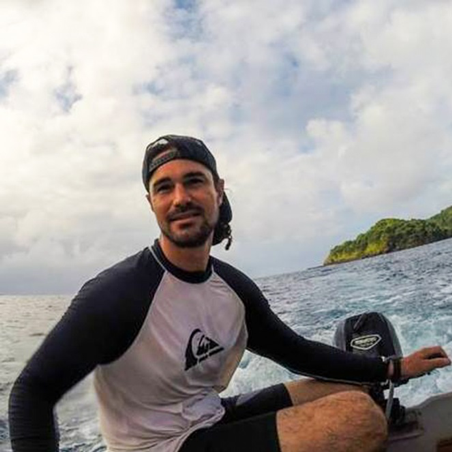
“My talk will share reports on how injection wells and cesspools continue to pollute Hawaiʻi’s waters, with an emphasis on recent Maui studies,” says Dr. Amato. ”I will also present recent decisions from the Hawaiʻi State Legislature and the current status of their effort to phase out cesspools.”

Dr. Amato will also discuss the current situation with sewage pollution in Hawai’i, and will present community efforts and new technological developments in sewage detection that show promise for the future.

A water quality specialist, Dr. Amato’s professional work focuses on the detection and impacts of land-based pollution in the Pacific Ocean and the development of new technology to assist in detecting the DNA of fecal indicator bacteria (FIB) in the water.Dr. Amato is a Marine Research Specialist at the University of Hawaiʻi at Manoa, an Environmental Scientist at Element Environmental LLC, and serves as the coordinator for Surfrider-Oahu’s Blue Water Task Force.

“We are offering this webinar by Dr. Amato to share important information about sewage and its impact on Maui’s coastlines, including ocean water quality and our nearshore coral reefs,” says Amy Hodges, Programs and Operations Manager at Maui Nui Marine Resource Council. “It’s a critically important topic, at a time when our coral reefs need the benefit of clean ocean water, to survive the impacts of climate change and warming water.”

“We thank the County of Maui Mayorʻs Office of Economic Development for supporting our Know Your Ocean Speaker Series,” says Hodges.

For reservations for this talk, visit https://bit.ly/MauiSewage.

About Maui Nui Marine Resource Council:
Maui Nui Marine Resource Council is a community-based nonprofit organization celebrating 12 years of working for healthy coral reefs, clean ocean water and abundant native fish throughout Maui County. Our work includes co-managing the Hui O Ka Wai Ola Ocean Water Quality Monitoring Program in South and West Maui, efforts to reduce pollution in Mā‘alaea Bay (through erosion-control efforts in the Pohakea watershed and using oysters to filter sediment and pollutants from ocean water), coral reef research, visitor education programs and more. Learn more at www.mauireefs.org.