Posts

Take a Virtual Dive with Hawaii’s Whale Sharks in Next Know Your Ocean Speaker Series Webinar

in /by

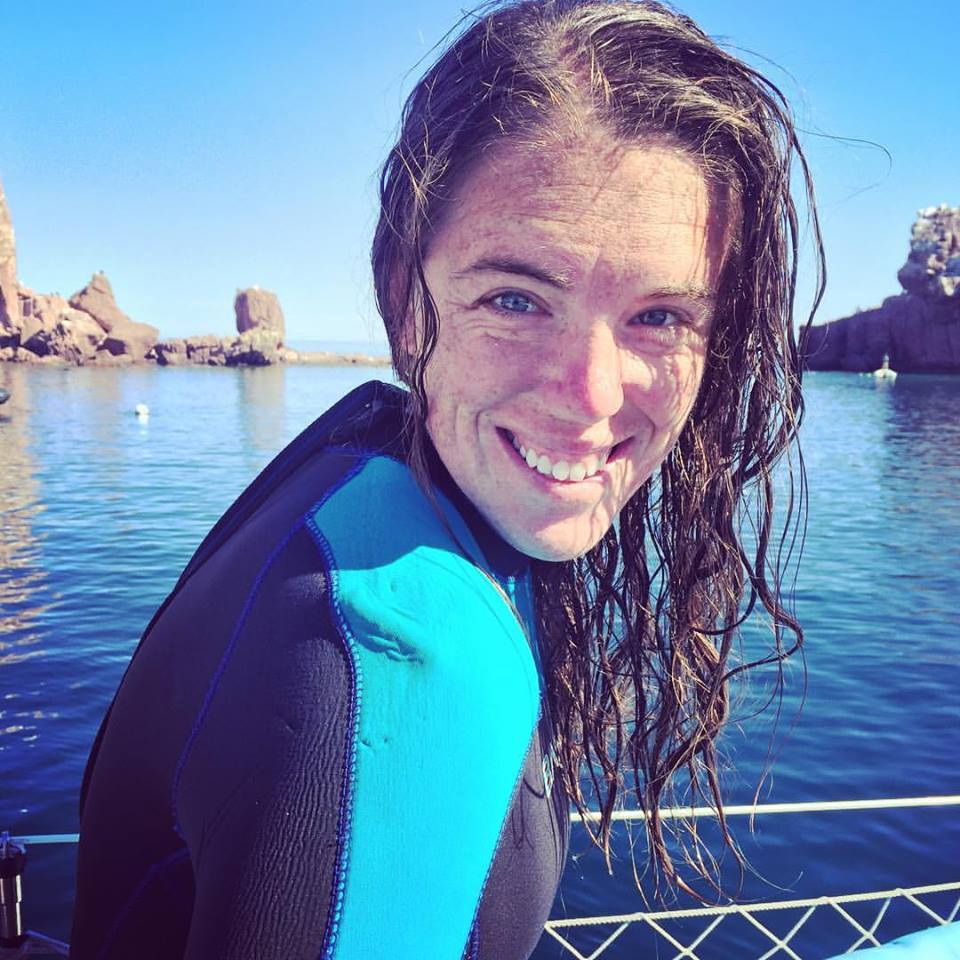
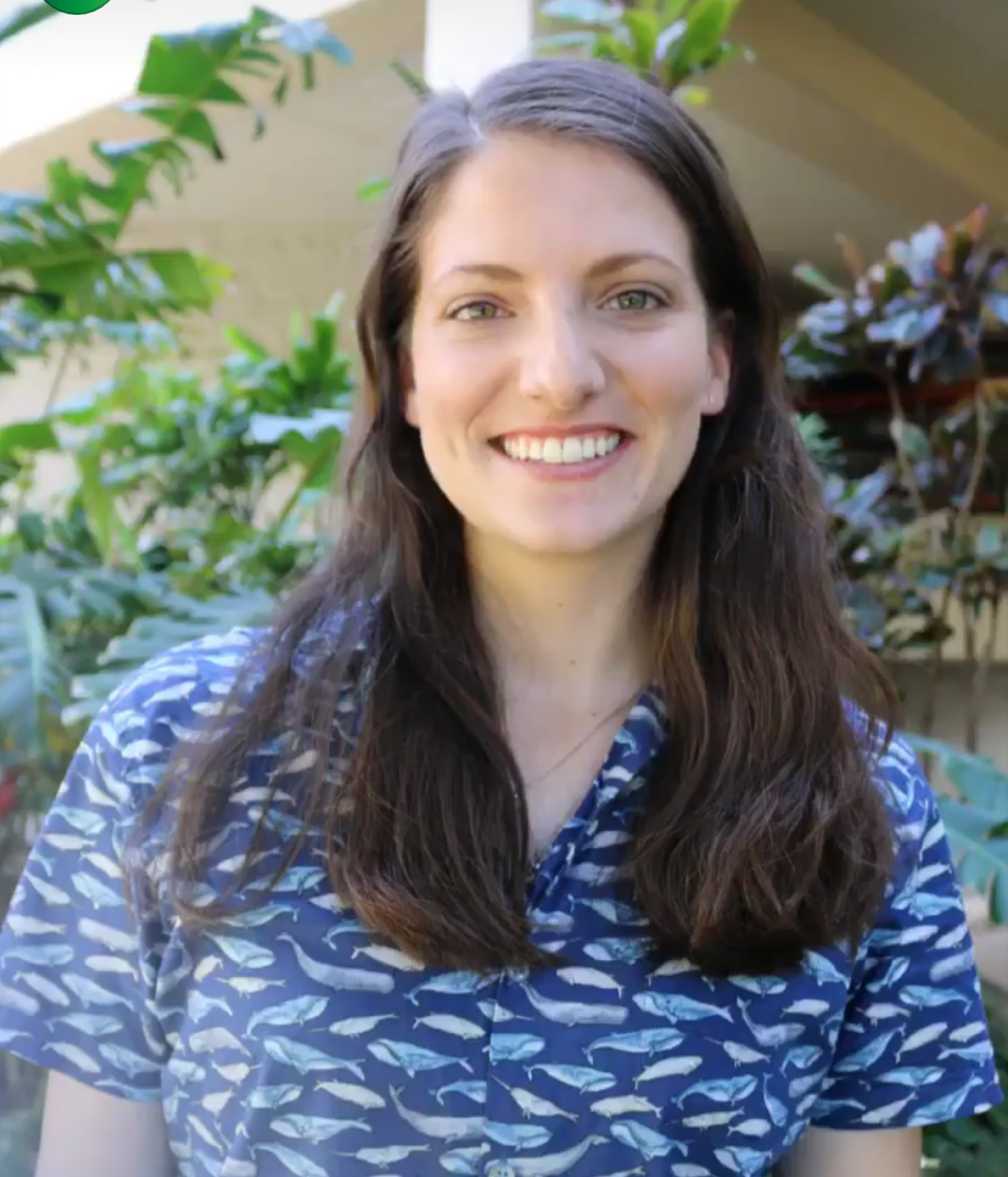
KIHEI, HI — Hawaiian waters are popular for ocean migrants, from humpback whales to green sea turtles to great white sharks, but did you know that the largest fish in the world visits the islands as well? Whale sharks, which can grow up to 60 feet, have eluded residents and scientists alike, but Kona-based Hawaii Uncharted Research Collective (HURC) is working to understand more about these gentle giants.

The public is invited to learn about HURC and these animals in a free presentation, “A look at whale sharks in Hawaii: A research effort for the conservation of an endangered species,” led by HURC founder Maria Harvey. The Zoom presentation will be held on Wednesday, Aug. 3 at 5:30 pm as part of Maui Nui Marine Resource Councilʻs monthly Know Your Ocean Speaker Series, sponsored by the County of Maui. Admission is free, but advanced registration is required. To register, visit https://bit.ly/ WhaleSharkWebinar.

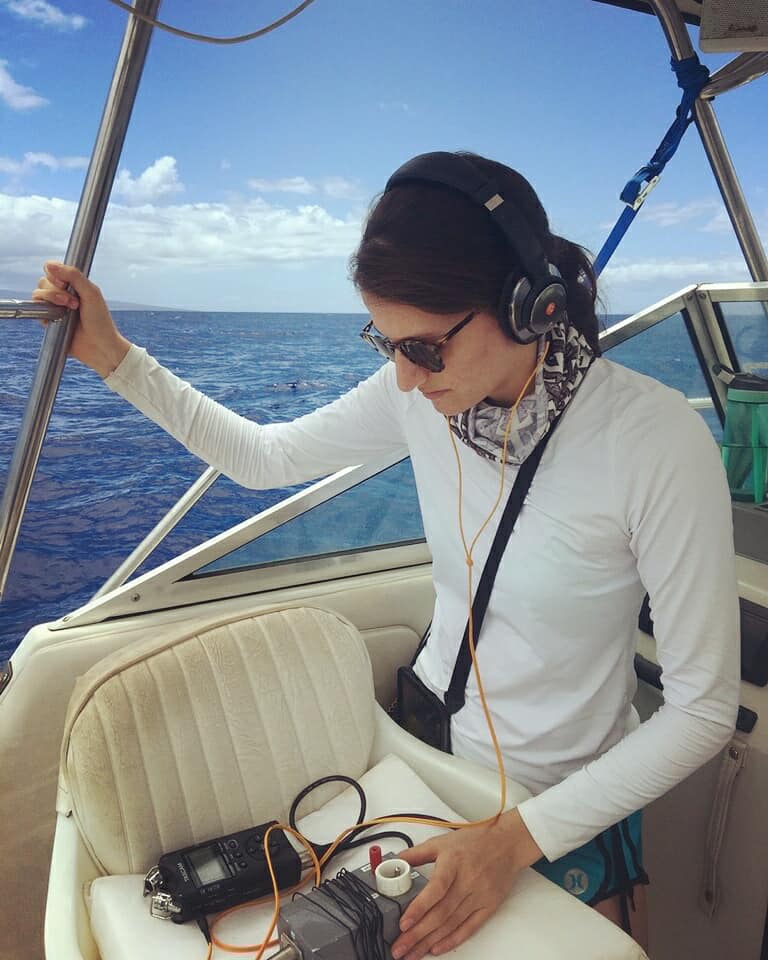
Harvey founded HURC in 2017 with a mission to conduct research on whale sharks and other marine organisms in Hawaiian waters, focusing on population dynamics, ecology, animal behavior and human impacts. HURC merges community engagement with scientific research, relying on citizen science and field studies to better understand how and why these sharks use Hawaii’s offshore areas. Findings from this research will support local and global efforts to conserve whale sharks and their environment.

Her presentation will cover how and why Hawaii Uncharted Research Collective was formed and will give viewers a glance at the organization’s research projects. It will also provide information on localized and global threats to whale sharks, dive into some of HURC’s results so far, and discuss the future of the organization and other conservation efforts.

“Hawaii Uncharted Research Collective provides an avenue to couple my research and education background with my love for the Hawaiian Islands, ocean conservation, and the charismatic whale sharks that inhabit the deep blue waters of the Pacific,” said Harvey. “I’m excited to share the story of HURC and what we’ve accomplished since our founding.”

Whale sharks are found worldwide in tropical seas, preferring open waters where they can be found filter feeding with their large mouths on some of the smallest marine organisms, plankton. They are currently listed as “endangered,” mainly due to fishing pressure, accidental catch and vessel strikes. Capable of living upwards of 100 years, very little is known about these animals, especially those in Hawaiian waters. HURC’s research hopes to contribute to worldwide scientific investigations into these mysterious and threatened animals.

“Hawaii truly is a remarkable place for marine wildlife,” said Mike Fogarty, Executive Director of Maui Nui Marine Resource Council. “We’re excited to share Maria’s work with the larger public and hear ways that residents and visitors alike can contribute to local efforts to research and protect these charismatic sharks.”

To reserve your spot, visit https://bit.ly/WhaleSharkWebinar.

About Maria Harvey:
Maria Harvey graduated from the University of Hawaii in 2009 with a bachelor’s degree in Marine Science and is currently working on her graduate degree in Fish, Wildlife and Conservation Biology. Maria’s love for the ocean, education, wilderness and research has taken her all over the world in recent years. Notably, Maria has worked in Alaska, Hawaii, Canada, Mexico and Cape Cod. During her travels, she has worked as a Captain, naturalist, expedition guide and assistant researcher, and is currently a level-4 marine animal disentanglement specialist. Her work and studies have encompassed a variety of species, including spinner dolphins, humpback whales, right whales, bottlenose dolphins, leatherback turtles and whale sharks. In recent years, Maria has been a guest lecturer and distinguished speaker for private universities and cruise operations, including the University of Pennsylvania’s Veterinary School, Georgetown University and UnCruise Adventures.

In her free time, Maria loves to travel and backpack. Just last year, she completed the 211-mile John Muir Trail. When she isn’t on the water or hiking, she loves to spend time with her two beloved golden retrievers, Samantha and Palmer. One day, Maria would love to own an animal sanctuary in honor of her favorite four-legged critter, Melvin the pig (Instagram: @melvinpig).

“Rally for the Reefs” webinar on Thursday, June 16 will focus on saving the reefs of Māʻalaea Bay

in /by

Speakers Stuart Coleman, Rep. Angus McKelvey and Maui County Councilmember Kelly King will provide updates on Māʻalaea wastewater treatment options

MĀʻALAEA, HI – Longtime Māʻalaea resident Peter Cannon remembers that during his childhood, “the coral reefs of Māʻalaea Bay were like the robust and healthy reefs that you see today at the ʻĀhihi-Kīnaʻu Natural Area Reserve.” He recalls that local families enjoyed harvests of ribbon limu from the bay, and there was an abundance of native fish and opae.

Since the 1970s, the coral reefs in Māʻalaea Bay have degraded so severely that Hawaii’s Division of Aquatic Resources (DAR) has described the situation as “a case study in total system collapse.” In their report, “Status and Trends of Maui’s Coral Reefs” DAR in partnership with the Coral Reef Assessment and Monitoring Program reported on their 1999 monitoring in Māʻalaea Bay and noted that the “end result of reef degradation is evident in Māʻalaea Bay.”

The report noted that in 1972, “Māʻalaea coral reefs were described as being ‘striking in their diversity and in the presence of rare corals species’. As late as 1993, estimated coral cover was 50- 75% close to the site where cover is now 8%. Therefore, in just a few decades, the Māʻalaea reef has transformed from a healthy and diverse ecosystem into a badly degraded habitat overgrown by algae and with little surviving coral.”

The report also noted that fish stocks in in Māʻalaea are now in very poor condition, and the reefs have been invaded by alien and invasive algae species.

Declining ocean water quality in Māʻalaea Bay is a major contributor of the decline. A new report for the years 2019 – 2022 by the Hui O Ka Wai Ola community-based ocean water quality monitoring program indicates that Māʻalaea Bay has excessive levels of nitrates, second only to the levels in Kihei Cove, of all the sites the program monitors along the leeward Maui coast.

What can Maui County residents and visitors do to improve the ocean water quality and save the reefs of Māʻalaea Bay? Learn about the steps that are proposed — and how individuals can help – at an online Rally for the Reefs webinar to be held on Thursday, June 16 at 5:30 pm via Zoom.

Admission is free, but reservations are required. To reserve your spot, visit https://bit.ly/Rally4Reefs.

The “Rally for the Reefs” webinar will feature presentations by:

Stuart Coleman
Founder and Executive Director of WAI (Wastewater Alternatives & Innovations)
Coleman will discuss modern wastewater alternatives and innovations that will make it possible to reduce the pollution that has been harming the corals in Māʻalaea Bay.

Maui County Councilmember Kelly Takaya King
(Holds the County Council seat for South Maui)
Councilmember King will discuss the funding for the improved wastewater treatment system for Māʻalaea in the County’s 2023 budget and the steps ahead to make this system a reality.

State Representative Angus L.K. McKelvey
(Representing West Maui – Māʻalaea – North Kihei)
Representative McKelvey will explain how the State can help establish improved wastewater treatment in Māʻalaea, and why the proposed wastewater treatment project in Māʻalaea could serve as a model for other small communities throughout Hawaii that are looking for replacements for cesspools, injection wells and septic systems.

“The community has been working hard to identify and address the problems that have undermined the ocean water quality of Māʻalaea Bay and harmed the coral reefs,” said Mike Fogarty, Executive Director of Maui Nui Marine Resource Council. “We’ve now reached critical junctures that will decide if and when some of the proposed solutions to the problems of water pollution and reef loss will be addressed. We need to act now to save Māʻalaea’s reefs before it’s too late. Please attend the Rally for the Reefs to learn what can and should be done.”

The Rally for the Reefs webinar is sponsored by WAI, Maui Ocean Center, Māʻalaea Village Association, Maui Nui Marine Resource Council, Maui Ocean Center Marine Institute and Sierra Club Maui Group.

To register to attend this free Zoom event, please visit https://bit.ly/Rally4Reefs.

New FlushAware App to Be Topic of March 2 Know Your Ocean Speaker Series

in /by

Meet the App’s Developer and Learn More About Where Wastewater Goes When You Flush Your Toilet on Maui

PAIA, MAUI, HI – The average person flushes their toilet five times per day. But when you flush, do you know where your wastewater goes and what impacts it has on the ocean where you surf or swim, the beaches where you play and the fish that you eat from our coastal waters? Maui Nui Marine Resource Council invites you to learn more about the path that wastewater follows once it leaves your toilet and how your wastewater is impacting our nearshore ocean water quality at a special Know Your Ocean Speaker Series presentation on Zoom on Wed. March 2 at 5:30 pm featuring Travis Liggett as the guest speaker. To reserve your spot, please visit https://bit.ly/FlushAwareWebinar

Liggett is the president of Reef Power LLC and the developer of the new FlushAware app with a demonstration website launch for Maui island users slated for March 2022.

“FlushAware is a new online education system that will inform users about the treatment level and destination of their Maui Island disposal method, while providing tools for activism and improving life downstream,” says Liggett.

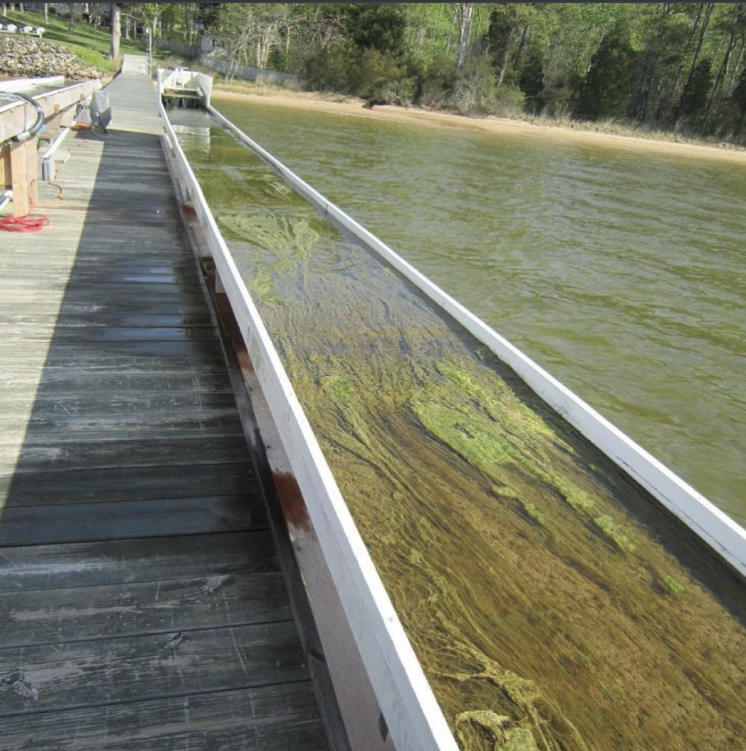
During his presentation, Liggett will demonstrate how the new FlushAware app will work, and will discuss solutions to Maui’s wastewater challenges, which he says can be found in the living life support ʻĀina. “Native species such as stream limu, breadfruit and taro provide answers to our water waste woes. Instead of nearshore injection, municipal discharges in Maui can be polished with turf scrubbers to reduce nutrient pollution using local freshwater algae,” reports Liggett. “The wastewater can then be 100% reused as irrigation of native food agroforestry, pastureland, and vetiver slope stabilization plantings to reduce sediment transport potential from mauka lands.”

Travis Liggett graduated from University of California at Berkeley with a Bachelor of Science degree in Mechanical Engineering with a focus on design in 1998, and from the University of Colorado at Boulder with a Master of Science degree in Aerospace Engineering with a focus on life science in 2003.

In 2001 Mr. Liggett started work as a Research Assistant at  BioServe Space Technologies, a NASA Commercial Space Center locate

d at CU Boulder, and continued his tenure working for the Agency as a Flight Systems Engineer for the Space Station Biological Research Project starting in 2003, then as an Aerospace Research Engineer focusing on functional prototype development of new life science technologies from 2005 – 2010 at  NASA Ames Research Center in Moffett Field, located in California’s Silicon Valley.

On Maui, Travis has managed algae growth operations at Maui Tropical Algae Farm, and served as Principal Engineer for Water Quality Consulting, Inc., where he performed core duties including work on the Maui Ocean Center’s 2018 NPDES permit application.

Travis founded the small business Reef Power LLC in 2018 with the objective of bringing to Maui a natural regenerative reuse wastewater nutrient polishing system called a turf scrubber growing native Hawaiian stream limu (freshwater macroalgae), coupled with native food agroforest irrigation for disposal, instead of nearshore injection wells.

“Wastewater has a significant impact on Maui’s coral reefs and nearshore ocean water quality, whether you live in Kula or Kihei,” says Mike Fogarty, Executive Director of Maui Nui Marine Resource Council. “The FlushAware App will contribute to our community’s growing awareness of the impacts of each and every flush – the first step in finding an answer to the question of how to manage our wastewater to protect our reefs and the ocean waters that surround our shores.”

The Know Your Ocean Speaker Series is hosted on the first Wednesday of each month and is funded in part by the County of Maui Office of Climate Change, Resiliency and Sustainability and by donations from individuals and businesses in the community. To learn more, visit www.mauireefs.org.

Photo at right: A turf scrubber reduces nutrient pollution using local freshwater algae.

Maui’s Community-Based Ocean Water Quality Monitoring Program Celebrates 100th Sampling Session

in /by

Maui’s volunteer-based ocean water quality monitoring program Hui O Ka Wai Ola celebrated a special milestone on February 8, 2022: its 100th sampling session since the program began on Maui in 2016.

A beachside ceremony held this morning at Hanakaʻōʻō Beach Park in Kāʻanapali was organized by Maui Nui Marine Resource Council, West Maui Ridge to Reef Initiative and The Nature Conservancy, the three organizations that co-founded and co-manage this unique community program. It was attended by about 40 Maui residents, program volunteers and local VIPs including State Representative Tina Wildberger, Maui County Councilmember Tamara Paltin, and Maui County Managing Director Sandy Baz, who each delivered remarks and congratulations to the volunteers and staff.

A sampling session occurs over a week’s time and typically involves about a dozen volunteers, who wake up before sunrise and fan out in groups of three or four with cars packed with water quality monitoring equipment to gather and test ocean water samples along Maui’s leeward coast.

Sampling sessions take place every three weeks. Each sampling session in West Maui covers 16 sites stretching from Pāpalaua Pali to Honolua. Each South Maui sampling session covers 13 sites from Mā’alaea to ‘Āhihi Kīna’u.

Todayʻs celebration included awarding of gift certificates donated by Duke’s Maui to the volunteers in the program, plus a ceremonial gathering of ocean water samples by long-time volunteers Kit Harris and George Burnette. It was followed by a demonstration of how the water samples are tested for sediment, temperature, pH and other factors conducted by Harris, Burnette, Representative Wildberger and Councilmember Paltin with narration by Hui O Ka Wai Ola Senior Team Lead Tiarra Stark.

Representative Wildberger had a special connection to today’s event: she had volunteered with the Hui O Ka Wai Ola monitoring program  to collect and test ocean water samples in South Maui before being elected as the District 11 Representative for Kihei, Wailea and Makena.

For Councilmember Paltin, the 100th sampling event also held special significance. She, along with then-West Maui resident Dana Reed, helped provide the spark that led to the creation of the community-based ocean water quality monitoring program after the pair observed an unusual increase in brown water events at DT Fleming Beach in 2013-2014.

“Large brown plumes started appearing at DT Fleming, even without much rainfall, which led to beach closures,” noted Reed, who is a retired electrical engineer and now lives in Pennsylvania. “One day I saw another brown plume and said, ‘That’s it! I have to investigate!’.”

Reed had learned how to test ocean water for turbidity at a UH Maui course taught by Donna Brown. She grabbed the sampling bottles she had received at the course and started gathering samples. It was then that she met Paltin, who was a lifeguard at the time. Paltin shared that she too was concerned about the brown water plumes and had photographed them and sent them to Watson Okubo, the Director of the Department of Health Clean Water Branch. Their sampling data wasn’t accepted because they did not have a Quality Assurance Project Plan (QAPP) in place to ensure the integrity of the data.

Undaunted, Reed and Paltin started documenting the water quality at DT Fleming on a regular basis, gathering data from water samples and photos, including aerial photos that Reed’s husband Bill Rathfon obtained with his drone.

Reed said that Paltin would sound the alert – “the stream is running brown!” – and Reed would rush over to grab water quality samples. Paltin also kept sampling bottles at her lifeguard station so she could gather samples during her breaks.

Paltin was a member of the Marine Nui Marine Resource Council Clean Water Committee and together with Reed and Rathfon presented data and pictures from DT Fleming to the group.

Someone who had hiked upslope to understand where the sediment runoff was originating reported that a site that was being prepared for the development of Mahana Estates appeared to be the cause of the runoff.

The project manager from Mahana Estates was invited to meet with Marine Resource Council’s clean water committee and visit the site. She reported that the developer had put up sediment fences and barriers to control the runoff but was having trouble keeping them in place because they kept breaking.

The Department of Public Works said that the developer was following the County’s Best Management Practices (BMPs) and asked for baseline data to compare the current water quality issues at DT Fleming to past years when the problem wasn’t occurring.

That data didn’t exist. But Paltin, Reed, Rathfon and Maui Nui Marine Resource Council persisted in spotlighting the problem  – and ultimately a County engineer, Department of Health representative and the developer visited the site and saw the source of the sediment.

The result was a County-mandated shutdown of the project for more than a year and improvement of the County’s BMPs.

“From that experience, I saw the importance of water quality data – including the need for baseline data – at all of our Maui beaches,” said Reed, who attended the ceremony remotely from her home in Pennsylvania. “At that time, the Department of Health Clean Water Branch had only one person sampling water quality for all of Maui. They suggested that we create a citizen’s monitoring group.”

Maui Nui Marine Resource Council and The Nature Conservancy joined together to host Carl Berg, a research scientist who has worked on water quality issues on Kauai, to learn how to create a community-based water quality monitoring program here.

He told the groups that they needed to create a Quality Assured Project Plan (QAPP) that would meet EPA requirements and State Department of Health standards for projects that involve the collection and analysis of water samples.

This led to a meeting with the Department of Health, Environmental Protection Agency, NOAA, Maui Nui Marine Resource Council, The Nature Conservancy, West Maui Ridge to Reef Initiative and other community environmental groups to discuss creating a water quality monitoring program for Maui.

The result was the launch of Hui O Ka Wai Ola (the “association of living waters”) to be managed through a partnership of Maui Nui Marine Resource Council, The Nature Conservancy and West Maui Ridge to Reef Initiative.

Maui Nui Marine Resource Council agreed to serve as the fiscal sponsor of the program and oversee its finances and payroll.  A grant from National Fish & Wildlife Foundation obtained by The Nature Conservancy helped fund paid positions for Reed and Kim Falinski to create the program in West Maui and purchase water sampling equipment. A second grant from National Fish & Wildlife Foundation later obtained by Maui Nui Marine Resource Council made it possible to expand the program to South Maui.

The QAPP was created over a two-year period by Reed, Falinski and Scott Lerner of The Nature Conservancy. The Department of Health Clean Water Branch signed off on the QAPP and the first official samples of the new Hui O Ka Wai Ola program were collected in June of 2016.

Volunteers signed on to receive the needed training and commit to the early morning sampling sessions. “People didn’t join for fun. They joined because they cared,” said Reed. “I am amazed at how many good quality people we got, who stuck with it. People are so dedicated. I am so impressed.”

At each sampling site, one of the volunteers wades into knee deep water and fills several containers with sea water. The citizen-scientists use portable lab equipment to analyze the samples for pH, dissolved oxygen concentration, salinity and turbidity. The water quality samples are transferred to indoor labs for additional testing. Further testing for nutrients is performed on samples that are frozen and shipped to the labs at the University of Hawaii at Manoa.

Today, the Hui O Ka Wai Ola program manages data collected at 40 leeward sites, which has been provided to the Department of Health Clean Water Branch, to be included in reports to the EPA and State and County agencies. New data is currently being gathered at 29 shoreline locations in West and South Maui.

Dozens of volunteers have worked with the program since its inception, including Hawaii State Representative Tina Wildberger and Maui resident Kit Harris. The program has four part time staff: Senior Team Lead Tiara Stark and Team Leads Meredith Beeson, Mitch Brown and Nalei Sampson. Retired biophysicist Cathy Maxwell is the organization’s Technical Advisor and Bill Rathfon is the Data Manager. Hui O Ka Wai Ola is led by a steering committee of representatives of the three partner organizations, along with Dana Reed and Kim Falinski, who are the Quality Assurance advisors.

The Hawaiian Islands Humpback Whale National Marine Sanctuary, Lahainaluna High School, Da Hawaiian Store and Pineapple Properties LLC have provided free space to the group for its indoor laboratories. The County of Maui has provided funding, along with local companies, foundations and groups including National Fish & Wildlife Foundation, Duke’s Maui, Makana Aloha Foundation, Napili Bay and Beach Foundation, MediaThe Foundation, EACH Foundation, North Beach West Maui Benefit Fund,  Maui Ocean Center, Hawaii Tourism, LUSH, Hawaii Community Foundation’s CHANGE grant and individual donors.
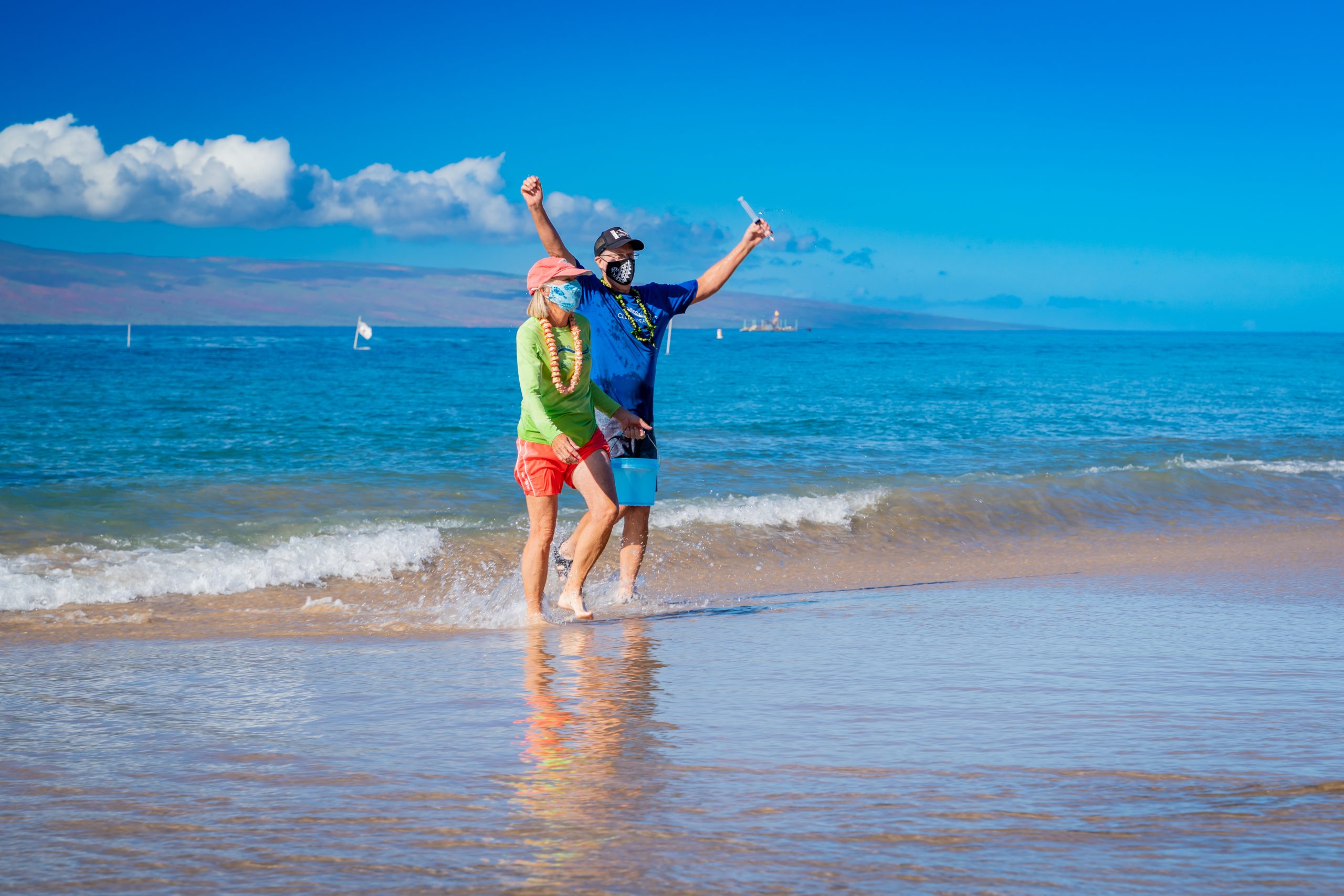
Longtime volunteers George Burnette and Kit Harris carry water samples for testing from the ocean at Hanakaʻōʻō Beach Park in Kāʻanapali.

Photo by Ty Freiberg
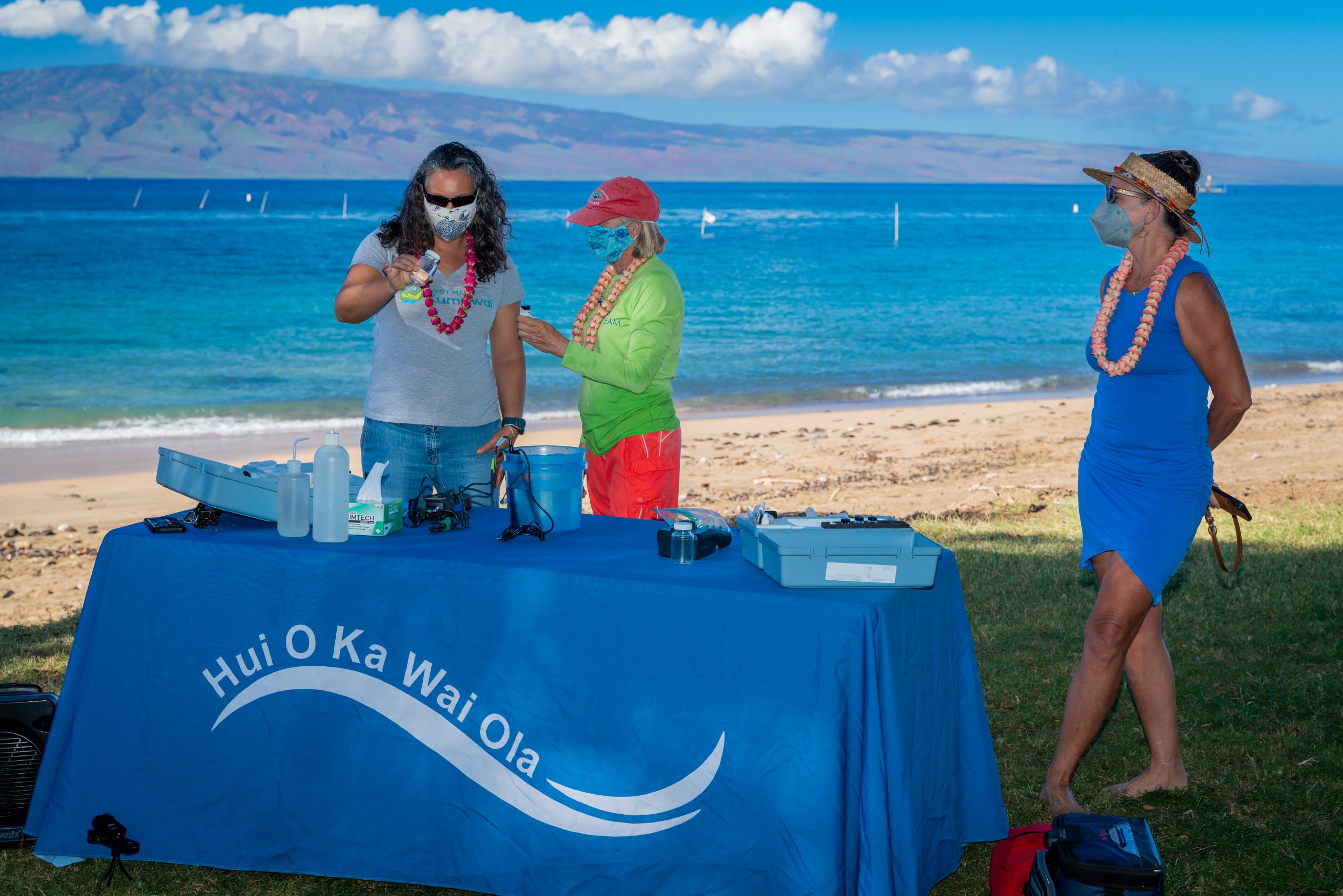
Maui County Councilmember Tamara Paltin and volunteer Kit Harris test a water sample while Hawaii Representative (and a former Hui O Ka Wai Ola volunteer) Tina Wildberger looks on.

Photo by Ty Freiberg
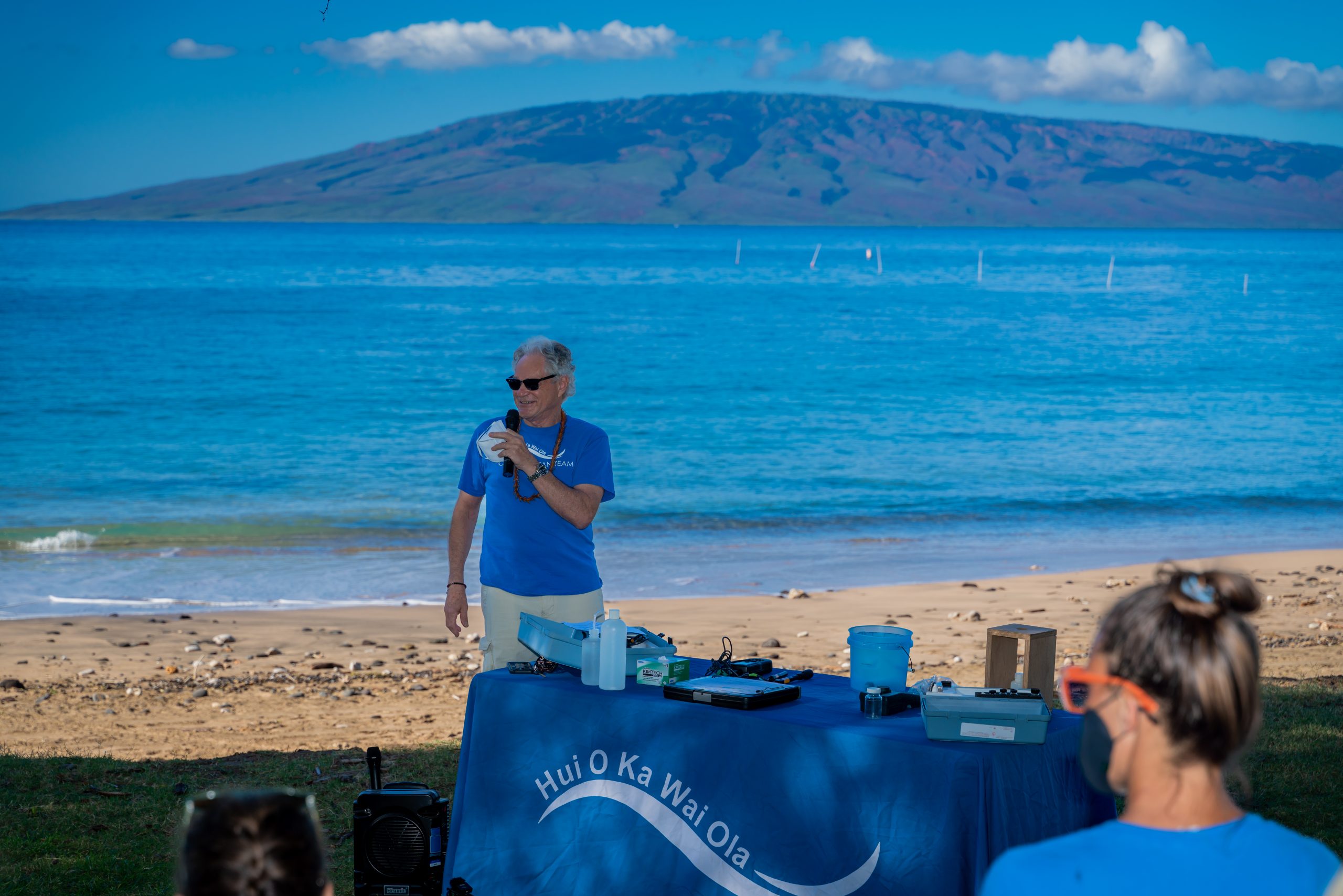
Maui Nui Marine Resource Council Executive Director Mike Fogarty thanks the volunteers and announces a special gift for each one donated from Duke’s Maui.

Photo by Ty Freiberg
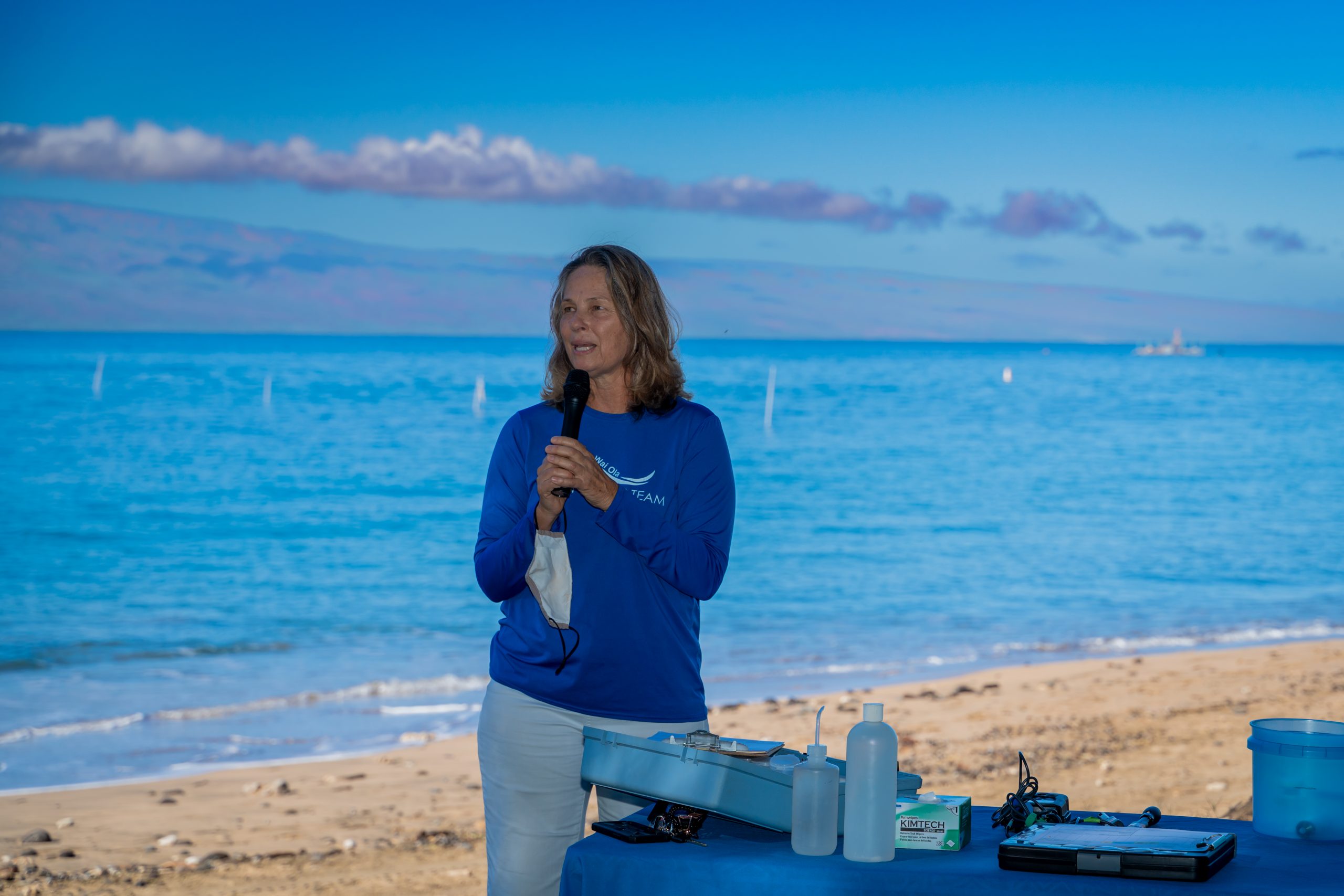
Emily Fielding, Maui Marine Program Manager at The Nature Conservancy, speaks about the partnership between The Nature Conservancy, Maui Nui Marine Resource Council and West Maui Ridge to Reef Initiative that co-founded and co-manages the Hui O Ka Wai Ola ocean water quality monitoring program.

Photo by Ty Freiberg

 

Free Zoom Presentation on Wed. Feb. 2 by Dr. Jennifer Lynch:
 “Did Maui’s expanded polystyrene ban improve the amounts or types of plastic on Maui beaches?”

in /by

KIHEI, HI – On December 31, 2018, Maui County banned the use, sale or provision of polystyrene food service containers as a step to protect marine wildlife and bird populations. The County took this step after learning about the lightweight nature of polystyrene and its ability to break down into smaller fragments that persist for decades, contributing to the potential illness and death of marine animals and birds that mistake the small fragments for food and ingest them.
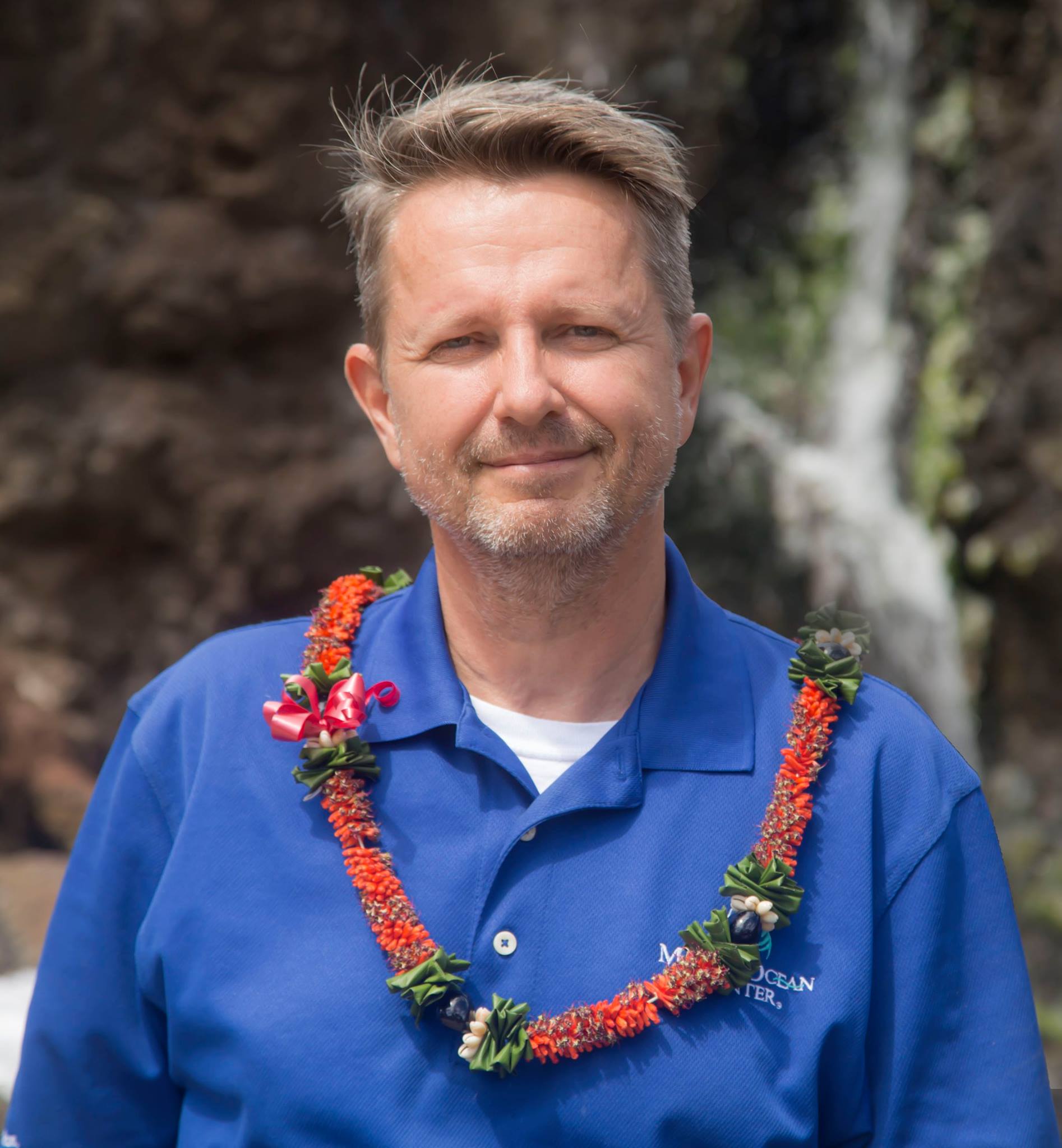
Did this ban improve the amounts or types of plastic on Maui beaches? Learn what recent research has found at a free Zoom presentation by Dr. Jennifer M. Lynch, the co-director of the Hawaii Pacific University Center for Marine Debris Research. Her talk will take place on Wednesday, February 2 at 5:30 pm as part of Maui Nui Marine Resource Councilʻs Know Your Ocean Speaker Series, sponsored by the County of Maui Office of Economic Development.

Admission is free, but advance reservation is required. To register, visit https://bit.ly/MauiPlasticWebinar.

Dr. Lynch is one of eight co-authors on a study titled, “Did Maui’s expanded polystyrene ban (County Ord. No. 4457) improve the amounts or types of plastic pollution on Maui beaches?“
The study abstract states that “in order to protect native wildlife and Hawaii’s unique coastal environments, reduce plastic waste, and promote the health and welfare of the residents of Hawaii, bans on single-use plastic items have been implemented by some local municipalities. However, the impacts and effectiveness of these policies has been rarely studied.”

The study used polymer identification methods to determine if ordinance number 4457 had an effect on the amount and composition of plastic marine debris on five Maui beaches.
The authors of the study are Kerrianne O’Malley, Hawaii Pacific University Center for Marine Debris Research; Sheena Weller, Hawaii Pacific University Center for Marine Debris Research; Cheryl King, Sharkastics; Jens Currie, Pacific Whale Foundation; Kayla Brignac, Hawaii Pacific University Center for Marine Debris Research; Melissa Jung, Hawaii Pacific University Center for Marine Debris Research; Regina Ostergaard-Klem, Hawaii Pacific University and Jennifer M. Lynch, National Institute of Standards and Technology and Hawaii Pacific University Center for Marine Debris Research.

“We are excited to host Dr. Lynch and to learn about her findings about how Mauiʻs polystyrene ban has impacted the debris on our local beaches,” commented Michael Fogarty, Executive Director of Maui Nui Marine Resource Council. “Her findings are valuable for our nonprofit, especially now as we launch a National Geographic-funded study of the streams and gulches that are transporting plastic waste to Mauiʻs beaches and shorelines.”

“Polystyrene foam is lightweight, floats, and is more likely to be blown from landfills, even when disposed of properly,” reports the website Foam Free Maui County. Recent studies conducted by University of Hawaii at Manoa show that methane and ethylene (major contributors to global warming) are emitted as polystyrene breaks down (Royer et al 2018). Carbon dioxide is also emitted (Ward et al 2019).

“Join our presentation to learn what is being found here on Maui,” notes Meredith Beeson, Project and Research Coordinator at Maui Nui Marine Resource Council and the coordinator of the Know Your Ocean Speaker Series. “Sign up today at https://bit.ly/MauiPlasticWebinar.”

Jill Wirt, Project and Research Coodinator at Maui Nui Marine Research Council will emcee the free event.

About Dr. Jennifer M. (Keller) Lynch

Dr. Jennifer Lynch has worked for the National Institute of Standards and Technology since 2003, and became the Co-Director of the Hawaii Pacific University (HPU) Center for Marine Debris Research (CMDR) in 2019. The CMDR was purposefully established in Hawaii, one of the most plastic polluted marine environments. Dr. Lynch’s research focuses on developing optimal methods to quantify and chemically characterize plastic marine debris to answer questions about pollution quantities, sources, fate, transport, effects, and reuse.  She has authored 61 peer-reviewed publications and four book chapters, and mentored over 45 graduate students.

About Maui Nui Marine Resource Council
Maui Nui Marine Resource Council (MNMRC) is a Maui-based non-profit organization working for clean ocean water, healthy coral reefs and a restoration of abundant native fish for the islands of Maui County. MNMRC is recognized for its ability to work with the community to plan, fund, enact and manage culturally appropriate, science-based solutions to serious problems undermining nearshore ocean water quality and threatening local coral reefs. To learn more, visit www.mauireefs.org.

Free Presentation to Discuss Redefining the Definition of a Public Aquarium – and What it Means to Our Local Community

in /by

KIHEI— A free Zoom presentation on Wednesday, January 12 at 5:30 pm by Tapani Vuori, Maui Ocean Center’s General Manager and founder and president of the Maui Ocean Center Marine Institute (MOCMI) will discuss “Redefining the definition of a public aquarium and what it means to our local community.”

Vuoriʻs presentation is part of Maui Nui Marine Resource Council’s monthly “Know Your Ocean Speaker Series.” His talk will look at the history of Maui Ocean Center, its operational details and its journey of transformation over the past few years, driven by Maui Ocean Centerʻs vision and mission.

Reservations are required. To reserve, visit https://bit.ly/OceanCenterWebinar
Vuori will discuss Maui Ocean Centerʻs role in the community in Māʻalaea and its stated responsibility first and foremost to add value to the community every day.

“I will discuss topics such as aquarium and zoo industry in general, plastic marine debris, shark finning, climate change, tourism, and environmental threats to nearshore marine ecosystems,” says Vuori. “I’ll share with the audience what Maui Ocean Center is doing about all of these issues — and why our aquarium and others around the world need to take action on the problems impacting our planetʻs oceans.”

Vuori draws inspiration from world-renowned scientist and ocean protector Dr. Sylvia Earle, who said, “the oceans deserve our respect and care, but you have to know something before you can care about it.” Vuori notes that Earleʻs powerful message is the driving force behind the energy he brings to Maui Ocean Center each day, and his goal to educate people and get them to care about the creatures beneath the oceanʻs surface.

Vuori grew up in Finland, where he formed a powerful connection with nature and the ocean — a bond he has carried throughout his life. He got his diving license as a young child and as a boy experienced the wonder of diving in winter beneath an ice-covered surface. As a young adult, Vuori moved to the U.S. to attend college, starting at Brigham Young University in Utah and graduating from UCLA in 1987.

When Vuori accepted the position as Maui Ocean Center’s general manager, he had one request — to build an on-property nonprofit 501(c)(3) organization to support conservation efforts further. Through his efforts and vision, Vuori became the founder and president of the Maui Ocean Center Marine Institute (MOCMI), which serves to restore Hawaiʻiʻs coral reefs and rehabilitate injured Hawaiian green sea turtles.

Today, Vuori works from all angles to protect marine life and is deeply involved in Mauiʻs island community. In addition to his contribution at MOCMI, Vuori is an active board member of Māʻalaea Triangle Association, vice president of the Māʻalaea Village Community Association, and president of the advisory council for Maui County on Civil Rights. Vuori is also working to establish a regional wastewater treatment center for Māʻalaea Bay to replace the nutrient leaching injection wells that have caused widespread loss of coral reef and limu in the bay.

“My hope is that this talk will inspire our audience to become more active in their community, where ever it may be,” says Vuori.

Maui Nui Marine Resource Council’s monthly “Know Your Ocean Speaker Series” events are supported by the County of Maui Mayor’s Office of Economic Development.

To learn more about Maui Ocean Center, visit www.mauioceancenter.com.

To learn more about Maui Nui Marine Resource Council, visit www.mauireefs.org.

Reserve your spot for this presentation at https://bit.ly/OceanCenterWebinar.

Public Invited to “Talk Story with Maui Nui Marine Resource Council” on Wednesday, December 1 at 5:30 pm

in /by

KIHEI, HI — 10,000 oysters cleaning the water in Māʻalaea Harbor. Hundreds of ocean water quality samples gathered and analyzed. Three new solar-powered monitoring buoys providing data for scientists worldwide. A major new grant to help prevent coastal flooding in Kihei. Education programs to help visitors protect Mauiʻs reefs as they enjoy our island’s beaches. And much more. 

The public is invited to learn about the many projects underway at Maui Nui Marine Resource Council during a “Talk Story” evening with their staff on Wed. Dec. 1 from 5:30 to 6:30 pm on Zoom.

During the evening, attendees will learn about ways that this Maui-based nonprofit is working for healthy coral reefs, clean ocean water and a sustainable population of native fish for the islands of Maui County. Questions and suggestions will be welcomed, and door prizes will be awarded.

“We’re looking forward to sharing the latest news and developments at Maui Nui Marine Resource Council at this annual event,” said Mike Fogarty, Executive Director. “It’s been a very busy year for our staff, resulting in some exciting progress in our work to protect Maui’s reefs and nearshore waters.”

The evening will include details about an initiative to promote reef-friendly landscaping in South Maui, new technology that’s being used to identify ocean water quality issues along Maui’s coasts, and steps taken during 2021 to prevent ocean pollution caused by wildfires, feral axis deer, and marine debris transported into the ocean from Maui streams and gulches.

“We guarantee you’ll learn a lot about coral reef protection and why it is so important to the future of our island,” noted Amy Hodges, Programs and Operations Manager at Maui Nui Marine Resource Council. “And in turn, we want to hear from our community, to learn about your ideas and suggestions for protecting Maui’s coastal waters.”

Due to Covid-19, this annual event will once again be held by Zoom. Preregistration is required. To sign up, visit https://bit.ly/MNMRCUpdates.

Help support clean ocean water and healthy coral reefs at benefit for Maui Nui Marine Resource Council at Flatbread Company on November 23

in /by

PAIA, HI — Enjoy some exceptionally delicious wood-fired pizza and support efforts to protect Maui’s coral reefs at a Benefit Night for the nonprofit Maui Nui Marine Resource Council at Flatbread Company in Paia on Tuesday, November 23.

All pizzas purchased between 5 pm and 9 pm that day will help raise needed funds for Maui Nui Marine Resource Council’s work to restore healthy coral reefs, clean ocean water and abundant native fish to the islands of Maui County. The Flatbread Company will donate $3.50 for each large flatbread and $1.75 for each small flatbread sold during the benefit, whether the pizza is for takeout or in-restaurant dining. The Flatbread Company is located at 89 Hana Highway in Paia.

Maui Nui Marine Resource Council is a nonprofit organization celebrating 14 years of working with the local community to create culturally appropriate, effective science-based solutions to serious local threats facing our reefs. Projects include:

• Ocean water quality monitoring at 29 Maui beaches through the community-based program Hui O Ka Wai Ola
• Improving ocean water quality in Māʻalaea Bay by using caged oysters to filter sediment and other pollutants from the ocean water
• Preventing sediment and pollution runoff from Pohakea watershed into Māʻalaea Bay
• Educating visitors about protecting coral reefs by using only mineral-based sunscreens, avoiding walking or standing on corals, and keeping snorkel fins up and away from the reef while snorkeling
• Promoting reef friendly landscaping that avoids the use of reef-harming herbicides and pesticides

“We recognize that Tuesday evening will be a time when folks are preparing for their Thanksgiving feasts, so why not take a break from cooking dinner by ordering a delicious wood-fired Flatbread pizza — and experience the added satisfaction of helping to raise funds to protect Mauiʻs coastal waters and coral reefs,”  said Anne Rillero, Communication, Community Outreach and Development Manager at Maui Nui Marine Resource Council. “Each pizza sold during this benefit night will make a difference — whether you choose to dine at the Flatbread Company restaurant or take the pizza home.”

To learn more about Maui Nui Marine Resource Council, visit www.mauireefs.org.

Free Talk “Spying on Spinners: What We Can Learn From Listening” Focuses on Study of Spinner Dolphins of Maui, Moloka‘i, Lāna‘i, and the ‘Au‘au channel

in /by

KIHEI—  A free presentation called “Spying on Spinners: What We Can Learn from Listening” on Wednesday, Oct. 13 at 5:30 p.m. via Zoom will take a look at research conducted in the Maui Nui region (Maui, Moloka‘i, Lāna‘i and the ‘Au‘au Channel) that listened to spinner dolphins to learn more about their behaviors.  Reserve your spot. 

The presentation is part of Maui Nui Marine Resource Council’s monthly Know Your Ocean Speaker Series.

Megan McElligott, a fourth-year doctoral candidate at the University of Hawaiʻi at Mānoa in the Marine Biology Graduate Program, will be the guest speaker. She will discuss her recent work for her master’s thesis, titled “Investigating Spinner Dolphin (Stenella longirostris) Occurrence and Acoustic Activity in the Maui Nui Region” which was recently published in Frontiers in Marine Science. 

She will discuss how the acoustic recordings in her study confirmed that spinner dolphins use Mānele Bay and Honolua Bay for their daily resting behavior, as well as their use of the ʻAuʻau channel for resting.

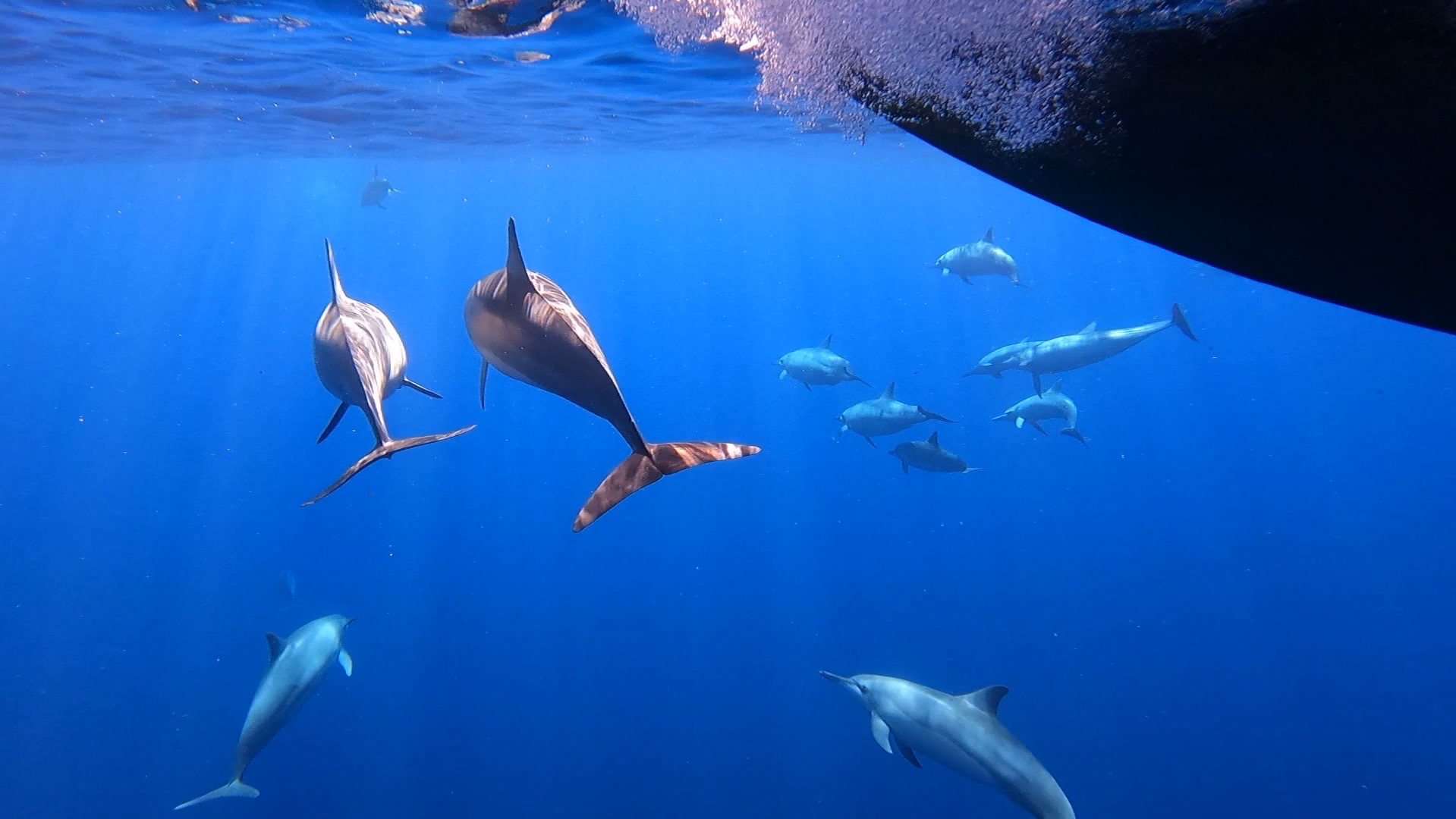
“Hawaiian spinner dolphins rest during the day in the islands’ coastal waters where they are susceptible to human disturbance,” reports McElligott. She notes that spinner dolphins are nocturnal and hunt in offshore waters at night. During the day, they use areas close to shore to socialize, nurture their young, shelter from predators, and rest in preparation for nightly hunting.

The goal of McElligott’s research is to help wildlife managers determine the best ways to protect spinner dolphins from human disturbance.

McElligott’s research was one of the studies examined by NOAA Fisheries leading up to their new rule finalized on September 28, 2021  that prohibits swimming with, approaching, or remaining within 50 yards of a Hawaiian spinner dolphin. The rule applies to any vessel, person, or object (including all boats, canoes, stand-up paddleboards, drones, or any other means) that is within 2 nautical miles from shore in the main Hawaiian Islands and in designated waters bounded by the islands of Lāna‘i, Maui, and Kahoʻolawe. This final rule will officially be in effect on October 28, 2021, 30 days after it was published in the Federal Register. Learn more about this new law and its exceptions at https://www.fisheries.noaa.gov/feature-story/new-regulation-protects-hawaiian-spinner-dolphins-against-disturbance.

McElligott’s study was conducted using a combination of passive acoustic monitoring and vessel surveys to document spinner dolphin occurrence and movements. Bottom-moored acoustic recorders were deployed at eight locations in Maui Nui, and at one previously established resting bay off west O‘ahu for comparison. The amount of whistles, clicks, and burst pulses at each location was quantified and averaged by the hour of the day.

“What we observed in Maui Nui is different from what we see off Oʻahu and Hawaiʻi island,” says McElligott. “I will also talk about what we aim to investigate with our current data collection efforts in Mānele, Hulopoʻe, and Honolua.”

To learn more this species’ behavior and McElligott’s research, tune in to Maui Nui Marine Resource Council’s “Know Your Ocean Speaker Series” on Oct. 12 at 5:30 p.m. via Zoom.
These monthly virtual events are supported by the County of Maui Mayor’s Office of Economic Development.|

The event’s emcee will be Darla Palmer-Ellingson, local radio show host of the public affairs program, Island Environment 360 Maui’s only commercially broadcast public affairs show on environmental and related Hawaiian cultural topics, aired on the stations of H-Hawaii Media.

NOAA Fisheries is also proposing to establish time-area closures to reduce disturbance in five nearshore areas designated as essential daytime habitats for spinner dolphins. This regulation would prohibit entering restricted areas between 6 a.m. and 3 p.m. daily in parts of Kealakekua, Hōnaunau, Kauhakō (Ho‘okena), and Makako Bays on Hawai‘i Island, and La Perouse Bay on Maui.

Since this is a proposed rule, a decision on whether to finalize the rule will not happen until after the public has an opportunity to comment. The public comment period for the proposed time-area closures will be open until December 27, 2021, 90 days after publication in the Federal Register. To learn more, visit https://www.fisheries.noaa.gov/action/proposed-rule-establish-time-area-closures-hawaiian-spinner-dolphins-essential-habitats-main

Reserve your spot for this presentation.


Free Presentation “Saving a Species: “Rehabilitation as a Conservation Tool for Hawaiian Monk Seals” Offered on Weds., Aug. 4

in , /by

Hawaiian monk seals are endangered, with fewer than 1,400 animals left on earth — yet they have recently been in the news, as videos and photos have surfaced showing the seals falling victim to harassment by visitors who get too close or attempt to touch them, sometimes for social media content. Learn more about Hawaiian monk seals at a free presentation called “Saving a Species: Rehabilitation as a Conservation Tool for Hawaiian Monk Seals” on Wednesday, August 4 at 5:30 pm HST via Zoom where two special guests from The Marine Mammal Center’s dedicated hospital for monk seals, Ke Kai Ola, on Hawai’i Island will highlight their conservation and outreach work.

The Center’s Lauren Van Heukelem, Response and Operations Coordinator, and Dr. Sophie Whoriskey, Hawaiian Monk Seal Conservation Veterinarian, will speak at this event, part of the “Know Your Ocean Speaker Series” which is hosted every month by Maui Nui Marine Resource Council.

Researchers estimate that about 30 percent of Hawaiian monk seals are alive today due to conservation efforts led by the National Oceanic and Atmospheric Administration (NOAA) and partners like the Center. The mission of The Marine Mammal Center focuses on global ocean conservation through rescue and rehabilitation, scientific research, and education.

Reserve a spot at the free presentation by visiting https://www.bitly.com/monksealwebinar

“We are hosting this special presentation with the awareness that public education is needed to help protect our Hawaiian monk seals from harassment or injury,” says Anne Rillero, Communications Manager at Maui Nui Marine Resource Council. “These animals are among the most endangered seals on earth.”

Dr. Whoriskey received her bachelor’s degree from Dalhousie University in Nova Scotia, Canada, and her veterinary medical degree from the Atlantic Veterinary College. She first came to The Marine Mammal Center in 2015 as the intern veterinarian in marine mammal medicine and pathology where she spent two years training with marine mammal medicine experts.

In 2020, she returned to the Center as a full-time Hawaiian Monk Seal Conservation Veterinarian. She leads the Center’s Hawaiʻi animal care operations, dedicated to the rehabilitation, conservation and research of the endangered Hawaiian monk seal.

Whoriskey has extensive field experience in remote and harsh environments and has participated in research projects from Alaska to Antarctica, all with a mission of advancing the global body of knowledge on marine mammal health.

Born and raised in Hawaiʻi, Van Heukelem received both her bachelor’s and master’s degrees from the University of Hawaiʻi at Mānoa in Marine Biology. She has participated in many research studies both in Hawaiʻi and the Northern Mariana Islands on various topics.

As the Response and Operations Coordinator, Van Heukelem oversees the monitoring of the endangered Hawaiian monk seal population on Hawaiʻi Island. She runs the Center’s 24-hour hotline for reporting seal sightings around the island and coordinates outreach and population assessments on a daily basis.

“On Hawai’i Island, we operate Ke Kai Ola, the only hospital dedicated to Hawaiian monk seals, providing support for monk seals found throughout the Hawaii archipelago,” says Van Heukelem. “Utilizing a 24-hour response hotline and a variety of education and outreach programs, we aim to advance conservation practices that empower our local community to protect this rare species.”

This presentation will focus on the center’s mission and work over the past 45 years in California and Hawaiʻi. Since opening Ke Kai Ola in 2014, The Marine Mammal Center has treated 36 Hawaiian monk seals and supports the work of NOAA’s Hawaiian Monk Seal Research Program by providing the only long-term care facility for this endangered animal.

These monthly virtual events are supported by the County of Maui Mayor’s Office of Economic Development.

The event’s emcee will be Darla Palmer-Ellingson, local radio show host of the public affairs program, Island Environment 360 Maui’s only commercially broadcast public affairs show on environmental and related Hawaiian cultural topics, aired on the stations of H-Hawaii Media.

To reserve your spot at this free Zoom webinar, please visit https://www.bitly.com/monksealwebinar


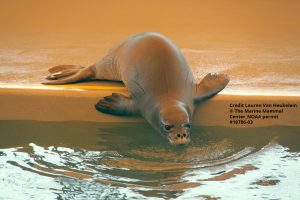
Eleu (PP08), a weaned female Hawaiian monk seal pup rescued from Papahānaumokuākea Marine National Monument Refuge, rests during rehabilitation at The Marine Mammal Center’s Ke Kai Ola hospital and visitor center in Kailua-Kona, HI. The young female seal’s name means one that is active, alert, energetic, lively and nimble. Credit Lauren Van Heukelem © The Marine Mammal Center, NOAA Permit #18786-03


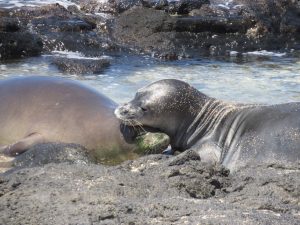
Hawaiian monk seals RK26 (on left) and RL50 (on right) rest on a beach. As the world’s largest marine mammal hospital, The Marine Mammal Center actively monitors endangered monk seals that frequent Big Island beaches to check on their condition, but its experts do not serve in a law enforcement capacity. Credit Sheila Latta © The Marine Mammal Center