Posts

Speaker Series: Unlocking the Mysteries of Biodiversity on Hawaiian Coral Reefs

in , , /by

Join us on February 5 as Dr. John Burns of the University of Hawaiʻi at Hilo shares how the Multiscale Environmental Graphical Analysis (MEGA) Lab is using cutting-edge 3D technology to map and study reefs as the organization pursues its goal of mapping 1 million of the world’s best reefs by 2030.

“Less than 20 percent of our oceans have ever been seen and in order to better prepare for a rapidly changing future, we need to know what we have so that we can understand where we need to go,” said Dr. Burns.

MEGA Lab layers their 3D reef reconstructions with an array of environmental data to improve understanding of the biology and ecology of the underwater habitats. This has helped show how coral reefs are changing over time, and how these changes impact associated reef organisms and the services communities depend on.

Map2Adapt aims to map 1 million of the world’s best reefs by 2030 while also training more than 10,000 citizen scientists to better support their communities. “Through Map2Adapt we are able to rapidly identify the state of our reefs, inform conservation restoration efforts, and integrate better management methods across the planet,” said Dr Burns. “Ultimately, our goal is to use innovative technologies to improve our understanding of reef biodiversity and develop techniques to help protect and preserve these ecosystems for future generations.”

MEGA lab also hosts a live streaming camera and a smart buoy to monitor ocean temperatures and coral reef health through a collaboration with UH Hilo and Aqualink off the coast of Kona, Hawaiʻi. The site utilizes infrastructure at the Natural Energy Laboratory of Hawaii Authority (NELHA) and the Fathom Octopus camera to provide 360 panning ability to optimize reef monitoring.


Save your spot, register today!


Meet the Speaker: Dr. John Burns, Associate Professor in Marine Science and Data Science, University of Hawaiʻi at Hilo
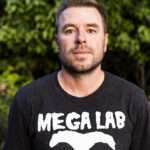
Dr. Burns is a research scientist who studies coral health and disease. His work has investigated the physiological impacts of disease on affected corals and how coral mortality affects the ecology and biology of coral reef ecosystems. John has been continuously searching for both global and localized drivers of coral diseases in order to promote healthy coral ecosystems in the face of global stressors such as climate change. His expertise led to his inclusion in the award-winning documentaries, Chasing Coral, Reefs at Risk, and Island Earth. John has recently developed innovative techniques to create three-dimensional maps of coral reefs to accurately measure how natural and human-induced disturbances impact ecosystem function. John’s research has been presented at scientific conferences around the globe and he has authored multiple publications in international peer-reviewed journals.


 

Speaker Series: Global & Local Coastal Water Quality Data Visualization: A new tool for the Maui community

in , , /by

Join us for a conversation on how Aqualink, a leading platform for real-time oceanographic data, is partnering with water quality monitoring organization Hui O Ka Wai Ola (HOKWO) to empower residents and scientists alike to track water quality and ocean conditions in real-time. Learn about new tools for monitoring sea surface temperature, wind, and wave conditions alongside HOKWO’s essential data on salinity, pH, and turbidity. The partnership aims to highlight the importance of “thinking globally, acting locally,” equipping Maui’s community with insights to safeguard its cherished beaches and reefs. Don’t miss this opportunity to learn more about the global network of ocean advocates and how you can make a meaningful impact in protecting Maui’s coastal waters! Register here:

Save your spot, register today!


Meet the Speaker: Caesar Hjertén, Project Manager at Aqualink
Caesar Hjertén

Caesar joined Aqualink in February 2022 with the goal of advancing the platform and increasing the organization’s impact. Caesar graduated from UH Hilo where he also played for the university’s soccer team. Caesar is passionate about our oceans and the environment. He likes to play sports, dive, surf, and other outdoor activities. At Aqualink, he manages the online platform, fleet of Smart Mooring buoys, and is Aqualink’s primary point of contact.


Meet the Speaker: Liz Yannell, Program Manager at Hui O Ka Wai Ola
Liz YannellLiz joined the Hui as Senior Team Leader in May 2022 and became the Program Manager in June 2023. She has a bachelor’s degree in environmental studies from Florida Gulf Coast University. In 2022, Liz graduated from the Marine Options Program at UH Maui and worked as the assistant in the marine lab on campus. As Program Manager, she is primarily responsible for coordinating various aspects of the program, including field, lab, and logistical support, coordinating fellow team leads, and managing the volunteer program. Her responsibilities include overseeing monitoring operations and data collection, entry, and record-keeping; team lead and volunteer training and coordination; preparing and maintaining supplies and equipment; and meeting with advisory Technical and Steering Committees to ensure successful continuity and growth of the program. She also often joins volunteers in collection and analysis of coastal water samples in the field. Liz is from O’ahu and currently lives in Kula with her two kids and husband. She loves all things ocean-related and is very passionate about coral reef conservation.

Know Your Ocean: Trash Debris Monitoring Reveals Insights into Marine Debris Origins and the Local Community’s Impact on Maui’s Beaches.

in , /by

From December 2022 to January 2023, the Maui Nui Marine Resource Council conducted extensive monitoring and debris removal in six Maui streams and gulches: Ukumehame, Kahana, Kanaio, Kaua‘ula, Wailuku, and an unnamed gulch at Cove Beach Park. The study aimed to establish baseline data for coastal debris sources, assess compliance with the 2022 single-use plastic ban, and raise community awareness about local marine debris. A total of 4,428 trash items were cataloged and removed during 117 surveys, with Kanaio Gulch having the highest trash count. Plastics were the most common type of debris. The study highlights the complex relationship between human activity and marine debris and provides insights into seasonal trends and the importance of community clean-up efforts.

Maui Nui Marine Resource Council invites you to an important FREE Zoom Webinar on Wednesday, October. 4 at 5:30 PM. Find out more about the effort to understand where Maui’s marine debris is coming from and how efforts to reduce it are working… or not. Register here: https://bit.ly/Trash2MarineDebris

Meet the Speaker
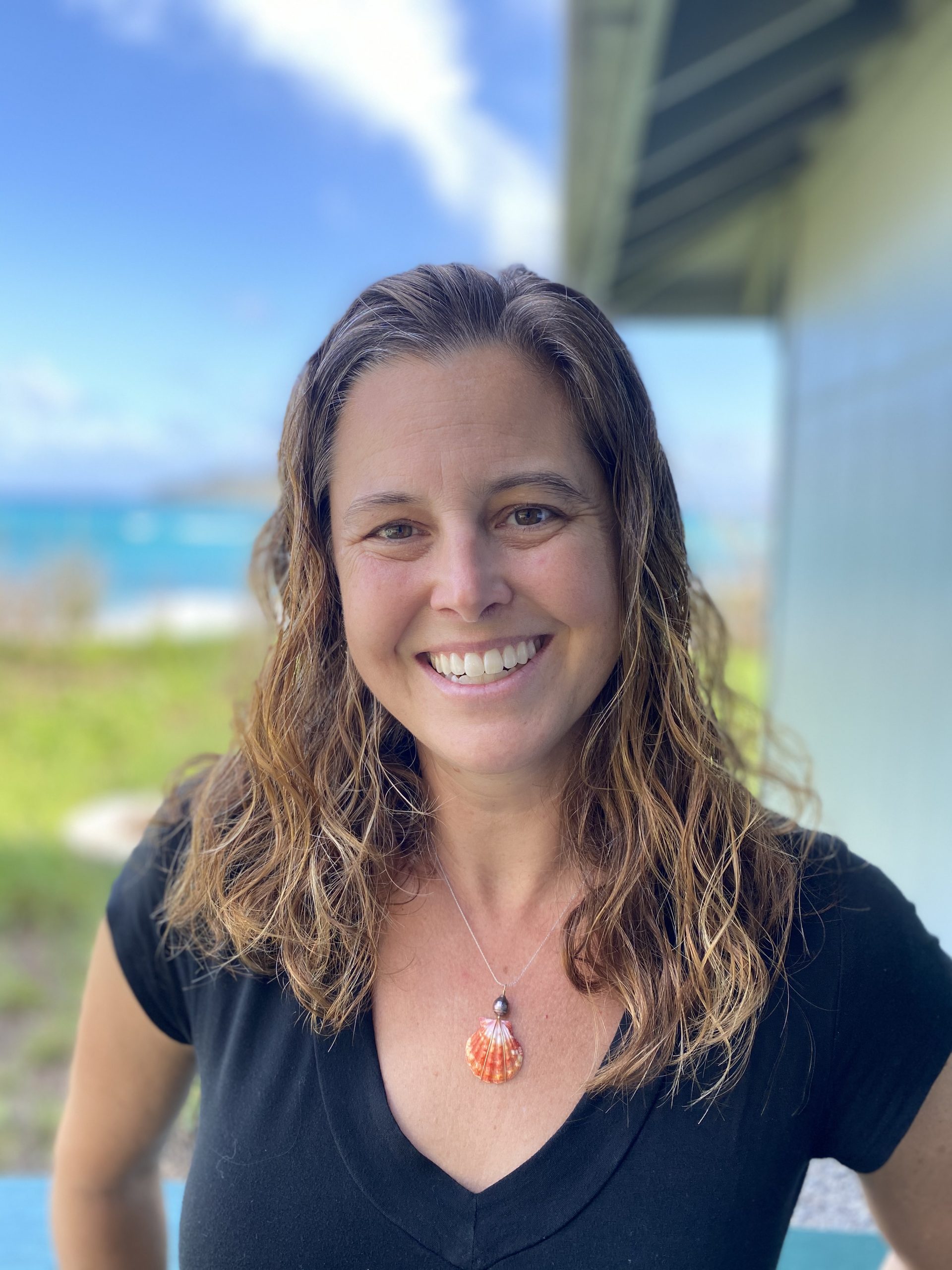
Tiara StarkYou’ll meet Tiara Stark, who, growing up on Maui within a Polynesian family, developed a profound admiration for the natural ecosystems of Hawaiʻi, which inspired her to pursue a career in marine conservation. After completing her postgraduate degree, Tiara returned to her island home of Maui to actively contribute to community conservation endeavors. These included part-time positions as a Research Coordinator with MNMRC and as Senior Team Lead with MNMRC’s partnership program Hui O Ka Wai Ola. Tiara is currently Project Manager for The Nature Conservancy’s Maui Marine Program where she leads and supports a range of research and monitoring projects, as well as community-led conservation initiatives all aimed at the shared objective of safeguarding, managing, and revitalizing marine ecosystems for future generations. Tiara’s dedication to marine conservation is also evident in her personal interests, which include snorkeling, scuba diving, and sustainable fishing.
Save your spot, register now: https://bit.ly/Trash2MarineDebris

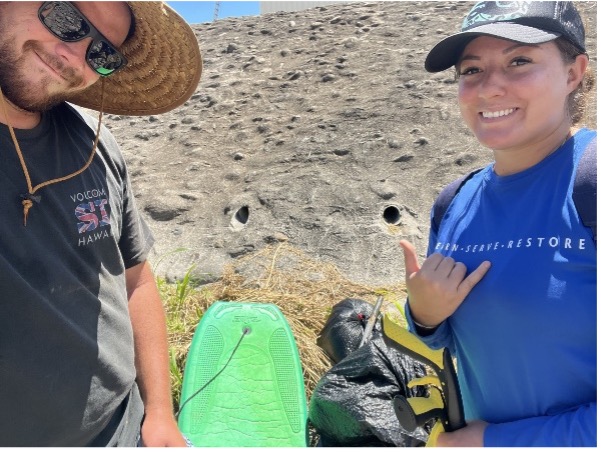
Tiara and Research Assistant, Naha Pierce, remove trash debris from Wailuku Stream.

Tiara and Research Assistant, Naha Pierce, remove trash debris from Wailuku Stream.

Free Zoom Presentation on Wed. Feb. 2 by Dr. Jennifer Lynch:
 “Did Maui’s expanded polystyrene ban improve the amounts or types of plastic on Maui beaches?”

in /by

KIHEI, HI – On December 31, 2018, Maui County banned the use, sale or provision of polystyrene food service containers as a step to protect marine wildlife and bird populations. The County took this step after learning about the lightweight nature of polystyrene and its ability to break down into smaller fragments that persist for decades, contributing to the potential illness and death of marine animals and birds that mistake the small fragments for food and ingest them.
Did this ban improve the amounts or types of plastic on Maui beaches? Learn what recent research has found at a free Zoom presentation by Dr. Jennifer M. Lynch, the co-director of the Hawaii Pacific University Center for Marine Debris Research. Her talk will take place on Wednesday, February 2 at 5:30 pm as part of Maui Nui Marine Resource Councilʻs Know Your Ocean Speaker Series, sponsored by the County of Maui Office of Economic Development.

Admission is free, but advance reservation is required. To register, visit https://bit.ly/MauiPlasticWebinar.

Dr. Lynch is one of eight co-authors on a study titled, “Did Maui’s expanded polystyrene ban (County Ord. No. 4457) improve the amounts or types of plastic pollution on Maui beaches?“
The study abstract states that “in order to protect native wildlife and Hawaii’s unique coastal environments, reduce plastic waste, and promote the health and welfare of the residents of Hawaii, bans on single-use plastic items have been implemented by some local municipalities. However, the impacts and effectiveness of these policies has been rarely studied.”

The study used polymer identification methods to determine if ordinance number 4457 had an effect on the amount and composition of plastic marine debris on five Maui beaches.
The authors of the study are Kerrianne O’Malley, Hawaii Pacific University Center for Marine Debris Research; Sheena Weller, Hawaii Pacific University Center for Marine Debris Research; Cheryl King, Sharkastics; Jens Currie, Pacific Whale Foundation; Kayla Brignac, Hawaii Pacific University Center for Marine Debris Research; Melissa Jung, Hawaii Pacific University Center for Marine Debris Research; Regina Ostergaard-Klem, Hawaii Pacific University and Jennifer M. Lynch, National Institute of Standards and Technology and Hawaii Pacific University Center for Marine Debris Research.

“We are excited to host Dr. Lynch and to learn about her findings about how Mauiʻs polystyrene ban has impacted the debris on our local beaches,” commented Michael Fogarty, Executive Director of Maui Nui Marine Resource Council. “Her findings are valuable for our nonprofit, especially now as we launch a National Geographic-funded study of the streams and gulches that are transporting plastic waste to Mauiʻs beaches and shorelines.”

“Polystyrene foam is lightweight, floats, and is more likely to be blown from landfills, even when disposed of properly,” reports the website Foam Free Maui County. Recent studies conducted by University of Hawaii at Manoa show that methane and ethylene (major contributors to global warming) are emitted as polystyrene breaks down (Royer et al 2018). Carbon dioxide is also emitted (Ward et al 2019).

“Join our presentation to learn what is being found here on Maui,” notes Meredith Beeson, Project and Research Coordinator at Maui Nui Marine Resource Council and the coordinator of the Know Your Ocean Speaker Series. “Sign up today at https://bit.ly/MauiPlasticWebinar.”

Jill Wirt, Project and Research Coodinator at Maui Nui Marine Research Council will emcee the free event.

About Dr. Jennifer M. (Keller) Lynch

Dr. Jennifer Lynch has worked for the National Institute of Standards and Technology since 2003, and became the Co-Director of the Hawaii Pacific University (HPU) Center for Marine Debris Research (CMDR) in 2019. The CMDR was purposefully established in Hawaii, one of the most plastic polluted marine environments. Dr. Lynch’s research focuses on developing optimal methods to quantify and chemically characterize plastic marine debris to answer questions about pollution quantities, sources, fate, transport, effects, and reuse.  She has authored 61 peer-reviewed publications and four book chapters, and mentored over 45 graduate students.

About Maui Nui Marine Resource Council
Maui Nui Marine Resource Council (MNMRC) is a Maui-based non-profit organization working for clean ocean water, healthy coral reefs and a restoration of abundant native fish for the islands of Maui County. MNMRC is recognized for its ability to work with the community to plan, fund, enact and manage culturally appropriate, science-based solutions to serious problems undermining nearshore ocean water quality and threatening local coral reefs. To learn more, visit www.mauireefs.org.