
Free Presentation on Using Artificial Reefs and Other Offshore Wave Dissipation Techniques to Protect Eroding Coastlines on Maui
/The public is invited to a free presentation on Wednesday, January 2 that will explore artificial reefs and other offshore wave dissipation techniques that could be used to reduce coastal erosion on Maui. The presentation is part of Maui Nui Marine Resource Council’s monthly meeting series, which is free and open to all.
The presentation will take place from 5:30 to 7:00 pm at Pacific Whale Foundation’s classrooms at the Ma’alaea Harbor Shops at 300 Ma’alaea Road, Wailuku. Doors open at 5:00 pm. Refreshments will be served.
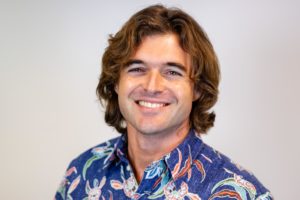 The presentation will be offered by Dr. Michael Foley, a Professional Engineer and leader of the Resilient Sustainable Engineering (RiSE) team at Oceanit, a company with headquarters in Honolulu that employs more than 160 scientists and engineers.
Considered one of the state’s leading experts on shoreline erosion, Foley has designed artificial reef systems to provide coastal protection and promote coral reef habitats. He has also been a key contributor to understanding issues and identifying solutions for beach erosion and sand depletion.
Dr. Foley grew up on Maui. He is an avid surfer, serves on the Board of Directors of the Hawaii Shore and Beach Preservation Association, and volunteers with the Surfrider Foundation. He earned his Ph.D. from the University of Hawaiʻi at Mānoa, specializing in the application of submerged breakwaters (artificial reefs) that provide coastal and harbor protection while simultaneously providing ecological and recreational value as coral reef habitat and surf breaks.
“Many of us on Maui are wondering what can be done about shoreline erosion and the loss of beaches and coastal areas,” says Amy Hodges, Programs Manager at Maui Nui Marine Resource Council. “Dr. Foley’s talk will explore some innovative options that could be considered to help reduce shoreline loss.”
According to the company’s website, “Oceanit is committed to pursuing responsible solutions to the world’s most difficult problems, blending interdisciplinary science, technology, engineering, and innovative thinking to benefit our global community. Through spin-outs, co-development partnerships, licensing, and direct manufacturing, Oceanit is able to deliver solutions to market. Oceanit calls this practice ‘Mind-to-Market’; delivering deep science to disruptive, real-world breakthroughs.”
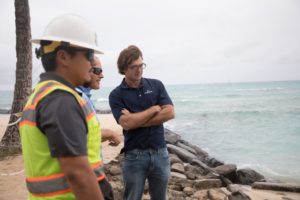
With headquarters in Honolulu, Oceanit employs over 160 scientists and engineers in Hawai’i, California, Texas, and Washington, D.C and has built its culture upon values of Ohana, Curiosity, and Community. To learn more, visit www.oceanit.com.
Maui Nui Marine Resource Council is a nonprofit organization celebrating 11 years of working for healthy coral reefs, clean ocean water and abundant native fish. To learn more, visit www.mauireefs.org
 “Is it possible to have long, healthy and happy lives for all people across the globe without destroying our planet’s natural resources?,” asks Deakos. “My talk will explore the science of happiness and how pursuing selfish interests can actually be good for the planet.”