Posts

Guided chocolate tasting at Maui Ku’ia Estate Chocolate to benefit Maui Nui Marine Resource Council 

in /by

Exciting news! This event will be led by Gunars Valkirs PhD, founder and CEO of Maui Ku’ia Estate Chocolate

Numerous scientific studies have identified the benefits of consuming chocolate, including providing health-boosting antioxidants and micronutrients.

This Sunday, December 5, you can add one more benefit to enjoying quality chocolate: it will help the nonprofit Maui Nui Marine Resource Council raise needed funds for projects to protect Mauiʻs nearshore coral reefs and the ocean water quality at island beaches. Thatʻs because Maui Kuʻia Estate Chocolate in Lahaina is holding a signature guided chocolate tasting this Sunday with 100% of the ticket sales to be donated to Maui Nui Marine Resource Council.

This special 60-minute guided chocolate tasting will be led by Gunars Valkirs, PhD, the founder and CEO of Maui Ku’ia Estate Chocolate. It will begin at 12:30 pm and will take place on the Maui Kuʻia rooftop pavilion at 78 Ulupono St, Suite 1, in Lahaina. During the tasting, guests will be introduced to Maui Ku’ia’s unique chocolate and its varieties. Guests will sample at least nine varieties of chocolate, including some featuring unique Maui flavors. Participants will discover how cacao is locally grown in Lahaina and why the chocolate produced at the Maui Kuʻia Estate Chocolate factory is of such high quality.

100% of the ticket sales from this tour will benefit Maui Nui Marine Resource Council. Tickets are $35 per person and can be purchased at https://www.mauichocolatetour.com/weekend-tastings-chocolate-laulima/

Maui Kuʻia Estate Chocolate established their guided chocolate tasting events to benefit local Maui nonprofits, finding inspiration in the Hawaiian concept of kuleana. “In the Hawaiian language, kuleana can be defined as accepting responsibility with understanding and intent,” notes the Maui Kuʻia Estate Chocolate website. “It is a value or a way of thinking that gives one a sense of ownership and accountability or carrying out certain responsibilities, and it becomes one’s privilege to do so.”

Through the Maui Kuʻia Estate Chocolate Laulima Program, participating nonprofits can sign up to benefit from the guided chocolate tastings. They can also earn 40% of the retail sales of chocolate products sold through the program. To learn more, visit https://mauichocolate.com/pages/chocolate-laulima.

“Give yourself a holiday treat by participating in Sundayʻs guided chocolate tasting event and be proud of yourself for making a difference,” says Anne Rillero, Communication, Community Outreach and Development Manager at Maui Nui Marine Resource Council. “Maui Nui Marine Resource Council is very grateful to Maui Kuʻia Estate Chocolate for their generosity in supporting our important work to save Mauiʻs coral reefs.”

“Itʻs a true gift to Maui that Maui Kuʻia Estate Chocolate is so committed to supporting our community nonprofits — while also producing such exquisite, high quality chocolates.”

To learn more about Maui Nui Marine Resource Council, please visit www.mauireefs.org.
Public Invited to “Talk Story with Maui Nui Marine Resource Council” on Wednesday, December 1 at 5:30 pm

in /by

KIHEI, HI — 10,000 oysters cleaning the water in Māʻalaea Harbor. Hundreds of ocean water quality samples gathered and analyzed. Three new solar-powered monitoring buoys providing data for scientists worldwide. A major new grant to help prevent coastal flooding in Kihei. Education programs to help visitors protect Mauiʻs reefs as they enjoy our island’s beaches. And much more. 

The public is invited to learn about the many projects underway at Maui Nui Marine Resource Council during a “Talk Story” evening with their staff on Wed. Dec. 1 from 5:30 to 6:30 pm on Zoom.

During the evening, attendees will learn about ways that this Maui-based nonprofit is working for healthy coral reefs, clean ocean water and a sustainable population of native fish for the islands of Maui County. Questions and suggestions will be welcomed, and door prizes will be awarded.

“We’re looking forward to sharing the latest news and developments at Maui Nui Marine Resource Council at this annual event,” said Mike Fogarty, Executive Director. “It’s been a very busy year for our staff, resulting in some exciting progress in our work to protect Maui’s reefs and nearshore waters.”

The evening will include details about an initiative to promote reef-friendly landscaping in South Maui, new technology that’s being used to identify ocean water quality issues along Maui’s coasts, and steps taken during 2021 to prevent ocean pollution caused by wildfires, feral axis deer, and marine debris transported into the ocean from Maui streams and gulches.

“We guarantee you’ll learn a lot about coral reef protection and why it is so important to the future of our island,” noted Amy Hodges, Programs and Operations Manager at Maui Nui Marine Resource Council. “And in turn, we want to hear from our community, to learn about your ideas and suggestions for protecting Maui’s coastal waters.”

Due to Covid-19, this annual event will once again be held by Zoom. Preregistration is required. To sign up, visit https://bit.ly/MNMRCUpdates.

Help support clean ocean water and healthy coral reefs at benefit for Maui Nui Marine Resource Council at Flatbread Company on November 23

in /by

PAIA, HI — Enjoy some exceptionally delicious wood-fired pizza and support efforts to protect Maui’s coral reefs at a Benefit Night for the nonprofit Maui Nui Marine Resource Council at Flatbread Company in Paia on Tuesday, November 23.

All pizzas purchased between 5 pm and 9 pm that day will help raise needed funds for Maui Nui Marine Resource Council’s work to restore healthy coral reefs, clean ocean water and abundant native fish to the islands of Maui County. The Flatbread Company will donate $3.50 for each large flatbread and $1.75 for each small flatbread sold during the benefit, whether the pizza is for takeout or in-restaurant dining. The Flatbread Company is located at 89 Hana Highway in Paia.

Maui Nui Marine Resource Council is a nonprofit organization celebrating 14 years of working with the local community to create culturally appropriate, effective science-based solutions to serious local threats facing our reefs. Projects include:

• Ocean water quality monitoring at 29 Maui beaches through the community-based program Hui O Ka Wai Ola
• Improving ocean water quality in Māʻalaea Bay by using caged oysters to filter sediment and other pollutants from the ocean water
• Preventing sediment and pollution runoff from Pohakea watershed into Māʻalaea Bay
• Educating visitors about protecting coral reefs by using only mineral-based sunscreens, avoiding walking or standing on corals, and keeping snorkel fins up and away from the reef while snorkeling
• Promoting reef friendly landscaping that avoids the use of reef-harming herbicides and pesticides

“We recognize that Tuesday evening will be a time when folks are preparing for their Thanksgiving feasts, so why not take a break from cooking dinner by ordering a delicious wood-fired Flatbread pizza — and experience the added satisfaction of helping to raise funds to protect Mauiʻs coastal waters and coral reefs,”  said Anne Rillero, Communication, Community Outreach and Development Manager at Maui Nui Marine Resource Council. “Each pizza sold during this benefit night will make a difference — whether you choose to dine at the Flatbread Company restaurant or take the pizza home.”

To learn more about Maui Nui Marine Resource Council, visit www.mauireefs.org.

Free Presentation “Saving a Species: “Rehabilitation as a Conservation Tool for Hawaiian Monk Seals” Offered on Weds., Aug. 4

in , /by

Hawaiian monk seals are endangered, with fewer than 1,400 animals left on earth — yet they have recently been in the news, as videos and photos have surfaced showing the seals falling victim to harassment by visitors who get too close or attempt to touch them, sometimes for social media content. Learn more about Hawaiian monk seals at a free presentation called “Saving a Species: Rehabilitation as a Conservation Tool for Hawaiian Monk Seals” on Wednesday, August 4 at 5:30 pm HST via Zoom where two special guests from The Marine Mammal Center’s dedicated hospital for monk seals, Ke Kai Ola, on Hawai’i Island will highlight their conservation and outreach work.

The Center’s Lauren Van Heukelem, Response and Operations Coordinator, and Dr. Sophie Whoriskey, Hawaiian Monk Seal Conservation Veterinarian, will speak at this event, part of the “Know Your Ocean Speaker Series” which is hosted every month by Maui Nui Marine Resource Council.

Researchers estimate that about 30 percent of Hawaiian monk seals are alive today due to conservation efforts led by the National Oceanic and Atmospheric Administration (NOAA) and partners like the Center. The mission of The Marine Mammal Center focuses on global ocean conservation through rescue and rehabilitation, scientific research, and education.

Reserve a spot at the free presentation by visiting https://www.bitly.com/monksealwebinar

“We are hosting this special presentation with the awareness that public education is needed to help protect our Hawaiian monk seals from harassment or injury,” says Anne Rillero, Communications Manager at Maui Nui Marine Resource Council. “These animals are among the most endangered seals on earth.”

Dr. Whoriskey received her bachelor’s degree from Dalhousie University in Nova Scotia, Canada, and her veterinary medical degree from the Atlantic Veterinary College. She first came to The Marine Mammal Center in 2015 as the intern veterinarian in marine mammal medicine and pathology where she spent two years training with marine mammal medicine experts.

In 2020, she returned to the Center as a full-time Hawaiian Monk Seal Conservation Veterinarian. She leads the Center’s Hawaiʻi animal care operations, dedicated to the rehabilitation, conservation and research of the endangered Hawaiian monk seal.

Whoriskey has extensive field experience in remote and harsh environments and has participated in research projects from Alaska to Antarctica, all with a mission of advancing the global body of knowledge on marine mammal health.

Born and raised in Hawaiʻi, Van Heukelem received both her bachelor’s and master’s degrees from the University of Hawaiʻi at Mānoa in Marine Biology. She has participated in many research studies both in Hawaiʻi and the Northern Mariana Islands on various topics.

As the Response and Operations Coordinator, Van Heukelem oversees the monitoring of the endangered Hawaiian monk seal population on Hawaiʻi Island. She runs the Center’s 24-hour hotline for reporting seal sightings around the island and coordinates outreach and population assessments on a daily basis.

“On Hawai’i Island, we operate Ke Kai Ola, the only hospital dedicated to Hawaiian monk seals, providing support for monk seals found throughout the Hawaii archipelago,” says Van Heukelem. “Utilizing a 24-hour response hotline and a variety of education and outreach programs, we aim to advance conservation practices that empower our local community to protect this rare species.”

This presentation will focus on the center’s mission and work over the past 45 years in California and Hawaiʻi. Since opening Ke Kai Ola in 2014, The Marine Mammal Center has treated 36 Hawaiian monk seals and supports the work of NOAA’s Hawaiian Monk Seal Research Program by providing the only long-term care facility for this endangered animal.

These monthly virtual events are supported by the County of Maui Mayor’s Office of Economic Development.

The event’s emcee will be Darla Palmer-Ellingson, local radio show host of the public affairs program, Island Environment 360 Maui’s only commercially broadcast public affairs show on environmental and related Hawaiian cultural topics, aired on the stations of H-Hawaii Media.

To reserve your spot at this free Zoom webinar, please visit https://www.bitly.com/monksealwebinar


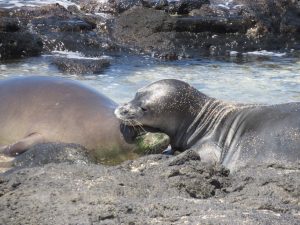
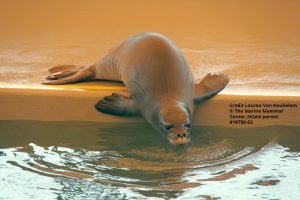
Eleu (PP08), a weaned female Hawaiian monk seal pup rescued from Papahānaumokuākea Marine National Monument Refuge, rests during rehabilitation at The Marine Mammal Center’s Ke Kai Ola hospital and visitor center in Kailua-Kona, HI. The young female seal’s name means one that is active, alert, energetic, lively and nimble. Credit Lauren Van Heukelem © The Marine Mammal Center, NOAA Permit #18786-03


Hawaiian monk seals RK26 (on left) and RL50 (on right) rest on a beach. As the world’s largest marine mammal hospital, The Marine Mammal Center actively monitors endangered monk seals that frequent Big Island beaches to check on their condition, but its experts do not serve in a law enforcement capacity. Credit Sheila Latta © The Marine Mammal Center

Free July 7 Zoom Presentation by Dr. Craig Downs and Hawaii Senator Mike Gabbard: “Education vs. Enforcement: Next Steps Beyond the Enactment of Hawaii’s Sunscreen Law”

in /by

KIHEI, HI— Hawaii’s ban on sunscreens containing the reef-harming chemicals oxybenzone and octinoxate went into effect on January 1, but is the law effective in protecting our local coral reefs and marine animals as intended? Is the ban being enforced? What’s the latest scientific evidence about the chemicals that are replacing these two ingredients in some brands of sunscreen? Are new laws needed?

Get the answers to these important questions on Wednesday, July 7 at 5:30 p.m. via a free Zoom presentation featuring special guest speakers: Dr. Craig Downs, whose groundbreaking research educated the world about sunscreen chemicals and their role in coral reef decline; and Hawaii Senator Mike Gabbard, who authored the legislation that resulted in Hawaii’s ban on the sale of sunscreens that contain the chemicals oxybenzone and octinoxate.

The presentation titled “Education vs. Enforcement: Next Steps Beyond the Enactment of Hawaii’s Sunscreen Law” is sponsored by the County of Maui Mayor’s Office of Economic Development and hosted by Maui Nui Marine Resource Council as part of the organization’s “Know Your Ocean Speaker Series.”

This event is free, but advanced reservations are required. To reserve your spot, please visit https://bit.ly/SunscreenWebinar.

Downs graduated from Hiram College with a B.A. in philosophy and biology, received his M.Sc. from Syracuse University, and received his Ph.D. from the University of Hawaii in cell and molecular biology. He has published over 50 scientific papers and a number of book chapters in scientific textbooks, and is the co-editor of the CRC press veterinary book, Diseases of Corals, as well as founded a number of companies and nonprofits relating anywhere from animal welfare to environmental conservation and exploration.

Downs has held positions as research professor at University of Hawaii’s School of Medicine and Sweet Briar College. He is currently an invited professor at Sorbonne University (France) and is the Executive Director of Haereticus Environmental Laboratory, a non-profit scientific organization dedicated to increasing the scientific, social and economic knowledge of natural environmental habitats in order to better conserve and restore threatened environmental habitats and resources.

Gabbard, who has represented District 20 since 2006, which includes Kapolei, Makakilo, and portions of Kalaeloa, Waipahu, and Ewa, has authored 54 bills that became law relating to energy efficiency, renewable energy, endangered species protection, industrial hemp, the environment, public safety, and more.

One of those bills that became law in 2018, SB 2571, is the ban of sale or distribution in the state of any sunscreen that contains oxybenzone or octinoxate, or both. Last session, Gabbard introduced SB 366, which would ban the sale, offer of sale, or distribution in Hawaii of any sunscreen that contains two more chemicals, avobenzone or octocrylene.

The speakers plan to address whether or not sunscreen pollution is a symptom of unsustainable tourism and coastal development, how we get visitors and residents to comply with the new sunscreen law, and who is responsible for enforcing it.

This panel will also provide information and tips on how you can help to protect the marine environment.

Maui Nui Marine Resource Council’s “Know Your Ocean Speaker Series” events are held monthly via Zoom. Support for these events is provided by the County of Maui Mayor’s Office of Economic Development.

The virtual event’s emcee will be Darla Palmer-Ellingson, local radio show host of the public affairs program, Island Environment 360 Maui’s only commercially broadcast public affairs show on environmental and related Hawaiian cultural topics, aired on the stations of H-Hawaii Media.

To reserve your spot at this free Zoom webinar, please visit https://bit.ly/SunscreenWebinar.

Free Presentation on “Growing Up Fast: A Land-Based Coral Nursery for Restoring Hawaii’s Reefs” Offered During Earth Week

in /by


KIHEI, HI— In honor of Earth Day and Earth Week, the public is invited to a free presentation on “Growing Up Fast: A Land-Based Coral Nursery for Restoring Hawaii’s Reefs” on Zoom on Wednesday, April 21 at 5:30 pm.

The presenter will be coral specialist Christina Jayne of the Dept. of Land and Natural Resources Division of Aquatic Resources Hawaii Coral Restoration Nursery. The talk is hosted by Maui Nui Marine Resource Council, as part of its monthly “Know Your Ocean Speaker Series.”

Coral reef restoration is the process of raising new corals — often from fragments of coral salvaged from the wild — in a protected, nurturing environment, then transplanting them out into the ocean to grow and form new reefs. When combined with efforts to improve coral reef habitat, it is viewed as a way to help coral reefs survive the stresses of climate change and warming ocean waters.

For the past two years, Jayne has worked for the Dept. of Land and Natural Resources Division of Aquatic Resources as a coral restoration specialist at the Hawaii Coral Restoration Nursery on Oahu with director David Gulko. Before moving to Honolulu, she earned her bachelor’s in Marine Biology from the University of California San Diego and her masters from Scripps Institution of Oceanography at UC San Diego.“Hawaii’s reefs are extremely unique and Hawaiian corals have some of the slowest growth rates in the world, which is why the State has taken an innovative, land-based approach to coral restoration,” notes Jayne.
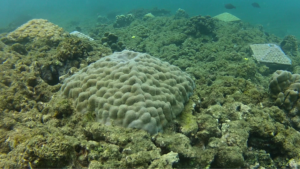
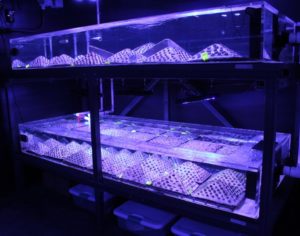
Hawaii’s first state coral nursery, which is managed by DAR, opened in 2016 at the Anuenue Fisheries Research Center on Oahu.

Corals are brought to the Coral Restoration Nursery and are rapidly grown using a series of aquarium-based techniques that help them to generate large coral colony modules in a fraction of the time it would take naturally, which can be out-planted back on the reef.

The nursery typically uses corals for out-planting from harbors because of their lower ecological value compared to corals from natural areas, says DAR, and they may also be more resilient to any challenges and environmental changes.

University of Hawaii Sea Grant researchers are also conducting experiments at the Anuenue facility to understand different environmental conditions, like light and water movement, that are useful for growing corals quickly. Creating the best environment for the corals to grow rapidly will help to restore local reefs after disturbance events such as bleaching or physical damage.

Maui Nui Marine Resource Council’s “Know Your Ocean Speaker Series” events are held monthly via Zoom. Support for these events is provided by the County of Maui Mayor’s Office of Economic Development.

The virtual event’s emcee will be Darla Palmer-Ellingson, local radio show host of the public affairs program, Island Environment 360 Maui’s only commercially broadcast public affairs show on environmental and related Hawaiian cultural topics, aired on the stations of H-Hawaii Media.

To reserve your spot at this free Zoom webinar, please visit https://bit.ly/coralnurserywebinar


PacIOOS Water Quality Sensor Partnership Program Enhances Maui Nui Marine Resource Council’s Water Quality Monitoring in Māʻalaea Harbor

in /by


MĀʻALAEA, HI – Maui Nui Marine Resource Council’s ocean water quality monitoring efforts in Māʻalaea Harbor are being helped by a new underwater data sensor that the organization has borrowed through the Pacific Islands Ocean Observing System (PacIOOS) Water Quality Sensor Partnership Program. The new data sensor collects data every five minutes on water temperature, salinity, turbidity, chlorophyll and ocean depth.

The PacIOOS program supports scientists and natural resource managers to collect water quality data in order to inform research, conservation, planning, and resource management projects in the U.S. Pacific Islands region. The data sensor is owned and maintained by PacIOOS under the supervision of Dr. Margaret McManus, Chairwoman of the Department of Oceanography at the University of Hawai‘i at Mānoa.

“We are grateful to PacIOOS for the use of this data sensor that will help us learn more about the effects of tides, swell, rain events, and runoff on water quality within Māʻalaea Harbor and to monitor water quality variability over time,” reports Amy Hodges, Programs and Operations Manager at Maui Nui Marine Resource Council.

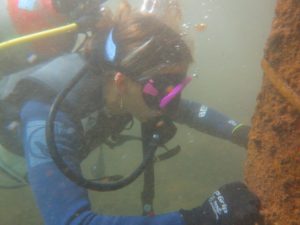
Mounted 1 or 2 meters below the ocean’s surface, the sensor package is relocated by divers from Maui Nui Marine Resource team to a new site within the harbor about once per month. The sensor package was installed in 2020 and is scheduled to be used in Māʻalaea Harbor through 2021.

The PacIOOS data sensor will help guide Maui Nui Marine Resource Council as it implements its watershed management plan, which aims to reduce sediment and pollutants in Māʻalaea Bay and its harbor. Professor Margaret McManus

“In recent decades, declining ocean water quality has led to significant deterioration of Māʻalaea Bay’s reefs,” says Hodges. “Monitoring by the community-based program Hui O Ka Wai Ola — which was co-founded and is co-managed by Maui Nui Marine Resource Council, The Nature Conservancy and West Maui Ridge to Reef Initiative —  using ocean water samples grabbed from the ocean edge has shown turbidity (sediment) and excessive nitrogen as primary causes of impaired water quality.”

Maui Nui Marine Resource Council’s staff also assist with gathering ocean water quality “grab samples” from the shore. All combined, the Hui O Ka Wai Ola sampling and the MNMRC staff grab sampling results in data from 5-10 sites every three weeks in Māʻalaea Harbor.

Maui Nui Marine Resource Council has also been using a Manta data sonde, purchased with a grant from LUSH cosmetics, to gather water quality data in the Harbor. The sonde is towed behind a kayak and records real time data as it is pulled through varying depths through the water.

The organization has also been testing the nitrogen isotope ratios (δ15N values) in macroalgae (limu) tissue to determine the possible sources of nitrogen pollution in the harbor and the bay. Other ongoing testing in Māʻalaea Bay conducted by MNMRC includes current drift analysis studies, underwater coral cover and fish transects, and stormwater sampling.

To address Māʻalaea’s sediment issues, MNMRC is working to improve stormwater management in the 4,000 acre Pohakea watershed adjoining Mā‘alaea Bay. In 2018, MNMRC commissioned Maui Environmental Consulting (MEC) to create the Pohakea Stormwater Management Plan following meetings with Hawai‘i Division of Forestry and Wildlife (DOFAW), Māʻalaea Village Association, Maui Ocean Center and other stakeholders.

MNMRC has been enacting the priorities in this plan. In 2020, MNMRC installed firebreaks in Pohakea watershed to suppress frequent wildfires that occur in this windy, dry region, causing loss of vegetative cover that helps hold soil in place and prevents erosion. Partners included DOFAW, Maui Electric Co. and Goodfellow Bros. Inc.

MNMRC and Maui Environmental Consulting began monitoring headcuts (erosional features) in 2020 to quantify soil loss at four of the most severely eroded sites in the Pohakea watershed nearest the harbor. Their monitoring showed a loss of an estimated 64,050 pounds, or 32 tons, of soil from just two head cut locations in a single moderate rainstorm in January 2021. The lost soil was likely transported via culverts directly into the ocean, contributing to a severe brown water event in Māʻalaea Bay.  MNMRC is now working to obtain funding to work with Maui Environmental Consulting and Goodfellow Bros. to repair two of the most severe head cut locations to reduce the sediment runoff.

Maui Nui Marine Resource Council launched an oyster bioremediation project in Māʻalaea Bay in 2020 to utilize caged oysters as a natural method of water filtration. A single oyster can filter up to 50 gallons of ocean water per day, removing sediment and pollutants. During 2020, MNMRC installed more than 10,000 oysters and conducts periodic monitoring to assess their growth rates and health. Data from the PacIOOS data sensor will help measure changing ocean water quality conditions in response to the oyster program.

“The progress of our projects to clean up Māʻalaea Bay’s water quality will be measured by resulting data from the PacIOOS data sensor and our other monitoring methods,” says Hodges. “We to see evidence of improved ocean water quality, through reductions in sediment and excess nitrogen, an essential step in restoring coral cover and reef health in Māʻalaea Harbor and in the bay.”

To learn more about the PacIOOS Water Quality Sensor Partnership Program and view data, visit https://www.pacioos.hawaii.edu/water/sensor-maalaea/#about.

Founded in 2007, Maui Nui Marine Resource Council is a nonprofit 501(c)(3) organization working for clean ocean water, healthy coral reefs and abundant native fish for the islands of Maui County. To learn more, visit www.mauireefs.org.


CAPTION: Maui Nui Marine Resource Council’s Grace Silver helps to prepare a site in Mā’alaea Harbor for the data sensor on loan from PacIOOS.

Maui Nui Marine Resource Council Launches Campaign to Encourage Chemical-Free Landscaping to Protect Coral Reefs and Marine Wildlife

in /by

MAUI, HI – As part of its work to protect and promote healthy coral reefs, clean ocean water and abundant native fish in Maui County, Maui Nui Marine Resource Council has launched an educational campaign to encourage private and public landowners, golf courses and landscapers to switch to organic land management. The organization launched this campaign after gathering research on the impacts that toxic pesticides, fungicides, herbicides and synthetic fertilizers have on coral reefs and marine wildlife.

“Many people want to help protect the ocean, but they aren’t aware that they can do that through organic land management,” says Grace Silver, Project and Research Coordinator at Maui Nui Marine Resource Council. “This campaign will educate and encourage private and public landowners to give up use of landscape chemicals to protect the ocean environment and create a healthier and thriving microclimate on their own land.”

Maui Nui Marine Resource Council is working with Beyond Pesticides, National Organic Farming Association and local organic land management experts to provide the community with helpful information for landowners and land management experts to make the switch to organic land management. Because cumulative impacts can be so detrimental, every single property that makes the switch will make a difference towards creating a cleaner and healthier environment around them.

“Numerous scientific studies have shown that the use of synthetic chemicals on land have significant and adverse impacts to coral reef ecosystems and aquatic species,” reports Silver. “Some of these negative impacts include coral reef bleaching, eutrophication, biomagnification, reproduction inhibition and increased disease in fish and marine wildlife.”

“Through our research, we’ve found that a majority of chemicals applied to our land for landscaping and pest control often end up in the ocean,”  explains Meredith Beeson, Project and Research Coordinator at Maui Nui Marine Resource Council. “Once these chemicals make their way into aquatic environments, they harm coral reefs by hindering their ability to feed and reproduce.”

“In order to protect our oceans, this chemical runoff needs to be reduced (or ideally stopped) from reaching the ocean,” says Beeson. “The solution is organic land management.”

According to a study published in the Journal of Agricultural and Environmental Ethics by David Pimentel, less than 0.1% of pesticides applied for pest control reach their target pests. Thus, more than 99.9% of pesticides used move into the environment where they adversely affect public health and beneficial biota, and contaminate soil, water, and atmosphere of the ecosystem.

Problems caused by landscaping chemicals and synthetic fertilizers entering the marine environment include:
• Tumor-causing diseases in turtles, as documented by the University of Hawaii, Manoa by Celia Smith and Walter Zimmermann.
• Creation of dead zones through the process of eutrophication, as documented by InTeGrate in “Managing Runoff to Reduce the Dead Zone.”
• Degradation of coral reefs, leading to economic impacts, as documented by University of Hawaii, Manoa in “Economic Value of Hawaii’s Nearshore Reefs.”
• Death of zooxanthelle (coral symbiont) which leads to coral bleaching, as documented by the Marine Pollution Bulletin by C.M. Shaw, J. Brodie, and J.F. Mueller.
• Potential human health impacts through chemical exposure, as documented by the Agency for Toxic Substances and Disease Registry.

“Whether you have a small yard or run a large-scale farm, organic land management can help protect Maui’s coral reefs and aquatic organisms” says Beeson. “Another benefit of organic landscaping is that it ultimately allows the land to sustain itself without large amounts of human intervention, saving time, energy and money in the long run.”

Maui Nui Marine Resource Council has created a webpage at https://www.mauireefs.org/what-we-do/pesticides/ with resources to help land managers, owners and landscapers obtain more information on organic land management. These resources focus on common issues found in Maui County.


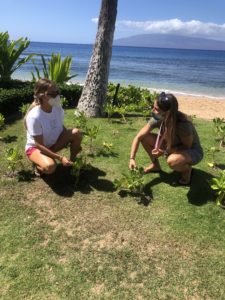
Maui Nui Marine Resource Council staff members Meredith Beeson and Grace Sliver examine landscaping plants and discuss organic land care methods as part of our new Pesticide Education Program. 

Public invited to free Zoom presentation about unique collaboration of 7 environmental projects funded by Maui CARES

in /by

Program provided employment for more than 70 Maui and Molokai residents

“It’s like Maui County’s own version of the Civilian Conservation Corps”

KIHEI, HI – During the Great Depression, the government-sponsored Civilian Conservation Corps (CCC) provided paychecks for 3 million unemployed young men and provided valuable labor for conservation projects across the country.

With unemployment at record levels due to COVID-19, a new program followed this historical CCC model and put more than 70 Maui and Molokai residents to work in November, providing seven local conservation nonprofits with needed labor to benefit coral reefs, cultural resources and the environment.

The public is invited to a free presentation on Weds. January 27 at 5:30 pm on Zoom to learn about this unique collaborative employment and workforce training program and the impact it had on our local environment. The presentation will include videos, photos and firsthand accounts of the projects and accomplishments, with information on how the projects incorporated traditional Hawaiian cultural practices and modern technology to prevent sediment pollution in the ocean and protect valuable cultural resources.

It’s free, but registration is required. To sign up, visit https://bit.ly/mauiCARES

This unique collaborative employment and workforce training program was made possible through the County of Maui Office of Economic Development’s Maui CARES program, which was funded by the Federal CARES Act. As the fiscal sponsor, Maui Nui Marine Resource Council oversaw the administration of the Maui CARES funding for the projects and managed the rapid employment of more than 70 new hires with the help of simplicityHR by ALTRES.

The workers participated in conservation and restoration projects in Olowalu, Waihe’e, Keanae, Kipahulu, Hana and Moloka’i. All of the projects were rooted in Hawaiian cultural practices and values which serve as the foundation of our community. Their work was filmed by Inflatable Film of Kula. The evening will include video premieres exclusively for webinar attendees.

“Through this presentation, attendees will be immersed in a virtual experience to feel the importance of Kuleana, ʻOhana, Kōkua, Aloha ʻAina, Mālama ʻAina, and Hānai ʻAina, said Ekolu Lindsey, President of Maui Cultural Lands and a principal organizer of this program. “Be inspired to follow in the footsteps of those who have come before us, as we share our legacies with you.”

The participating nonprofits include:

Ka Honua Momona on Molokai worked to restore two ancient fishponds, which will help trap sediment before it reaches the open ocean – with the benefit of also producing fish for local people.

Kipahulu ‘Ohana in East Maui improved a lo’i, or wetland taro farm. The taro plants will slow the flow of stormwater, allowing time for sediment in the water to settle, rather than flow out to sea.

Hawaiian Islands Land Trust in Waihe’e worked to remove invasive species along approximately 3,000 linear feet of Kalepa Stream to lower sediment loads in the nearshore waters off Waihe’e and protect offshore corals.

Ke Ao Hali‘i (KAH) in Hana worked on 27 acres of publicly owned land at Mokae/Kaholaiki and another ~2 acres of contiguous land, directly above Hamoa Beach. Their project included invasive plant removal and native habitat restoration for seabirds and insects, and a biological survey of ‘opihi as a baseline for a possible ‘opihi rest area in the future.

Kipuka Olowalu in West Maui reestablished washed out and damaged lo’i (taro fields), rebuilt vanished lo’i and prepared lo’i for planting in the Olowalu Cultural Reserve. Workers removed overgrowth, fire hazards and invasive plants; planted native plants and crops and repaired infrasturcture.

Na Moku ‘Aupuni O Ko‘olau Hui in East Maui worked on watershed management and stream maintenance, as well as stream and ditch monitoring in the East Maui Irrigation system to establish accurate data for stream and ditch flow and loss as a basis for making sound future management decisions related to this resource and delivery infrastructure.

Each of the nonprofits will be presenting their work and accomplishments through photos, video and stories from the field.

Na Mamo o Mu‘olea in East Maui focused on land and shoreline management on a county parcel (which Nā Mamo O Mū’olea has a 50 year lease). It included removal of invasive plants around a rock wall that is on the historic registry, and preparation for wall restorations, maintenance of two heiau on the property, installation of new fencing around an area designated for native trees and medicinal plants, and maintenance and repair of feral animal controls.

“This presentation is a celebration of all that was accomplished and learned,” said Lindsey. “We encourage the public to attend to connect with these organizations and the workers who put heart and soul into these challenging and impactful projects.“

The emcees for this event are Ekolu Lindsey and Darla Palmer-Ellingson, local radio show host of the public affairs program, Island Environment 360 Maui’s only commercially broadcast public affairs show on environmental and related Hawaiian cultural topics, aired on the stations of H-Hawaii Media.

About Maui Nui Marine Resource Council

Maui Nui Marine Resource Council is a community-based nonprofit organization celebrating 13 years of working for healthy coral reefs, clean ocean water and abundant native fish throughout Maui County. Our work includes co-managing the Hui O Ka Wai Ola Ocean Water Quality Monitoring Program in South and West Maui, efforts to reduce pollution in Mā‘alaea Bay (through erosion-control efforts in the Pohakea watershed and using oysters to filter sediment and pollutants from ocean water), coral reef research, visitor education programs and more. Learn more at www.mauireefs.org.

Volunteers Needed to Assist with Pre-Rainy Season Mā’alaea Ditch Clean Up on Sunday, December 27

in /by

MA’ALAEA, HI — Looking for ways to give back this holiday season? Maui Nui Marine Resource Council invites the public to help protect marine life and water quality in Mā’alaea Bay by participating in a clean-up of trash that has been accumulating in the Mā’alaea ditch by the Honoapi‘ilani Highway. The clean-up will take place on Sunday, December 27, from 8 am – 11 am. Now is the time to remove trash from the ditch before heavy rains arrive and cause the debris to wash into the ocean.

“Unless we act now, the trash will flow into the ocean when winter storms arrive, putting marine life and water quality in Mā’alaea Bay at risk,” says Tiara Stark, clean-up coordinator. “We’ll meet at the EV charging stations at the parking lot along the highway between Maui Ocean Center and Carl’s Jr.”

Trash bags, gloves, and facemasks will be provided.

“To ensure a fun and safe event, safety precautions such as mask wearing, social distancing, and limitations on the number of volunteers will be enforced,” notes Stark. “Please wear closed toed shoes and long pants; don’t forget your hat, sunscreen and water bottle.”

“It feels good to make a difference,” says Stark.

To volunteer for one or more one-hour time slots, please sign up through this link:
https://bit.ly/MaalaeaCleanUp

Maui Nui Marine Resource Council is a nonprofit organization working for healthy coral reefs, clean ocean water and abundant native fish. The organization is working to improve ocean water quality in Mā’alaea Bay through an oyster bioremediation project and a program to reduce sediment runoff from the adjoining Pohakea watershed. To learn more and to Adopt an Oyster to support this work, please visit www.mauireefs.org.