Talk Story with Liz Yannell
/
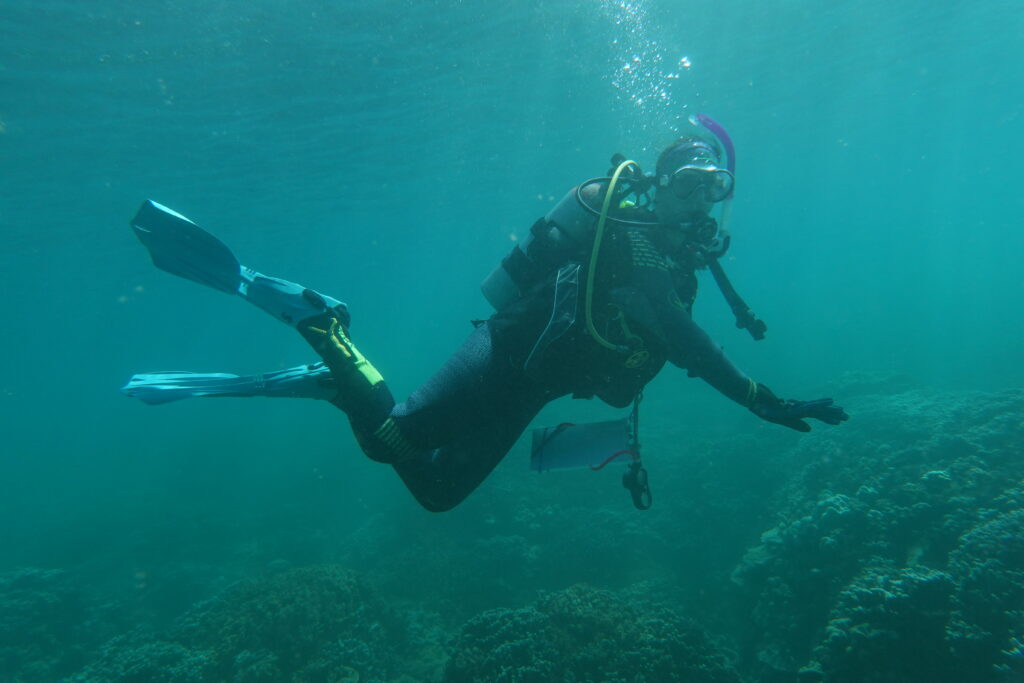
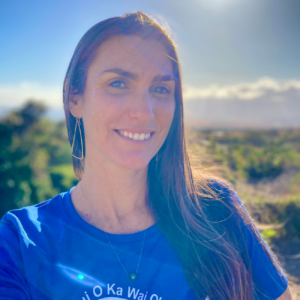 Liz Yannell is the Program Manager for Hui O Ka Wai Ola, a volunteer-powered water quality monitoring program supported by MNMRC. Liz manages all field, lab, and program logistics and often joins volunteers in the collection and analysis of coastal water samples in the field. Liz is also a member of MNMRC’s dive team that performs reef surveys throughout the year. She has a B.A. in environmental studies from Florida Gulf Coast University, and in 2022, Liz graduated from the Marine Options Program at UH Maui.
What does the ocean mean to you?
The ocean has always felt like a best friend to me. I was born on Oʻahu, and we moved to South Florida when I was a kid. My grandparents lived on Hollywood Beach and then the Florida Keys. Since my mom was a teacher, every school break meant heading down to the Keys to stay with my grandparents. The Atlantic Ocean was at the end of their street—a place that I could freely play and explore the coast and coastal waters. I’m very much at home when I know the water is there. I remember how deeply connected I felt to the water as a kid, and there’s this sense of belonging when I’m by the ocean that has never faded.
I graduated from Florida Gulf Coast University with a degree in environmental studies with a focus on environmental education. In part, it was the ocean that pulled me back to Hawaiʻi. I eventually moved to Maui with my husband, and, after I took time off to raise my family, I decided it was the right time to dive into my love of the ocean and make marine science my career. I enrolled at UH Maui College (UHMC) where I joined the Marine Option Program (MOP), a job-ready certificate program in marine science and conservation.
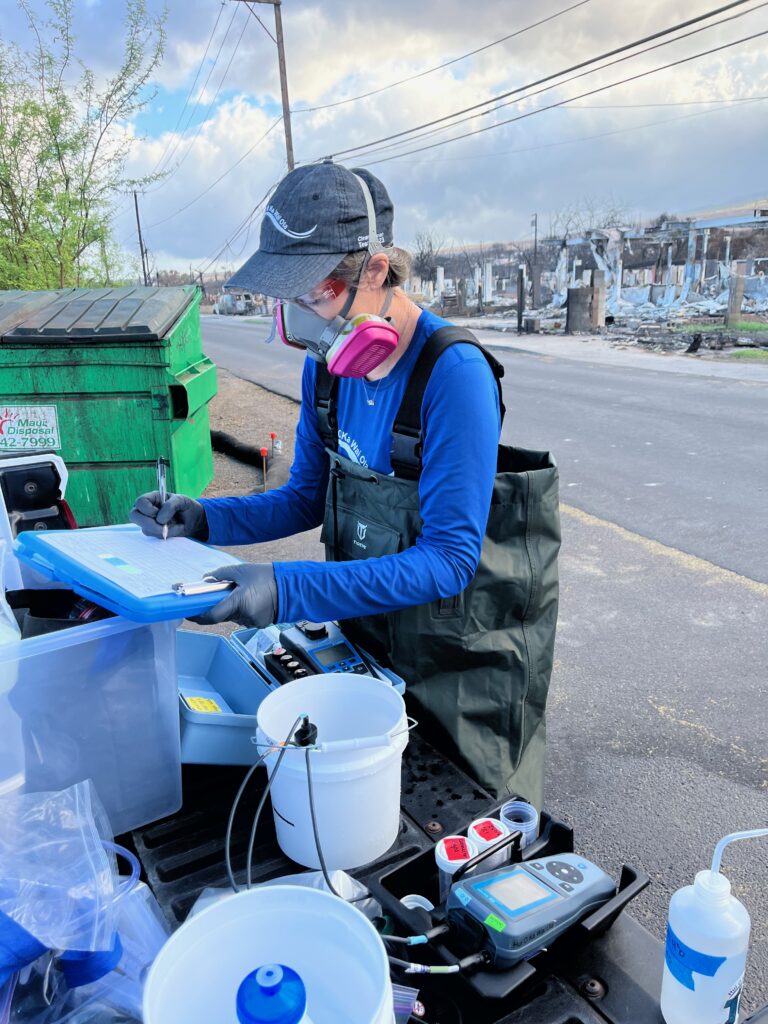
Hui O Ka Wai Ola was one of the first conservation groups to respond in the aftermath of the 2023 Lāhainā wildfire. Liz and Hui staff collected water samples at sites in and around the burn zone to monitor the effects of the fire on nearby waters. (Photo Credit: Tova Callender)
Can you tell us how Hui O Ka Wai Ola is connected with MNMRC?
Hui O Ka Wai Ola means Association Of The Living Waters in Hawaiian. The Hui is unique in that we are a coalition program. It was founded in 2014 as a way to come together to address concerns over coastal water quality, and our three main partners since the start have been MNMRC, The Nature Conservancy of Hawai’i and the West Maui Ridge to Reef Initiative. All three of those partners make up our steering committee, our technical team and our communications team with MNMRC also being our fiscal sponsor.
What we do as a community-based organization is vital to understanding and protecting our island’s environment and ecosystem. Clean water is the foundation of a healthy reef, and Maui depends on its coral reef ecosystems for cultural, ecological, and economic well-being. Hui O Ka Wai Ola is on the ground, actively collecting the data needed to improve the health of our coastal waters. A key part of our work is adhering to the rigorous standards of our Quality Assurance Project Plan (QAPP), which ensures our data is credible, high-quality, and respected by decision-makers. Our data is shared and published widely — through the Hawai‘i Department of Health Clean Water Branch, the EPA, Aqualink, PacIOOS, and Zenodo — and is also available for free on our website, so that everyone in our community can access and use it.
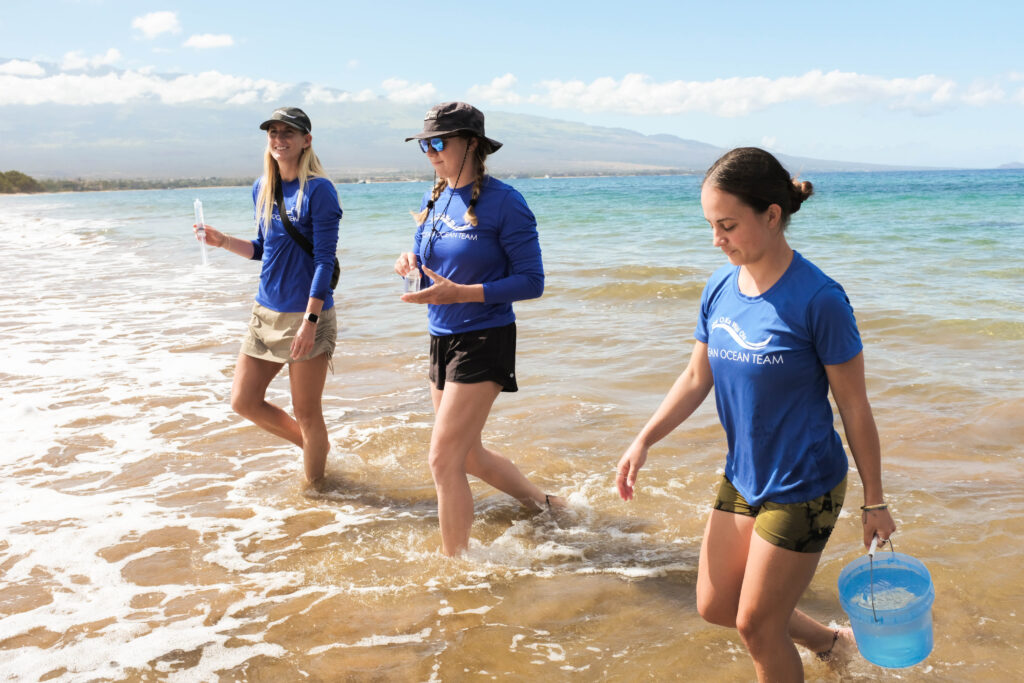
Hui O Ka Wai Ola volunteers collect and analyze water samples from 41 locations across Maui every three weeks. (Photo Credit: Maui Nui Marine Resource Council)
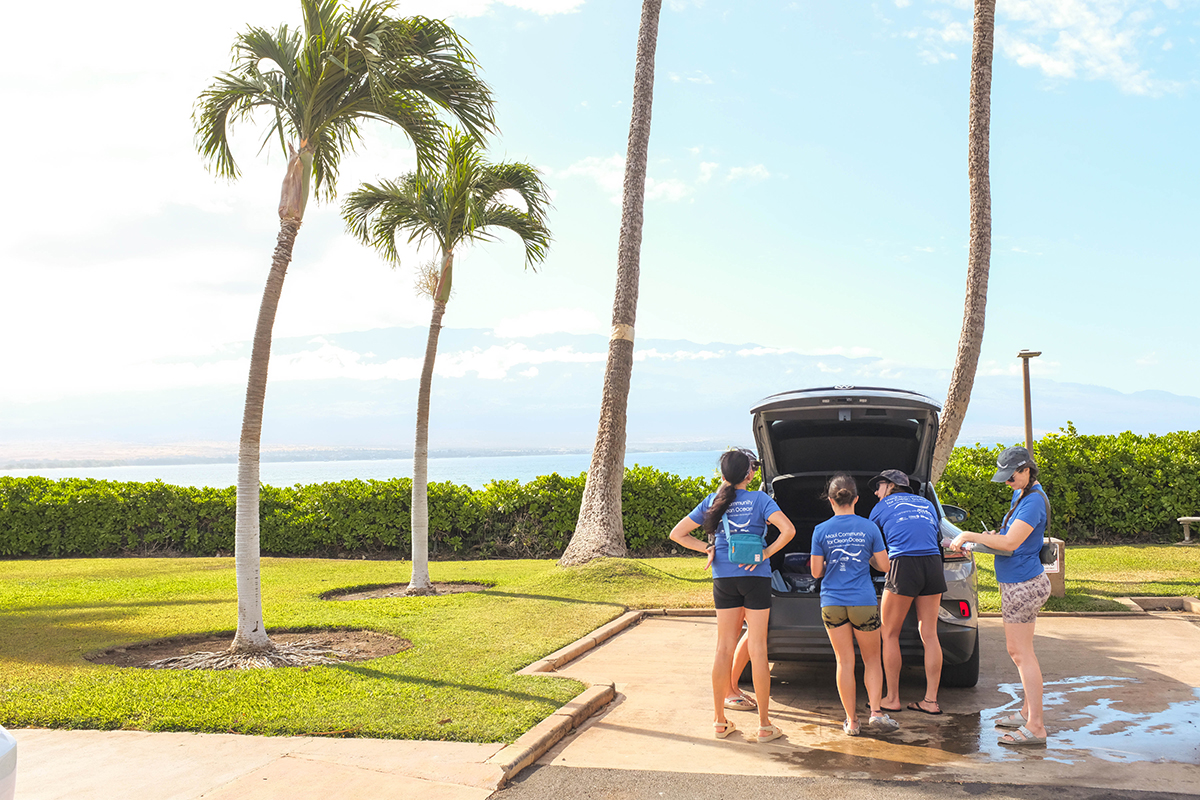
The North Kīhei team analyzes water samples in their mobile lab. (Photo Credit: Maui Nui Marine Resource Council)
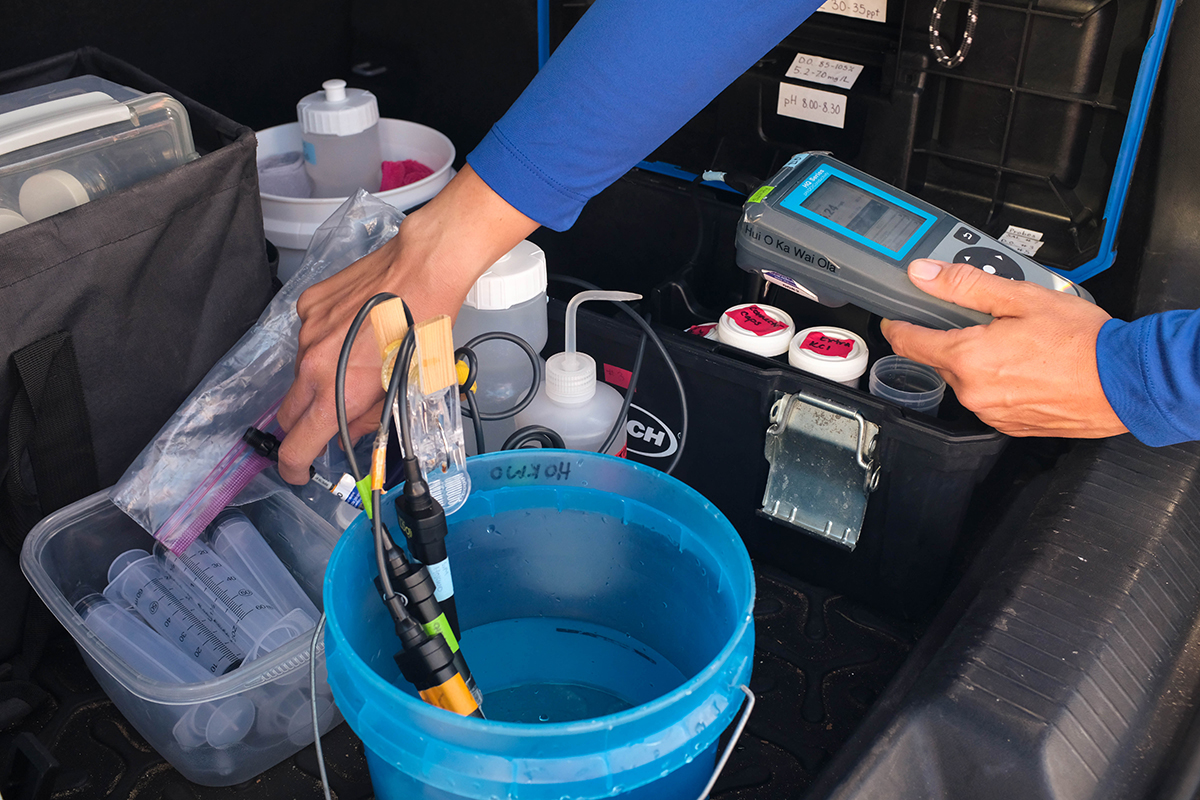
Hui O Ka Wai Ola tests for 13 different parameters including: turbidity, pH, salinity, and water temperature. (Photo Credit: Maui Nui Marine Resource Council)
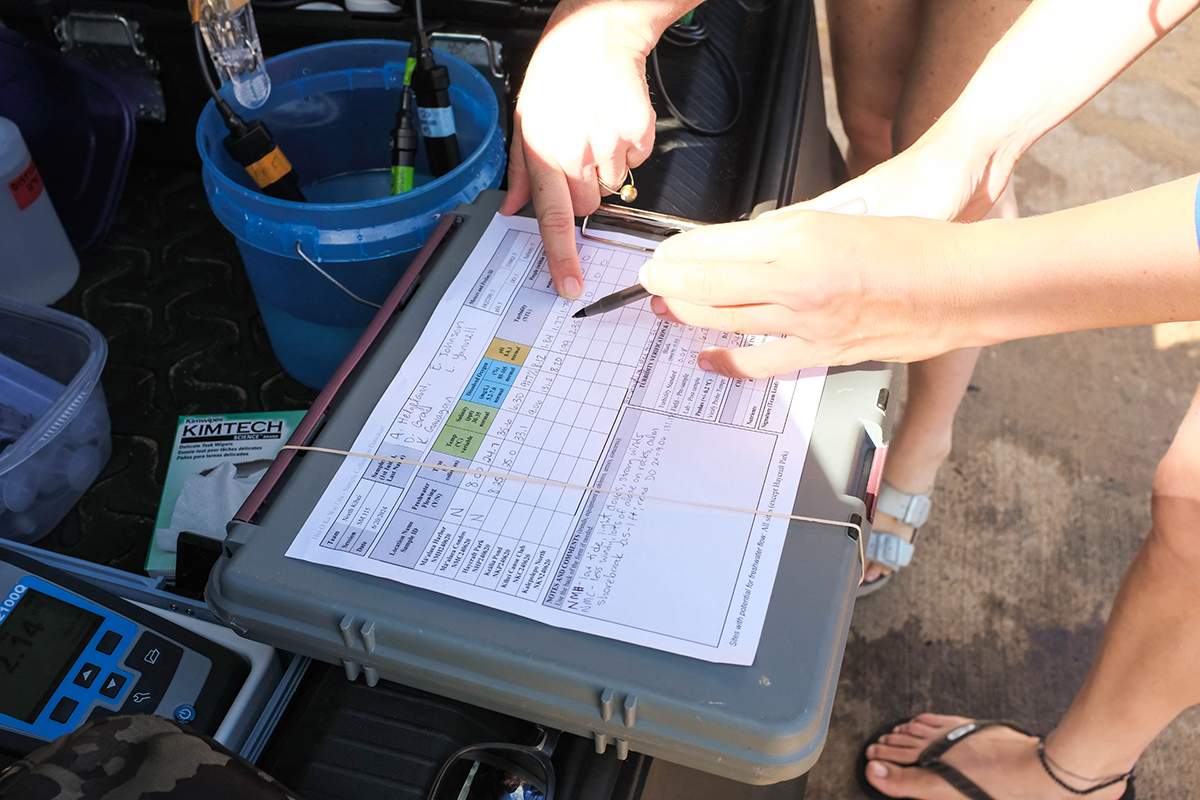
Immediately following collection, water samples are tested using a mobile lab and results are recorded before moving on to the next site. (Photo Credit: Maui Nui Marine Resource Council)
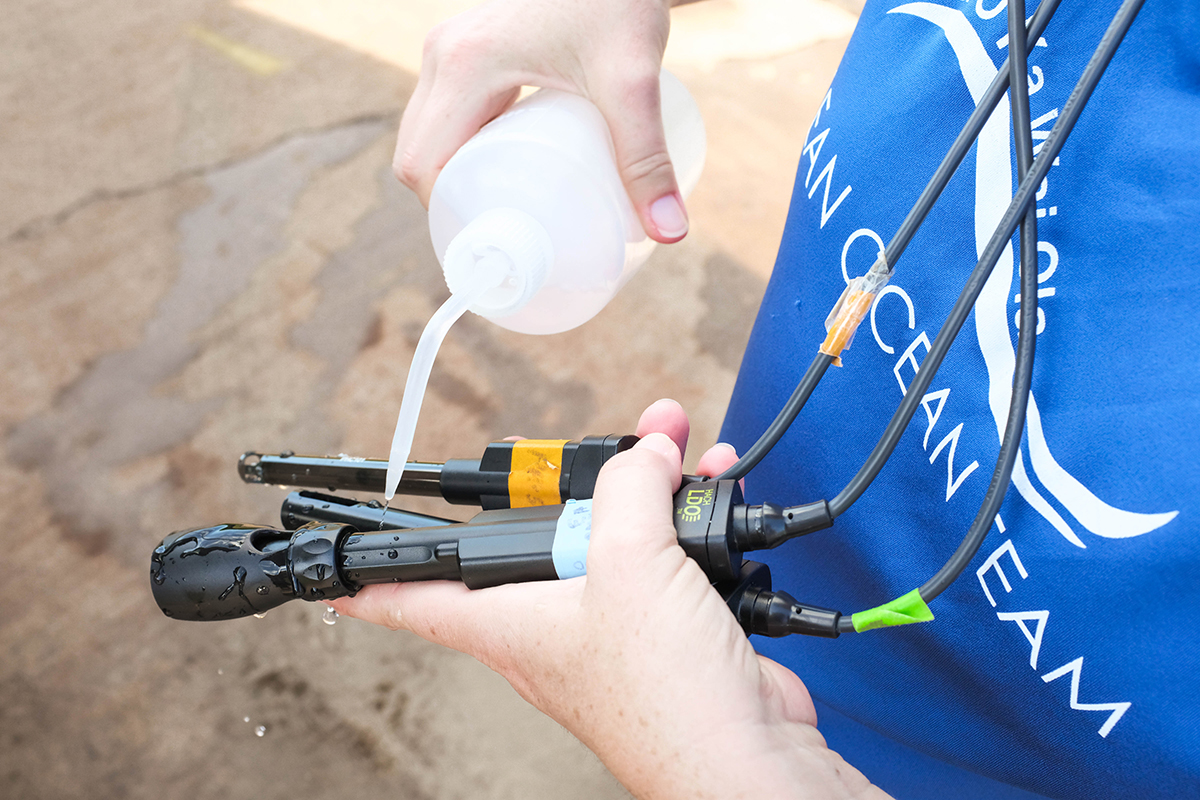
Testing instruments are cleaned with distilled water after data from each site is recorded. (Photo Credit: Maui Nui Marine Resource Council)
What discoveries have surfaced from your water quality data?
Our data shows where things are getting better and where things need to be improved. If the water at one of our sites is visually looking brown, for example, our testing and data underscores what we are seeing and can tell us more details about what might have led to the current situation.
Here is a great example at our Kahana Village site on the west side — Kahananui is a huge watershed and our data at Kahana Village was showing some of the highest turbidity issues across the west side of the island. After we flagged this issue, further research was done by partners which determined that the valves in the Kahananui retention basin were blocked, meaning that the water hadn’t been properly draining out for decades and was leading to large amounts of sediment input into our Kahana coastal waters. Our data was used as the leverage point in a pitch for a grant from the National Fish & Wildlife Funds for $200,000 to address the needed valve repair. Once the valve was fixed, Maui County was able to continue proper maintenance of the basin to improve our coastal waters. So much sediment was cleaned out of the basin in 2018 and 2019, and we saw the notable decline of turbidity in our data. Six years later, we are still seeing improvements in coastal water quality in Kahana. I’m sure the coral ecosystems are grateful for that.
What makes this success story especially powerful is how one infrastructure repair has had these lasting positive effects, proving that localized conservation efforts can create real, tangible results. I love to repeat a phrase I picked up from a colleague: you can only manage what you measure. In other words, data matters because you can’t protect what you don’t understand.
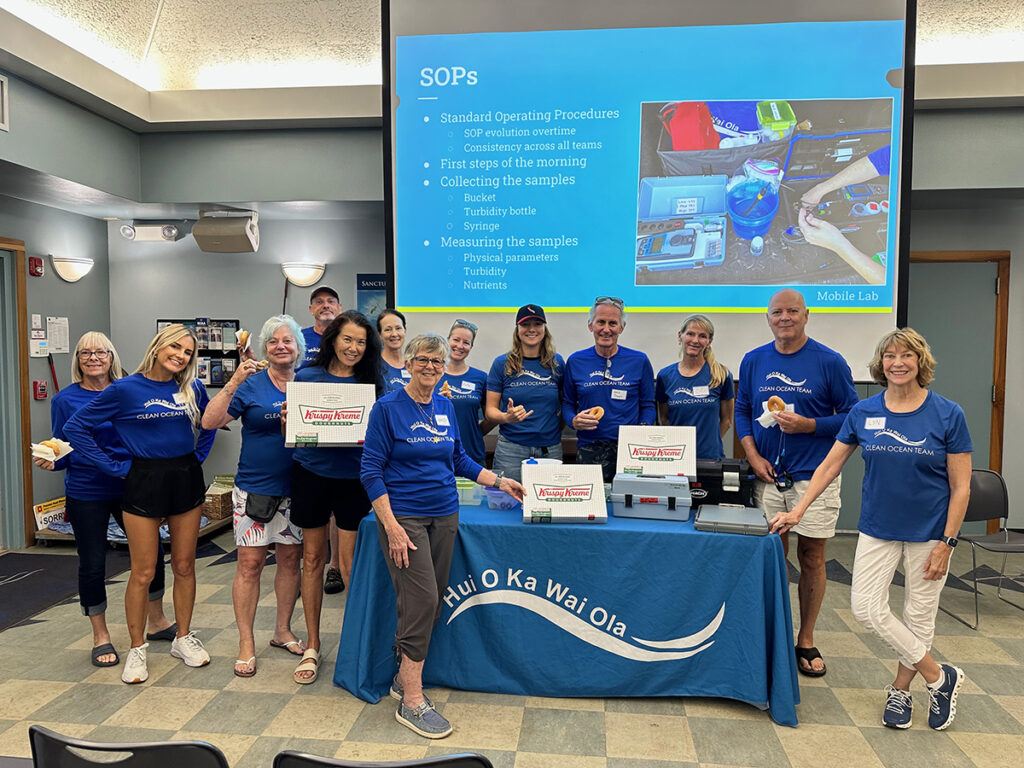
Hui volunteers participated in an annual refresher training in November 2024. (Photo Credit: Liz Yannell)
How can new volunteers get involved in upcoming work?
We encourage those considering becoming a volunteer to fill out our online application and come out and observe the field team a couple of times. Then, we’ll do some training which takes 3-4 hours and we also provide them with our volunteer handbook. We’re very specific about how the samples get collected to ensure we are getting accurate, good quality data across all of our sampling teams.
Volunteers go to the same site every three weeks to collect samples for testing. The three week time frame gives us good variation in our data with changing groundwater flow, different moon cycles, tides, and season shifts, for example. We currently have 7 teams across our 41 sites, with rotations on different days of the week along the leeward coast. We’d love to welcome new members to our team whether it’s help in the field, the lab, or some other way we can utilize your skill set.
Volunteer Sign-up Link: https://www.huiokawaiola.com/join-us.html
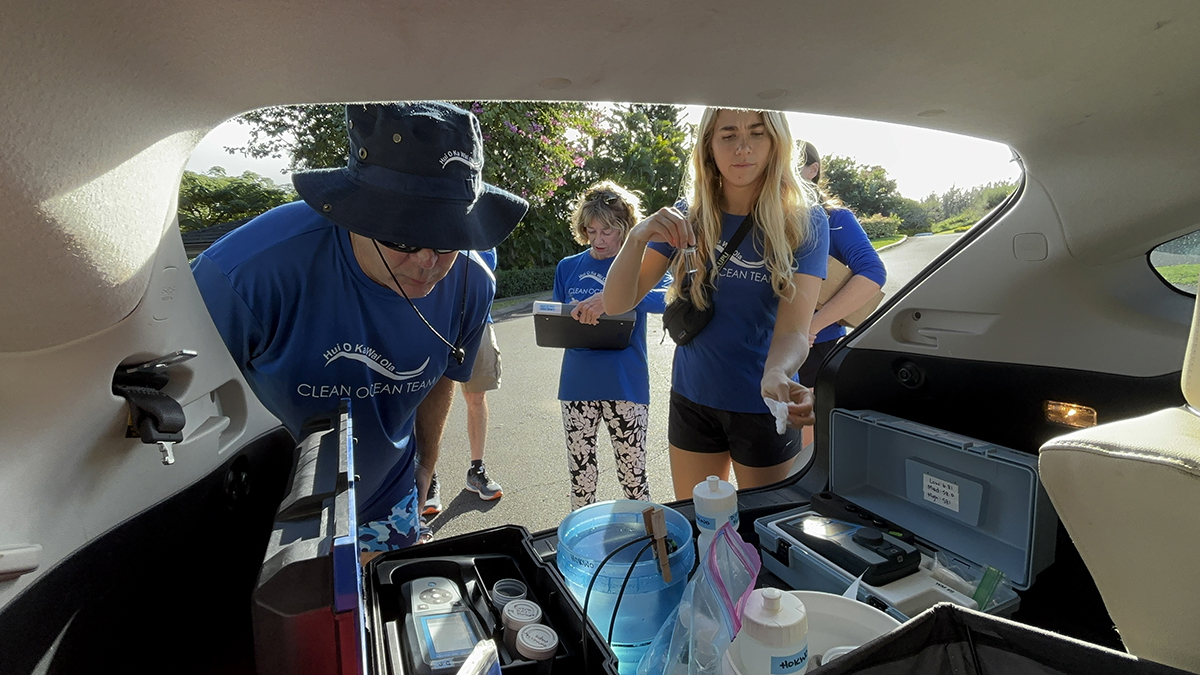
West Maui team members test samples at Oneola Beach in Kapalua. (Photo Credit: Maui Nui Marine Resource Council)
What’s the best part of your job?
Our program gives me so much hope for the future. The experience of working within our Maui community is what I love most. Our volunteers make our program more powerful. Each team of volunteers really becomes watchdogs for their sites, they know their sites better than anyone and they will notice when something is different out there and then bring it to the attention of the rest of our team. Our volunteers are deeply engaged in their work. I love the sense of camaraderie and teamwork we have at the Hui. It’s inspiring to see people care enough about our coastal waters to routinely dedicate their time to help us gather this essential data.
Do you have any favorite island treats you can recommend?
Komoda Bakery in Makawao is the best donut shop in Hawai’i. I love their stick donuts, malasadas and vanilla Long Johns. Their chiffon cake is legendary – it’s a treat we like for special celebrations! Komoda’s has been around for over a hundred years and they’re still such a successful family bakery because everything they make is so ‘ono.