Drought Conditions Turn Kealia Pond Pink
/A pink pond doesn’t sound natural… but it is! … especially if that pond is salty… very salty. A whole group of salt “loving” organisms (aka halophiles) ranging from bacteria and archaea to algae to shrimp to fish and birds have adapted to life in water that most other organisms would say “No thank you!” to living in. The recent pink makeover at Kealia Pond is an example of where water got too salty for some of the typical inhabitants and the halophiles got happy and took over.
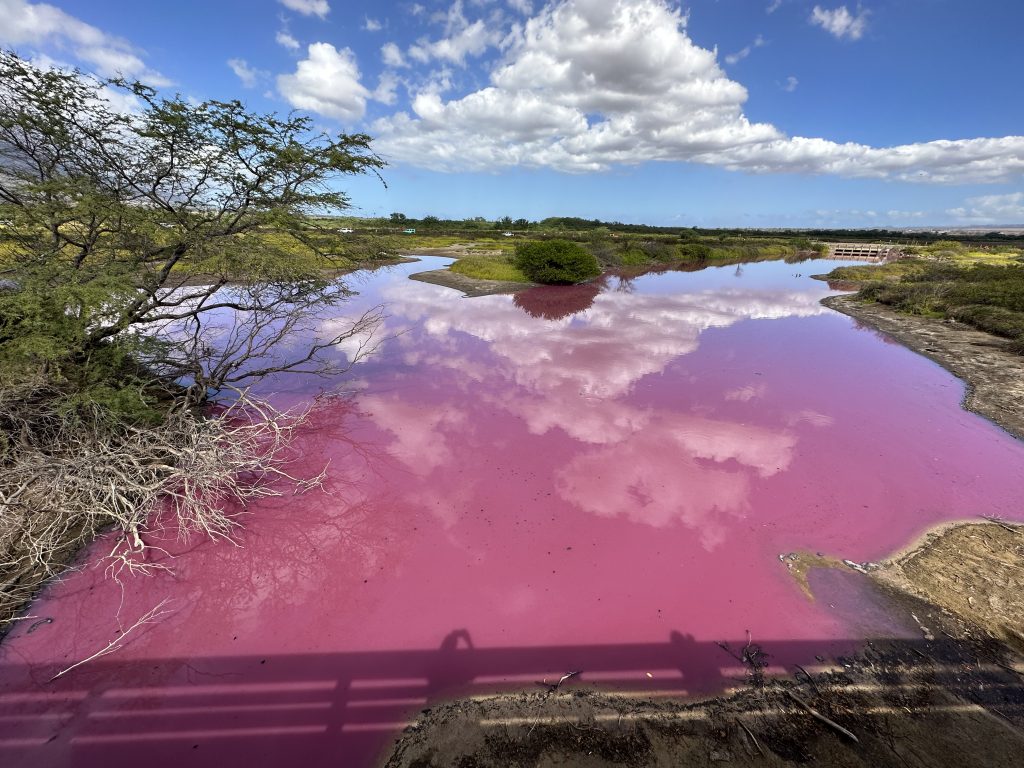
The water turned pink at Kealia Pond in November 2023. Early analysis suggests it could be due to Halobacterium salinarum or one of its close relatives. PC: John Starmer
Why did the Kealia Pond turn pink?
So what is turning the water pink at Kealia? While a definitive ID is still not available, a good suspect is Halobacterium salinarum or one of its close relatives. The red-to-pink color of Halobacterium comes from bacteriorhodopsin, which helps capture light energy for photosynthesis. This protein is unique to archaea and one of the things that separates them from true bacteria.
Halobacterium, despite the name, is a type of halophilic (salt-loving) archaea, not a bacterium. The archaea were only split out from bacteria about 50 years ago and now are recognized to comprise one of the three domains of life, alongside true bacteria and eukaryotes (everything from single-celled algae to sea turtles). Archaea were first discovered in ‘extreme environments’ like salt ponds and thermal hot springs. They are now recognized as abundant and common in most environments from seawater to soil to animal skin and digestive tracts. Interestingly, none of the species found to date are considered to cause disease.
Is this natural?
Kealia Pond is a dynamic landscape that floods and dries as the seasons change and water becomes more or less abundant. The name Kealia means salt-encrusted place and reflects that during the dry season, patches of white salt remain behind as water evaporates from large areas of this shallow wetland. The only surface drainage for the pond that remains connected to the sea passes under the National Wildlife Refuge boardwalk. This drainage channel gets scoured out when high water breaks through the sand plug that usually closes off the channel from the ocean in Ma’alaea Bay. Because the channel is deeper, it still holds water even as the shallower parts of the pond and nearby mudflats earn their name and show off white patches of salt crystals scattered across the surface.
The conditions that led to the Halobacterium bloom are considered a natural, though unexpected, result of a long dry summer evaporating the pond and raising its salinity – about twice that of seawater at the moment. Pink salt ponds are a common occurrence around the world thanks to Halobacterium and other halophilic organisms can turn these ponds a range of colors. A small pond along Hana Highway in Kahului has exhibited the same sorts of color changes over the years, but its less striking color changes and small size have kept it from getting much attention.
Is this a Red Tide? / Is this Dangerous?
Is there any need to be concerned about what’s going on at Kealia Pond? Red tides or harmful algal blooms (HABS) are known to affect wildlife and humans by producing toxins. HABS, however, are caused by different organisms – often dinoflagellates or cyanobacteria – and are frequently associated with high nutrient levels in the water. These organisms cannot survive in the high salinity in the pond and have been discounted as the source of the color change. Interestingly, the archaea as a whole, including Halobacterium, are not known to cause any human disease, despite being among the most common organisms on earth.
 Will the pond stay pink forever?
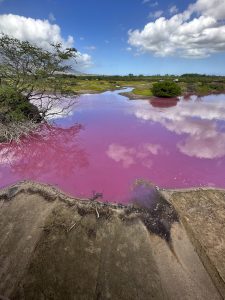
The Halobacterium are thriving right now thanks to the current high salinity at in the pond. Because conditions are optimal for the growth of these halophiles, rather than typical green algae, the pond will likely stay pink as long as the salinity remains high. When rains come and drop the salinity, the pond will certainly return to a more sedate and typical color as algae take over as the dominant plankton in the pond.
Enjoy learning more about Maui Nui’s natural resources?
Consider making a donation to MNMRC to help us continue doing work like this and more!