Graceful reptilian residents of Maui’s coral reefs, Hawaii’s sea turtles appear to be almost unafraid of humans. Encountering them in the wild is part of the wonder of snorkeling or diving on Maui.
Please help protect these beautiful animals. Stay back 10 feet or more when watching sea turtles in the ocean or on land. Yes, on land — Maui’s green turtles can often be sighted basking on quiet beaches, usually in the evenings and mornings.
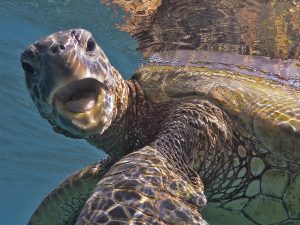
Photo: Don McLeish
What are Maui’s best places for viewing sea turtles? Check out these spots:
1. Makena Landing (South Maui)
2. Maluaka Beach (South Maui)
3. Keawakapu Beach (South Maui)
4. Ulua Beach (South Maui)
5. Kaʻanapali Beach’s Puu Kekaa (Black Rock) – (West Maui)
6. The point between Napili Bay and Honokeana Cove (West Maui)
7. Kapalua Bay (West Maui)
8. Honolua Bay (West Maui)
9. Ho’okipa Bay (Northshore) – to view sea turtles basking on shore
Get Maui snorkeling and diving tips.
What kind of turtles will you see?
The turtles that you’re most likely to encounter are Hawaiian green turtles (Chelonia mydas), named “Honu” in Hawaiian. Named not for the color of their shells (which feature radiating streaks and dappled shades of black, grey, brown, gold and green), these turtles are called “green” due to the color of their fat, tinted green by their herbivorous diet of algae and limu.
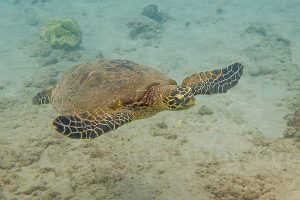
Adult green turtles can weigh 300 to 350 pounds. No matter their size, green turtles are graceful swimmers, with strong paddle-like flippers and a streamlined carapace (shell). Small fish sometimes congregate around their shells to pick off bits of algae for food.
Less frequently sighted are the endangered hawksbill turtles (Eretmochelys imbricata) or “Honuʻea” in Hawaiian. These turtles live and feed in our nearshore waters, especially in areas with healthy coral reefs. Their narrow beaks enable them to forage for sea sponges—one of their favorite food items.
Hawksbill turtle. Photo by Don Bloom, Tropical Light Photography
Learn more about what we’re doing to protect the reefs that these sea turtles call home.
 Protect the turtles
When watching sea turtles, please stay back at least 10 feet on land and in water. While they can hold their breath while resting on the ocean floor, swimming sea turtles must frequently come to the surface to breathe. Never crowd them or block their way to the surface.
Hawaii’s green turtles are protected by the U.S. Endangered Species Act as a threatened species; our hawksbill turtles are protected as an endangered species. It is illegal to harass, harm, pursue, kill or capture these animals. Harassment includes touching, attempting to ride on or trying to feed turtles. Please ensure that photos are taken from a responsible and respectful distance. Any efforts to photograph turtles must not disturb or alter natural behavior.
To report illegal or suspicious activity, call 1-800-853-1964 or (808) 643-DLNR (3567). Email photos and videos to [email protected].
Entanglement in fishing line is a serious threat to our local sea turtles. Entangled turtles may not be able to reach the surface to breathe and can drown. Marine debris such as plastic bags can be mistaken for food. Do your part and retrieve fishing line, nets and gear, as well as trash, from coastal areas.
Who to call if you see an injured, sick or dead turtle:
Lanai: State of Hawaii DLNR-DOCARE Lanai (808-565-7916)
Maui (Kihei Area – Maalaea to Makena): Maui Ocean Center Marine Institute (808-286-2549)
Maui (All Other Areas): Maui Community College – Marine Option Program in partnership with NMFS (808-286-2899)
Molokai: State of Hawaii DLNR-DOCARE Molokai (808-553-5190)
Visit NOAAʻs injured turtles website
Download a free sea turtle reference card — and get tips on protecting Maui’s reefs while you snorkel
Visit our snorkeler’s resource page at mauireefs.org/snorkel
Be safe!
Check all local ocean conditions carefully before entering the water. If surfers are present, the surf is likely too big for safe snorkeling. Always swim with a buddy. Our list of “Best Places to View Sea Turtles” is based on the likelihood of seeing turtles, and does not imply that conditions are safe or recommended for swimming, snorkeling or diving.
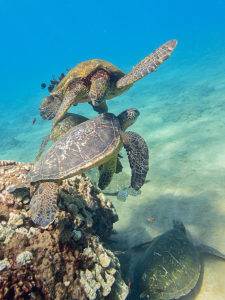
Photo: Don Bloom, Tropical Light Photography.
Help us protect Maui’s coral reefs and marine wildlife
Sea turtles are just some of the residents of the coral reefs of Maui. If you enjoy watching these intriguing marine reptiles please support Maui Nui Marine Resource Council in our work to protect coral reefs, restore clean ocean water and bring back an abundance of native fish to our nearshore waters. We’re a nonprofit organization now in our 14th year of working to help protect Maui County’s coastal waters and reefs.
Learn more about Maui Nui Marine Resource Council.
Donate to support Maui Nui Marine Resource Council’s visitor education programs.