Posts

“Rally for the Reefs” webinar on Thursday, June 16 will focus on saving the reefs of Māʻalaea Bay

in /by

Speakers Stuart Coleman, Rep. Angus McKelvey and Maui County Councilmember Kelly King will provide updates on Māʻalaea wastewater treatment options

MĀʻALAEA, HI – Longtime Māʻalaea resident Peter Cannon remembers that during his childhood, “the coral reefs of Māʻalaea Bay were like the robust and healthy reefs that you see today at the ʻĀhihi-Kīnaʻu Natural Area Reserve.” He recalls that local families enjoyed harvests of ribbon limu from the bay, and there was an abundance of native fish and opae.

Since the 1970s, the coral reefs in Māʻalaea Bay have degraded so severely that Hawaii’s Division of Aquatic Resources (DAR) has described the situation as “a case study in total system collapse.” In their report, “Status and Trends of Maui’s Coral Reefs” DAR in partnership with the Coral Reef Assessment and Monitoring Program reported on their 1999 monitoring in Māʻalaea Bay and noted that the “end result of reef degradation is evident in Māʻalaea Bay.”

The report noted that in 1972, “Māʻalaea coral reefs were described as being ‘striking in their diversity and in the presence of rare corals species’. As late as 1993, estimated coral cover was 50- 75% close to the site where cover is now 8%. Therefore, in just a few decades, the Māʻalaea reef has transformed from a healthy and diverse ecosystem into a badly degraded habitat overgrown by algae and with little surviving coral.”

The report also noted that fish stocks in in Māʻalaea are now in very poor condition, and the reefs have been invaded by alien and invasive algae species.

Declining ocean water quality in Māʻalaea Bay is a major contributor of the decline. A new report for the years 2019 – 2022 by the Hui O Ka Wai Ola community-based ocean water quality monitoring program indicates that Māʻalaea Bay has excessive levels of nitrates, second only to the levels in Kihei Cove, of all the sites the program monitors along the leeward Maui coast.

What can Maui County residents and visitors do to improve the ocean water quality and save the reefs of Māʻalaea Bay? Learn about the steps that are proposed — and how individuals can help – at an online Rally for the Reefs webinar to be held on Thursday, June 16 at 5:30 pm via Zoom.

Admission is free, but reservations are required. To reserve your spot, visit https://bit.ly/Rally4Reefs.

The “Rally for the Reefs” webinar will feature presentations by:

Stuart Coleman
Founder and Executive Director of WAI (Wastewater Alternatives & Innovations)
Coleman will discuss modern wastewater alternatives and innovations that will make it possible to reduce the pollution that has been harming the corals in Māʻalaea Bay.

Maui County Councilmember Kelly Takaya King
(Holds the County Council seat for South Maui)
Councilmember King will discuss the funding for the improved wastewater treatment system for Māʻalaea in the County’s 2023 budget and the steps ahead to make this system a reality.

State Representative Angus L.K. McKelvey
(Representing West Maui – Māʻalaea – North Kihei)
Representative McKelvey will explain how the State can help establish improved wastewater treatment in Māʻalaea, and why the proposed wastewater treatment project in Māʻalaea could serve as a model for other small communities throughout Hawaii that are looking for replacements for cesspools, injection wells and septic systems.

“The community has been working hard to identify and address the problems that have undermined the ocean water quality of Māʻalaea Bay and harmed the coral reefs,” said Mike Fogarty, Executive Director of Maui Nui Marine Resource Council. “We’ve now reached critical junctures that will decide if and when some of the proposed solutions to the problems of water pollution and reef loss will be addressed. We need to act now to save Māʻalaea’s reefs before it’s too late. Please attend the Rally for the Reefs to learn what can and should be done.”

The Rally for the Reefs webinar is sponsored by WAI, Maui Ocean Center, Māʻalaea Village Association, Maui Nui Marine Resource Council, Maui Ocean Center Marine Institute and Sierra Club Maui Group.

To register to attend this free Zoom event, please visit https://bit.ly/Rally4Reefs.
Free Presentation to Discuss Redefining the Definition of a Public Aquarium – and What it Means to Our Local Community

in /by

KIHEI— A free Zoom presentation on Wednesday, January 12 at 5:30 pm by Tapani Vuori, Maui Ocean Center’s General Manager and founder and president of the Maui Ocean Center Marine Institute (MOCMI) will discuss “Redefining the definition of a public aquarium and what it means to our local community.”

Vuoriʻs presentation is part of Maui Nui Marine Resource Council’s monthly “Know Your Ocean Speaker Series.” His talk will look at the history of Maui Ocean Center, its operational details and its journey of transformation over the past few years, driven by Maui Ocean Centerʻs vision and mission.

Reservations are required. To reserve, visit https://bit.ly/OceanCenterWebinar
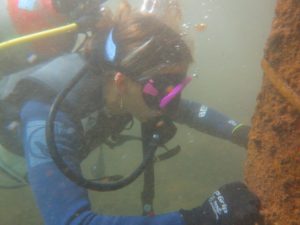
Vuori will discuss Maui Ocean Centerʻs role in the community in Māʻalaea and its stated responsibility first and foremost to add value to the community every day.

“I will discuss topics such as aquarium and zoo industry in general, plastic marine debris, shark finning, climate change, tourism, and environmental threats to nearshore marine ecosystems,” says Vuori. “I’ll share with the audience what Maui Ocean Center is doing about all of these issues — and why our aquarium and others around the world need to take action on the problems impacting our planetʻs oceans.”

Vuori draws inspiration from world-renowned scientist and ocean protector Dr. Sylvia Earle, who said, “the oceans deserve our respect and care, but you have to know something before you can care about it.” Vuori notes that Earleʻs powerful message is the driving force behind the energy he brings to Maui Ocean Center each day, and his goal to educate people and get them to care about the creatures beneath the oceanʻs surface.

Vuori grew up in Finland, where he formed a powerful connection with nature and the ocean — a bond he has carried throughout his life. He got his diving license as a young child and as a boy experienced the wonder of diving in winter beneath an ice-covered surface. As a young adult, Vuori moved to the U.S. to attend college, starting at Brigham Young University in Utah and graduating from UCLA in 1987.

When Vuori accepted the position as Maui Ocean Center’s general manager, he had one request — to build an on-property nonprofit 501(c)(3) organization to support conservation efforts further. Through his efforts and vision, Vuori became the founder and president of the Maui Ocean Center Marine Institute (MOCMI), which serves to restore Hawaiʻiʻs coral reefs and rehabilitate injured Hawaiian green sea turtles.

Today, Vuori works from all angles to protect marine life and is deeply involved in Mauiʻs island community. In addition to his contribution at MOCMI, Vuori is an active board member of Māʻalaea Triangle Association, vice president of the Māʻalaea Village Community Association, and president of the advisory council for Maui County on Civil Rights. Vuori is also working to establish a regional wastewater treatment center for Māʻalaea Bay to replace the nutrient leaching injection wells that have caused widespread loss of coral reef and limu in the bay.

“My hope is that this talk will inspire our audience to become more active in their community, where ever it may be,” says Vuori.

Maui Nui Marine Resource Council’s monthly “Know Your Ocean Speaker Series” events are supported by the County of Maui Mayor’s Office of Economic Development.

To learn more about Maui Ocean Center, visit www.mauioceancenter.com.

To learn more about Maui Nui Marine Resource Council, visit www.mauireefs.org.

Reserve your spot for this presentation at https://bit.ly/OceanCenterWebinar.

Public Invited to “Talk Story with Maui Nui Marine Resource Council” on Wednesday, December 1 at 5:30 pm

in /by

KIHEI, HI — 10,000 oysters cleaning the water in Māʻalaea Harbor. Hundreds of ocean water quality samples gathered and analyzed. Three new solar-powered monitoring buoys providing data for scientists worldwide. A major new grant to help prevent coastal flooding in Kihei. Education programs to help visitors protect Mauiʻs reefs as they enjoy our island’s beaches. And much more. 

The public is invited to learn about the many projects underway at Maui Nui Marine Resource Council during a “Talk Story” evening with their staff on Wed. Dec. 1 from 5:30 to 6:30 pm on Zoom.

During the evening, attendees will learn about ways that this Maui-based nonprofit is working for healthy coral reefs, clean ocean water and a sustainable population of native fish for the islands of Maui County. Questions and suggestions will be welcomed, and door prizes will be awarded.

“We’re looking forward to sharing the latest news and developments at Maui Nui Marine Resource Council at this annual event,” said Mike Fogarty, Executive Director. “It’s been a very busy year for our staff, resulting in some exciting progress in our work to protect Maui’s reefs and nearshore waters.”

The evening will include details about an initiative to promote reef-friendly landscaping in South Maui, new technology that’s being used to identify ocean water quality issues along Maui’s coasts, and steps taken during 2021 to prevent ocean pollution caused by wildfires, feral axis deer, and marine debris transported into the ocean from Maui streams and gulches.

“We guarantee you’ll learn a lot about coral reef protection and why it is so important to the future of our island,” noted Amy Hodges, Programs and Operations Manager at Maui Nui Marine Resource Council. “And in turn, we want to hear from our community, to learn about your ideas and suggestions for protecting Maui’s coastal waters.”

Due to Covid-19, this annual event will once again be held by Zoom. Preregistration is required. To sign up, visit https://bit.ly/MNMRCUpdates.

The Maui News: Maui has the highest number of tiger sharks, attacks in state

in /by

Not only does Maui have the highest number of tiger sharks in the state, the area also sees the most shark attacks, according to local scientists who have tracked and studied Hawaii sharks for decades.

Shark bite frequency by island from 1995 to 2021 shows that Maui outpaces any other Hawaiian island with about 40 nonfatal bites and five fatal bites, research from the Hawaii Institute of Marine Biology shows. Oahu is second with slightly more than 20 nonfatal bites. Hawaii island is third with about 15 nonfatal bites.

Despite shark attacks off Maui in November, December and February, shark expert Kim Holland said he and colleagues are surprised that there aren’t more attacks, given how many tiger sharks are actually in the water.

“One of the things that has to come across in this conversation: The amazing thing to me and my colleagues is not how many shark attacks there are in Hawaii, it’s how few shark attacks there are in Hawaii,” he said. “If you think of how many tens of thousands of person hours of ocean users there are in the water and how common we know large sharks are, the fact that we have two (attacks per year) to five (attacks) to zero to eight to two to four to zero attacks per year is really astounding.”

Read more

PacIOOS Water Quality Sensor Partnership Program Enhances Maui Nui Marine Resource Council’s Water Quality Monitoring in Māʻalaea Harbor

in /by


MĀʻALAEA, HI – Maui Nui Marine Resource Council’s ocean water quality monitoring efforts in Māʻalaea Harbor are being helped by a new underwater data sensor that the organization has borrowed through the Pacific Islands Ocean Observing System (PacIOOS) Water Quality Sensor Partnership Program. The new data sensor collects data every five minutes on water temperature, salinity, turbidity, chlorophyll and ocean depth.

The PacIOOS program supports scientists and natural resource managers to collect water quality data in order to inform research, conservation, planning, and resource management projects in the U.S. Pacific Islands region. The data sensor is owned and maintained by PacIOOS under the supervision of Dr. Margaret McManus, Chairwoman of the Department of Oceanography at the University of Hawai‘i at Mānoa.

“We are grateful to PacIOOS for the use of this data sensor that will help us learn more about the effects of tides, swell, rain events, and runoff on water quality within Māʻalaea Harbor and to monitor water quality variability over time,” reports Amy Hodges, Programs and Operations Manager at Maui Nui Marine Resource Council.

Mounted 1 or 2 meters below the ocean’s surface, the sensor package is relocated by divers from Maui Nui Marine Resource team to a new site within the harbor about once per month. The sensor package was installed in 2020 and is scheduled to be used in Māʻalaea Harbor through 2021.

The PacIOOS data sensor will help guide Maui Nui Marine Resource Council as it implements its watershed management plan, which aims to reduce sediment and pollutants in Māʻalaea Bay and its harbor. Professor Margaret McManus

“In recent decades, declining ocean water quality has led to significant deterioration of Māʻalaea Bay’s reefs,” says Hodges. “Monitoring by the community-based program Hui O Ka Wai Ola — which was co-founded and is co-managed by Maui Nui Marine Resource Council, The Nature Conservancy and West Maui Ridge to Reef Initiative —  using ocean water samples grabbed from the ocean edge has shown turbidity (sediment) and excessive nitrogen as primary causes of impaired water quality.”

Maui Nui Marine Resource Council’s staff also assist with gathering ocean water quality “grab samples” from the shore. All combined, the Hui O Ka Wai Ola sampling and the MNMRC staff grab sampling results in data from 5-10 sites every three weeks in Māʻalaea Harbor.

Maui Nui Marine Resource Council has also been using a Manta data sonde, purchased with a grant from LUSH cosmetics, to gather water quality data in the Harbor. The sonde is towed behind a kayak and records real time data as it is pulled through varying depths through the water.

The organization has also been testing the nitrogen isotope ratios (δ15N values) in macroalgae (limu) tissue to determine the possible sources of nitrogen pollution in the harbor and the bay. Other ongoing testing in Māʻalaea Bay conducted by MNMRC includes current drift analysis studies, underwater coral cover and fish transects, and stormwater sampling.

To address Māʻalaea’s sediment issues, MNMRC is working to improve stormwater management in the 4,000 acre Pohakea watershed adjoining Mā‘alaea Bay. In 2018, MNMRC commissioned Maui Environmental Consulting (MEC) to create the Pohakea Stormwater Management Plan following meetings with Hawai‘i Division of Forestry and Wildlife (DOFAW), Māʻalaea Village Association, Maui Ocean Center and other stakeholders.

MNMRC has been enacting the priorities in this plan. In 2020, MNMRC installed firebreaks in Pohakea watershed to suppress frequent wildfires that occur in this windy, dry region, causing loss of vegetative cover that helps hold soil in place and prevents erosion. Partners included DOFAW, Maui Electric Co. and Goodfellow Bros. Inc.

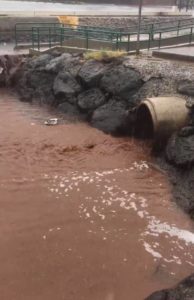
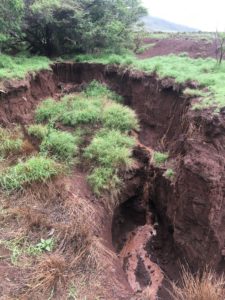
MNMRC and Maui Environmental Consulting began monitoring headcuts (erosional features) in 2020 to quantify soil loss at four of the most severely eroded sites in the Pohakea watershed nearest the harbor. Their monitoring showed a loss of an estimated 64,050 pounds, or 32 tons, of soil from just two head cut locations in a single moderate rainstorm in January 2021. The lost soil was likely transported via culverts directly into the ocean, contributing to a severe brown water event in Māʻalaea Bay.  MNMRC is now working to obtain funding to work with Maui Environmental Consulting and Goodfellow Bros. to repair two of the most severe head cut locations to reduce the sediment runoff.

Maui Nui Marine Resource Council launched an oyster bioremediation project in Māʻalaea Bay in 2020 to utilize caged oysters as a natural method of water filtration. A single oyster can filter up to 50 gallons of ocean water per day, removing sediment and pollutants. During 2020, MNMRC installed more than 10,000 oysters and conducts periodic monitoring to assess their growth rates and health. Data from the PacIOOS data sensor will help measure changing ocean water quality conditions in response to the oyster program.

“The progress of our projects to clean up Māʻalaea Bay’s water quality will be measured by resulting data from the PacIOOS data sensor and our other monitoring methods,” says Hodges. “We to see evidence of improved ocean water quality, through reductions in sediment and excess nitrogen, an essential step in restoring coral cover and reef health in Māʻalaea Harbor and in the bay.”

To learn more about the PacIOOS Water Quality Sensor Partnership Program and view data, visit https://www.pacioos.hawaii.edu/water/sensor-maalaea/#about.

Founded in 2007, Maui Nui Marine Resource Council is a nonprofit 501(c)(3) organization working for clean ocean water, healthy coral reefs and abundant native fish for the islands of Maui County. To learn more, visit www.mauireefs.org.


CAPTION: Maui Nui Marine Resource Council’s Grace Silver helps to prepare a site in Mā’alaea Harbor for the data sensor on loan from PacIOOS.

Monitoring study shows that 64,050 lbs. of soil likely washed into Māʻalaea Bay from just two “head cuts” during recent Jan. 18 rainstorm 

in /by

After a rainstorm on January 18, 2021, the State of Hawaii Department of Health Clean Water Branch issued a Brown Water Advisory for all of Maui.

Māʻalaea Bay was one of the areas that experienced a significant brown water event as a result of this rainstorm.

Curious about how so much sediment ended up in Māʻalaea Bay?

A monitoring project of head cuts (severe erosional features) launched in 2020 by Maui Nui Marine Resource Council on unused agricultural land in the Pohakea watershed measured the loss of an estimated 64,050 pounds (or 32 tons) of soil from just two head cut locations as a result of the January 18 rains. The two head cuts are located on the mauka (upslope) side of the Honoapi’ilani Highway across from Maui Ocean Center. The lost soil was likely carried via the stormwater through culverts and box culverts under the highway and into the bay.

What is a head cut? Head cuts occur when the flow of a stream is constricted (in this case by a culvert) and the water’s force is directed downward. This creates a sheer bluff or cliff in the stream known as the knickpoint. As the water erodes the soil, the knickpoint migrates further upstream each time the stream flows and a larger area is exposed to stormwater erosion.

The monitoring was conducted by Maui Environmental Consulting (MEC) who installed arrays of erosion pins in the ground around the extent of the head cuts. By measuring the amount of soil lost between pins and the depth of the head cut observed, MEC was able to quantify the approximate amount of soil loss during the January 18 storm.

Sediment pollution is believed to be a significant cause of the coral reef decline in Māʻalaea Bay. This sediment, coming from legacy agricultural land, may also be transmitting excess nitrogen and other pollutants into the ocean.

While the two head cuts described here aren’t responsible for all of the sediment entering Māʻalaea Bay, repairing these two erosional sites can keep tons of sediment out of the ocean each year. That’s why Maui Nui Marine Resource Council is working to obtain funding to plan, design and implement repairs to to pull back and stabilize the now vertical or undermined walls of these two significant head cuts.

Learn more about the work that Maui Nui Marine Resource Council is doing to improve ocean water quality in Ma’alaea Bay. 


Volunteers Needed to Assist with Pre-Rainy Season Mā’alaea Ditch Clean Up on Sunday, December 27

in /by

MA’ALAEA, HI — Looking for ways to give back this holiday season? Maui Nui Marine Resource Council invites the public to help protect marine life and water quality in Mā’alaea Bay by participating in a clean-up of trash that has been accumulating in the Mā’alaea ditch by the Honoapi‘ilani Highway. The clean-up will take place on Sunday, December 27, from 8 am – 11 am. Now is the time to remove trash from the ditch before heavy rains arrive and cause the debris to wash into the ocean.

“Unless we act now, the trash will flow into the ocean when winter storms arrive, putting marine life and water quality in Mā’alaea Bay at risk,” says Tiara Stark, clean-up coordinator. “We’ll meet at the EV charging stations at the parking lot along the highway between Maui Ocean Center and Carl’s Jr.”

Trash bags, gloves, and facemasks will be provided.

“To ensure a fun and safe event, safety precautions such as mask wearing, social distancing, and limitations on the number of volunteers will be enforced,” notes Stark. “Please wear closed toed shoes and long pants; don’t forget your hat, sunscreen and water bottle.”

“It feels good to make a difference,” says Stark.

To volunteer for one or more one-hour time slots, please sign up through this link:
https://bit.ly/MaalaeaCleanUp

Maui Nui Marine Resource Council is a nonprofit organization working for healthy coral reefs, clean ocean water and abundant native fish. The organization is working to improve ocean water quality in Mā’alaea Bay through an oyster bioremediation project and a program to reduce sediment runoff from the adjoining Pohakea watershed. To learn more and to Adopt an Oyster to support this work, please visit www.mauireefs.org.

Oyster Spat Collected to Raise Next Generation of Oysters for Māʻalaea Ocean Water Improvement Project

in /by

A small bag of 100 tiny Hawaiian oysters, gathered in mid-August under State of Hawai‘i permit by staff of Maui Nui Marine Resource Council (MNMRC), represents the “next generation” in the nonprofit organization’s work to use oysters to filter and clean ocean water in Māʻalaea Bay. The project to improve ocean water quality in Māʻalaea is supported by the County of Maui Mayorʻs Office of Economic Development.

What’s amazing is that the tiny oysters appeared to have “volunteered” for the job.

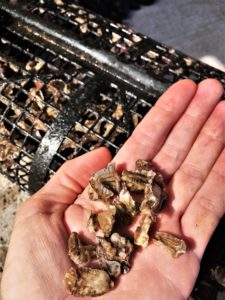
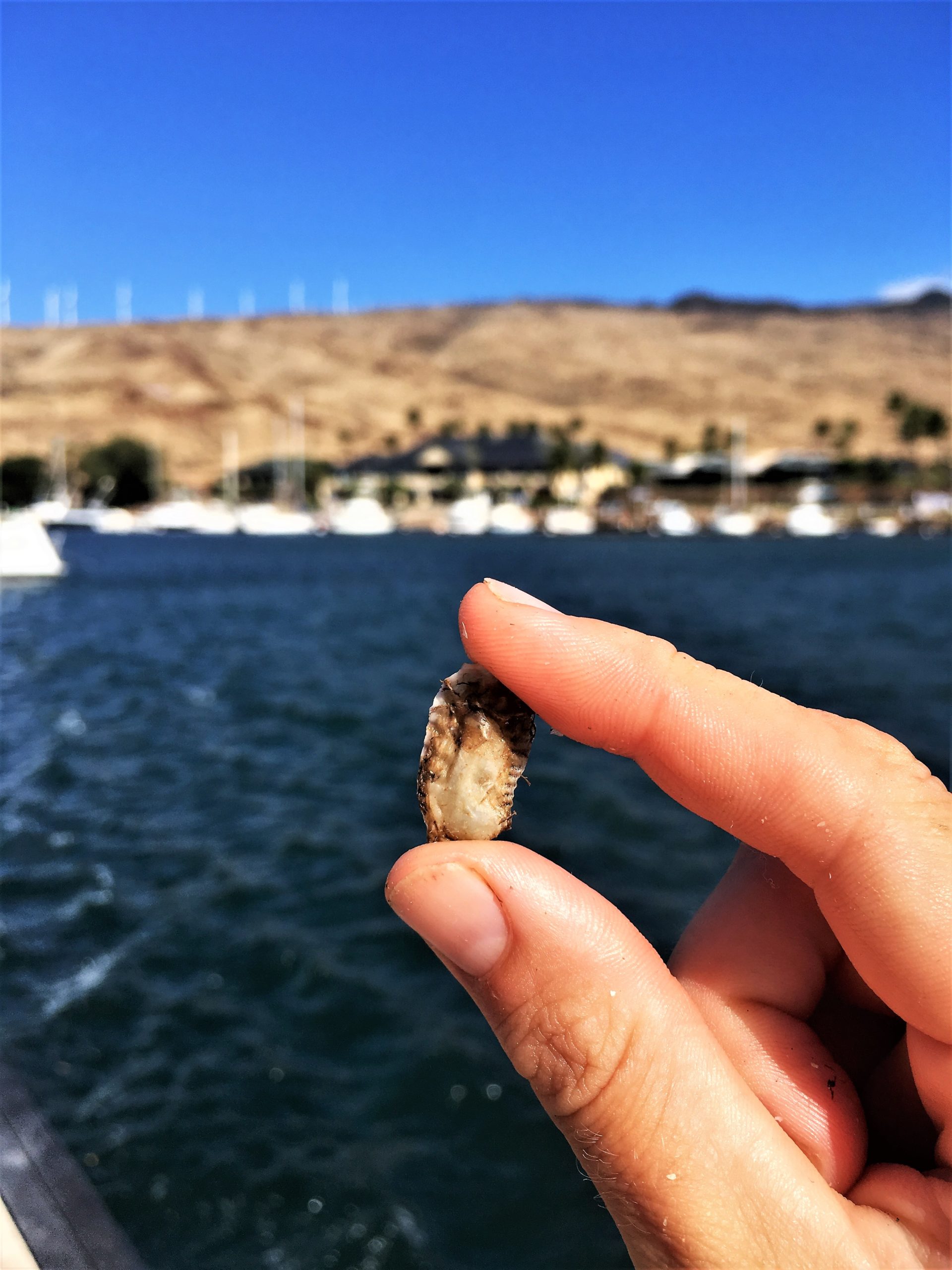
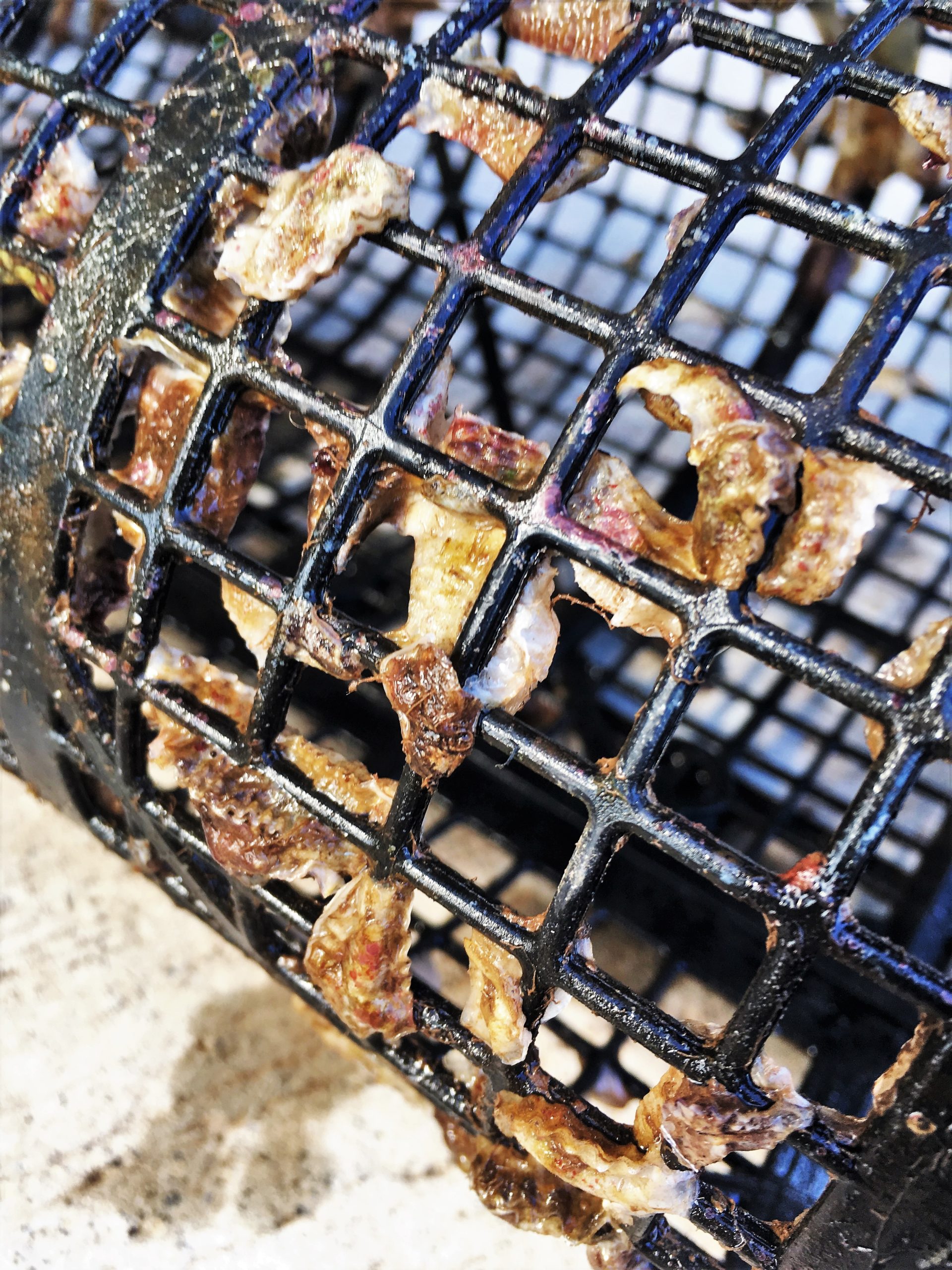
Months ago, Maui Nui Marine Resource Council Programs and Operations Manager Amy Hodges was amazed to see that floating oyster larvae from native Hawaiian oysters (Dendostrea sandvicensis) had begun to voluntarily attach themselves to the outside of oyster cages that the organization had installed in Māʻalaea Harbor. Over a period of months, they grew into tiny oysters called “spat.”

“It was MNMRC’s goal to incorporate using Hawaiian oysters, which are native to Hawaiʻi, for this project starting in December 2020. And here they were, appearing on our cages,” noted Hodges. “These baby oysters were truly a gift from nature.”

MNMRC coordinated with the Pacific Aquaculture and Coastal Resources Center (PACRC) in Hilo, a project of the University of Hawai‘i at Hilo, to follow the right protocol to safely collect and ship these oysters to PACRC for spawning and propagation. The State of Hawaiʻi Department of Agriculture office on Maui inspected the oysters before they were shipped.

The tiny oysters will be well-fed and protected at PACRC, where they will spawn and their progeny will grow larger more quickly than those in the wild. They will be shipped back to Maui in December to be raised in cages as part of MNMRC’s oyster bioremediation project.

MNMRC expects to receive about 3,000 mature Hawaiian oysters from PACRC by the end of 2020.

Hodges explains that oysters are extremely effective natural filter feeders, with each oyster capable of filtering 40 to 60 gallons of water per day, removing sediment and other pollutants. “Our goal is to use the oysters to improve the ocean water quality to Māʻalaea Bay, to provide cleaner, healthier water for the coral reefs and local fish populations,” says Hodges. “The goal is to make Māʻalaea Bay a better place for fishing, paddling, surfing, swimming and beach days for the entire community. We’re glad to have the oysters ‘volunteering’ to help us reach that goal.”

When MNMRC launched its project in early 2020, the team installed cages of Pacific oysters, which are commonly found throughout Hawai‘i, but are not native. The Pacific oysters are larger than Hawaiian oysters and are triploids, meaning they are sterile and cannot reproduce. After seeing that the Pacific oysters survived the polluted water in which they were placed, and the Hawaiian oysters appeared on the oyster cages,  MNMRC’s team decided to go forward with including smaller native Hawaiian oysters in the project, using oyster spat gathered from Māʻalaea Bay. “We believe that these oysters are well suited to the unique conditions of this area,” said Hodges.

All of the oysters are being used to clean polluted water and are unsafe to eat. The oysters may carry Vibrio bacteria which can cause watery diarrhea, often accompanied by abdominal cramping, nausea, vomiting, fever and chills. Vibrio is a naturally occurring bacteria and can be found in warm coastal waters and harbors, where it infects oysters.

The cages housing the oysters are clearly marked with warning tags stating, “Toxic. Do Not Eat. Research in Progress. Do Not Remove. Maui Nui Marine Resource Council.”

It is illegal to catch, take, kill, possess, remove, sell, or offer for sale oysters or clams from the waters of the state of Hawai‘i according to fishing regulations HAR 13-83 and HAR 13-85. Violators shall be punished as provided by law. Maui Nui Marine Resource Council is permitted through the State of Hawai‘i for its oyster project.

Maui Nui Marine Resource Council is a community-based nonprofit organization celebrating 12 years of working for healthy coral reefs, clean ocean water and abundant native fish throughout Maui County. MNMRC’s work includes co-managing the Hui O Ka Wai Ola Ocean Water Quality Monitoring Program in South and West Maui, efforts to reduce pollution in Mā‘alaea Bay through erosion-control efforts in the Pōhākea watershed, coral reef research, visitor education programs and more. Learn more at www.mauireefs.org.

Support for this project was provided by Hawaii Tourism through the Aloha ʻĀina program and the County of Maui Mayorʻs Office of Economic Development. 


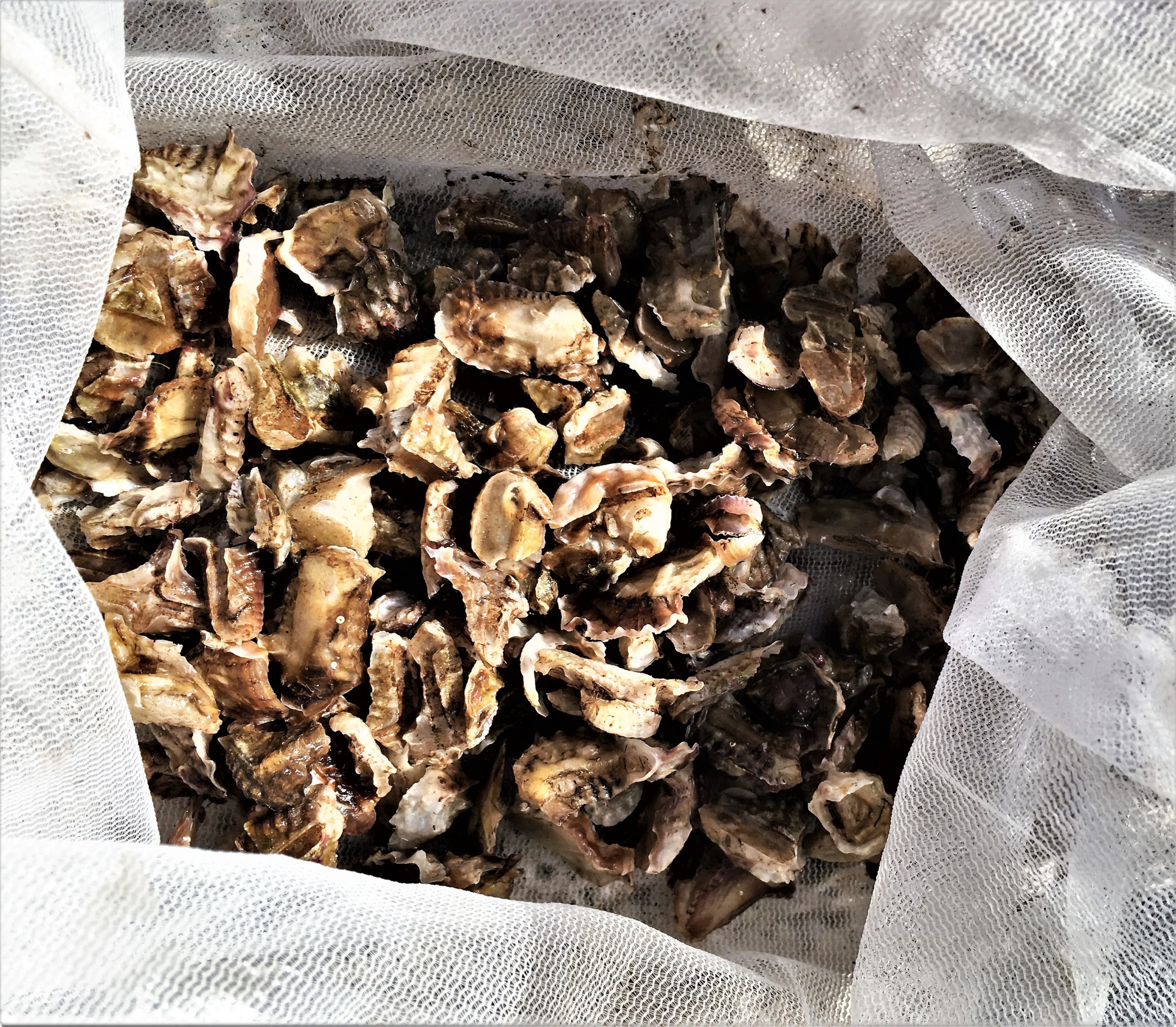
Hawaiian oysters collected under permit in Mā‘alaea Harbor by Maui Nui Marine Resource Council will be propagated at the Pacific Aquaculture and Coastal Resources Center in Hilo, and their progeny returned to Maui as part of an oyster bioremediation project to help improve ocean water quality in Mā‘alaea Bay. Photo credit: Maui Nui Marine Resource Council


 The tiny Hawaiian oysters first appeared as spat (baby oysters) on the outside of cages that Maui Nui Marine Resource Council had installed in the harbor. “It almost seems like they were ʻvolunteeringʻ to be part of our project,” says Amy Hodges, Programs and Operations Manager at Maui Nui Marine Resource Council. Photo credit: Maui Nui Marine Resource Council.


 A bag of 100 tiny oysters was collected under State of Hawai‘i permit, then inspected by the Department of Agriculture on Maui, before shipment to the Pacific Aquaculture and Coastal Resources Center in Hilo, to be raised under ideal conditions for spawning and propagation. Photo credit: Maui Nui Marine Resource Council.