Posts

Drought Conditions Turn Kealia Pond Pink

in , /by

A pink pond doesn’t sound natural… but it is! … especially if that pond is salty… very salty.  A whole group of salt “loving” organisms (aka halophiles) ranging from bacteria and archaea to algae to shrimp to fish and birds have adapted to life in water that most other organisms would say “No thank you!” to living in. The recent pink makeover at Kealia Pond is an example of where water got too salty for some of the typical inhabitants and the halophiles got happy and took over.
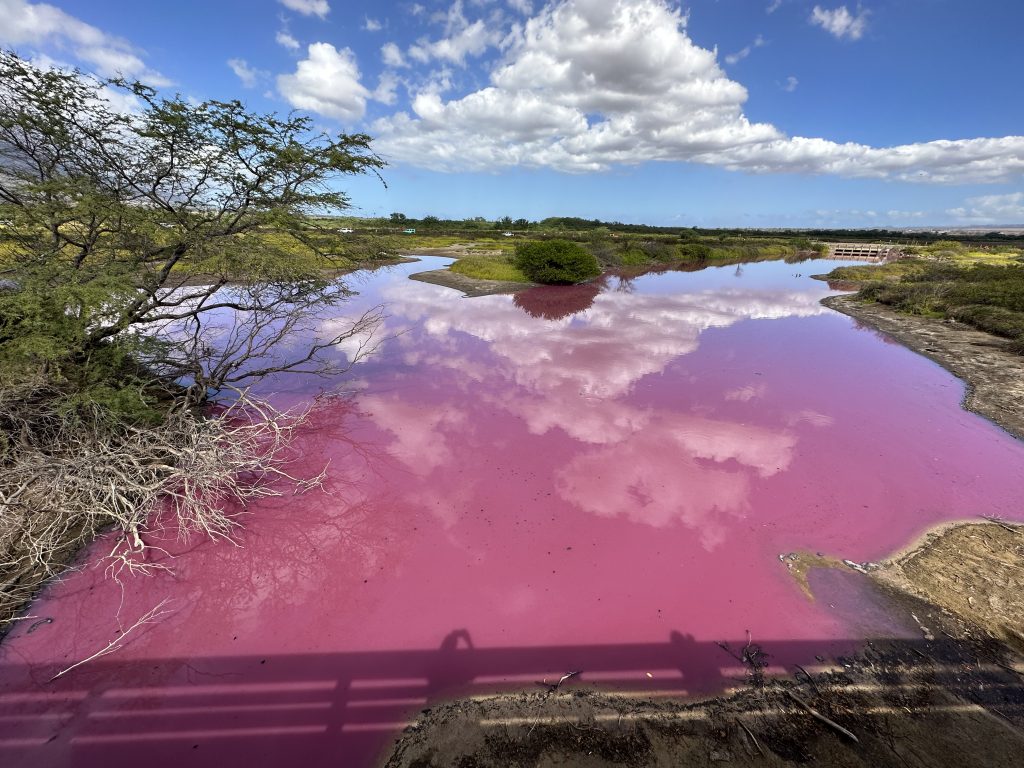
 

Pink water at Kealia Pond in November 2023.

The water turned pink at Kealia Pond in November 2023. Early analysis suggests it could be due to Halobacterium salinarum or one of its close relatives. PC: John Starmer


Why did the Kealia Pond turn pink?

So what is turning the water pink at Kealia?  While a definitive ID is still not available, a good suspect is Halobacterium salinarum or one of its close relatives.  The red-to-pink color of Halobacterium comes from bacteriorhodopsin, which helps capture light energy for photosynthesis. This protein is unique to archaea and one of the things that separates them from true bacteria.

Halobacterium, despite the name, is a type of halophilic (salt-loving) archaea, not a bacterium. The archaea were only split out from bacteria about 50 years ago and now are recognized to comprise one of the three domains of life, alongside true bacteria and eukaryotes (everything from single-celled algae to sea turtles). Archaea were first discovered in ‘extreme environments’ like salt ponds and thermal hot springs. They are now recognized as abundant and common in most environments from seawater to soil to animal skin and digestive tracts.  Interestingly, none of the species found to date are considered to cause disease.

Is this natural?

Kealia Pond is a dynamic landscape that floods and dries as the seasons change and water becomes more or less abundant. The name Kealia means salt-encrusted place and reflects that during the dry season, patches of white salt remain behind as water evaporates from large areas of this shallow wetland.  The only surface drainage for the pond that remains connected to the sea passes under the National Wildlife Refuge boardwalk. This drainage channel gets scoured out when high water breaks through the sand plug that usually closes off the channel from the ocean in Ma’alaea Bay. Because the channel is deeper, it still holds water even as the shallower parts of the pond and nearby mudflats earn their name and show off white patches of salt crystals scattered across the surface.

The conditions that led to the Halobacterium bloom are considered a natural, though unexpected, result of a long dry summer evaporating the pond and raising its salinity – about twice that of seawater at the moment. Pink salt ponds are a common occurrence around the world thanks to Halobacterium and other halophilic organisms can turn these ponds a range of colors. A small pond along Hana Highway in Kahului has exhibited the same sorts of color changes over the years, but its less striking color changes and small size have kept it from getting much attention.

Is this a Red Tide? / Is this Dangerous?

Is there any need to be concerned about what’s going on at Kealia Pond? Red tides or harmful algal blooms (HABS) are known to affect wildlife and humans by producing toxins. HABS, however, are caused by different organisms – often dinoflagellates or cyanobacteria – and are frequently associated with high nutrient levels in the water. These organisms cannot survive in the high salinity in the pond and have been discounted as the source of the color change. Interestingly, the archaea as a whole, including Halobacterium, are not known to cause any human disease, despite being among the most common organisms on earth.
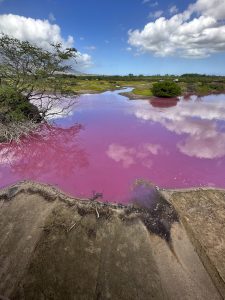
Vertical image of Pink water at Kealia Pond in November 2023.Will the pond stay pink forever?

The Halobacterium are thriving right now thanks to the current high salinity at in the pond. Because conditions are optimal for the growth of these halophiles, rather than typical green algae, the pond will likely stay pink as long as the salinity remains high. When rains come and drop the salinity, the pond will certainly return to a more sedate and typical color as algae take over as the dominant plankton in the pond.


Enjoy learning more about Maui Nui’s natural resources?

Consider making a donation to MNMRC to help us continue doing work like this and more!
Is it Ash? Is it Oil? No! It’s Trichodesmium!

in /by

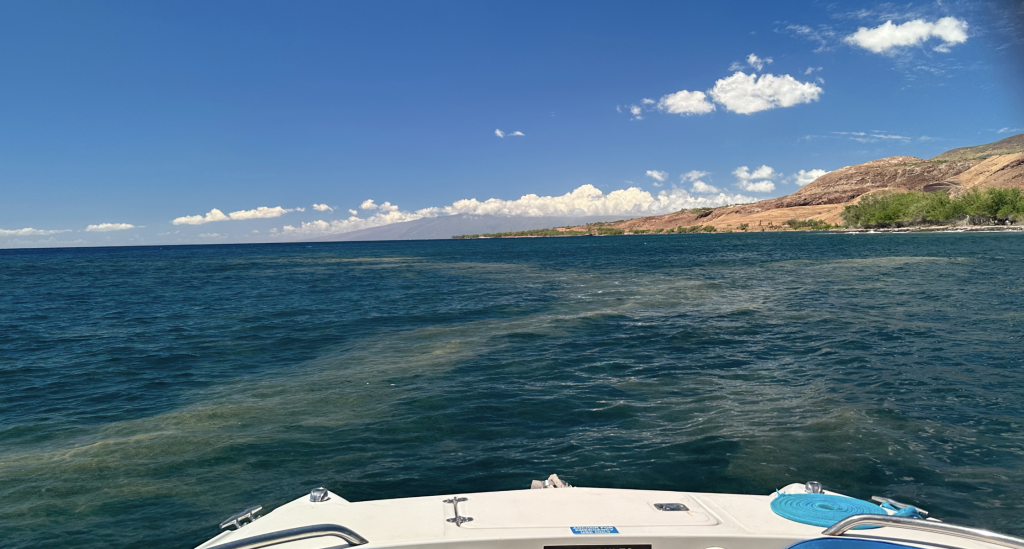
During recent coastal water quality and habitat surveys, we’ve come across slicks of what turned out to be blue-green alga, also known as cyanobacteria, in this case, an alga called Trichodesmium.  A biologist at the Division of Aquatic Resources confirmed that these slicks or “scuzzes” are known to periodically occur around Maui but the abundance this year appears unusual.

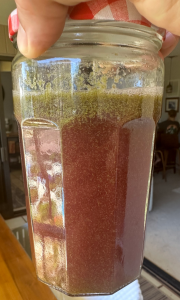
Trichodesmium scuzz by Olowalu, Maui, Hawaii. September 2023.

Trichodesmium scuzz by Olowalu, Maui, Hawaii. September 2023.

A sample collected off Kihei on September, 2023 proved to belong to the genus Trichodesmium. Trichodesmium, also called “sea sawdust” due to its appearance, plays a pivotal role in marine ecosystems. These microscopic organisms are widely distributed throughout tropical and subtropical oceans, forming distinct colonies that can be visible to the naked eye. Trichodesmium is actually ecologically important, as it is a primary producer in the marine food web and also contributes to nutrient cycling and nitrogen fixation, benefiting marine life and the planet as a whole.

A little bit of ecology

Trichodesmium is crucial to the health of marine ecosystems. These cyanobacteria are photosynthetic, using sunlight to convert carbon dioxide and nitrogen gas into organic matter – a process known as nitrogen fixation. This ability to fix atmospheric nitrogen makes Trichodesmium a critical source of bioavailable nitrogen in nutrient-poor ocean regions, such as Hawai’i and much of the tropical Pacific. As a result, it provides essential nutrients to a variety of marine organisms, including phytoplankton, zooplankton, and filter-feeding invertebrates. By supporting the base of the marine food chain, Trichodesmium indirectly sustains the health of larger marine species, all the way up to fish and marine mammals.

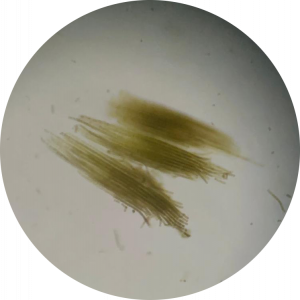
Trichodesmium from a 2023 scuzz in Kaanapali, Maui, Hawaii. Photo: Trey Garnes.

Trichodesmium from a 2023 scuzz in Kaanapali, Maui, Hawaii. Photo: Trey Garnes.

Blooms and Causes

Trichodesmium blooms are periodic and can cover vast stretches of ocean surface. These blooms occur due to a combination of factors, including warm water temperatures, nutrient availability, and calm sea conditions. The warm waters of tropical and subtropical regions create ideal conditions for Trichodesmium growth, while the presence of nutrients like iron and phosphorus can stimulate bloom formation. There is some speculation that ash from the recent Maui wildfires may have dropped enough nutrients into our coastal waters to trigger the blooms we are now seeing close to shore.

Calm seas and low wind speeds can further allow Trichodesmium colonies to remain at the ocean’s surface, forming visible mats that can stretch for kilometers, which is what we are currently seeing around Maui. These blooms can have both positive and negative effects on marine ecosystems, promoting productivity but also potentially leading to oxygen depletion and harmful algal blooms under certain conditions.

Health Concerns

While Trichodesmium is an essential component of marine ecosystems, it is not suitable for human consumption. Ingesting or touching Trichodesmium colonies can cause skin irritation and, in some cases, lead to respiratory problems due to the release of certain toxins and irritants. It is advised to avoid direct contact with these cyanobacteria. Moreover, the ecological consequences of large-scale Trichodesmium blooms, such as oxygen depletion and changes in water chemistry, can have negative effects on marine life and local fisheries.

Trichodesmium

Trichodesmium

Fun fact

There are several species of Trichodesmium. Some make little urchin-like balls made up of individual strands others look more like bundles of rods on close inspection.  All species have spaces (vacuoles) that hold gas and as a Trichodesmium rolls around underwater, the flash of light off these bubbles can give the water a sparkly appearance.

Report your sightings!
If you see a Trichodesmium scuzz washing up on the beach or while you are out on the water, please share your observation.  Date, time and location are important details. A photograph or video of the bloom would be appreciated.

Please share your sightings with us by email at [email protected].


Using Algal Turf Scrubbers  to Improve Wastewater Quality to be Subject of February 7 Meeting of Maui Nui Marine Resource Council

in /by

The public is invited to attend a free presentation on harnessing local algae and sunlight to improve the quality of treated municipal wastewater at the Wednesday, February 7 meeting of the nonprofit Maui Nui Marine Resource Council. 

The meeting will take place from 5 pm to 7 pm at Pacific Whale Foundation’s classrooms at the Harbor Shops at Maʻalaea at 300 Maʻalaea Road. Refreshments will be served. 

Guest presenter, Travis Liggett, will be speaking about Algal Turf Scrubbers, a cutting-edge technology which can improve wastewater quality by harnessing local algae and sunlight to lower nutrient levels, increase oxygen concentration, and reverse acidification in wastewater. 

“Algal Turf Scrubbers have a place on the island of Maui to provide an added stage of treatment to municipal wastewater before entering the marine environment via injection wells serving Kahului-Wailuku, Kihei-Wailea and Lahaina,” says Liggett. 

Liggett holds a MS in Aerospace Engineering from University of Colorado Boulder and a BS in Mechanical Engineering from University of California, Berkeley. He served as an Algae Manager at Maui Tropical Algae Farm and also worked as an Aerospace Research Engineer with NASA.  Mr. Liggett is working with Dr. Dean Calahan, a Smithsonian researcher focused on expanding the use of Algal Turf Scrubber technology.

Liggett holds a MS in Aerospace Engineering from University of Colorado Boulder and a BS in Mechanical Engineering from University of California, Berkeley. He served as an Algae Manager at Maui Tropical Algae Farm and also worked as an Aerospace Research Engineer with NASA.

The evening will also include a discussion about general wastewater issues on Maui, including the 12,000 cesspools located here, which handle 7.9 million gallons of untreated wastewater per day.

Dana Reed, West Maui Regional Coordinator of Hui O Ka Wai Ola, the ocean water quality testing program led by Maui Nui Marine Resource Council, The Nature Conservancy, West Maui Ridge 2 Reef and University of Hawaii Maui College, will be presenting some preliminary findings about ocean water quality at West Maui beaches and the Hui’s efforts to use algae (limu) to collect more information about Maui’s coastal water.