Posts

Is it Ash? Is it Oil? No! It’s Trichodesmium!

in /by

During recent coastal water quality and habitat surveys, we’ve come across slicks of what turned out to be blue-green alga, also known as cyanobacteria, in this case, an alga called Trichodesmium.  A biologist at the Division of Aquatic Resources confirmed that these slicks or “scuzzes” are known to periodically occur around Maui but the abundance this year appears unusual.
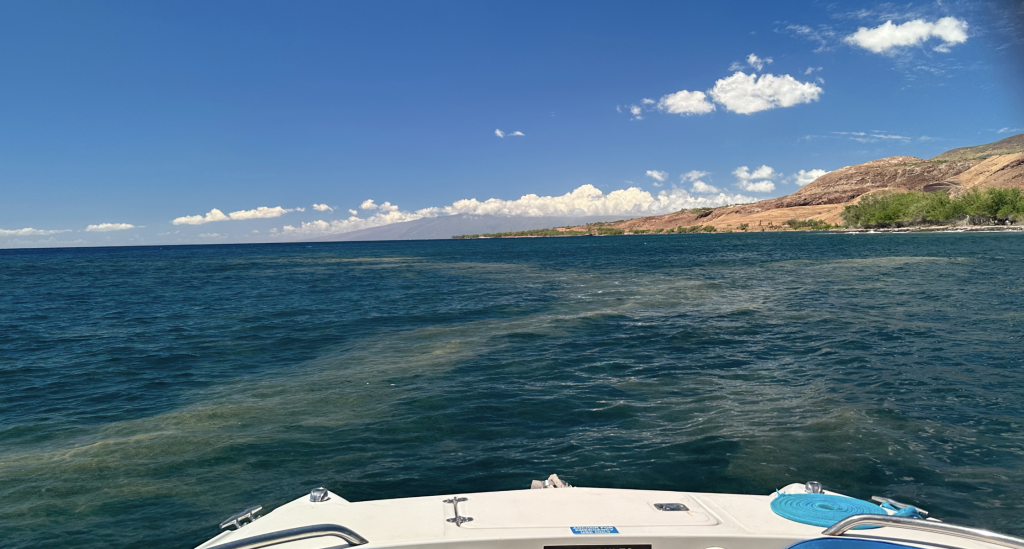
Trichodesmium scuzz by Olowalu, Maui, Hawaii. September 2023.

Trichodesmium scuzz by Olowalu, Maui, Hawaii. September 2023.

A sample collected off Kihei on September, 2023 proved to belong to the genus Trichodesmium. Trichodesmium, also called “sea sawdust” due to its appearance, plays a pivotal role in marine ecosystems. These microscopic organisms are widely distributed throughout tropical and subtropical oceans, forming distinct colonies that can be visible to the naked eye. Trichodesmium is actually ecologically important, as it is a primary producer in the marine food web and also contributes to nutrient cycling and nitrogen fixation, benefiting marine life and the planet as a whole.

A little bit of ecology

Trichodesmium is crucial to the health of marine ecosystems. These cyanobacteria are photosynthetic, using sunlight to convert carbon dioxide and nitrogen gas into organic matter – a process known as nitrogen fixation. This ability to fix atmospheric nitrogen makes Trichodesmium a critical source of bioavailable nitrogen in nutrient-poor ocean regions, such as Hawai’i and much of the tropical Pacific. As a result, it provides essential nutrients to a variety of marine organisms, including phytoplankton, zooplankton, and filter-feeding invertebrates. By supporting the base of the marine food chain, Trichodesmium indirectly sustains the health of larger marine species, all the way up to fish and marine mammals.
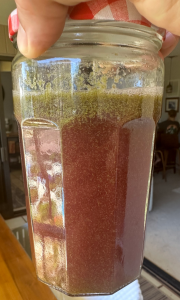
Trichodesmium from a 2023 scuzz in Kaanapali, Maui, Hawaii. Photo: Trey Garnes.

Trichodesmium from a 2023 scuzz in Kaanapali, Maui, Hawaii. Photo: Trey Garnes.

Blooms and Causes

Trichodesmium blooms are periodic and can cover vast stretches of ocean surface. These blooms occur due to a combination of factors, including warm water temperatures, nutrient availability, and calm sea conditions. The warm waters of tropical and subtropical regions create ideal conditions for Trichodesmium growth, while the presence of nutrients like iron and phosphorus can stimulate bloom formation. There is some speculation that ash from the recent Maui wildfires may have dropped enough nutrients into our coastal waters to trigger the blooms we are now seeing close to shore.

Calm seas and low wind speeds can further allow Trichodesmium colonies to remain at the ocean’s surface, forming visible mats that can stretch for kilometers, which is what we are currently seeing around Maui. These blooms can have both positive and negative effects on marine ecosystems, promoting productivity but also potentially leading to oxygen depletion and harmful algal blooms under certain conditions.

Health Concerns

While Trichodesmium is an essential component of marine ecosystems, it is not suitable for human consumption. Ingesting or touching Trichodesmium colonies can cause skin irritation and, in some cases, lead to respiratory problems due to the release of certain toxins and irritants. It is advised to avoid direct contact with these cyanobacteria. Moreover, the ecological consequences of large-scale Trichodesmium blooms, such as oxygen depletion and changes in water chemistry, can have negative effects on marine life and local fisheries.
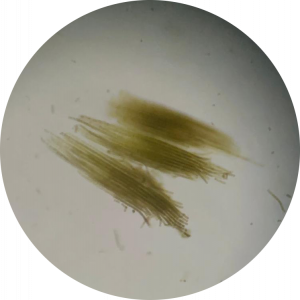
Trichodesmium

Trichodesmium

Fun fact

There are several species of Trichodesmium. Some make little urchin-like balls made up of individual strands others look more like bundles of rods on close inspection.  All species have spaces (vacuoles) that hold gas and as a Trichodesmium rolls around underwater, the flash of light off these bubbles can give the water a sparkly appearance.

Report your sightings!
If you see a Trichodesmium scuzz washing up on the beach or while you are out on the water, please share your observation.  Date, time and location are important details. A photograph or video of the bloom would be appreciated.

Please share your sightings with us by email at [email protected].
 

What is a watershed? Why do they matter in Maui County?

in /by

You live in a watershed, even though you might not know it. A watershed is an area of land that drains all the streams and rainfall to a single body of water, such as a river, lake, or ocean. Watersheds and their management are incredibly important for coral reefs because they are the source of fresh water and nutrients that can actually promote reef growth.

Unfortunately, human activities, such as poorly planned development, have caused pollution to enter our watersheds and flow down into the ocean, affecting our reefs. Excessive use of fertilizers, pesticides, and herbicides that are used in farming or lawn care is one source of polluted runoff, also known as nonpoint source or NPS pollution. Urbanization adds to NPS pollution as roads, parking lots, and other developments produce runoff polluted with oil, grease, and other chemicals.  Impermeable surfaces such as paved areas, roofs, and even compacted bare soil increase the rate at which water flows down through a watershed.

Groundwater is also an often overlooked part of a watershed system.  Maui County is currently struggling with coral reef and water quality degradation caused by failed and poorly planned sewage disposal systems that are contaminating groundwater. Like surface water, the direction of flow is towards the ocean, so pollutants that are pumped into injection wells do eventually have an impact on our coastal environment.

Fortunately, there are a number of steps that anyone can take to help protect their watersheds. Here are ten things you can do:

1. Reduce the use of household chemicals and pesticides that can pollute watersheds – many of these common pollutants contain harmful elements that negatively impact coral reefs.

2. Conserve water by taking shorter showers, turning off the tap when brushing your teeth and only running full loads in the washing machine. This will help reduce water waste and also help to prevent runoff from carrying pollutants into our watersheds, especially through groundwater.

3. Dispose of waste properly by making sure all hazardous materials – and this includes any unused medications – are taken to a designated drop-off center, not put down any drains or flushed down the toilet.

4. Participate in beach cleanups or other local events dedicated to protecting our waterside ecosystems – this will not only remind us how important watersheds are but also help keep them clean.

5. Plant native vegetation. The plants that grow naturally in a given area are adapted to the local conditions and provide essential food, shelter, and refuge for wildlife. Any vegetation helps filter polluted runoff before it enters our water, but by reducing water consumption.

6. Avoid dissolving detergent products – both pods and sheets – these products are actually packaged in a dissolving plastic that breaks down into microparticles in water. Even though not visible to the naked eye, these particles are not fully rinsed from clothing and cannot be filtered out by the municipal wastewater treatment systems we have in Hawai’i.

7. Avoid using or disposing of single-use plastics or Styrofoam products near rivers, streams, lakes, or oceans. Even though Maui County has banned some of these single-use materials, they still exist in packing materials.  If not recycled, and most are not, these materials break down into small pieces that can be ingested by animals, including reef corals.

8. Reduce pesticide and herbicide use, as these chemicals have been proven to contaminate our water and harm coral reefs. Use organic gardening products when possible, and follow any local ordinances pertaining to the proper disposal of hazardous materials.

9. Volunteer with a local watershed organization or join a cleanup effort near where you are located. Community members can help make an impact by simply picking up trash on shorelines or in waterways; this not only reduces debris but also helps protect aquatic life from toxins and pollutants that may be present in the garbage being collected.

10. Help spread awareness about how watersheds are connected to coral reefs, and the pollution that can be caused by human activities. The more people know about this issue, the more likely it is for us to make a collective effort toward protecting our watersheds and ultimately, our reefs.

Even if you do any one of the tips above, you will reduce your impact on watersheds and help protect our coral reefs. Watershed degradation and the resulting pollution are one of the top three things harming our coral reefs.  Together, let’s keep our waters clean, safe and healthy so that future generations can enjoy the beauty of coral reefs.

Maui has three watershed partnerships that are great resources for information about watersheds and provide opportunities for you to get involved in watershed conservation and management.

East Maui Watershed Partnership

West Maui Mountains Watershed Partnership

Leeward Haleakala Watershed Restoration Partnership

Monitoring study shows that 64,050 lbs. of soil likely washed into Māʻalaea Bay from just two “head cuts” during recent Jan. 18 rainstorm 

in /by

After a rainstorm on January 18, 2021, the State of Hawaii Department of Health Clean Water Branch issued a Brown Water Advisory for all of Maui.

Māʻalaea Bay was one of the areas that experienced a significant brown water event as a result of this rainstorm.

Curious about how so much sediment ended up in Māʻalaea Bay?

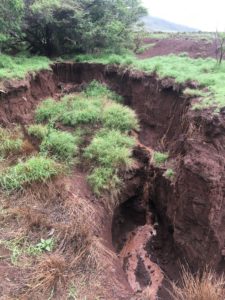
A monitoring project of head cuts (severe erosional features) launched in 2020 by Maui Nui Marine Resource Council on unused agricultural land in the Pohakea watershed measured the loss of an estimated 64,050 pounds (or 32 tons) of soil from just two head cut locations as a result of the January 18 rains. The two head cuts are located on the mauka (upslope) side of the Honoapi’ilani Highway across from Maui Ocean Center. The lost soil was likely carried via the stormwater through culverts and box culverts under the highway and into the bay.

What is a head cut? Head cuts occur when the flow of a stream is constricted (in this case by a culvert) and the water’s force is directed downward. This creates a sheer bluff or cliff in the stream known as the knickpoint. As the water erodes the soil, the knickpoint migrates further upstream each time the stream flows and a larger area is exposed to stormwater erosion.

The monitoring was conducted by Maui Environmental Consulting (MEC) who installed arrays of erosion pins in the ground around the extent of the head cuts. By measuring the amount of soil lost between pins and the depth of the head cut observed, MEC was able to quantify the approximate amount of soil loss during the January 18 storm.

Sediment pollution is believed to be a significant cause of the coral reef decline in Māʻalaea Bay. This sediment, coming from legacy agricultural land, may also be transmitting excess nitrogen and other pollutants into the ocean.

While the two head cuts described here aren’t responsible for all of the sediment entering Māʻalaea Bay, repairing these two erosional sites can keep tons of sediment out of the ocean each year. That’s why Maui Nui Marine Resource Council is working to obtain funding to plan, design and implement repairs to to pull back and stabilize the now vertical or undermined walls of these two significant head cuts.

Learn more about the work that Maui Nui Marine Resource Council is doing to improve ocean water quality in Ma’alaea Bay.