

Talk Story with Tova Callender
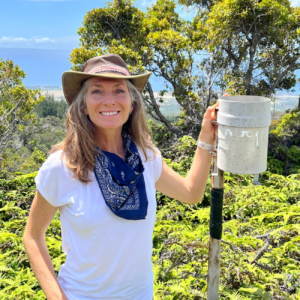 Tova Callender is a longtime partner of the Maui Nui Marine Resource Council and its newest board member. In her current role as the Ridge to Reef Coordinator for the Department of Land and Natural Resources, Division of Aquatic Resources (DNLR-DAR), Tova focuses on land-based solutions to protect Maui’s waters. Tova is also a member of the steering committee for Hui O Ka Wai Ola and is the watershed coordinator for the West Maui Ridge 2 Reef Initiative.
What first sparked your journey into environmental science?
I grew up running wild with my brothers on 100 acres of forest, fields, streams, and orchards in Ontario, Canada. That early connection to nature eventually led me to pursue a bachelor’s degree in environmental biology at McGill University followed by graduate studies at UC Santa Barbara. The close relationship I have felt to nature since I was young and my passion for the environment naturally evolved into my career focus.
I moved to Maui twenty years ago to work in sustainable agriculture in West Maui. That experience deepened my understanding of the island’s unique ecosystems and people, which led me to my current role as Ridge to Reef Coordinator for DLNR-DAR, where I focus on land-based solutions to protect our coastal waters.
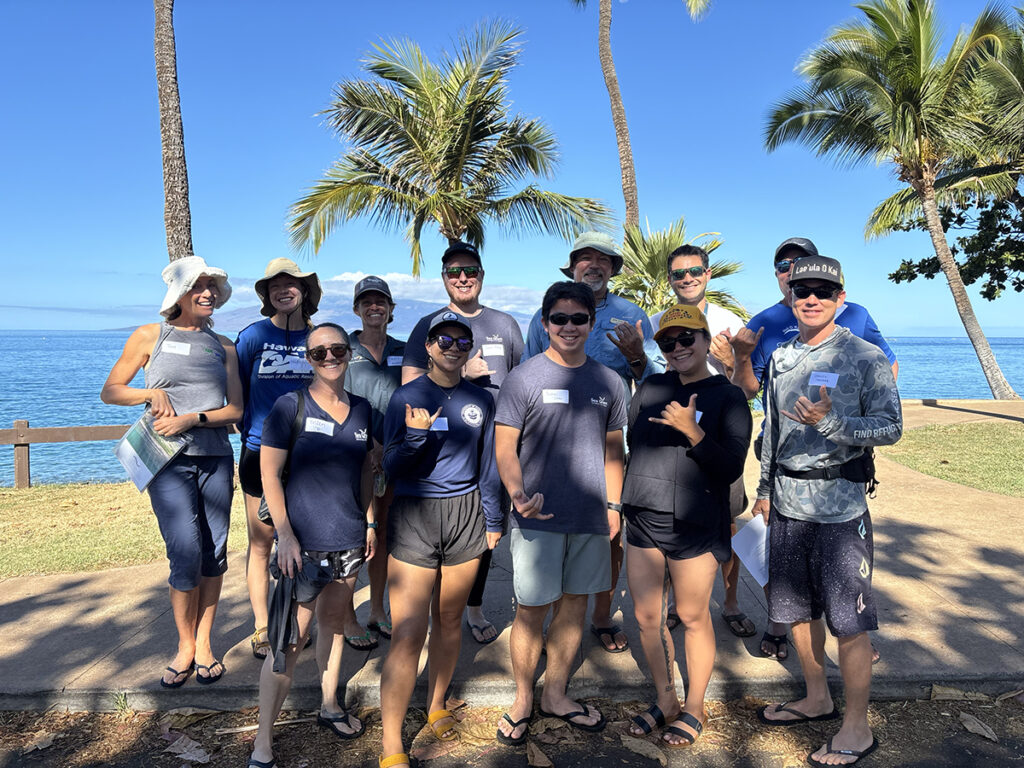
Tova (back row, left) participated in the Maui Nui Marine Resource Council’s limu volunteer day in Lāhainā in July.
Can you tell us more about your current work?
As Ridge to Reef Coordinator, I try to bring people together to find collaborative solutions to land and water issues, which are always closely tied together. It’s about facilitating connections between organizations, funders, and individuals—breaking down silos and recognizing where missions overlap. No landowner wants their soil washing into the ocean, and that shared concern opens the door for meaningful conversations and lasting partnerships.
Education is an element of what we do, especially around land-based pollution and community engagement. It’s important that people don’t feel overwhelmed by the scale of the problems we are collectively facing—individual actions really do make a difference. Also, there is inevitable ongoing movement within positions on the island, with general managers transferring between properties, for example, so it’s critical to consistently focus on introducing the issues to new audiences—especially the land-ocean connection, what we refer to as working mauka (mountain) to makai (sea).
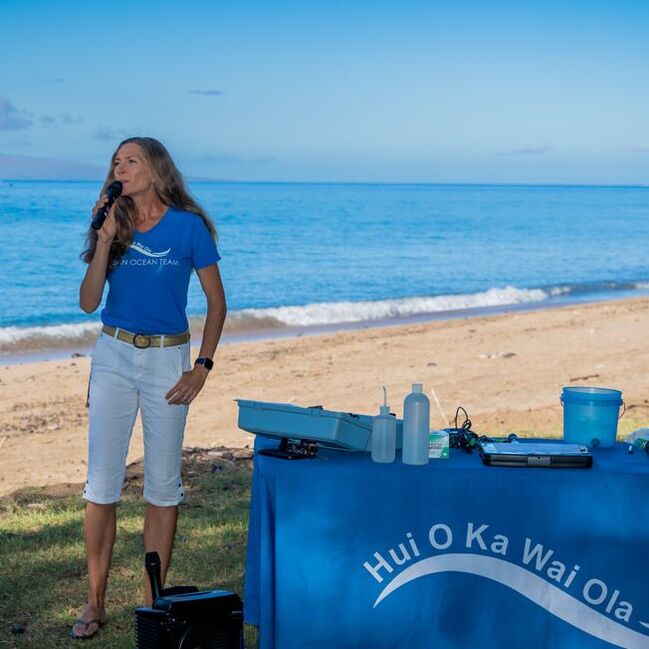
As a member of Hui O Ka Wai Ola’s steering committee, Tova advocates for data-based management solutions that protect coastal waters and local marine ecosystems. (Photo Credit: Hui O Ka Wai Ola)
You are on the steering committee for Hui O Ka Wai Ola. How has the Hui’s work impacted Maui’s waters?
Hui O Ka Wai Ola has been essential to watershed management on Maui—we wouldn’t have the water quality data we rely on without them. The work is deeply collaborative and gratifying. I chair the technical team, which meets every three weeks to ensure data collection and analysis align with community and environmental needs. Every two years, we publish a comprehensive report, with the next one coming out mid-2026.
The Kahana Nui Basin in West Maui is a great example that shows the impact of our data. Over time, the original retention basins had become less effective at preventing pollution from reaching the coastline. USGS studies had indicated that sediment-laden runoff from streams and gulches was contributing to coastal water degradation—a finding which was confirmed by our nearshore water quality assessments. By securing grant funding, working closely with landowners, the county, and the Soil and Water Conservation District, we were able to instigate the jump start needed to improve the functionality of those basins. Restoring retention capacity upstream significantly reduced pollutant loads, resulting in cleaner coastal waters and hopefully healthier reef ecosystems off Kahana. Maui County has since continued to make major investments in that area to keep the basin functioning optimally.
This progress is the result of years of science, planning, and collective action—from identifying drainage issues back in 2013 to contracting heavy equipment operators to begin work in 2018 to the county continuing structural improvements today. It’s a reminder that every effort matters and together we can achieve a lot. Even when the challenges feel overwhelming, we really can create lasting change.
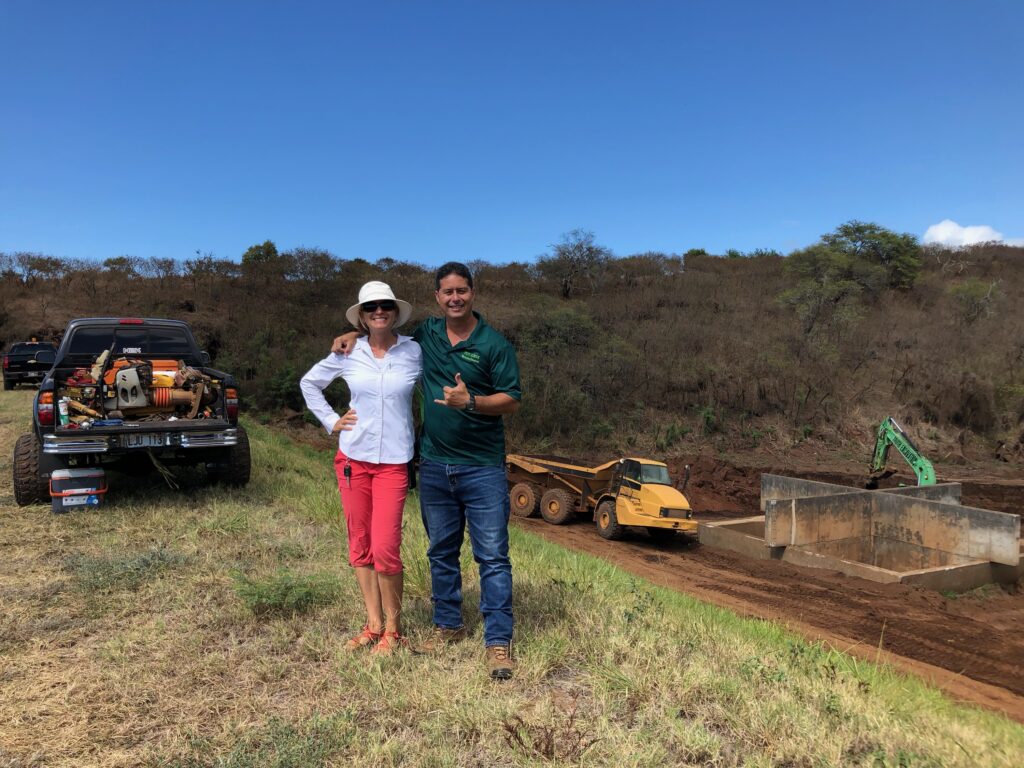
Tova at the Kahana Nui Basin clean out with Pomaikaʻi Kaniaupio-Crozier of Aloha Puʻu Kukui. (Photo Courtesy of Tova Callender)
During your time in Maui, what changes have you seen in the environmental landscape?
I have seen increased collaboration and a strong sense of ownership over our shared environment. I have also seen improvements in land management and a focused commitment to reduce pollution before it reaches the ocean.
Climate shifts are also noticeable—it’s warmer, the winds are less predictable, and brown water events are more frequent. The heavy rains in January that brought mud floods have caused persistent brown water in North Kihei. It’s late summer, and I still can’t swim at my local beach because the sediment continues to resuspend in the nearshore. These changes are tough to see, but they are motivating people to act and it’s clear we need to work together to address the issues.
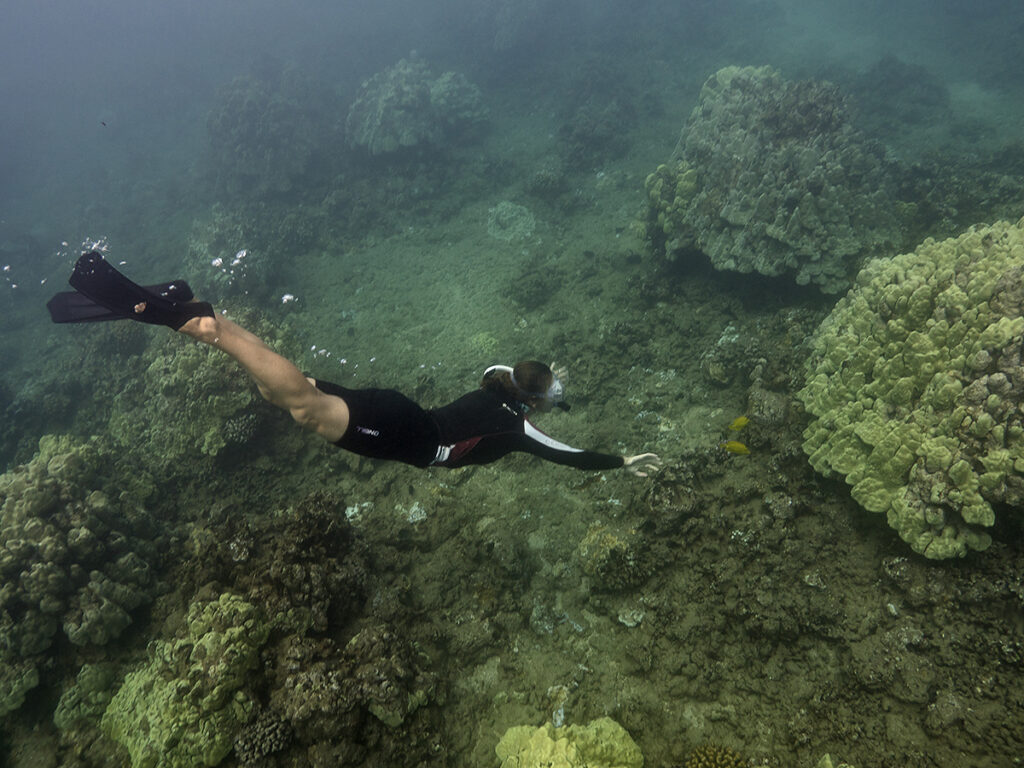
Tova enjoying time in the ocean. (Photo Courtesy of Tova Callender)
What do you love most about living and working here on the island?
Community and the proximity to nature. People on Maui tend to share a deep connection to the land and sea, and that shapes shared community values as well—family, relationships, and time spent being out in nature, all of which align with my sense of what makes life good. I’m inspired by the colors here—the blues and greens all around— the warm breeze, the sun, the welcoming air. Whether it’s biking, snorkeling, swimming, or just being outside, it’s all part of what makes this place so special to me. I love to travel, but I always love coming home.
Looking at the future of conservation, what makes you feel optimistic?
There are so many people who care, and real solutions do exist to the challenges we face. If we have the will, we can make progress—especially with so many incredible groups already taking action. But we’ll only solve these problems by working together and staying focused. Collaboration is essential to success.

No Comments
Sorry, the comment form is closed at this time.