
Posts

Free Presentation on “Proposed Use of Oysters for Water Quality Improvement in Ma’alaea Harbor”

1 Comment/in /by

The public is invited to a free presentation on a proposed plan to use oysters to improve ocean water quality in Ma’alaea Harbor during Maui Nui Marine Resource Council’s monthly meeting on Wednesday, December 5, from 5:30 pm to 7:30 pm.

The presentation will be offered by Rhiannon “Rae” Tereari‘i Chandler-‘Īao, Executive Director and O‘ahu Waterkeeper for Waiwai Ola Waterkeepers Hawaiian Islands. It will take place at Pacific Whale Foundation’s classrooms at the Ma’alaea Harbor Shops, 300 Ma’alaea Road. Admission is free and refreshments will be served.

Oysters are filter feeders that remove pollutants from the water column including sediment, bacteria, heavy metals, PCBs, oil, microplastics, oxybenzone, and other harmful sunscreen-related chemicals. Oysters also digest the type of bacteria that cause skin-borne illnesses such as Staph and MRSA. These oysters are for restoration, they cannot be consumed. Oysters for consumption are grown in clean water only.

Oysters are currently at work in harbor waters of New York and New Jersey, where Waterkeeper Alliance member projects have installed more than 42 million oysters to help clean the water and protect the coastline from wave action. Similar efforts are also being employed in Baltimore’s Chesapeake Bay to improve ocean water quality.

Pacific oysters, the type of oyster considered for the pilot project in Ma’alaea Harbor, were originally introduced by the State in the 1950’s and 1960’s and are found in locations throughout the Hawaiian Islands. Adult Pacific oysters can filter more than 50 gallons of water per day. The proposed pilot project would involve the installation of approximately 1,000 oysters in cages beneath the docks of Ma’alaea Harbor away from boat traffic. Trained staff and volunteers will monitor the oysters to evaluate survival rates and their success in improving water quality. At the end of one year, the pilot project will yield a report to help determine the feasibility of expanding the project within the harbor.

“In 2017, Hawai‘i’s Department of Land and Natural Resources (DLNR), Division of Aquatic Resources (DAR) conducted a successful grow trial using Pacific oysters,” says Chandler-‘Īao “This DAR study, conducted in West Loch, demonstrated the oysters’ ability to remove various pollutants water column. We’re excited to see what is possible to improve conditions in Ma‘alaea Harbor.”

Maui Nui Marine Resource Council (MNMRC) is partnering with Waiwai Ola Waterkeepers Hawaiian Islands to conduct the one-year pilot oyster project in Ma’alaea Harbor. The project is part of MNMRC’s overall plan to address land-based impacts to water quality in Ma’alaea Bay.

Recently, MNMRC commissioned and funded a study of the watershed that drains into Ma’alaea Harbor. With the study in hand, the nonprofit is now evaluating recommendations for action steps, and will be selecting those that can be implemented in 2019 and beyond. “We are looking at ways we can work upslope to improve water quality throughout Ma’alaea Bay,” notes Amy Hodges, Programs Manager at Maui Nui Marine Resource Council, who has been meeting with local landowners, MECO, Hawai‘i’s Division of Forestry and Wildlife, Ma’alaea Community Association, and others to talk about ocean water quality in Ma’alaea.

“Ma’alaea Bay is home to a popular surf break, beaches, a sea turtle feeding area, fishing areas, and coral reefs both inside and outside the harbor,” says Hodges. “Improving water quality in the harbor will benefit recreational users of the area and help marine wildlife.”

At the meeting, MNMRC will provide information on new volunteer opportunities associated with this project, including helping MNMRC regularly monitor the oysters and clean the cages to remove excess algae.

Doors will open at 5 pm, with complimentary holiday-themed refreshments. The presentation will begin at 5:30 pm and will include time for questions and comments from the public. To learn more, visit www.mauireefs.org.

About our presenter:
Rhiannon “Rae” Tereari‘i Chandler-‘Īao serves as the Executive Director and O‘ahu Waterkeeper for Waiwai Ola Waterkeepers Hawaiian Islands. She earned a B.A. in Ethnic Studies from the University of Hawai‘i at Mānoa in 2004. After graduating from William S. Richardson School of Law in 2016 with certificates in both Native Hawaiian Rights Law and Environmental Law, she worked as a Post J.D. Research & Teaching Fellow at Ka Huli Ao Center for Excellence in Native Hawaiian Law. Prior to attending law school, Rhiannon served as the Executive Director of the environmental non-profit organization Community Work Day Program, d.b.a. Mālama Maui Nui. While on Maui, she served as a member of the Maui County Cultural Resources Commission, the Maui Nui Marine Resource Council, and the Steering Committee of Ka Ipu Kukui Fellows Leadership Program.

About Maui Nui Marine Resource Council:
Maui Nui Marine Resource Council is a nonprofit organization based on Maui, dedicated to healthy coral reefs, clean ocean water and abundant native fish. Founded in 2007, Maui Nui Marine Resource Council is celebrating its 11th anniversary this year. Some of the organization’s accomplishments include:

• Formation of Maui Coral Reef Recovery Team and the Maui Coral Recovery Plan, the first of its kind in the state.

• Forming Community Managed Makai (CMMA) areas, in which local residents work together to manage their marine resources.

• Creating Hui O Ka Wai Ola in partnership with The Nature Conservancy and West Maui Ridge to Reef. This volunteer citizen-based ocean water quality testing program is now in its 2nd year of testing ocean water quality at 39 locations along Maui’s south and west shorelines every 3 weeks.

To learn more, visit www.mauireefs.org
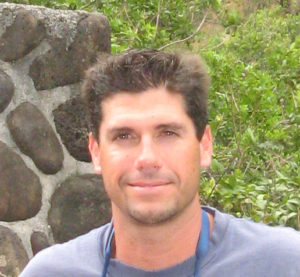
Dr. Mark Deakos to Present Talk on “Chasing Happiness and Its Impact on the Planet” at Maui Nui Marine Resource Council’s August 1 Meeting

in /by

MA’ALAEA, HI – Many people know Dr. Mark Deakos as a researcher, scientist and community activist, known for his studies of Maui’s manta rays and his efforts to protect our local coral reefs. Deakos will be presenting a talk with a larger, more global perspective, on the topic of “Chasing Happiness and Its Impact on the Planet” as part of Maui Nui Marine Resource Council’s upcoming August meeting.

The public is invited to this free presentation and meeting on Wednesday, August 1, from 5:30 pm to 7:30 pm at Pacific Whale Foundation’s classrooms at the ocean level of the Ma’alaea Harbor Shops at 300 Ma’alaea Road. (Please note the later start time.) Refreshments will be served. The doors open at 5:00 pm.

“Is it possible to have long, healthy and happy lives for all people across the globe without destroying our planet’s natural resources?,” asks Deakos. “My talk will explore the science of happiness and how pursuing selfish interests can actually be good for the planet.”

At one time a competitive swimmer and water polo player, Deakos now spends much of his time in saltwater as an avid scuba diver, free diver, kayaker and mariner. His chosen career working in wildlife biology and marine research is an extension of his passion for the natural world and his marvel of the ocean environment.

“I was fortunate to experience living in various countries around the globe during my early years,” says Deakos. “A common thread in my life has always been water.”

Dr. Deakos obtained his biology degree from the University of Waterloo in Canada where he began pursuing his interest in wildlife biology. After working with several avian and reptile species, his interests rapidly returned to the ocean and towards marine mammals, which eventually led him to Hawaii in 1996.

At the University of Hawaii, he completed his master’s degree studying humpback whale behavior, and completed his doctoral degree in 2010 focusing on manta ray ecology. In 2004, he founded The Hawai’i Association for Marine Education and Research (HAMER), a not-for-profit 501 (c) 3 corporation with the mission of better understanding and protecting Hawaii’s marine resources.

Aside from his continued involvement to learn about and protect manta rays here in Hawaii, Mark is the Deputy Program Manager for HDR Environmental, Operations, and Constructions Inc., Norfolk, Virginia, tasked with managing the Navy’s Protected Species Monitoring Program in the Pacific. He is also an active member of various community groups working towards solutions to some of our greatest environmental threats, and is a founding member of Maui Nui Marine Resource Council.

The host of the event, Maui Nui Marine Resource Council, is a nonprofit Maui-based organization which recently celebrated its 10th anniversary of working for clean ocean water, healthy coral reefs and abundant native fish for the islands of Maui County.

Maui Nui Marine Resource Council’s work includes an ocean water quality testing program known as Hui O Ka Wai Ola, which currently tests 39 locations from Makena to Kapalua, a program to reduce water pollution in Ma’alaea Harbor and a study to determine which genetic strains of Olowalu’s corals are most resistant to stressors such as temperature and pollution. To learn more about Maui Nui Marine Resource Council, please visit www.mauireefs.org.

Public Invited to Free Presentation on Impacts of Climate Change on Maui’s Coastal Areas 

in /by

The public is invited to learn more about the impacts of climate change on Maui’s coastal areas, including big waves, flooding, erosion and more, at Maui Nui Marine Resource Council’s meeting on Wednesday, July 11. The meeting takes place from 5 to 7 pm at Pacific Whale Foundation’s classrooms at the Ma’alaea Harbor Shops. All are invited.

The climate change presentation will be offered by these guest presenters:

– Bradley Romine, PhD, Coastal Management and Resilience Specialist, University of Hawaii Sea Grant Program, Center for Coastal and Climate Science and Resilience.

– Tara Owens, Coastal Processes and Hazards Specialist, University of Hawaii Sea Grant College Program (partnered with Maui County’s Planning Department).

Attendees are welcome to bring questions about managed retreat, beach replenishment and other issues relating to the impact of climate change on Maui’s shorelines.

The meeting is free and open to all. Refreshments will be provided.

Established in 2007, Maui Nui Marine Resource Council (MNMRC) is a community-based nonprofit dedicated to clean ocean water, healthy coral reefs and abundant native fish for Maui County. The meeting will include updates on our projects, including the Hui O Ka Wai Ola water quality monitoring program, Olowalu coral reef study and efforts to improve water quality in Ma’alaea Harbor. Copies of MNMRC’s 10th anniversary annual report will be available to take home.

To learn more, visit www.mauireefs.org.

Presenter bios:

Bradley Romine, PhD
Coastal Management and Resilience Specialist
University of Hawaii Sea Grant College Program,
Center for Coastal and Climate Science and Resilience

Brad’s role as University of Hawaiʻi Sea Grant extension faculty is to provide bridges between the university, our communities, and government to meet the complimentary goals of conserving coastal environments and reducing natural hazards risk to shoreline development. He works closely with the Office of Conservation and Coastal Lands at the Hawaiʻi Department of Land and Natural Resources (DLNR) and interfaces with other government agencies and the public on collaborative projects to support planning and decision-making based on the latest and best-available coastal and climate science. Recently, he provided scientific and technical guidance to the DLNR for the development of the Hawaiʻi Sea Level Rise Vulnerability and Adaptation Report. He is also leading the development of science-based planning tools and guidance to improve resilience to coastal hazards and sea level rise in Hawaiʻi through funding from the National Oceanic and Atmospheric Administration. Brad completed his PhD in Geology and Geophysics at the University of Hawaiʻi at Mānoa in 2013 and has published research articles on coastal geology, beach processes, shoreline change, and sea level rise impacts in Hawaiʻi.

Tara Owens
Coastal Processes and Hazards Specialist
University of Hawaii Sea Grant College Program

Tara Owens is Extension Faculty with the University of Hawaii Sea Grant College  Program,  specializing  in  coastal  processes  and  coastal  hazards.    Partnered  with  Maui  County’s  Planning  Department,  Tara’s  role  is  to  “bridge  the  gap”  between  science  and  policy  and  planning  for  improved  coastal  management  by  providing  technical  guidance,  consultations,  site  visits,  and  public  outreach.  Tara  also  interfaces  with  other  government  agencies  and  the  public  on  collaborative  projects  pertaining  to   coastal  hazards,  including  beach  erosion  and  sea-level  rise  impacts.   Tara  earned  a  bachelor  of  science  degree  in  marine  science  from  Coastal  Carolina  University,  and  a  master’s  degree  in  coastal  geology  from  the  University  of  Hawaii.   She  was  hired  by  UH  Sea  Grant  and  moved  back  to  Hawaii  in   2010  after  working  for  7  years  in  the  federal  government  at  the  U.S.  Geological  Survey  in  St.  Petersburg,  Florida  and  then  at  the  NOAA  Coastal  Services  Center  in Charleston, SC.

Beach photo by John Seebart