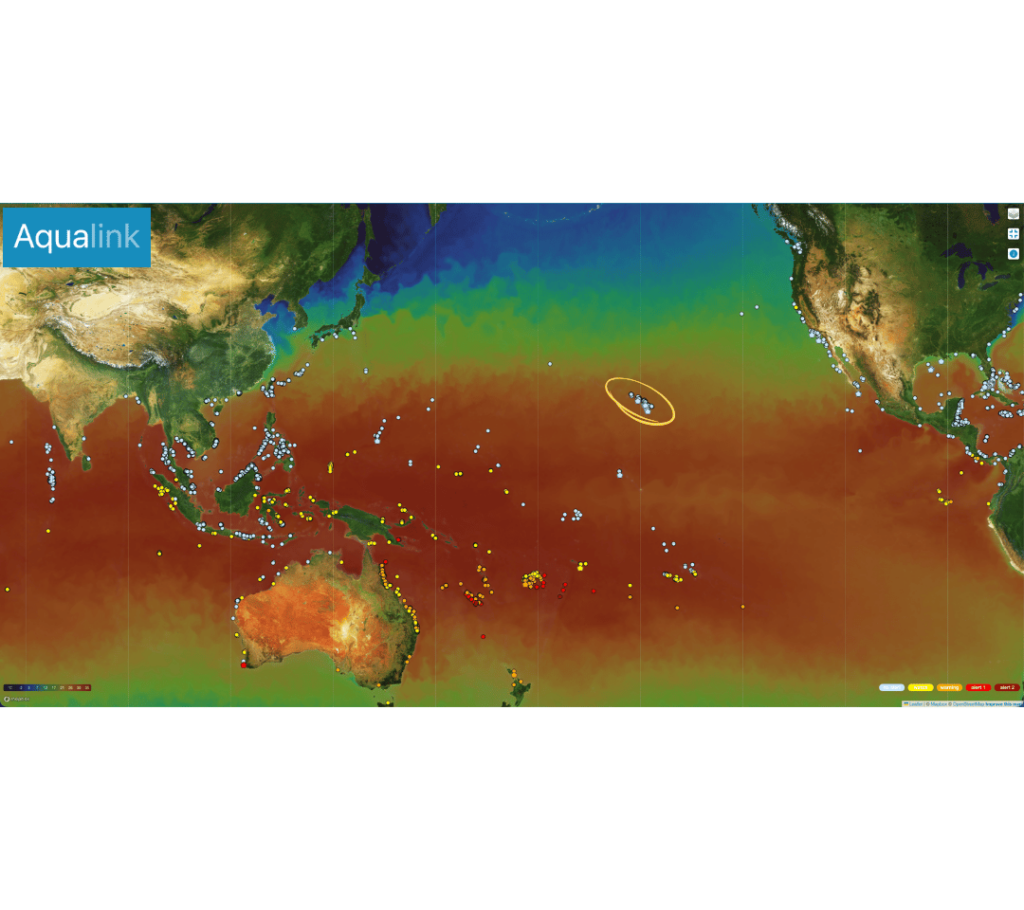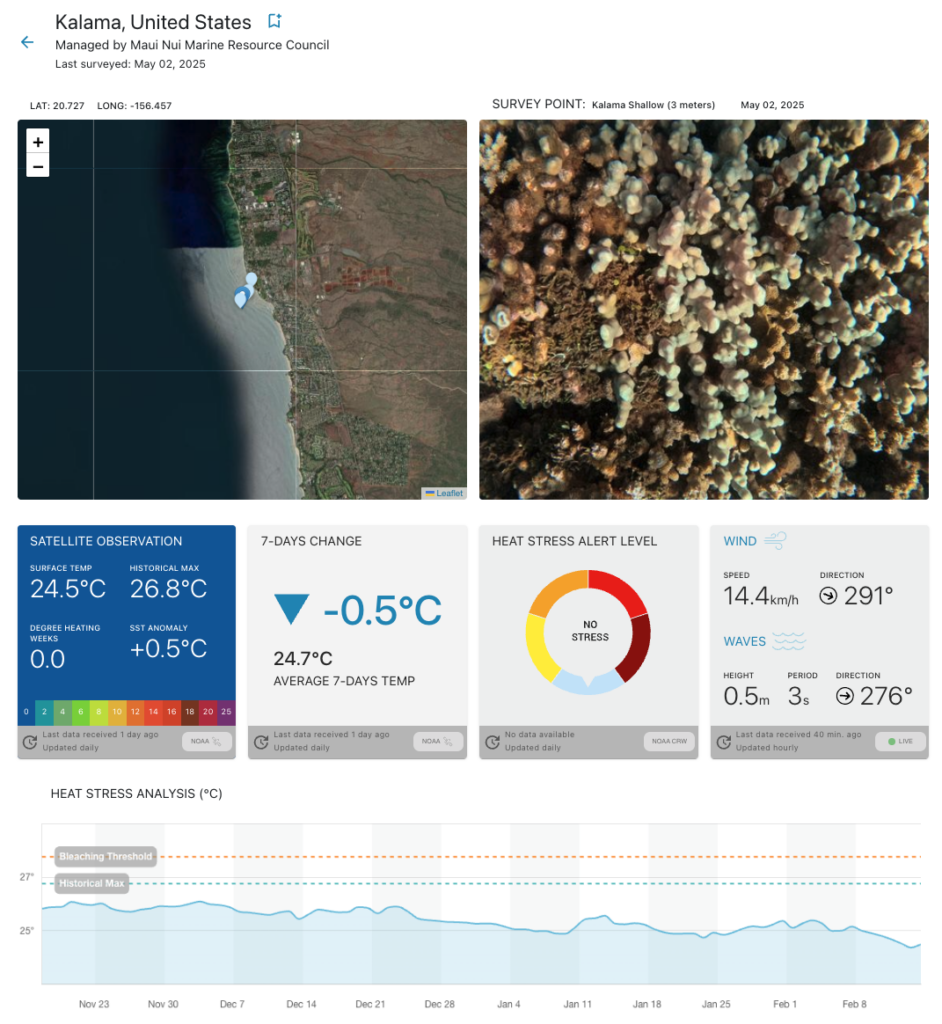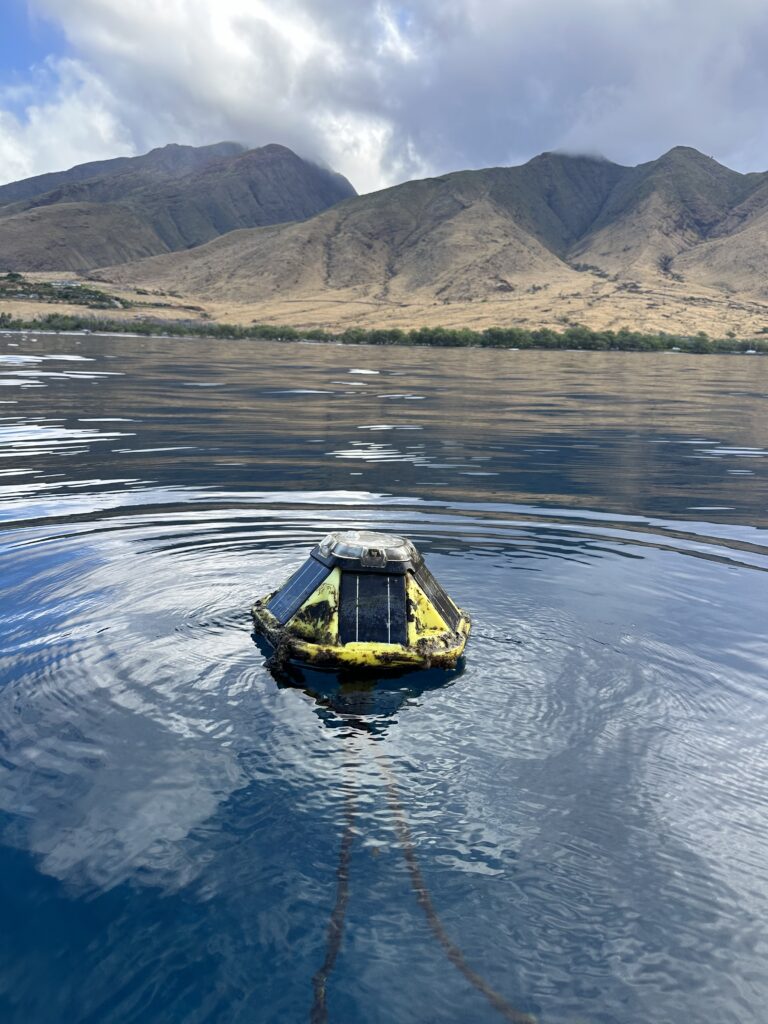

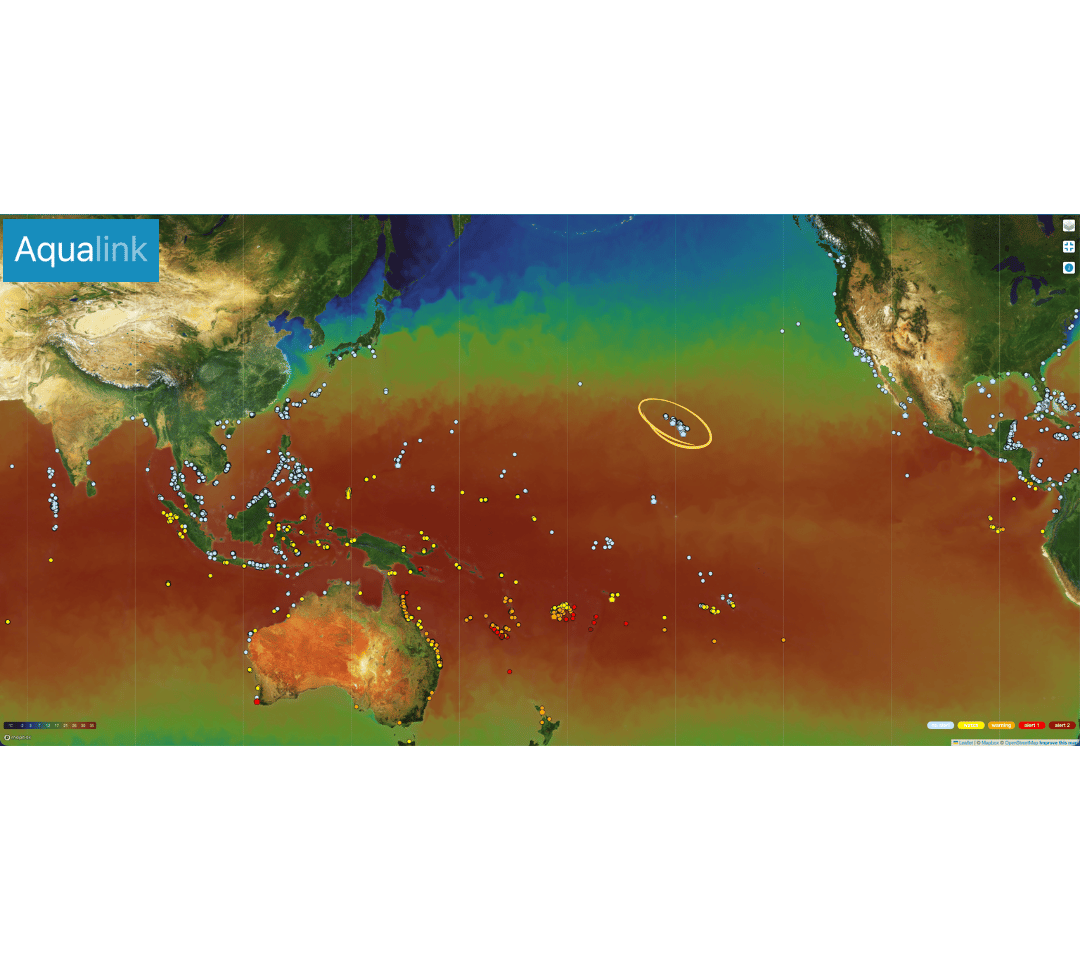
Coral reefs worldwide are facing a crisis. Corals are animals that are susceptible to temperature extremes. If the temperature increases by just one degree Celsius from what they are used to, they start to experience heat stress and may bleach. If the temperatures remain high, they will die. When the coral dies, the entire ecosystem of the reef collapses. In today’s warming ocean, temperature and chemistry are changing, and we are starting to see the effects ripple through all ocean life, not only coral reefs. Aqualink was started to help scientists get better information about how temperatures are changing on coral reefs worldwide. To know where and when heat stress in the ocean will occur, to be able to predict these changes, we need to measure it in real-time. Aqualink is a philanthropic engineering organization working on building ocean conservation technology. They donate Aqualink buoys to volunteer organizations, like MNMRC, that take ownership of the system and are responsible for the management and maintenance of their buoys. Aqualink provides continued support by donating satellite communication services to relay real-time information and provides a web interface to display that information.
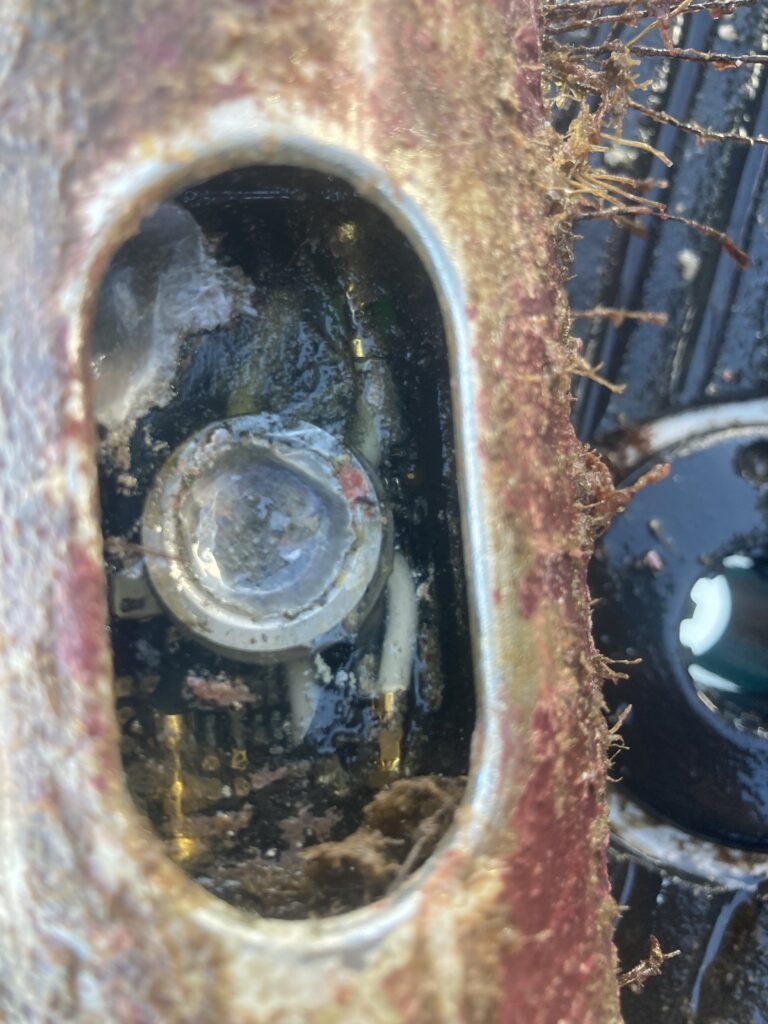
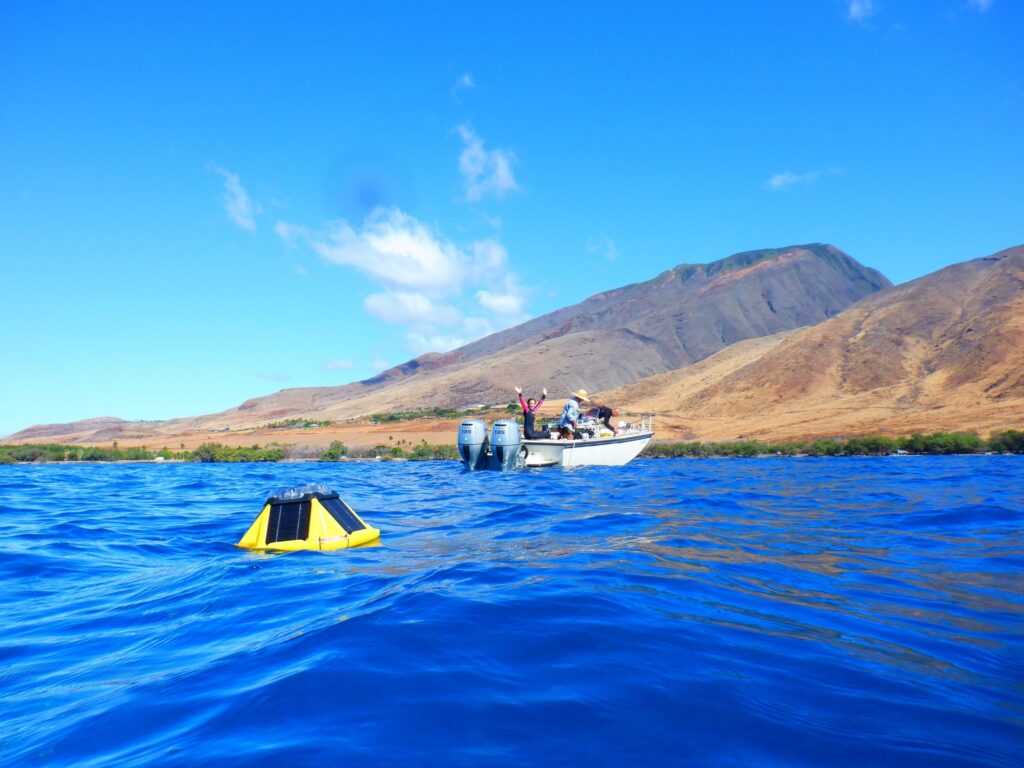
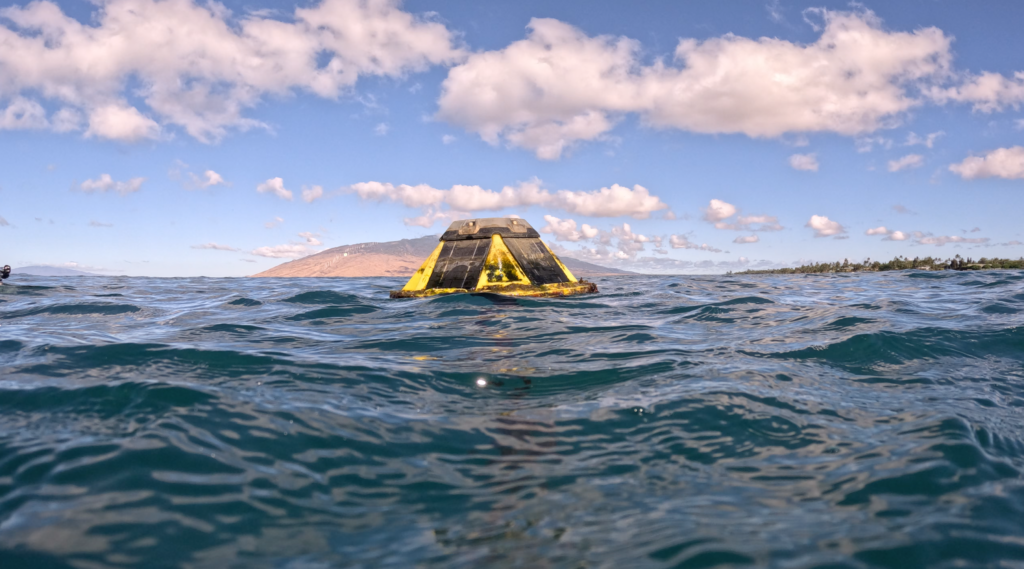
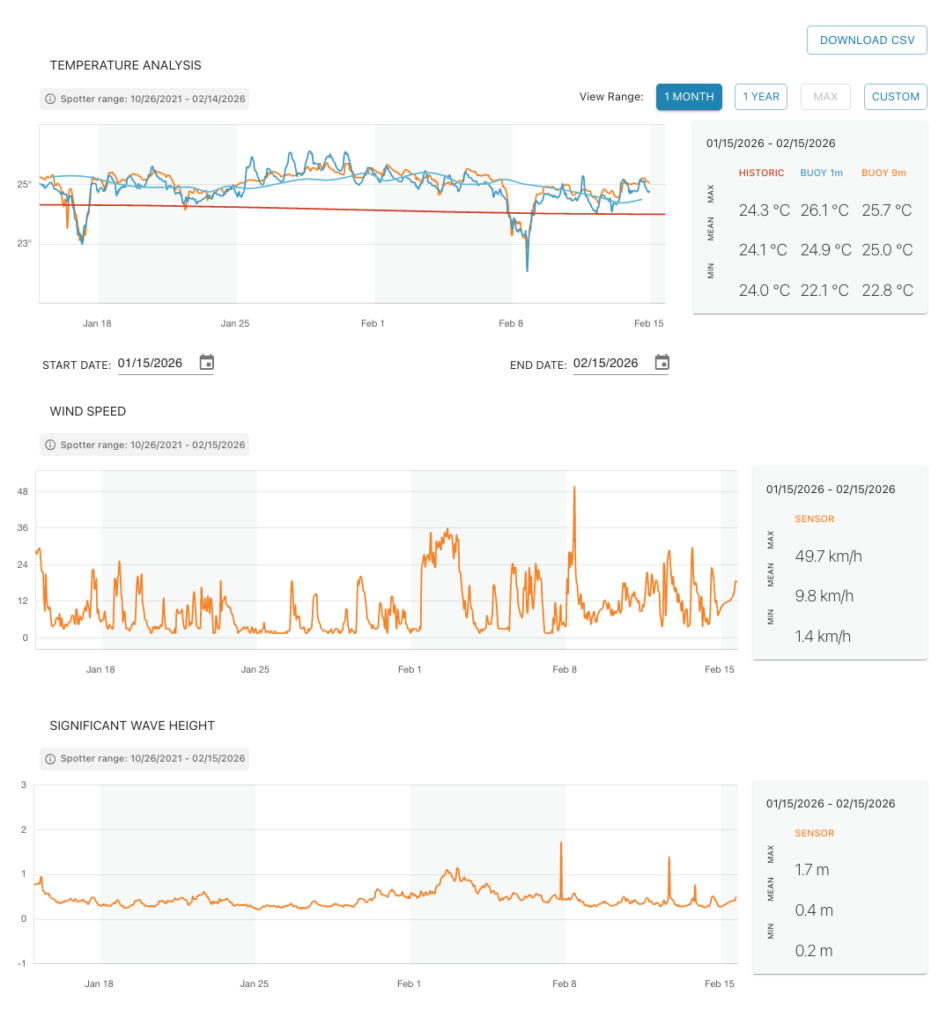
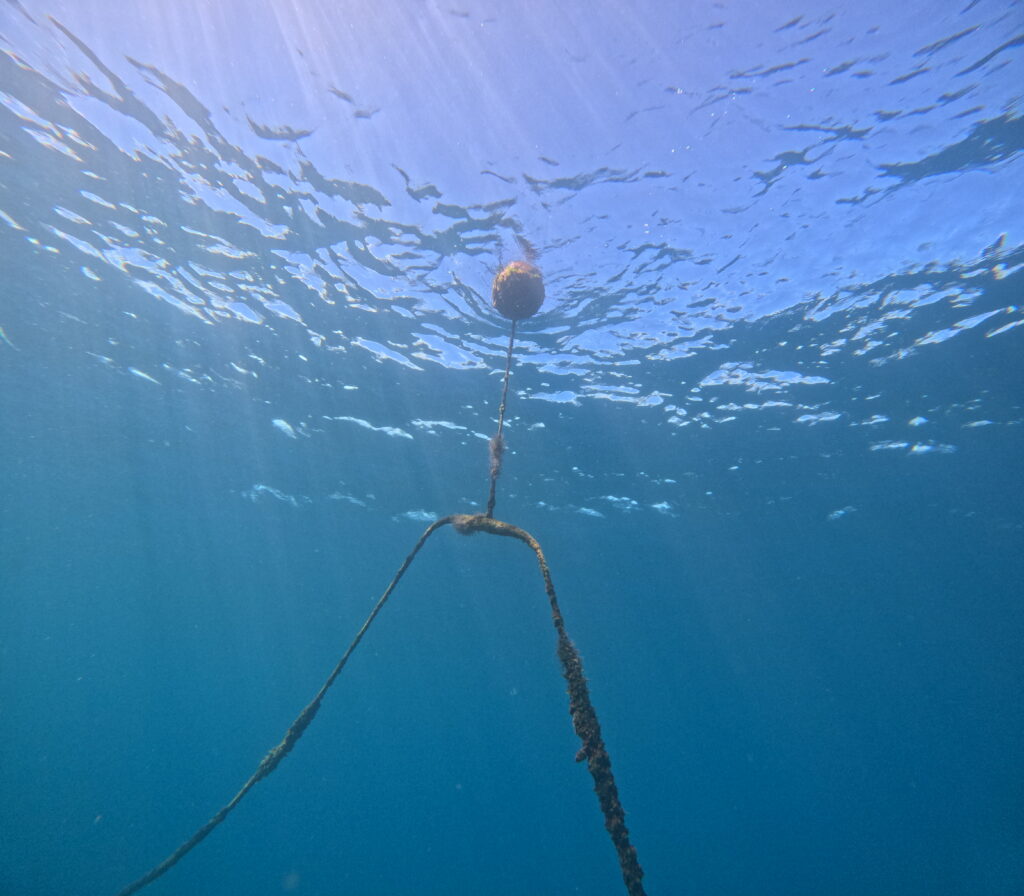
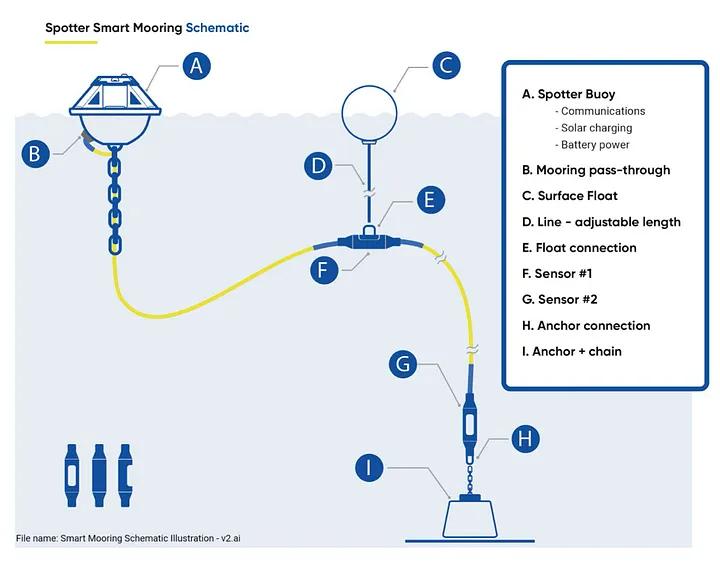
Moorings are comprised of the pentagonal Spotter buoy, which provides satellite communication providing real-time location, wind and wave conditions and also collects and transmits temperature data from a near surface sensor on a separate buoy on the mooring and a bottom sensor located above the mooring. The combination of surface and bottom sensors are helping NOAA improve their Coral Reef Watch models, which provides coral bleaching predictions primarily based on satellite data. Because satellites measure surface temperature, the realtime comparison with bottom temperature is helping understand how close these two values are over time and this help improve the NOAA models.
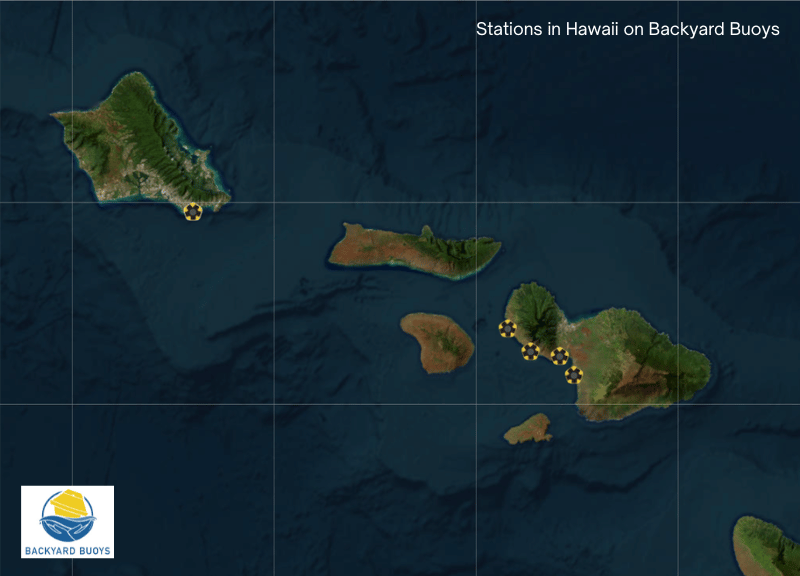
Currently, MNMRC manages three buoys on Maui:
… and the Kohala Film Project manages a fourth:
In addition to the scientific data supporting the vision of improved global bleaching detection and prediction, MNMRC’s installation of these buoys provides local communities on Maui and other stakeholders with access to real-time oceanographic information. The Pacific Islands Ocean Observation System has expressed interest in using these additional data to improve its coastal-hazard modeling for Maui. Anyone going out on the ocean in these areas will now be able to access near-real-time information on sea temperature, waves (height, period, and direction), and wind (speed and direction).
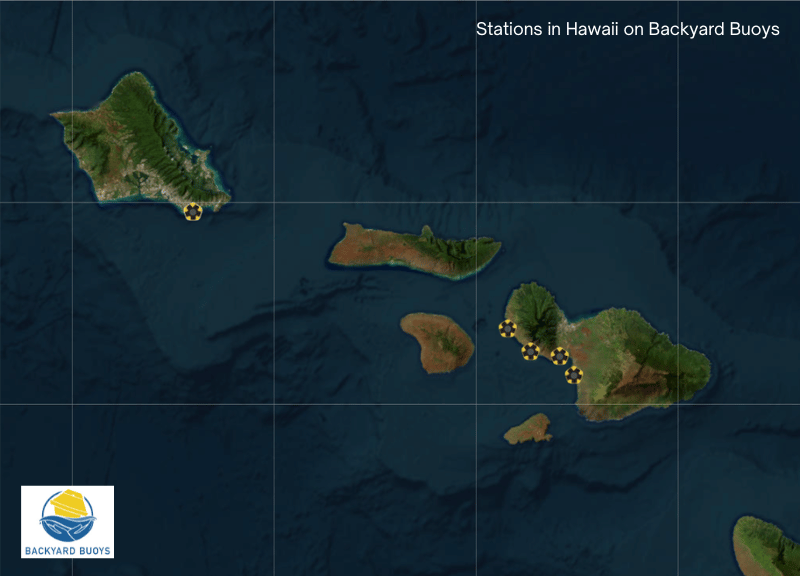
In line with this goal of making Aqualink data accessible, all four Maui Aqualink moorings are now available on the Backyard Buoys app as of January 2026. A fifth, managed by Malama Maunalua on Oahu, is also on the app. The Backyard Buoys project enables Indigenous and coastal communities to gather and use wave data. The project provides “community-managed ocean buoys and web apps that simplify data access to complement Indigenous Knowledge.” In addition to the Aqualink web interface, the Backyard Buoys mobile app provides a simple interface to access mooring wind, wave, and surface temperature data.